American Guerrilla Marketing
Nationwide Service
Media planning, media buying, billboard advertising, & guerrilla marketing
Guerrilla Projections in Parkersburg, WV
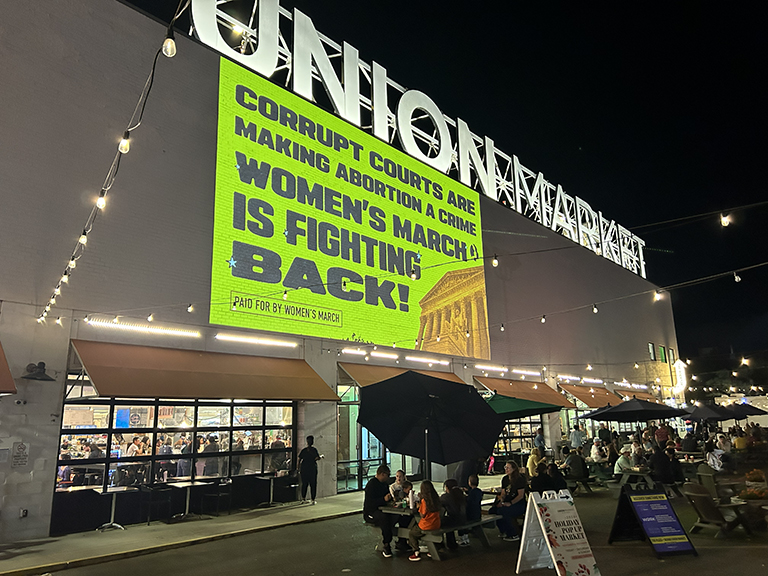
Parkersburg’s river city commercial heritage, downtown arts corridors, and a building landscape shaped by the Mid-Ohio Valley’s industrial past create a projection advertising environment with blank wall inventory and local audiences hungry for visual engagement.
Parkersburg as a Projection Advertising Market
Parkersburg sits at the confluence of the Ohio and Little Kanawha rivers in West Virginia’s northwestern corner, serving as the commercial and civic anchor of the Mid-Ohio Valley — a regional economy that spans the West Virginia border into southeastern Ohio and brings a regular flow of visitors and commerce into the city’s downtown core. That regional anchor role gives Parkersburg’s projection advertising campaigns a geographic reach that extends beyond the city’s own resident population and into the surrounding communities whose residents treat downtown Parkersburg as their regional shopping, dining, and entertainment destination.
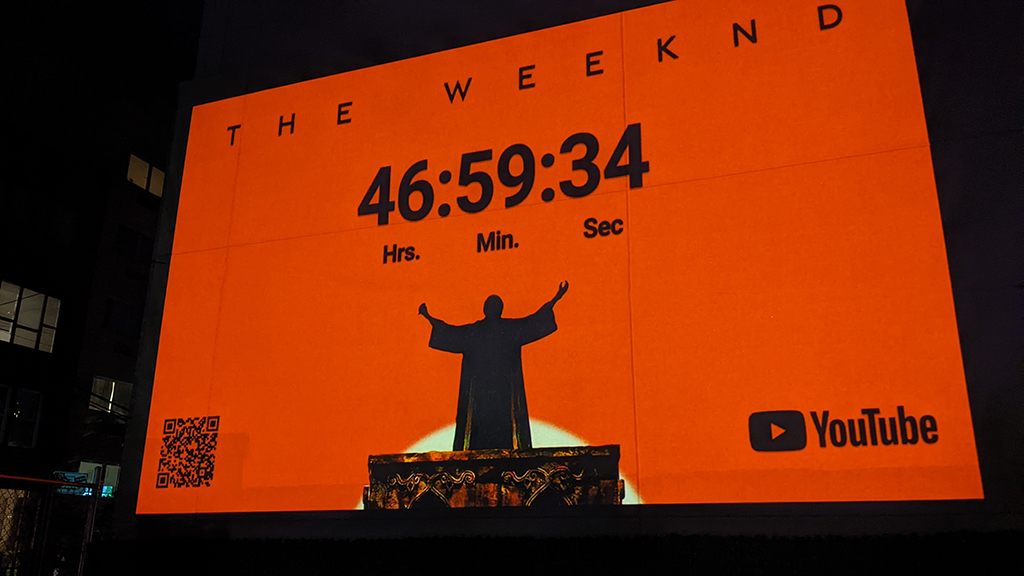
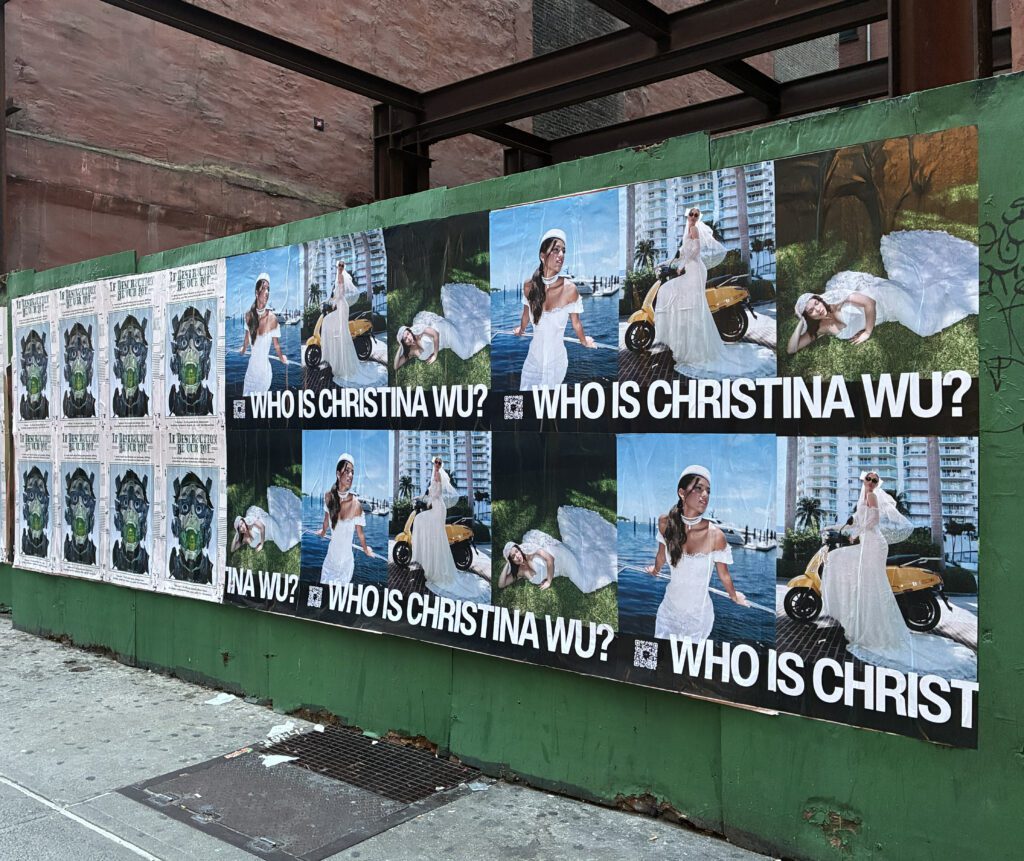
AGM’s projection client roster includes Netflix, Disney, Coca-Cola, FanDuel, Live Nation, iHeartRadio, and the US Marine Corps. A confirmed case study: the US Marine Corps × CMA Fest Nashville — multi-night projections onto architectural surfaces throughout the festival footprint, reaching 80,000+ attendees across the campaign window. Projection advertising scales across every brand category; what our campaigns share is scale, precision, and a physical presence digital cannot replicate.
Past AGM projection clients include Coca-Cola, Live Nation, and iHeartRadio, with multi-night campaigns that generated earned media coverage and massive organic social sharing.
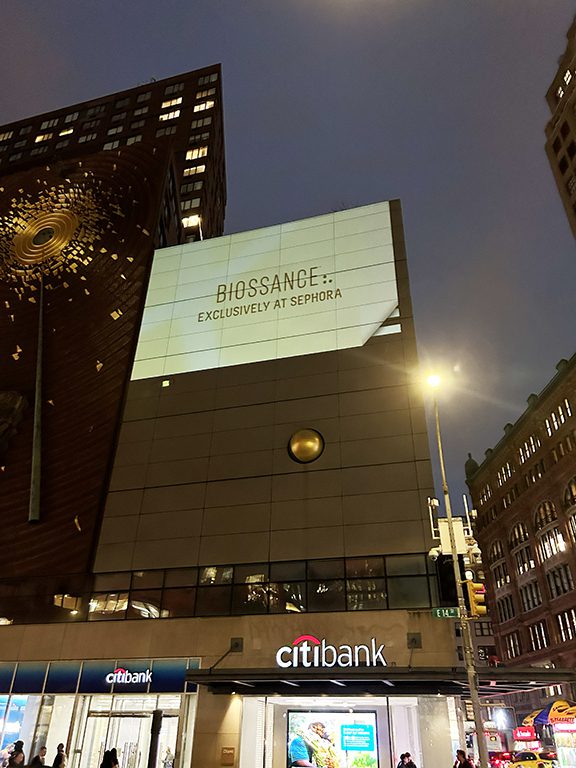
The city’s downtown corridor — centered on Market Street, the Grand Central area, and the historic commercial blocks surrounding Henderson Hall — presents a physical environment shaped by the late-19th and early-20th-century commercial development that characterized every thriving Ohio River trade city of that era. The architectural legacy of that development is a dense inventory of brick and masonry commercial buildings whose upper floors rise three and four stories above the ground-level retail layer, presenting blank wall sections whose scale and surface character are ideal for guerrilla projection campaigns deploying at 20,000 lumens against the night sky.
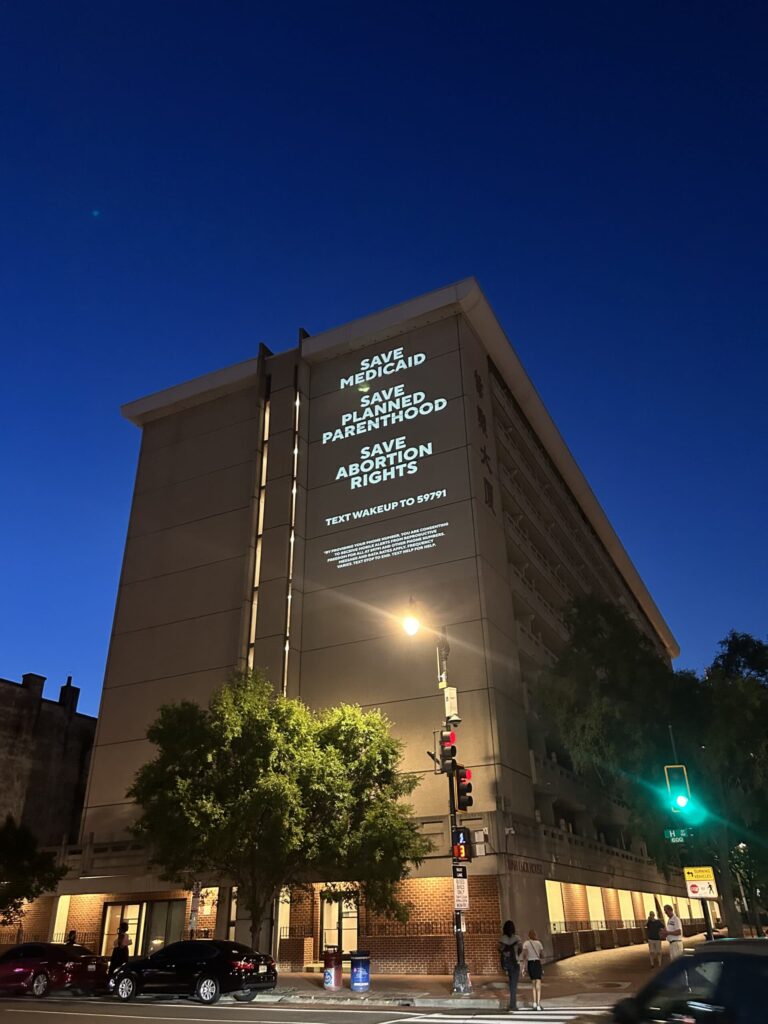
The Women’s March campaign in Washington, DC showed how building projection converts a cause-driven message into unavoidable public presence in an urban environment — a model that resonates in Parkersburg with a community whose connection to the national civic conversation has often felt mediated by distance from the coastal centers where that conversation takes place. A projection campaign in downtown Parkersburg is not a fringe media tactic. It is a statement that the issues it addresses matter here, on this corner, in this city, in the Mid-Ohio Valley — and that visibility matters enough to be delivered at a scale that fills an entire building face.
AGM’s national projection infrastructure — 20,000-lumen commercial projection system, direct two-person technical crew, physical advance scouting, and GPS-documented location analysis and post-campaign reporting — applies in full to Parkersburg campaigns. The agency’s national scouting team has both digital and physical on-the-ground presence in West Virginia markets, and every Parkersburg campaign surface is physically assessed before any campaign commitment is made. The quality of Parkersburg’s commercial building inventory makes this physical assessment rewarding: the city’s downtown blocks consistently yield blank wall sections that are larger, more reflective, and more operationally accessible than most first-time scouts expect from a city of this scale.
Parkersburg’s position as one of the few West Virginia cities with direct economic and cultural ties across the Ohio River into southeastern Ohio extends the campaign’s organic reach through the visiting population that crosses the river for Parkersburg’s commercial and entertainment offerings. Campaigns documented by Ohio visitors on Parkersburg’s streets travel back across the river into Wood County’s adjacent Ohio communities through the organic social sharing behavior of a regional audience that experiences the city as a shared commercial hub rather than a state-bordered separate market.
Light Up Parkersburg's Downtown Walls
Market Street, Grand Central, Henderson Hall — AGM deploys 20,000-lumen projection campaigns across Parkersburg's most productive downtown corridors. Reach the Mid-Ohio Valley's core audience on the walls of the city they call home.
Our Campaign Locations
Browse Cities in West Virginia
Select a city to explore Guerrilla Projections opportunities.
Wall Inventory In Parkersburg's Downtown Corridors
Parkersburg’s downtown commercial building inventory is one of the most productively underestimated surface landscapes for projection advertising in the mid-Atlantic and Appalachian region. The city’s preservation of its late-Victorian and early-20th-century commercial core — a function of slower development pressure relative to larger markets — has left intact a substantial number of three- and four-story brick commercial buildings whose upper floors present blank masonry faces above the ground-level commercial signage band. Those faces, many of which have been painted in light colors over the past century of commercial use, offer projection surfaces whose dimensions and reflectivity are significantly better than a first glance at a mid-size West Virginia city would suggest.
The specific surface characteristics of Parkersburg’s commercial buildings vary by block and by the maintenance history of each individual structure. Painted brick surfaces — particularly those painted in white or light gray — produce excellent projection output at 20K-lumen levels, with vivid color saturation and strong contrast against the ambient nighttime light of the downtown corridor. Unpainted brick surfaces are workable but require the full system output for adequate saturation and produce slightly lower image sharpness due to the irregular surface texture. AGM’s physical scouting process specifically identifies and prioritizes painted or otherwise finished surfaces over unpainted brick within Parkersburg’s commercial building inventory.
The clear line of sight from available projector positions to viable wall surfaces is one of Parkersburg’s most consistent projection advantages. The city’s commercial streets — Market Street, Grand Central Avenue, and the connecting blocks — are wide enough by historic Ohio River city standards to allow projector positioning at 50–100 feet of throw distance from most of the primary wall candidates, producing image heights of 30–55 feet that are highly legible to pedestrians at street level and visible from considerable distances along the open commercial corridor. Parkersburg’s relatively low ambient nighttime light — a consequence of a downtown that is active but not overly dense with commercial lighting — keeps image contrast high even on overcast nights when ambient sky glow might reduce contrast in denser urban environments.
Reading Parkersburg's Surface Landscape By District
Downtown Arts Corridor
Parkersburg’s downtown arts corridor encompasses the commercial and cultural blocks that have concentrated the city’s independent arts, dining, and creative business activity over the past decade of downtown revitalization investment. The corridor’s building stock presents the full range of Parkersburg’s commercial heritage architecture — brick commercial facades from multiple construction eras, some painted and some showing their original masonry, with upper floors that present the blank projection-viable wall sections that the format requires. Evening foot traffic in the arts corridor is driven by the restaurant and bar scene that has anchored the revitalization, and the arts-oriented character of the district’s businesses creates an audience that is receptive to visual campaigns whose creative quality aligns with the aesthetic values of an arts-engaged community.
Henderson Hall Arts Area
Henderson Hall is one of Parkersburg’s most significant historic structures, providing an anchor point for the cultural and arts activity in the neighborhood surrounding it. The buildings in the Henderson Hall zone include older institutional and commercial structures whose exterior wall faces reflect the substantial construction quality of the late-19th-century building era — brick and masonry of the kind that, when painted or plastered, produces effective projection surfaces at the commercial lumen levels AGM deploys. The area’s arts-institution character and the community engagement that surrounds Henderson Hall’s programming make it a natural campaign zone for cultural institution campaigns, arts organization fundraising projections, and community-oriented brand activations that want to anchor their Parkersburg presence in a location with genuine local cultural significance.
Grand Central Corridor
The Grand Central area anchors Parkersburg’s historic downtown commercial core and has historically served as the city’s primary retail and civic gathering zone. The corridor’s commercial building inventory includes some of the largest and most intact multi-story commercial facades in the downtown, with upper floors that present blank wall sections spanning widths and heights that support the largest image dimensions available within Parkersburg’s street geometry. Grand Central’s evening pedestrian activity has grown with the downtown’s revitalization, and the corridor’s central location in the downtown grid means that audiences moving through the commercial core at any point in the evening are likely to pass through or near the Grand Central zone during a projection campaign operating window.
Market Street Arts Zone
Market Street runs through Parkersburg’s downtown as one of the primary commercial arteries connecting the Ohio River waterfront to the city’s interior commercial blocks. The street’s commercial building inventory along its active downtown blocks includes brick commercial facades of the standard two-to-four-story profile, with varying surface finishes depending on each building’s maintenance history. Market Street’s evening pedestrian activity is concentrated around its dining, retail, and entertainment nodes, and the street’s accessibility from the river crossing routes means that visitors from Ohio regularly move through Market Street on their way into and through Parkersburg’s commercial center — creating a cross-border audience component for campaigns positioned along this corridor.
Plan Your Guerrilla Projection Campaign in Parkersburg, WV
Tell us about your campaign goals, target audience, and preferred locations. Our team will help you plan a high-impact guerrilla projection campaign tailored to your needs.
Award Winning Personalized Service
You will get thoughtful, devoted, and individualized attention from our experienced, qualified, and professional personnel. Being one of the most illustrious agencies in Brooklyn, New York, American Guerrilla Marketing has been awarded the Best of Brooklyn title.
Nationwide
Industry City, Brooklyn, New York 11232
American Guerrilla Marketing
Hours
Mon - Fri: 9 AM - 5 PM
Sat & Sun: Closed
Automate your campaign with AGM’s Request for Proposal Builder.
Automate your campaign with AGM’s Request for Proposal Builder. Simply answer a few quick questions about your campaign goals, markets, and timeline, and the system will generate a tailored presentation with recommended strategies, quantities, and pricing. Click the RFP Builder to instantly receive your customized proposal.
Campaign Content for the Parkersburg Market
Advocacy and Community Campaigns
The Women’s March used building projection to make its cause visible in the national capital at a scale that no conventional ad buy could match. Parkersburg’s community — whose residents have lived through the environmental and economic challenges of the Mid-Ohio Valley with particular directness — responds to advocacy campaigns whose messages acknowledge the weight of those experiences without condescension. Causes that speak to economic opportunity, environmental health, community resilience, and civic engagement find in Parkersburg’s downtown pedestrian audience an engaged and emotionally invested audience whose documentation behavior reflects genuine connection to the message.
Regional Brand Awareness
Consumer brands building presence in the Mid-Ohio Valley use Parkersburg projection campaigns to reach the regional commercial hub’s resident and visitor base simultaneously — a combination that extends campaign reach into southeastern Ohio as well as the surrounding West Virginia communities whose residents use Parkersburg as their regional retail and service destination. The novelty of large-scale building projection in a market that has seen little of the format ensures that a well-executed campaign generates strong organic documentation and social sharing from a regional audience encountering it for the first time.
Cultural and Arts Institution Campaigns
Parkersburg’s arts organizations — the Parkersburg Art Center, the art-focused programming at Henderson Hall, and the independent arts businesses in the downtown corridor — create consistent demand for projection campaigns tied to exhibition openings, performance programming, artist-in-residence announcements, and community arts fundraising initiatives. The format’s visual scale and the organic documentation behavior it generates from arts-aware audiences makes building projection a natural extension of the art-world’s established tradition of using public space as a venue for visual communication.
Healthcare and Public Awareness
Camden Clark Medical Center, the Mid-Ohio Valley’s largest healthcare provider, and the regional healthcare organizations that serve the surrounding communities give Parkersburg consistent demand for public health and institutional awareness campaigns. Healthcare topics with direct relevance to the Mid-Ohio Valley’s community health profile — including environmental health, substance use recovery, cardiovascular disease prevention, and mental health access — reach a community audience in Parkersburg that is primed to engage with health messaging delivered at the scale and visibility that building projection provides.
Executing A Projection Campaign In Parkersburg
Parkersburg campaign preparation follows the same physical scouting protocol AGM applies across all markets. A scouting team physically walks Market Street, the Grand Central corridor, Henderson Hall blocks, and the downtown arts corridor to assess building surfaces — dimensions, material, reflectivity, window density — and projector positioning options from available street-level positions. The compact geography of Parkersburg’s primary campaign zones allows comprehensive scouting of all target districts in a single field visit, typically requiring two to three weeks of advance lead time before the planned campaign date.
Parkersburg’s permit environment for outdoor projection campaigns reflects the City of Parkersburg’s approach to outdoor public events and temporary installations. AGM handles all permit research and city outreach as part of standard pre-campaign preparation. In cases where a specific building surface requires property owner coordination — for access to a wall that is not visible from the public right-of-way at the optimal projector position — AGM manages that coordination as part of the advance scouting and planning process.
On the campaign night, the two-person technical crew deploys the full 20K-lumen projection package from the pre-scouted position along Market Street, in the Grand Central area, or at the identified Henderson Hall location. Setup completes within 60–75 minutes of crew arrival, and projection operations begin at dusk. Parkersburg’s low urban ambient light — a function of the city’s size and the Ohio River valley’s natural darkness beyond the immediate commercial core — creates high-contrast projection conditions that maximize image saturation on the downtown’s mixed brick and painted masonry surfaces. The crew operates the projection and captures documentation continuously through the four-to-six-hour operating window.
The Women’s March projection campaign’s impact demonstrated that building projection is not a tactic limited to major metros — it is a medium that carries its full weight in any city where the audience is assembled, the wall is blank, and the message is worth broadcasting at building scale. In Parkersburg, those three conditions converge in the downtown corridor’s evening hours with regularity throughout the spring, summer, and fall campaign seasons, making the city a fully viable and operationally productive market for projection advertising campaigns of any type.
Post-campaign documentation — high-resolution photo and video assets from multiple positions, operational notes, audience observation context — is delivered within five business days of the final campaign night. All documentation materials are produced in formats appropriate for social media distribution, earned media pitching, and formal internal campaign reporting, acknowledging that Parkersburg clients may serve diverse stakeholders whose documentation needs span from Instagram-ready imagery to formal performance reporting for institutional audiences.
Campaign Costs in Parkersburg
Guerrilla projection advertising in Parkersburg is priced at contact us for a quote. . That rate includes the 20,000-lumen commercial projection system, generator and integrated power solution, electronics bundle, mobility unit, and a two-person AGM technical crew covering setup, operation, and full breakdown. Campaigns begin at dusk and run four to six continuous hours per night.
Advance location scouting for Parkersburg is available at approximately Contact us for a custom quote. for the market, credited toward the total campaign investment for confirmed activations. Multi-night campaigns carry the same per-night rate with crew and equipment remaining in market. For clients wanting to activate in both Parkersburg and Huntington across consecutive nights — a natural pairing given the two cities’ complementary audiences in the western West Virginia regional market — AGM structures the multi-city logistics to reduce total crew travel costs across the engagement.
Who Runs Projection Campaigns In Parkersburg
Parkersburg’s projection advertising market draws advocacy organizations, healthcare institutions, arts and cultural bodies, consumer brands building Mid-Ohio Valley presence, and community-oriented campaigns whose messages are grounded in the specific experience of living and working in the Wood County and surrounding regional economy. Healthcare campaigns are among the most consistent projection advertising category in Parkersburg, reflecting the city’s role as a regional medical hub and the community’s above-average engagement with health-related messaging. Advocacy and civic campaigns use Parkersburg’s downtown corridors to reach a community audience whose connection to national policy conversations — around environmental regulation, economic development, public health, and community infrastructure — is both deep and personal in ways that audiences in less affected communities cannot replicate. Arts organizations and cultural institutions use the downtown arts corridor and the Henderson Hall zone to reach the city’s arts-engaged residents with programming announcements and fundraising campaigns whose visual format signals investment in public cultural life. Consumer brands entering the Mid-Ohio Valley market use Parkersburg projections to establish regional presence in the market’s commercial center before extending to smaller surrounding communities. AGM’s national client experience — including the Women’s March and other advocacy brands — provides every Parkersburg campaign with strategic guidance drawn from the agency’s full national portfolio of projection advertising practice.
Coverage & Estimated Impressions
| Zone / Area | Peak Hours | Foot Traffic | Est. Nightly Impressions | Best For |
|---|---|---|---|---|
| Downtown Arts Corridor | 8PM–12AM | Moderate | 2,500–12,000 | Product Launch |
| Henderson Hall Arts Area | 8PM–12AM | Moderate | 2,500–12,000 | Event Promotion |
| Grand Central Corridor | 8PM–12AM | Moderate | 2,500–12,000 | Brand Awareness |
| Market Street Arts Zone | 8PM–12AM | Moderate | 2,500–12,000 | Political |
Frequently Asked Questions
Parkersburg’s preserved late-Victorian and early-20th-century commercial building inventory provides a projection surface landscape that is consistently better than its market size would suggest. The city’s three- and four-story downtown facades, many with painted or plastered upper-floor wall sections, deliver blank projection surfaces at scale — supported by a downtown pedestrian economy that generates evening audiences across the Market Street, Grand Central, and arts corridor zones. The regional anchor role that draws Mid-Ohio Valley visitors into the city extends campaign reach beyond Parkersburg’s own resident base.
The Grand Central corridor offers some of Parkersburg’s largest and most intact multi-story commercial facades, with upper-floor blank sections whose scale supports the largest available image dimensions within the city’s street geometry. Market Street’s commercial buildings provide strong inventory along the city’s primary east-west commercial axis. Henderson Hall’s surrounding blocks and the downtown arts corridor offer surface options with distinct audience contexts — arts-institution adjacency for the Henderson Hall zone, arts-district pedestrian culture for the corridor.
Parkersburg’s position as the Mid-Ohio Valley’s regional commercial hub brings a regular flow of visitors from surrounding West Virginia communities and from Lawrence County and Meigs County in southeastern Ohio across the river. Campaigns deployed in Parkersburg’s downtown corridors reach this regional visitor population in addition to city residents — and the organic documentation generated by Ohio visitors carries the campaign’s visual content back across the river into communities that no conventional West Virginia-targeted media buy would reach.
Yes. The buildings in and around the Henderson Hall zone offer viable projection surfaces, and the area’s arts-institution character creates an audience context that is well-aligned with cultural, arts-organization, and community-oriented campaign types. Physical scouting confirms specific surface dimensions, reflectivity, and projector positioning options in the Henderson Hall area for each campaign. Any applicable restrictions associated with Henderson Hall’s historic designation are reviewed during the pre-campaign permit phase to ensure clean deployment without conflict with preservation requirements.
Market Street’s evening audience is a cross-section of downtown Parkersburg’s commercial and entertainment patrons — primarily adults 25–55 who are using the downtown restaurant and bar scene, attending events at the arts and entertainment venues along the corridor, or passing through the commercial center as part of their evening activities. The corridor also draws a portion of the regional visitor audience moving through downtown from the Ohio River crossing routes, adding a cross-state demographic component that extends beyond the resident consumer base. The overall audience profile skews toward established community members and regional consumers rather than the student-heavy demographics that characterize Morgantown’s High Street.
AGM scouts Parkersburg campaigns through physical, boots-on-the-ground site visits to the downtown core — Market Street, Grand Central, Henderson Hall blocks, and the arts corridor — by team members who walk each zone during both daylight and evening hours. Daytime scouting assesses surface dimensions, material and reflectivity, window density, and obstructions. Evening scouting evaluates ambient light conditions, foot traffic patterns at the planned campaign hours, and any visual environment changes that affect projection contrast or positioning. No surface is confirmed for a Parkersburg campaign before both daytime and evening physical assessments are completed.
Yes. A Parkersburg-Huntington two-night campaign is a natural combination for brands building regional presence across western West Virginia, reaching Parkersburg’s Mid-Ohio Valley anchor audience on the first night and Huntington’s Tri-State market on the second. AGM structures the inter-city logistics — equipment travel, crew accommodation, permit coordination in both markets — as a consolidated multi-city engagement rather than two separate single-city bookings, which reduces total campaign cost and simplifies client management across both activation nights.
Grand Central’s evening pedestrian environment is driven by the downtown’s restaurant, bar, and entertainment activity concentrated in and around the historic commercial core. The corridor sees consistent but not dense foot traffic on most evenings, with higher concentrations on weekends and during civic events in downtown’s parks and public spaces. The audience is locally rooted — Wood County residents who use downtown Parkersburg as their entertainment destination — making the Grand Central environment well-suited to campaigns whose message has genuine local relevance and whose content rewards the kind of considered engagement that a non-rushing pedestrian audience is prepared to offer.
Parkersburg’s Ohio River trade and industrial heritage left a legacy of multi-story commercial and light-industrial buildings whose construction priorities — maximize floor area, minimize exterior openings — produced exactly the large blank wall faces that guerrilla projection advertising requires. The city’s preservation of its historic commercial core, combined with the maintenance history of those buildings’ exterior surfaces (many of which have been painted over the past century of commercial use), means that Parkersburg’s downtown inventory includes a higher-than-average proportion of painted or plaster-finished blank wall faces that reflect the 20K-lumen system with excellent color saturation and contrast.
The minimum Parkersburg projection campaign is a single projector for a single night, priced at Contact us for a custom quote. inclusive of the 20K-lumen system, generator, electronics bundle, mobility unit, and a two-person AGM technical crew. Advance scouting is available at approximately contact us for a custom quote. is credited against the campaign total for confirmed activations. Most Parkersburg campaigns run one to two projectors over one to two nights, depending on the client’s reach objectives and budget. AGM recommends a two-night run for campaigns relying on organic social amplification to build awareness, as the second night captures the audience built by the first night’s documentation reach.
AGM delivers a full post-campaign documentation package within five business days of the final campaign night: high-resolution photo documentation from multiple positions and angles, video footage of the projection in operation on the confirmed building surface, operational notes from the crew covering site conditions and any relevant field observations, and audience context notes from the operating window. All media assets are delivered in full resolution for client use — formatted for social media distribution, earned media pitching, and formal campaign reporting to the client’s stakeholders, donors, or internal marketing team as applicable.
Absolutely. Local Parkersburg businesses — restaurants, retailers, arts organizations, small businesses — use guerrilla projection campaigns for grand opening celebrations, anniversary events, community milestones, and neighborhood activation events that benefit from the visual scale and public attention that building projection provides. The per-projector-per-night rate delivers a defined level of production quality and campaign reach regardless of client size, making the format accessible to local businesses alongside national brands. AGM works with local Parkersburg clients on content development, surface selection, and timing to maximize the campaign’s effectiveness for the specific community event context.
Our Campaign Locations
Browse All States
Explore Guerrilla Projections opportunities across the United States.
49 States • 192 Cities
More AGM Outdoor Advertising Services
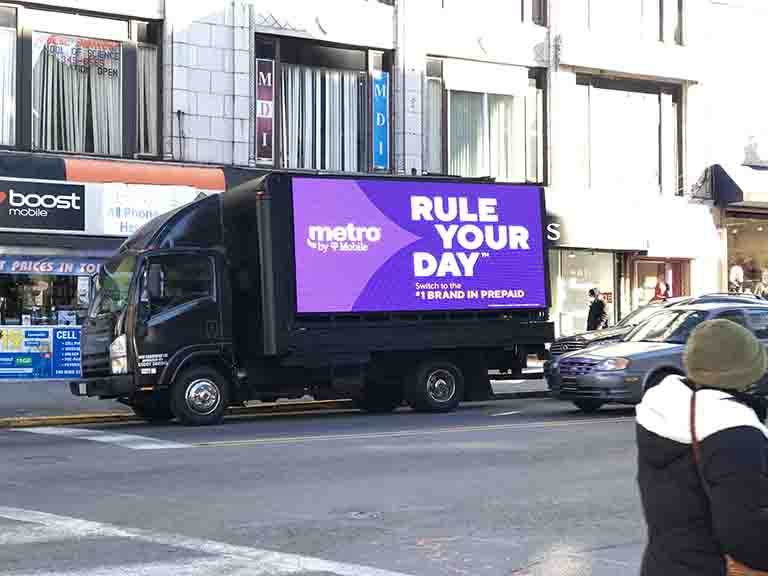
Led Billboard Trucks
Mobile LED displays that bring your brand to any location, any event.
Fly Posting
Street-level poster saturation across walls, construction sites, and corridors.

Sidewalk Decals
Ground-level branded decals at pedestrian hotspots and event entrances.

Sidewalk Stencils
Creative stencil campaigns that put your brand in the path of pedestrians.