American Guerrilla Marketing
Nationwide Service
Media planning, media buying, billboard advertising, & guerrilla marketing
Guerrilla Projections in New Orleans, LA
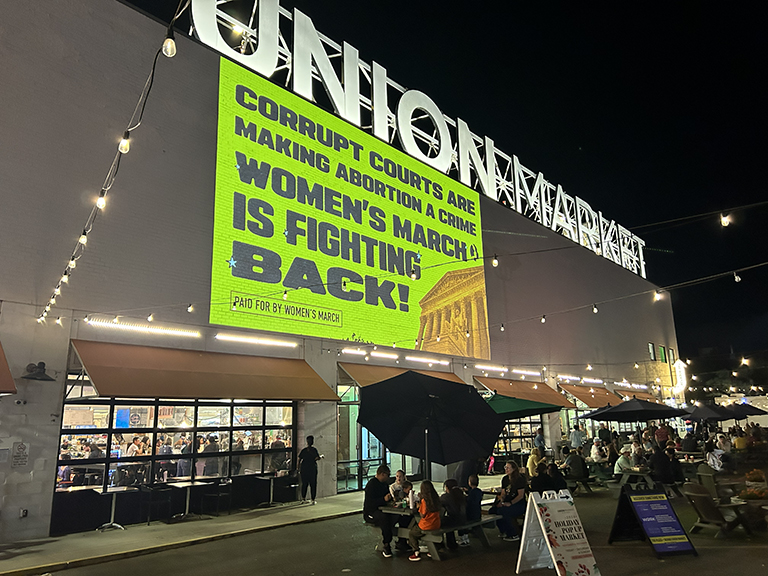
New Orleans is one of the most walkable cities in the American South — with tourism, culture, and nightlife keeping pedestrian density high across multiple neighborhoods every single evening. AGM deploys 20,000-lumen building facade campaigns across the Warehouse Arts District, Frenchmen Street, Bywater, Magazine Street, Tremé, and Mid-City, starting at contact us for a quote.
New Orleans: The South’s Premier Facade Projection Market
No city in Louisiana — and few in the entire American South — offers the combination of wall inventory, foot traffic consistency, and cultural audience density that makes New Orleans the most productive outdoor projection market in the region. The city’s physical structure is fundamentally pedestrian. Neighborhood after neighborhood is built at human scale, with streets narrow enough that a projected image on a building facade fills an entire field of vision from the opposite sidewalk. The architecture is old enough that warehouse-era building stock — the largest, blankest walls available anywhere in the city — sits in the same blocks as restaurants, music venues, and galleries that generate consistent foot traffic every evening of the week.
New Orleans tourism does not follow a simple peak-and-valley seasonal pattern. The city draws visitors across the entire calendar: Mardi Gras season in late winter, Jazz Fest in late April and early May, Essence Fest in early July, Tales of the Cocktail and Southern Decadence in summer, Voodoo Fest in the fall, and a dense secondary calendar of food festivals, literary events, and music weekends that fills in the gaps between major events. The practical consequence for building facade campaigns is that there is no genuinely off-season in New Orleans — the baseline foot traffic in entertainment districts like Frenchmen Street and the Warehouse Arts District remains high even between event peaks because the city’s own residential community sustains nighttime activity at levels that most cities only reach during special events.
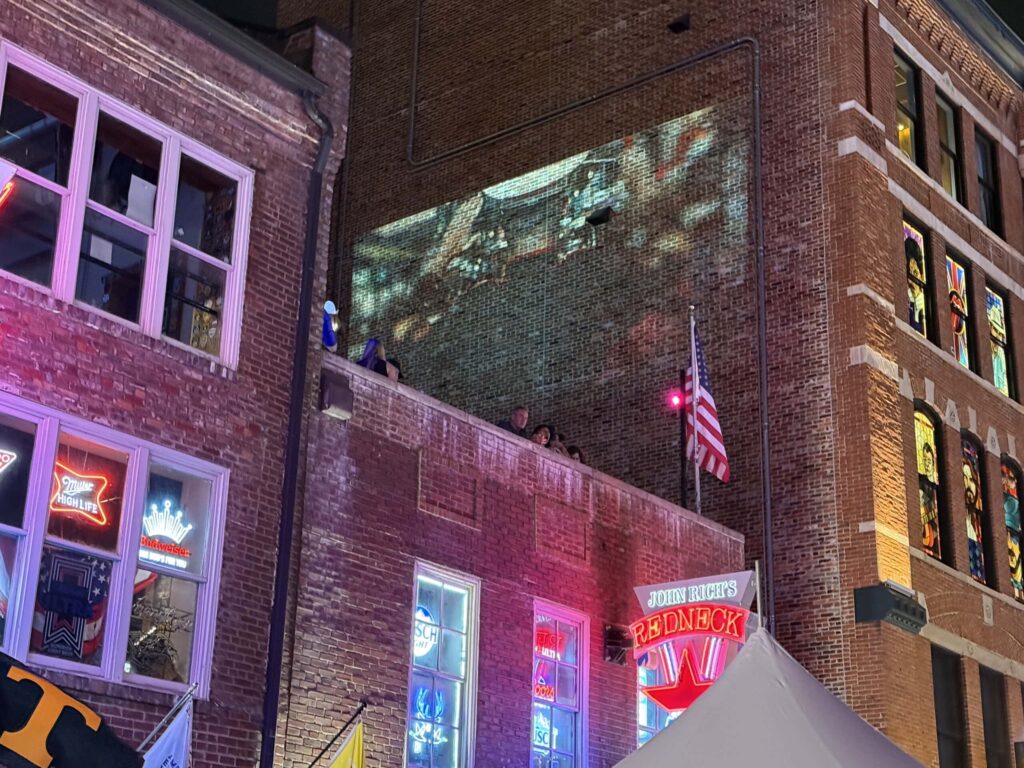
AGM’s reference campaign for the New Orleans market context is the US Marine Corps activation at CMA Fest in Nashville — a large-scale institutional projection campaign executed on multi-story building facades along the entertainment corridor during one of the country’s largest music festivals, reaching tens of thousands of event attendees with high-impact imagery at scale. New Orleans replicates those conditions with particular fidelity because it is, at its core, a festival and entertainment city that never fully returns to a non-festival baseline. The Frenchmen Street corridor on any Saturday night rivals the foot traffic density of a major festival weekend in most other American cities. The Warehouse Arts District during Jazz Fest week functions as one of the most concentrated pedestrian environments anywhere in the South.
AGM brings to New Orleans campaigns the national scouting capability, direct technical crew, and GPS-documented location analysis that distinguishes its work from ad-hoc local vendors. The team has operated in entertainment corridor environments with the logistical complexity of a major event city before — and New Orleans, with its particular mix of narrow streets, variable ambient light, and dense architectural context, rewards the kind of pre-campaign scouting rigor that AGM builds into every activation.
Activate on New Orleans' Most Iconic Building Facades
AGM deploys 20,000-lumen building projection advertising across the Warehouse Arts District, Frenchmen Street, Bywater, Magazine Street, Tremé, and Mid-City New Orleans. Direct technical crew, GPS-documented location analysis, full post-campaign documentation — starting at contact us for a quote.
Browse Cities in Louisiana
Select a city to explore Guerrilla Projections opportunities.
New Orleans Projection Zones: Wall Inventory By Neighborhood
New Orleans has more viable projection walls per square mile than any other Louisiana market. The following zones represent the city’s primary activation opportunities, each with distinct audience composition and building surface characteristics.
Warehouse Arts District — Primary Market
The Warehouse Arts District is AGM’s top New Orleans projection zone by a significant margin. The neighborhood’s building stock is a direct legacy of the city’s nineteenth-century commercial and industrial economy — multi-story brick and concrete structures with exterior wall sections that in many cases span an entire city block. These walls are large, relatively smooth, and light in color — ideal projection surfaces for a 20,000-lumen commercial system. The district now houses galleries, event venues, hotels, and creative offices that draw foot traffic on evening and weekend schedules. During Jazz Fest week, the Warehouse Arts District becomes one of the most concentrated pedestrian environments in the city. The New Orleans Museum of Art, the Contemporary Arts Center, and the surrounding gallery network sustain a culturally active audience in this neighborhood year-round.
Frenchmen Street Entertainment Corridor
Frenchmen Street in the Marigny neighborhood is New Orleans’ living room for nightly live music. The street draws a mix of locals and tourists every evening, with foot traffic peaking on Thursday through Sunday nights and during festival weekends. Buildings along and adjacent to Frenchmen Street include a mix of Creole townhouses, commercial structures, and larger warehouse-adjacent buildings in the blocks just off the main entertainment strip. Projection campaigns in this zone reach an audience that has specifically chosen to spend the evening in a live-music, community-experience environment — a psychological state that makes experiential media more impactful than passive outdoor advertising placements. This is one of the few entertainment corridors in the South that generates meaningful foot traffic without a scheduled event as the catalyst.
Magazine Street Arts Zone
Magazine Street runs through several miles of Uptown New Orleans and passes through a commercial and arts corridor that serves a predominantly local, professionally employed demographic. The audience on Magazine Street skews toward residents of Uptown, the Garden District, and adjacent neighborhoods — a more settled, income-established demographic than the tourist-heavy zones near the French Quarter. Building facades along the commercial sections of Magazine Street include painted brick and stucco exterior walls on commercial structures that provide viable projection surfaces. Campaigns targeting the Uptown New Orleans resident demographic — rather than the tourism-driven audience of the entertainment districts — find Magazine Street a useful zone for reaching that more locally rooted consumer segment.
Bywater Arts District
Bywater occupies the stretch of river-adjacent New Orleans between the Marigny and the Lower Ninth Ward — a neighborhood with a strong arts community identity, significant creative-class resident population, and industrial building stock that includes some of the largest blank wall surfaces in the city. The audience in Bywater is younger, more arts-engaged, and more locally rooted than the French Quarter tourist corridor. Large warehouse and industrial buildings in Bywater offer projection surfaces that can accommodate image dimensions significantly larger than what is achievable in the denser architectural fabric of the Warehouse Arts District or the Marigny. For campaigns requiring maximum image scale on genuinely massive exterior walls, Bywater’s industrial blocks are the strongest option in the New Orleans market.
Tremé — Historic Community Walls
Tremé is one of the oldest African American neighborhoods in the United States and carries deep cultural significance as the birthplace of jazz and a living center of New Orleans Black cultural life. Building surfaces in Tremé include a range of historic structures with exterior walls suited for projection. Campaigns specifically seeking to engage with the Tremé community — advocacy organizations, cultural institutions, community-centered brands — will find projection advertising here a meaningful way to be present in a neighborhood where the community’s relationship to public space and cultural expression runs particularly deep. AGM’s advance scouting in Tremé pays particular attention to ensuring that campaign placements are appropriate to the neighborhood’s character and community context.
Mid-City Commercial Corridor
Mid-City New Orleans is a neighborhood in transition — a residential-commercial zone with a growing restaurant and bar scene, a significant local population, and building stock that includes a range of commercial structures with exterior walls accessible for projection campaigns. The audience in Mid-City is predominantly local residents rather than tourists, which distinguishes it from the French Quarter-adjacent zones. Brands seeking to reach New Orleans residents specifically — rather than the tourist overlay present in most entertainment district campaigns — will find Mid-City a useful zone for accessing the residential demographic that lives and spends money in this part of the city.
Projection Campaign Formats For New Orleans
The format choices for a New Orleans projection campaign are shaped by the city’s specific audience conditions: high ambient foot traffic, a strong entertainment culture, significant tourism overlay, and a local creative and arts community that has high visual literacy and specific aesthetic sensibilities.
Festival & Event Week Campaigns
Large-format building projections timed to New Orleans’ major event calendar — Jazz Fest, Essence Fest, Voodoo Fest, Mardi Gras season. AGM’s US Marine Corps projection at CMA Fest in Nashville directly parallels this format: large-scale institutional imagery on entertainment corridor building facades during a high-attendance music event. New Orleans event weeks consistently deliver the highest ambient pedestrian density of any campaign window in the city.
Music & Entertainment Industry Releases
Artist portraiture, album and streaming release imagery, concert promotion, and film debut campaigns projected in the Warehouse Arts District and Frenchmen Street entertainment corridor. New Orleans is a globally recognized music capital, and the entertainment industry community — both local and visiting — treats the city as a meaningful market for music and arts releases. A projection campaign in this city’s entertainment zones reaches an audience with genuine cultural stakes in music and the arts.
Multi-Story Facade Projections
The Warehouse Arts District and Bywater’s industrial blocks provide building surfaces large enough to accommodate genuinely multi-story projection imagery — 50 to 80-plus feet of facade filled from the 20,000-lumen system at appropriate throw distance. For brands or campaigns where the visual scale of the activation is itself part of the message, these zones allow for projection dimensions that are simply not achievable in tighter urban contexts.
Nightlife & Consumer Brand Campaigns
Consumer-facing brand advertising, product launches, spirits and beverage campaigns, lifestyle brand activations, and hospitality marketing deployed in New Orleans’ concentrated entertainment corridors. The city’s nightlife audience is genuinely diverse in age, origin, and cultural background — spanning local professionals, domestic tourists, and international visitors who all occupy the same walkable blocks simultaneously. Few American cities offer this audience range in a single compact geography.
Advocacy & Cause-Driven Projections
Social movement messaging, nonprofit awareness campaigns, and cause-driven brand activations deployed in New Orleans’ most visible public corridors. The city has a strong tradition of public expression — parades, street performance, second-line culture — that gives outdoor messaging in shared public space a particular resonance. Advocacy campaigns and cause-driven organizations find New Orleans audiences responsive to bold, direct messaging in the same public corridors where cultural expression has always been most alive.
Mardi Gras Season Activations
Building facade campaigns executed during Mardi Gras season — the extended period from Twelfth Night through Fat Tuesday when New Orleans concentrates massive foot traffic in exactly the walkable corridors where projection campaigns perform best. Advance planning of 6–8 weeks is essential for Mardi Gras activations given the logistical complexity of the city during the season. Multi-night runs across Mardi Gras parade weekends and the final days of carnival season produce some of the highest-reach campaign windows available in any southern city.
Plan Your Guerrilla Projection Campaign in New Orleans, LA
Tell us about your campaign goals, target audience, and preferred locations. Our team will help you plan a high-impact guerrilla projection campaign tailored to your needs.
Award Winning Personalized Service
You will get thoughtful, devoted, and individualized attention from our experienced, qualified, and professional personnel. Being one of the most illustrious agencies in Brooklyn, New York, American Guerrilla Marketing has been awarded the Best of Brooklyn title.
Nationwide
Industry City, Brooklyn, New York 11232
American Guerrilla Marketing
Hours
Mon - Fri: 9 AM - 5 PM
Sat & Sun: Closed
Automate your campaign with AGM’s Request for Proposal Builder.
Automate your campaign with AGM’s Request for Proposal Builder. Simply answer a few quick questions about your campaign goals, markets, and timeline, and the system will generate a tailored presentation with recommended strategies, quantities, and pricing. Click the RFP Builder to instantly receive your customized proposal.
How AGM Runs Projection Campaigns in New Orleans
New Orleans presents specific operational factors that AGM’s process is built to manage. The city’s narrow streets affect throw distances and angle geometry. The ambient light environment varies sharply between neighborhoods — the Frenchmen Street corridor is bright with venue lighting, while Bywater’s industrial blocks may have significantly lower ambient light levels that require different exposure calibration. The logistical complexity of moving equipment through French Quarter-adjacent zones during peak event periods requires advance route planning. AGM addresses each of these factors as part of the standard pre-campaign process.
Neighborhood-Specific Reconnaissance
Before a New Orleans campaign is confirmed, AGM’s scouting team walks the target neighborhoods at the specific times of evening the campaign will run. This produces documentation of ambient light conditions, pedestrian traffic patterns, sightline geometry from the sidewalk and street positions where the audience will stand, and surface quality assessments for candidate walls. In a city with New Orleans’ architectural diversity — from the large masonry facades of the Warehouse District to the smaller-scale wooden and stucco structures of the Marigny — advance surface assessment is essential because visual inspection from a distance does not reliably predict projection performance.
Image Optimization for New Orleans Architecture
Projection imagery calibrated for New Orleans’ specific building surfaces — primarily aged brick, painted stucco, and concrete — needs different color and contrast settings than imagery optimized for modern smooth concrete or painted cinderblock. AGM’s creative review process adjusts client-submitted assets for the specific surface characteristics of the confirmed campaign wall. This pre-campaign optimization step prevents the scenario where a brand’s carefully developed creative looks washed out, distorted, or misaligned on the actual building facade on activation night.
Deployment and On-Site Management
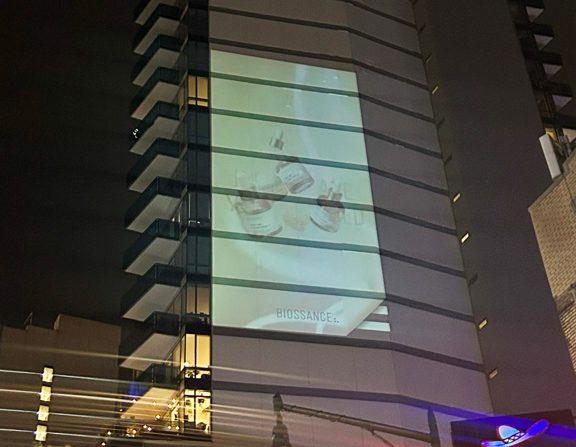
AGM’s direct two-person technical crew manages every aspect of the New Orleans activation night: system transport and positioning, generator deployment and power management, image alignment on the target wall, operation throughout the projection window, and complete breakdown at the end of the campaign. The crew is AGM’s own staff — Best of Brooklyn award-winning organization with campaigns for clients including The Weeknd, the US Marine Corps, Women’s March, Biossance, Reproductive Freedom for All, and YouTube. That institutional depth is what distinguishes AGM’s New Orleans activations from ad-hoc local projection vendors operating without the same organizational infrastructure.
AGM’s projection client roster includes Netflix, Disney, Coca-Cola, FanDuel, Live Nation, iHeartRadio, and the US Marine Corps. A confirmed case study: the US Marine Corps × CMA Fest Nashville — multi-night projections onto architectural surfaces throughout the festival footprint, reaching 80,000+ attendees across the campaign window. Projection advertising scales across every brand category; what our campaigns share is scale, precision, and a physical presence digital cannot replicate.
Documentation Delivered Post-Campaign
Every New Orleans campaign concludes with a documentation package: on-site photography capturing the projected image in its architectural and neighborhood context, GPS-documented location records for each activation site, and campaign duration logs. This material supports client press outreach, social content production, and internal campaign reporting. In a city as photographically active as New Orleans, high-quality post-campaign imagery also serves as evidence of activation for clients reporting to internal stakeholders who were not present on campaign night.
New Orleans Projection Advertising Rates
Building facade projection campaigns in New Orleans are priced at contact us for a quote. This is an all-in rate — the 20,000-lumen commercial projection system, generator and full power solution, complete electronics bundle, mobility unit, two-person technical crew, and all setup, operation, and post-campaign breakdown are included.
Campaign windows open at dusk and run approximately 4 to 6 hours through the night. Multi-night campaigns are available across all New Orleans neighborhoods and are commonly used for Mardi Gras season activations, Jazz Fest week campaigns, and entertainment releases timed to generate sustained presence across multiple consecutive evenings in the entertainment district.
Advance location scouting for New Orleans, engaged as a standalone service before the campaign booking is confirmed, is approximately contact us for a quote. Permitted or private-property placements — where AGM negotiates direct access with a building owner for a secured premium location — range from Contact us for a custom quote. per night depending on the specific property and arrangement.
Who Deploys Projection Advertising in New Orleans
The entertainment industry is the dominant user of building facade campaigns in New Orleans — music labels, streaming platforms, film studios, touring artists, and live event promoters who recognize New Orleans as a city where the cultural conversation about music and arts is always active. A streaming release projected in the Warehouse Arts District during Jazz Fest week reaches an audience that includes journalists, music industry professionals, international fans, and local music community members simultaneously — a media opportunity that does not exist in most other American cities.
Consumer brands — spirits and beverage companies in particular — find New Orleans’ entertainment corridors productive for brand-building campaigns given the city’s association with hospitality and nightlife culture. Lifestyle brands, fashion labels, and personal care brands have all used outdoor projection advertising in New Orleans to establish cultural credentials in a city that functions as a significant arbiter of taste and trend for the broader American South.
Social movement organizations and advocacy groups use New Orleans projection campaigns for the same fundamental reason they are effective everywhere: the message appears at full building scale in the public space where the intended audience already gathers, and it cannot be avoided, skipped, or scrolled past. In a city with New Orleans’ tradition of public cultural expression, bold advocacy messaging in shared public corridors carries particular weight. Nonprofit organizations serving New Orleans communities and regional advocacy groups have used building facade campaigns to reach the concentrated pedestrian audience of the entertainment district with messaging that otherwise competes against significant ambient noise in digital channels.
Coverage & Estimated Impressions
| Zone / Area | Peak Hours | Foot Traffic | Est. Nightly Impressions | Best For |
|---|---|---|---|---|
| Warehouse Arts District | 9PM–2AM | Very High | 25,000–120,000 | Product Launch |
| Frenchmen Street Entertainment Corridor | 9PM–2AM | Very High | 25,000–120,000 | Event Promotion |
| Magazine Street Arts Zone | 9PM–2AM | Very High | 25,000–120,000 | Brand Awareness |
| Bywater Arts District | 9PM–2AM | Very High | 25,000–120,000 | Political |
| Tremé | 9PM–2AM | Very High | 25,000–120,000 | Sports |
| Mid-City Commercial Corridor | 9PM–2AM | Very High | 25,000–120,000 | Concert/Festival |
Frequently Asked Questions — Building Projection Advertising in New Orleans
Jazz Fest week (late April to early May) and Mardi Gras season (late January through Fat Tuesday) represent the two periods of absolute peak foot traffic in New Orleans’ walkable entertainment corridors. Essence Fest in early July, Voodoo Fest in October, and Tales of the Cocktail in summer are secondary peaks. Outside these event windows, Frenchmen Street and the Warehouse Arts District maintain foot traffic levels that rival event-season periods in most other American cities — New Orleans’ baseline is simply higher than comparable markets, which means there is no genuinely bad window for facade projection campaigns here.
The Warehouse Arts District has the best overall wall inventory in New Orleans — multi-story masonry and concrete building facades with minimal window interruption, strong surface area, and light base colors that maximize projected image brightness. Bywater’s industrial blocks offer even larger wall dimensions for campaigns requiring maximum image scale. The Marigny neighborhood, adjacent to Frenchmen Street, has a mix of surfaces — some well-suited, others less so — which is why advance scouting in that zone is particularly valuable. AGM’s team assesses candidate walls for surface texture, color, area, and ambient light environment before confirming any location.
The Warehouse Arts District offers superior wall inventory — larger surfaces, better texture, and more consistent ambient light conditions that favor projection visibility. Frenchmen Street delivers a more entertainment-corridor audience character — the people walking Frenchmen at 10 p.m. on a Saturday are explicitly there for nightlife and cultural experience, which is a strong psychological context for experiential outdoor media. The two zones are not mutually exclusive; a multi-night campaign can activate in both neighborhoods to combine the Warehouse District’s superior projection scale with Frenchmen Street’s high-density entertainment audience. AGM can advise on the optimal zone sequencing based on specific campaign objectives.
Yes — and Mardi Gras season is one of the most powerful windows for outdoor projection advertising in New Orleans given the extraordinary concentration of foot traffic in the walkable corridors where facade campaigns perform. Logistical complexity is high during Mardi Gras given parade routes, crowd management, and the volume of activity throughout the city. Early planning — 6 to 8 weeks minimum before the target campaign dates — is essential for Mardi Gras activations, and AGM recommends initiating conversations as early as possible for carnival season bookings to secure optimal locations and crew scheduling.
The tourism overlay in New Orleans is a meaningful campaign amplifier for brands with international reach objectives. Visitors from across the United States and from international markets — particularly Europe, Latin America, and Canada — occupy the same entertainment corridors as the local residential audience. A projection campaign in the Warehouse Arts District or Frenchmen Street corridor reaches this mixed audience simultaneously. For brands with global presence who want Gulf South market activation with international documentation potential, New Orleans is the correct Louisiana market for that objective — the tourism audience creates earned media distribution potential that is simply not present in purely local markets like Shreveport or Lafayette at the same scale.
Bywater works well for projection campaigns where maximum image scale is the primary objective. The neighborhood’s industrial building stock includes wall sections significantly larger than what is available in the denser architectural fabric of the Warehouse Arts District. The audience in Bywater is more locally rooted and arts-forward than the tourist-mixed crowd of the Warehouse District — younger, more creative-class-oriented, and more invested in the arts community identity of the neighborhood. Campaigns targeting the local New Orleans creative and arts community specifically will find Bywater’s demographic character more aligned with that objective than the broader mixed audience of the Warehouse Arts District or Frenchmen Street.
New Orleans audiences have high visual literacy — the city’s tradition of elaborate visual culture, from Mardi Gras costume to jazz funeral brass band aesthetics to gallery arts, creates an audience that is not easily impressed by generic brand advertising at scale. The most effective projection campaigns in New Orleans tend to have strong, confident graphic design — bold color contrasts, clear visual hierarchy, and imagery that communicates a coherent visual idea rather than simply displaying a logo. Creative that engages with the city’s visual culture without reducing it to cliché tends to generate the organic social documentation and positive audience response that amplifies the campaign beyond its physical activation footprint.
Jazz Fest week is one of the optimal windows for entertainment industry building facade campaigns in New Orleans. The festival draws an audience that includes music journalists, industry professionals, international fans, and a massive local music community — a demographic that is specifically receptive to entertainment release campaigns and artist visibility activations. Building facade projections in the Warehouse Arts District and surrounding neighborhoods during Jazz Fest week reach this concentrated music industry and fan audience in public space. Early booking is essential for Jazz Fest week campaigns; contact AGM at least 6–8 weeks before the festival dates.
The French Quarter and immediately adjacent zones have significant ambient light from venue signage, street lighting, and the commercial activity of Bourbon Street and its surroundings. High ambient light reduces projected image contrast and visibility relative to darker industrial zones like Bywater. AGM’s scouting assessment for any French Quarter-adjacent activation accounts for specific ambient light conditions at the exact target location and time of night, and recommends projection surface placements that maximize image visibility given those conditions. Campaigns requiring the highest possible image clarity and contrast are generally routed to the Warehouse Arts District or Bywater rather than the brighter zones immediately adjacent to the French Quarter.
For standard New Orleans campaign dates outside of major event windows, AGM recommends beginning the planning process 3–4 weeks in advance to allow for location scouting, creative review, crew scheduling, and logistics coordination. For campaign dates during Mardi Gras season, Jazz Fest week, Essence Fest, or other high-demand periods, 6–8 weeks of advance planning is the recommended minimum. Rush timeline accommodations may be possible depending on AGM’s schedule; contact directly to discuss availability for compressed timelines.
Tremé has projection-viable wall inventory, though the neighborhood’s building stock is smaller in scale and more varied in surface quality than the Warehouse Arts District. The more significant consideration for Tremé activations is community context — Tremé is a historically significant African American neighborhood with deep cultural roots, and campaign placements here should be evaluated not only for physical surface suitability but for appropriateness to the neighborhood’s community character. AGM’s advance scouting for Tremé activations includes that contextual assessment alongside the standard surface quality evaluation.
Magazine Street campaigns are viable in the commercial corridor sections of the street where building facades with suitable exterior wall surfaces are present. The audience on Magazine Street is predominantly local Uptown New Orleans residents — a more settled, income-established demographic than the tourist and entertainment-oriented crowd of the Warehouse Arts District or Frenchmen Street. Brands specifically targeting the New Orleans resident consumer rather than the tourism overlay will find Magazine Street useful for accessing that local demographic in a commercial context. AGM’s scouting team identifies specific projection-ready walls within the Magazine Street commercial corridor during the advance site assessment process.
More AGM Outdoor Advertising Services
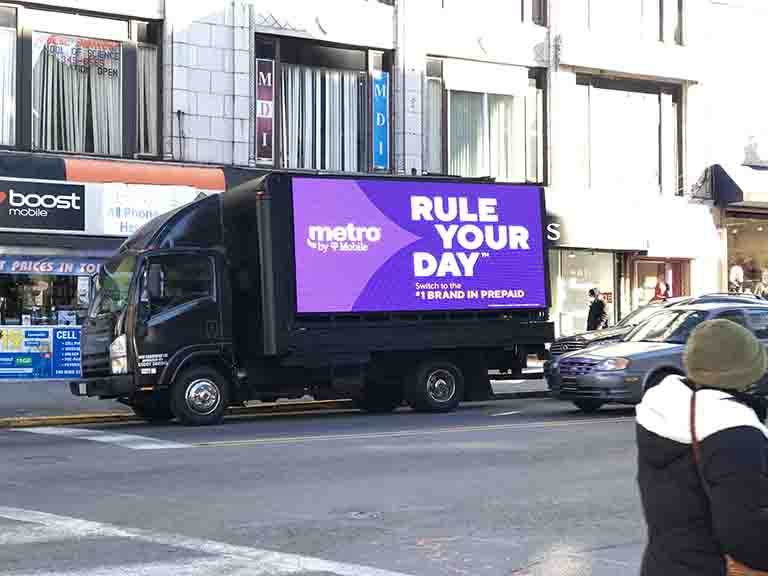
Led Billboard Trucks
Mobile LED displays that bring your brand to any location, any event.
Fly Posting
Street-level poster saturation across walls, construction sites, and corridors.

Sidewalk Decals
Ground-level branded decals at pedestrian hotspots and event entrances.

Sidewalk Stencils
Creative stencil campaigns that put your brand in the path of pedestrians.