🚀 NEW WHEATPASTING MARKETS Discover our wheatpasting campaigns in : 🇬🇧 London • 🇨🇦 Canada • 🇲🇽 Mexico City

American Guerrilla Marketing

Nationwide Service

Media planning, media buying, billboard advertising, & guerrilla marketing

Guerrilla Projections in Chicago, IL

Guerrilla Projections in Chicago, IL

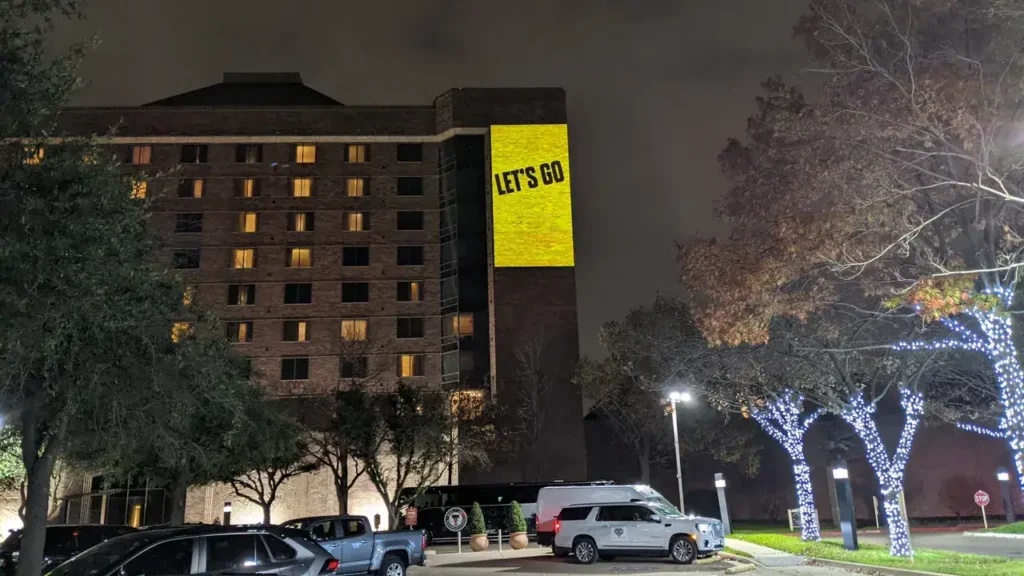
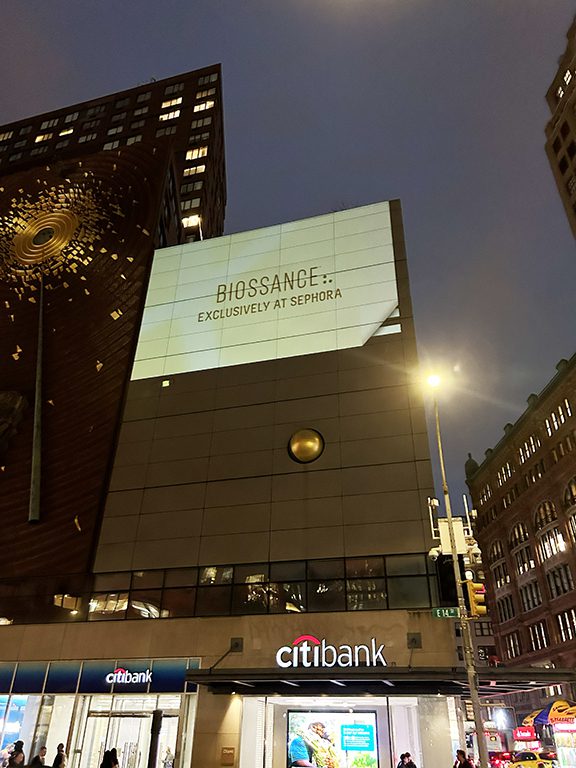
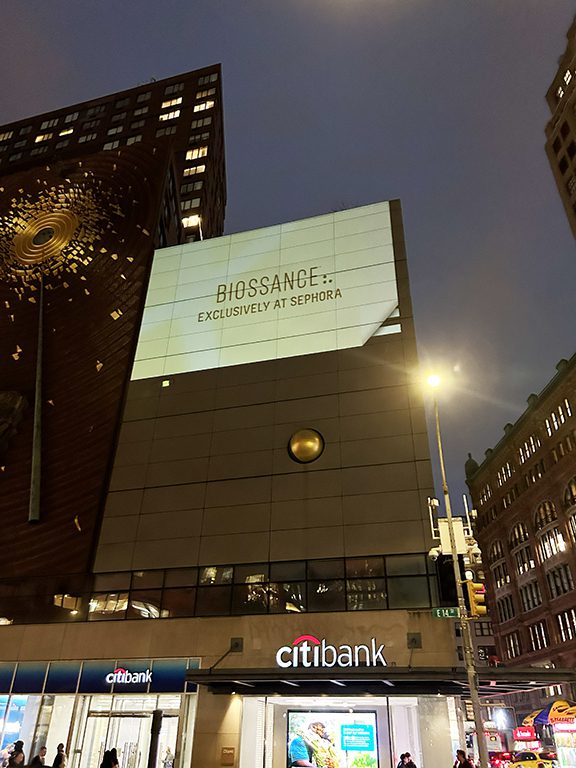
Chicago’s warehouse districts, arts corridors, and nightlife zones contain some of the finest projection surfaces in the country. AGM deploys 20,000-lumen building facade campaigns across Pilsen, the West Loop, Fulton Market, Wicker Park, and Logan Square — where scale, architecture, and audience density collide.

Why Chicago Is One of the Country’s Premier Projection Markets

Chicago earned its projection advertising reputation through architecture. A century of industrial manufacturing left the city with an extraordinary inheritance of warehouse buildings — massive, flat-faced, light-colored masonry structures whose exterior walls were designed to face loading docks and rail lines, not advertisers. But those walls turned out to be exactly what a 20,000-lumen projector needs: large uninterrupted surface area, minimal window coverage, relatively smooth painted exteriors, and positioning in neighborhoods that have since become the city’s densest nighttime entertainment and arts corridors.

AGM’s projection client roster includes Netflix, Disney, Coca-Cola, FanDuel, Live Nation, iHeartRadio, and the US Marine Corps. A confirmed case study: the US Marine Corps × CMA Fest Nashville — multi-night projections onto architectural surfaces throughout the festival footprint, reaching 80,000+ attendees across the campaign window. Projection advertising scales across every brand category; what our campaigns share is scale, precision, and a physical presence digital cannot replicate.

Past AGM projection clients include Coca-Cola, Live Nation, and iHeartRadio, with multi-night campaigns that generated earned media coverage and massive organic social sharing.

The convergence of ideal building stock with high-density nighttime foot traffic is what makes Chicago exceptional. Pilsen’s warehouse faces open directly onto streets and plazas where gallery-goers, restaurant diners, and bar patrons move on foot every evening of the week. The West Loop’s restaurant row concentrates the city’s culinary audience into a six-block stretch where a four-story projection on a Randolph Street warehouse face is visible to thousands of diners stepping in and out of the city’s most-reviewed restaurants. Fulton Market’s conversion from meatpacking to tech-and-restaurant corridor produced a zone where old industrial building faces sit directly adjacent to the highest-income evening foot traffic in the city.

Chicago’s size and district diversity also allow for multi-location, multi-night campaigns that other cities cannot match. A single Chicago projection campaign can run in Pilsen one night and Wicker Park the next — reaching entirely different audience demographics without leaving the same metro area. That flexibility means brands can test creative across multiple Chicago segments in a single campaign cycle, or can deploy the same creative to accumulate impressions across different neighborhood audiences on consecutive nights.

AGM’s national scouting team maintains active wall intelligence across all of Chicago’s major projection zones. We know which Pilsen warehouse faces are currently optimal, which Fulton Market corners have clear sight lines, and which Wicker Park positions deliver the strongest combination of surface quality and audience density. That existing intelligence shortens the path from brief to deployment and ensures Chicago campaigns launch with confidence in their physical execution.

Launch Your Chicago Projection Campaign

AGM deploys 20,000-lumen building facade campaigns across Pilsen, the West Loop, Fulton Market, Wicker Park, Logan Square, and Chicago's arts and entertainment corridors citywide. Tell us your district, your date, and your vision — we'll handle the rest.

Browse Cities in Illinois

Select a city to explore Guerrilla Projections opportunities.

Chicago's Best Projection Districts — Surface Guide

Wall selection determines outcome in Chicago more than any other variable. The city’s districts vary enormously in building type, surface quality, audience density, and timing characteristics. AGM’s team evaluates each candidate wall against the full set of criteria — size, flatness, color, texture, obstruction clearance, throw distance, and viewing angle — before any Chicago campaign is confirmed.

Pilsen Arts District — The Flagship Chicago Projection Zone

Pilsen is the single best guerrilla projection district in Chicago, and among the best in the country. The neighborhood’s concentration of former industrial loft buildings — many four to six stories tall with blank, painted masonry faces covering their full street-facing elevation — provides projection surfaces that would be difficult to find in most American cities. Many Pilsen warehouse faces are white or light cream in color, which reflects the full 20,000-lumen output with outstanding color saturation. The absence of window openings on many of these walls — a legacy of their loading dock function — means the projected image covers an uninterrupted rectangle of surface. The evening pedestrian traffic in Pilsen is dense with gallery visitors, restaurant-goers, and neighborhood residents who spend significant time on the street and document what they see. Campaigns that run during Pilsen gallery nights or adjacent to major cultural programming in the district produce some of the highest organic social documentation rates AGM has measured across all national markets.

West Loop & Fulton Market Warehouse Corridor

The West Loop and Fulton Market corridor combine Chicago’s densest restaurant foot traffic with former industrial building faces that are ideally proportioned for projection advertising. Randolph Street’s restaurant row concentrates a premium demographic — high-income diners, food media, out-of-town visitors staying nearby — in a linear corridor where a warehouse face projection is visible for half a block in both directions. Fulton Market’s converted meatpacking buildings retain their large, flat street-facing exteriors while now drawing a tech-company and restaurant audience that indexes heavily toward social documentation behavior. The surfaces here are a mix of painted masonry and EIFS-clad renovated exteriors, with the best projection walls being the older, heavier masonry faces on the north and south elevations of former warehouse buildings.

Wicker Park & Bucktown Entertainment Corridor

The Milwaukee Avenue corridor through Wicker Park and Bucktown is Chicago’s most active nightlife strip outside of the downtown core. Bar traffic, concert venue foot traffic from Empty Bottle and Subterranean, and the general density of the neighborhood’s evening economy produce consistent audience volumes through late night. The building stock here is more varied than Pilsen — a mix of two-to-four-story commercial facades, flat-roof retail buildings, and occasional former industrial structures. The best projection walls in Wicker Park are the broader commercial building faces with painted masonry and minimal window coverage on upper stories. The entertainment-engaged audience in this corridor responds well to music-adjacent and brand-cultural projection creative.

Logan Square Arts District

Logan Square has emerged as Chicago’s fastest-growing arts district and carries a nighttime audience that is demographically younger, more culturally engaged, and more active on social media than almost any other Chicago neighborhood. The boulevard system and commercial corridors around the Logan Square monument and along Milwaukee Avenue host a mix of independent restaurants, cocktail bars, and gallery spaces that collectively draw an evening crowd with strong social documentation behavior. The building faces in Logan Square’s commercial core include flat-front masonry structures with painted facades — several of which offer excellent projection surfaces on their secondary elevations or side walls facing open lots. The cultural credibility of a Logan Square projection placement, to the neighborhood’s audience, signals that a brand understands Chicago culture at a level that resonates.

Bridgeport Arts Area

Bridgeport’s arts corridor carries a more concentrated, neighborhood-specific audience than the higher-profile Chicago districts — which makes it exceptionally effective for campaigns that want to reach a specific community with high per-person impression depth rather than maximum total volume. The former industrial and commercial building stock along Halsted Street and the surrounding blocks includes several large, flat masonry faces that are among the cleanest projection surfaces in the city. A campaign in Bridgeport’s arts zone that runs simultaneously with a gallery opening or neighborhood event can achieve audience engagement rates that rival Chicago’s higher-foot-traffic districts because the audience is concentrated, present, and highly engaged with the physical environment around them.


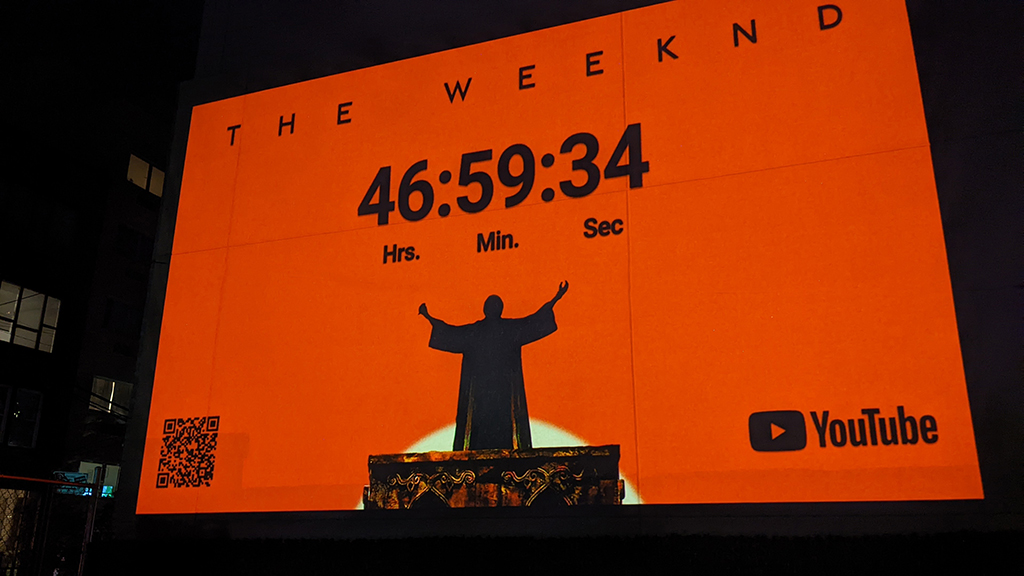
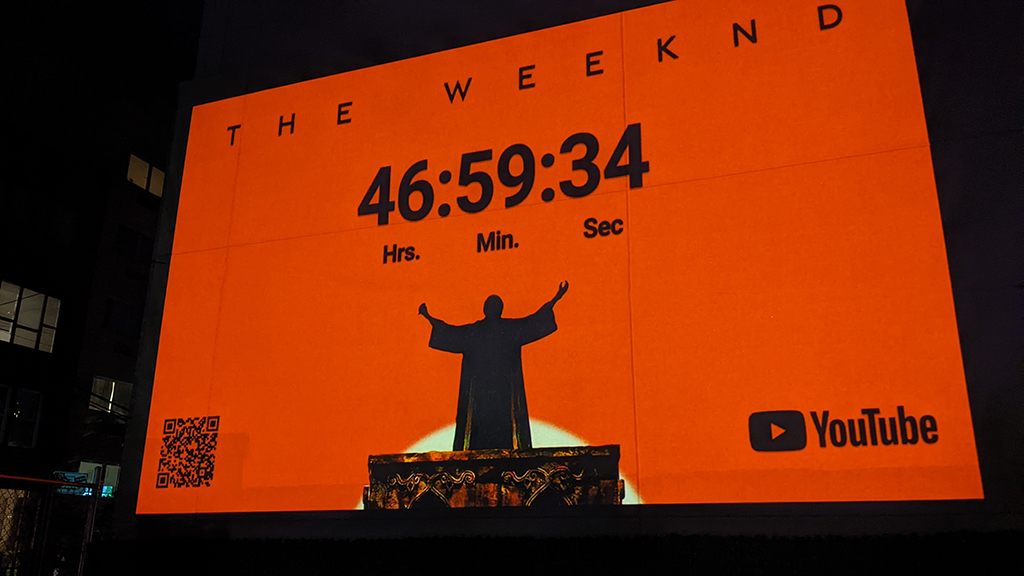
Case Study: The Weeknd × Youtube — Entertainment Release Campaign, New York City

The campaign AGM executed for The Weeknd in partnership with YouTube demonstrated the full potential of building facade projection for music and entertainment releases in major urban markets. The activation needed to create cultural momentum ahead of a significant release window in a city where every major entertainment brand competes for street-level attention. The solution was a set of building-scale projections in high-foot-traffic nightlife and entertainment corridors — surfaces chosen specifically for their ability to produce a spectacle that registered as an event rather than an advertisement.

For Chicago brands and entertainment properties, this campaign is directly instructive. Chicago is one of the country’s most music-engaged cities — the birthplace of house music, a major touring market, and home to a nightlife culture that treats concert-going as a weekly practice rather than an occasional event. A projection campaign in Pilsen or Wicker Park that ties to a major music release, a streaming platform launch, or a touring artist’s Chicago date reaches an audience that is already primed to engage with music-cultural content and already in the street environment where projection advertising operates. The scale advantage of a Chicago warehouse face — the ability to project at 40 to 60 feet — creates the same spectacle dynamic that drove social documentation and earned media for the Weeknd campaign, applied to one of the country’s most music-literate urban audiences.

Plan Your Guerrilla Projection Campaign in Chicago, IL

Tell us about your campaign goals, target audience, and preferred locations. Our team will help you plan a high-impact guerrilla projection campaign tailored to your needs.

    Award Winning Personalized Service

    You will get thoughtful, devoted, and individualized attention from our experienced, qualified, and professional personnel. Being one of the most illustrious agencies in Brooklyn, New York, American Guerrilla Marketing has been awarded the Best of Brooklyn title.

    Nationwide

    Industry City, Brooklyn, New York 11232

    American Guerrilla Marketing

    +1 (646) 776-2770

    [email protected]

    Telegram: @americanguerillamarketing

    Hours

    Mon - Fri: 9 AM - 5 PM

    Sat & Sun: Closed

    Automate your campaign with AGM’s Request for Proposal Builder.

    Automate your campaign with AGM’s Request for Proposal Builder. Simply answer a few quick questions about your campaign goals, markets, and timeline, and the system will generate a tailored presentation with recommended strategies, quantities, and pricing. Click the RFP Builder to instantly receive your customized proposal.

    Creative Formats That Work in Chicago

    Music & Entertainment Releases

    Chicago’s entertainment-engaged audience and high density of nightlife corridors make it a top-tier market for album drops, streaming launches, film premieres, and touring concert promotions. Projection campaigns timed to release dates and deployed in Pilsen or Wicker Park generate organic social documentation from audiences who are already in a cultural discovery mindset.

    Consumer Brand Launches

    Consumer goods, technology, and lifestyle brands entering or refreshing their Chicago market position use building facade projection to establish street-level credibility. A 40-foot brand image in the West Loop restaurant corridor reaches the premium demographic that drives Chicago’s consumer goods market — high-income urban consumers who make decisions based on brand cultural relevance as much as product quality.

    Advocacy & Political Campaigns

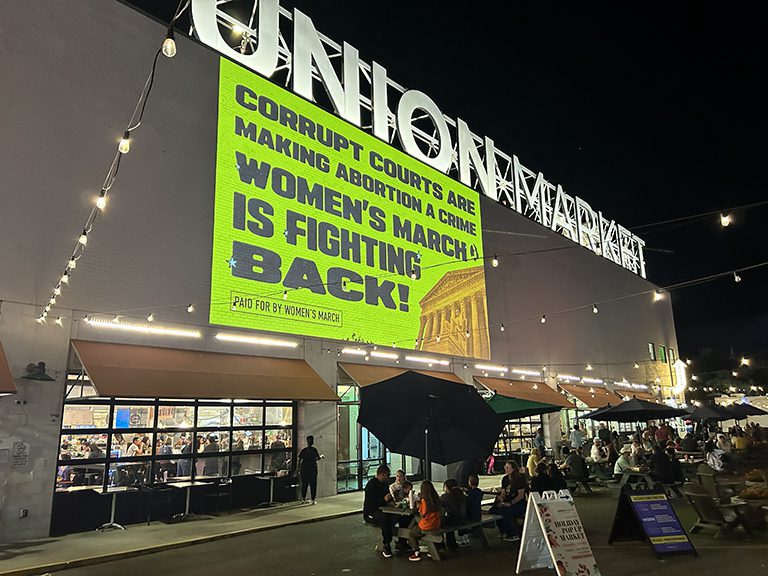
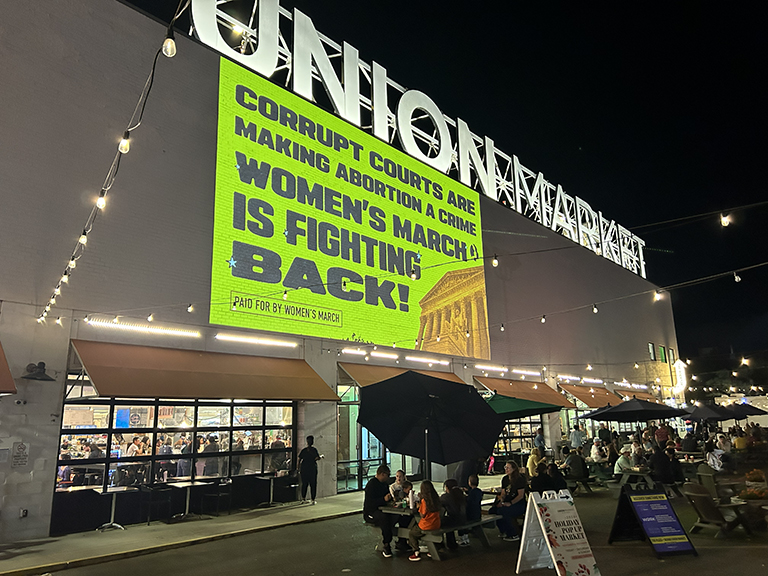
    Chicago’s politically engaged population and concentration of progressive urban voters make it one of the strongest advocacy projection markets in the Midwest. Campaigns reaching Chicago audiences in Logan Square, Pilsen, and Wicker Park connect with voters who are active participants in civic and political discourse — and who share advocacy messaging at high rates when it appears in a visually compelling format.

    Experiential Brand Moments

    Brands building cultural moments around Chicago events — music festivals, food and wine events, sports championships, and gallery walks — use projection advertising to tie the brand to the city’s peak cultural energy. A projection campaign deployed during Chicago’s major event windows reaches a city already in celebration mode, primed for social sharing and highly receptive to culturally aligned brand messaging.

    The Chicago Campaign Process

    AGM’s Chicago campaign process begins with wall intelligence. Because our team maintains ongoing familiarity with Chicago’s major projection districts, the wall selection phase for Chicago campaigns is faster and more precise than in markets we’re entering fresh. Candidate walls are evaluated for the current state of their surface — paint condition, obstruction changes, seasonal vegetation coverage — and confirmed against the campaign’s creative dimensions and throw distance requirements before any campaign date is locked.

    Creative preparation for a Chicago campaign accounts for the specific wall dimensions of the selected surface. Pilsen’s warehouse faces often have significant height-to-width ratios that differ from the broader, lower Wicker Park commercial facades — files are calibrated to the specific surface rather than produced to a generic template. AGM’s technical team handles all calibration in coordination with the brand’s creative team, ensuring the delivered image on the wall matches the creative intent without geometric distortion.

    Logistics in Chicago require precise timing coordination given the density of pedestrian and vehicle traffic in all major projection districts. AGM’s crew — direct AGM technicians with deep Chicago market experience — manages equipment transport, setup, projection operation, and breakdown with the efficiency that comes from repeated deployments in the same corridors. Post-campaign documentation for Chicago campaigns includes photography and video captured from multiple audience vantage points, GPS location data, and a comprehensive reporting package for client brand review and earned media use.

    Chicago Projection Campaign Pricing

    Projection advertising campaigns in Chicago are priced at contact us for a quote. This covers the complete 20,000-lumen system — projector, generator, power solution, electronics, and mobility unit — along with AGM’s two-person technical crew for the full operation window from setup through breakdown. Chicago’s nighttime entertainment calendar means campaigns run from dusk through a four-to-six-hour active window, with multi-night options available.

    Multi-district Chicago campaigns — running in Pilsen one night and the West Loop the next, for example — are a common and efficient configuration. Advance location scouting for Chicago campaigns runs approximately Contact us for a custom quote. when a dedicated scouting visit is required, though AGM’s existing Chicago wall intelligence often reduces this cost for standard district placements. Permitted or private-property Chicago locations carry additional costs from Contact us for a custom quote. per night.

    Brands That Use Chicago Projection Advertising

    Chicago’s projection advertising client base spans entertainment, consumer goods, technology, advocacy, and sports. Record labels and streaming platforms use Chicago to reach the music-engaged urban consumer at scale. Consumer goods brands — beauty, food and beverage, fashion, and lifestyle — use Chicago’s premium-demographic restaurant and retail corridors for product launches that need to feel like cultural moments. Tech brands opening Chicago offices and startups launching into the Midwest consumer market use projection advertising to establish visual presence in a city where street-level credibility matters. Advocacy organizations and political campaigns run Chicago projections to reach the high-density progressive urban voter base across the city’s most politically engaged neighborhoods. Sports brands, fitness companies, and Chicago-team-affiliated sponsors tie campaigns to the city’s deep sports culture during championship pushes and major event moments.

    Coverage & Estimated Impressions

    Zone / Area Peak Hours Foot Traffic Est. Nightly Impressions Best For
    Pilsen Arts District 9PM–2AM Very High 25,000–120,000 Product Launch
    West Loop & Fulton Market Warehouse Corridor 9PM–2AM Very High 25,000–120,000 Event Promotion
    Wicker Park & Bucktown Entertainment Corridor 9PM–2AM Very High 25,000–120,000 Brand Awareness
    Logan Square Arts District 9PM–2AM Very High 25,000–120,000 Political
    Bridgeport Arts Area 9PM–2AM Very High 25,000–120,000 Sports


    Frequently Asked Questions — Guerrilla Projections in Chicago, IL

    Chicago’s former industrial warehouse buildings were constructed with large, flat, uninterrupted exterior faces — no windows on loading dock elevations, smooth painted masonry, and two-to-six-story heights that produce the scale necessary for building-facade impact. These buildings were built for manufacturing, not office use, which means their street-facing walls are blank canvases. Pilsen and Fulton Market contain the highest concentration of these surfaces in the city, making them the country’s premier industrial-district projection zones.

    Pilsen offers larger building surfaces — four-to-six-story warehouse faces with minimal windows — and an arts-engaged audience that tends to pause and document. Wicker Park offers higher absolute nightlife volume — more total foot traffic, especially late-night bar and venue crowds — with more varied building surfaces that require more selective scouting. Pilsen is the choice for maximum surface quality and arts-demographic precision; Wicker Park is the choice for entertainment-audience volume and music-adjacent cultural positioning. Many Chicago brands use both districts across a multi-night campaign to combine the two advantages.

    A single projection unit operates at one location per night — the system is mobile but requires a setup and calibration window that makes same-night relocation impractical for a complete second activation. Multi-location Chicago campaigns are structured as multi-night deployments, with the same equipment repositioning to a second district on the following night. Brands that want to reach both the Pilsen and West Loop audiences, for example, run a two-night Chicago campaign covering one district per night.

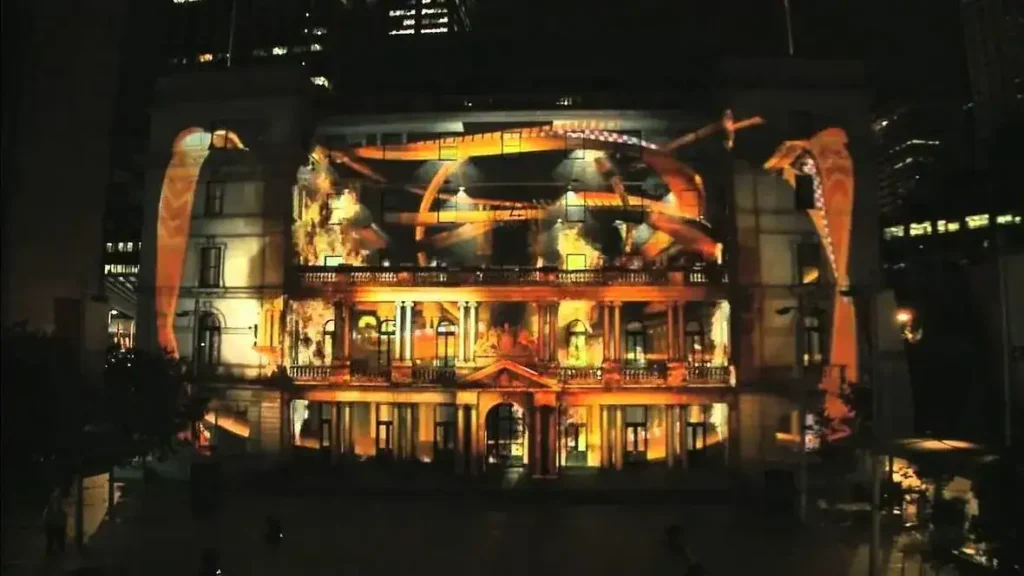
    Projection mapping involves calibrating a projection to precisely fit the three-dimensional contours of a specific structure — often a historic building or sculptural object — using software that accounts for corners, angles, and architectural details. Guerrilla projections are flat-surface deployments on blank building facades that project a conventional image at large scale without 3D contour mapping. Guerrilla projections are faster to deploy, less expensive, and more flexible in location. Most building facade advertising campaigns in Chicago use the guerrilla projection approach rather than full projection mapping.

    Most guerrilla projection placements in Chicago operate from public space using mobile equipment, which typically does not require a permit because no surface is physically modified and no equipment is permanently installed. The projection light itself is not regulated as a sign installation in most Chicago neighborhood contexts. For campaigns requiring access to private property, rooftop positions, or extended operations in specific permit-required zones, AGM’s team identifies and addresses the relevant requirements as part of the pre-campaign logistics process.

    AGM’s 20,000-lumen commercial system is sufficient to project effectively on medium-tone brick and darker painted masonry facades under nighttime conditions. Dark brick absorbs more light than light-painted concrete or stucco, which reduces maximum brightness and color saturation. For very dark Chicago building faces, AGM’s scouts prioritize selecting surfaces that are painted or have a lighter masonry tone. When a specific campaign requires a darker-surface wall for strategic reasons, the creative file is adjusted with higher contrast and saturation to compensate for the absorption factor.

    Pilsen’s foot traffic peaks on Friday and Saturday evenings and during scheduled gallery walk events. West Loop traffic peaks Thursday through Saturday with restaurant-driven crowds concentrated between 6pm and 11pm. Logan Square’s audience is more evenly distributed across Thursday through Sunday and extends later into the night. Wicker Park runs hottest on Friday and Saturday from 9pm through 2am with bar and venue crowds. Timing a Chicago projection to the peak window of the selected district’s traffic pattern significantly amplifies audience exposure relative to an off-peak deployment in the same location.

    Yes, and this is one of the most common Chicago campaign structures. Running West Loop on night one and Pilsen on night two — or in reverse — reaches two demographically distinct Chicago audiences: the premium-income restaurant and tech-company crowd versus the arts-engaged, culturally active Pilsen consumer. The logistical transition between these districts is straightforward for AGM’s crew because both zones are well within the city and the equipment relocation requires only a standard overnight repositioning between campaign nights.

    Audience exposure varies significantly by district, night of week, and season. A Friday or Saturday night projection in Pilsen during gallery season or in the West Loop during peak restaurant hours can reach 2,000 to 5,000 or more individual pedestrians within direct viewing range over a four-to-six-hour window. Organic social documentation — photographs and videos shared from the projection location — typically extends total reach well beyond the in-person audience as shared content circulates through the networks of people who were physically present.

    Chicago’s density creates both advantages and constraints. The advantage is audience concentration — the neighborhoods with the best projection walls also have the highest foot traffic. The constraint is that equipment positioning requires careful coordination with street parking, loading zones, pedestrian pathways, and adjacent business operations. AGM’s crew has extensive Chicago deployment experience and handles these logistics as a standard part of campaign preparation, selecting projector positions that maximize sight lines while operating smoothly within the city’s active street environment.

    Entertainment — music labels, streaming platforms, concert promoters, and film studios — accounts for a significant share of Chicago projection campaigns given the city’s cultural prominence in the music industry. Consumer goods brands in beauty, food and beverage, and lifestyle represent the second major category, using Chicago’s premium restaurant and retail corridors for product launches. Advocacy organizations and political campaigns are a consistent third segment, leveraging Chicago’s politically engaged urban voter concentration. Technology brands, sports-adjacent companies, and hospitality businesses round out the active Chicago projection advertising client base.

    Browse All States

    Explore Guerrilla Projections opportunities across the United States.

    No locations found

    More AGM Outdoor Advertising Services

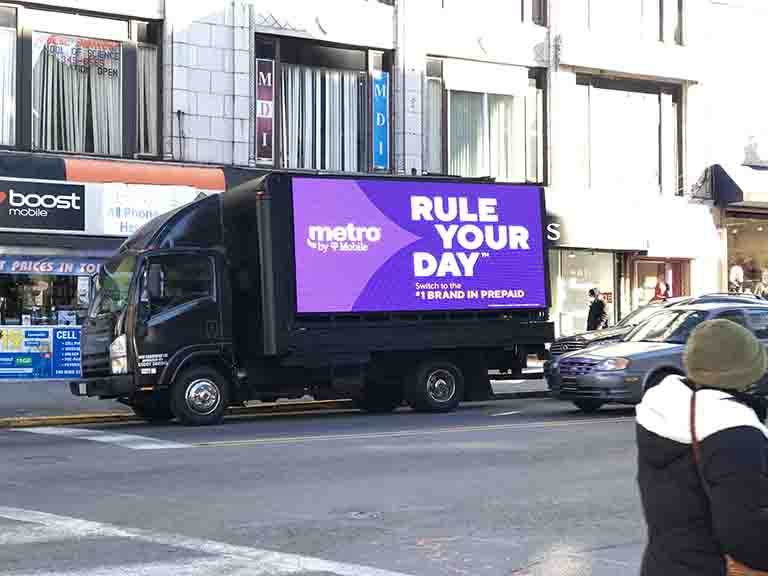
    Led Billboard Trucks

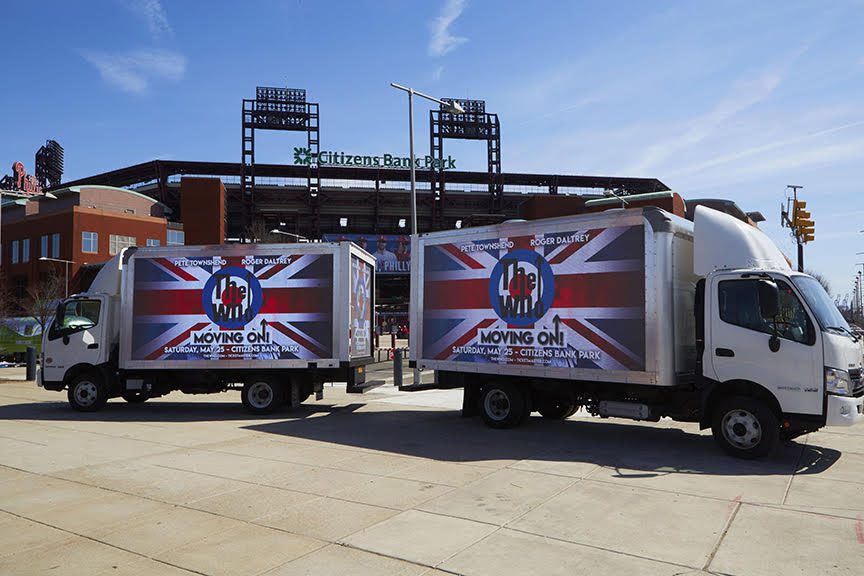
    Mobile LED displays that bring your brand to any location, any event.

    Led Billboard Trucks

    Fly Posting

    Street-level poster saturation across walls, construction sites, and corridors.

    Fly Posting

    Sidewalk Decals

    Ground-level branded decals at pedestrian hotspots and event entrances.

    Sidewalk Decals

    Sidewalk Stencils

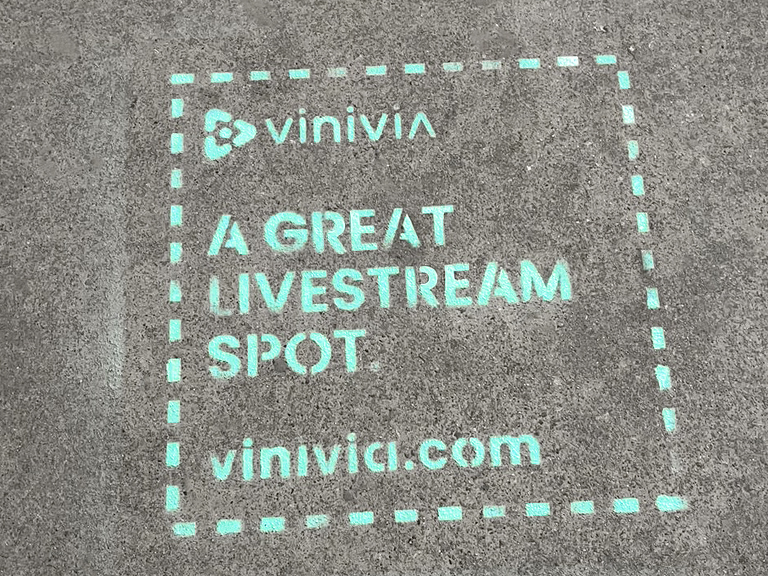
    Creative stencil campaigns that put your brand in the path of pedestrians.

    Sidewalk Stencils

    Guerrilla Projection Advertising Insights