American Guerrilla Marketing
Nationwide Service
Media planning, media buying, billboard advertising, & guerrilla marketing
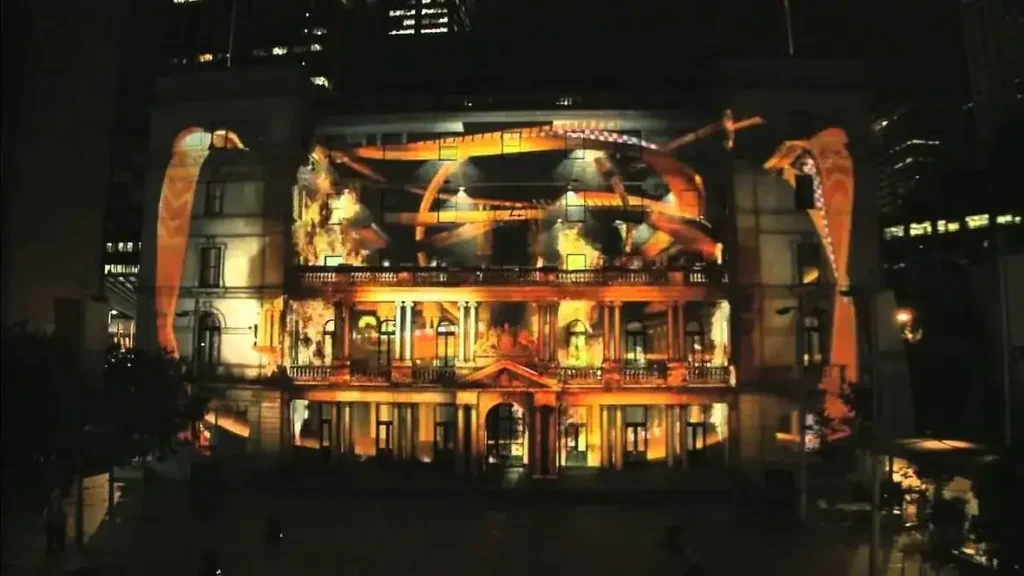
The United States Marine Corps proved it in Nashville during CMA Fest. Tennessee’s entertainment infrastructure actively accommodates major national brand building projection campaigns — from Broadway’s honky-tonk corridor to Memphis’s South Main Arts District and Chattanooga’s South Broad warehouse walls.
Some markets have to be argued for. Tennessee doesn’t. When the United States Marine Corps chose Nashville as the site for a building projection advertising campaign timed to CMA Fest — one of the country’s largest country music events, drawing hundreds of thousands of visitors to Nashville’s downtown entertainment district — they answered the central question every brand asks before committing to projection advertising in a new state: does this market work? The answer was delivered on the building walls of Nashville’s Broadway corridor during one of the most concentrated public gatherings in the American South. It worked. The market accommodated the campaign. Property owners, the public environment, and the entertainment district’s infrastructure all proved compatible with national-brand-scale projection advertising. That campaign is Tennessee’s proof of concept, and it belongs to AGM.
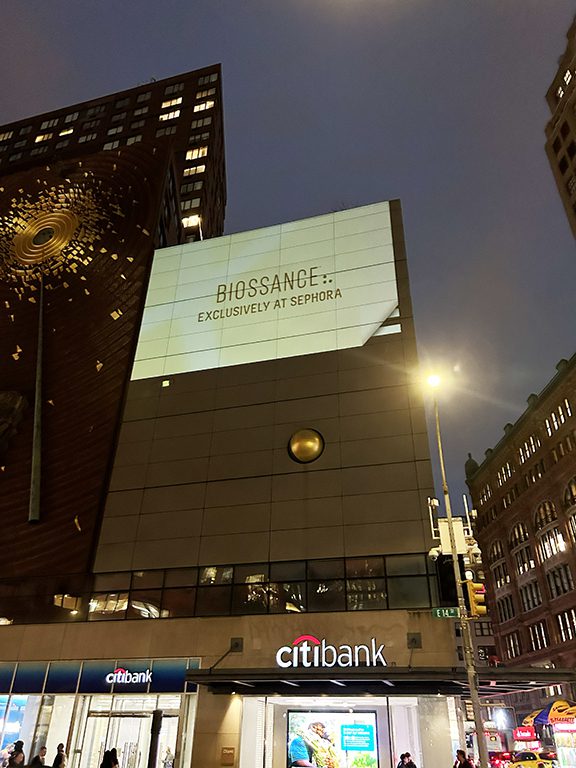
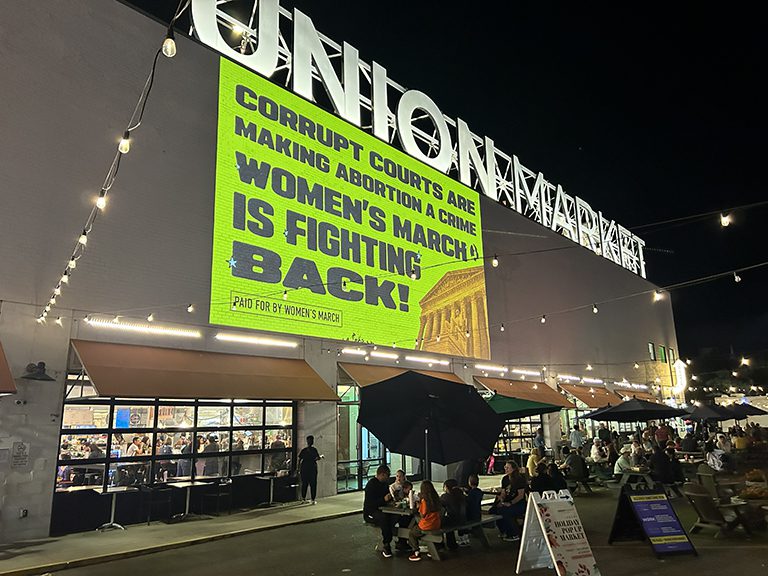
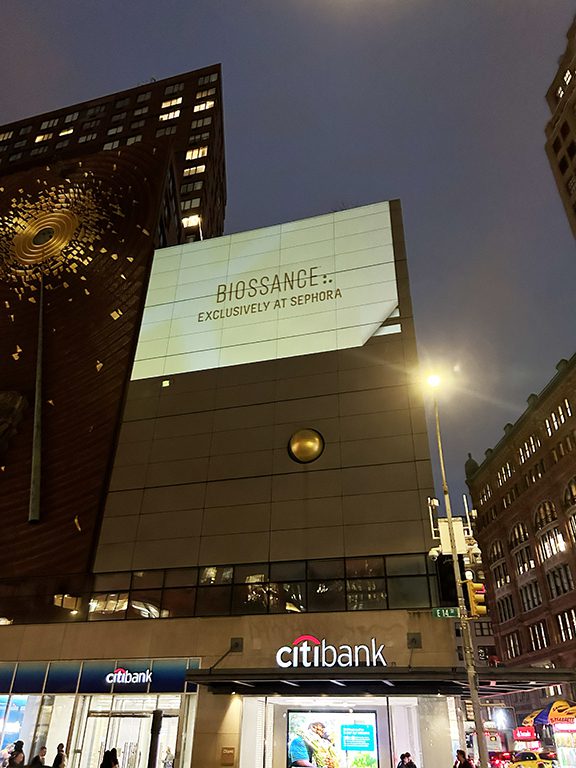
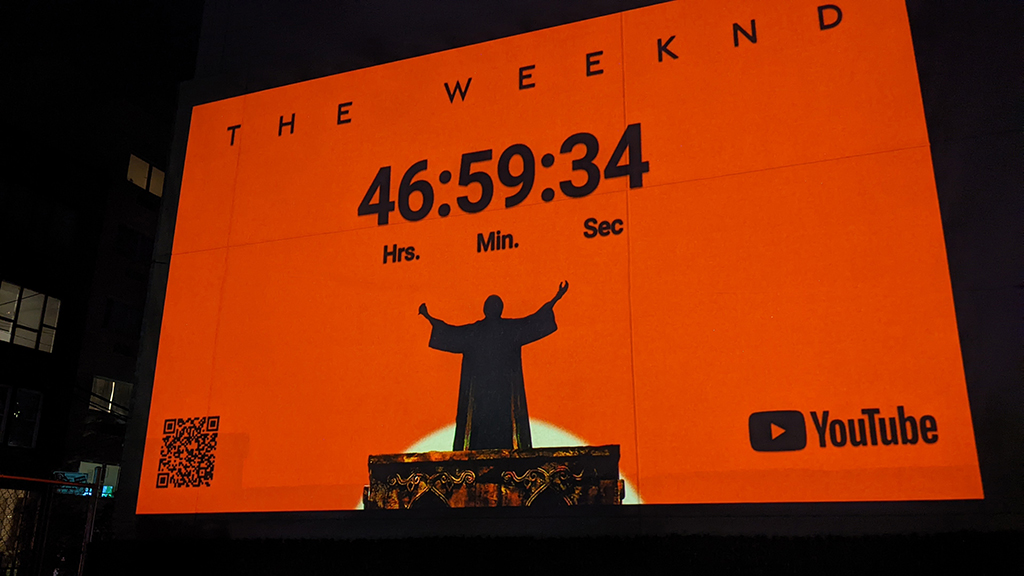
AGM has executed guerrilla projection campaigns for brands including Netflix, Disney, and FanDuel — deploying high-impact visual activations onto architectural surfaces in major markets nationwide.
The USMC × CMA Fest activation established something more valuable than just one campaign’s success — it established that Nashville’s entertainment district is willing and able to host building projection advertising for major national organizations. Venue operators, building owners, and the broader entertainment infrastructure that make Nashville’s Broadway and Gulch districts function saw this activation and now have a clear reference point for what projection advertising looks like in their environment. For brands planning Tennessee campaigns after that precedent, the path is clearer than it would have been otherwise.
But Tennessee’s projection advertising opportunity extends well beyond Nashville. Memphis’s South Main Arts District — with its converted industrial buildings and growing arts economy — offers some of the South’s strongest raw projection surfaces. Chattanooga’s South Broad arts district, where former warehouse buildings now house galleries, studios, and a concentrated nightlife scene, provides the blank industrial wall geometry that projection advertising depends on in a market that’s been called one of America’s fastest-growing mid-size arts cities. Knoxville’s Old City entertainment district anchors a dense nightlife zone with the pedestrian character and engaged young demographic that drives projection campaign social amplification. Tennessee, taken as a whole, is one of the most projection-advertising-ready states in the American South.
Tennessee's entertainment infrastructure accommodates major national brand building projection campaigns — the USMC × CMA Fest activation proved it in Nashville. AGM's 20,000-lumen system, national scouting team, and direct technical crew are ready to deploy across Nashville, Memphis, Chattanooga, and Knoxville.
Select a city to explore Guerrilla Projections opportunities.
American Guerrilla Marketing serves Tennessee’s four primary urban markets for building projection campaigns. Each city has a distinct entertainment character, surface inventory, and audience profile that shapes how campaigns are planned and executed. Together, they give Tennessee-focused brands the ability to reach a combined metro area of more than three million people across a state whose entertainment reputation draws national and international audiences every year.
Nashville is Tennessee’s entertainment capital and the state’s projection advertising flagship. The Broadway honky-tonk corridor and the Gulch arts and entertainment district are the nation’s most active projection advertising environments in Tennessee — proven by the USMC × CMA Fest campaign, which demonstrated that the city’s building owners, entertainment operators, and public environment accommodate national brand projection advertising at the highest level. East Nashville’s Shelby Avenue warehouse corridor, Rolling Mill Hill, and the Nations neighborhood add additional projection surface zones with distinct audience profiles across the city’s expanding entertainment geography.
Memphis brings Tennessee’s deepest creative heritage to projection advertising — the Mississippi Delta music tradition, the visual arts culture of the South Main Arts District, and the physical character of a city built around industrial-scale buildings now repurposed as the setting for one of the South’s most vibrant arts economies. The South Main corridor’s converted industrial buildings provide the kind of large-footprint exterior walls that produce projection images at a scale that Nashville’s more commercial downtown architecture rarely matches. Crosstown Concourse, Cooper-Young, and the Edge District along Lamar Avenue round out Memphis’s projection surface inventory with multiple distinct audience zones.
Chattanooga has undergone one of the more remarkable urban transformations of any mid-size American city over the past two decades. The South Broad arts district — anchored by former industrial warehouse buildings converted to galleries, studios, and nightlife venues — provides not just the blank wall surfaces that projection advertising requires but the concentrated arts community audience that generates the strongest engagement and social amplification when those walls light up. NorthShore’s entertainment density, the Market Street corridor, and the Tennessee Aquarium and Hunter Museum of American Art area complete Chattanooga’s projection surface geography.
Knoxville is anchored by the University of Tennessee campus and the Old City arts and entertainment district — a pedestrian-scale neighborhood with consistent nightlife activity, a socially active young demographic, and building surfaces that include the kind of blank warehouse and commercial walls that work best for projection advertising. Market Square, the 100 Block of Gay Street, Fort Sanders, and the Worlds Fair Park area all add to Knoxville’s projection surface inventory, giving brands multiple deployment options in East Tennessee’s commercial hub.
Tennessee’s four major markets each have distinct projection surface characteristics driven by their urban history and architecture. Understanding what makes each market’s surfaces distinctive — and what that means for campaign planning — is part of what AGM’s national scouting team delivers for every Tennessee engagement.
Nashville’s Broadway corridor and the Gulch are Tennessee’s most commercially active projection advertising zones. The USMC × CMA Fest campaign deployed in this environment and succeeded — meaning the surface inventory, logistical approach, and audience concentration of these districts have already been validated at the national brand level. The Gulch’s newer construction includes large exterior wall faces oriented toward the pedestrian zones that generate the corridor’s consistent evening foot traffic. Broadway’s building stock, while more architecturally varied, includes surface opportunities on the larger solid wall faces of buildings set back from the strip’s most neon-saturated blocks — surfaces where projection can hold its own against the ambient light environment.
East Nashville’s Shelby Avenue warehouse corridor adds an entirely different surface profile: former industrial buildings in a rapidly growing entertainment zone, with the large flat exterior wall geometry that warehouse construction provides. Rolling Mill Hill and the Nations neighborhood extend Nashville’s projection geography into emerging residential and mixed-use zones where the audience profile differs from the downtown entertainment tourist crowd.
Memphis’s South Main Arts District is Tennessee’s strongest raw projection surface environment. Former industrial buildings converted to galleries, studios, and entertainment venues along South Main Street retain their large structural footprints — wide exterior wall spans with high parapet lines, minimal window interruption, and the kind of smooth or light-painted concrete and masonry finishes that AGM’s 20,000-lumen system renders with exceptional clarity and saturation. These are projection surfaces at the scale of major urban murals — wide enough and tall enough to create images that are visible from distances that allow a much larger viewing area than typical commercial downtown building surfaces.
The Crosstown Concourse — the former Sears distribution complex converted to a vertical urban village — provides a unique exterior surface character: the enormous scale of the original industrial building’s exterior faces, now in a context of dense arts, retail, and residential activity. Cooper-Young’s entertainment corridor and the Edge District’s warehouse buildings along Lamar Avenue give Memphis additional surface options in distinct neighborhood contexts across the city.
Chattanooga’s South Broad arts district offers the industrial warehouse building type in its most concentrated Tennessee form — block after block of former industrial structures with large blank exterior faces, converted to arts and entertainment uses but retaining the original building geometry that makes them ideal projection surfaces. The community concentration in South Broad — galleries, studios, performance spaces, and a growing nightlife scene — creates an arts-engaged audience that is specifically responsive to visually ambitious large-scale media. The NorthShore entertainment area across the Tennessee River adds a distinct entertainment zone with different surface inventory and audience demographics, giving brands multiple district options for Chattanooga campaigns.
Knoxville’s Old City entertainment district provides Tennessee’s most pedestrian-concentrated nightlife environment outside Nashville’s Broadway corridor. The district’s mix of converted warehouse and older commercial buildings includes blank building walls at the upper-story level — surfaces above the ground-floor retail and bar activity that face the pedestrian zone with good sightlines from the street. Gay Street’s 100 Block adds an outdoor dining and entertainment corridor with consistent evening crowds and additional surface options. The Fort Sanders neighborhood and Worlds Fair Park area extend Knoxville’s projection geography into the UT campus-adjacent zone, where the student and academic community provides a distinct audience profile from the Old City nightlife crowd.
Tell us about your campaign goals, target audience, and preferred locations. Our team will help you plan a high-impact guerrilla projection campaign tailored to your needs.
Award Winning Personalized Service
You will get thoughtful, devoted, and individualized attention from our experienced, qualified, and professional personnel. Being one of the most illustrious agencies in Brooklyn, New York, American Guerrilla Marketing has been awarded the Best of Brooklyn title.
Nationwide
Industry City, Brooklyn, New York 11232
American Guerrilla Marketing
Hours
Mon - Fri: 9 AM - 5 PM
Sat & Sun: Closed
Automate your campaign with AGM’s Request for Proposal Builder. Simply answer a few quick questions about your campaign goals, markets, and timeline, and the system will generate a tailored presentation with recommended strategies, quantities, and pricing. Click the RFP Builder to instantly receive your customized proposal.
Tennessee’s market character — led by the entertainment industry identity of Nashville and Memphis and the arts-forward communities of Chattanooga and Knoxville — rewards creative that is ambitious and culturally engaged. Each market has a distinct creative context, but across the state, projection advertising consistently performs best when the creative treats the building facade as a canvas rather than a flat screen — when scale, motion, and the physical context of the wall are integrated into the creative concept rather than treated as constraints.
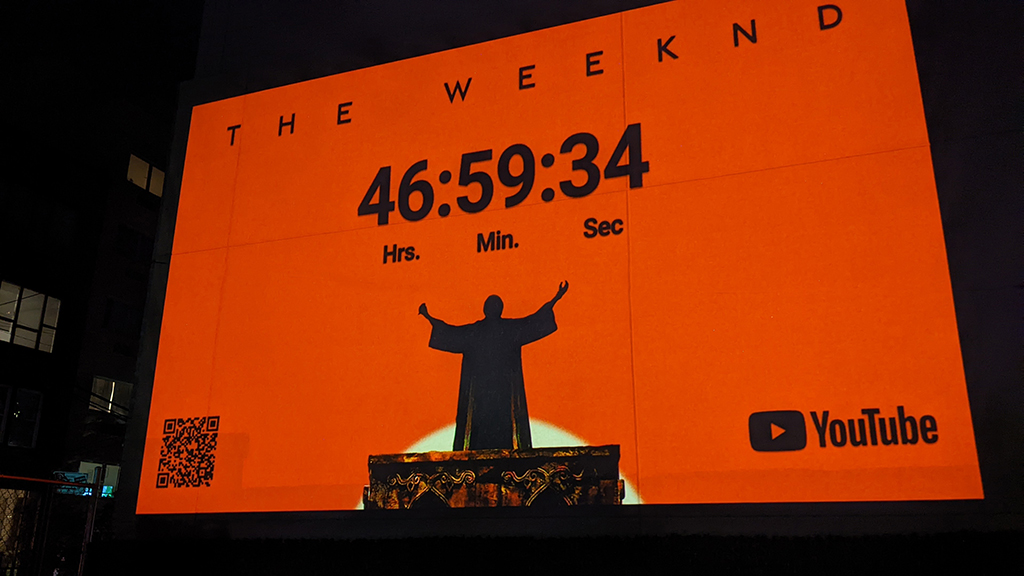
Tennessee’s concentration of music industry infrastructure — record labels, music publishers, booking agencies, and artist management all concentrated in Nashville — makes it the natural home market for entertainment-industry projection campaigns. Album launches, tour announcements, streaming platform activations, and live event countdowns all use Nashville’s entertainment district projection zones to reach the industry and fan community simultaneously in the city where music is made.
Tennessee’s event calendar — CMA Fest, Memphis in May, Chattanooga outdoor festivals, Knoxville arts programming — provides a dense schedule of activation opportunities where brands can time projection campaigns to events that draw concentrated public audiences to outdoor entertainment corridors. Event-tied projection campaigns in Tennessee reach audiences at their highest engagement, generating earned media and social content at the moment of peak community excitement.
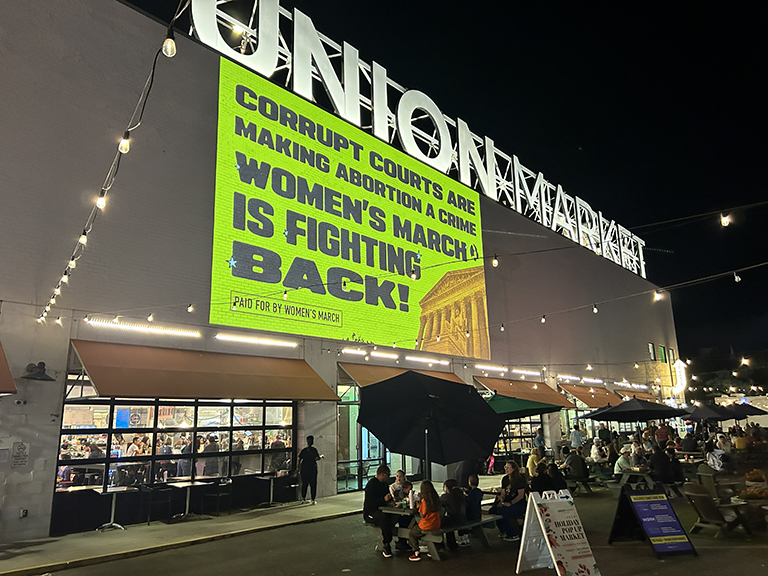
Tennessee’s politically engaged cities — particularly Nashville and Memphis — carry advocacy messaging with impact. Projection advertising’s guaranteed public reach delivers advocacy messages to audiences that digital channels miss: the 30 percent of adults who use ad blockers, the large share who have opted out of politically sensitive social media content, and the general public that encounters projection advertising in a shared physical space with no mediation between the message and the audience.
Brands entering Tennessee’s markets — from national retail expansions to regional food and beverage launches — use building projection to announce market arrival with an impact that positions the brand as a serious player from the moment of entry. A projection campaign in Nashville’s Gulch during a brand’s Tennessee launch creates first-impression associations with the city’s premium entertainment environment that persist in the audience’s brand memory well beyond the campaign night.
Tennessee campaigns begin with advance location scouting — AGM’s national scouting team combines digital analysis with physical on-the-ground evaluation in each target Tennessee city. The scouting process assesses surface tone, planarity, window interruption level, sightline clearance, throw distance, and audience approach geometry for every candidate wall. Scouting is priced at approximately contact us for a quote. and is strongly recommended for any first-time Tennessee city deployment.
Creative preparation follows surface confirmation. Tennessee’s markets each have specific creative requirements: Nashville’s Broadway environment requires higher brightness and contrast to hold its own against ambient neon light; Memphis’s large South Main warehouse walls support imagery at scales that require different aspect ratio preparation than Nashville commercial buildings; Chattanooga’s South Broad warehouse surfaces provide projection area that accommodates large vertical imagery. AGM’s creative team prepares projection-optimized content to the specific dimensions and environmental conditions of the confirmed deployment location in each city.
On campaign night, AGM’s own two-person direct technical crew manages complete deployment — setup, calibration, operation through the four-to-six-hour campaign window, and full breakdown. AGM’s direct crew model eliminates the subcontractor handoff risk that third-party execution introduces. The same technicians who set up the equipment operate it through the night, maintaining calibration precision and managing any technical adjustments that arise during the campaign window.
Post-campaign documentation includes professional photography and video of the projection in its environmental context, GPS location data, and campaign performance notes. For Tennessee campaigns timed to major events — CMA Fest, Memphis in May, Bonnaroo adjacent activations — the documentation package is specifically designed to support press outreach to entertainment and lifestyle media that covers Tennessee’s event circuit.
Building projection campaigns across Tennessee are priced at contact us for a quote. Every deployment includes AGM’s 20,000-lumen commercial projection system, generator and complete power infrastructure, full electronics bundle, mobility unit, and AGM’s own two-person direct technical crew covering setup, full campaign operation, and breakdown. Projection runs begin at dusk and typically continue for four to six hours.
Advance location scouting in any Tennessee market is priced at approximately contact us for a quote. Permitted or private-property locations — where a campaign requires formal exclusivity agreements with a specific building owner — are priced contact us for a custom quote. depending on building specifics and market. For Tennessee campaigns tied to high-demand events like CMA Fest, advance planning and property coordination should begin eight to twelve weeks before the target dates.
Multi-city Tennessee campaigns — pairing Nashville with Memphis, or Chattanooga with Knoxville in the same campaign week — are available and often the most efficient approach for brands seeking statewide Tennessee market coverage. AGM coordinates multi-city scheduling and logistics as part of a single unified campaign engagement.
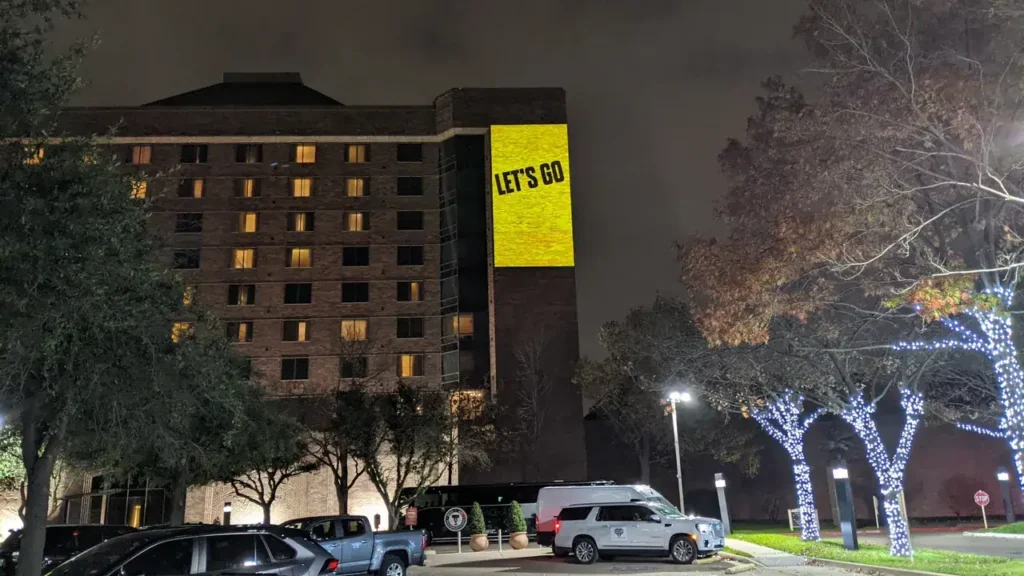
The United States Marine Corps × CMA Fest campaign in Nashville stands as Tennessee’s defining building projection advertising case study — and one of the most compelling examples of major national brand projection advertising in the American South. The campaign deployed AGM’s system in Nashville during CMA Fest, projecting onto building facades in the entertainment district while hundreds of thousands of festival attendees moved through Nashville’s outdoor entertainment corridors. The Marine Corps chose this environment — the busiest entertainment event in Tennessee, in the most public outdoor space in Nashville — to deploy projection advertising because the format reaches the specific kind of public audience that can’t be reached through digital channels or traditional outdoor placements.
What the USMC × CMA Fest campaign demonstrated for subsequent Tennessee campaigns is threefold. First, the format works at the highest national brand level in Tennessee’s entertainment environment — a branch of the United States military trusted AGM to execute a public-facing campaign in one of America’s most high-profile event environments. Second, Nashville’s Broadway and entertainment district infrastructure accommodates projection advertising campaigns at that scale — the campaign ran without infrastructure or public reaction issues. Third, the audience concentrated in Nashville during CMA Fest — hundreds of thousands of country music fans from across the country — responds to building projection advertising with the engagement and social documentation behavior that extends campaign reach far beyond the direct audience on campaign night.
For brands planning Tennessee campaigns, the USMC × CMA Fest activation is direct evidence that the market is ready. The question is no longer whether Tennessee’s entertainment infrastructure accommodates projection advertising — it does. The question is which brand activates next and what they project onto Tennessee’s building walls.
Tennessee’s entertainment industry — concentrated in Nashville but with influence across all four major markets — is the category with the strongest historical relationship with building projection advertising. Record labels, streaming platforms, tour promoters, and event organizers use projection campaigns to amplify releases and events in the state’s entertainment corridors. The military has demonstrated the format’s effectiveness for recruitment and awareness campaigns in high-crowd entertainment environments. Consumer brands across food, beverage, retail, and technology categories use Tennessee projection campaigns to reach the state’s tourism audience — more than 115 million visitors annually — alongside the local resident market. Advocacy organizations use the format’s guaranteed public reach to deliver messages in Tennessee’s most-trafficked public corridors. Healthcare, financial services, and professional categories use projection advertising to establish brand quality associations in markets where trust and premium positioning drive consumer choice.
| Zone / Area | Peak Hours | Foot Traffic | Est. Nightly Impressions | Best For |
|---|---|---|---|---|
| Nashville | 8PM–12AM | Moderate | 2,500–12,000 | Product Launch |
| Memphis | 8PM–12AM | Moderate | 2,500–12,000 | Event Promotion |
| Chattanooga | 8PM–12AM | Moderate | 2,500–12,000 | Brand Awareness |
| Knoxville | 8PM–12AM | Moderate | 2,500–12,000 | Political |
AGM serves Nashville, Memphis, Chattanooga, and Knoxville — Tennessee’s four major urban markets. Additional Tennessee markets can be evaluated based on surface availability and campaign requirements. Each city has distinct projection surface inventory and audience profiles that AGM’s national scouting team evaluates for every campaign inquiry.
Yes. The United States Marine Corps ran a building projection advertising campaign in Nashville during CMA Fest — one of the country’s largest country music events — using AGM’s 20,000-lumen system on building facades in Nashville’s entertainment district. The campaign reached hundreds of thousands of festival attendees moving through Nashville’s outdoor entertainment corridors, demonstrating that Tennessee’s entertainment environment fully accommodates national brand building projection campaigns at the highest level.
CMA Fest and CMA Week in Nashville draw hundreds of thousands of visitors to the downtown entertainment district — the state’s single highest-concentration audience window for Nashville projection campaigns. Memphis in May concentrates the city’s largest outdoor audiences. The Tennessee Valley Fair in Knoxville draws substantial regional traffic in September. Chattanooga’s outdoor festival programming generates consistent summer foot traffic across South Broad and the riverfront entertainment zone. All of these events create audience conditions that multiply projection campaign reach beyond baseline levels.
Tennessee’s entertainment identity creates built-in public audiences that no other advertising trigger could assemble as efficiently. People who travel to Nashville for CMA Fest, to Memphis for Beale Street, to Chattanooga for the arts district, or to Knoxville for UT game days are already gathered in outdoor entertainment corridors — exactly the physical environments where building projection advertising operates. Tennessee’s entertainment culture concentrates its public in the outdoor spaces where projection campaigns run, without requiring the campaign itself to generate that foot traffic from scratch.
Yes. AGM coordinates multi-city Tennessee campaigns that move between markets during a single activation week — for example, Nashville one night and Memphis the next, or Chattanooga and Knoxville in sequential deployments. Multi-city Tennessee campaigns are planned as single unified engagements with coordinated logistics, reducing per-city overhead compared to treating each city as a separate campaign. This approach is particularly common for brands seeking statewide Tennessee market reach within a single campaign cycle.
Nashville’s projection audience in the Broadway and Gulch districts is heavily weighted toward entertainment tourists — visitors from across the country who have traveled to Nashville specifically for its music and nightlife experience. They’re there to have an experience, and projection advertising becomes part of that experience. Memphis’s South Main Arts District audience has a stronger local arts community character — longtime Memphis residents, artists, gallery visitors, and the residential community of the broader South Main area. Both are excellent projection audiences, but Nashville reaches a higher percentage of out-of-market visitors while Memphis reaches deeper into the local creative community.
AGM manages all permitting and property coordination as part of the campaign planning process. For private-property deployments — projecting onto a building with the building owner’s agreement — AGM facilitates the property coordination. For public-space deployments, AGM navigates each municipality’s specific permitting framework. Nashville, Memphis, Chattanooga, and Knoxville each have different local processes, and AGM’s team is experienced in managing these requirements across all four markets as part of standard campaign preparation.
Tennessee’s strongest projection zones share a common historical character: former industrial and commercial buildings that retain large exterior wall surfaces from their original construction. Memphis’s South Main and Chattanooga’s South Broad are the clearest examples — former industrial buildings with warehouse-scale exterior geometry, minimal window interruption, and large solid wall faces. Nashville’s East Nashville warehouse corridor provides similar industrial-building surfaces. In more commercially developed areas like Nashville’s Gulch and Knoxville’s Old City, the strongest surfaces are found on the upper stories of older commercial buildings above the retail and restaurant zone, where window-to-wall ratios decrease and solid wall surface becomes available for projection.
Entertainment industry campaigns — music releases, streaming platforms, tour promotions, festival activations — produce the strongest contextual alignment with Tennessee’s entertainment-focused audience. Military recruitment campaigns have been proven at the highest level by the USMC × CMA Fest execution. Consumer brands in food, beverage, lifestyle, and retail categories perform well by reaching Tennessee’s high-tourism audience at the moment of peak engagement with the state’s entertainment experience. Advocacy organizations use Tennessee’s concentrated outdoor entertainment audiences to deliver messages with guaranteed public reach. Any category with a brand story that aligns with the energy, creativity, or community character of Tennessee’s entertainment markets will find the format productive.
Tennessee is one of the nation’s top tourism states — Nashville alone hosts tens of millions of visitors annually, making it one of the most-visited cities in the American South. Memphis draws millions of music heritage tourists, Graceland visitors, and Beale Street visitors each year. Tourism volume means that projection campaigns in Nashville and Memphis reach a substantially larger percentage of out-of-market audiences than campaigns in less tourist-visited cities. A visitor who photographs a projection in Nashville’s Gulch and posts it to their home-market social channels extends the campaign’s geographic reach without any additional investment.
A standard Tennessee projection campaign at contact us for a quote. includes AGM’s 20,000-lumen commercial projection system, generator and full power infrastructure, complete electronics bundle, mobility unit, two-person direct technical crew — AGM’s own employees, not subcontractors — and end-to-end management of setup, calibration, campaign operation through the four-to-six-hour projection window, and complete breakdown. Post-campaign documentation including professional photography and video is included. Advance location scouting, at approximately contact us for a quote. and private-property location agreements are priced separately.