American Guerrilla Marketing
Nationwide Service
Media planning, media buying, billboard advertising, & guerrilla marketing
Guerrilla Projections in Salem, OR
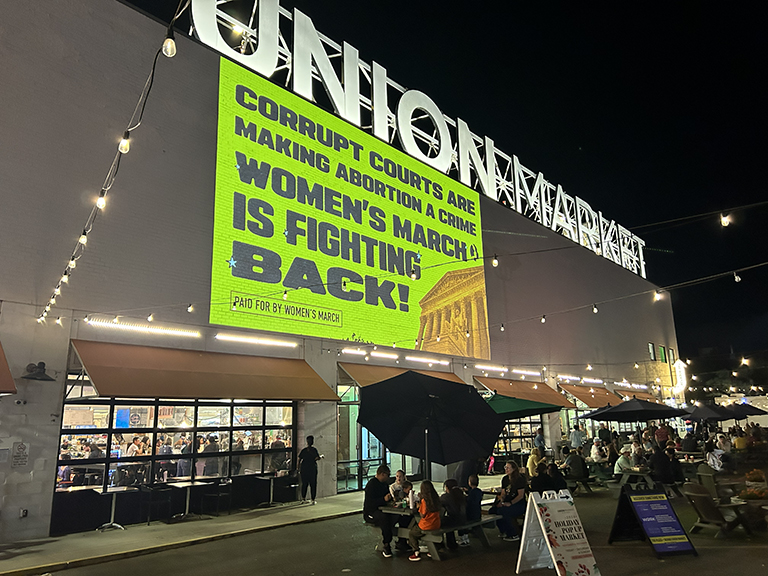
Oregon’s state capital concentrates legislators, lobbyists, state agency directors, and civic organization staff in a small downtown footprint — especially during legislative sessions. A building projection campaign in Salem reaches this audience where no billboard, no digital buy, and no traditional media placement can: on foot, unavoidably, at building scale.
Salem: Oregon’s State Capital and the Advocacy Advertiser’s Precision Market
Most Oregon advertising campaigns treat Salem as a secondary market — a smaller city that doesn’t carry Portland’s cultural cachet or Eugene’s university demographic appeal. That framing misses what Salem actually is: the most concentrated audience of Oregon policymakers, civic organization executives, state agency staff, and political operatives that exists anywhere in the state, compressed into a walkable downtown footprint for the duration of each legislative session. For advocacy organizations, issue campaigns, and any brand that benefits from visibility with the people who make decisions that affect Oregon policy, Salem is not a secondary market — it is the only market that matters.
The Oregon Legislative Assembly convenes for regular sessions in odd-numbered years — typically January through June — and for special sessions and interim committee work throughout the year. During regular session, Salem’s downtown corridor between the Oregon State Capitol, the Convention Center, and the hotel and restaurant district becomes a daily loop. Legislators walk it. Lobbyists walk it. State agency directors walk it. Advocacy organization staff who have driven from Portland, Eugene, and Bend to testify before committees walk it multiple times a day between hearings, lunch meetings, and evening coalition events. This is an audience that is simultaneously of enormous political and civic importance, geographically concentrated to a degree that rarely occurs anywhere in American public life, and almost entirely unreachable through conventional digital advertising — because their legislative schedule and in-person policy work keeps them off screens and on their feet throughout the day.
Building projection advertising in Salem’s downtown civic corridor is one of the only advertising formats that can reach this audience efficiently. A 20,000-lumen projection on a building face in the Capitol District or along Commercial Street is physically unavoidable when you’re walking back from a late committee hearing to your hotel. It doesn’t require a device, a click, or a browser session — it is simply there, at building scale, at the moment when the target audience is present and on foot. No other outdoor media format delivers the Capitol District audience with that combination of frequency, scale, and immediacy.
Salem’s value extends beyond the legislative calendar. The city’s convention center draws regional and statewide professional and civic conferences year-round, creating recurring windows of audience concentration that parallel the legislative session dynamic — concentrated groups of professionals, civic leaders, and organizational decision-makers moving through the downtown corridor between the convention facility, hotel rooms, and evening dining. For advocacy organizations and issue-oriented brands, these convention windows are secondary high-value periods that make Salem a year-round deployment market rather than a session-only opportunity.
The downtown Riverfront, the Reed Opera House vicinity, and Commercial Street also serve Salem’s resident consumer population — shoppers, restaurant patrons, arts and culture attendees who fill the city’s downtown commercial corridors outside legislative and convention windows. A well-timed Salem projection campaign can serve multiple audience objectives simultaneously: the weekday session-period audience of civic professionals, and the evening and weekend consumer audience of Salem’s downtown commercial economy.
Launch Your Salem Projection Campaign
Oregon's legislative sessions concentrate the state's most important decision-makers in a walkable downtown footprint. AGM's 20,000-lumen projection system puts your campaign on the buildings they walk past. No other advertising format delivers the Salem legislative audience with this combination of scale, immediacy, and visual impact.
The Dc Proof Point: What Reproductive Freedom For All Showed About State Capital Campaigns
AGM deployed building projection infrastructure for Reproductive Freedom for All during a major advocacy rally in Washington, DC. The campaign projected messaging and visual imagery directly onto DC building facades on an evening when the city was concentrated with advocacy participants, press, and the kind of civic audience that state capital cities replicate on their own scale during legislative sessions. The 20,000-lumen system extended the campaign’s visual reach across multiple city blocks, projecting at a scale that conventional rally signage and event lighting could not approach, and generating earned media coverage that amplified the campaign’s message well beyond the evening’s physical audience.
That DC experience maps directly onto Salem’s state capital dynamic. Washington concentrates federal decision-makers the way Salem concentrates Oregon’s — the mechanisms are identical, the audiences differ only in jurisdiction and scale. National advocacy organizations that run projection campaigns during DC rallies and federal legislative pushes understand instinctively why the same approach in Salem, timed to a specific Oregon legislative session, delivers exactly the same strategic logic: the audience is physically concentrated, on foot, and reachable through building-scale visual media in a way that digital advertising during those same periods cannot achieve. For advocacy organizations with Pacific Northwest operations, applying the DC projection playbook to Salem during an Oregon session push is a direct strategic extension, not an adaptation.
The Salem application also carries a specific advantage that DC campaigns occasionally lack: scale proportionality. Salem’s downtown is compact relative to Washington, which means the civic audience is even more geographically concentrated during a session period. A projection on a Capitol District building face is not competing with the visual density of a major metropolitan environment — it is operating in a capital city where the concentration of decision-maker foot traffic in a single corridor creates an extremely high audience-per-impression rate for a campaign that runs on the buildings those decision-makers walk past every day of the session.
Salem's Best Projection Environments
Salem’s downtown building stock reflects the city’s identity as a civic and state government center — masonry commercial buildings from the early and mid-20th century, civic institution structures, and a growing hospitality and entertainment development around the convention center. The projection surfaces available in Salem are functional and well-suited to a 20,000-lumen system, though they differ significantly from Portland’s warehouse district scale. Salem campaigns are calibrated to the physical characteristics of the city’s existing building stock, and the location selection process reflects an understanding of which Salem surfaces deliver the strongest image quality and which audience corridors carry the highest-value viewer traffic for each campaign’s specific objectives.
Downtown Entertainment District near Salem Convention Center
The Salem Convention Center anchors a downtown entertainment zone that is the city’s primary after-dark destination — the commercial and hospitality corridor where legislators, lobbyists, convention attendees, and evening restaurant patrons concentrate on weekday evenings and throughout convention event periods. Commercial and hospitality building faces surrounding the convention center block provide flat masonry and concrete surfaces that are suitable for projection advertising, and the consistent pedestrian traffic between the convention facility, nearby hotels, and the restaurant and bar cluster creates a durable evening audience across the week. Convention event nights — when a regional conference or statewide organization meeting fills the facility — create predictable audience density that allows campaigns to be timed to specific events for maximum reach and documentation. The convention center district is Salem’s most versatile projection zone because it serves both the legislative-session civic audience during session periods and the broader convention and entertainment audience throughout the rest of the year.
Reed Opera House Area — Historic Civic Core
The Reed Opera House is one of Salem’s defining historic civic landmarks — a renovated performance space on Liberty Street surrounded by commercial buildings that reflect the city’s early-20th-century commercial architectural character. The building faces adjacent to the Reed Opera House on Liberty Street and the surrounding blocks are flat masonry and painted concrete in light to medium tones, consistent with the commercial building stock of Salem’s historic downtown core. Evening pedestrian traffic in this zone is consistent — the Reed’s performance programming draws arts and culture audiences whose movement pattern through the surrounding commercial blocks creates projection viewing windows before and after performances. The Liberty Street corridor’s character as a civic and cultural destination gives projection campaigns in this zone an ambient context that complements advocacy, arts, and brand messaging designed for an educated, community-engaged audience. Surrounding building faces are positioned for viewing from the pedestrian sidewalks that serve the Reed’s event audience and the broader downtown commercial foot traffic that uses Liberty Street as a primary north-south downtown corridor.
Commercial Street Arts Corridor — Salem’s Downtown Spine
Commercial Street is Salem’s primary downtown north-south spine — the main commercial corridor that connects the city’s civic institutions, restaurants, and retail establishments across downtown’s full length. Commercial buildings line both sides of the street with flat masonry and painted concrete facades, and consistent pedestrian and vehicular traffic through evening hours gives projections on Commercial Street buildings simultaneous pedestrian and passing-vehicle reach. During legislative session periods, Commercial Street is among the most frequently walked corridors in Salem’s civic circuit — the direct pedestrian route between the Capitol, the downtown hotel cluster, and the restaurant zone that serves the legislative audience’s daily movement pattern. For campaigns that want to reach the maximum combined audience of civic professionals and general downtown consumers in a single Salem location, the Commercial Street corridor delivers both within one deployment without requiring multiple nights at different locations.
Riverfront Area — Willamette River Open-Air Audience Zone
Riverfront Park and the adjacent commercial development along the Willamette give Salem projection campaigns an unusual configuration: open riverside space that creates natural viewing distance between the audience and the projected building faces, while the park itself brings a built-in audience of residents, families, and evening visitors who are spending extended time in an outdoor leisure environment. Surrounding commercial and mixed-use building faces are suitable for projection, and the park’s open geometry allows viewing angles across greater distances than the tight urban block patterns of the commercial downtown corridors. Riverfront campaigns in Salem offer a different audience register than the Capitol District civic circuit — a consumer and community leisure audience rather than a legislative professional audience — which makes the Riverfront a strong complementary deployment for campaigns that want both the policy audience of the civic core and the general consumer reach of Salem’s outdoor recreation and weekend leisure culture. A multi-night Salem campaign might schedule the Capitol District and Commercial Street for weekday legislative session nights and the Riverfront for a Friday or Saturday evening with the consumer leisure audience concentrated in the park.
Plan Your Guerrilla Projection Campaign in Salem, OR
Tell us about your campaign goals, target audience, and preferred locations. Our team will help you plan a high-impact guerrilla projection campaign tailored to your needs.
Award Winning Personalized Service
You will get thoughtful, devoted, and individualized attention from our experienced, qualified, and professional personnel. Being one of the most illustrious agencies in Brooklyn, New York, American Guerrilla Marketing has been awarded the Best of Brooklyn title.
Nationwide
Industry City, Brooklyn, New York 11232
American Guerrilla Marketing
Hours
Mon - Fri: 9 AM - 5 PM
Sat & Sun: Closed
Automate your campaign with AGM’s Request for Proposal Builder.
Automate your campaign with AGM’s Request for Proposal Builder. Simply answer a few quick questions about your campaign goals, markets, and timeline, and the system will generate a tailored presentation with recommended strategies, quantities, and pricing. Click the RFP Builder to instantly receive your customized proposal.
Understanding Salem's Building Surfaces
Salem’s projection surface landscape is honest about its position as a state capital city rather than a warehouse-district arts market: the walls are functional, the surfaces are predominantly masonry in reasonable condition, and the best projection performances come from careful selection within a building stock that is broadly workable but rarely spectacular in the way Portland’s Pearl District or Central Eastside walls can be.
Salem’s best projection surfaces are the painted concrete block and plaster-finished masonry buildings throughout the downtown commercial core. These are typically commercial buildings of two to four stories, with primary street-facing walls in light or medium-light tones, relatively flat profiles, and window-to-solid-wall ratios that are manageable for a 20,000-lumen projection — often with windows concentrated on street-level retail glazing and upper floors carrying more solid wall area relative to fenestration. These surfaces deliver solid image quality: good color saturation on light-painted faces, readable typography at moderate projection distances, and consistent performance across the four-to-six-hour evening run window.
The surface challenge to navigate in Salem is the unpainted or medium-toned historic brick that appears throughout the Liberty Street area and in portions of Commercial Street’s older commercial blocks. Salem’s historic commercial architecture is brick-heavy, and brick without paint coverage is a scatter surface — light from the projection diffuses across the mortar lines and individual brick texture, reducing image sharpness and pulling color saturation down from its theoretical maximum. AGM’s scouting process identifies which specific buildings in the Salem historic core have received light-colored paint coverage over their brick — which is common in buildings that have been renovated for modern commercial use — and which retain exposed brick facades that require creative adaptation. The difference between a painted brick surface and an exposed brick surface is not academic: it can mean the difference between a sharp, vivid campaign image and a soft, detail-compromised one.
Line-of-sight considerations in Salem’s downtown are less complex than in Portland’s dense urban grid, but street tree canopy along Commercial Street and Liberty Street in the growing season creates a beam-interruption variable that AGM’s physical scouting visits specifically map. Projector positioning that clears the tree canopy at the selected projection angle — either by positioning above the canopy or finding a clear gap in the street tree line — is part of the advance scouting assessment. Salem campaigns scheduled for May through September, when tree canopy is at its maximum density, receive specific canopy-clearance documentation in the location recommendation report.
Who Runs Salem Projection Campaigns
Advocacy Organizations — Legislative Session Campaigns
National and state advocacy organizations are Salem’s primary projection advertising clients. Legislative session timing is the defining variable: campaigns deployed during an active Oregon Legislative Assembly session reach the state’s most concentrated audience of decision-makers, lobbyists, and civic staff in the Capitol District and Commercial Street corridors that serve as their daily legislative circuit.
Issue-Oriented Political Campaigns
Issue campaigns that need visible presence in the state capital during ballot measure campaigns, legislative hearings, or statewide policy debates use building projection in Salem to establish a physical visual presence in the policy environment that digital advertising cannot achieve among an audience that is already on foot and in-person for official business.
Civic & Nonprofit Organizations
Statewide civic organizations — environmental groups, public health organizations, education advocacy groups — with headquarters or chapter operations in Salem use building projection to build brand recognition and messaging visibility within the downtown civic corridor that houses their target institutional audiences: state agencies, legislative offices, and fellow civic organization headquarters.
AGM’s projection client roster includes Netflix, Disney, Coca-Cola, FanDuel, Live Nation, iHeartRadio, and the US Marine Corps. A confirmed case study: the US Marine Corps × CMA Fest Nashville — multi-night projections onto architectural surfaces throughout the festival footprint, reaching 80,000+ attendees across the campaign window. Projection advertising scales across every brand category; what our campaigns share is scale, precision, and a physical presence digital cannot replicate.
Consumer Brands Targeting State Capital Markets
Consumer brands that benefit from reaching Salem’s employed, middle-to-upper-income downtown workforce use projection campaigns in the Convention Center district and Commercial Street corridor during evenings when the professional audience transitions from official business to the restaurant and entertainment economy. Salem’s convention center audience also represents a recurring regional consumer demographic across event categories.
Statewide Event & Conference Campaigns
Organizations hosting statewide conferences at the Salem Convention Center use building projection as a signature event activation — creating a visual landmark in the host city that conference attendees encounter during their evening social circuit and that generates documentary photography for post-event content and future marketing materials.
Multi-Night Oregon Advocacy Tours
Oregon-wide advocacy campaigns that cover Portland’s civic audiences, Eugene’s university market, and Salem’s legislative audience in a single coordinated tour use AGM’s mobile system to move between markets over consecutive nights — one campaign, one crew, complete statewide civic audience coverage across the Willamette Valley’s three major population centers.
Campaign Process in Salem: From Session Calendar to Execution Night
Salem projection campaigns require an additional planning dimension that most other Oregon markets don’t: the legislative calendar. Advocacy organizations that want to maximize the civic professional audience should align campaign timing with specific legislative session periods — regular session dates, special session announcements, key committee hearing weeks, or bill vote timing — rather than selecting dates based on general availability. AGM’s planning process for Salem advocacy campaigns begins with a conversation about the legislative calendar and the specific policy context the campaign is designed to address, and location selection and execution timing are structured around that context from the outset.
Advance scouting in Salem covers all four primary projection zones — the Convention Center district, the Reed Opera House area, Commercial Street, and the Riverfront — through a physical on-the-ground visit that documents surface quality, ambient light conditions at dusk, equipment access routes, and pedestrian flow patterns across each location. The scouting team photographs candidate walls in daylight and returns at dusk to document the real visual conditions a projection will operate in, including street tree canopy interference with potential projection beam paths.
Following scouting, AGM produces a location recommendation that includes candidate wall assessments with photographs, projector positioning options and distances, ambient light analysis for each location, and a final recommended location with execution-night logistics notes. For multi-night Salem campaigns — Convention Center district one night, Commercial Street another — the recommendation covers all planned locations simultaneously so the client receives a complete campaign picture before any execution commitment is made.
On execution nights, AGM’s two-person technical crew manages all setup, operation, and breakdown independently. The same crew that scouted the location executes the campaign — meaning the people setting up your Salem projection have physically stood in front of the wall, walked the projector position, and documented the surface in its real evening context. Projection runs from dusk across a four-to-six-hour window. Post-campaign, GPS-documented location data and photography are delivered for earned media, advocacy reporting, and future campaign documentation.
Guerrilla Projection Pricing In Salem
Salem campaigns are priced at contact us for a quote. . Every booking covers the complete deployment package: the 20,000-lumen commercial projector, generator and power solution, electronics bundle, mobility unit, and AGM’s two-person technical crew for setup, operation, and breakdown. Multi-night Salem runs — covering multiple districts across a legislative session period — are available at the same per-night rate with a single coordinated advance scouting and planning process covering all planned nights simultaneously.
Advance location scouting in Salem is approximately , covering physical on-the-ground assessment of all four primary Salem projection zones, dusk ambient light documentation, GPS-documented surface analysis, street tree canopy mapping for relevant locations, and a formal location recommendation report. For campaigns requiring permitted or private-property wall access in specific downtown Salem buildings, property arrangements typically add Contact us for a custom quote. per night depending on the building and the specific arrangement required.
AGM serves Salem from its West Coast offices:
- Los Angeles, CA: 611 Wilshire Blvd, Suite 900, Los Angeles, CA 90017 | (213) 328-4480
- Las Vegas, NV: 5940 S Rainbow Blvd, PMB 1205, Las Vegas, NV 89118 | (702) 996-1806
Why Organizations Choose AGM for Salem Legislative Campaigns
- National scouting team — physical on-the-ground scouting of all Salem Capitol District zones, Commercial Street, the Riverfront, and Reed Opera House area before every campaign
- Direct technical crew — AGM’s own technicians on every Salem deployment; no subcontractors at any stage
- 20,000-lumen commercial projection system — visible at building scale in Salem’s downtown civic corridor under real-world evening ambient conditions
- GPS-documented location analysis and post-campaign reporting with client-ready photography for advocacy documentation, earned media, and session reporting
- Best of Brooklyn award winner — national outdoor projection expertise applied in Oregon’s state capital market
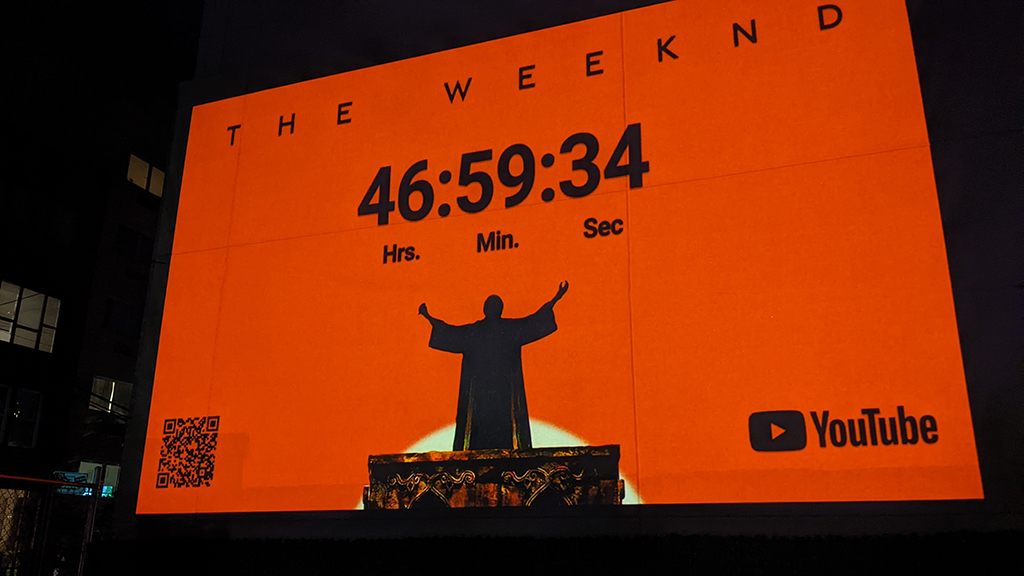
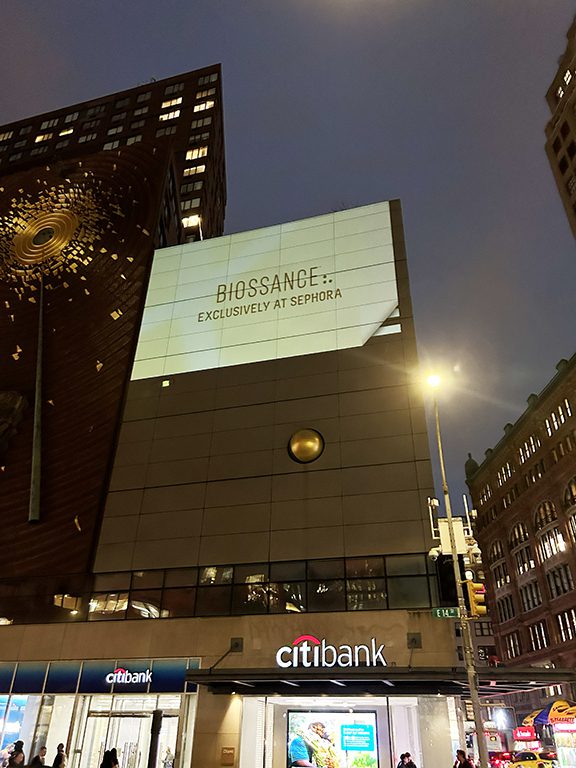
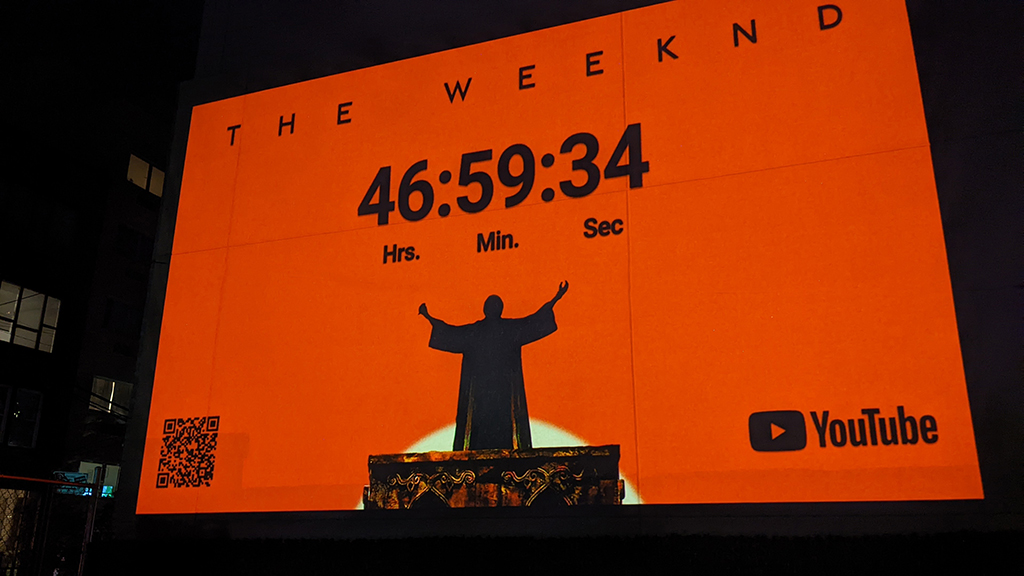
- Clients include: Biossance, The Weeknd, US Marine Corps, Women’s March, Reproductive Freedom for All, YouTube
Coverage & Estimated Impressions
| Zone / Area | Peak Hours | Foot Traffic | Est. Nightly Impressions | Best For |
|---|---|---|---|---|
| Downtown Entertainment District near Salem Convention Center | 8PM–1AM | High | 8,000–35,000 | Product Launch |
| Reed Opera House Area | 8PM–1AM | High | 8,000–35,000 | Event Promotion |
| Commercial Street Arts Corridor | 8PM–1AM | High | 8,000–35,000 | Brand Awareness |
| Riverfront Area | 8PM–1AM | High | 8,000–35,000 | Political |
Frequently Asked Questions
The highest-value projection windows during a regular Oregon Legislative Assembly session fall during active floor weeks and high-profile committee hearing periods — the periods when legislators, lobbyists, and advocacy organization staff are most concentrated in the Capitol District and when press attention on Salem is highest. Opening week and weeks surrounding major vote sequences typically concentrate the maximum number of decision-makers in the downtown corridor simultaneously. Special session windows, when they occur, provide similar concentration with the added urgency that accelerated legislative timelines create. AGM recommends aligning campaign timing with the specific legislative calendar relevant to your advocacy objective — and can work with a client’s policy team to identify the optimal week within a session period.
The Capitol-to-hotel pedestrian circuit is specifically the audience geometry that makes Salem projection advertising uniquely valuable for advocacy organizations. The Oregon State Capitol building is within easy walking distance of Salem’s downtown hotel cluster and the Commercial Street restaurant corridor — the daily movement pattern of legislators, lobbyists, and agency staff during session concentrates them precisely in the corridors where Commercial Street and Convention Center district projections are visible. A building face projection on a Commercial Street building, visible from the westbound sidewalk, intercepts this audience on one of the two or three routes they walk multiple times daily during an active session week. The unavoidable, at-scale nature of a 20,000-lumen projection in a familiar pedestrian corridor is qualitatively different from any digital advertising — it registers as a physical event in the environment, not as a screen advertisement that can be scrolled past.
The Convention Center district is effective year-round — not just during legislative sessions. The Salem Convention Center hosts regional and statewide conferences, professional association meetings, and civic gatherings throughout the year, each of which concentrates a specific audience of professionals and organizational decision-makers in the Convention Center neighborhood for the duration of their event. Organizations that want to reach audiences attending specific statewide conferences — agricultural industry, healthcare, education, environmental, or public safety — can time Salem Convention Center projections to specific conference dates and reach those exact professional audiences during their evening social circuit away from the event facility.
No other Salem advertising format reaches the legislative and lobbying community as directly as building projection during a session period. Salem radio reaches commuter and residential audiences, not the concentrated downtown legislative circuit. Salem print reaches subscribers, not the specific in-person session audience. Digital advertising reaches devices, and the legislative community’s in-person session schedule significantly reduces the screen time of its members during high-activity session weeks. Building projection reaches people on foot, in the physical environment where they are present and paying attention to their surroundings — which is exactly where Salem’s legislative audience is during a session. It is not a substitution for digital or print; it is an additive reach layer that accesses an audience those formats miss.
The Riverfront area’s audience concentration is strongest during Oregon’s dry season — late May through September — when Riverfront Park draws the most consistent recreational and leisure audience. Outside those months, the park’s ambient pedestrian audience drops significantly during wet-season evenings. For campaigns specifically targeting the Riverfront’s recreational consumer audience, late spring through early fall is the optimal window. For campaigns targeting Salem’s civic and legislative audience, the Riverfront is typically a secondary or weekend complement to the more consistently active Convention Center and Commercial Street corridors, which draw pedestrian traffic year-round from their commercial and hospitality anchors.
Oregon statewide advocacy tours — covering Salem’s legislative audience, Portland’s civic and arts district audiences, and Eugene’s university and progressive community audiences in a coordinated multi-night campaign — are one of AGM’s most common Oregon advocacy campaign structures. Salem is typically scheduled on weekday session-period nights when the legislative audience is most concentrated; Portland nights are structured around First Thursday or Gallery Walk timing when Pearl District and Alberta pedestrian density peaks; Eugene nights target the Whiteaker on Thursday-through-Saturday. A three-market Oregon advocacy tour with AGM operates as a single campaign with one advance scouting pass, one crew movement itinerary, and a single post-campaign documentation package covering all three markets.
Earned media is a significant component of Salem advocacy campaign ROI — particularly for campaigns targeting the legislative audience. Oregon press covering the Capitol beat is concentrated in Salem during session periods — Statesman Journal reporters, OPB political correspondents, Willamette Week Capitol reporters, and statewide news wire reporters all have regular Salem session presence. A visually compelling building projection in the Capitol District or Commercial Street corridor is exactly the kind of unexpected visual event that generates photograph-worthy documentation from both press and civilian social media sources. Advocacy organizations that structure their Salem projection campaigns to coincide with a specific bill hearing or legislative vote can use earned media pickup from the projection to amplify their message into the broader Oregon press cycle simultaneously with the direct visual reach of the projection itself.
Salem’s historic commercial district includes buildings on state and local historic registers, and facade projection — which involves directing light onto an exterior surface without any physical attachment to the building — does not constitute modification of historic fabric in the sense that most preservation regulations address. Light projection is temporary, reversible, and leaves no physical trace on the building surface. For permitted wall arrangements with historic district building owners, AGM presents the projection as a temporary lighting installation with full reversibility and no surface contact, which typically satisfies preservation officer consultation requirements. AGM’s advance scouting process identifies whether candidate walls fall within Historic District boundaries and flags this for the location recommendation so clients can make informed decisions about which Salem locations carry historic review considerations.
Coalition projection campaigns — where two or more aligned advocacy organizations share a Salem campaign night — are a viable and occasionally more cost-effective structure than individual organization deployments. The per-night projector rate remains Contact us for a custom quote. regardless of how many organizations are credited in the campaign creative, and splitting that cost across coalition partners who are jointly advancing a shared legislative objective is a straightforward arrangement. Creative that represents a coalition of organizations on a single projection night requires clear visual hierarchy planning — the image needs to read coherently as a unified message rather than a collection of competing logos — and AGM can advise on coalition creative structure as part of the campaign planning process.
Every Salem campaign receives GPS-documented location data, photographic documentation captured during the projection run, and technical deployment notes covering surface performance, audience conditions, and operational timeline. For advocacy organizations whose donor reporting or board communications require evidence of campaign reach and visual impact, the post-campaign photography — showing the 20,000-lumen projection on a downtown Salem building face with visible pedestrian audience present — is typically the most compelling documentation deliverable. Organizations that combine AGM’s post-campaign photography with any earned media pickup from the campaign night produce strong reporting packages for foundation donors, board presentations, and member communications that demonstrate visual scale and public presence in ways that click-through rate reports cannot.
The Reed Opera House area is specifically well-suited for arts and cultural organization campaigns. The Liberty Street corridor’s identity as a civic and cultural destination gives projection campaigns in this zone an ambient context that reinforces arts and cultural messaging rather than competing with it — a projection for a theater company, a statewide arts organization, or a cultural institution on a building face adjacent to one of Salem’s most recognized performance landmarks lands in exactly the right narrative and physical environment. The Reed’s performance programming creates predictable evening audience windows, and organizations that time their projection campaigns to performance nights at the Reed can reach arts-engaged audiences as they arrive and depart in a zone where the surroundings prime them for aesthetic engagement.
More AGM Outdoor Advertising Services
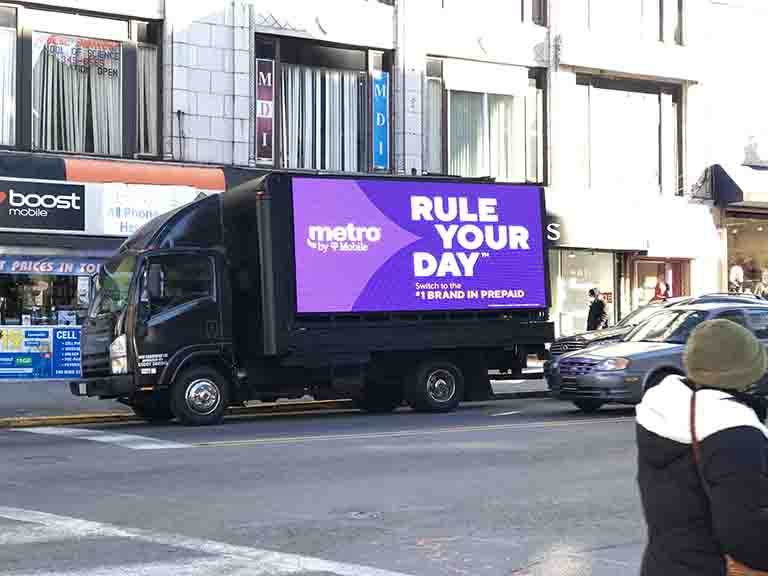
Led Billboard Trucks
Mobile LED displays that bring your brand to any location, any event.
Fly Posting
Street-level poster saturation across walls, construction sites, and corridors.

Sidewalk Decals
Ground-level branded decals at pedestrian hotspots and event entrances.

Sidewalk Stencils
Creative stencil campaigns that put your brand in the path of pedestrians.