American Guerrilla Marketing
Nationwide Service
Media planning, media buying, billboard advertising, & guerrilla marketing
Guerrilla Projections in Stamford, CT
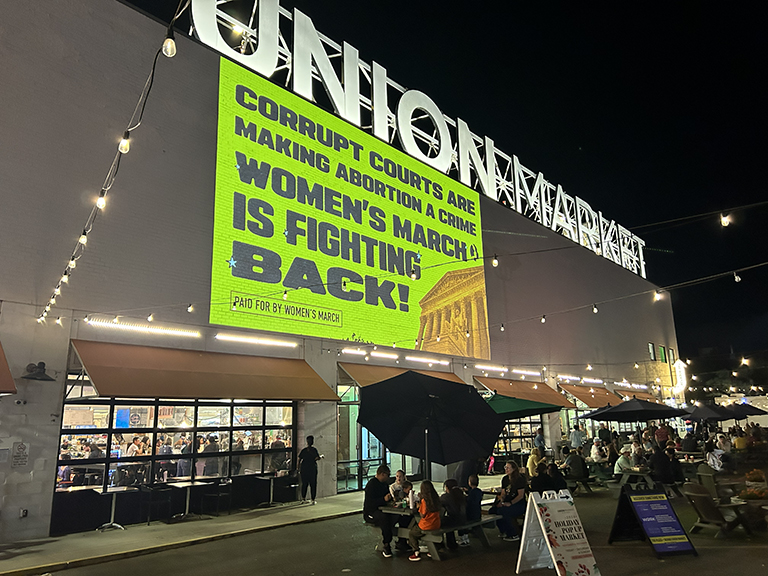
Stamford’s transformation into a genuine live-work-play destination has created a corporate professional audience that moves through a real entertainment district every evening — making it the most affluent and commercially strategic guerrilla projection market in Connecticut.
Why Stamford Is Connecticut’s Premium Projection Market
Stamford occupies a unique position in the Connecticut market: it’s the state’s most commercially sophisticated city, functioning as New York City’s most significant satellite economy north of the five boroughs. The concentration of financial services, media companies, and corporate headquarters within walking distance of a genuine entertainment district creates an audience profile that no other Connecticut city can match — high-income professionals who are accustomed to premium brand experiences and who dine, socialize, and attend events within the Bedford Street and Harbor Point corridors regularly enough that projection advertising in those zones can build frequency as well as initial impact.
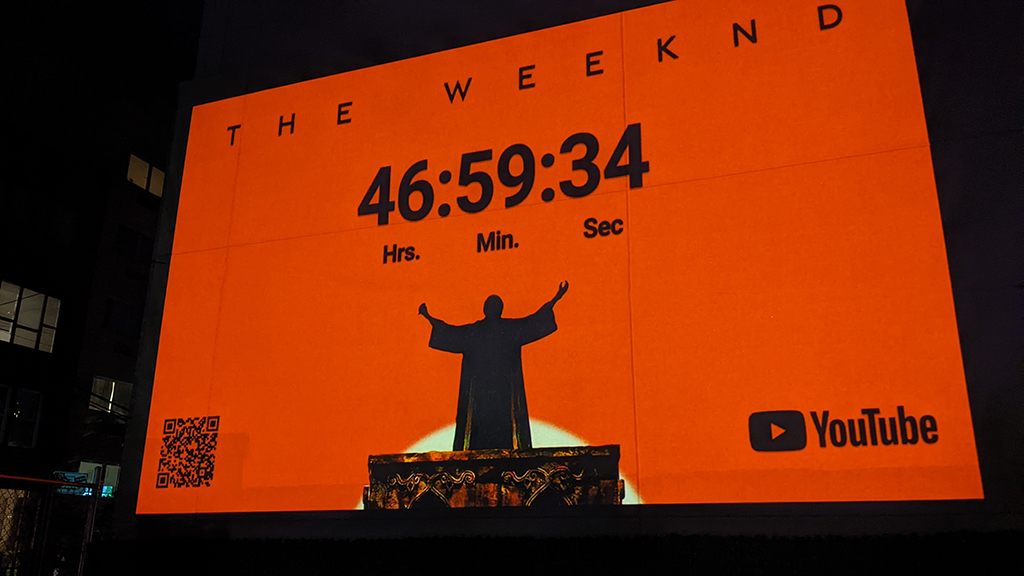
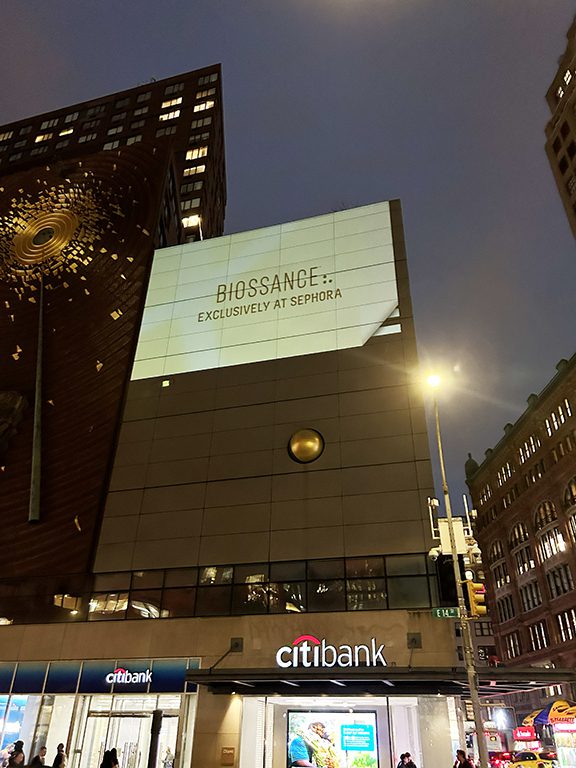
AGM’s projection client roster includes Netflix, Disney, Coca-Cola, FanDuel, Live Nation, iHeartRadio, and the US Marine Corps. A confirmed case study: the US Marine Corps × CMA Fest Nashville — multi-night projections onto architectural surfaces throughout the festival footprint, reaching 80,000+ attendees across the campaign window. Projection advertising scales across every brand category; what our campaigns share is scale, precision, and a physical presence digital cannot replicate.
Past AGM projection clients include Coca-Cola, Live Nation, and iHeartRadio, with multi-night campaigns that generated earned media coverage and massive organic social sharing.
American Guerrilla Marketing has worked the Stamford market with specific attention to this corporate consumer dynamic. The technical variables of surface selection — wall dimensions, reflectivity, window-to-wall ratio, standoff distance — are evaluated alongside the audience strategic variables: what time of evening does this location’s pedestrian traffic peak, what demographic does that audience represent, and what campaign objectives does that combination of surface and audience most effectively serve? In Stamford, those questions produce answers that favor premium brand positioning, financial services marketing, and entertainment releases targeting the 30-to-55 professional demographic concentrated in the city’s live-work districts.
The city’s geography along the I-95 and Metro-North corridor creates a second audience dimension worth considering. Stamford’s commuter infrastructure means that its restaurants and entertainment venues draw from a geographic catchment that extends well into Fairfield County — Greenwich, Darien, New Canaan, and Westport all feed into Stamford’s dining and nightlife infrastructure. Projection advertising in Stamford’s entertainment corridors reaches not just Stamford’s residential population but the broader Fairfield County professional audience that treats the city’s downtown as a regional destination.
The physical building stock across Stamford’s projection-capable zones ranges from the older industrial character of the South End to the newer mixed-use architecture of Harbor Point and the adapted commercial buildings along Bedford Street. That variety creates different surface-quality profiles — which means AGM’s scouting process produces a richer set of options than a more architecturally uniform market would offer. Some campaigns benefit from the scale and raw industrial quality of South End warehouse surfaces; others benefit from Harbor Point’s waterfront setting and higher-income residential audience. Understanding which location combination serves a specific campaign objective is where AGM’s market experience in Stamford translates directly into campaign performance.
Stamford’s proximity to New York City — approximately forty-five minutes by Metro-North — means campaigns here often function as part of a broader Northeast market strategy. Brands running coordinated projection campaigns across New York and Connecticut regularly include Stamford as the Connecticut anchor, knowing that the city’s corporate professional audience represents the highest-income consumer segment in the state. The social media reach of a Stamford campaign extends into both the New York metro area and the broader Connecticut market, which means the effective reach of the investment exceeds what local impression numbers alone would indicate.
Reach Stamford's Professional Audience at Scale
Bedford Street, Harbor Point, the South End warehouse buildings — AGM has Stamford's highest-value projection locations documented and ready for your campaign. Tell us your objectives and we'll design the right execution around them.
Our Campaign Locations
Browse Cities in Connecticut
Select a city to explore Guerrilla Projections opportunities.
Stamford's Building Surfaces: A Market-by-zone Analysis
Effective projection advertising in Stamford requires matching the right surface to the right audience for each campaign objective. The four zones most relevant to AGM’s Stamford campaign planning differ in surface quality, audience character, and the type of campaign they’re best designed to support.
Downtown Stamford Entertainment District — Bedford Street
Bedford Street runs as Stamford’s primary evening pedestrian corridor, lined with restaurants, bars, and entertainment venues that generate consistent foot traffic from the city’s professional and residential population throughout the week. Commercial buildings along and adjacent to Bedford Street include several with substantial blank upper-floor facades that face the pedestrian spine directly, creating natural projection targets in the corridor where impressions per campaign hour are highest. The ambient light level on Bedford Street is moderate — enough to create a lively evening atmosphere but not so intense as to wash out a 20,000-lumen projected image on an appropriately light-colored surface. Campaigns in this zone benefit from the reliable audience density that a mature entertainment corridor with multiple years of established programming generates.
Harbor Point Development Area
Harbor Point represents Stamford’s most contemporary built environment — a mixed-use waterfront development with residential towers, hotels, restaurants, and retail that has fundamentally changed the character of Stamford’s south waterfront. The development’s newer construction includes building types with larger blank facade sections on parking and service levels, and the waterfront setting creates natural viewing positions from the promenade and the approach corridors from downtown. The Harbor Point audience skews toward the development’s residential population and hospitality guests — a younger, higher-income profile than the Bedford Street dinner-trade crowd — which makes this zone particularly well-suited to luxury product launches, premium entertainment releases, and brand campaigns targeting the aspirational consumer segment.
South End Warehouse Buildings
Stamford’s South End warehouse district sits several blocks from the Bedford Street entertainment spine, but its building stock represents the highest technical quality projection surfaces in the city. The former industrial buildings in this area present large, flat masonry facades with minimal window openings — the kind of continuous wall surface that allows for projected images spanning the full height and width of a multi-story building face. Many of these structures have painted exteriors that significantly improve light reflectivity compared to raw brick, supporting vivid color reproduction at full campaign scale. South End campaigns trade some audience density relative to Bedford Street for maximum image size and surface quality — a trade that makes sense for campaigns where visual impact and documentation quality are the primary objectives rather than raw impression volume.
Mill River Corridor
The Mill River corridor offers a distinctive campaign environment in Stamford’s emerging waterfront-adjacent zone. Buildings along the corridor include a mix of commercial and light industrial structures with exterior walls that face the river and adjacent pedestrian infrastructure. The corridor’s audience is more mixed than Bedford Street or Harbor Point — a blend of neighborhood residents, outdoor recreation users, and commuters passing through — which makes it suitable for campaigns with broader awareness objectives rather than narrowly targeted demographic buys. The waterfront setting creates visual context that adds production value to projection campaigns, particularly when content is composed to incorporate the architectural and environmental character of the river-adjacent setting.
What Projection Advertising Campaigns Work In Stamford
Financial Services and Corporate Brand
Stamford’s concentration of financial services companies, hedge funds, and corporate headquarters creates a market where brand campaigns targeting institutional decision-makers and high-net-worth individuals can reach their audience in the social environments where brand impressions stick. Projection advertising in the Bedford Street corridor reaches CFOs and managing directors at dinner, not at their desks — a context where brand communication lands differently and often more effectively than in the office environment.
Premium Consumer Products and Retail Launches
Stamford’s affluent professional consumer base makes it one of the highest-value Connecticut markets for premium product launches. Luxury goods, premium food and beverage brands, high-end retail openings, and aspirational lifestyle products all find their target demographic concentrated in Stamford’s entertainment corridors with the spending power and cultural appetite to respond to premium brand communication at projection scale.
Entertainment and Cultural Releases
Entertainment releases targeting the 30-to-55 professional demographic — premium streaming content, music releases from established artists, film campaigns with sophisticated adult-audience positioning — find Stamford’s Bedford Street and Harbor Point audiences particularly well-suited. The city’s professional population is a significant consumer of premium entertainment content, and reaching them through projection advertising in their own neighborhood produces the kind of ambient brand contact that accumulates into purchase intent over time.
Civic and Regional Advocacy
Stamford’s role as Fairfield County’s civic center means advocacy campaigns with regional relevance — environmental issues, ballot measures, community campaigns — can reach politically engaged professional voters in the corridors they use most intensively. The city’s professional population is often highly civically active, making it a productive target for advocacy messaging delivered at the physical scale that building projection advertising uniquely enables.
Plan Your Guerrilla Projection Campaign in Stamford, CT
Tell us about your campaign goals, target audience, and preferred locations. Our team will help you plan a high-impact guerrilla projection campaign tailored to your needs.
Award Winning Personalized Service
You will get thoughtful, devoted, and individualized attention from our experienced, qualified, and professional personnel. Being one of the most illustrious agencies in Brooklyn, New York, American Guerrilla Marketing has been awarded the Best of Brooklyn title.
Nationwide
Industry City, Brooklyn, New York 11232
American Guerrilla Marketing
Hours
Mon - Fri: 9 AM - 5 PM
Sat & Sun: Closed
Automate your campaign with AGM’s Request for Proposal Builder.
Automate your campaign with AGM’s Request for Proposal Builder. Simply answer a few quick questions about your campaign goals, markets, and timeline, and the system will generate a tailored presentation with recommended strategies, quantities, and pricing. Click the RFP Builder to instantly receive your customized proposal.
How AGM Plans and Executes Stamford Campaigns
Market Scouting and Location Selection
AGM’s Stamford scouting process evaluates candidate locations across Bedford Street, Harbor Point, the South End warehouse zone, and the Mill River corridor, assessing each surface for technical performance characteristics and strategic audience alignment. The output is a ranked shortlist that matches campaign objectives with the most suitable available locations. Advance scouting is available at approximately contact us for a quote. and includes physical reconnaissance that captures ambient light conditions, available standoff positions, and building access logistics not visible through digital survey methods.
Creative Development for Stamford’s Professional Audience
Creative content for Stamford campaigns is typically formatted with the professional consumer’s visual sophistication in mind. The Bedford Street and Harbor Point audiences encounter premium design and brand communication regularly — in the financial media they consume, the urban environments they travel through on business, and the premium retail and hospitality environments they frequent. Campaign creative that meets that standard of visual quality performs; creative that falls short of it signals the wrong brand message to exactly the audience the client is trying to impress. AGM’s technical team formats assets to each confirmed wall’s specific geometry and surface conditions.
Campaign Night Operations
AGM’s own crew manages every stage of the Stamford campaign night. The 20,000-lumen projection system and self-contained generator arrive as a mobile package requiring no building electrical connection. Setup takes one to two hours; the campaign runs from dusk for four to six hours with real-time technical management by the on-site crew. Complete breakdown at end of run leaves no trace of the campaign’s physical presence.
Documentation for Corporate and Brand Clients
Post-campaign documentation includes GPS-documented location records and professional photography and video of the projection at scale. For corporate and financial services clients in Stamford, these assets serve investor relations presentations, brand campaign reporting, and earned media placement. The Harbor Point and South End building contexts produce documentation imagery that communicates premium market positioning effectively — the visual quality of the setting reinforces the brand signal of the projection medium itself.
Pricing For Stamford Guerrilla Projection Campaigns
Stamford projection campaigns are priced at contact us for a quote. This rate includes the complete package: 20,000-lumen commercial projection system, generator and power solution, electronics bundle, mobility unit, and two-person technical crew from setup through breakdown. The system is entirely self-contained — no building electrical access is required for public-facing campaigns.
Advance location scouting adds approximately contact us for a quote. Private-property campaigns with formal building owner authorization add Contact us for a custom quote. per night. Brands running Stamford campaigns as part of a broader New York and Connecticut regional rollout should discuss multi-market logistics with AGM’s team — sequential deployment of a single equipment package across Stamford and adjacent markets carries cost efficiencies relative to separate single-market mobilizations.
Case Study Reference: Women's March — Advocacy at Architectural Scale
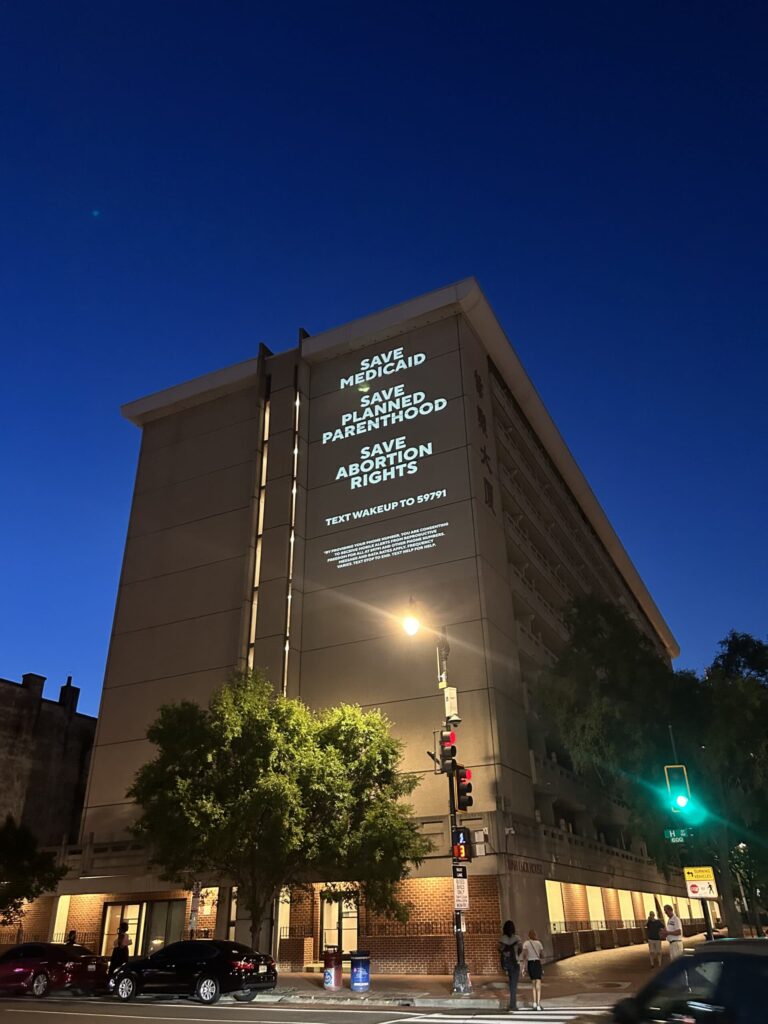
The Women’s March used building projection advertising to create civic-scale visual presence that complemented and extended the physical event’s reach into the surrounding urban environment. Projecting messaging onto landmark building facades at heights of thirty to sixty feet or more, the campaign generated earned media coverage and social documentation that amplified the message far beyond what traditional advertising placements in similar budget ranges would have produced. The projection medium’s inherent drama — the sheer unexpectedness of a large image appearing on a familiar building at night — created the kind of attention that no static format can manufacture.
For Stamford, the relevant lesson from this case study is about civic and corporate audience engagement simultaneously. Stamford’s professional population is politically active, follows regional and national civic issues closely, and occupies the same entertainment corridors where brand and entertainment campaigns run. Advocacy and civic campaigns in Stamford reach an audience that combines high civic engagement with the social connectivity and media literacy to amplify projection-campaign documentation into earned media coverage. The combination makes Stamford an unusually high-return market for advocacy campaigns that need both mass exposure and elite-audience penetration in the same execution.
Who Runs Projection Campaigns In Stamford
Financial services and corporate brand clients represent a significant share of Stamford’s projection calendar — brands that want to reach Fairfield County’s professional consumer base in a social environment rather than a work context, where brand impressions register at a different register of attention than office-delivered marketing. The medium itself communicates creative ambition and investment, which functions as a brand signal in addition to whatever specific message the campaign carries.
Premium consumer product brands — luxury goods, high-end food and beverage, aspirational lifestyle products — use Stamford’s Bedford Street and Harbor Point zones to reach the highest-income consumer segment in Connecticut. Retail launches, product introductions, and seasonal campaigns by brands targeting the premium consumer find the Stamford market’s demographic concentration more valuable per impression than comparable investment in larger markets with more diluted demographic profiles.
Entertainment brands running Northeast release campaigns regularly include Stamford as the Connecticut market anchor, particularly when the target demographic aligns with the professional 30-to-55 population that concentrates in the city’s entertainment infrastructure. The Metro-North corridor’s reach into the broader Fairfield County audience extends the effective geographic coverage of a Stamford campaign into the surrounding affluent suburban market.
Coverage & Estimated Impressions
| Zone / Area | Peak Hours | Foot Traffic | Est. Nightly Impressions | Best For |
|---|---|---|---|---|
| Downtown Stamford Entertainment District | 8PM–12AM | Moderate | 2,500–12,000 | Product Launch |
| Harbor Point Development Area | 8PM–12AM | Moderate | 2,500–12,000 | Event Promotion |
| South End Warehouse Buildings | 8PM–12AM | Moderate | 2,500–12,000 | Brand Awareness |
| Mill River Corridor | 8PM–12AM | Moderate | 2,500–12,000 | Political |
Frequently Asked Questions: Guerrilla Projections in Stamford, CT
Stamford’s concentration of financial services professionals, corporate executives, and high-income households creates a consumer audience that is difficult to reach through conventional mass-market advertising at comparable efficiency. Building projection advertising in Stamford’s entertainment corridors reaches this demographic in a social context — over dinner, between events, walking between venues — where brand impressions are received with lower psychological resistance than in work or commute contexts. The audience’s purchasing power, decision-making authority in both personal and professional capacities, and active social media connectivity make each impression in this market worth more than comparably measured impressions in lower-income demographic environments.
Harbor Point’s waterfront setting and mixed-use programming create a natural concentration of the development’s residential and hospitality population in the evening hours. The development’s newer construction includes building types with suitable projection surfaces — light-colored cladding, large blank sections on parking and service levels — and the waterfront promenade provides both projector positioning opportunities and natural audience viewing positions. Event programming at Harbor Point’s dining and hospitality venues creates predictable peak-traffic windows that projection campaigns can be scheduled to intercept at maximum audience density.
Stamford’s municipal regulations on temporary signage and outdoor media vary by zone and execution type. Public-facing projection campaigns from mobile units on public streets typically fall outside the scope of static sign permit requirements, though local ordinances should be reviewed for each specific campaign. Private-property campaigns with building owner authorization operate under a different regulatory framework and typically provide the greatest operational flexibility. AGM’s team researches applicable requirements for each Stamford campaign location during the planning phase to ensure any relevant conditions are addressed before campaign night.
Stamford’s entertainment district density on a per-block basis is competitive with Hartford’s downtown and Bridgeport’s arts corridor, but the audience demographic profile differs significantly. Stamford’s entertainment-district pedestrians skew strongly toward higher-income professionals, while Hartford and Bridgeport’s primary districts serve more diverse socioeconomic cross-sections. Raw impression volume at the highest-traffic times may be comparable across the three markets; the quality and economic profile of the Stamford audience makes each impression more commercially valuable for premium brand campaigns specifically.
Campaigns with geographic scope requirements that extend beyond Stamford can include Greenwich, Norwalk, or other Fairfield County markets as additional nights in a multi-night sequential tour. Greenwich’s smaller entertainment footprint limits projection surface options but serves a uniquely high-income demographic. Norwalk’s SoNo arts and entertainment district offers a different surface and audience profile that complements Stamford effectively in multi-market Fairfield County campaigns. AGM’s scouting team can assess candidate locations in any Fairfield County market as part of an expanded campaign plan.
Bedford Street delivers higher raw audience density on a typical evening, drawing from the full breadth of Stamford’s entertainment district foot traffic. The Mill River corridor offers a different audience quality — a mix of residents, outdoor recreation users, and commuters who are in a more relaxed, ambient-attention state than the active entertainment-district crowd on Bedford Street. Campaigns that benefit from a less competitive visual environment and a slightly lower-ambient-light setting sometimes perform better on the Mill River corridor per impression than on the higher-stimulation Bedford Street. The choice depends on the campaign’s target audience and creative positioning objectives.
A one-night Stamford campaign is contact us for a quote. A three-night campaign runs contact us for a quote. for the projection system costs, though multi-night campaigns typically involve planning and logistics efficiencies that reduce the ancillary costs per night relative to three separate single-night deployments. For campaigns with frequency-building objectives — brand awareness campaigns targeting repeat exposure among the same professional audience — the three-night or four-night format builds cumulative impression frequency in a way that a single campaign night cannot replicate. AGM’s team can walk through the multi-night campaign economics specific to each client’s objectives.
AGM has executed accelerated campaigns in the Stamford market when all logistical variables were already resolved — confirmed location, prepared creative, no permit-dependent access requirements. When a location from AGM’s existing Stamford surface inventory can be applied without new scouting, and when client creative is ready for technical formatting, mobilization timelines compress significantly from the standard two-to-four-week planning window. Clients with time-sensitive campaign windows should discuss their timeline constraints directly with AGM’s team at first contact so that any accelerated planning requirements can be identified and addressed immediately.
The South End’s warehouse buildings represent Stamford’s highest technical quality projection surfaces — large, flat masonry facades with minimal window interruption, many with painted exterior finishes that significantly improve light reflectivity compared to raw brick. The trade-off relative to Bedford Street is lower ambient pedestrian traffic, which reduces raw impression volume. For campaigns where documentary photography quality, maximum image scale, or specific industrial-aesthetic visual character is the primary objective, the South End’s technical advantages outweigh the audience density difference. Multi-location campaigns that combine a South End surface for primary projection with a Bedford Street location for impression volume can capture both variables in a single campaign design.
Financial services brands targeting Stamford’s professional community have used projection advertising to reach their core audience in social environments outside the standard financial media ecosystem. Premium consumer goods companies — luxury, high-end food and beverage, automotive — use Stamford’s entertainment corridors to access Fairfield County’s high-income consumer base. Entertainment brands running adult-skewing release campaigns include Stamford in Northeast regional rollouts targeting the 35-to-55 professional demographic. Advocacy organizations with regional civic campaigns find Stamford’s politically active professional population a high-value audience for issue-based projection messaging.
Our Campaign Locations
Browse All States
Explore Guerrilla Projections opportunities across the United States.
49 States • 192 Cities
More AGM Outdoor Advertising Services
Led Billboard Trucks
Mobile LED displays that bring your brand to any location, any event.

Fly Posting
Street-level poster saturation across walls, construction sites, and corridors.

Sidewalk Decals
Ground-level branded decals at pedestrian hotspots and event entrances.

Sidewalk Stencils
Creative stencil campaigns that put your brand in the path of pedestrians.