American Guerrilla Marketing
Nationwide Service
Media planning, media buying, billboard advertising, & guerrilla marketing
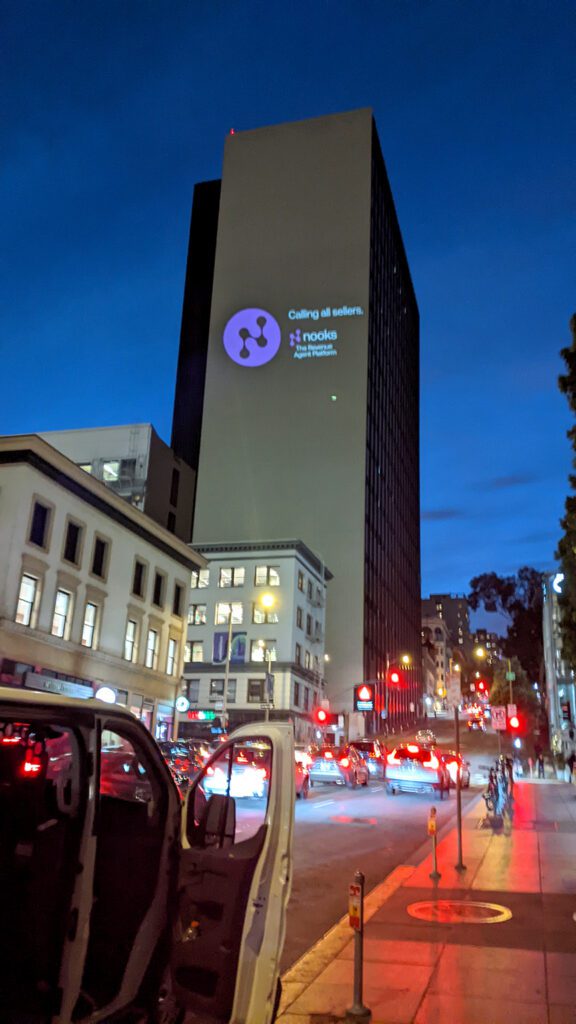
Guerrilla Projections in Tacoma, WA

Tacoma’s post-industrial warehouse corridor, expanding arts scene, and a Stadium District that draws consistent evening crowds make it one of the Pacific Northwest’s most compelling markets for large-scale building facade projection campaigns.
Tacoma’s Position in the Pacific Northwest Projection Market
Tacoma has spent the past two decades in active reinvention — converting its industrial heritage into an arts and entertainment identity while retaining the physical landscape that makes it uniquely valuable for outdoor projection advertising. That combination of transformation and retention is exactly what guerrilla projection campaigns require: a city where blank industrial walls coexist with growing nighttime pedestrian culture, where the audience is hungry for engaging visual experiences in a built environment that doesn’t yet deliver them through conventional media channels.
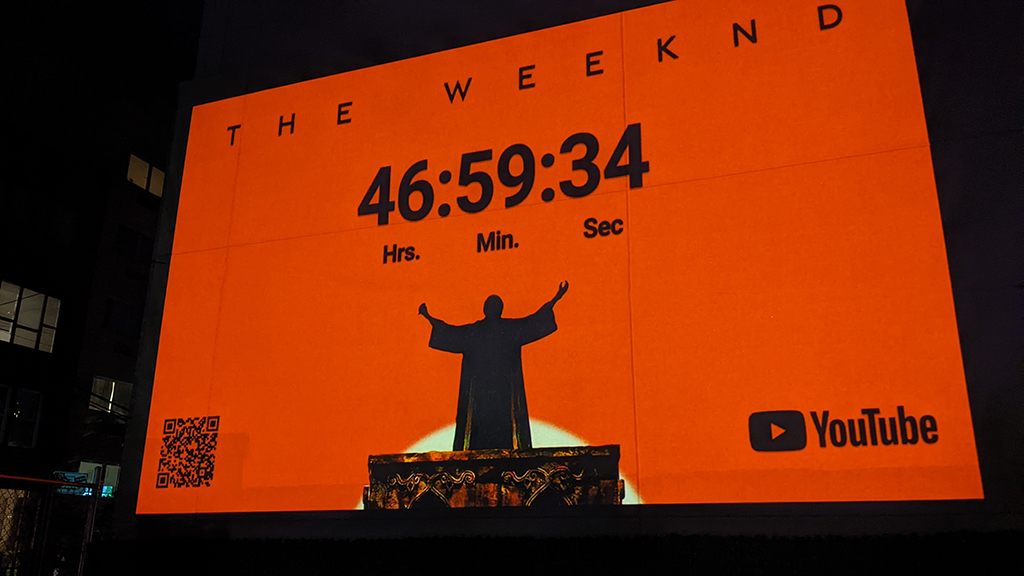
AGM’s projection client roster includes Netflix, Disney, Coca-Cola, FanDuel, Live Nation, iHeartRadio, and the US Marine Corps. A confirmed case study: the US Marine Corps × CMA Fest Nashville — multi-night projections onto architectural surfaces throughout the festival footprint, reaching 80,000+ attendees across the campaign window. Projection advertising scales across every brand category; what our campaigns share is scale, precision, and a physical presence digital cannot replicate.
AGM has executed guerrilla projection campaigns for brands including Netflix, Disney, and FanDuel — deploying high-impact visual activations onto architectural surfaces in major markets nationwide.
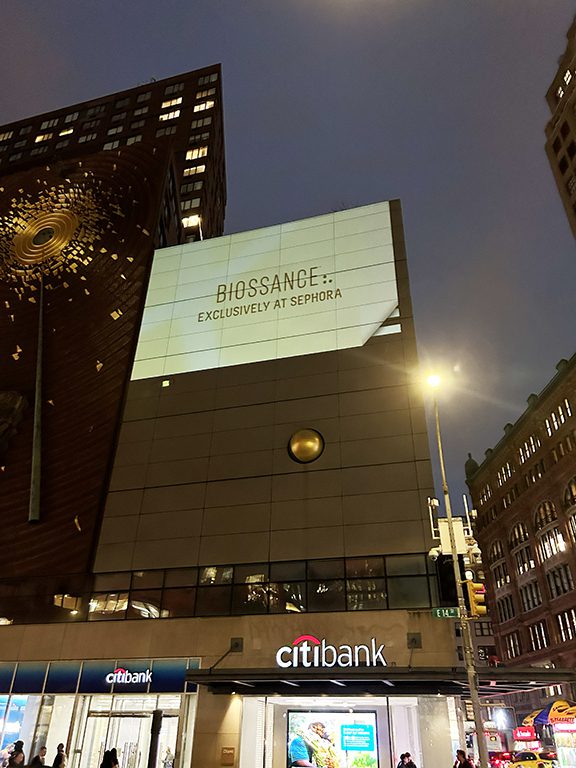
The Warehouse District alone elevates Tacoma into a tier of projection markets that most Pacific Northwest cities simply cannot access. The concentrated inventory of former industrial and warehousing buildings along the district’s western edge presents projection surfaces — three- and four-story concrete and masonry walls — that are among the largest unobstructed building faces available for outdoor advertising in the entire region. When a 20,000-lumen system projects at 150 feet of throw distance onto a four-story concrete end-wall, the resulting image approaches 70 feet in height. At that scale, the projection is not just advertising — it restructures the visual identity of a full city block for the duration of the campaign.
The Stadium District’s historic architecture, the Hilltop neighborhood’s growing arts corridor, and 6th Avenue’s entertainment-oriented pedestrian strip each contribute distinct audience profiles and surface characteristics that allow Tacoma campaigns to be scoped for specific objectives rather than forced into a one-size-fits-all placement approach. An entertainment release campaign that needs scale and spectacle goes to the Warehouse District. An advocacy campaign that needs density and engagement goes to 6th Avenue or the Hilltop corridor. A retail launch that benefits from arts-aware early adopters works in the Stadium District’s gallery-adjacent streets.
Tacoma’s geographic position — between Seattle and Olympia, along the Interstate 5 corridor that connects the Puget Sound region to Portland — also means that projection campaigns in the city reach a regional transit audience beyond the metro’s resident base. Major events at the Tacoma Dome, the Museum of Glass, and other anchor institutions draw audiences from across the South Puget Sound region, creating event-aligned campaign windows that significantly multiply effective reach.
AGM brings its full national projection infrastructure to Tacoma: 20K-lumen commercial projection system, direct two-person technical crew, advance physical scouting, and comprehensive post-campaign documentation. The same standards and equipment that the agency deploys in New York, Los Angeles, and Chicago apply to every Tacoma activation — because the investment a client makes in a Tacoma projection campaign deserves the same level of execution regardless of market size.
Put Your Brand on Tacoma's Walls
From the Warehouse District's monumental blank concrete faces to 6th Avenue's entertainment-district foot traffic, AGM deploys 20,000-lumen projection campaigns across Tacoma's most impactful corridors. Let's scope your activation.
Industrial Heritage, Blank Walls, And Campaign Opportunity
Tacoma’s history as a port city and regional industrial center has left a physical legacy that is extremely valuable to projection advertisers: large, relatively unmodified industrial buildings whose exterior walls were never designed with advertising in mind but happen to meet every criteria for high-performance projection surfaces. Flat, smooth, light-colored, unobstructed by windows or architectural details — the Warehouse District’s best walls are projection ideal by accident of construction history, and that accident is a significant competitive asset for brands willing to deploy projection advertising as a primary rather than supplemental out-of-home medium.
The distinction between Tacoma’s industrial walls and the commercial facade inventory found in most urban projection markets is substantial. Commercial buildings typically have window bands, signage attachments, balcony projections, and other architectural features that interrupt the surface and create dark spots, lens flare, or distortion in projected images. Industrial buildings built for warehousing or manufacturing were designed for maximum enclosed floor area, which means minimal exterior openings, flat planar walls, and structural systems that produce exactly the uninterrupted surface area that projection advertising maximizes.
Not every building in Tacoma’s industrial zones qualifies for projection campaigns — surface orientation relative to available projector positioning, proximity to competing light sources, and property owner access all filter the inventory. But the starting inventory in Tacoma’s Warehouse District is large enough that AGM’s scouting team consistently identifies multiple viable candidate surfaces per campaign, allowing primary and backup selections without compromising on surface quality. That redundancy is a logistical asset on campaign nights when site conditions may require pivoting from a primary to a backup location.
Tacoma's Surface Inventory By District
The Warehouse District
Tacoma’s Warehouse District is the city’s premier projection advertising zone and one of the strongest large-format surface environments in the Pacific Northwest. The district occupies several blocks of former warehousing, cold storage, and light manufacturing facilities west of Pacific Avenue, and its building stock is characterized by three- and four-story poured-concrete and painted CMU-block walls with minimal fenestration and no commercial signage interruptions. Nighttime foot traffic in the Warehouse District has grown as the surrounding entertainment and dining scene expands outward from downtown’s more established corridors, and the area’s position between the waterfront and downtown creates natural pedestrian transit through the district during evening hours. For campaigns that prioritize visual scale above all other factors, the Warehouse District is Tacoma’s unambiguous starting point.
Stadium District Historic Entertainment Zone
The Stadium District takes its name from Stadium High School’s iconic castle-like building and encompasses a historic neighborhood of late-Victorian and early-20th-century commercial and residential buildings that have been gradually reactivated by restaurants, bars, galleries, and boutique businesses. The district’s building stock is primarily brick, which requires higher lumen output to achieve saturated projection images but offers aesthetic context that many campaign types benefit from — the patina of weathered brick framing a projected image creates a visual tension that clean concrete does not. Foot traffic in the Stadium District is concentrated around its dining and entertainment nodes, and the arts-aware character of the neighborhood makes it particularly receptive to cultural, advocacy, and entertainment release campaigns.
Tacoma’s Hilltop Neighborhood Arts Corridor
The Hilltop neighborhood has undergone significant community arts investment over the past decade, emerging as one of Tacoma’s most culturally active residential corridors. The neighborhood’s building stock mixes older commercial structures with newer arts-oriented development, and its evening pedestrian culture is driven by local residents, artists, and community organizations whose engagement with public visual culture makes them active documenters and amplifiers of outdoor projection campaigns. Hilltop campaigns work particularly well for advocacy organizations, community-oriented brands, and causes with strong local resonance whose message benefits from intimate projection scale in a neighborhood context rather than monumental-scale projection in a commercial district.
Murray Morgan Bridge Arts District Area
The area surrounding the Murray Morgan Bridge — Tacoma’s historic bascule bridge connecting downtown to the tide flats — has developed a distinct arts identity anchored by studios, galleries, and creative businesses in the converted warehouse and commercial spaces clustered near the bridge’s approaches. The building inventory in this zone includes a mix of older brick commercial buildings and former industrial structures in varying states of reuse, and the district’s arts-engaged audience makes it a strong target for cultural and creative-sector campaign content. The bridge itself provides dramatic visual backdrop for campaigns that can position a projector to use the bridge’s structural elements as part of the composition.
6th Avenue Entertainment District
Tacoma’s 6th Avenue strip is the city’s most consistent nighttime entertainment corridor, hosting a dense concentration of bars, restaurants, music venues, and independent businesses that generate reliable foot traffic across weekend and weeknight evenings. The district’s building stock is primarily mid-century commercial construction — two- and three-story buildings with blank wall sections above the ground-floor commercial layer — and the pedestrian-scale of the corridor means that projection campaigns at medium image size (30–45 feet) achieve maximum legibility for the audiences moving through the district at ground level. 6th Avenue’s entertainment-oriented audience makes it the best Tacoma location for campaigns tied to music releases, film events, streaming platform launches, and brand activations targeting the 21–40 nightlife demographic.
Plan Your Guerrilla Projection Campaign in Tacoma, WA
Tell us about your campaign goals, target audience, and preferred locations. Our team will help you plan a high-impact guerrilla projection campaign tailored to your needs.
Award Winning Personalized Service
You will get thoughtful, devoted, and individualized attention from our experienced, qualified, and professional personnel. Being one of the most illustrious agencies in Brooklyn, New York, American Guerrilla Marketing has been awarded the Best of Brooklyn title.
Nationwide
Industry City, Brooklyn, New York 11232
American Guerrilla Marketing
Hours
Mon - Fri: 9 AM - 5 PM
Sat & Sun: Closed
Automate your campaign with AGM’s Request for Proposal Builder.
Automate your campaign with AGM’s Request for Proposal Builder. Simply answer a few quick questions about your campaign goals, markets, and timeline, and the system will generate a tailored presentation with recommended strategies, quantities, and pricing. Click the RFP Builder to instantly receive your customized proposal.
Creative Executions for Tacoma Audiences
Advocacy Campaigns
When Reproductive Freedom for All deployed building projection campaigns in Washington, DC to maximize public visibility for a national advocacy initiative, the campaign illustrated a format that translates directly to Tacoma’s political and civic culture. The city’s active community organizations and its history of civic engagement make advocacy projection campaigns particularly resonant in Tacoma’s arts and entertainment districts, where audiences encounter cause-driven visual media as a natural extension of the public discourse they already participate in.
Entertainment and Cultural Launches
Tacoma’s growing entertainment scene — anchored by the Tacoma Dome’s concert programming, the Theater District’s performing arts venues, and the Museum of Glass’s cultural programming — creates a strong audience base for entertainment-release and cultural-launch projection campaigns. The Warehouse District’s scale and the Stadium District’s character both serve entertainment campaigns, depending on whether the creative calls for visual spectacle or aesthetic intimacy.
Brand Awareness in the South Puget Sound
Consumer brands targeting the South Puget Sound region use Tacoma projection campaigns to reach an audience that is distinct from Seattle’s — less media-saturated, more geographically rooted, and often more brand-loyal once a local connection is established. A Tacoma projection campaign positions a brand as present and engaged in the city’s own identity, not parachuting in from a Seattle office park to claim regional relevance it hasn’t earned.
Arts Institution and Community Campaigns
Tacoma’s density of cultural institutions — the Museum of Glass, the Tacoma Art Museum, the Washington State History Museum, the Pantages Theater — creates a strong market for arts institution campaigns that use building projection to announce exhibitions, fundraising initiatives, programming launches, and community engagement events. The city’s arts-informed audience recognizes and values the format as a legitimate artistic medium, which elevates the institutional credibility of any organization that deploys it thoughtfully.
Logistics And Timeline For A Tacoma Projection Campaign
Tacoma campaigns begin with a dedicated scouting phase in which AGM’s team physically assesses candidate wall locations in each target district. For the Warehouse District, that assessment includes surface material and color, wall dimensions, available projector positioning from street level or adjacent elevated structures, and any property owner or city access requirements. For 6th Avenue and Stadium District campaigns, scouting also evaluates pedestrian flow patterns at the planned campaign hours and identifies the wall sections that maximize audience encounter without competing with commercial signage in the same visual field.
Pre-campaign lead time for Tacoma is three to four weeks for standard campaigns, covering the scouting phase, permit or property owner outreach if required, content production and format review, and equipment logistics. For campaigns aligned with Tacoma Dome events, Tacoma Night Market dates, or other major civic programming, AGM recommends four to six weeks of advance booking to secure preferred locations before event-adjacent demand tightens inventory.
Campaign night operations begin with crew arrival 90 minutes before planned projection start. Warehouse District deployments — which often require positioning on wider streets or at the edges of parking areas for maximum throw distance — can involve slightly longer setup times than compact urban configurations in 6th Avenue or Stadium District. The crew manages all equipment deployment, image calibration, content playback, and audience management during the operating window, and documentation capture runs continuously from first image to final breakdown. Each operating window typically runs four to six hours, beginning at dusk.
Reproductive Freedom for All’s advocacy campaigns showed how building projection in an urban environment converts the physical scale of the projected image into social and media reach that far exceeds what the local audience alone can deliver. The same dynamic applies in Tacoma: a projection on a Warehouse District wall is not just visible to pedestrians on the adjacent block — it is photographed and shared by those pedestrians in a format whose visual impact reads accurately on a smartphone screen, making the organic social reach of a Tacoma campaign substantially larger than its physical footprint.
Tacoma Campaign Investment
Building projection advertising in Tacoma is priced at contact us for a quote. . That rate covers the 20,000-lumen commercial projection system, generator and integrated power solution, electronics bundle, mobility unit, and a two-person AGM technical crew handling setup, operation, and full breakdown. Campaigns open at dusk and run four to six continuous hours per night.
Multi-night Tacoma campaigns carry the same per-night rate with crew and equipment remaining in market. Advance scouting is available at approximately Contact us for a custom quote. for the Tacoma market, credited against the campaign total for confirmed activations. Permitted or private-property location arrangements — such as coordination with building owners in the Warehouse District for access to optimal surface positions — run Contact us for a custom quote. per night depending on the building and the nature of the access agreement.
Clients who want to activate across both Tacoma and Seattle in the same week can structure multi-city campaigns with AGM that share scouting resources and equipment logistics, reducing total campaign cost compared to booking two independent single-city activations. AGM coordinates the inter-market logistics and can structure the campaign schedule to maximize audience reach across both metros.
Who Activates In Tacoma
Tacoma’s projection advertising market draws arts institutions, advocacy organizations, entertainment brands, community-oriented businesses, and regional retailers who want to establish presence in the South Puget Sound’s most culturally active city. The Warehouse District attracts brands whose creative calls for scale. Stadium District and Hilltop draw causes and community organizations whose audience lives in the neighborhood. 6th Avenue serves entertainment campaigns that need nightlife-district foot traffic as the primary reach vehicle. The Tacoma Dome’s event calendar creates regular windows for event-adjacent campaigns that reach audiences from across the region in concentrated, high-engagement moments.
AGM’s documented history with advocacy clients — Reproductive Freedom for All, Women’s March, and others — demonstrates that projection advertising in a city like Tacoma is not a niche tactic for edge-case campaigns. It is a mainstream out-of-home format that serves a wide range of client objectives when deployed with the right surface, the right creative, and the production quality that a 20K-lumen direct-crew campaign delivers.
Coverage & Estimated Impressions
| Zone / Area | Peak Hours | Foot Traffic | Est. Nightly Impressions | Best For |
|---|---|---|---|---|
| The Warehouse District | 8PM–1AM | High | 8,000–35,000 | Product Launch |
| Stadium District Historic Entertainment Zone | 8PM–1AM | High | 8,000–35,000 | Event Promotion |
| Tacoma’s Hilltop Neighborhood Arts Corridor | 8PM–1AM | High | 8,000–35,000 | Brand Awareness |
| Murray Morgan Bridge Arts District Area | 8PM–1AM | High | 8,000–35,000 | Political |
| 6th Avenue Entertainment District | 8PM–1AM | High | 8,000–35,000 | Sports |
Frequently Asked Questions
Tacoma combines an industrial building heritage that produces exceptional blank wall inventory — particularly in the Warehouse District — with a growing nighttime pedestrian economy anchored by an expanding arts and entertainment scene. The city’s audience is hungry for engaging visual experiences, and the novelty of large-scale building projection in a market that hasn’t been saturated with the format produces strong organic documentation and social amplification from every campaign night.
The Warehouse District offers Tacoma’s largest and most technically ideal projection surfaces — three- and four-story concrete and CMU-block walls with minimal fenestration. The Stadium District provides medium-scale brick facades in a high-foot-traffic arts corridor. The 6th Avenue entertainment strip offers accessible two- and three-story commercial walls with consistent evening audiences. Each district suits different campaign scale and audience objectives.
The Warehouse District is typically the first option for Tacoma campaigns that prioritize visual scale. Its industrial buildings present walls that are available for large-format projection at dimensions that can exceed 60 feet in height, allowing AGM’s 20K-lumen system to produce the kind of monumental image impact that generates maximum organic documentation and media coverage. AGM scouts the Warehouse District for each campaign to confirm current site conditions and property owner access.
Yes, with careful surface selection. Tacoma’s waterfront and the tide flats adjacent to the Warehouse District include former industrial buildings whose walls can serve as projection surfaces, but the open waterfront environment requires projector positioning that accounts for marine wind conditions and the absence of the urban streetscape obstruction cover that helps define projector positions in more interior neighborhoods. AGM evaluates waterfront-adjacent locations during the physical scouting process for each campaign.
The Stadium District draws a mix of local residents, arts and gallery patrons, dining-and-bar audiences, and visitors to neighborhood cultural programming. The district skews toward the 25–55 demographic with a pronounced arts and culture orientation — audiences who are comfortable with and receptive to public visual installations as a form of meaningful communication rather than intrusive advertising. Campaigns in the Stadium District perform particularly well when the creative content aligns with the neighborhood’s cultural character.
Tacoma’s arts growth creates an increasingly receptive environment for outdoor visual campaigns. As arts institutions, galleries, and creative businesses expand their footprint across Hilltop, the Stadium District, and the Murray Morgan Bridge area, they bring with them an audience that actively engages with public visual media and treats building projection as an art form worth documenting. That audience engagement directly increases the organic amplification value of every projection campaign in those districts.
Many Warehouse District buildings are available for projection campaigns either from the public right-of-way or through property owner coordination. AGM’s scouting process identifies which surfaces are accessible without a property agreement and which require owner outreach, and manages all access coordination as part of campaign preparation. Projection from public street rights-of-way onto building exteriors is the most common scenario; private-property arrangements are pursued when a specific building offers uniquely valuable surface dimensions that justify the additional coordination.
AGM’s 20K-lumen projection system requires a stable generator power source, a clear line of sight between projector and wall without obstructions in the throw path, and positioning at a throw distance appropriate to the target surface dimensions. In the Warehouse District, typical throw distances range from 80–150 feet. In 6th Avenue and Stadium District locations, closer urban geometries allow shorter throw distances of 40–80 feet. All technical requirements are assessed during the physical scouting phase before campaign commitment.
AGM’s mobility unit carries all projection equipment — projector, generator, electronics bundle, support hardware — in a single vehicle that can be positioned at the deployment site on the campaign night. Setup requires 45–75 minutes from crew arrival. For Warehouse District campaigns with wider street geometries, positioning is typically straightforward. For Stadium District and 6th Avenue campaigns with tighter urban streetscapes, the crew pre-plans equipment positioning during the physical scouting visit to avoid campaign-night configuration delays.
Yes. Event-aligned campaigns in Tacoma are among the most effective because they overlay projection advertising onto an audience that is already assembled, already in an experiential mindset, and already moving through the districts where the projection is deployed. Tacoma Night Market draws significant foot traffic through the downtown and adjacent districts; Tacoma Dome events drive tens of thousands of attendees through the South Puget Sound area on event nights. AGM recommends booking event-aligned campaigns four to six weeks in advance to confirm location availability before event-adjacent demand tightens the scouting calendar.
AGM provides every Tacoma client with a post-campaign documentation package delivered within five business days of the final campaign night. That package includes high-resolution photo and video assets from multiple positions and angles, operational notes from the crew covering conditions and audience observations, and a summary of each night’s operating window. Clients use that documentation for internal campaign attribution reporting, social media content distribution, earned media pitching, and performance benchmarking for future campaign planning.
Standard Tacoma campaigns operate four to six hours per night, beginning at dusk. The specific window depends on ambient light conditions at the target location, foot traffic peaks in the deployment district, and the client’s campaign objectives. Warehouse District campaigns often run toward the longer end of that window because the wider street geometry and lower ambient light create optimal projection conditions through more of the evening. 6th Avenue campaigns concentrate within the peak bar and restaurant hours for maximum audience encounter density.
Our Campaign Locations
Browse All States
Explore Guerrilla Projections opportunities across the United States.
49 States • 192 Cities
More AGM Outdoor Advertising Services
Led Billboard Trucks
Mobile LED displays that bring your brand to any location, any event.

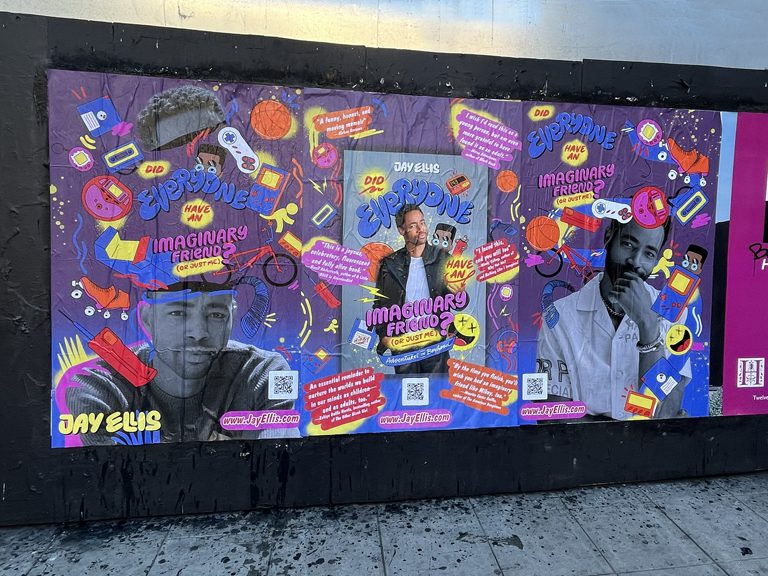
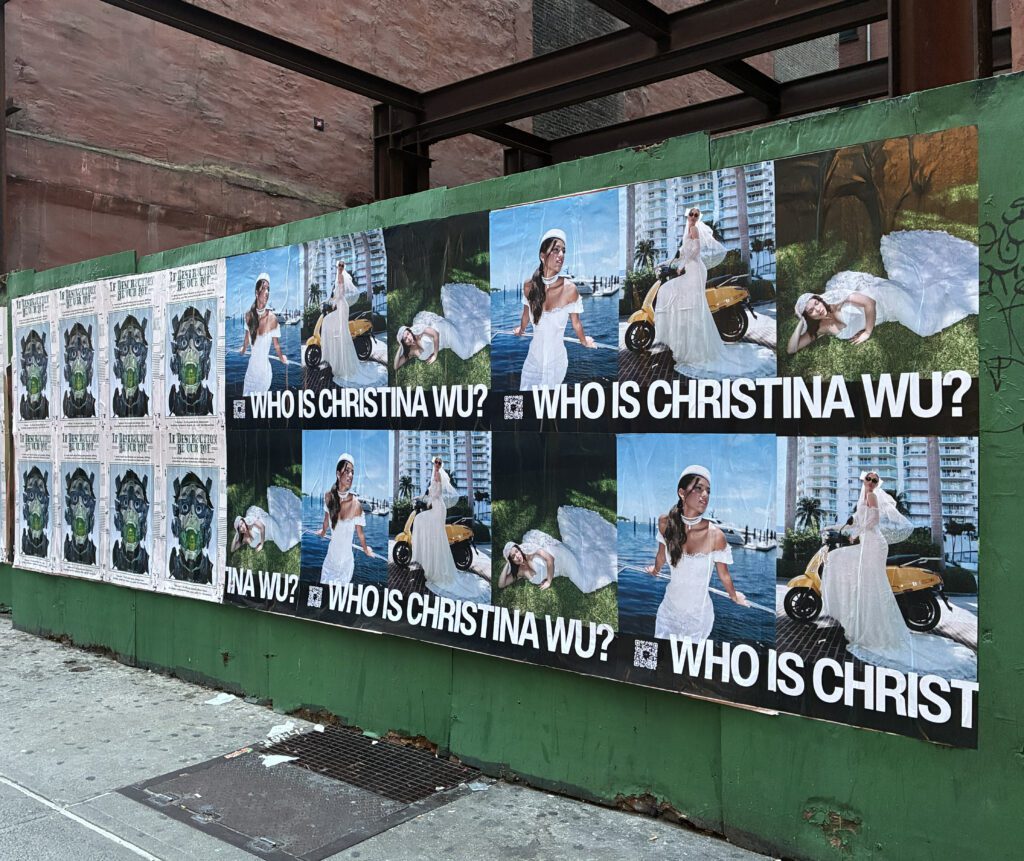
Fly Posting
Street-level poster saturation across walls, construction sites, and corridors.

Sidewalk Decals
Ground-level branded decals at pedestrian hotspots and event entrances.

Sidewalk Stencils
Creative stencil campaigns that put your brand in the path of pedestrians.