🚀 NEW WHEATPASTING MARKETS Discover our wheatpasting campaigns in : 🇬🇧 London • 🇨🇦 Canada • 🇲🇽 Mexico City

American Guerrilla Marketing

Nationwide Service

Media planning, media buying, billboard advertising, & guerrilla marketing

Guerrilla Projections in Phoenix, AZ

Guerrilla Projections in Phoenix, AZ

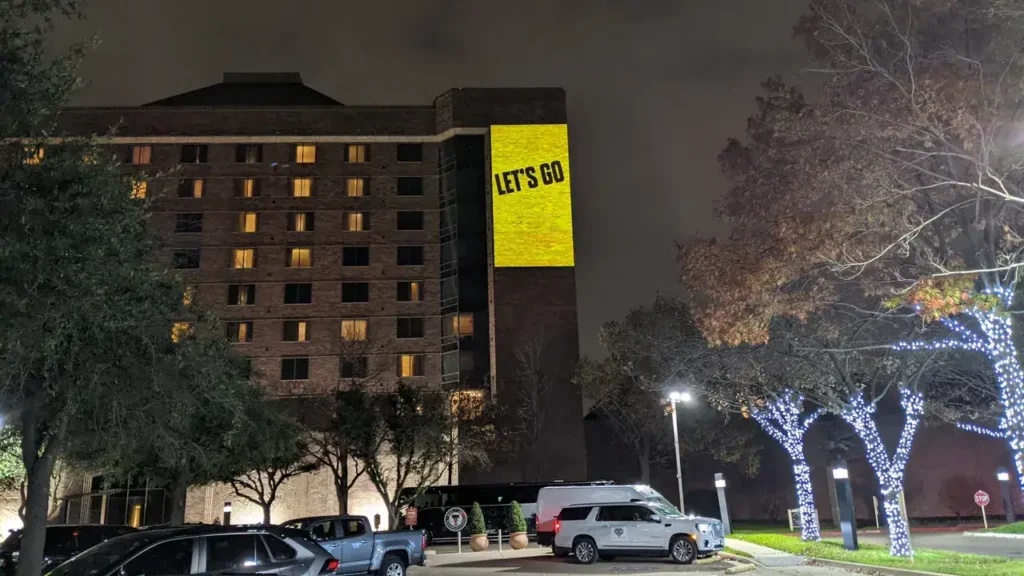
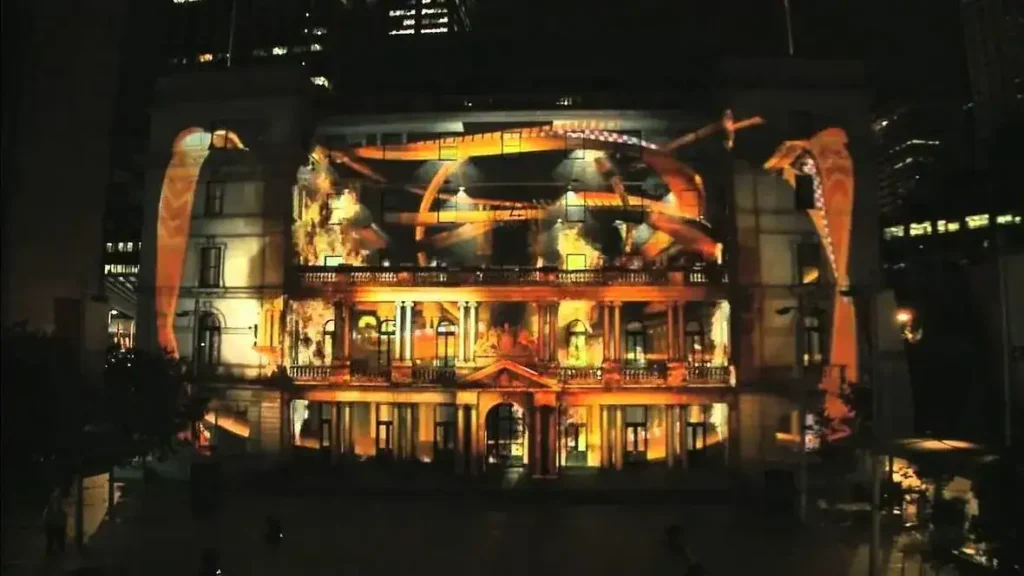
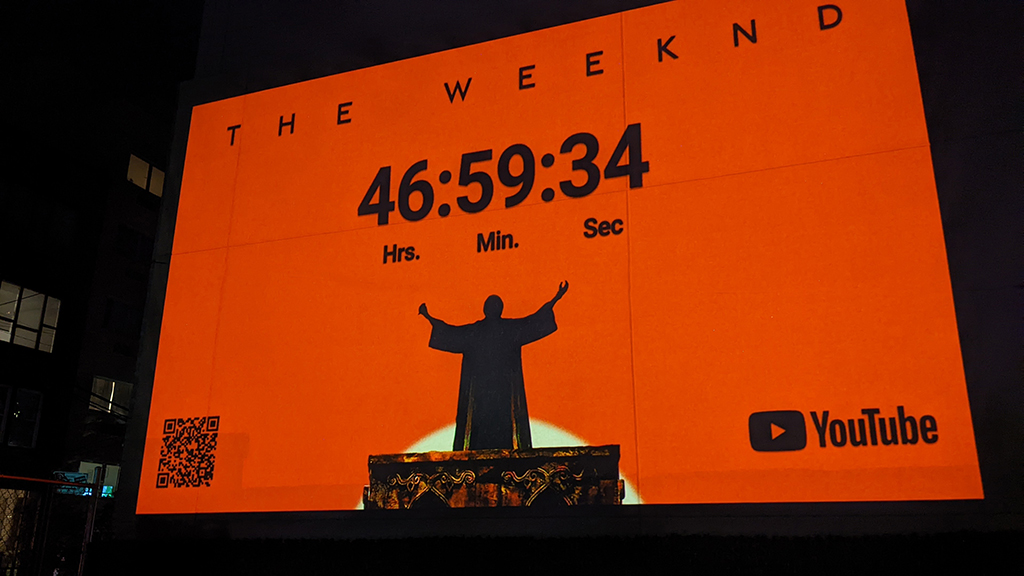
Phoenix is the fifth-largest city in America and one of its most dynamic projection markets. AGM deploys 20,000-lumen commercial campaigns across Roosevelt Row, the Warehouse District, Grand Avenue, and Downtown Phoenix — reaching the audiences, surfaces, and cultural moments that define the city.

Phoenix: Scale, Culture, and a Projection Market That Delivers

Phoenix is not simply large — it is large in ways that specifically advantage guerrilla projection campaigns. The city’s population of more than 1.6 million people, and its metro area of nearly five million, generates the kind of pedestrian concentration in entertainment districts that makes projection advertising operationally and economically powerful. But beyond raw numbers, Phoenix has developed an urban cultural infrastructure — arts districts, creative corridors, warehouse conversions, and nightlife zones — that gives projection campaigns the audience quality that distinguishes a result from merely a visibility impression. The people who walk Roosevelt Row, move through the Warehouse District, or stop at Grand Avenue galleries are paying attention to the environment around them. They respond to striking visual communication. They document and share what they see.

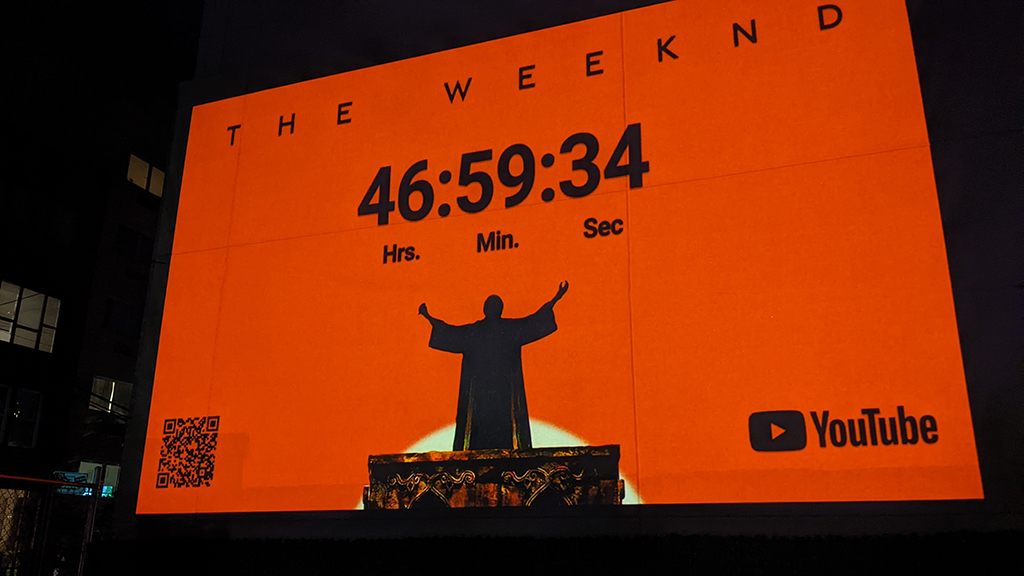
Past AGM projection clients include Coca-Cola, Live Nation, and iHeartRadio, with multi-night campaigns that generated earned media coverage and massive organic social sharing.

Phoenix’s position as a major national media market amplifies the earned media potential of every well-executed projection campaign. Phoenix television stations, digital news outlets, metropolitan newspapers, and lifestyle publications cover the city’s creative community as part of their regular editorial scope. A projection campaign that generates local interest in Roosevelt Row doesn’t stay local — it enters a media ecosystem that distributes content to the Phoenix DMA’s millions of viewers and readers. For brands, organizations, and campaigns that need reach beyond the pedestrian footprint of a single activation, Phoenix’s media market scale is a force multiplier that smaller Arizona markets cannot match.

Phoenix’s event calendar adds another layer of strategic opportunity. The Footprint Center hosts an NBA schedule that concentrates tens of thousands of fans in the downtown core on game nights. Chase Field draws three million baseball fans annually to the blocks surrounding the stadium. The Phoenix Convention Center brings major conferences, trade shows, and consumer events to the city’s core throughout the year. Talking Stick Resort Arena, venues along the entertainment corridor, and major touring concert events fill the calendar with audience concentration moments that projection campaigns can align with precisely. When a campaign needs to reach a specific audience — sports-engaged consumers, convention delegates, music fans — Phoenix’s event density creates the targeting opportunity that projection campaigns are specifically designed to exploit.

The physical environment of Downtown Phoenix and its adjacent creative districts cooperates with projection work. The Warehouse District in particular offers exactly what projection campaigns need: large, flat, largely undecorated building facades, low ambient light competition in most blocks, and a district character that rewards visual boldness. Roosevelt Row’s building surfaces vary from blank warehouse walls to art-decorated facades, and AGM’s scouting process identifies the specific surfaces and positioning within the district that maximize projection impact for each campaign’s creative content and objectives. Phoenix’s flat topography creates predictable sightlines and allows projection equipment to be positioned at precise distances and angles without the topographic complications that add uncertainty to campaigns in hillier cities.

Put Your Message on Phoenix's Walls

Roosevelt Row, the Warehouse District, Grand Avenue — AGM has the equipment, the crew, and the location intelligence to deploy in Phoenix's strongest projection corridors. From a single First Friday night to a multi-week presence, we build campaigns that earn attention rather than buy it.

Browse Cities in Arizona

Select a city to explore Guerrilla Projections opportunities.

Client Standard: The Biossance Model

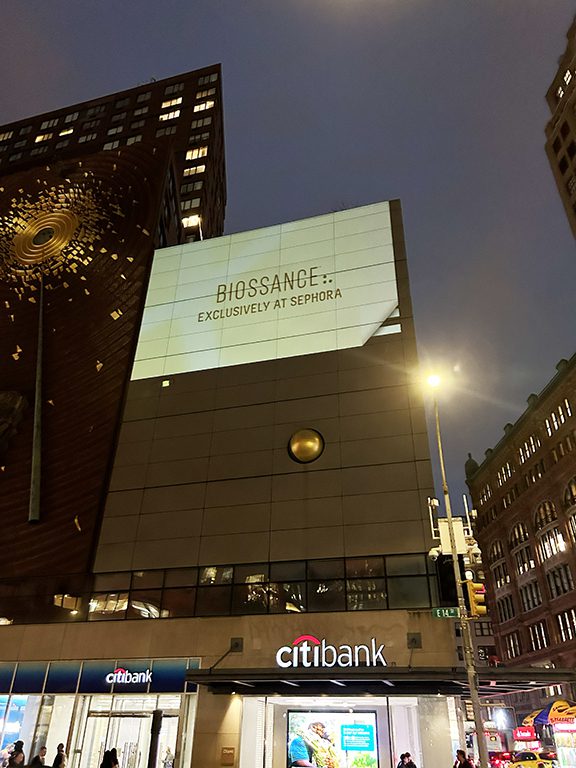
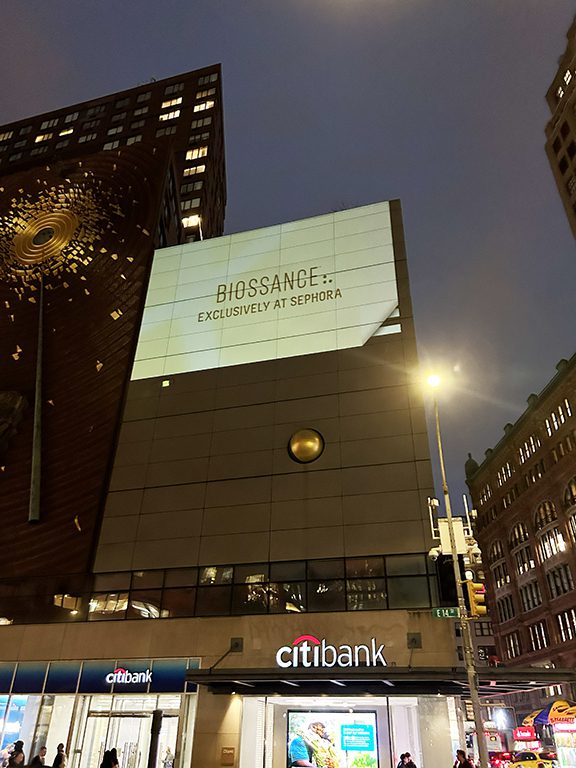
AGM’s client roster includes Biossance, a national skincare and beauty brand whose marketing standards demand the kind of production quality, visual precision, and brand-protective documentation that consumer lifestyle brands require. The Biossance engagement — like every AGM national brand engagement — required that the physical execution match the brand’s visual identity standards at full scale, on a building facade, in real-world lighting conditions that a studio cannot control. AGM’s 20,000-lumen system and calibrated creative preparation process delivered exactly that. The images that came back from the campaign were press-quality, brand-consistent, and visually compelling enough to circulate through the brand’s owned channels and generate earned media placement.

AGM’s projection client roster includes Netflix, Disney, Coca-Cola, FanDuel, Live Nation, iHeartRadio, and the US Marine Corps. A confirmed case study: the US Marine Corps × CMA Fest Nashville — multi-night projections onto architectural surfaces throughout the festival footprint, reaching 80,000+ attendees across the campaign window. Projection advertising scales across every brand category; what our campaigns share is scale, precision, and a physical presence digital cannot replicate.

The operational standard that national brand clients like Biossance require is the same standard AGM applies to every Phoenix engagement regardless of client category. Direct technical crew — AGM’s own technicians, not a locally sourced day-hire — professional photography documentation, GPS-confirmed location records, and post-campaign reporting that satisfies marketing team, legal team, and executive stakeholder requirements simultaneously. Phoenix campaigns run at the same quality baseline as campaigns for national brands, because the equipment, the crew, and the process don’t change based on client size. They’re the same.


Phoenix's Strongest Projection Locations

Roosevelt Row Arts District

Roosevelt Row is Phoenix’s most established arts district and one of the strongest projection environments in the American Southwest. The district’s creative community has cultivated an audience of culturally engaged residents, visiting arts consumers, food and dining patrons, and media-active younger professionals who move through the area on evenings and weekends. Building surfaces along Roosevelt Street and the surrounding blocks range from pure blank warehouse walls to painted murals — and AGM’s scouts identify the specific blank-wall surfaces that deliver maximum projection contrast without competing with existing building graphics. Roosevelt Row also benefits from a consistent First Friday foot traffic surge that concentrates thousands of pedestrians in the district on the first Friday of each month, creating a known, high-density audience window that projection campaigns can be specifically timed to capitalize on.

Warehouse District

Phoenix’s Warehouse District may be the single best projection environment in Arizona. The district is dominated by large industrial buildings whose exterior walls provide projection canvases of significant scale — surfaces that allow AGM’s 20,000-lumen system to create images that command attention from a full city block away. Ambient light competition is minimal in most Warehouse District blocks, which means the projection’s visual impact is not diluted by competing storefront signage, streetlamp density, or adjacent LED displays. The district’s foot traffic includes creative professionals, arts patrons, nightlife audiences, and visitors attracted by the neighborhood’s growing restaurant and bar scene. Content displayed on Warehouse District building facades can be seen from vehicle traffic on adjacent arterials, adding an impression layer beyond the pedestrian audience that standard entertainment district projections reach.

Grand Avenue Arts Corridor

Grand Avenue is Phoenix’s counterculture creative corridor — the part of the city where artists, independent businesses, and community organizations have built something distinct from the more polished character of the city’s newer development zones. The audience that moves through Grand Avenue is artistically sophisticated, community-engaged, and specifically interested in visual communication that challenges rather than conforms. Projection campaigns in the Grand Avenue corridor reach exactly the early-adopter, opinion-leading, high-sharing demographic that brands and causes trying to build authentic cultural credibility target. Building surfaces along the diagonal avenue vary in scale and character, and AGM’s scouts identify the locations along the corridor where projection images achieve the strongest visual presence against the existing visual environment.

Downtown Phoenix Near the Footprint Center

The blocks surrounding the Footprint Center — home of the Phoenix Suns — deliver concentrated sports-engaged audience traffic on game nights throughout the NBA season. Pre-game pedestrian flow along Jefferson Street, Washington Street, and the downtown entertainment corridor creates predictable, high-density audience windows that projection campaigns can be timed to with precision. A projection campaign deployed on an evening with a home game reaches the specific audience profile that sports-adjacent brands — apparel, automotive, food and beverage, financial services, consumer electronics — spend significant media budgets trying to reach. The combination of event-specific foot traffic and the general downtown dining and nightlife crowd that fills surrounding blocks on game nights makes this zone one of Phoenix’s highest-impression projection opportunities on the right evenings.

Downtown Phoenix Convention Corridor

The Phoenix Convention Center draws trade shows, medical conferences, industry events, and major consumer gatherings to the city’s downtown core throughout the year. Convention delegates move through the surrounding blocks during evenings when they’re exploring Phoenix’s dining and entertainment options — making them a captive audience for brands and organizations that want to reach industry-specific or demographically concentrated groups. AGM’s campaign planning process includes research into Phoenix’s convention calendar, and can recommend projection deployment windows where the convention in town matches a client’s target audience with exceptional precision. B2B brands, healthcare organizations, financial services firms, and technology companies find convention-timed Phoenix projections among their most cost-effective audience targeting opportunities in the market.

Plan Your Guerrilla Projection Campaign in Phoenix, AZ

Tell us about your campaign goals, target audience, and preferred locations. Our team will help you plan a high-impact guerrilla projection campaign tailored to your needs.

    Award Winning Personalized Service

    You will get thoughtful, devoted, and individualized attention from our experienced, qualified, and professional personnel. Being one of the most illustrious agencies in Brooklyn, New York, American Guerrilla Marketing has been awarded the Best of Brooklyn title.

    Nationwide

    Industry City, Brooklyn, New York 11232

    American Guerrilla Marketing

    +1 (646) 776-2770

    [email protected]

    Telegram: @americanguerillamarketing

    Hours

    Mon - Fri: 9 AM - 5 PM

    Sat & Sun: Closed

    Automate your campaign with AGM’s Request for Proposal Builder.

    Automate your campaign with AGM’s Request for Proposal Builder. Simply answer a few quick questions about your campaign goals, markets, and timeline, and the system will generate a tailored presentation with recommended strategies, quantities, and pricing. Click the RFP Builder to instantly receive your customized proposal.

    What to Project in Phoenix: Creative Formats That Work in This Market

    National Brand Regional Launches

    Phoenix’s position as a top-15 national media market and one of the fastest-growing major metros in America makes it a priority regional launch market for national brands testing expansion, announcing new product lines, or establishing local market presence. A Warehouse District or Roosevelt Row projection for a national brand launch generates the kind of striking local imagery that brand marketing teams need for national press releases, regional social content, and market-specific PR narratives. The visual quality that AGM’s 20,000-lumen system delivers on Phoenix’s large building facades — especially in the Warehouse District — consistently produces launch imagery that earns placement in both local and national media.

    Entertainment & Music Campaigns

    Phoenix has a legitimate live music culture — the Talking Stick Resort Arena draws major touring acts, local venues anchor neighborhoods across the city, and a music community exists here that is actively engaged with what’s happening in the industry. Artists, labels, and promoters find Phoenix projection campaigns particularly effective for building local buzz ahead of major touring announcements, album releases, or concert dates. AGM has worked with entertainment clients whose reach extends to global audiences, and the Phoenix market’s combination of cultural engagement and media market scale makes it one of the most high-leverage cities in the Southwest for entertainment projection campaigns timed to specific release or event moments.

    Advocacy & Issue Campaigns

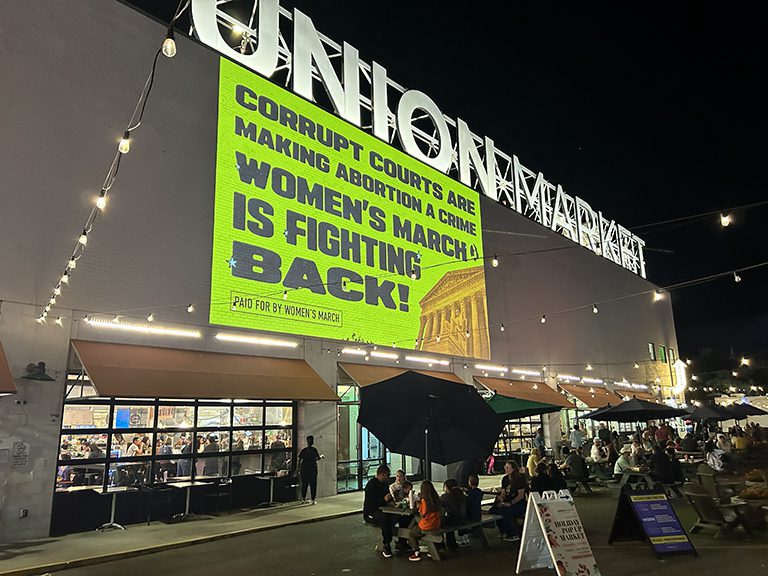
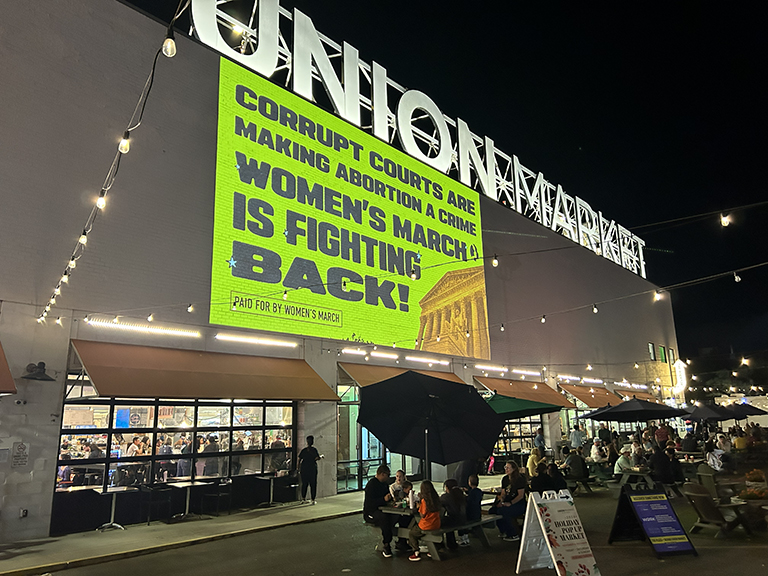
    Phoenix is a politically contested, culturally diverse major city — and those characteristics make it a high-value target for advocacy projection campaigns across a wide spectrum of issues and organizations. The city’s diverse neighborhoods, its proximity to Arizona’s legislative apparatus, and its role as a national political bellwether all contribute to a projection environment where advocacy campaigns generate engagement that extends well beyond the immediate audience. Downtown Phoenix is where political and community conversations happen at the highest volume, and a projection campaign deployed in the Roosevelt Row or Warehouse District creates a visual presence in exactly the environment where media, political observers, and community leaders pay closest attention.

    Tech & Startup Announcements

    Phoenix’s growing technology sector — fueled by corporate relocations, major facility investments by semiconductor and data center companies, and a growing startup ecosystem — has created a new category of Phoenix projection client. Technology companies announcing local office openings, product launches, hiring campaigns, or community investments find guerrilla projection an effective tool for establishing employer brand and market presence in a city where tech community leadership notices unconventional, high-production marketing. The Roosevelt Row arts community and the Warehouse District’s creative-professional demographic are specifically aligned with the tech sector audience that Phoenix’s expanding technology economy generates.

    The Agm Campaign Process In Phoenix

    Step One — Dual-Layer Phoenix Scouting

    AGM’s national scouting team approaches Phoenix with both digital and physical methods deployed in sequence. Digital scouting uses satellite imagery and street-level survey tools to identify candidate surfaces across all targeted districts — Roosevelt Row, the Warehouse District, Grand Avenue, downtown near the Footprint Center. Physical scouting follows: AGM crew members walk the identified locations during evening hours, evaluating surfaces under actual ambient light conditions, documenting projection distances and angles, assessing line-of-sight from pedestrian viewing zones, and noting operational logistics including equipment positioning and access. Phoenix’s scale means that digital scouting alone risks missing details that only physical presence confirms. The two-layer process produces scouting documentation that drives precise creative calibration and operational planning. Location scouting in Phoenix runs approximately contact us for a quote. engagement.

    Step Two — Creative Calibration for Phoenix Surfaces

    Phoenix’s building surfaces — especially in the Warehouse District — offer projection scale that most markets don’t. A blank warehouse wall that spans six stories provides a canvas that fundamentally changes how creative content should be designed, proportioned, and scaled. AGM’s production team uses the scouting documentation — precise measurements, surface photography, distance calculations — to configure creative content specifically for the identified Phoenix surface. What reads as a bold, impactful statement on a large warehouse wall might be an illegible mess on a smaller commercial building. The calibration step ensures that content is formatted for the actual surface at the actual scale, so execution night delivers what the creative brief promised. Clients are shown calibrated previews before execution and have the opportunity to refine content before the crew deploys.

    Step Three — Execution Night in Phoenix

    AGM’s two-person technical crew deploys for Phoenix campaigns with the full operational kit: 20,000-lumen commercial projection system, generator and complete power solution, electronics bundle, and mobility unit. Campaigns launch at dusk — Phoenix’s extended daylight hours during warm months mean that dusk timing varies seasonally, and the crew adjusts accordingly. Operational runs typically cover four to six hours, through the peak pedestrian hours in whichever Phoenix district the campaign is targeting. Phoenix’s flat terrain and accessible parking infrastructure along major arterials make equipment positioning logistics more straightforward than in denser urban cores, contributing to precise and reliable execution timing. The crew handles every aspect of the operational night — setup, launch, monitoring, adjustment, and complete breakdown — with no client presence required unless desired.

    Step Four — Documentation and Phoenix Campaign Reporting

    Every Phoenix campaign concludes with GPS-documented location data, professional photography captured during the operational run, and a complete post-campaign report. For campaigns that generate Phoenix media coverage — which well-executed projections in Roosevelt Row or the Warehouse District commonly do — AGM provides the technical documentation and photography that editorial teams require for story development. Images are delivered in formats suitable for press distribution, social media, and internal stakeholder presentation. The GPS documentation confirms exact locations, allowing clients to reference precise deployment coordinates in post-campaign communications with partners, donors, investors, or other stakeholders who require verified operational records. This documentation package is a standard deliverable, not a premium add-on.

    Phoenix Guerrilla Projection Pricing

    Phoenix projection campaigns are priced at contact us for a quote. The rate covers the complete deployment: 20,000-lumen commercial projection system, generator and full power solution, electronics bundle, mobility unit, and AGM’s two-person technical crew through the full operational night. There are no supplemental charges for the equipment package, no separate crew fees, and no operational surcharges for the infrastructure that makes a professional projection campaign function. The rate is for a professional, documented, properly executed campaign — not an entry price that grows during project development.

    Location scouting in Phoenix is approximately contact us for pricing. For campaigns requiring specific permitted or private-property locations — where advance negotiation with Phoenix property owners or coordination with municipal permitting is necessary — those engagements are priced contact us for a custom quote.. Phoenix’s permitting environment varies by district and by the specific nature of the location requested. AGM researches current local requirements and manages the process on behalf of clients. Multi-night Phoenix campaigns are available and frequently recommended for clients whose campaign objectives require sustained visual presence rather than a single high-impact night.

    Who Runs Projection Campaigns In Phoenix

    Phoenix’s projection client base reflects the diversity of a major national market. National consumer brands — lifestyle, beauty, technology, automotive, food and beverage — use Phoenix as a regional launch and brand presence market where projection campaigns generate the local earned media and social documentation that national PR strategies require. Arizona’s political environment makes Phoenix a consistent target for advocacy organizations, ballot campaign committees, and issue-based nonprofits that need high-visibility tools in a market where their message has direct electoral or policy relevance. Entertainment clients — record labels, promoters, film studios, streaming platforms — use Phoenix to build local market momentum ahead of release dates, concert announcements, or premiere events.

    Phoenix’s technology sector, which has expanded rapidly through corporate relocations and major facility investments, has created a growing category of tech employer-brand projection client. Companies that need to establish themselves as desirable employers in a competitive Phoenix technology labor market find that guerrilla projection creates the kind of striking first impression that a LinkedIn campaign or job board spend simply cannot. The visual scale and public presence of a building projection in Roosevelt Row or the Warehouse District signals ambition and creative confidence in a way that resonates specifically with the technology professionals these campaigns are designed to reach.


    Coverage & Estimated Nightly Impressions

    Zone / Area Peak Hours Foot Traffic Est. Nightly Impressions Best For
    Roosevelt Row Arts District 9PM–2AM Very High 45,000–90,000 Brand Awareness / Events
    Footprint Center / Chase Field Event nights Extreme 80,000–120,000 Sports / Concert Launch
    Grand Avenue Arts Corridor Fri–Sat 8PM–1AM High 18,000–35,000 Product Launch
    Midtown / Camelback Corridor 5–9PM weekdays High 22,000–40,000 B2B / Professional
    ASU Downtown Phoenix Campus Daily 10AM–8PM High 15,000–28,000 Youth / Tech
    Convention Center District Event-dependent Very High 30,000–75,000 Event Promotion


    Frequently Asked Questions About Phoenix Projections

    Roosevelt Row combines four factors that projection campaigns specifically require: consistent evening foot traffic driven by the district’s dining, arts, and nightlife scene; a culturally engaged audience that actively notices and responds to visual content in its environment; building surfaces — particularly blank warehouse walls — that deliver large, clean projection canvases; and a First Friday event that monthly concentrates thousands of pedestrians in the district at peak evening hours. The audience that moves through Roosevelt Row is media-active, high-sharing, and specifically attuned to the kind of creative visual statements that guerrilla projection represents. That combination is what distinguishes a strong projection corridor from simply a high-traffic area.

    AGM’s scouts document pedestrian flow patterns, event traffic routes, and optimal projection positioning relative to the Footprint Center and the surrounding downtown blocks during scouting. Campaign timing can be aligned with specific game nights identified from the NBA schedule, targeting the pre-game arrival window — when fans are moving toward the arena through adjacent entertainment blocks — and the post-game departure window when thousands of people are on foot in the surrounding area. Specific surfaces and positioning are selected to maximize visibility to the game-night pedestrian flow direction rather than the general Downtown Phoenix foot traffic pattern. Game-night projection campaigns in Phoenix are among the most concentrated audience-targeting opportunities AGM deploys in the Arizona market.

    The Warehouse District’s best projection surfaces are large, flat, light-colored exterior walls — typically the broad, unadorned sides of industrial or warehouse buildings that have few windows, architectural interruptions, or competing signage. AGM scouts specifically document surface texture (smooth plaster and painted concrete project more cleanly than raw brick), surface color (lighter surfaces reflect projection light more efficiently and produce more saturated colors), structural regularity (walls with significant recesses or projections create geometric complications that affect image readability), and ambient light exposure (walls that face away from streetlamp direct coverage project with higher contrast). In the Warehouse District, candidate surfaces are evaluated against all four criteria during physical scouting, and clients receive recommendations with specific surface rationale documented.

    Grand Avenue’s arts community functions as a force multiplier for projection campaigns deployed there, because it concentrates exactly the early-adopter, opinion-leader, high-influence demographic that social amplification depends on. When a striking projection appears on Grand Avenue, the people who see it are the people who share first, post first, and whose posts reach networks of similarly engaged cultural participants. The organic social amplification from a Grand Avenue projection tends to reach a creative professional, arts-engaged, culturally influential audience that extends the campaign’s effective reach far beyond the foot traffic count at the activation location. For brands and causes that need to establish cultural credibility rather than simply advertising presence, Grand Avenue’s community character is a strategic asset as much as its building surfaces are a technical one.

    Yes — First Friday is one of AGM’s most requested Phoenix campaign timing windows. The monthly First Friday art walk concentrates thousands of pedestrians in the Roosevelt Row arts district on the first Friday of each month, creating a known, predictable, high-density audience window that gives projection campaigns their most reliable Phoenix foot traffic exposure. First Friday audiences are arts-engaged, food and dining oriented, younger and more culturally active than the general metro demographic, and highly social in their sharing behavior. Campaigns timed to First Friday consistently generate more social documentation — organic photography, video posts, Instagram stories — than campaigns running on other evenings, because the audience is already in documentation mode and culturally primed to respond to striking visual content in their environment.

    Ambient light competition is the primary technical challenge in downtown Phoenix, where commercial signage, streetlamp density, and architectural lighting can reduce projection contrast in certain locations. AGM’s 20,000-lumen commercial system is specifically selected because it maintains strong visibility even in environments with moderate ambient light — but location selection remains critical. AGM scouts evaluate ambient light at the specific hours of the projected operational run (not at midday when conditions are different) and prioritize surfaces that face away from the highest-density light sources in a given block. The Warehouse District’s lower commercial signage density makes it generally preferable to more heavily lit commercial blocks for campaigns that prioritize maximum projection contrast. Scouts document ambient light conditions per location in the scouting deliverable.

    The Warehouse District’s weekend evening demographic skews toward creative professionals, arts-engaged young adults, food and hospitality patrons, and visitors to the district’s growing number of bars and restaurants. The area draws a significant amount of event-adjacent traffic from Roosevelt Row’s arts programming. Income levels are mixed but lean toward the young professional range, with strong representation from Phoenix’s creative, technology, and design sectors. This demographic is mobile-first, social-media active, and specifically inclined to document and share interesting visual experiences encountered in the urban environment. For brands targeting creative professionals, tech-adjacent consumers, or a culturally engaged 25–40 demographic in Phoenix, the Warehouse District’s weekend audience composition is among the best-targeted pedestrian exposures available in any Arizona market.

    Yes. The Valley Metro Light Rail runs through central Phoenix and connects Roosevelt Row, Downtown Phoenix, and a number of entertainment districts through its station stops and adjacent corridors. Light rail station zones generate consistent evening pedestrian flow from commuters, event-goers, and entertainment-district visitors who are on foot between stops and entertainment destinations. AGM scouts evaluate light rail station adjacency during the Phoenix scouting process, particularly for campaigns that prioritize consistent multi-hour pedestrian exposure rather than event-spike traffic. Building surfaces near light rail corridors that face high-traffic pedestrian flow directions — rather than surfaces oriented toward vehicle traffic — are specifically noted and can be prioritized for campaigns whose objective is cumulative pedestrian impression delivery over a full operational night.

    Phoenix and Scottsdale deliver meaningfully different audiences despite their geographic proximity. Phoenix’s entertainment districts — particularly Roosevelt Row, the Warehouse District, and Grand Avenue — draw a more arts-forward, creatively engaged, community-rooted audience with higher local residency rates and lower tourist overlap. Scottsdale’s Old Town entertainment corridor draws a higher-income, more tourist-inflected crowd where luxury brands and upscale entertainment campaigns find their best audiences. In practical terms, a campaign that needs cultural credibility and community resonance tends to perform better in Phoenix’s arts districts, while a campaign targeting high-income consumers, travelers, or the luxury lifestyle segment finds Scottsdale’s entertainment environment more precisely matched to those objectives. Many clients run both markets simultaneously to capture both audience profiles.

    AGM’s post-campaign documentation for Phoenix engagements is delivered within the timeframe agreed upon during campaign planning — typically within a few business days of the execution night. The package includes professional photography in press-ready resolution, GPS-documented location records with specific coordinate data, an operational summary covering launch time, operational duration, and crew notes, and social-format image exports. For clients pursuing Phoenix media coverage, AGM can prioritize delivery of specific photography and documentation that news outlets require when covering the event. Rush documentation delivery is available for clients with PR timelines that require same-day or next-day documentation package delivery.

    Permitted projection locations in Phoenix’s downtown core typically require a lead time of four to eight weeks, depending on the specific property, the nature of the permission required, and the current responsiveness of the relevant property owners or municipal bodies. Private property agreements — where a specific building owner is approached for written authorization to project on their exterior wall — vary widely in timeline based on the property owner’s decision-making process. AGM manages the outreach and negotiation on behalf of clients and provides regular updates throughout the permission process. For clients with compressed timelines, AGM’s scouting portfolio includes locations with pre-established ownership relationships that can reduce the permission lead time significantly for Phoenix campaigns where scheduling is time-sensitive.

    Yes, and both events create exceptional audience concentration opportunities for Phoenix-area projection campaigns. The Waste Management Phoenix Open draws more than 700,000 attendees over its tournament week — the largest attended golf tournament in the world — concentrating high-income, sports-engaged, out-of-state visitors across the Phoenix metro’s entertainment infrastructure. Phoenix-area bars, restaurants, and entertainment zones fill with Open attendees in the evenings, creating elevated foot traffic in projection districts even outside the Scottsdale tournament grounds. Spring Training runs for six weeks and floods the metro with out-of-state visitors from dozens of teams’ home markets. AGM can plan Phoenix projection campaigns aligned with either event, selecting locations and operational timing to intercept the specific audience concentrations these events generate.

    Browse All States

    Explore Guerrilla Projections opportunities across the United States.

    No locations found

    More AGM Outdoor Advertising Services

    Led Billboard Trucks

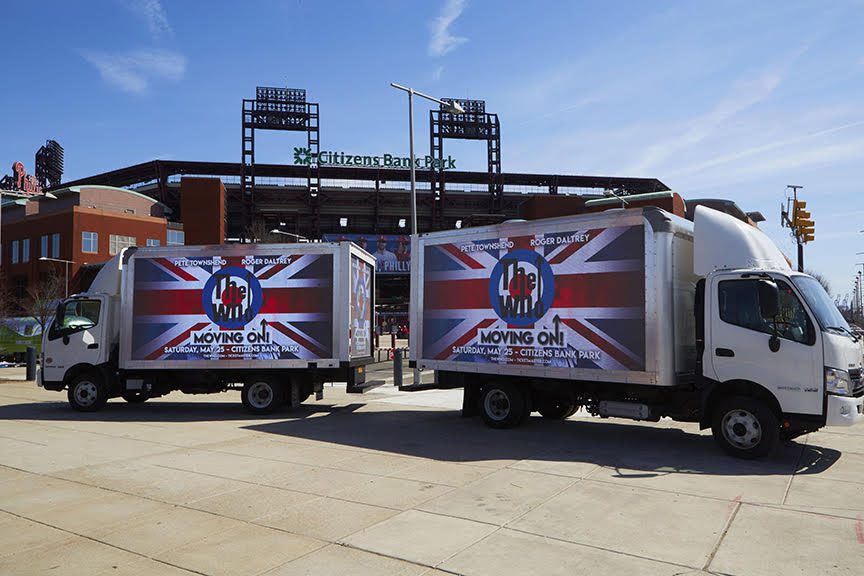
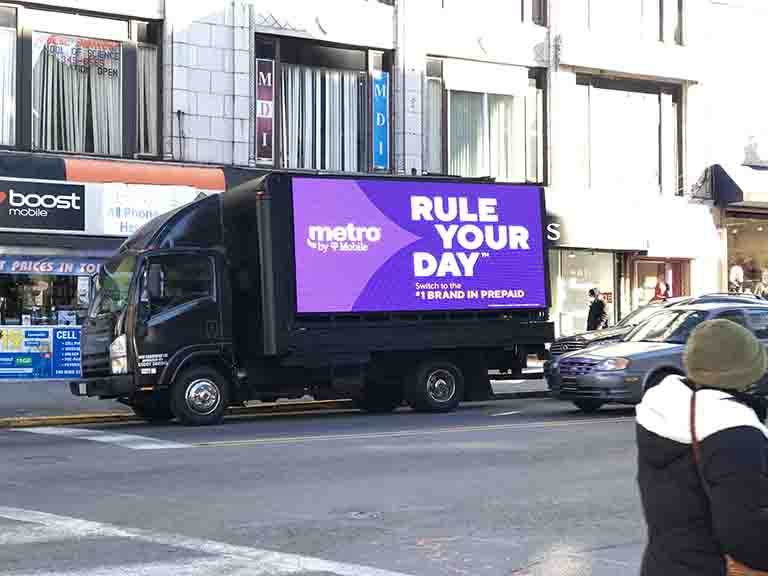
    Mobile LED displays that bring your brand to any location, any event.

    Led Billboard Trucks

    Fly Posting

    Street-level poster saturation across walls, construction sites, and corridors.

    Fly Posting

    Sidewalk Decals

    Ground-level branded decals at pedestrian hotspots and event entrances.

    Sidewalk Decals

    Sidewalk Stencils

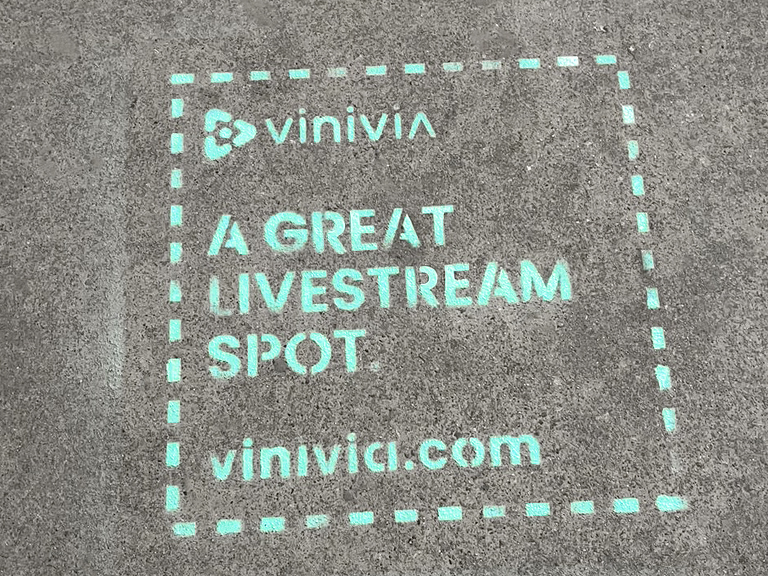
    Creative stencil campaigns that put your brand in the path of pedestrians.

    Sidewalk Stencils

    Guerrilla Projection Advertising Insights