American Guerrilla Marketing
Nationwide Service
Media planning, media buying, billboard advertising, & guerrilla marketing
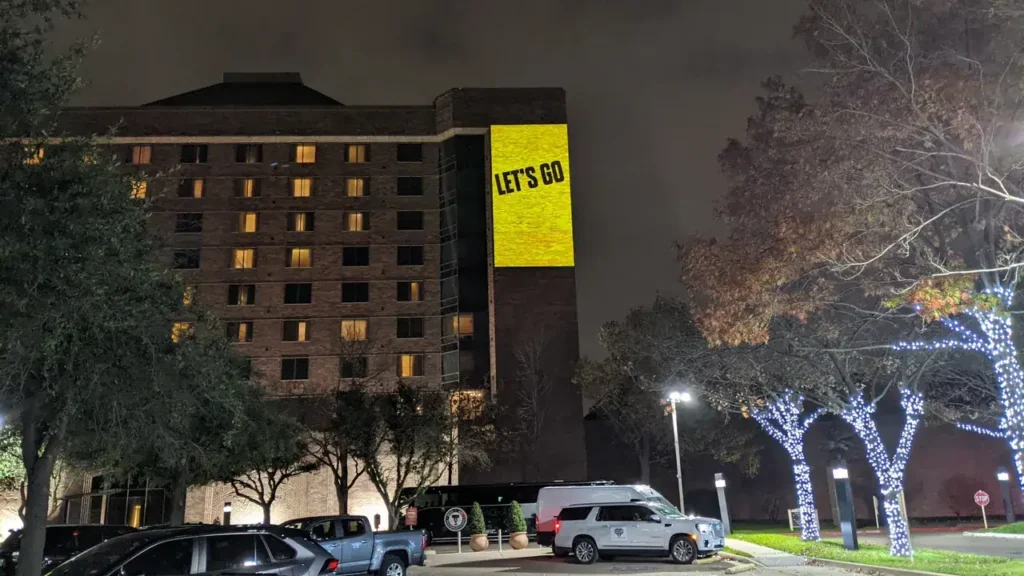
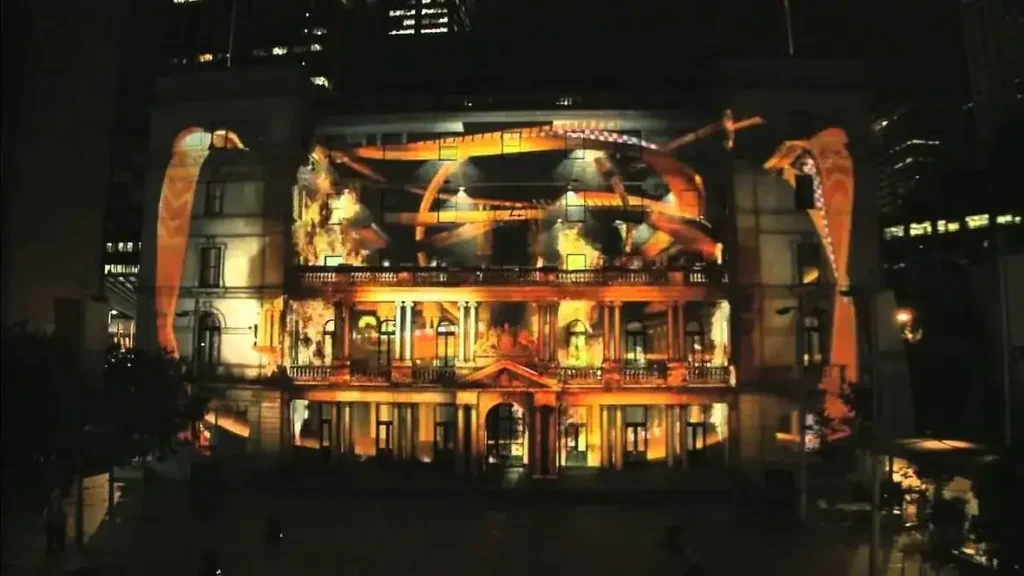
From Phoenix’s warehouse arts corridors to the nightlife spine of Scottsdale, AGM deploys commercial-grade projection campaigns that commandeer building facades, ignite public conversation, and generate the kind of cultural visibility that paid media simply cannot replicate.
Arizona offers a combination of factors that make it genuinely exceptional for guerrilla projection advertising — and not all of them are obvious. Yes, the state is home to Phoenix, the fifth-largest city in the United States. Yes, Scottsdale draws tens of millions of visitors annually. But beyond raw population numbers and tourism traffic, Arizona’s physical environment itself creates a projection advantage that brands working in coastal markets rarely experience.
Desert air is dry, clear, and remarkably low in the atmospheric particulate that blurs projection beams in humid climates. On a Phoenix evening in October or November, a 20,000-lumen commercial projection system casts an image with a sharpness and color saturation that photographers from national outlets notice immediately. That clarity isn’t incidental — it’s a media production advantage that translates directly into sharper earned media images, more compelling social content, and a visual presence on a building facade that reads with authority from two blocks away.
Arizona’s event calendar also gives brands and organizations an extraordinary number of natural activation windows. Super Bowl LVII brought more than 100,000 visitors to the Phoenix area alone. Barrett-Jackson draws global automotive money to Scottsdale every January. Spring training fills metro Phoenix with baseball fans from across the country for six weeks every spring. Tucson hosts the world’s largest gem and mineral show, drawing specialists and enthusiasts from over 50 countries. These are not generic foot traffic opportunities — they are targeted, concentrated, high-attention moments where the right projection in the right location speaks directly to a captive audience with demonstrated spending power and media appetite.
Arizona’s outdoor culture extends the viable projection calendar further than almost any other major market. While Chicago, New York, and Boston compress effective outdoor advertising into a compressed seasonal window, Arizona operates year-round with consistent warm evenings that keep pedestrians outside well past projection launch. Even in summer, Arizonans stay out — the heat breaks after sundown, and desert nights carry an energy that drives foot traffic to entertainment districts even when thermometers hit triple digits in the afternoon.
AGM's national scouting team has documented location portfolios across Phoenix, Scottsdale, Mesa, and Tucson. One call gets your campaign from concept to desert wall — with the equipment, crew, and operational discipline that national clients depend on.
Select a city to explore Guerrilla Projections opportunities.
No case study demonstrates the power of guerrilla projection in Arizona more directly than the campaign AGM executed for Reproductive Freedom for All in Scottsdale. This was not a national campaign using Arizona as a backdrop — it was a campaign built specifically for the Scottsdale market, deployed in one of Arizona’s most culturally contested and politically charged environments, designed to reach exactly the audience that would feel its message most acutely.
The campaign leveraged AGM’s 20,000-lumen commercial projection system to cast the Reproductive Freedom for All message onto prominent building surfaces in the Scottsdale entertainment corridor. The timing was deliberate — launched during an evening with high pedestrian traffic, when residents, tourists, and media were concentrated in the area. The visual contrast of a high-lumen projection against Scottsdale’s built environment created an unmistakable presence. Bystanders stopped. Phones came out. The images circulated through social media channels before AGM’s crew had finished their operational run.
What makes this campaign a compelling local precedent isn’t just its visibility — it’s what the execution demonstrated about Arizona as a projection environment. The desert climate cooperated completely. The urban surfaces of Scottsdale’s entertainment district provided ideal projection canvases. The campaign generated earned media coverage that amplified the initial investment many times over. For any brand or organization considering guerrilla projection in Arizona, this campaign answers the baseline question with documented evidence: it works here, at scale, with measurable impact.
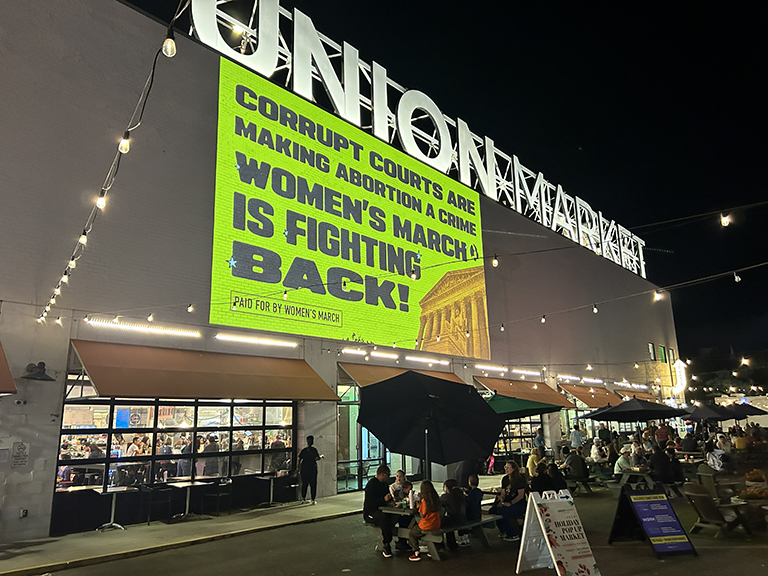
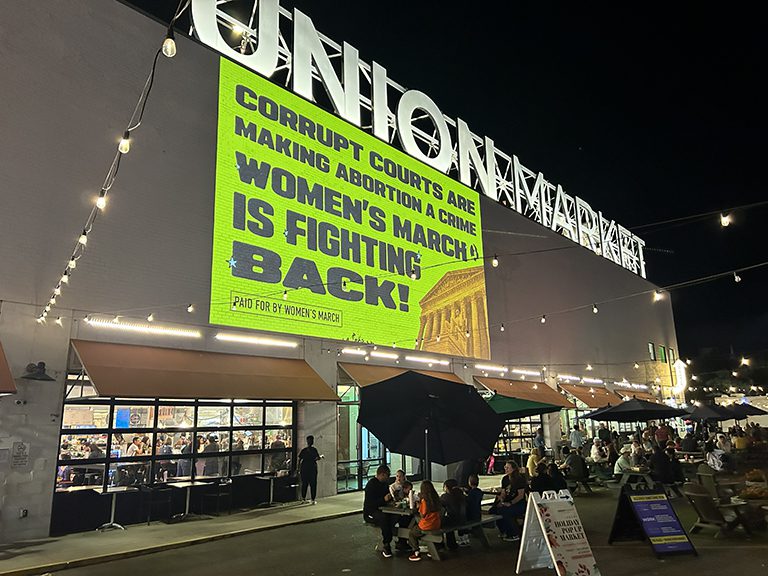
AGM’s projection work isn’t limited to single markets or single issues. The Women’s March campaign demonstrated what advocacy projection looks like when deployed at national scale — a massive building projection in Washington, D.C. that generated media coverage and social amplification reaching well beyond the immediate geographic audience. The operational discipline AGM brought to that campaign — precision scouting, exact execution timing, professional documentation — is the same standard applied to every Arizona deployment. Scale changes. Standards don’t.
Tell us about your campaign goals, target audience, and preferred locations. Our team will help you plan a high-impact guerrilla projection campaign tailored to your needs.
Award Winning Personalized Service
You will get thoughtful, devoted, and individualized attention from our experienced, qualified, and professional personnel. Being one of the most illustrious agencies in Brooklyn, New York, American Guerrilla Marketing has been awarded the Best of Brooklyn title.
Nationwide
Industry City, Brooklyn, New York 11232
American Guerrilla Marketing
Hours
Mon - Fri: 9 AM - 5 PM
Sat & Sun: Closed
Automate your campaign with AGM’s Request for Proposal Builder. Simply answer a few quick questions about your campaign goals, markets, and timeline, and the system will generate a tailored presentation with recommended strategies, quantities, and pricing. Click the RFP Builder to instantly receive your customized proposal.
Phoenix is AGM’s highest-volume Arizona market, and for good reason. Roosevelt Row, the city’s established arts district, concentrates exactly the kind of culturally engaged, media-active audience that amplifies projection campaigns through organic social sharing. The Warehouse District offers massive blank building facades that serve as natural projection screens. Grand Avenue’s artist corridor gives campaigns a counterculture backdrop that brands launching disruptive products or messages find particularly effective. Downtown Phoenix near the Footprint Center creates opportunities tied to NBA game nights and arena events that deliver captive audiences in the thousands. Phoenix also benefits from its position as a major media market, meaning local news pickup of a well-executed projection campaign extends reach well beyond the pedestrian footprint.
Scottsdale is Arizona’s most consistently trafficked entertainment destination, and its urban layout creates exceptional projection conditions. Old Town Scottsdale concentrates bars, restaurants, galleries, and nightlife venues into a walkable grid where thousands of people move through on any given evening. Scottsdale Road provides long unbroken building facades ideal for projection at scale. The arts district near Fifth Avenue shops delivers a more curated, upscale audience. The Reproductive Freedom for All campaign executed here provides direct, documented proof that guerrilla projection in Scottsdale generates the visibility, social amplification, and earned media coverage that justify the investment.
Mesa is Arizona’s third-largest city and one of its fastest-growing, with a downtown that has invested heavily in arts infrastructure over the past decade. The Mesa Arts Center complex anchors a cultural district that draws consistent evening foot traffic. The Main Street corridor creates a linear projection environment where sequential or moving content can build cumulative impact over a single evening. The Fiesta District entertainment zone delivers nightlife and event audiences. Mesa’s growth trajectory also means that projection campaigns executed here now establish presence in a market before it reaches the saturation that often makes unconventional advertising more difficult in older, more established cores.
Tucson operates differently from the Phoenix metro, and that difference creates its own kind of projection opportunity. The city’s arts community is genuine and deeply rooted — 4th Avenue has been a cultural corridor for decades, not a recently gentrified approximation of one. The Congress Street entertainment district draws a mixed, engaged crowd. Barrio Viejo’s historic district walls offer textured, visually interesting surfaces that give projection imagery a character it doesn’t achieve on modern glass and concrete. The University of Arizona adjacent areas deliver the kind of young, socially active, high-sharing demographic that can turn a single night’s projection into a week-long conversation online.
Arizona’s projection season is genuinely year-round, but certain windows deliver elevated performance for specific campaign objectives. Fall — particularly October through December — is widely considered prime season for Arizona projection work. Temperatures have dropped to comfortable evening ranges, outdoor foot traffic is at its highest, and the approaching holiday season concentrates consumer and media attention in ways that amplify projection visibility. January and February are exceptional months for Scottsdale and the broader Phoenix metro, overlapping with Barrett-Jackson, major golf tournaments, and the pre-Super Bowl period in years when the Phoenix area hosts.
Spring training, which runs roughly from late February through the end of March, floods the Phoenix metro area with out-of-state visitors who are actively exploring the city’s entertainment options in the evenings. A projection campaign running during Spring Training in a Phoenix or Scottsdale entertainment district reaches a demographic that national brands specifically target — high-income, sports-engaged, high-travel, and concentrated in a geographic area in ways that digital advertising cannot replicate. Summer projection campaigns in Arizona require heat management protocols for equipment, but the evenings remain operational and the combination of warm outdoor culture and reduced tourism creates opportunities for campaigns targeting local residents with messages that benefit from lower visual competition.
The Reproductive Freedom for All campaign in Scottsdale demonstrated that advocacy projection in Arizona generates both on-the-ground visibility and national earned media. Political campaigns, ballot initiative organizations, and cause-driven nonprofits find projection in Arizona’s major entertainment districts uniquely effective at reaching voters who are actively engaged with their community but may not be reachable through traditional channels. The visual directness of a projection — impossible to scroll past, impossible to ignore — creates a contact moment with genuine staying power.
Arizona’s tourism economy delivers an unusually broad demographic cross-section in its entertainment districts, making it a natural market for national brands running regional or limited launches. A product reveal projected onto a prominent building in Roosevelt Row or Old Town Scottsdale reaches local tastemakers and out-of-state visitors simultaneously. The social sharing behavior of Arizona’s entertainment-district audiences — who are already primed to document and share their experiences — makes brand launch projections particularly effective at generating the organic content that extends campaign reach well beyond the physical activation footprint.
Concerts, album releases, film openings, festival announcements, and major events find natural homes in Arizona’s projection landscape. AGM has executed projection campaigns for entertainment clients whose work demands exactly the kind of cultural edge that guerrilla tactics deliver. A projection in Tucson’s 4th Avenue corridor on the Thursday before a major concert creates urgency and cultural presence that traditional flyering and digital advertising simply cannot replicate. Event promotion projections in Arizona benefit from the state’s strong outdoor-entertainment culture, where audiences are already conditioned to look for what’s happening and where.
AGM’s client roster includes the US Marine Corps — a client whose brand requirements demand absolute operational professionalism, precision execution, and documentation standards that would satisfy any institutional procurement review. That same discipline applies to every corporate engagement in Arizona. Whether you’re a financial services firm announcing a local presence, a technology company building regional brand awareness, or a national retailer establishing a footprint in the Phoenix market, AGM’s crew and equipment meet the standards your legal and communications teams require. GPS-documented location analysis, post-campaign reporting, and professional photography documentation are standard on every engagement.
AGM’s projection client roster includes Netflix, Disney, Coca-Cola, FanDuel, Live Nation, iHeartRadio, and the US Marine Corps. A confirmed case study: the US Marine Corps × CMA Fest Nashville — multi-night projections onto architectural surfaces throughout the festival footprint, reaching 80,000+ attendees across the campaign window. Projection advertising scales across every brand category; what our campaigns share is scale, precision, and a physical presence digital cannot replicate.
AGM’s national scouting team operates both digitally and on the ground. Digital scouting begins with satellite imagery analysis, street-view surveys, and local permitting research. Physical scouting follows — AGM crew members travel to Arizona markets to walk intended projection zones, evaluate building surfaces, assess ambient light conditions at dusk, and document specific angles and distances that determine equipment configuration. This dual-layer scouting process is what separates a campaign that performs from one that merely executes. Location scouting for a new Arizona market runs approximately contact us for a quote. is applied directly to campaign effectiveness rather than treated as overhead.
Once locations are confirmed, AGM’s production team works with clients to develop or refine creative content specifically optimized for the identified surfaces. Building facades are not flat, neutral screens — they have architectural features, lighting considerations, and proportional relationships that affect how content reads. AGM’s technical team uses precise measurements and equipment modeling to ensure that the creative content delivered on the night of the campaign reads exactly as intended from the pedestrian viewing zone. This calibration step is the difference between a projection that looks like a projection and one that looks like part of the building itself.
AGM deploys a two-person technical crew for every Arizona engagement. These are AGM’s own technicians — not subcontractors, not day-hire operators, not freelance projectionists sourced from a regional vendor list. The crew brings a 20,000-lumen commercial projection system, a dedicated generator and power solution, and a full electronics bundle that ensures operational continuity regardless of what a specific location’s infrastructure provides. Campaigns launch at dusk and typically run four to six hours. Multi-night runs are available and often recommended for markets where cumulative visibility drives meaningfully stronger results than single-night exposures.
Every AGM engagement concludes with GPS-documented location analysis and post-campaign reporting. Professional photography is captured during the projection run, with images delivered in formats suitable for press release distribution, social media use, and internal stakeholder reporting. For clients whose campaigns generate earned media coverage — which is common with well-executed Arizona projections — AGM provides the technical documentation that media outlets request when covering the event. Post-campaign reporting details operational specifics, audience exposure estimates, and documentation suitable for organizational review.
AGM prices Arizona campaigns at contact us for a quote. That rate is all-in for the core deployment: 20,000-lumen commercial projection system, generator and complete power solution, full electronics bundle, mobility unit, and the two-person technical crew that handles setup, operation, and breakdown from launch through close. There are no hidden fees for equipment, no add-on charges for the crew, and no surcharges for the operational infrastructure that makes a professional projection campaign function reliably.
Location scouting for a new Arizona market is priced at approximately contact us for a quote. This is not an arbitrary service charge — it reflects the real cost of deploying qualified scouts, conducting physical site analysis, evaluating local permitting environments, and delivering scouting documentation that informs the creative and technical decisions that determine campaign effectiveness. Clients who skip advance scouting and attempt to execute on a first-night basis in an unfamiliar market consistently report performance gaps that a proper scouting engagement would have prevented.
Permitted and private-property engagements — where a client requires a specific location that involves advance negotiation with property owners or municipal permitting bodies — are priced contact us for a custom quote., depending on the complexity of the agreement and the specific requirements of the property or jurisdiction. AGM manages these relationships on behalf of clients and delivers fully documented, properly authorized campaigns in markets where permitted execution is the appropriate approach. Multi-night and multi-city engagements are available across Arizona’s major markets, with pricing structured to reflect campaign scope and operational continuity.
The organizations running projection campaigns in Arizona span the full range of sectors that operate in a politically diverse, economically active, culturally engaged state market. National brands use Arizona projection campaigns to test regional strategies before broader rollouts, to build local credibility in a market that is skeptical of generic national advertising, and to generate earned media from a state that draws consistent national press attention during its major annual events. Arizona’s position as a perennial political swing state makes it a natural target for advocacy organizations, ballot initiative campaigns, and political committees that need high-visibility, high-impact communication tools in a market where paid media budgets are stretched by intense competition.
Arizona’s entertainment industry — its concert venues, its film festival circuit, its professional sports franchises, and its rapidly expanding creative economy — represents a significant and growing segment of AGM’s projection clients in the market. The Tucson arts community, the Phoenix music scene, and Scottsdale’s luxury entertainment sector each have distinct needs that projection campaigns address differently, but all share the core requirement: reach an audience that cares, at a moment when they’re already engaged, in a way that earns attention rather than purchasing it. That’s the brief that AGM was built to fill.
| Zone / Area | Peak Hours | Foot Traffic | Est. Nightly Impressions | Best For |
|---|---|---|---|---|
| Phoenix | 8PM–12AM | Moderate | 2,500–12,000 | Product Launch |
| Scottsdale | 8PM–12AM | Moderate | 2,500–12,000 | Event Promotion |
| Mesa | 8PM–12AM | Moderate | 2,500–12,000 | Brand Awareness |
| Tucson | 8PM–12AM | Moderate | 2,500–12,000 | Political |
Arizona combines several factors that make it genuinely exceptional for guerrilla projection: a dry, clear desert atmosphere that dramatically improves projection sharpness and color saturation; a year-round outdoor culture that keeps pedestrians in entertainment districts well past dusk; one of the most event-dense annual calendars in the country, including the Super Bowl, Barrett-Jackson, Spring Training, and the Tucson Gem Show; and major urban markets — Phoenix, Scottsdale, Mesa, Tucson — each with distinct character and distinct audiences. The Reproductive Freedom for All campaign in Scottsdale demonstrated that projections in this environment generate both on-the-ground visibility and national earned media coverage. Arizona isn’t a backup market. It’s a primary one.
AGM’s 20,000-lumen commercial projection systems are built to operate in demanding environments, and the crew protocols for Arizona campaigns include specific heat management steps. Equipment is kept shaded and cooled until operational deployment. Generator placement is selected with airflow in mind. The two-person technical crew monitors system temperatures throughout the operational run and has established response protocols for any thermal irregularity. Arizona summer evenings — when temperatures drop significantly after sunset — fall within safe operational parameters for professional projection equipment. AGM has operated in desert markets extensively and designs every deployment with the environment in mind, not as an afterthought.
AGM operates in all major Arizona markets: Phoenix, Scottsdale, Mesa, Tempe, Chandler, Gilbert, Glendale, and Tucson. The Phoenix metro area, including Scottsdale, Mesa, and surrounding communities, represents AGM’s primary Arizona deployment zone. Tucson operates as a separate market with its own scouting, crew logistics, and location portfolio. For campaigns requiring coverage across multiple Arizona cities simultaneously, AGM coordinates multi-team deployment. The national scouting team has documented location portfolios across the state’s major markets and can brief clients on specific location options during the initial consultation.
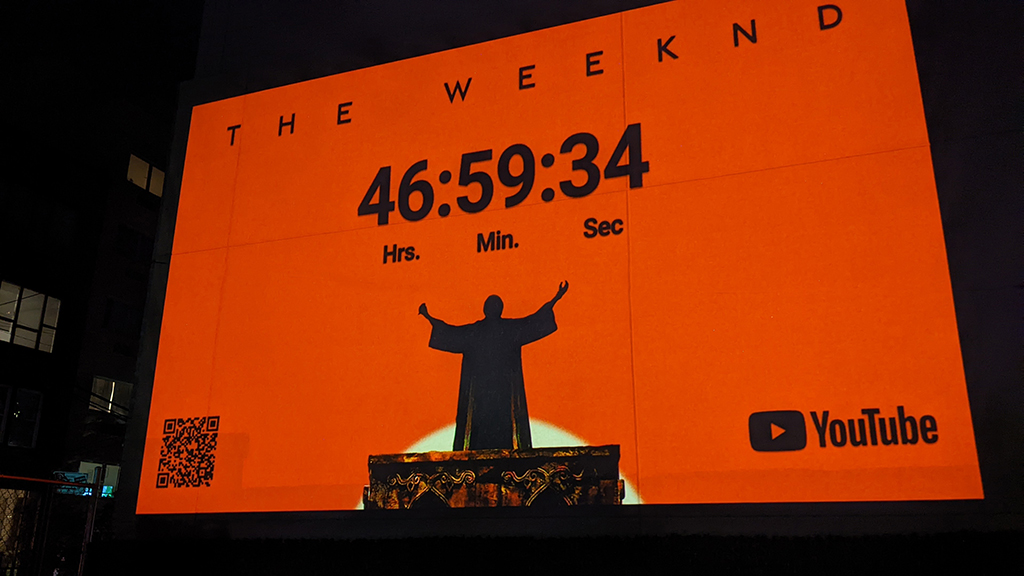
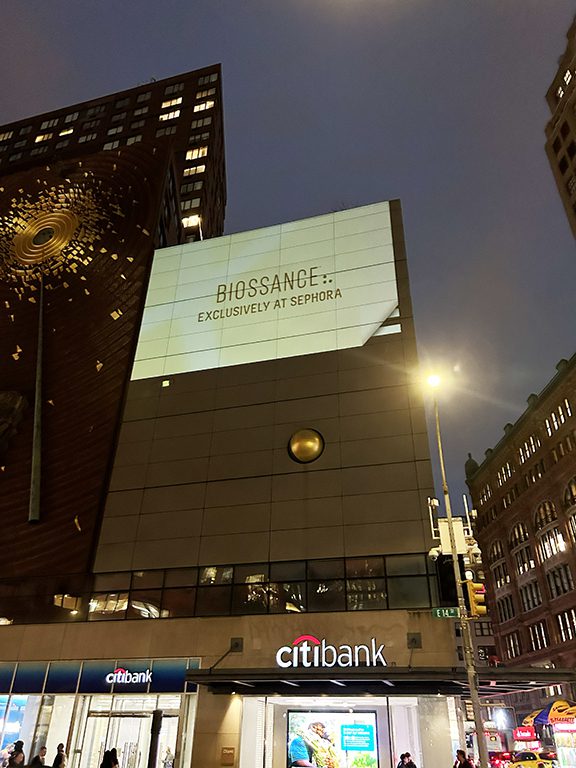
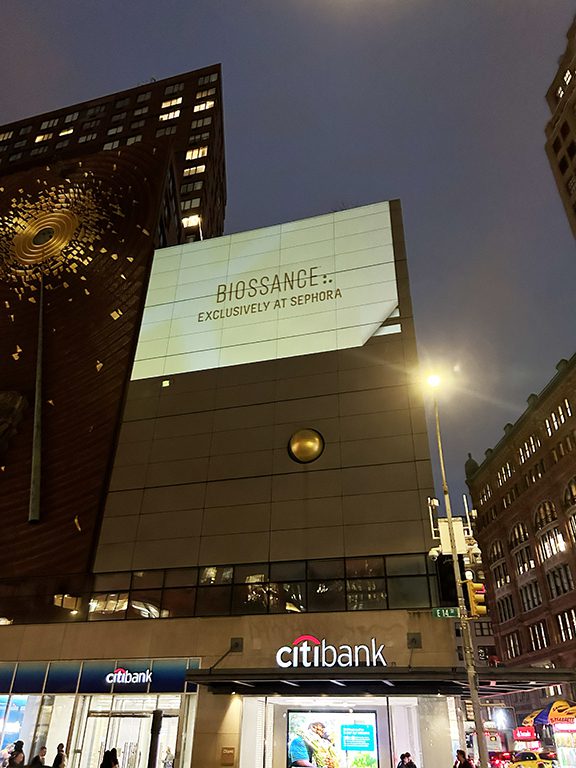
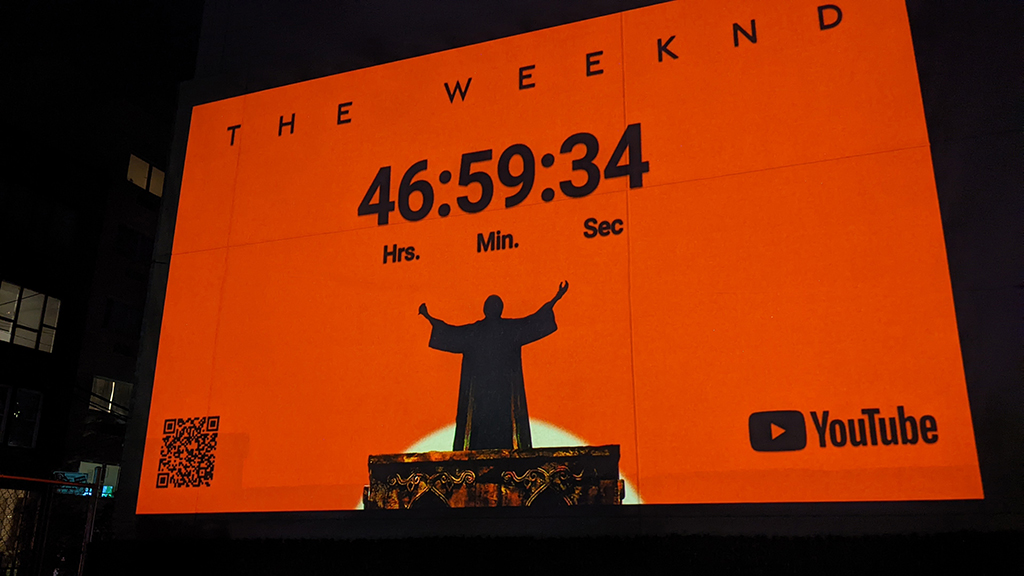
AGM deploys its own direct technical crew for every engagement — the same people who have run campaigns for clients including the US Marine Corps, YouTube, and Biossance. Crew travel is factored into campaign logistics rather than billed as a separate surprise charge. The reason AGM does not hire regional subcontractors for Arizona markets is operational consistency: every crew member has been trained on AGM’s specific equipment, processes, and documentation standards. When you book an AGM campaign in Phoenix or Scottsdale or Tucson, you get AGM’s people, not a locally sourced substitute.
Yes. AGM has the equipment inventory and crew capacity to run concurrent campaigns in multiple Arizona markets. A Phoenix and Tucson simultaneous run, for example, creates a statewide narrative that individual city campaigns cannot match. Multi-city deployments are particularly effective for advocacy organizations, statewide ballot campaigns, and brands announcing a major Arizona-wide presence. Pricing for multi-city campaigns is structured around the number of projectors deployed per market per night, with location scouting handled as a per-market line item. Contact AGM directly to discuss the specific scope and logistics of a multi-city Arizona engagement.
Fall and winter — specifically October through February — deliver the highest combination of pedestrian foot traffic, favorable evening temperatures, and event-driven audience concentration in Arizona’s major markets. January and February are particularly strong for Scottsdale and the Phoenix metro, when Barrett-Jackson, winter golf tournaments, and Spring Training arrivals begin concentrating high-income, out-of-state visitors in the entertainment districts where projections operate. Spring Training itself (late February through March) creates a sustained six-week window of elevated foot traffic and media attention. Summer campaigns are operationally viable and often benefit from reduced visual competition as other outdoor advertisers pull back during extreme heat months.
Dramatically, and in the campaign’s favor. Desert air contains significantly less moisture and atmospheric particulate than humid coastal or midwestern climates. This means the projection beam travels from lens to surface with minimal scattering or diffusion. The result is a sharper image, more saturated color, and a cleaner edge definition than the same system produces in higher-humidity environments. Professional photographers and videographers who document AGM campaigns in Arizona consistently report that the images are easier to shoot and more visually compelling than equivalent campaigns in markets with heavier atmosphere. That translates directly into better earned media images and more compelling social content.
AGM’s 20,000-lumen commercial system can fill building facades ranging from modest two-story structures to large warehouse walls and multi-story institutional or commercial buildings. The optimal surface for maximum visual impact is a large, relatively flat, light-colored wall — conditions that Arizona’s built environment delivers readily across all major markets. The specific surface selected for each campaign is determined during the scouting process, with AGM’s team evaluating projection distance, ambient light competition, surface texture, and audience viewing angles before finalizing location recommendations. Clients are briefed on the specific surfaces selected and why, as part of the pre-campaign reporting package.
Permitting requirements vary significantly by municipality in Arizona. Phoenix, Scottsdale, Mesa, and Tucson each have distinct ordinance frameworks governing projection advertising, and these frameworks are subject to periodic revision. AGM’s scouting team researches current local requirements as part of every market engagement. For campaigns requiring permitted or private-property locations, AGM manages the outreach, negotiation, and documentation necessary to secure proper authorization. Permitted and private-property engagements in Arizona are priced contact us for a custom quote., depending on the specific arrangement required. AGM delivers fully documented, properly authorized campaigns in markets where that approach is appropriate.
A standard Arizona projection campaign from initial inquiry to execution typically runs three to six weeks. The timeline includes an initial consultation to define campaign objectives and market targets, a scouting phase for new markets (physical and digital), creative review and technical calibration, logistics coordination for crew travel and equipment deployment, and the execution night itself. Rush timelines are possible in markets where AGM has existing scouted location portfolios — Scottsdale and Phoenix specifically. Contact AGM early in your planning process; campaigns with the longest lead times consistently outperform last-minute deployments because the scouting and creative calibration steps have time to be done properly.
Post-campaign documentation is a standard component of every AGM engagement. Deliverables include professional photography captured during the projection run, GPS-documented location data confirming specific surfaces and deployment coordinates, an operational summary covering launch time, operational duration, and any field observations relevant to campaign performance, and image files delivered in resolution suitable for press, social media, and internal reporting. For clients pursuing earned media coverage, AGM provides the technical documentation that journalists and editors request when covering projection campaigns. This documentation package is not an add-on — it’s part of what AGM delivers on every engagement.
Yes, and AGM’s physical scouting process is specifically designed to make location selection demographically intelligent. Different Arizona districts concentrate different audiences: Tucson’s 4th Avenue and University of Arizona adjacent areas reach young adults, students, and arts-engaged residents. Old Town Scottsdale reaches a high-income entertainment demographic with significant out-of-state visitor overlap. Phoenix’s Roosevelt Row and Warehouse District reach creative professionals, cultural early adopters, and a media-active younger demographic. AGM’s scouts document the specific audience characteristics of each identified location as part of the scouting deliverable, giving clients the information they need to select locations that match their campaign’s target audience with precision.