American Guerrilla Marketing
Nationwide Service
Media planning, media buying, billboard advertising, & guerrilla marketing
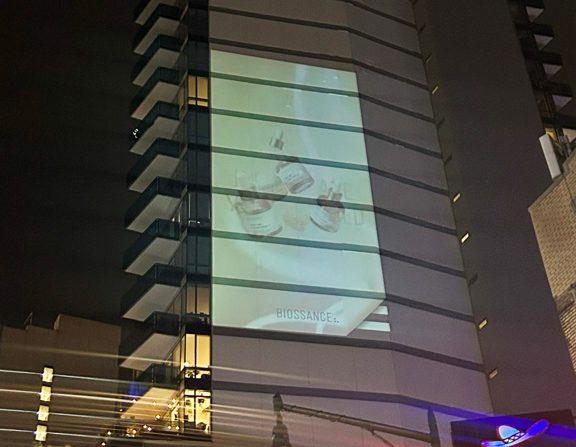
Guerrilla Projections in Green Bay, WI
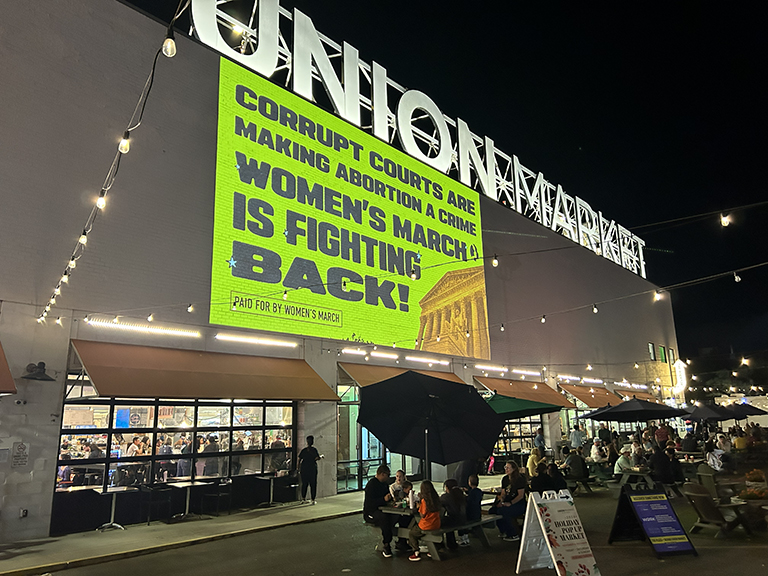
Sports-market building projections near Lambeau Field, Titletown District, and downtown Broadway. One projector. One night. 20,000 lumens on the walls your audience walks past.
Green Bay is a city whose entire commercial ecosystem pivots around a single facility — Lambeau Field — and the audience patterns that facility generates across the NFL season, draft events, concerts, and high-visibility off-season programming. On a Packers home game day, the surrounding streets carry more pedestrian foot traffic per square block than most Midwest cities generate at their busiest intersections on the busiest nights of the year. That density, combined with a passionate, engaged audience in an elevated emotional state, creates one of the most compelling guerrilla projection environments in the region.
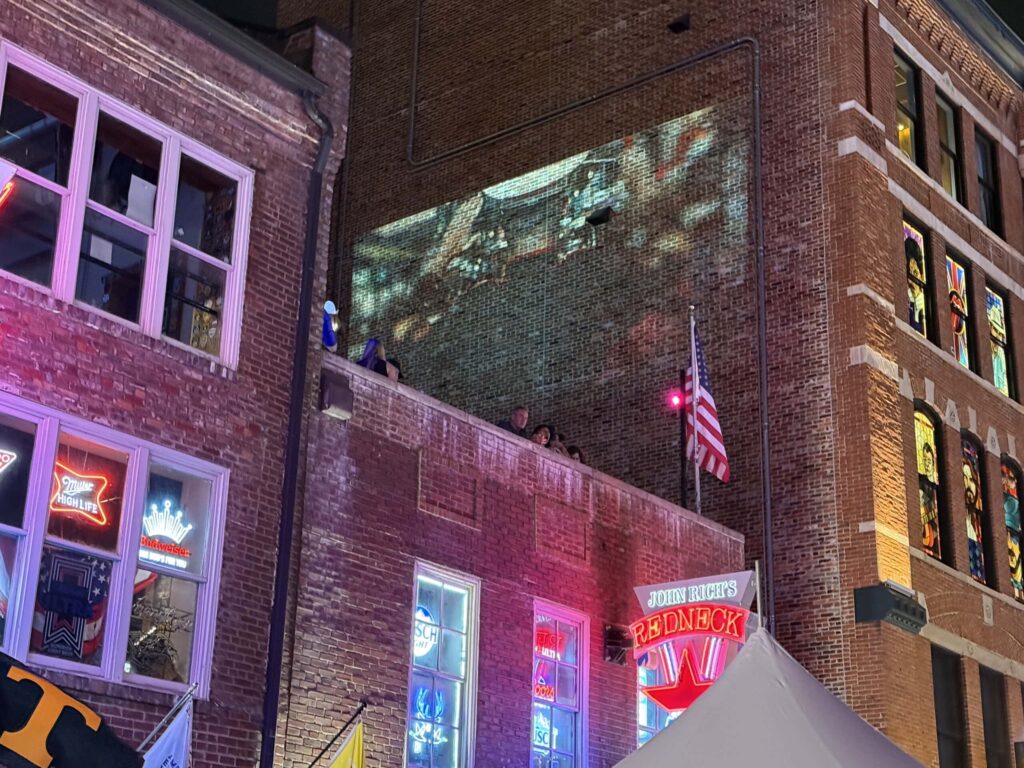
The US Marine Corps selected AGM for a guerrilla projection campaign during CMA Fest in Nashville, projecting onto high-traffic surfaces during peak festival activity and reaching 80,000+ attendees.
AGM’s projection client roster includes Netflix, Disney, Coca-Cola, FanDuel, Live Nation, iHeartRadio, and the US Marine Corps. A confirmed case study: the US Marine Corps × CMA Fest Nashville — multi-night projections onto architectural surfaces throughout the festival footprint, reaching 80,000+ attendees across the campaign window. Projection advertising scales across every brand category; what our campaigns share is scale, precision, and a physical presence digital cannot replicate.
American Guerrilla Marketing deploys 20,000-lumen commercial projection systems on building facades in Green Bay — targeting the pre-game and post-game pedestrian patterns around Lambeau, the growing commercial corridor in the Titletown District, and the evening foot traffic of downtown Broadway’s arts and dining zone. AGM’s national scouting team conducts physical on-the-ground evaluation of every location before deployment, identifying surfaces that produce a clean, brilliant image at the exact viewing distances relevant to each site. Every campaign is run by AGM’s own direct technical crew — not subcontractors — ensuring that the people operating the equipment understand the location, the surface, and the campaign objective.
Green Bay’s projection advertising environment is sport-adjacent in a way that few American markets can match. The audience is primed for brand engagement by the event context — fans who travel from across the Midwest to attend a Packers game are in a spending, documenting, and sharing mindset that makes them far more receptive to branded moments than a typical urban passerby. A projection campaign running on the walls of the Lambeau perimeter zone in the two hours before kickoff intercepts an audience that is already looking, already walking, and already holding a smartphone. The visual impact of a 20,000-lumen projection on a building face in that environment is not just noticed — it’s photographed, shared, and discussed.
Beyond the stadium perimeter, Green Bay’s Titletown District has emerged as a purpose-built commercial entertainment zone that generates its own foot traffic independent of game day schedules. The district’s restaurant, hotel, and event venue mix means that evenings in Titletown produce meaningful audience volume even during weeks without a home game. And downtown Green Bay’s Broadway corridor carries a steady arts-and-dining crowd that provides a secondary projection environment for brands whose audience isn’t exclusively sports-focused.
Reach Green Bay's Game-Day Crowd at Street Level
20,000-lumen projection campaigns from contact us for pricing. Lambeau Field perimeter, Titletown District, Broadway corridor. AGM's own crew, on-ground scouting, GPS-documented results.
Prime Projection Locations In Green Bay
AGM’s scouting team evaluates Green Bay locations against a specific set of surface and site quality criteria. The following districts represent the highest-priority projection environments in the city, each with distinct characteristics that affect surface selection and campaign positioning.
Lambeau Field Entertainment Zone — IDEAL
The pedestrian zone surrounding Lambeau Field is Green Bay’s premier projection advertising environment. On game days and major event nights, the streets, parking lots, and commercial blocks adjacent to the stadium carry a dense, concentrated foot traffic flow that spans a multi-hour window on either side of the event. Commercial buildings along Oneida Street and the surrounding blocks include light-painted masonry and smooth commercial facades suitable for large-format projection at distances of 60 to 120 feet. The audience in this zone is captive — they’re moving between parking and the stadium at a deliberate pace, and a large building projection along their path commands attention in a way that static signage on the same wall never could. For sports brands, event sponsors, apparel companies, and consumer products targeting a passionate sports-market demographic, this is the single strongest projection environment in Green Bay.
Titletown District — Commercial Entertainment Corridor
The Titletown District development, located directly west of Lambeau Field, was designed from the ground up as a destination commercial zone anchored to the stadium’s gravitational pull. Its hotel, restaurant, bar, and entertainment venue mix creates an audience that visits on game days and on non-game evenings alike. The district’s newer construction includes commercial building faces with smooth cladding and light exterior finishes well-suited to outdoor projection. Projection campaigns in Titletown reach a dual audience: the sports visitor who is in Green Bay specifically for the game, and the local resident who uses the district as a regular dining and entertainment destination. Brands with appeal across both segments — hospitality, food and beverage, consumer electronics, retail — find Titletown an efficient projection environment when targeting a mixed local-and-visitor audience.
Downtown Broadway Arts District
Green Bay’s downtown Broadway corridor runs through the city’s arts and dining community — a distinct cultural zone separate from the stadium environment, drawing a local audience of residents, arts patrons, and restaurant-goers on evenings throughout the week. The Broadway district’s building stock includes historic commercial buildings with painted brick and masonry facades, some of which have large upper-story walls suitable for projection when the surface color and texture are favorable. Projection in the Broadway district reaches a local audience that skews toward arts, culture, and local community — a different profile from the stadium visitor audience, and a useful environment for brands whose message resonates with a creative, locally-engaged demographic. AGM’s scouting team identifies the strongest individual surfaces in the corridor based on paint condition, wall orientation, and available throw distance.
Bay Beach Entertainment Area
Green Bay’s Bay Beach area — anchored by the Bay Beach Amusement Park and the surrounding lakefront recreational zone — draws seasonal foot traffic during the summer months from both local residents and visitors from across northeast Wisconsin. Evening and weekend activity at Bay Beach and the adjacent waterfront zones creates an audience that is in a leisure mindset — relaxed, social, and visually attentive to their environment. Commercial and entertainment buildings in the Bay Beach vicinity include surfaces suitable for projection during the summer activation window when outdoor pedestrian activity is at its seasonal peak. Summer festival programming and lakefront events add to the foot traffic potential during June through August. For brands with summer seasonal relevance, Bay Beach provides a projection environment distinct from the stadium perimeter and the downtown arts corridor.
Formats Built For Green Bay's Sports Market
Game-Day Perimeter Activation
A projection campaign positioned in the Lambeau pedestrian zone and timed to run during the two-to-three hours surrounding kickoff. This format intercepts the game-day foot traffic pattern at its peak density — fans moving toward the stadium before the game and dispersing through the entertainment zone afterward. The emotional elevation of the event amplifies brand recall for projected messaging encountered in this window. Sports brands, hospitality companies, and consumer products tied to the game-day experience are natural fits for this format.
Static Stadium-Perimeter Branding
A bold, single-image projection placed on a commercial building face in the Lambeau zone — logo, product, or campaign visual — held for the duration of the campaign run. The simplicity of a static image optimizes legibility from distance in a high-motion pedestrian environment where audiences are moving continuously. Maximum brand recall per impression, minimum creative complexity. Ideal for brand awareness objectives where the message needs to land quickly and clearly on a moving audience.
Multi-Night Titletown Campaign
A consecutive-night deployment in the Titletown District designed to build audience awareness across multiple evenings surrounding a home game weekend. A two-night campaign — Friday night and Saturday night — can reach both the arriving-visitor audience and the local resident audience before the Sunday game. Multi-night runs generate compounding organic documentation as audience members encounter the projection across different evenings and share it within their networks. Ideal for launches, sponsorship activations, and campaigns that benefit from sustained visibility in a single geographic zone.
Off-Season Event Campaign
Green Bay’s Lambeau Field and surrounding venues host concerts, NFL Draft events, and other major programming in the off-season months. These events generate significant pedestrian traffic independent of the football calendar. Projection campaigns timed to off-season Lambeau events reach a visitor audience drawn specifically to the event — often a different demographic from the typical game-day crowd — while using the same stadium-adjacent locations that produce peak exposure during the season.
Plan Your Guerrilla Projection Campaign in Green Bay, WI
Tell us about your campaign goals, target audience, and preferred locations. Our team will help you plan a high-impact guerrilla projection campaign tailored to your needs.
Award Winning Personalized Service
You will get thoughtful, devoted, and individualized attention from our experienced, qualified, and professional personnel. Being one of the most illustrious agencies in Brooklyn, New York, American Guerrilla Marketing has been awarded the Best of Brooklyn title.
Nationwide
Industry City, Brooklyn, New York 11232
American Guerrilla Marketing
Hours
Mon - Fri: 9 AM - 5 PM
Sat & Sun: Closed
Automate your campaign with AGM’s Request for Proposal Builder.
Automate your campaign with AGM’s Request for Proposal Builder. Simply answer a few quick questions about your campaign goals, markets, and timeline, and the system will generate a tailored presentation with recommended strategies, quantities, and pricing. Click the RFP Builder to instantly receive your customized proposal.
From Booking to Breakdown: How a Green Bay Campaign Runs
A Green Bay guerrilla projection campaign begins with a brief conversation about your campaign objective, target audience, and preferred timing. For event-adjacent deployments tied to specific game dates or Lambeau programming, AGM recommends booking four to six weeks in advance to allow time for location scouting, logistics planning, and any necessary location arrangements. For general market campaigns without a specific event anchor, two to four weeks of lead time is typically sufficient.
Once the campaign is confirmed, AGM’s national scouting team conducts advance evaluation of candidate surfaces in the target district. This isn’t a map review — it’s physical, on-the-ground assessment of wall conditions, surface color and texture, viewing angles, pedestrian flow patterns, power access, and projector positioning geometry. Every location is GPS-documented before the campaign date, giving both AGM and the client a precise record of the planned deployment site.
On campaign night, AGM’s two-person technical crew arrives at the location with the 20,000-lumen projector, generator, complete power solution, electronics bundle, and mobility unit. Setup typically takes 30 to 60 minutes. The projection goes live at dusk — the threshold at which ambient light drops enough for the 20,000-lumen system to achieve full visual impact against the building face — and runs for a four-to-six-hour window. The crew remains on-site for the full campaign duration, managing the projection, monitoring conditions, and documenting the run.
After breakdown and equipment retrieval, AGM compiles the post-campaign report: GPS-documented location data, deployment timestamps, on-site photography, and video documentation of the projection in operation. This report is delivered digitally and provides proof-of-placement documentation for internal reporting, agency review, and earned-media use.
Proof Of Concept: The Mizzou × Cotton Bowl Campaign
The most direct case study for what AGM can deliver in Green Bay is the Mizzou × Cotton Bowl projection campaign in Arlington, Texas. When University of Missouri athletics needed to build presence and energy around its Cotton Bowl appearance, AGM deployed building projection advertising in the stadium perimeter zone — targeting the dense pedestrian traffic concentrated in the blocks surrounding the game venue during the hours immediately surrounding the bowl game.
The campaign worked because the bowl game environment creates the same structural conditions that Lambeau Field creates on NFL Sundays: a large, motivated audience moving on foot through a defined geographic zone, already in an elevated emotional state connected to the event. Projection advertising inside that zone doesn’t compete for attention the way that paid media does — it occupies physical space in the audience’s actual walking environment, which is a fundamentally different kind of presence.
The Cotton Bowl campaign produced a branded moment that lived inside the event’s energy window without requiring broadcast placement, stadium signage costs, or negotiated sponsor inventory. Every fan who passed the projection wall encountered the campaign at street level, at human scale, in the exact location and emotional context the advertiser wanted. That formula — projection at stadium perimeter, timed to event-driven pedestrian density — is directly replicable at Lambeau Field. The building stock exists. The pedestrian patterns exist. AGM’s crew has executed this format in exactly this kind of environment. Green Bay is a natural deployment site for the same approach.
Green Bay Projection Campaign Rates
Building projection advertising in Green Bay is priced at contact us for a quote. . That rate includes the 20,000-lumen commercial projector, generator and complete power solution, the full electronics bundle, a mobility unit, and AGM’s direct two-person technical crew for setup, full-duration operation, and complete breakdown. No subcontractors. No separate crew fees. No add-on charges for power or equipment transport.
Campaign runs begin at dusk and typically cover a four-to-six-hour window. Advance location scouting for the Green Bay market is available at approximately contact us for pricing. Campaigns requiring permitted building placements or private-property arrangements carry location fees of Contact us for a custom quote. per night depending on the specific building and arrangement.
AGM serves Green Bay from its national operations infrastructure. For questions about campaign availability around specific game dates, event programming, or seasonal timing, contact AGM’s team directly. Proximity to Lambeau game schedules creates demand spikes for certain dates — early booking is recommended for the most desirable NFL Sunday windows.
Green Bay's Projection Advertising Audience
Green Bay’s projection advertising audience is defined by the Packers. On game days and event nights, the Lambeau perimeter zone draws fans from across Wisconsin, Michigan’s Upper Peninsula, Illinois, Minnesota, and beyond — a regional audience with strong brand loyalty, high discretionary spending on sports and entertainment categories, and an active social media behavior pattern rooted in documenting and sharing the game-day experience. That audience encounters a projection campaign not as a passive commuter passing a billboard, but as an engaged sports fan in a social environment — more receptive, more likely to stop, more likely to photograph, and more likely to share.
Downtown Broadway’s audience is a local complement — Green Bay residents, arts patrons, and dining regulars who provide a consistent weeknight and weekend foot traffic base year-round. Sports brands, apparel, hospitality, and entertainment companies are the most natural fit for the stadium perimeter; consumer products, food and beverage, and community-facing brands often find the Broadway district audience a better fit for their messaging. AGM’s scouting team can help identify which Green Bay environment best matches your campaign audience objective.
Coverage & Estimated Impressions
| Zone / Area | Peak Hours | Foot Traffic | Est. Nightly Impressions | Best For |
|---|---|---|---|---|
| Lambeau Field Entertainment Zone | 8PM–12AM | Moderate | 2,500–12,000 | Product Launch |
| Titletown District | 8PM–12AM | Moderate | 2,500–12,000 | Event Promotion |
| Downtown Broadway Arts District | 8PM–12AM | Moderate | 2,500–12,000 | Brand Awareness |
| Bay Beach Entertainment Area | 8PM–12AM | Moderate | 2,500–12,000 | Political |
Frequently Asked Questions
Yes. AGM deploys projection campaigns in the commercial and pedestrian zones surrounding Lambeau Field during game-day windows. Campaigns run in the hours before kickoff, when pedestrian density in the stadium perimeter zone is at its highest, and can continue through the post-game dispersion period. Location scouting confirms the best available surfaces in the zone for each specific campaign and event date. Early booking is recommended for the most in-demand game-day windows during the NFL regular season.
Green Bay’s downtown Broadway corridor hosts an arts-and-dining community that generates consistent evening foot traffic throughout the year, independent of the NFL schedule. Projection campaigns in Broadway reach a local resident audience — a different demographic profile from the out-of-town stadium visitor. Building surfaces in the Broadway district include painted brick and masonry facades; AGM’s scouting team identifies the strongest individual walls based on surface color, texture, and available throw distance from accessible ground positions. Broadway works best for brands whose audience profile aligns with arts, local culture, and dining — rather than the sports-centric Lambeau perimeter demographic.
In the Lambeau perimeter zone, bold, high-contrast static images perform extremely well — fans moving through the zone register a strong visual impression quickly without needing to stop and read. Product visuals, brand logos, and campaign graphics that communicate clearly in two to three seconds of viewing time maximize impact in a moving-pedestrian environment. Animated sequences can also be effective, particularly for campaigns with a product reveal or countdown component. The key principle is clarity at distance: the image needs to read from 50 feet away in two seconds, because that’s the viewing window in a moving game-day crowd.
For maximum game-day exposure, AGM recommends starting the projection at dusk on the evening before or at dusk on game day — typically two to three hours before kickoff. The peak pedestrian density in the Lambeau perimeter zone builds steadily in the 90 minutes before kickoff and peaks in the final 30 to 45 minutes as fans move toward the gates. Beginning the campaign two to three hours before kickoff captures both the early-arriving audience and the peak-density period. Campaigns can continue into the post-game dispersion window if the client wants to capture both pre- and post-game audience movements.
AGM’s two-person technical crew typically requires 30 to 60 minutes for complete equipment setup — unloading the projector, generator, power solution, and mobility unit; positioning the projector at the correct throw distance and angle; calibrating the image to the target surface; and confirming image quality before the campaign goes live. Breakdown after the campaign run requires a similar amount of time. The crew handles all setup and breakdown without any requirement for client-side assistance at the deployment location.
Green Bay’s game-day audience is one of the most brand-receptive demographics in the Midwest for sports-adjacent categories. Sports betting platforms, gaming companies, sports apparel and equipment brands, consumer electronics with sports ties, food and beverage brands with game-day associations, and hospitality companies serving the sports tourism market are all well-matched to the Lambeau perimeter audience. Consumer brands without a direct sports connection can also be effective in the Titletown District or Broadway corridor, where the audience is broader and not exclusively sports-focused.
The Titletown District is a planned commercial development built on land adjacent to Lambeau Field, anchoring a hotel, restaurants, entertainment venues, a skating rink, and event spaces into a destination zone designed to capture visitor spending before and after games — and to draw local residents throughout the year. Its newer construction includes building facades with smooth exterior cladding suitable for outdoor projection. Unlike the organic commercial block of the Lambeau perimeter, Titletown was purpose-designed as a destination, meaning its pedestrian patterns are intentional and sustained. Projection campaigns in Titletown reach both the sports visitor and the local regular — a dual audience that expands the potential fit for campaigns with broader demographic targets.
AGM can deploy multiple projection units in Green Bay simultaneously — one in the Lambeau perimeter zone and a second in the Titletown District, for example, covering two distinct audience environments on the same campaign night. Each additional projector requires its own dedicated crew member pair, equipment package, and scouted location. Multi-projector deployments in Green Bay are priced at contact us for a quote. with advance scouting for each location handled separately. Multi-unit campaigns are useful for brands that want to cover both the stadium arrival and the entertainment-zone audience in a single campaign evening.
Out-of-town Packers fans — visitors who have traveled to Green Bay specifically for a game — are pedestrian by necessity in the Lambeau zone because parking is dispersed and walking between parking, hotels, bars, and the stadium gates is the standard mode of movement. This makes them exactly the audience that guerrilla projection advertising is designed to reach: people on foot, in an unfamiliar neighborhood, looking at their surroundings in a way that local commuters on familiar routes rarely do. A visitor experiencing the Lambeau game-day environment for the first time is highly visually attentive and highly likely to document and share notable branded moments encountered in the street environment.
The strongest projection surfaces in the Lambeau perimeter zone are commercial buildings with large, light-colored, flat facades — painted block or stucco commercial structures with minimal window interruption on the upper portions of the building face. Bar and restaurant buildings along Oneida Street and the adjacent commercial blocks include several surfaces that meet these criteria, as do some commercial buildings within the Titletown District. AGM’s on-the-ground scouting team evaluates each candidate surface individually, looking at paint color and condition, surface texture, wall planarity, window density, available throw distance, and power access before committing to a deployment location.
Yes. AGM’s projection campaigns can be coordinated with event sponsors, brand partners, and third-party organizations operating in the Green Bay market around specific game dates or events. If a campaign is part of a larger sponsorship activation or multi-channel marketing push tied to a specific Lambeau event, AGM can align the deployment logistics, timing, and location to complement other on-site activations. Early coordination between AGM and any partner organizations is recommended to ensure that projection locations, timing, and creative assets are aligned across all components of the activation.
More AGM Outdoor Advertising Services
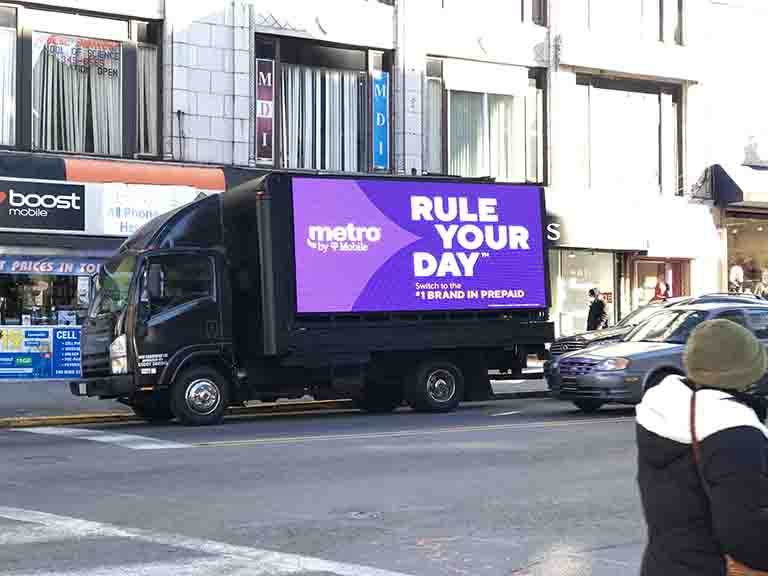
Led Billboard Trucks
Mobile LED displays that bring your brand to any location, any event.
Fly Posting
Street-level poster saturation across walls, construction sites, and corridors.

Sidewalk Decals
Ground-level branded decals at pedestrian hotspots and event entrances.

Sidewalk Stencils
Creative stencil campaigns that put your brand in the path of pedestrians.