American Guerrilla Marketing
Nationwide Service
Media planning, media buying, billboard advertising, & guerrilla marketing
Guerrilla Projections in Tulsa, OK

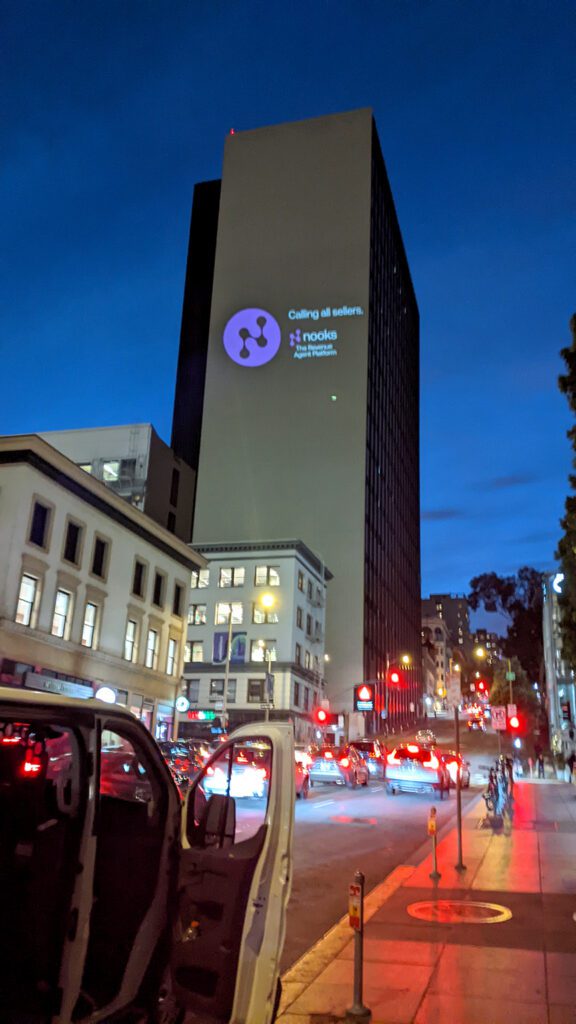
Tulsa’s oil-legacy architecture left an inventory of warehouse-scale blank masonry walls that projection advertising was built for. Brady Arts District is the anchor — but the BOK Center corridor, Greenwood Avenue, Blue Dome’s nightlife zone, and Cherry Street’s midtown dining scene extend the canvas across the city.
Tulsa is Oklahoma’s second city and, from a projection advertising standpoint, the state’s most architecturally gifted market. The oil boom that defined Tulsa’s 20th century left behind something that brand advertisers rarely get to work with: a substantial inventory of former industrial and warehouse buildings with vast blank exterior walls, minimal window coverage, and masonry and painted metal surfaces that accept high-lumen projection with the kind of surface fidelity that entertainment-district commercial buildings in newer metros simply don’t offer. The Brady Arts District sits at the center of this inventory — a former industrial zone converted to Tulsa’s premier arts and entertainment destination, where warehouse-scale building faces now serve as the backdrop for a thriving music, gallery, and restaurant scene that draws serious evening crowds Thursday through Saturday.
What sets Tulsa apart from comparable markets is the combination of surface quality and audience character. The Brady Arts District isn’t just a neighborhood with good walls — it’s a neighborhood where the audience on those walls is civically engaged, culturally active, and present on social media in ways that amplify a projection campaign far beyond its physical footprint. Tulsa has a history of civic pride that runs deep in its arts community: the city that produced the Philbrook Museum, that preserved the Art Deco architecture of downtown, that built the Gathering Place riverfront park, has a creative and community-minded residential audience that pays genuine attention to the visual environment it occupies. A projection on a Brady Arts District warehouse face isn’t just seen — it’s discussed, photographed, posted, and talked about.
The BOK Center concert market adds an entertainment-industry layer to Tulsa’s projection advertising profile. As one of the premier mid-size concert venues in the Great Plains, the BOK Center draws touring acts that move through Tulsa as part of regional and national tour routes — and each show night concentrates a defined entertainment audience in the downtown and Brady Arts District corridor. Advocacy organizations, entertainment brands, and media companies have increasingly recognized Tulsa as a Southwest launchpad — a market with genuine audience engagement, strong surface inventory, and a geographic position that connects efficiently to Oklahoma City, Fayetteville, and the broader South-Central regional circuit.
Ready to Project in Tulsa?
AGM deploys 20,000-lumen building projection advertising on Brady Arts District warehouse walls and throughout Tulsa's entertainment corridors. Tell us your district, your message, and your BOK Center date — we'll identify the wall and execute the campaign.
Our Campaign Locations
Browse Cities in Oklahoma
Select a city to explore Guerrilla Projections opportunities.
Tulsa's Four Primary Projection Zones
Tulsa’s projection-ready environments spread across four distinct neighborhoods, each with its own building stock, audience demographic, and activation rhythm. AGM’s national scouting team assesses all four zones with physical on-the-ground reconnaissance at operating hours before any campaign deploys — walking the districts on representative evenings to evaluate surface conditions, ambient light, pedestrian flow, and projector placement options under actual nighttime conditions. GPS-documented location records are delivered as standard campaign documentation for every Tulsa engagement.
Brady Arts District — Tulsa’s Premier Projection Environment
Brady Arts District is Tulsa’s most important projection advertising zone, and for good reason: it combines the two characteristics that matter most for outdoor projection advertising — excellent building surfaces and a consistently engaged evening audience. Brady Street and the surrounding blocks contain former industrial and warehouse buildings that were built for storage and distribution functions, which means their exterior walls were designed for structural performance rather than architectural display. The result is large, flat, largely blank masonry and painted metal exterior faces with minimal fenestration — exactly the surface profile that produces the sharpest, most vivid high-lumen projection images. Light-toned or painted warehouse faces in the Brady Arts District deliver maximum reflectivity for AGM’s 20,000-lumen system, producing color saturation and image clarity that exceeds what smaller-scale commercial building facades in other Tulsa neighborhoods can offer. The evening audience is the second half of the equation: Brady Arts District draws consistent Thursday-through-Saturday crowds to music venues, galleries, bars, and restaurants. These are not casual passersby — they are intentional evening visitors who have specifically chosen Brady Arts District as their destination, which means their engagement with their physical environment is higher than average and their social media documentation of that environment is consistent. A projection on a Brady warehouse face reaches an audience that is present, attentive, and actively sharing what it sees.
Blue Dome District Entertainment Zone — Downtown Tulsa
The Blue Dome District is downtown Tulsa’s concentrated nightlife zone, anchored by the historic Blue Dome gas station at the corner of 2nd Street and Elgin Avenue. The surrounding blocks contain a dense concentration of bars, restaurants, and late-night venues with flat commercial facades on adjacent buildings that face the primary pedestrian flow. Blue Dome’s audience peaks Thursday through Saturday, with the bar and restaurant crowd providing sustained foot traffic through late evening hours. The building stock in the Blue Dome zone is more variable in surface quality than Brady Arts District — commercial buildings of varying ages and construction types produce a range of wall profiles — but the right candidate walls in the district deliver flat masonry or painted block faces that respond well to high-lumen projection. Blue Dome functions well as a Tulsa secondary activation zone when a campaign needs nightlife-demographic reach that complements Brady Arts District’s arts-community audience: the Blue Dome crowd skews slightly younger and more entertainment-focused, while Brady draws a broader mix of cultural and civic-minded Tulsa residents.
Greenwood District Arts Corridor — Historic Greenwood Avenue
The Greenwood District occupies an important place in both Tulsa history and the city’s contemporary arts and civic identity. Historic Greenwood Avenue in north Tulsa — the area once known as Black Wall Street — is a site of cultural and historical significance that has been undergoing arts-district development and community-focused revitalization. The ongoing gallery openings, cultural events, and community programming on Greenwood Avenue create a civic-minded audience environment where projection advertising addressing community, cultural, and advocacy themes is received with particular resonance. Building faces along the corridor include structures with flat masonry and painted block exteriors suitable for projection in the context of community arts events. For advocacy organizations, civic campaigns, and brands whose messaging connects meaningfully to Greenwood’s historical and contemporary community identity, this is a projection environment with depth of audience engagement that goes beyond simple pedestrian count. The combination of historical significance, ongoing arts development, and community-event programming makes Greenwood Avenue an activation zone where the right message, delivered with appropriate context, generates a quality of audience response that purely demographic metrics don’t capture.
Cherry Street Entertainment Area — 15th Street, Midtown Tulsa
Cherry Street is midtown Tulsa’s upscale dining and independent business corridor, running along 15th Street through a neighborhood of established homes and commercial blocks that attract Tulsa’s professional and affluent-family demographic to independent restaurants, boutique wine bars, specialty retail, and neighborhood gathering spots. The evening audience on Cherry Street is older and more settled than the Brady Arts District or Blue Dome crowd — a 30–55 age range with high household income, established brand loyalties, and leisure spending habits that make the corridor valuable for premium consumer brands, financial services, home goods, and lifestyle campaigns. Commercial building faces along the Cherry Street corridor include mixed commercial structures with flat exteriors suitable for mid-scale projection campaigns — the building scale is smaller than Brady Arts District’s warehouse blocks, but the trade-off is access to a demographic segment that Brady’s younger arts-community audience doesn’t represent. Cherry Street works best for campaigns that need Tulsa’s affluent professional residential audience in a dining and lifestyle context, and pairs well with Brady Arts District when a campaign wants to reach both the arts-community and the upscale-professional segments of Tulsa’s evening economy in the same activation window.
Understanding Tulsa's Projection Surface Inventory
The oil-legacy warehouse character that defines Tulsa’s building stock is what makes the city exceptional for projection advertising, but reading that inventory well requires genuine expertise in how different surface types perform under high-lumen projection conditions. Not every Brady Arts District warehouse wall is equal. The visual similarity of former industrial buildings from street level conceals meaningful variation in surface texture, tone, and reflectivity that has direct consequences for projected image quality at operating distances.
The highest-performing surfaces in Tulsa’s projection inventory are the painted exterior masonry walls — particularly those on former warehouse buildings where the exterior face has been painted white or in a light neutral tone for preservation or aesthetic reasons. These walls deliver close to maximum reflectivity from a 20,000-lumen system: vivid color, sharp detail, and consistent brightness across the full projected area. The combination of flat masonry structure (which eliminates the texture-induced light scatter of rough stone or rough brick), light paint coat (which maximizes lumen reflection), and large uninterrupted area (which allows full creative deployment without interruption by windows or architectural detail) produces projection results that a photographer can capture cleanly and that a pedestrian can read clearly from half a block’s distance.
Unpainted dark brick — common in Tulsa’s older warehouse stock — performs significantly worse. Dark brick absorbs lumen output rather than reflecting it, reducing effective image brightness and washing out color saturation in the midtones. At AGM’s 20,000-lumen output, dark brick is still workable, but it requires creative assets with higher contrast and more saturated color ranges to compensate — and the final image quality is meaningfully below what a light-painted surface delivers from the same projector at the same distance. Corrugated metal siding, present on some Brady Arts District industrial buildings, produces directional glare patterns that interrupt image uniformity depending on projector angle. AGM’s scouting process documents these distinctions in detail, ranks candidate walls by expected image performance, and gives clients clear information on the trade-offs before any activation commitment is made.
Plan Your Guerrilla Projection Campaign in Tulsa, OK
Tell us about your campaign goals, target audience, and preferred locations. Our team will help you plan a high-impact guerrilla projection campaign tailored to your needs.
Award Winning Personalized Service
You will get thoughtful, devoted, and individualized attention from our experienced, qualified, and professional personnel. Being one of the most illustrious agencies in Brooklyn, New York, American Guerrilla Marketing has been awarded the Best of Brooklyn title.
Nationwide
Industry City, Brooklyn, New York 11232
American Guerrilla Marketing
Hours
Mon - Fri: 9 AM - 5 PM
Sat & Sun: Closed
Automate your campaign with AGM’s Request for Proposal Builder.
Automate your campaign with AGM’s Request for Proposal Builder. Simply answer a few quick questions about your campaign goals, markets, and timeline, and the system will generate a tailored presentation with recommended strategies, quantities, and pricing. Click the RFP Builder to instantly receive your customized proposal.
The WakeUp Coalition Campaign: Arts District Advocacy That Generated Earned Media
The WakeUp Coalition campaign in Austin, Texas is the most relevant case study for understanding how projection advertising reaches Tulsa’s arts-district civic audiences. The campaign was designed for exactly the environment that Brady Arts District represents: an arts-and-entertainment zone where the evening audience is disproportionately civically engaged, politically active, and present on social media — a community of people who document their environment, form opinions about what they see in it, and share those opinions with their networks.
AGM deployed projection systems along Austin’s Rainey Street corridor and 6th Street entertainment zone — two environments that share the character of Brady Street in Tulsa: concentrations of bars, restaurants, and venues where a socially active, culturally engaged demographic assembles on weekend evenings. The WakeUp Coalition’s political mobilization message was projected onto the building faces of these entertainment corridors during active evening hours, reaching thousands of bar and restaurant patrons in the middle of their social lives rather than through a digital ad unit they were already primed to skip.
The result was significant earned media coverage that extended the campaign’s reach far beyond the geographic footprint of the street-level activation. Organic social media documentation from the audience — photographs and video captured by people who encountered the projection during their normal Friday and Saturday evenings — circulated through the networks of people who were never physically present on Rainey Street or 6th Street but who encountered the campaign through the sharing behavior of those who were. This amplification mechanism is not unique to Austin: it operates wherever a projection advertising campaign places itself in front of an audience with high social media activity and strong community engagement. Brady Arts District in Tulsa is precisely that audience environment. An advocacy organization targeting Tulsa’s arts-community civic audience, or an entertainment brand seeking organic social amplification through the Brady District’s digitally active evening crowd, can deploy the same mechanism with the same results in a Tulsa warehouse district context.
Campaign Formats For The Tulsa Market
Advocacy & Civic Campaign
Policy messaging and political mobilization content deployed in Brady Arts District, Greenwood Avenue, or Blue Dome — reaching Tulsa’s civically engaged arts-district audience with high-impact visual messaging in their entertainment environment. The WakeUp Coalition Austin campaign model applies directly: projection in arts district entertainment corridors generates both direct audience reach and organic social media documentation from a highly engaged demographic.
BOK Center Concert Activation
Projection deployed in the Brady Arts District and surrounding entertainment corridor during BOK Center event nights, reaching the entertainment-motivated audience assembled downtown for touring concerts and major live events. Pre-show and post-show pedestrian activity in the Brady and downtown corridor creates sustained exposure windows for entertainment brand campaigns tied to specific BOK Center events or touring artist appearances.
Warehouse-Scale Brand Statement
Large-format projection on Brady Arts District warehouse facades reaching near-building-height dimensions. For brands that require visual scale and dominance — entertainment releases, major product launches, brand transformation announcements — the Brady warehouse inventory offers a projection canvas that exceeds what entertainment-district commercial buildings in most comparable markets can support.
Lifestyle & Premium Consumer
Cherry Street corridor activations reaching Tulsa’s upscale professional residential demographic in their primary midtown dining and entertainment environment. Premium consumer brands, financial services, home goods, and specialty retail campaigns targeting the 35–55 high-income Tulsa household demographic find Cherry Street’s evening audience more accessible than a Brady Arts District activation targeting the younger arts-community segment.
Entertainment Release & Streaming
Film premieres, music drops, and streaming service campaigns targeting Tulsa’s entertainment-consuming audience in their leisure environment. Brady Arts District and the Blue Dome Zone’s Thursday-through-Saturday nightlife crowds are consistent consumers of entertainment content who document and share new releases — organic amplification behavior that makes projection advertising particularly efficient for entertainment campaigns seeking earned social reach.
Statewide Southwest Launchpad
Tulsa as the opening activation in a multi-city South-Central regional campaign — deploying in Brady Arts District before extending to Oklahoma City, Norman, or Broken Arrow within the same campaign window, or connecting east to Fayetteville, Arkansas. AGM’s mobility unit manages the statewide and regional routing efficiently within a unified campaign package.
Tulsa's Concert and Event Calendar: Projection Windows Throughout the Year
The BOK Center’s annual event calendar is one of Tulsa’s most reliable drivers of downtown pedestrian activity. As a 19,000-seat arena that regularly hosts major touring concerts, championship boxing events, and large-scale civic gatherings, BOK Center event nights push substantial pedestrian volume into the surrounding downtown and Brady Arts District corridor. Concert audiences — particularly those for touring acts with younger and mid-age demographics — are high-documentation audiences: people who photograph their entire evening, from the pre-show dinner to the post-show walk to the parking garage, and who share that documentation across social media platforms continuously throughout the night.
A projection campaign activated on a Brady Arts District warehouse face during a major BOK Center concert night reaches the concert audience during their pre-show and post-show entertainment district activity — the period when they’re exploring downtown Tulsa, looking for food and drinks, and documenting the city around them for their social networks. This is an audience in an exploratory, documentation-ready state: different from a captive arena audience, but in many ways more useful for brand projection because they’re moving through the physical environment actively and sharing it in real time.
Beyond the BOK Center, Tulsa’s annual event calendar includes Tulsa Tough — one of the largest criterium cycling events in the United States — which draws competitors and enthusiasts from across the country into the Blue Dome and downtown corridor, and the Tulsa State Fair, Mayfest, and the Greenwood Rising events that each create distinct audience concentrations in specific Tulsa neighborhoods. The year-round variety of Tulsa event programming gives projection advertising campaigns multiple distinct activation windows across every season, making Tulsa viable for year-round campaign scheduling rather than seasonal activation only.
Scouting And Technical Execution In Tulsa
Tulsa’s Brady Arts District requires the kind of careful advance scouting that warehouse districts everywhere require: buildings that look similar from the street present meaningfully different projection performance characteristics once you’ve assessed their actual surface texture, paint tone, window placement, and orientation relative to the primary pedestrian viewing axis. AGM’s national scouting team walks Brady Street and the surrounding blocks on a representative Thursday or Friday evening — the actual operating hours — to assess candidate walls under nighttime conditions with real ambient light from bar and restaurant signage, street fixtures, and the general evening commercial activity of the district.
Physical scouting in the Greenwood and Cherry Street corridors follows the same methodology: evening assessment, candidate wall ranking, ambient light mapping, and projector placement documentation. The GPS-documented location records that AGM delivers as part of every Tulsa engagement give clients precise confirmation of where the campaign ran, under what surface conditions, and with what sightline clearance — evidence that stands up to internal campaign review and client reporting requirements. Scouting for BOK Center-tied campaigns may include advance assessment during a comparable prior event night to evaluate the specific pedestrian flow patterns that a given touring act’s audience creates in the surrounding entertainment district.
AGM’s direct technical crew — the company’s own technicians, not a Tulsa-area subcontractor — deploys to every Tulsa engagement with the same 20,000-lumen commercial projection system that runs AGM campaigns in New York, Austin, and Los Angeles. Setup before dusk, operation through the full four-to-six-hour activation window, and breakdown at close are all crew-managed. Photography and video documentation are captured throughout the run and delivered with the post-campaign report as standard campaign assets.
Tulsa Projection Advertising Pricing
Guerrilla projection advertising in Tulsa runs at contact us for a quote. — the standard outside-NYC rate. This covers the complete activation package: AGM’s 20,000-lumen commercial projector, generator and full power solution, electronics bundle, mobility unit, and the two-person technical crew of AGM’s own technicians for setup, full-window operation, and breakdown. The Contact us for a custom quote. rate applies across all four Tulsa activation zones — Brady Arts District, Blue Dome, Greenwood, and Cherry Street — and covers a four-to-six-hour activation window starting at dusk.
Multi-night Tulsa campaigns — sequential activations across Brady Arts District on one evening and Blue Dome or Cherry Street on another — are available and typically improve cost efficiency across the campaign’s total reach. Multi-city campaigns combining Tulsa with Oklahoma City, Norman, or Broken Arrow within the same week are structured within a single mobility-unit deployment. Advance location scouting in Tulsa for initial market reconnaissance runs approximately contact us for pricing. Private-property permitted placements — formal agreements with Brady Arts District or other Tulsa building owners that guarantee specific sightlines and multi-night site occupation — are available contact us for a custom quote. depending on the building, district, and arrangement.
Tulsa and Oklahoma region campaign inquiries: AGM’s Las Vegas regional hub at 5940 S Rainbow Blvd, PMB 1205, Las Vegas, NV 89118, (702) 996-1806. New York headquarters: Industry City, Unit 28, Brooklyn, NY 11232, (646) 776-2770.
Who Deploys Projection Advertising In Tulsa
Advocacy organizations and political campaigns represent a significant portion of Tulsa’s projection advertising client base, and the Brady Arts District and Greenwood corridor are the primary reasons why. The civic engagement level of the arts-district audience in Tulsa — an audience with high rates of voter registration, issue awareness, and social media activity — makes it one of the most productive environments for advocacy messaging in the South-Central region. Organizations working on policy issues with resonance in the arts community, environmental concerns relevant to oil-legacy communities, civic and social justice issues with connection to Tulsa’s Greenwood historical context, and political campaigns seeking young-professional and creative-class voter engagement have all found Tulsa’s arts districts a productive deployment environment.
Entertainment brands and touring music acts use Tulsa as a Southwest regional activation point because the BOK Center concert market draws audiences from across northeastern Oklahoma and surrounding states — and because Tulsa’s arts-district culture means entertainment content projected into the Brady Arts District reaches a demographic that actively follows music, follows entertainment media, and creates and shares the documentation that entertainment brands need to generate organic reach. A film campaign or streaming release projected on a Brady warehouse face during a major BOK Center show night reaches the entertainment-motivated audience assembled downtown in exactly the mindset that entertainment advertising seeks.
Consumer brands targeting the Tulsa professional household — particularly those in industries with heavy Tulsa presence like energy services, healthcare, and regional financial services — use Cherry Street and Midtown Tulsa projection windows to reach their demographic in a leisure context that the corporate environments where they work don’t provide. And national brands building South-Central regional presence have increasingly included Tulsa in multi-city campaign structures as a market with surface inventory, audience quality, and geographic efficiency that makes it a productive regional anchor alongside Oklahoma City.
AGM's Qualifications in the Tulsa Market
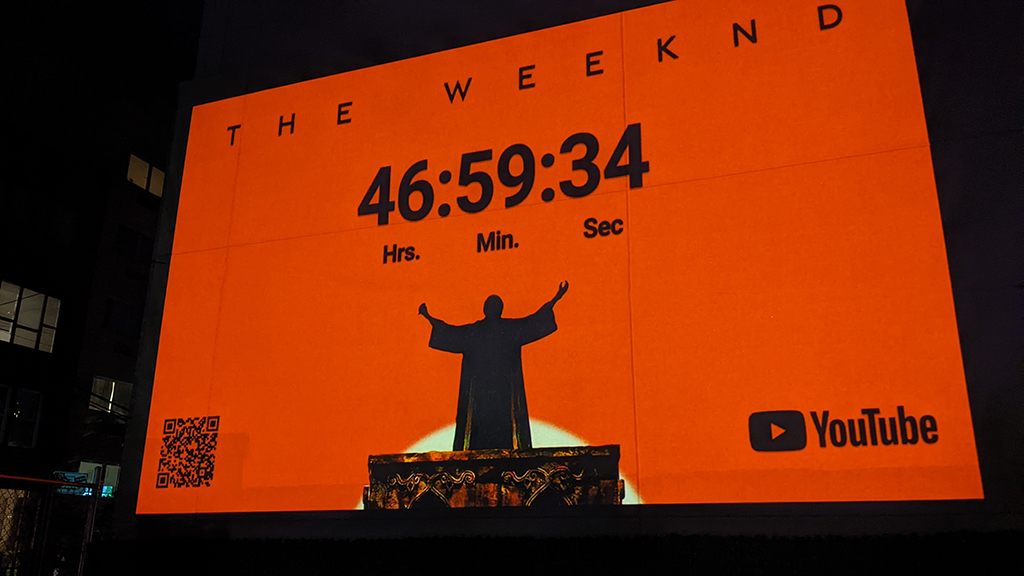
American Guerrilla Marketing is a Best of Brooklyn-recognized operation with a client roster that includes Biossance, The Weeknd, the US Marine Corps, Women’s March, Reproductive Freedom for All, and YouTube — campaigns across advocacy, entertainment, consumer products, and government sectors in markets ranging from New York to Austin to Washington DC to Los Angeles. That national range of market experience is the foundation of how AGM approaches Tulsa: not as a generic service applied uniformly, but as a genuinely location-specific operation where advance on-the-ground reconnaissance produces location decisions based on actual Tulsa nighttime conditions rather than assumptions imported from other markets.
AGM’s projection client roster includes Netflix, Disney, Coca-Cola, FanDuel, Live Nation, iHeartRadio, and the US Marine Corps. A confirmed case study: the US Marine Corps × CMA Fest Nashville — multi-night projections onto architectural surfaces throughout the festival footprint, reaching 80,000+ attendees across the campaign window. Projection advertising scales across every brand category; what our campaigns share is scale, precision, and a physical presence digital cannot replicate.
The direct technical crew model means AGM’s own technicians — who bring the operational standards developed across hundreds of campaigns nationally — execute every Tulsa activation. No local subcontracting, no crew handoffs, no operational consistency gaps between what was scouted and what is deployed. GPS-documented location analysis and post-campaign reporting are included as standard deliverables for every Tulsa engagement, giving clients documented evidence of campaign execution that serves internal reporting, press, and social media needs. The 20,000-lumen commercial projection system is purpose-built for outdoor brand advertising in exactly the ambient light and surface conditions Tulsa’s warehouse and entertainment districts present.
Coverage & Estimated Impressions
| Zone / Area | Peak Hours | Foot Traffic | Est. Nightly Impressions | Best For |
|---|---|---|---|---|
| Brady Arts District | 8PM–1AM | High | 8,000–35,000 | Product Launch |
| Blue Dome District Entertainment Zone | 8PM–1AM | High | 8,000–35,000 | Event Promotion |
| Greenwood District Arts Corridor | 8PM–1AM | High | 8,000–35,000 | Brand Awareness |
| Cherry Street Entertainment Area | 8PM–1AM | High | 8,000–35,000 | Political |
Frequently Asked Questions
Brady Arts District combines the two most important characteristics for guerrilla projection advertising in a single location: excellent building surfaces and a consistently engaged evening audience. The former industrial and warehouse buildings on Brady Street and surrounding blocks present large, flat, largely blank exterior masonry and painted metal wall faces with minimal window interruption — exactly the surface profile that produces the sharpest, most vivid 20,000-lumen projection images. The district’s consistent Thursday-through-Saturday audience at music venues, galleries, bars, and restaurants is civically engaged, active on social media, and highly likely to photograph and share projection content — giving Brady Arts District campaigns organic amplification that goes beyond the physical pedestrian count at the activation site.
BOK Center event nights generate sustained pedestrian movement between the arena and the surrounding Brady Arts District and downtown entertainment corridor — pre-show restaurant activity, post-show bar and nightlife exploration, and the general movement of thousands of entertainment-motivated pedestrians through the blocks surrounding the venue. A projection activated on a Brady Arts District warehouse face or a downtown building on a BOK Center event night intercepts this audience in the street-level entertainment environment they occupy before and after the show. Concert audiences are high-documentation audiences — they photograph their entire evening — and projection content encountered during their pre- or post-show downtown time tends to travel through their social networks along with the rest of their evening documentation.
Tulsa projection advertising runs at contact us for a quote. covering the complete activation package: AGM’s 20,000-lumen projector, generator and full power solution, electronics bundle, mobility unit, and a two-person crew of AGM’s own technicians. This rate applies across all four Tulsa activation zones — Brady Arts District, Blue Dome, Greenwood, and Cherry Street. Advance location scouting in the Tulsa market runs approximately contact us for pricing. Private-property permitted placements, which guarantee specific wall positions and multi-night site control, are available contact us for a custom quote. depending on the building and arrangement.
Yes. Greenwood Avenue carries a cultural and civic significance that makes it a particularly resonant environment for advocacy campaigns addressing community, social justice, and civic themes. The ongoing arts-district development on Greenwood and the community-focused events and gallery programming that populate the corridor concentrate a civically engaged audience that is exceptionally receptive to messaging with community relevance. Building faces on Greenwood Avenue include structures with flat masonry and painted block exteriors suitable for projection in the context of community arts events and advocacy activations. AGM assesses each specific Greenwood location through advance scouting, and recommends configurations that maximize image quality and audience visibility within the corridor’s specific built environment.
Yes. The Blue Dome District’s dense bar and restaurant concentration and its peak Thursday-through-Saturday nightlife activity make it a strong environment for entertainment brand activations during show weeks. A touring act playing the BOK Center can activate in the Blue Dome Zone on the night before or the evening of the show, reaching the Tulsa nightlife audience in the entertainment district closest to the venue before the show begins. Building faces adjacent to Blue Dome’s commercial zone provide projection surfaces within the pedestrian flow of the pre-show crowd. The nightlife demographic in Blue Dome is the same entertainment-consuming, social-media-active audience segment that concert marketing targets, making the alignment between district character and campaign objective strong.
The ideal Brady Arts District warehouse surface for projection advertising has four distinguishing characteristics. First, it’s flat — no curves, angles, or recesses that would distort the projected image. Second, it’s large — warehouse building exterior faces offer dimensions that commercial storefronts can’t match, allowing the projected image to scale to proportions that read from a full block’s distance. Third, it has minimal or zero window coverage in the projection area — windows are transparent and reflective, creating dead zones in the image where light passes through rather than reflecting back. Fourth, it has a light or white paint surface that maximizes reflectivity from the 20,000-lumen system, delivering maximum brightness and color saturation to the audience’s viewing position. Not every Brady warehouse wall hits all four marks, which is exactly why AGM’s advance physical scouting process is essential for identifying the specific walls that will produce the highest image quality for each campaign’s creative requirements.
The approximately 100-mile distance between Tulsa’s Brady Arts District and OKC’s Bricktown or Paseo District is within AGM’s mobility unit’s operational range for overnight transit between activation nights. A standard two-city Oklahoma campaign might activate in Tulsa’s Brady Arts District on night one, transit overnight, and deploy in OKC’s Paseo District or Bricktown on night two — covering both major Oklahoma metro markets within a single campaign structure without requiring separate crew deployments or equipment shipments. This makes the Tulsa-OKC two-city structure one of the most cost-efficient multi-market configurations in the South-Central region for brands seeking statewide Oklahoma projection advertising reach.
Yes. Cherry Street’s commercial building stock — converted storefronts and mixed-use structures along 15th Street — includes exterior wall surfaces suitable for mid-scale projection campaigns. The building scale on Cherry Street is more modest than Brady Arts District’s warehouse dimensions, but the trade-off is access to Tulsa’s upscale professional residential demographic in their primary midtown leisure environment. A restaurant opening, premium lifestyle brand, or financial services campaign targeting the Tulsa 35–55 high-income household demographic will find Cherry Street’s evening dining and boutique-retail audience more aligned with their customer profile than the younger arts-community crowd in Brady. AGM’s scouting team identifies the specific Cherry Street wall positions that deliver the cleanest projection images within the corridor’s commercial building stock.
On a standard Friday evening during the active season — spring through early winter — the Brady Arts District draws several hundred to a few thousand pedestrians through its music venues, galleries, restaurants, and bars during peak evening hours. Major event nights — BOK Center shows, gallery events, community programming — push audience volume above typical Friday levels as additional attendees spill into the Brady zone from adjacent venues and gathering spaces. The evening population is not homogeneous: early-evening diners, gallery-opening attendees, mid-evening bar hoppers, and late-night music venue crowds each contribute different audience segments across the full four-to-six-hour projection window, giving a Brady projection campaign meaningful aggregate exposure across the full evening rather than a single peak moment.
Yes. The WakeUp Coalition campaign in Austin, Texas is the direct precedent — an advocacy projection deployed in Austin’s Rainey Street and 6th Street entertainment and arts-adjacent corridors to reach a civically engaged audience during a major political mobilization moment. Austin’s arts-district entertainment zones serve the same function as Tulsa’s Brady Arts District and Greenwood corridor: they concentrate a culturally engaged, socially active audience that is receptive to advocacy messaging embedded in its leisure environment. The Austin campaign generated significant earned media coverage and organic social media documentation from its audience — the same amplification mechanism that operates in Tulsa’s arts-district environments when a projection campaign reaches an audience of active social media participants with community and civic engagement habits.
Yes. Tulsa Tough — one of the largest criterium cycling events in the United States — draws competitors and enthusiasts from across the country into the Blue Dome District and downtown Tulsa over its multi-day June schedule. The event concentrates a specific athletic, health-conscious, and community-engaged audience in the Blue Dome Zone during daytime and evening programming, and the surrounding downtown entertainment activity during Tulsa Tough week creates an elevated ambient pedestrian environment throughout the weekend. A projection activated during Tulsa Tough evenings reaches both the cycling community and the broader Tulsa audience drawn to the neighborhood by the event. Other Tulsa events — Mayfest, Greenwood Rising, the Tulsa State Fair, and major BOK Center shows — each create comparable activation windows throughout the annual calendar.
Two to three weeks of advance notice is the standard recommendation for Tulsa campaigns tied to specific BOK Center event dates. This window allows AGM’s scouting team to walk Brady Arts District and the adjacent downtown corridor during a comparable prior evening, assess ambient light and pedestrian flow patterns relative to the specific venue’s crowd behavior, identify and document candidate walls under actual nighttime conditions, confirm logistics for crew positioning relative to the venue’s event traffic, and complete any permitting coordination for the specific activation configuration. For major touring events that generate unusually large crowds — arena-capacity shows with high social media documentation behavior — early planning may reduce friction from competing activations or venue-adjacent restrictions that high-profile events sometimes prompt.
Our Campaign Locations
Browse All States
Explore Guerrilla Projections opportunities across the United States.
49 States • 192 Cities
More AGM Outdoor Advertising Services
Led Billboard Trucks
Mobile LED displays that bring your brand to any location, any event.

Fly Posting
Street-level poster saturation across walls, construction sites, and corridors.

Sidewalk Decals
Ground-level branded decals at pedestrian hotspots and event entrances.

Sidewalk Stencils
Creative stencil campaigns that put your brand in the path of pedestrians.