American Guerrilla Marketing
Nationwide Service
Media planning, media buying, billboard advertising, & guerrilla marketing
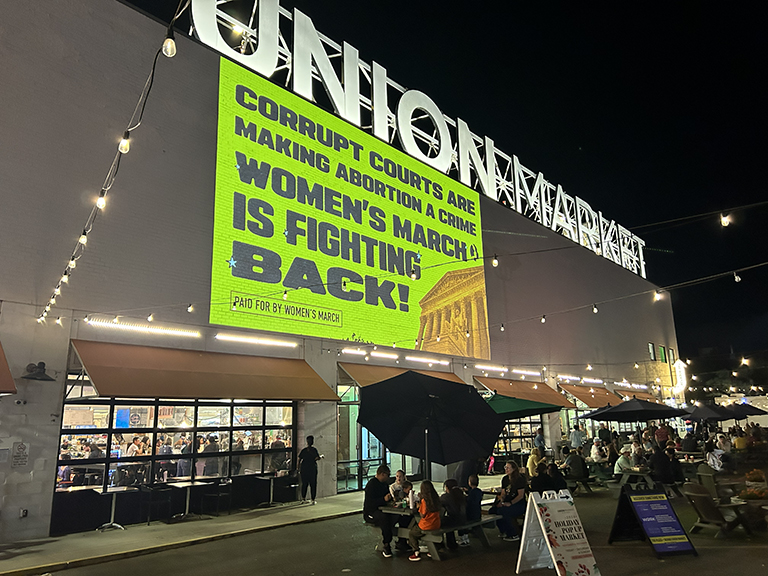
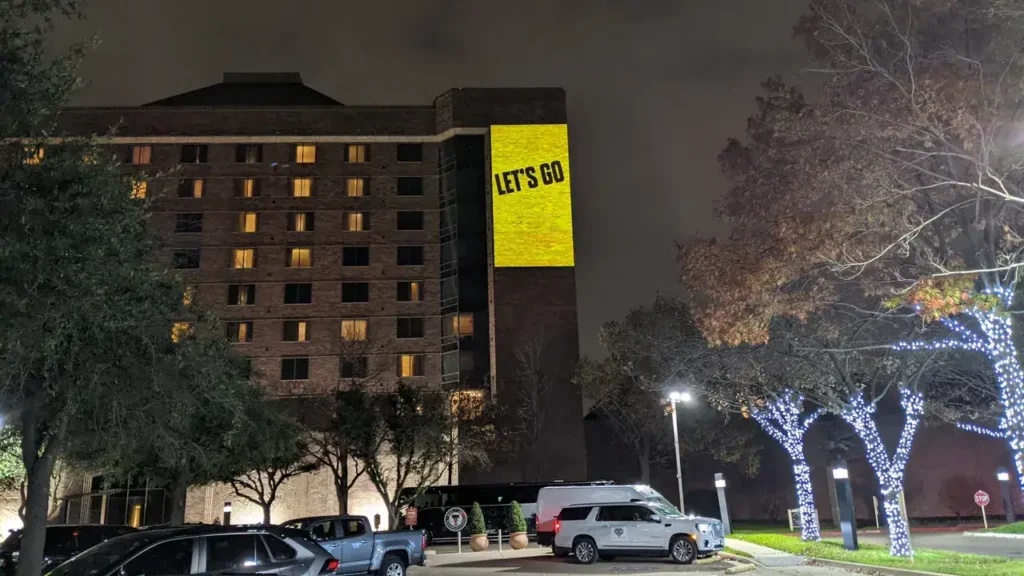
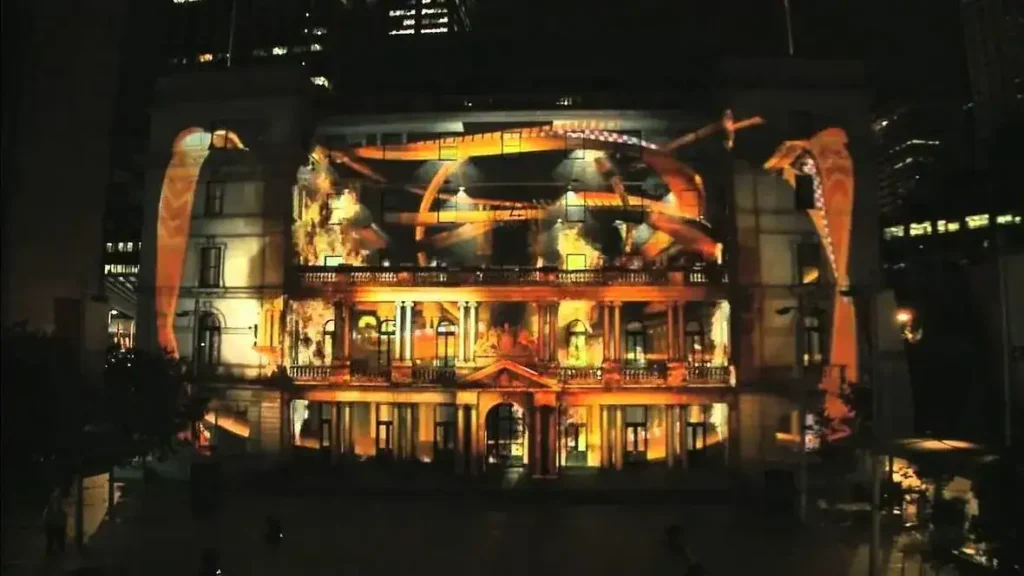
Mesa is one of Arizona’s fastest-growing cities and one of its most overlooked projection markets. AGM deploys 20,000-lumen commercial campaigns across Downtown Mesa’s arts corridor, Main Street, and the Fiesta District — turning underutilized urban surfaces into high-impact visual statements.
Mesa is Arizona’s third-largest city — and it is growing faster than most people outside the Phoenix metro realize. Over the past decade, Mesa has invested heavily in downtown revitalization, arts infrastructure, and the kind of mixed-use urban development that concentrates foot traffic, cultural engagement, and community identity in walkable blocks. The Mesa Arts Center, one of the largest arts centers in the American Southwest, anchors a cultural district that draws consistent evening audiences. Main Street has evolved from a depressed commercial strip into a genuine entertainment corridor with bars, restaurants, local shops, and music venues. The Fiesta District packs nightlife and retail density into an area that generates foot traffic well into the night on weekends.
What this means for projection advertising is that Mesa now offers exactly the kind of urban environment that makes guerrilla campaigns work: concentrated pedestrian traffic, a community that pays attention to local visual culture, building surfaces that haven’t been saturated by competing outdoor advertising, and proximity to the broader Phoenix metro market’s media infrastructure. A well-executed projection in Downtown Mesa doesn’t stay in Mesa — it travels through social channels, reaches Phoenix media, and lands in front of an audience far larger than the blocks where the campaign physically runs.
Mesa’s demographic composition also matters strategically. The city has one of the most culturally diverse populations in Arizona, with significant Hispanic and Latino communities, a growing young professional segment drawn by the tech and aerospace industries that have set up operations east of Phoenix, and a substantial arts-engaged resident base that actually looks at what’s happening on the walls around them. That’s not a generic audience — it’s an audience with specific values, spending patterns, and media behaviors that give projection campaigns in Mesa a targeting precision that broad-market Phoenix buys can’t replicate.
The physical environment of Mesa cooperates with projection work in ways that matter technically. Mesa’s flat urban grid creates clean sightlines along major corridors, allowing pedestrians and vehicle traffic to spot a projection from significantly further away than in cities with more varied topography. Building facades along Main Street and in the Downtown Cultural District tend toward the large, flat, light-colored surfaces that maximize projection clarity and color saturation. Evening temperatures in Mesa are consistently favorable for outdoor dwell time across most of the year, and the desert air clarity that benefits Arizona projections broadly applies here with full force.
AGM's crew knows the Main Street corridor, the Arts Center district, and the Fiesta Zone. Whether you need a single high-impact night or a multi-night run, we have the equipment, the people, and the location intelligence to deliver a Mesa campaign that earns attention and documentation.
Select a city to explore Guerrilla Projections opportunities.
AGM’s clients include the US Marine Corps — one of the most demanding institutional clients in American marketing. That engagement required AGM to meet standards of equipment reliability, crew professionalism, documentation precision, and operational consistency that would satisfy any institutional compliance or procurement review. Every Mesa engagement runs to those same standards. This isn’t a claim about company culture — it’s a documented operational baseline that every crew member, equipment package, and post-campaign deliverable is held to regardless of campaign size or client category. When you deploy AGM in Mesa, you get the same people and the same process that institutional clients depend on at national scale.
AGM’s crew for every Mesa engagement are AGM’s own direct technicians — not regionally sourced subcontractors, not day-hire projection operators recruited from local AV firms. This matters because crew consistency is directly tied to campaign consistency. AGM’s technicians have run the equipment they’re deploying. They’ve seen how it responds to heat, to surface irregularity, to ambient light competition. They know what to do when conditions vary from what was scouted. That operational depth is the reason AGM campaigns look like the scouting images and deliver on what was promised during the planning phase.
The Mesa Arts Center sits at the heart of a walkable cultural district that draws consistently strong evening audiences to performances, events, and gallery openings. The surrounding blocks feature building facades well-suited for projection work, and the cultural character of the district creates an audience already primed to engage with visual content in their physical environment. Projection campaigns deployed near the Arts Center benefit from the foot traffic generated by the venue’s programming calendar, which can be cross-referenced with campaign timing to ensure maximum audience concentration. The district’s relatively low ambient light competition compared to purely commercial zones makes projected images read with particularly strong contrast after dusk.
Mesa’s Main Street is a linear projection environment that offers strategic flexibility unavailable in district-concentrated zones. The corridor’s length allows AGM scouts to identify multiple projection angles, surface qualities, and audience viewing positions, selecting the specific block and surface combination that maximizes impact for a given creative brief. The mix of pedestrian traffic, vehicle traffic, and outdoor dining along Main Street creates a multi-modal audience exposure: people sitting at outdoor tables notice a projection on a building across the street, stop, pull out their phones, and post — before the crew has completed the first operational hour. That organic documentation behavior is one of the factors that makes linear corridor environments consistently strong for campaigns designed to generate social amplification.
The Fiesta District is Mesa’s most concentrated entertainment and nightlife zone, delivering the kind of audience density on Friday and Saturday evenings that makes projection campaigns exceptionally cost-effective per-impression. The demographic skews younger and more entertainment-oriented than the Arts Center district, making the Fiesta District the preferred location for brands, events, and campaigns targeting an 18–40 audience with high social media engagement. Building surfaces in the Fiesta District vary in character — some large blank walls, some more architecturally complex facades — and AGM’s scouting process identifies the specific surfaces within the zone that deliver the combination of size, surface quality, and viewing angle that makes a 20,000-lumen system perform at its best.
The Mesa Convention Center draws event-specific audiences to Downtown Mesa on a rotating basis throughout the year. Consumer shows, industry conferences, cultural events, and community gatherings create concentrated foot traffic in and around the convention center complex. AGM’s scouts track Mesa’s convention calendar and can recommend projection deployments timed to specific events where the audience composition matches campaign objectives. A convention draw of several thousand visitors moving through the surrounding blocks after evening sessions creates a captive, high-attention projection audience that doesn’t require the kind of organic foot traffic accumulation that makes weeknight campaigns in quieter zones less predictable.
The Valley Metro Light Rail line runs through Mesa, and the Center Street corridor adjacent to light rail stations creates a consistent pedestrian flow that projection campaigns can intercept across multiple evening hours. Light rail riders are on foot, they’re moving at walking speed, and they’re visually engaged with their environment in a way that vehicle passengers are not. Building surfaces near light rail station corridors in Mesa provide excellent projection canvases with the added benefit of a captive audience whose movement patterns are predictable, making operational timing precise. For campaigns that need to demonstrate cumulative impression delivery across a single evening, light rail corridor placement in Mesa provides reliable foot traffic data to support post-campaign reporting.
Tell us about your campaign goals, target audience, and preferred locations. Our team will help you plan a high-impact guerrilla projection campaign tailored to your needs.
Award Winning Personalized Service
You will get thoughtful, devoted, and individualized attention from our experienced, qualified, and professional personnel. Being one of the most illustrious agencies in Brooklyn, New York, American Guerrilla Marketing has been awarded the Best of Brooklyn title.
Nationwide
Industry City, Brooklyn, New York 11232
American Guerrilla Marketing
Hours
Mon - Fri: 9 AM - 5 PM
Sat & Sun: Closed
Automate your campaign with AGM’s Request for Proposal Builder. Simply answer a few quick questions about your campaign goals, markets, and timeline, and the system will generate a tailored presentation with recommended strategies, quantities, and pricing. Click the RFP Builder to instantly receive your customized proposal.
Mesa’s community identity is strong and locally inflected — residents are invested in what happens in their city in ways that differ meaningfully from the more transient character of tourist-heavy Phoenix or Scottsdale entertainment districts. Civic campaigns, ballot measures, community organizing, and municipal awareness efforts find in Mesa an audience that reads local cultural signals and responds to messages with direct community relevance. A projection in Downtown Mesa on a topic that affects Mesa residents specifically generates a different quality of community engagement than the same campaign in a higher-tourism environment. AGM’s scouting process identifies the specific locations and timing within Mesa that maximize community audience exposure for civic campaign objectives.
Brands launching in the Phoenix metro market increasingly treat Mesa as a distinct strategic target rather than a secondary Phoenix suburb. The city’s demographic profile — multicultural, growing, high tech and aerospace employment, strong arts engagement — represents a consumer segment that responds to brand communication that acknowledges the city’s identity rather than treating it as Phoenix spillover. Guerrilla projection in Mesa creates a brand presence that feels specifically designed for this market, which is an advantage in a city whose residents are increasingly aware of and resistant to generic metro-wide advertising that treats the East Valley as an afterthought.
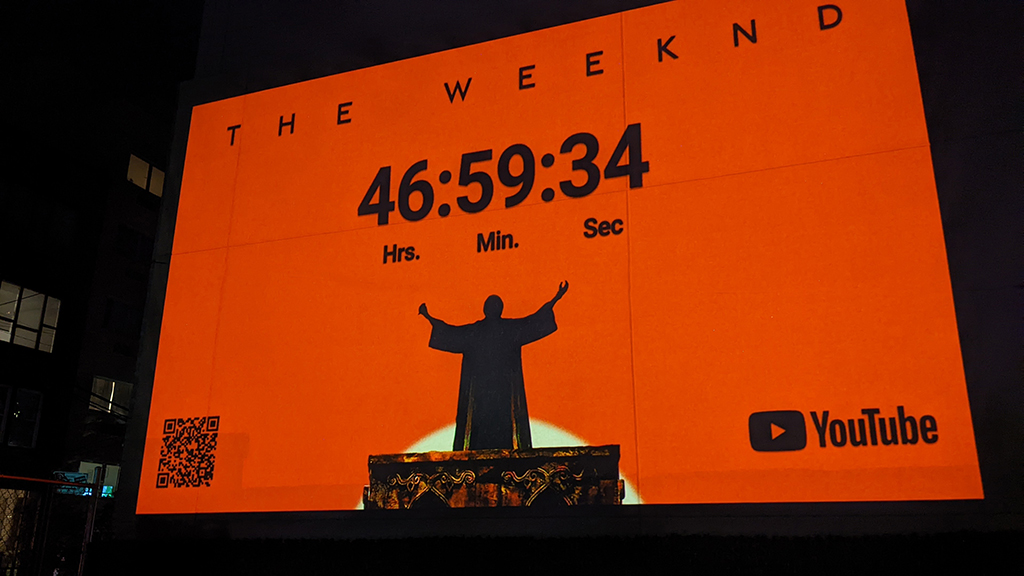
The Mesa Arts Center’s programming calendar, the Fiesta District’s nightlife concentration, and the city’s growing live music scene create multiple natural alignment points for entertainment projection campaigns. Concert announcements, album releases, film openings, and festival promotions find in Mesa an audience that actively tracks what’s happening culturally and responds to the kind of striking visual communication that a 20,000-lumen projection represents. The social sharing behavior of Mesa’s entertainment audiences — who are younger, more connected, and more likely to post immediately — makes entertainment projection campaigns particularly effective at generating the organic amplification that extends campaign reach well beyond the physical activation footprint.
Mesa’s active development landscape — new residential projects, commercial developments, mixed-use announcements, and urban revitalization milestones — creates a consistent need for high-impact visual communication that reaches both community stakeholders and prospective buyers or tenants. Projection campaigns announcing new developments in Downtown Mesa or along the Main Street corridor reach exactly the audience that development marketing needs to reach: residents who are already invested in the area’s trajectory, visitors who are evaluating Mesa as a place to live or do business, and media who cover Mesa’s transformation as an ongoing story. The scale of a building-size projection makes a development announcement feel like the community-defining moment that the best development projects actually are.
Every Mesa campaign begins with dual-layer scouting: AGM’s national team conducts digital analysis — satellite imagery, street-level surveys, ambient light mapping, surface condition assessment — followed by physical on-the-ground scouting in Mesa itself. Scouts walk the identified districts, evaluate building surfaces in actual evening light conditions, document specific projection angles and distances, and assess the pedestrian flow patterns that determine audience exposure. This physical scouting step is not optional and not a formality — it is the step that determines whether the campaign executes as planned or improvises under pressure on execution night. Location scouting for a new Mesa market engagement runs approximately contact us for a quote. is the single most leverage-generating investment in the pre-campaign phase.
Once Mesa locations are scouted and confirmed, AGM’s production team works with clients to ensure that creative content is specifically formatted for the identified surfaces. Projection surfaces are not neutral display screens — they have architectural character, proportion, ambient light interaction, and surrounding visual context that all affect how content reads from the pedestrian viewing zone. AGM’s technical team uses precise surface measurements and equipment modeling to configure content scaling, positioning, and brightness calibration before the execution night. Clients who arrive at execution night with content that hasn’t been calibrated to their specific surface consistently achieve lower visual impact than clients who allow the calibration step to happen properly. AGM’s process includes this step as standard, not as an optional upgrade.
AGM deploys a two-person technical crew for every Mesa engagement, carrying the full campaign infrastructure: 20,000-lumen commercial projection system, generator and complete power solution, electronics bundle, and mobility unit that allows repositioning if operational conditions require it. Campaigns launch at dusk — the moment when ambient light drops enough for full projection impact — and typically run for four to six hours. The crew manages the full operational period: setup, launch, monitoring, adjustments as lighting conditions change through the evening, and breakdown after the operational run concludes. Mesa’s flat urban grid and reliable access to parking positions along major corridors make mobility logistics more predictable than in more complex urban environments, which contributes to operational efficiency and execution precision.
AGM’s post-campaign documentation package for Mesa engagements includes professional photography captured during the operational run, GPS-documented location data, an operational summary with timing and duration details, and image files delivered in press-ready and social-ready formats. For Mesa campaigns that generate local or metro media coverage — which well-executed projections in visible locations commonly do — AGM provides the technical documentation that news organizations and online media request when covering projection events. The documentation package is a standard deliverable, not an add-on service, and is delivered to clients within the agreed post-campaign timeframe.
AGM’s Mesa campaign pricing is contact us for a quote. That rate covers the complete deployment: 20,000-lumen commercial projection system, generator and full power solution, electronics bundle, mobility unit, and the two-person technical crew responsible for setup, operation through the full run, and complete breakdown. Nothing in the core deployment is an add-on charge. The rate reflects what it actually costs to deploy a professional projection campaign at the technical standard that generates reliable results — not a discounted entry price that accretes hidden charges during project development.
Location scouting for Mesa runs approximately contact us for pricing. For clients who require specific permitted or private-property locations — situations where advance negotiation with Mesa property owners or municipal bodies is necessary — those engagements are priced contact us for a custom quote., depending on the scope of the agreement required. AGM manages the scouting and permitting process on behalf of clients and delivers fully documented, properly authorized campaigns. Multi-night runs in Mesa are available and consistently deliver stronger cumulative results than single-night deployments, particularly in entertainment district locations where repeat pedestrian audience exposure compounds the campaign’s impact over multiple evenings.
Mesa’s projection clients reflect the city’s evolving identity as a major urban center with distinct community character. National brands establishing Phoenix metro presence increasingly specify Mesa as a distinct target rather than rolling Mesa into a Phoenix-wide buy. The city’s Hispanic and Latino community — one of the largest and most economically active in Arizona — represents a demographic that specific brands and organizations deliberately target with campaigns designed for cultural resonance rather than generic metro reach. Arts organizations, community nonprofits, civic campaigns, and cultural institutions use Mesa’s arts district and Main Street corridor to reach an audience already engaged with the city’s cultural life.
The technology and aerospace sectors that have expanded into Mesa’s employment base bring a new category of projection client: companies building employer brand, recruiting presence, or product awareness in a tech-savvy local audience that responds to the kind of unconventional, high-production communication that projection campaigns represent. Mesa’s growth trajectory means the city will become a more competitive projection market as more brands discover what the city’s location portfolio offers — which means organizations investing in Mesa projection presence now are establishing visual territory in a market before it becomes crowded.
| Zone / Area | Peak Hours | Foot Traffic | Est. Nightly Impressions | Best For |
|---|---|---|---|---|
| Mesa Market Place Swap Meet | Sat–Sun 8AM–4PM | Very High | 30,000–65,000 | Consumer / Brand |
| Sloane Park / Cubs Spring Training | Game days | Very High | 18,000–40,000 | Sports / Family |
| Main Street Arts District | Fri–Sat 6–11PM | Moderate | 8,000–18,000 | Arts / Events |
| Power Road Commercial Corridor | Daily 11AM–8PM | High | 15,000–28,000 | Retail / Consumer |
| ASU Polytechnic Campus | Weekdays 9AM–6PM | Moderate | 10,000–20,000 | Youth / Education |
| Fiesta District / Superstition Springs | Weekend 12–8PM | High | 20,000–38,000 | Family / Retail |
The Mesa Arts Center district combines several conditions that make it among the strongest projection environments in the Phoenix metro: consistent evening foot traffic driven by the venue’s programming calendar, a culturally engaged audience predisposed to notice and respond to striking visual content, building surfaces well-suited for commercial projection, and relatively low ambient light competition compared to purely commercial downtown zones. The community character of the arts district — where residents are invested in local visual culture and attuned to what appears on walls around them — creates an audience that genuinely engages with projection content rather than passively passing by. That qualitative engagement drives the social sharing and word-of-mouth amplification that extend campaign reach beyond the physical footprint.
Main Street requires linear scouting — evaluating the full length of the corridor to identify the specific block, surface, and angle combination that delivers maximum impact for a given creative brief and operational configuration. AGM scouts document surface sizes, textures, and reflective properties; assess ambient light from streetlamps, storefronts, and cross-street illumination; evaluate pedestrian flow patterns at the specific blocks under consideration; and test viewing angles from the most likely audience positions. The flexibility of a linear corridor means AGM can often identify multiple viable locations and recommend the one that best matches the campaign’s specific creative and audience objectives. Main Street’s mix of outdoor dining, retail foot traffic, and vehicle visibility creates multi-modal audience exposure that district-concentrated locations don’t always deliver.
Mesa hosts a consistent calendar of events that concentrate audiences in its downtown and entertainment zones. The Mesa Arts Center’s performance schedule — concerts, theatrical productions, cultural events — creates regular evening audience concentrations in the Downtown Cultural District. The Mesa Convention Center brings event-specific crowds that vary by show but can number in the thousands over multi-day runs. Mesa’s First Friday events in the Downtown arts district, community festivals along the Main Street corridor, and Fiesta District programming on weekends all create predictable audience concentrations that AGM’s campaign timing can be aligned with. The Phoenix metro’s broader event calendar — Spring Training, major concerts, professional sports seasons — also drives visitor traffic through Mesa that projection campaigns can intercept.
The Fiesta District delivers one of the highest pedestrian density concentrations per square block of any entertainment zone in the East Valley on weekend evenings. Its audience profile skews younger and more entertainment-engaged than the Arts Center district, making it the preferred environment for campaigns targeting a socially active 18–40 demographic. Compared to Scottsdale’s Old Town — which delivers higher income levels but a more tourist-diluted audience — the Fiesta District reaches a more resident-concentrated Mesa demographic that has stronger local affinity and community influence. The trade-off is that Fiesta District audiences have somewhat lower out-of-state visitor overlap, which matters for campaigns whose geographic objective extends beyond local residents to include Arizona visitors and tourists.
Yes, and AGM’s physical scouting process is specifically designed to support demographic targeting through location selection. Mesa’s significant Hispanic and Latino population is concentrated in specific residential, commercial, and cultural zones within the city, and AGM scouts identify projection locations where foot traffic demographics align with campaign targeting requirements. Culturally resonant creative content — imagery, language, and messaging that speaks specifically to Latino community values and experiences rather than generic metro-wide advertising — combined with precise location selection in areas with the highest community concentration can make Mesa projection campaigns particularly effective for brands and organizations whose primary audience includes this community.
Ambient light evaluation is a core component of AGM’s physical scouting process. Scouts visit identified Main Street locations at dusk and at the projected operational hours of the campaign to document actual lighting conditions at the times when the projection will be running. Streetlamp positioning, storefront illumination, cross-street light sources, and any dynamic signage that competes with projection visibility are all documented and factored into location and configuration recommendations. AGM’s 20,000-lumen system is specifically selected because it maintains visibility in environments with moderate ambient light competition — but the scouting process determines which specific blocks and which projection angles deliver the best contrast ratio for the given conditions. Clients receive scouting documentation that includes ambient light assessment as a specific line item.
Mesa’s geographic position within the Phoenix metro market means that earned media coverage of a Mesa projection campaign reaches Phoenix metro-scale audiences. Phoenix-area television news, digital outlets, and major metro publications cover Mesa as part of their standard geographic scope. A projection campaign in Downtown Mesa that generates local news interest doesn’t stay within Mesa’s readership or viewership — it reaches the full Phoenix DMA audience that metro media serves. This media leverage effect means that the cost-per-impression calculation for a well-executed Mesa projection campaign accounts for substantially more than the pedestrians present at the activation location; it includes the editorial reach of whatever local coverage the campaign generates.
Yes, and this is a recommended approach for campaigns whose target audience overlaps with Mesa Arts Center patrons. The Arts Center’s public performance calendar is available well in advance, allowing AGM and clients to select execution dates that coincide with high-attendance performances where pre- and post-show foot traffic in the surrounding district is maximized. Audiences attending arts performances represent a specific demographic — culturally engaged, higher educational attainment, local community investment — that certain brands and causes align with very precisely. Timing a projection campaign to the Arts Center’s schedule is a form of event-based targeting that delivers demographic precision at a fraction of what event-specific paid media placements typically cost in comparable environments.
Brands whose core audience includes culturally engaged young professionals, Mesa’s large Hispanic and Latino demographic, tech and aerospace sector employees, and community-invested local residents find the strongest Mesa-specific rationale. Consumer brands in technology, entertainment, food and beverage, fashion, and lifestyle categories that align with Mesa’s demographic profile benefit from the market-specific reach that a Mesa campaign delivers versus a broader Phoenix metro approach. Brands looking to establish local credibility rather than broadcast generic metro awareness find Mesa’s community character particularly receptive to campaigns that feel specifically designed for the city. Nonprofits, civic organizations, and cause-driven campaigns also find Mesa’s arts and community-oriented districts particularly effective environments for projection.
Mesa’s flat topography and relatively regular urban grid create clean, predictable sightlines along major corridors — a projection advantage over cities with varied terrain, hills, or irregular street layouts that complicate angle planning. In a flat, grid-organized environment, AGM’s scouts can model projection angles and viewing distances with high precision from digital scouting data, and physical scouting confirms those models with minimal adjustment. The result is a more predictable execution outcome: the projection looks from the street what it looked like in the planning model. Flat urban environments also allow AGM’s mobility unit to reposition more easily if operational conditions require it, adding a flexibility layer that complex topography environments don’t always permit.
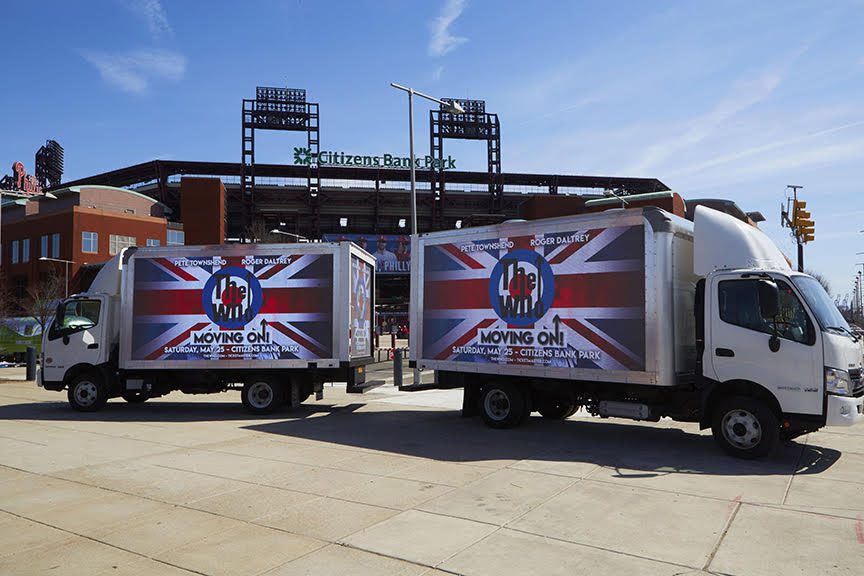
Mesa is not Phoenix. The two cities share a metro area, but their community identities, demographic compositions, and cultural characters are meaningfully distinct. A campaign that positions itself as specifically designed for Mesa — deployed in the Arts Center district, on Main Street, or in the Fiesta District — communicates something different to Mesa residents than a Phoenix campaign that happens to run in a Mesa location. Community-engaged Mesa residents notice when marketing makes an effort to treat their city as its own thing rather than as a Phoenix suburb with cheaper real estate. That recognition creates a different quality of audience engagement — closer to how a local business announcement lands versus how a chain store’s metro-wide flyer lands. For campaigns where community trust and local credibility matter, Mesa deserves its own dedicated projection campaign, not Phoenix spillover. AGM’s projection client roster includes Netflix, Disney, Coca-Cola, FanDuel, Live Nation, iHeartRadio, and the US Marine Corps. A confirmed case study: the US Marine Corps × CMA Fest Nashville — multi-night projections onto architectural surfaces throughout the festival footprint, reaching 80,000+ attendees across the campaign window. Projection advertising scales across every brand category; what our campaigns share is scale, precision, and a physical presence digital cannot replicate.