American Guerrilla Marketing
Nationwide Service
Media planning, media buying, billboard advertising, & guerrilla marketing
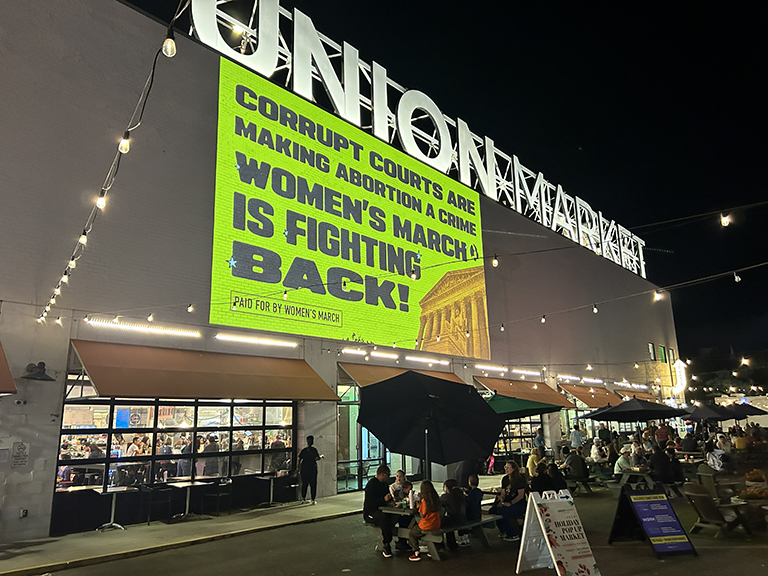
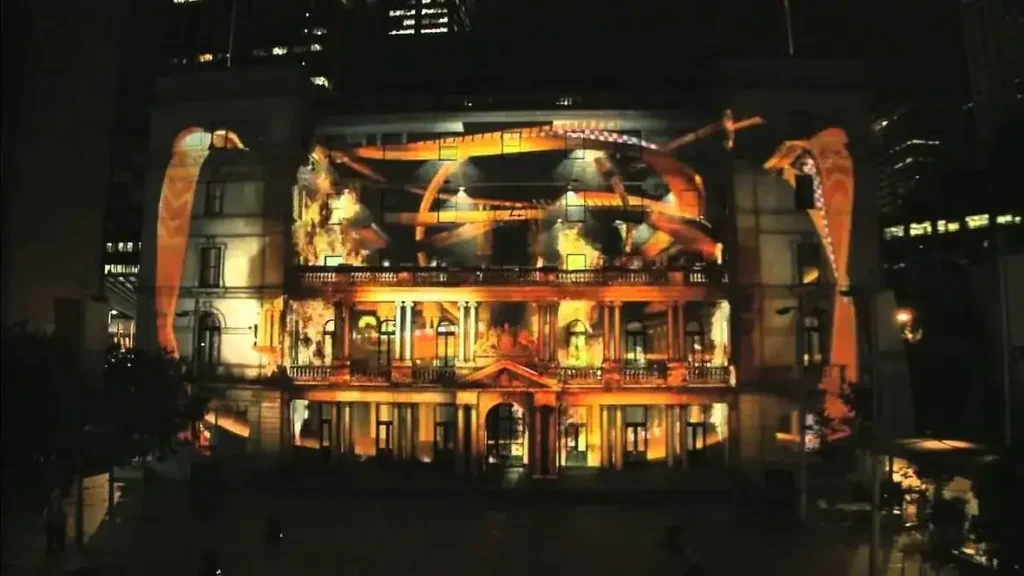
From Atlanta’s Beltline-adjacent warehouse walls to Savannah’s Historic District plaster facades and Augusta’s Broad Street corridor, Georgia offers a Southern entertainment landscape where guerrilla projection advertising creates cultural moments that resonate across the state’s distinct urban identities.
Georgia’s projection advertising landscape is anchored by Atlanta — one of the Southeast’s most economically powerful and culturally dynamic cities — but extends meaningfully into a set of secondary markets that each carry distinct character and strategic value. Savannah’s historic architecture and active tourism economy, Augusta’s golf and civic culture, and Columbus’s river-district arts infrastructure all represent genuine campaign opportunities for brands, advocacy organizations, and entertainment companies that want Southern market presence beyond Atlanta’s downtown core.
Atlanta’s position as the Southeast’s dominant media market gives Georgia-wide campaigns a regional amplification advantage that few other Southern states can match. Social media reach from an Atlanta Beltline-adjacent projection campaign extends into the networks of the city’s substantial professional and creative-class population, which includes tens of thousands of transplants from major coastal markets who maintain active connections to those origin-market networks. A projection campaign in Old Fourth Ward or the Castleberry Hill arts district reaches an audience whose social media footprint extends into New York, Los Angeles, Chicago, and Washington, DC through the networks of the highly connected professional population that Atlanta has attracted over the past two decades of extraordinary growth.
Georgia’s film industry — the state has become one of the largest production centers in the country — adds a specific entertainment-industry audience to Atlanta’s general projection advertising market. The concentration of film production professionals, studios, and the creative support infrastructure that has grown around the industry creates a culturally sophisticated, entertainment-connected population that responds to projection campaigns as culturally informed creative choices rather than conventional advertising placements.
The state’s military presence — Fort Moore (formerly Fort Benning) in Columbus, Fort Gordon/Fort Eisenhower in Augusta, Moody Air Force Base in Valdosta, and others — creates a specific audience dimension that advocacy and brand campaigns targeting service members, veterans, and military families can access through projection advertising in the entertainment districts adjacent to these installations. AGM’s experience executing campaigns for clients including the United States Marine Corps provides specific knowledge of how to design and deploy projection campaigns that communicate effectively with military and veteran audiences in the entertainment corridors those communities use.
American Guerrilla Marketing’s national scouting team has documented projection-ready surfaces across Georgia’s four primary urban markets. Atlanta’s exceptional surface inventory — the Beltline-adjacent warehouse district, West Midtown’s industrial buildings, Castleberry Hill’s arts district — provides the widest range of technically capable surfaces in the state. Savannah’s historic district brick and plaster walls, Augusta’s Broad Street commercial facades, and Columbus’s RiverCenter and Broadway corridor buildings complete a statewide surface inventory that supports campaigns at every scale and character.
From Atlanta's Beltline walls to Savannah's historic facades, AGM has Georgia's highest-performing projection surfaces documented and ready. Tell us your markets, your timeline, and your message — we'll design the right statewide execution.
Select a city to explore Guerrilla Projections opportunities.
Atlanta serves as the statewide campaign anchor with a surface inventory and audience density that no other Georgia city approaches. The city’s arts districts, warehouse zones, and Beltline-adjacent corridors provide projection surfaces at multiple scales and aesthetic characters, from the raw industrial authenticity of West Midtown to the curated creative community of Old Fourth Ward and Ponce City Market’s neighborhood. The Edgewood Avenue entertainment zone, Sweet Auburn’s arts corridor, and the Castleberry Hill district add additional zone personalities that allow Atlanta campaigns to be precisely tailored to specific audience demographics.
Savannah functions as a tourism anchor with year-round international visitor traffic and a permanent population that includes SCAD’s substantial arts community. The Historic District’s low-ambient-light streets, the River Street waterfront entertainment corridor, and Thomas Square’s arts neighborhood create a projection campaign landscape where the architectural character of the city’s Georgian and Federal-style buildings adds visual dimension to campaign content that flat-surface commercial environments cannot match.
Augusta’s identity as the home of the Masters Tournament creates a global golf audience window each April that concentrates international visitors and sports media in a compact downtown geography. The Broad Street commercial corridor, Olde Towne Augusta, Riverwalk Augusta, and the Harris Road arts district provide campaign surfaces appropriate to the city’s civic and cultural character.
Columbus’s Chattahoochee Riverfront development and the RiverCenter arts district create a focused entertainment geography adjacent to the Fort Moore military installation. The Broadway corridor and Uptown Columbus’s historic warehouse district provide the building stock appropriate for projection campaigns at a scale that Columbus’s compact downtown can support effectively.
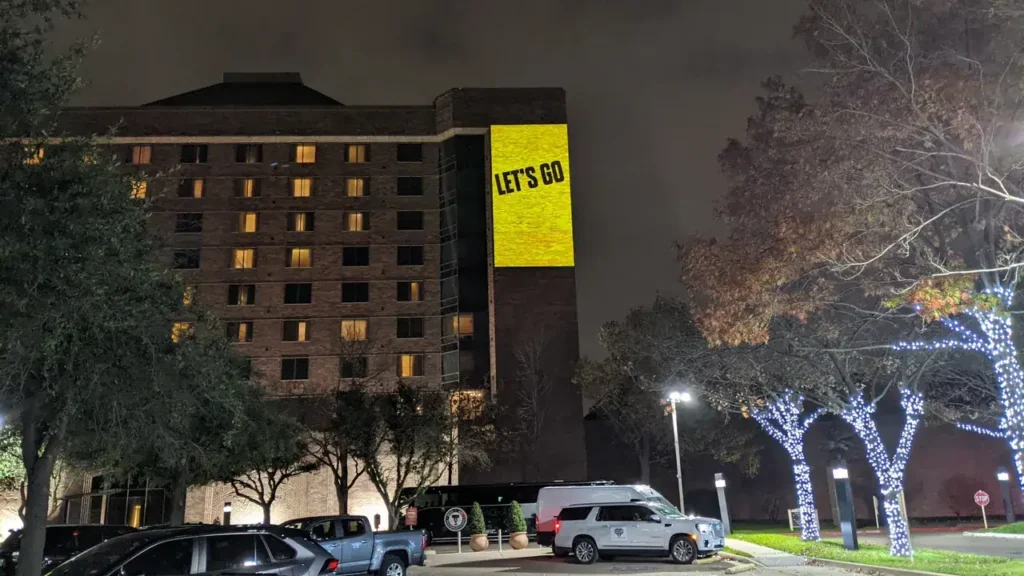
Atlanta’s BeltLine trail has created a connected corridor of arts, dining, and entertainment activity across the city’s in-town neighborhoods, and the former industrial buildings that cluster along the BeltLine’s path in areas like the Old Fourth Ward, Grant Park, and the Westside provide some of the most technically capable projection surfaces in the state. The warehouse buildings along the BeltLine’s industrial corridor present large, flat masonry facades with minimal window interruption — exactly the physical characteristics that 20,000-lumen projection systems need to produce vivid, commanding images at full architectural scale. The BeltLine’s active pedestrian trail and the development that has clustered around it provide both the audience and the viewing infrastructure that projection campaigns need to operate at maximum visual impact.
Atlanta’s West Midtown has transformed from a purely industrial zone into one of the city’s most active arts, dining, and creative-industry districts, with former manufacturing buildings converted to galleries, restaurants, design studios, and event spaces along the Howell Mill Road and surrounding corridors. The retained industrial building stock — masonry and concrete structures with large blank upper-floor facades — provides projection surface quality that West Midtown’s entertainment geography has not yet saturated with competing visual advertising. Campaigns in West Midtown reach the creative professional and arts-engaged audience that has colonized the neighborhood, and the documentation imagery produced in this zone carries the authentic industrial aesthetic that creative brands and advocacy organizations often find more resonant than the polished commercial architecture of Atlanta’s downtown core.
Savannah’s Historic District is one of the most architecturally distinctive projection environments in the Southeast. The city’s Georgian and Federal-style commercial buildings, the blank plaster and brick walls that face the famous squares, and the River Street warehouse buildings along the Savannah River bluff create a projection landscape unlike anything in Atlanta or Augusta. Projection campaigns in Savannah’s historic district carry the visual weight of one of the country’s most architecturally significant streetscapes, which adds production value to documentation imagery that translates directly into earned media and social media performance well above what more generic commercial environments generate.
Augusta’s Broad Street is one of the widest and most historically significant commercial corridors in the South — a grand boulevard that connects the city’s civic and commercial center to its waterfront. The commercial buildings along Broad Street include historic structures with masonry facades at the two-to-four-story scale that provide usable projection surfaces in the heart of Augusta’s most active pedestrian corridor. The corridor’s concentration of restaurants, bars, and entertainment venues generates consistent evening foot traffic, and its civic prominence gives projection campaigns here a sense of public significance that smaller corridors cannot convey.
Columbus’s RiverCenter for the Performing Arts anchors an arts and entertainment district along the Chattahoochee Riverfront that provides both the audience density and the building stock appropriate for projection advertising campaigns at the scale Columbus’s compact downtown supports. The RiverCenter complex itself and the surrounding commercial buildings along the river corridor create a concentration of arts-engaged audience activity that projection campaigns can access with precision timing around the performance programming calendar. Broadway Columbus’s entertainment corridor adds additional surface options and a broader audience reach within walking distance of the riverfront arts zone.
Tell us about your campaign goals, target audience, and preferred locations. Our team will help you plan a high-impact guerrilla projection campaign tailored to your needs.
Award Winning Personalized Service
You will get thoughtful, devoted, and individualized attention from our experienced, qualified, and professional personnel. Being one of the most illustrious agencies in Brooklyn, New York, American Guerrilla Marketing has been awarded the Best of Brooklyn title.
Nationwide
Industry City, Brooklyn, New York 11232
American Guerrilla Marketing
Hours
Mon - Fri: 9 AM - 5 PM
Sat & Sun: Closed
Automate your campaign with AGM’s Request for Proposal Builder. Simply answer a few quick questions about your campaign goals, markets, and timeline, and the system will generate a tailored presentation with recommended strategies, quantities, and pricing. Click the RFP Builder to instantly receive your customized proposal.
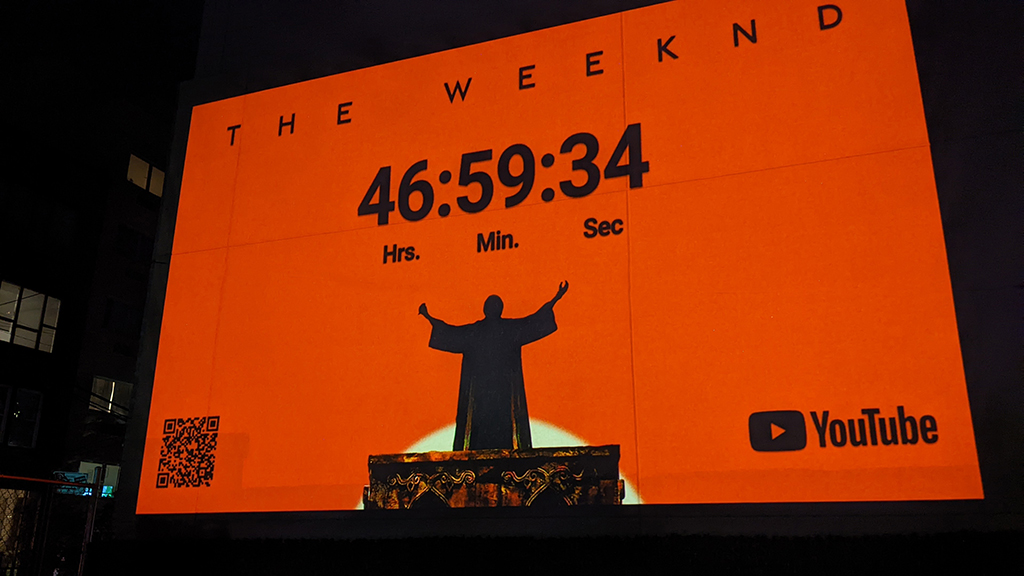
Atlanta’s status as one of the country’s most significant hip-hop and R&B music production centers, combined with its growing role as a film production hub, creates a natural home for entertainment-world projection campaigns targeting the 18-to-35 demographic concentrated in the city’s arts and entertainment districts. Music releases, film campaigns, and streaming platform launches all find Atlanta’s Old Fourth Ward and Castleberry Hill audiences among the most culturally responsive in the Southeast.
Georgia’s significant military presence — Fort Moore in Columbus, Fort Eisenhower in Augusta, and the veteran community distributed across the state’s urban markets — creates a specific audience segment for campaigns targeting service members, veterans, and military families. AGM’s experience with the US Marine Corps provides direct knowledge of how to design and place projection campaigns that communicate effectively with military audiences in the entertainment corridors those communities use.
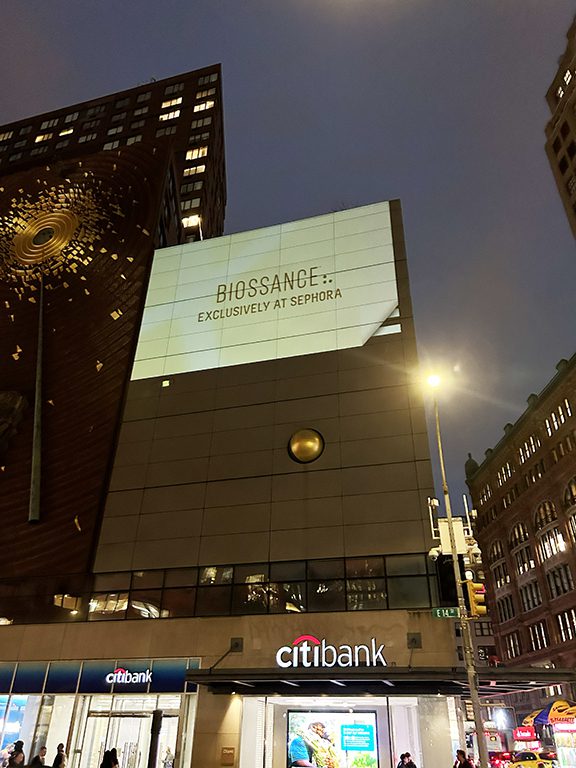
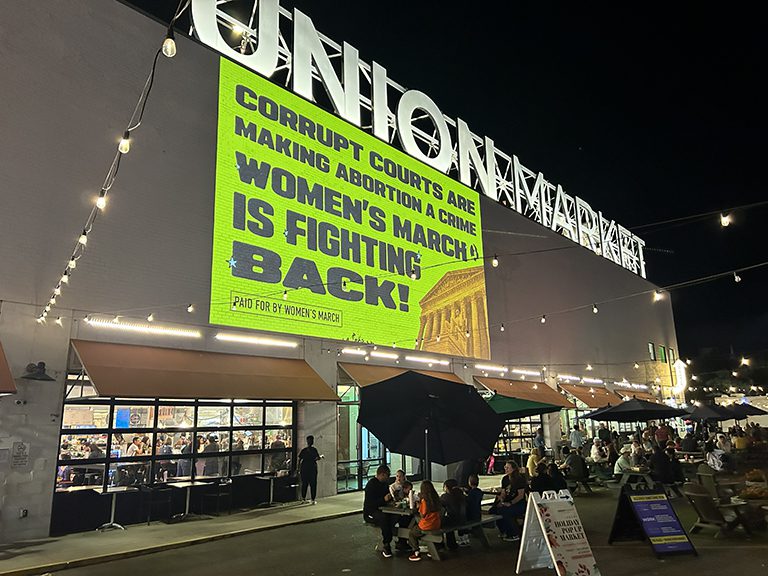
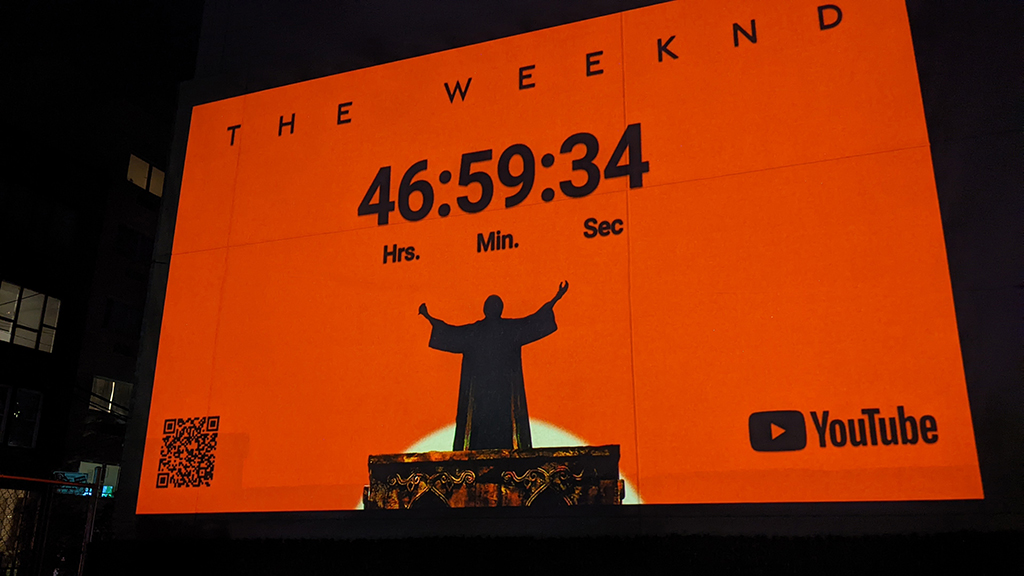
AGM’s projection client roster includes Netflix, Disney, Coca-Cola, FanDuel, Live Nation, iHeartRadio, and the US Marine Corps. A confirmed case study: the US Marine Corps × CMA Fest Nashville — multi-night projections onto architectural surfaces throughout the festival footprint, reaching 80,000+ attendees across the campaign window. Projection advertising scales across every brand category; what our campaigns share is scale, precision, and a physical presence digital cannot replicate.
Georgia’s status as a major electoral battleground state makes it one of the most strategically valuable markets in the country for advocacy projection campaigns targeting politically engaged urban audiences. Atlanta’s progressive urban population, Savannah’s civic community, and Augusta’s government-adjacent professional class all represent productive audiences for civic-scale projection messaging across a diverse range of political and social issues.
Savannah’s extraordinary tourism economy and the tourism infrastructure around Augusta’s Masters week create opportunities for tourism and hospitality brands, cultural institutions, and event organizations to reach visitor audiences at their peak presence in Georgia’s most tourist-active markets. Projection advertising during high-tourism windows in Savannah and Augusta reaches audiences from across the country and internationally who carry campaign documentation back to origin-market networks organically.
Georgia projection campaigns are priced at contact us for a quote. covering the 20,000-lumen system, generator and power solution, electronics bundle, mobility unit, and two-person technical crew from setup through breakdown. Advance scouting adds approximately contact us for a quote. Private-property campaigns with building owner authorization add Contact us for a custom quote. per night. Multi-city Georgia tours combining Atlanta with Savannah, Augusta, or Columbus carry standard per-night rates with multi-night planning efficiencies.
When the United States Marine Corps partnered with the Country Music Association Festival in Nashville, AGM deployed 20,000-lumen projection systems on building facades surrounding the festival’s entertainment corridors, projecting USMC campaign imagery at architectural scale to the festival’s massive audience of young adults in precisely the target demographic the branch needed to reach. The campaign demonstrated how building projection advertising can deliver precision audience targeting at event scale — reaching the right demographic in the right geography at the right moment with visual authority that no digital or conventional outdoor format can replicate.
For Georgia — a state with a significant military presence, a massive country music audience, and the entertainment event infrastructure of Atlanta’s concert calendar — this case study provides a direct template for how national brands with specific demographic targeting objectives can use projection advertising to reach concentrated audience windows at individual campaign executions with the kind of precision impact that national broadcast buys cannot achieve at comparable efficiency.
| Zone / Area | Peak Hours | Foot Traffic | Est. Nightly Impressions | Best For |
|---|---|---|---|---|
| Beltline-Adjacent Warehouse District | 8PM–12AM | Moderate | 2,500–12,000 | Product Launch |
| West Midtown Warehouse District | 8PM–12AM | Moderate | 2,500–12,000 | Event Promotion |
| Historic District Walls | 8PM–12AM | Moderate | 2,500–12,000 | Brand Awareness |
| Broad Street Commercial Corridor | 8PM–12AM | Moderate | 2,500–12,000 | Political |
| RiverCenter Arts District | 8PM–12AM | Moderate | 2,500–12,000 | Sports |
AGM covers Atlanta, Savannah, Augusta, and Columbus as primary Georgia markets, with additional capacity in secondary markets including Macon, Athens, Albany, and Warner Robins. The national scouting team has documented projection-ready surfaces across all four primary markets, and new markets can be qualified as part of campaign planning for clients requiring geographic coverage beyond the primary four.
Georgia’s entertainment economy is one of the most dynamic in the Southeast — Atlanta’s music industry, film production sector, sports franchises, and performing arts calendar create a year-round entertainment event landscape that generates natural campaign windows for projection advertising timed to high-audience-density events. Savannah’s tourism economy, Augusta’s Masters week, and Columbus’s arts programming add secondary windows that extend Georgia’s projection campaign calendar across diverse market segments and geographic areas.
Atlanta functions as Georgia’s projection advertising hub in the same way it functions as the Southeast’s economic and media hub generally — providing the largest audience density, the widest surface inventory, and the most robust social media amplification network of any Georgia market. Statewide campaigns typically begin with Atlanta to establish the highest-impact launch visual and then build secondary coverage in Savannah, Augusta, and Columbus around the Atlanta anchor. Atlanta’s social media reach extends campaign documentation into national and international networks through the city’s highly connected transplant and creative-professional population.
Georgia’s Southern markets respond to projection advertising with the same combination of surprise and enthusiastic documentation that characterizes strong organic campaign responses anywhere — but with the specific added dimension of a visual culture that has deep aesthetic appreciation for Southern architectural heritage. Projection campaigns in Savannah’s Historic District and Augusta’s Broad Street corridor carry additional resonance because they activate the visual character of buildings that are already culturally significant to their communities. That sense of familiar-made-extraordinary generates strong authentic engagement responses that generic commercial environments don’t produce.
Georgia’s mild climate supports year-round projection advertising without the temperature extremes that limit northern markets during winter months. The Atlanta and Savannah markets are particularly active in spring and fall, when outdoor pedestrian activity peaks and mild temperatures keep entertainment district audiences engaged later into the evening. Augusta’s April Masters window is the highest-value single campaign week in that market. Columbus’s event programming calendar — including performances at the RiverCenter and events related to Fort Moore — creates campaign windows throughout the year that align with specific audience concentrations.
Yes. Multi-city Georgia tours are logistically feasible and strategically effective. Atlanta to Savannah is approximately four hours; Atlanta to Augusta is approximately ninety minutes; Augusta to Savannah is approximately two and a half hours. A four-night Georgia tour covering all four primary markets — Atlanta, Augusta, Columbus, Savannah — is achievable with thoughtful routing and logistics planning. AGM’s team coordinates multi-city tour routing as a standard Georgia campaign type.
Atlanta’s music and entertainment industry, Georgia’s film production sector, advocacy organizations targeting the state’s electoral battleground status, military and veteran service organizations, tourism and hospitality brands serving Savannah and Augusta’s visitor economies, and consumer brands entering the Southeastern market all represent consistent Georgia projection advertising categories. The state’s economic diversity — from Atlanta’s tech and finance sectors to Augusta’s health and medical education infrastructure to Columbus’s military-adjacent economy — creates a broad range of campaign clients across a diverse set of demographic and geographic targets.
Georgia’s position as a top-three film production state means that Atlanta regularly hosts cast and crew from major studio productions, streaming service originals, and independent films — creating a film-industry-adjacent audience in the Old Fourth Ward, West Midtown, and Ponce City Market corridors that responds to entertainment brand campaigns with above-average engagement. Atlanta’s music industry infrastructure — recording studios, music management companies, entertainment attorneys, and the artist community itself — concentrates a socially connected creative audience in the city’s arts districts that makes entertainment projection campaigns in Georgia generate organic social documentation at rates that match or exceed comparable campaigns in much larger markets.
Savannah’s historic district presents a distinctive mix of brick masonry, stucco, and painted plaster on the low-to-mid-rise commercial and institutional buildings that define the city’s architectural character. Augusta’s Broad Street commercial buildings present primarily brick masonry facades, many with painted or coated finishes that improve reflectivity. Columbus’s historic Uptown district includes brick masonry commercial and industrial buildings at scales appropriate for large-format projection. AGM’s scouting process identifies the highest-reflectivity surfaces in each market — painted brick, smooth stucco, and EIFS-finished facades consistently outperform raw unpainted brick on projected image brightness and color saturation.
AGM’s Georgia scouting covers Atlanta’s multiple distinct entertainment districts, Savannah’s historic and arts corridors, Augusta’s downtown and riverwalk zones, and Columbus’s river district with district-specific physical reconnaissance that captures the surface conditions, ambient light levels, and pedestrian dynamics relevant to each zone. The approach differs by market character — scouting Savannah’s historic district requires understanding the specific light and access conditions of the city’s famous squares and alleys, while scouting Atlanta’s BeltLine corridor requires understanding the trail’s pedestrian timing patterns and the specific buildings accessible from the trail’s public right-of-way. AGM’s national team brings this market-specific knowledge to every Georgia campaign brief.