American Guerrilla Marketing
Nationwide Service
Media planning, media buying, billboard advertising, & guerrilla marketing
Guerrilla Projections in Boston, MA
Boston’s entertainment corridors don’t just draw crowds — they create moments. When a 20,000-lumen projection fills a Fort Point Channel warehouse facade or a Kenmore building becomes a living billboard on game night, you’re not running an ad. You’re manufacturing a cultural event.
Boston Is a City That Responds to Scale
Boston has one of the most emotionally charged audience cultures of any city in the country. The Red Sox faithful, the Celtics crowds spilling out of TD Garden onto Causeway Street, the creative professionals and arts-engaged residents who define neighborhoods like Fort Point and the South End — these are people with a high baseline of engagement. They respond to things that are big, unexpected, and visually arresting. And they share what stops them in their tracks.
That behavioral reality is what makes building facade projection advertising in Boston produce results that no standard outdoor placement can replicate. When a projection hits the right wall in the right corridor at the right moment, it doesn’t function as an advertisement. It becomes something people talk about, photograph, and share — a genuine piece of the city’s visual culture for however long the campaign runs.
Boston’s physical layout reinforces this dynamic. The city’s core entertainment districts are dense, walkable, and saturated with evening activity. There is no driving past a projection on a six-lane highway and forgetting it by the next exit. Boston pedestrians move at human speed through tight urban corridors, with building faces rising directly above their sightlines. That proximity is everything. A 20,000-lumen image projected four stories up on a Fort Point warehouse facade is impossible to miss and nearly impossible to walk past without stopping.
The city’s sports calendar creates recurring windows of extraordinary audience concentration. A Red Sox home game puts upward of 37,000 people through Kenmore Square and the Fenway corridor in a matter of hours — and those same fans flood the surrounding blocks before and after the game, moving on foot between bars, restaurants, and the T. A projection campaign timed to those nights reaches a captive, highly social, supremely shareable audience without paying a cent for the event’s platform.
AGM is the only projection advertising company that brings a Best of Brooklyn-awarded track record, a national on-the-ground scouting team, and its own in-house technical crew to every Boston campaign. No subcontractors. No remote-managed equipment. Direct technical ownership from setup through breakdown, every night.
AGM’s projection client roster includes Netflix, Disney, Coca-Cola, FanDuel, Live Nation, iHeartRadio, and the US Marine Corps. A confirmed case study: the US Marine Corps × CMA Fest Nashville — multi-night projections onto architectural surfaces throughout the festival footprint, reaching 80,000+ attendees across the campaign window. Projection advertising scales across every brand category; what our campaigns share is scale, precision, and a physical presence digital cannot replicate.
Put Your Brand on Boston's Skyline
AGM has the location intelligence, the technical crew, and the 20,000-lumen hardware to execute your Boston projection campaign at the scale the city demands. Let's build something the city talks about.
Browse Cities in Massachusetts
Select a city to explore Guerrilla Projections opportunities.
Boston's Strongest Projection Advertising Locations
AGM’s location intelligence in Boston covers all major entertainment and pedestrian corridors. These are the districts and building zones that consistently deliver the strongest combination of visual impact, foot traffic density, and social sharing potential.
Fort Point Channel Warehouse Corridor
Fort Point Channel is Boston’s most architecturally dramatic projection environment. The neighborhood’s converted industrial and warehouse buildings offer some of the tallest, cleanest, and most projection-receptive facades in New England — broad brick and concrete surfaces with minimal interruptions from windows, signage, or architectural ornament. Evening foot traffic in the area has grown steadily as the neighborhood’s restaurant, gallery, and creative office economy has expanded. The combination of large-scale building surfaces and an engaged, walkable audience makes Fort Point the anchor location for AGM’s Boston portfolio. Viewing distances across the channel and from adjacent sidewalks are strong, allowing projections to be seen from multiple angles simultaneously.
Fenway and Kenmore Entertainment Corridor
Nowhere in Boston is pedestrian density more predictable — or more intense — than the Fenway and Kenmore corridor on game and concert nights. Thousands of fans arrive and depart on foot, filling sidewalks and lingering in the blocks surrounding Fenway Park for hours before and after events. The street-level geometry of Kenmore Square and the surrounding blocks creates natural viewing corridors for building projections, with buildings rising directly above the pedestrian flow. For entertainment brands, sports marketers, and consumer companies targeting the city’s sports-aligned audience, this corridor is Boston’s highest-value projection zone.
Seaport Innovation District
The Seaport represents Boston’s newest urban fabric — and one of its most projection-friendly physical environments. Modern mixed-use towers, wide plazas, and open street geometry create long viewing distances that allow projections to achieve visual dominance at greater distances than older, more compressed neighborhood layouts. The Seaport’s daytime population of tech workers, finance professionals, and startup employees transitions into a strong evening dining and entertainment audience. Brands targeting a professional, affluent demographic find the Seaport’s audience profile and physical environment particularly well-suited to high-production projection campaigns.
South End Arts District
Boston’s South End is one of the city’s densest residential neighborhoods, layered with a gallery economy, a deep restaurant culture, and a daytime and evening street life that reflects a highly engaged, creative-class population. The neighborhood’s Victorian-era row houses and mixed commercial buildings create a different projection geometry than Fort Point — smaller facades but extremely high pedestrian density and a resident audience that interacts strongly with visual art and brand culture. Projection campaigns in the South End generate outsized social media response relative to audience size, driven by the neighborhood’s concentration of creative professionals and media-active residents.
Ink Block Development and JP Arts Corridor
The Ink Block development in the South End represents a newer architectural context — large-format contemporary building faces surrounded by an active residential and mixed-use community. Adjacent to this, Jamaica Plain’s arts corridor extends the South End’s creative-class energy into a neighborhood with a strong independent arts scene, consistent gallery and event programming, and a socially connected resident base. Projection campaigns in this extended zone reach an audience that is actively supportive of independent brand identity and highly responsive to unexpected street-level visual experiences.
East Cambridge Arts Zone
Straddling the boundary between Boston and Cambridge, the East Cambridge arts zone provides building facades that bridge the two markets — accessible from both cities’ evening pedestrian corridors and positioned within a neighborhood that draws an artistic and tech-adjacent audience. East Cambridge has seen significant investment in arts programming and creative business activity in recent years, building a consistent evening economy that supports projection campaigns outside the traditional Boston core. For brands running campaigns across both the Boston and Cambridge markets, East Cambridge offers natural geographic continuity.
Projection Advertising Formats Built For Boston Audiences
Entertainment Release Campaigns
Album drops, streaming launches, and concert announcements hit hardest when the campaign itself becomes a street-level event. Boston’s entertainment corridors — Fenway, Fort Point, the Seaport — are precisely where those cultural moments belong, projected at a scale audiences cannot ignore.
Sports-Adjacent Brand Activations
Game nights concentrate tens of thousands of emotionally primed Bostonians in the city’s walkable corridors. Brands with any connection to sports, entertainment, or lifestyle use projection advertising to insert their visual identity into that charged environment at the moment of maximum audience density.
Countdown and Pre-Launch Building Campaigns
Countdown projections that run in the days leading up to a launch, event, or release create sustained street-level anticipation. Running across multiple nights, they build a visual presence that compounds — audiences who saw the projection Wednesday are already primed to act when the launch lands Friday.
Consumer Brand Awareness Campaigns
Boston’s density of creative professionals, university graduates, and media-connected residents makes it one of the strongest consumer brand awareness markets in the Northeast. A projection campaign on a Fort Point or South End facade reaches exactly the tastemaker audience that drives brand consideration among a wider consumer base.
Earned Media Generation Campaigns
AGM’s Boston campaigns have been photographed, shared, and covered by local and national media consistently. A properly executed building projection in a high-traffic Boston corridor generates earned media return that multiplies the campaign’s effective reach far beyond the sidewalks where the projection ran.
Plan Your Guerrilla Projection Campaign in Boston, MA
Tell us about your campaign goals, target audience, and preferred locations. Our team will help you plan a high-impact guerrilla projection campaign tailored to your needs.
Award Winning Personalized Service
You will get thoughtful, devoted, and individualized attention from our experienced, qualified, and professional personnel. Being one of the most illustrious agencies in Brooklyn, New York, American Guerrilla Marketing has been awarded the Best of Brooklyn title.
Nationwide
Industry City, Brooklyn, New York 11232
American Guerrilla Marketing
Hours
Mon - Fri: 9 AM - 5 PM
Sat & Sun: Closed
Automate your campaign with AGM’s Request for Proposal Builder.
Automate your campaign with AGM’s Request for Proposal Builder. Simply answer a few quick questions about your campaign goals, markets, and timeline, and the system will generate a tailored presentation with recommended strategies, quantities, and pricing. Click the RFP Builder to instantly receive your customized proposal.
Building a Boston Projection Campaign: From Scouting to Street
Location Scouting: Boston Ground-Level Assessment
AGM’s scouting team approaches Boston with both digital analysis and physical on-the-ground evaluation. Satellite and street-level mapping identifies candidate walls across the city’s projection corridors. Scouts then confirm those candidates in person — assessing ambient light levels at dusk, pedestrian flow patterns, building surface condition, access logistics for equipment staging, and viewing angle geometry from multiple street positions. For brands with a preferred neighborhood in mind, AGM focuses the scouting process on that zone and delivers a GPS-documented report of qualified walls with projection geometry recommendations. Advance scouting for a Boston campaign runs approximately contact us for pricing.
Creative Preparation and Technical Setup
Once a location is confirmed, AGM’s technical team adapts brand creative to the selected building’s specific geometry. Aspect ratio, edge alignment, keystoning, and brightness calibration are all handled in advance of the campaign’s first night. AGM’s 20,000-lumen commercial projection systems are calibrated to deliver clean, saturated imagery across large facade surfaces — even in Boston’s mixed ambient light environments where streetlights, signage, and neighboring businesses contribute to the light field. Equipment staging and power solution deployment happen before dusk on each campaign night.
Campaign Execution: Two-Person Crew, Direct AGM Technicians
Every Boston projection campaign is staffed by a two-person crew of AGM’s own technicians — not subcontracted workers. The crew manages all equipment from arrival through breakdown, operating the projection system live throughout the campaign window. Campaigns begin at dusk and run for four to six hours, covering the full peak pedestrian period for the selected Boston corridor. The crew responds in real time to any technical conditions that arise during the campaign night and ensures that the projection maintains optimal quality throughout.
Campaign Documentation: Photo, Video, and GPS Reporting
AGM documents every Boston campaign with GPS-confirmed location data alongside professional-grade photography and video capture of the projection running in full urban context. Post-campaign deliverables give brand and agency teams the visual content they need for earned media outreach, social media use, and internal reporting. Wide-angle shots establish the projection’s relationship to the building and street. Detail shots capture creative quality. Video sequences provide social-ready content that brands can distribute across their own channels immediately following the campaign.
Agm In Action: The Weeknd × Youtube Pre-release Campaign
When YouTube partnered with The Weeknd on a pre-release campaign for a major entertainment launch, the brief called for something that would generate street-level anticipation, earned media, and social sharing at scale — not a media buy, but a genuine cultural moment. AGM executed building projections across New York City in the days leading up to the release date, projecting countdown imagery and brand visuals onto multi-story building facades in high-pedestrian corridors. The campaign was photographed by thousands of pedestrians, covered by entertainment and marketing press, and generated viral social content that extended the campaign’s reach far beyond anyone who witnessed the projections in person.
That strategic and executional capability — the ability to turn a building into a cultural touchpoint for a major entertainment release — is exactly what AGM brings to Boston. The city’s entertainment corridors, its sports-charged audience culture, and its building inventory make it one of the strongest markets for this type of campaign outside of New York. Brands executing entertainment release strategies, countdown activations, or event-adjacent campaigns in Boston are working with the same format, the same technical infrastructure, and the same production team that delivered the Weeknd and YouTube campaign.
Boston Projection Advertising: Investment Breakdown
AGM prices Boston projection campaigns transparently with no hidden fees or variable day-of costs.
- Projection system and crew — contact us for a quote. : Covers the 20,000-lumen commercial projector, generator and complete power infrastructure, full electronics bundle, mobility unit, and a two-person AGM technical crew for all setup, live operation, and breakdown. This is an all-in rate for the equipment and crew package.
- Boston location scouting — approximately contact us for pricing: Physical and digital assessment of qualified walls in the specified Boston corridor, with GPS documentation and projection geometry recommendations delivered as a pre-campaign report.
- Permitted and private building access — Contact us for a custom quote. per night: Applies when the selected Boston location requires formal city permitting or negotiated access from a private building owner. AGM manages both processes directly. Cost varies with building and property owner terms.
- Multi-night campaigns: Available across all Boston districts and strongly recommended for brand awareness and release campaigns where sustained visual presence builds recognition over time.
Who Brings Projection Advertising To Boston
Boston’s projection advertising client base spans entertainment, consumer brands, technology, sports, and advocacy. Entertainment companies and music labels use projection campaigns to build release anticipation and generate earned media in Boston’s music and arts corridors. Consumer brands activate building projections for product launches, seasonal campaigns, and retail partnerships in the city’s Seaport and South End neighborhoods. Technology and innovation companies use the format for brand launches and conference activations in Boston’s growing tech ecosystem. Sports brands and event organizers use projection advertising to amplify game-night energy and concert moments in the Fenway corridor and surrounding entertainment districts.
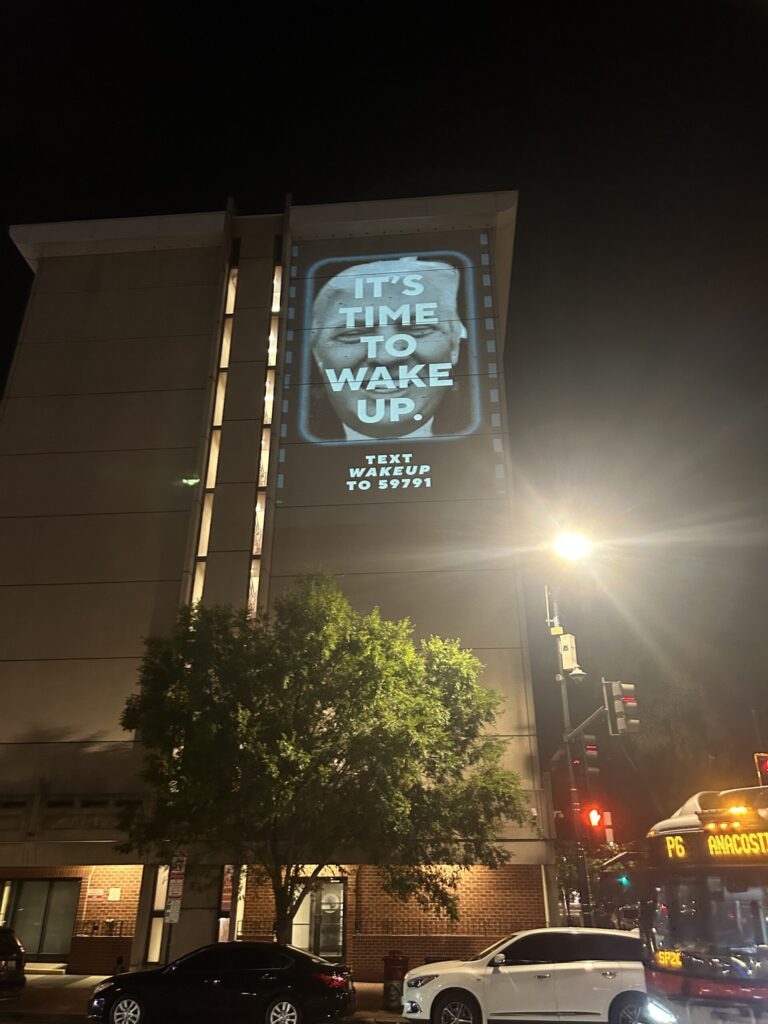
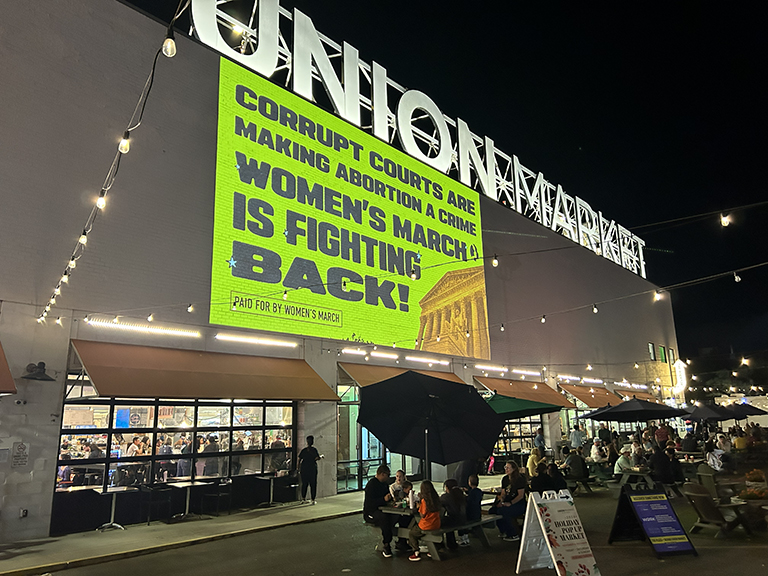
AGM clients in entertainment and media have included The Weeknd and YouTube, whose campaigns demonstrated the format’s power to turn an architectural surface into national media coverage. AGM clients in advocacy have included Women’s March and Reproductive Freedom for All, whose high-visibility Boston-adjacent campaigns used the same large-scale visual format to create public moments that transcended the immediate audience. The US Marine Corps has deployed AGM’s projection capability for recruiting and brand campaigns. That breadth reflects how many different objectives this format can serve when executed by a team with direct technical ownership and national scouting capability.
Coverage & Estimated Impressions
| Zone / Area | Peak Hours | Foot Traffic | Est. Nightly Impressions | Best For |
|---|---|---|---|---|
| Fort Point Channel Warehouse Corridor | 9PM–2AM | Very High | 25,000–120,000 | Product Launch |
| Fenway and Kenmore Entertainment Corridor | 9PM–2AM | Very High | 25,000–120,000 | Event Promotion |
| Seaport Innovation District | 9PM–2AM | Very High | 25,000–120,000 | Brand Awareness |
| South End Arts District | 9PM–2AM | Very High | 25,000–120,000 | Political |
| Ink Block Development and JP Arts Corridor | 9PM–2AM | Very High | 25,000–120,000 | Sports |
| East Cambridge Arts Zone | 9PM–2AM | Very High | 25,000–120,000 | Concert/Festival |
Frequently Asked Questions
Fort Point Channel’s warehouse buildings combine the three most important factors for high-quality building projections: large, relatively smooth facade surfaces; minimal ambient light interference from neighboring structures; and consistent evening foot traffic from the neighborhood’s restaurant, gallery, and creative office community. The buildings’ height and scale allow imagery to run across multiple stories at a visual size that dominates the streetscape from every approaching angle.
A Red Sox home game puts tens of thousands of pedestrians through the Fenway and Kenmore corridor in concentrated arrival and departure waves, with lingering bar and restaurant crowds extending the active audience window for hours before and after the game. A projection campaign timed to a game night reaches far more people per hour than a typical weeknight in the same location — and reaches them in a heightened emotional state that increases the likelihood of stopping, photographing, and sharing. AGM coordinates campaign timing with the city’s event calendar when game-night density is part of the campaign strategy.
The Seaport’s newer mixed-use and commercial buildings offer modern, relatively smooth facade surfaces with strong geometric regularity — characteristics that produce sharp, clean projection imagery at high resolution. Wide plazas and open street geometry in the Seaport create viewing distances that allow projections to be seen from greater distances than in older, more compressed Boston neighborhoods. Building heights in the Seaport range from four to twenty-plus stories, providing large-format facade surfaces suited to imagery that registers at architectural scale.
Fort Point offers larger facade surfaces and a more controlled ambient light environment, which tends to produce sharper, more saturated projection imagery. Fenway and Kenmore offer substantially higher foot traffic density on game and event nights, making audience concentration the primary advantage. The optimal location choice depends on campaign priorities: brands focused on projection quality and visual drama favor Fort Point; brands optimizing for raw audience exposure during peak event windows favor the Fenway corridor. AGM can advise on location selection based on specific campaign objectives.
AGM recommends a minimum of two to three weeks of lead time for Boston campaigns, which allows adequate time for location scouting, permitting or property access negotiation if required, creative adaptation and technical preparation, and logistics coordination for the campaign nights. For campaigns with fixed dates tied to a launch or event window, earlier engagement gives more flexibility in location selection and reduces permitting pressure. Last-minute campaigns may be possible depending on available locations and existing schedule commitments.
Absolutely — entertainment release campaigns are among the most effective applications of building projection advertising in Boston. The city’s entertainment corridors and sports-charged audience culture create a natural environment for release-driven visual moments. Countdown formats, which run across multiple nights in the days preceding a release date, build sustained street-level anticipation and generate social sharing throughout the campaign window rather than in a single burst. AGM has executed this exact format for major entertainment clients in comparable markets and brings that direct experience to Boston campaigns.
AGM’s projection units are mobility-first by design — configured to deploy and operate in tight urban environments where large equipment staging areas are not available. Boston’s dense street network and limited loading-zone access require precise logistics planning, which AGM handles as part of every campaign’s pre-production process. Crew arrival, equipment staging, projection setup, and breakdown are all timed to minimize street disruption and comply with local regulations for the selected Boston location.
AGM works with standard high-resolution still and video creative formats, including high-resolution PNG and JPEG files for static imagery and ProRes, H.264, or H.265 video files for motion content. Specific resolution requirements are determined by the selected building’s facade dimensions and projection geometry, which AGM calculates during the pre-production phase. Creative assets provided at the highest available resolution give AGM’s technical team the most flexibility in calibrating projection output for the specific building surface.
Yes, and game nights are often among the most strategically valuable campaign windows for Boston building projections. Coordinating a projection campaign with a Red Sox, Celtics, Bruins, or Patriots event night places the brand in front of a concentrated, emotionally engaged audience at maximum density. AGM coordinates campaign scheduling with Boston’s event calendar and can advise on which event nights in the target corridor offer the strongest audience profile for the brand’s specific campaign objectives.
The South End’s resident and visitor population skews creative, educated, and highly active on social media — a demographic profile that responds strongly to unexpected visual brand moments and shares them at an above-average rate. The neighborhood’s restaurant and gallery foot traffic is consistent through most of the week, not just on weekend nights. Projection campaigns in the South End tend to generate earned media and social sharing at a rate disproportionate to the neighborhood’s raw pedestrian count, because of the quality of the audience rather than its volume alone.
Fort Point’s warehouse buildings typically offer four to eight projectable stories of facade surface on their primary elevations, allowing AGM’s 20,000-lumen systems to deliver imagery spanning forty to eighty or more feet in height depending on projector placement distance and building geometry. At that scale, projection imagery is visible from across the channel and from multiple street intersections simultaneously. AGM calculates specific image dimensions for each Fort Point location during the scouting and pre-production phase based on building measurements and projector placement options.
Yes. AGM executed the building projection campaign for The Weeknd in partnership with YouTube, placing countdown imagery and brand visuals on multi-story building facades in New York City ahead of a major entertainment release. The campaign generated viral social sharing, earned media coverage, and street-level spectacle at a scale that demonstrated exactly what this format can deliver for entertainment clients. Boston’s building inventory and audience culture are directly comparable to the New York corridors where that campaign ran, and AGM brings the same technical capability and production approach to every Boston entertainment campaign.
More AGM Outdoor Advertising Services
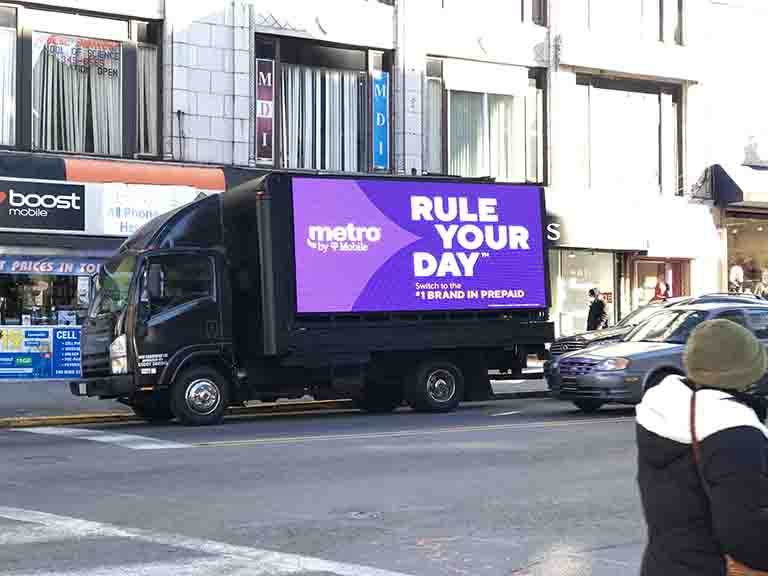
Led Billboard Trucks
Mobile LED displays that bring your brand to any location, any event.
Fly Posting
Street-level poster saturation across walls, construction sites, and corridors.

Sidewalk Decals
Ground-level branded decals at pedestrian hotspots and event entrances.

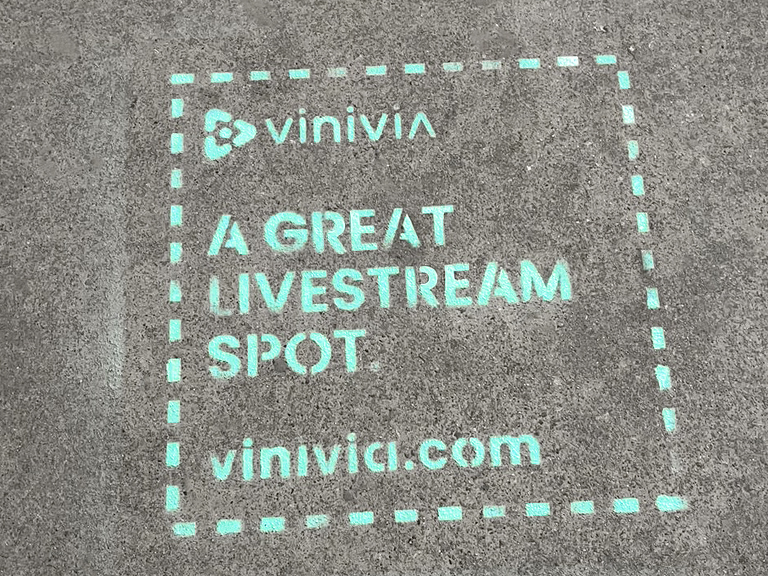
Sidewalk Stencils
Creative stencil campaigns that put your brand in the path of pedestrians.