American Guerrilla Marketing
Nationwide Service
Media planning, media buying, billboard advertising, & guerrilla marketing
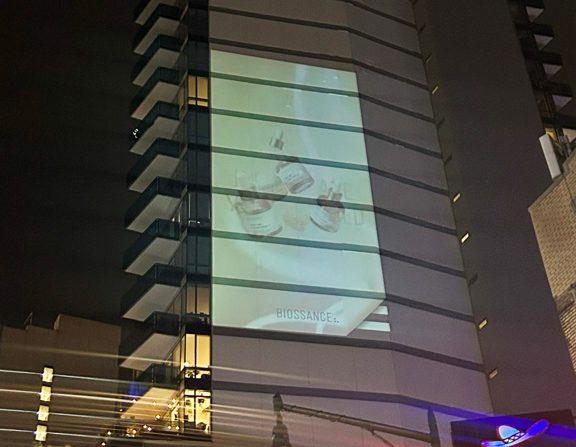
Guerrilla Projections in Rapid City, SD

Western South Dakota’s gateway city draws millions of visitors to Mount Rushmore and the Black Hills each year. AGM’s 20,000-lumen projection system reaches Rapid City’s unique blend of local residents and national tourist traffic — two distinct audiences in a single campaign night.
The Dual-Audience Advantage: Locals and Tourists in One Campaign Night
Rapid City occupies a singular position in the South Dakota advertising landscape — it’s simultaneously a city with a residential base of more than 80,000 people and one of the most visited tourism destinations in the American Midwest. That duality creates a projection advertising opportunity that most comparable-sized cities simply don’t possess. A campaign night in Rapid City during summer doesn’t just reach local residents — it reaches the tens of thousands of visitors flowing through the city on their way to Mount Rushmore, Custer State Park, Crazy Horse Memorial, Wind Cave National Park, and the broader Black Hills recreation corridor.
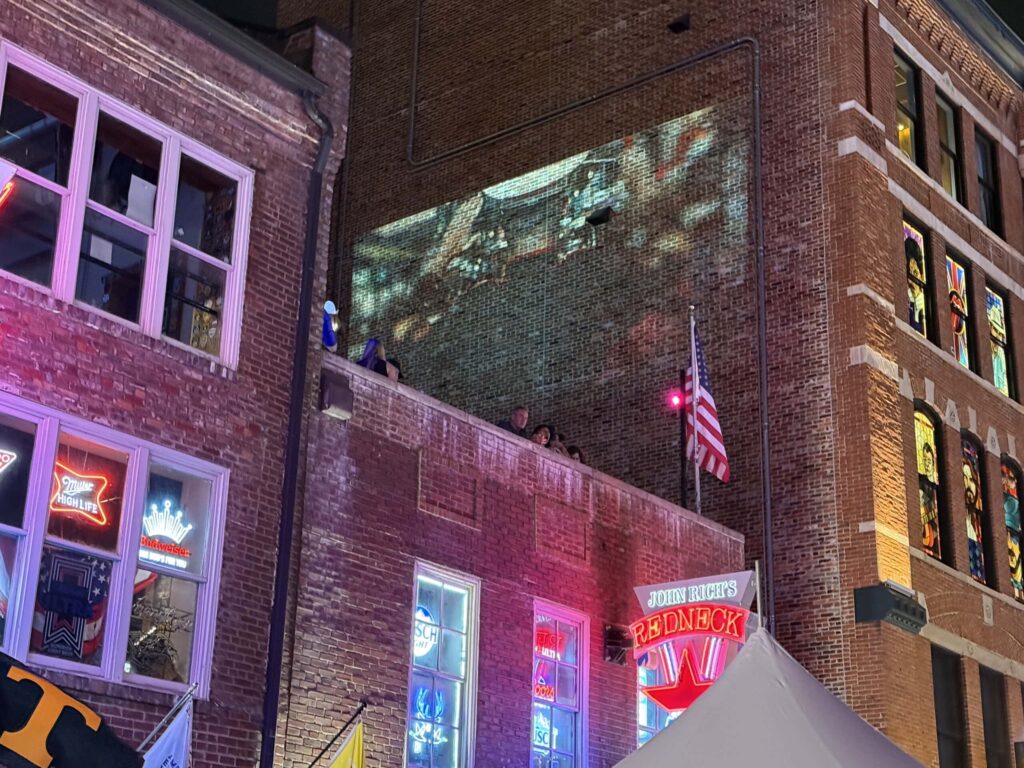
AGM’s projection client roster includes Netflix, Disney, Coca-Cola, FanDuel, Live Nation, iHeartRadio, and the US Marine Corps. A confirmed case study: the US Marine Corps × CMA Fest Nashville — multi-night projections onto architectural surfaces throughout the festival footprint, reaching 80,000+ attendees across the campaign window. Projection advertising scales across every brand category; what our campaigns share is scale, precision, and a physical presence digital cannot replicate.
AGM has executed guerrilla projection campaigns for brands including Netflix, Disney, and FanDuel — deploying high-impact visual activations onto architectural surfaces in major markets nationwide.
Tourism in western South Dakota is neither incidental nor unpredictable — it follows well-documented seasonal patterns that brands can plan around with precision. The peak tourist window runs from June through September, with an especially concentrated spike in August coinciding with the Sturgis Motorcycle Rally. During that August window, Rapid City itself functions as the hospitality hub for rally-adjacent activity — hotels, restaurants, and entertainment venues see their highest occupancy and revenue of the year as hundreds of thousands of rally participants and spectators use the city as a base. A projection campaign timed to that window reaches an audience that exists at no other point in the year: a dense, outdoor-oriented, independence-celebrating crowd that has traveled from across the country specifically to experience the Black Hills region.
Outside the peak tourist season, Rapid City’s downtown arts district, anchored by the Rapid City Arts Council campus and the Rushmore Hotel corridor, generates consistent evening foot traffic from the local residential community. The city’s arts infrastructure — the Dahl Arts Center, the Journey Museum, the Civic Center programming — creates a year-round cultural calendar that concentrates engaged audiences in the downtown core on weekends and event nights. Brands targeting the local market can deploy projection campaigns in the spring or fall shoulder seasons, reaching the Rapid City residential audience without the summer competition for venue and lodging availability.
Rapid City’s strategic value for projection advertising also stems from its earned media geography. When a brand deploys a building projection in Rapid City, the audience includes a substantial percentage of people who live outside western South Dakota — visitors who will return to their home markets in Minnesota, Iowa, Nebraska, Colorado, or beyond and describe what they saw. The organic word-of-mouth reach from a Rapid City summer campaign extends into every market those visitors call home. That multiplier effect on earned audience is a specific property of tourist-destination projection advertising that purely residential markets cannot replicate.
The physical character of Rapid City’s downtown also supports projection advertising well. The city’s arts district contains older commercial and civic buildings with large exterior wall surfaces — the product of decades of construction before modern architectural trends shifted toward glass-heavy facades. Those older solid-masonry buildings, concentrated in the core blocks around the Rushmore Hotel and Arts Council area, provide the kind of flat, light-painted surfaces that AGM’s 20,000-lumen system uses most effectively.
Reach Rapid City's Visitors and Locals on the Same Campaign Night
No other South Dakota market offers the dual local-tourist audience that Rapid City delivers during peak season. AGM's 20,000-lumen system, national scouting team, and direct technical crew are ready to put your brand on the walls of western South Dakota's gateway city.
Browse Cities in South Dakota
Select a city to explore Guerrilla Projections opportunities.
Prime Projection Surfaces Across Rapid City's Downtown Corridors
Every projection campaign begins with surface evaluation. The wall is the screen, and the screen’s material, color, geometry, and location relative to the audience determines whether the projection produces a merely good result or a truly striking one. In Rapid City, the downtown arts district and its surrounding corridors contain several distinct projection surface zones, each with different characteristics and audience profiles.
Downtown Arts District — Rushmore Hotel and Arts Council Corridor
The heart of Rapid City’s arts district, anchored by the historic Rushmore Hotel and the Rapid City Arts Council campus, is the city’s highest-value projection surface environment. Buildings along this corridor include multi-story structures with the solid masonry construction characteristic of downtown Rapid City’s older commercial architecture — light-painted or whitewashed exterior finishes, flat facade planes with minimal window interruption above the ground-floor retail zone, and clear sightlines from the pedestrian areas across the street. AGM’s scouting team evaluates the specific wall faces within this corridor for surface planarity and reflectivity, identifying the optimal deployment locations for projector positioning at 75 to 150 feet of throw distance from the target surface.
Tourist traffic through the downtown arts district during summer months means that a projection campaign in this zone simultaneously reaches locals who know the city and visitors encountering it for the first time. For brands seeking both depth of impression with residents and breadth of impression with visiting audiences, the Rushmore Hotel corridor provides both in a single deployment night.
Regional Hospital Arts Corridor
The arts corridor adjacent to the Regional Hospital area in Rapid City represents a secondary projection surface zone that AGM’s scouting team evaluates for campaigns requiring geographic separation from the downtown arts district core. Institutional and commercial buildings in this corridor often feature large flat wall faces with smooth surface finishes — the kind of exterior construction that produces sharp, vivid projection imagery. The audience in this corridor is a mix of healthcare workers, visitors, and the residential community that uses the surrounding neighborhood’s dining and retail options.
For brands whose target audience includes healthcare professionals, families, or the broader residential Rapid City demographic rather than specifically the tourist audience, the Regional Hospital corridor provides a projection surface zone with different audience characteristics than the downtown tourist-heavy core. Multi-projector campaigns can use both zones simultaneously, covering two distinct geographic areas of the city’s evening foot traffic in a single campaign night.
Arts Zone Near the Civic Center
The Civic Center area is Rapid City’s primary large-venue entertainment hub, hosting concerts, sporting events, conventions, and community events that draw thousands of attendees through the surrounding streets. On event nights, the pedestrian flow between the Civic Center and the downtown restaurant and entertainment district creates a concentrated audience corridor — moving foot traffic that encounters everything in its visual environment with the heightened awareness of a person heading toward or returning from an anticipated event.
Buildings adjacent to the Civic Center’s approach corridors include commercial and mixed-use structures whose exterior walls face the street at the angles most productive for projection advertising. AGM’s scouting team identifies the specific buildings whose wall geometry, surface quality, and sightline from the pedestrian approach create the strongest projection display conditions. Event-night campaigns in this zone can reach audiences numbering in the thousands in a single deployment window, depending on the specific Civic Center programming on the campaign date.
Founders Park Area
Founders Park provides a distinct projection surface environment in Rapid City’s downtown — an outdoor public space surrounded by commercial buildings whose exterior walls face the park’s open area. The park’s open geometry means projection surfaces can be reached from angles that allow for longer throw distances and consequently larger projected image scales. A projected image sized to fill the upper portion of a commercial building face adjacent to Founders Park can reach viewing audiences at greater distances than typical street-corridor projection setups, extending the effective reach radius of a single projector.
Evening activity at Founders Park during summer — outdoor events, casual gathering, the park’s role as a waypoint between downtown destinations — means there is a consistent ambient audience present without the need to time the campaign to a specific event. That baseline audience, combined with the extended reach geometry of the open park space, makes the Founders Park area a reliable option for campaigns that don’t have a specific event anchor and need a surface-and-audience combination that performs consistently across a broad campaign window.
St. Joseph Street Arts Corridor
St. Joseph Street runs through Rapid City’s downtown arts district as one of the primary east-west connectors of the city’s commercial core. Buildings along St. Joseph Street include the mix of older masonry commercial structures and contemporary mixed-use buildings that characterize Rapid City’s evolving downtown. The arts corridor character of this street — gallery spaces, arts-adjacent retail, cultural programming venues — concentrates an audience that is specifically receptive to visually sophisticated media experiences. Projection advertising in this corridor reaches viewers who are already in an arts-engaged state of mind, which consistently translates into stronger dwell time and more deliberate observation of the projected content.
Surface quality along St. Joseph Street varies between buildings, and AGM’s advance scouting evaluation specifically ranks the candidate surfaces for this corridor before making a primary deployment recommendation. The strongest surfaces are light-toned and smooth — painted concrete and plaster finishes that reflect AGM’s 20,000-lumen system at maximum efficiency — positioned at corners or setbacks where the projector can achieve a perpendicular approach angle to the wall face for minimum keystoning of the projected image.
Campaign Creative That Connects With Rapid City's Market
Rapid City’s dual local-tourist audience creates a creative brief unlike most other markets. Effective campaign creative needs to resonate with two overlapping but distinct audiences simultaneously — the local resident who knows the city well and has ongoing familiarity with the brand context, and the visitor who is encountering both the city and potentially the brand for the first time in an unfamiliar environment. Creative that anchors to the shared identity of the place — the Black Hills landscape, the western South Dakota community character, the specific energy of a city that serves as both a genuine hometown and a tourism destination — tends to perform well with both audiences at once.
Tourism and Destination Alignment
Brands that connect their identity to the Black Hills experience — outdoor adventure, western character, natural landscape — can use building projection to amplify that alignment in the physical environment where the association is most credible. A projection campaign in downtown Rapid City that visually references the landscape surrounding the city positions the brand as a genuine participant in the regional experience rather than an outside advertiser.
Event and Rally Season Amplification
The Sturgis Motorcycle Rally creates a specific cultural moment in and around Rapid City that projection advertising can amplify with precision. Campaign creative that speaks directly to the rally community — its identity, its values, its celebration energy — resonates with an audience that has traveled specifically to participate in that cultural moment and is highly receptive to brand messages that acknowledge and honor it.
Arts and Cultural Campaigns
Rapid City’s arts district attracts an audience with genuine arts engagement — museum visitors, gallery attendees, Arts Council programming participants. Cultural institutions, arts organizations, and brands whose identity has a creative or cultural dimension use projection advertising in the arts district to position themselves within the cultural frame that the audience already brings to the space.
Sports and Community Identity
Community sporting events, collegiate athletics, and local sports culture provide strong creative anchors for projection campaigns in a city where community identity runs deep. Projection creative that celebrates Rapid City’s athletic community — its high school, collegiate, and amateur sports — generates the same community-pride engagement that sports-centered campaigns have demonstrated in every Great Plains market AGM has activated.
Plan Your Guerrilla Projection Campaign in Rapid City, SD
Tell us about your campaign goals, target audience, and preferred locations. Our team will help you plan a high-impact guerrilla projection campaign tailored to your needs.
Award Winning Personalized Service
You will get thoughtful, devoted, and individualized attention from our experienced, qualified, and professional personnel. Being one of the most illustrious agencies in Brooklyn, New York, American Guerrilla Marketing has been awarded the Best of Brooklyn title.
Nationwide
Industry City, Brooklyn, New York 11232
American Guerrilla Marketing
Hours
Mon - Fri: 9 AM - 5 PM
Sat & Sun: Closed
Automate your campaign with AGM’s Request for Proposal Builder.
Automate your campaign with AGM’s Request for Proposal Builder. Simply answer a few quick questions about your campaign goals, markets, and timeline, and the system will generate a tailored presentation with recommended strategies, quantities, and pricing. Click the RFP Builder to instantly receive your customized proposal.
Planning a Projection Advertising Campaign in Rapid City
Advance location scouting is the starting point for any Rapid City campaign. At approximately contact us for a quote. the scouting process combines AGM’s digital analysis — satellite imagery, street-level mapping, building records — with a physical on-site evaluation by AGM’s national scouting team. The physical visit confirms the surface quality of each candidate wall, the optimal projector positioning and throw distance, the sightline geometry that determines audience viewing position, and any logistical considerations specific to the Rapid City location — parking access for the equipment vehicle, power source proximity, and approach clearance for the projection throw path.
Creative preparation follows surface confirmation. Rapid City campaigns often involve creative considerations specific to its dual audience: aspect ratios sized to the specific surface dimensions of the confirmed wall, color treatment calibrated for the surface material in Rapid City’s nighttime ambient light environment (which varies between the well-lit downtown arts district and the darker periphery blocks), and motion design that reads clearly for both close-proximity pedestrians at 50 feet and vehicle-based audiences at 200 feet or more in the wider street corridors.
AGM’s direct two-person technical crew handles all on-site execution. The crew arrives ahead of the projection window for setup, calibrates the 20,000-lumen commercial projection system to the exact geometry of the confirmed surface, operates the system throughout the four-to-six-hour campaign window, and completes full breakdown before the following morning. AGM’s direct crew model means no subcontractor handoffs — technical continuity from setup through breakdown is maintained by the same two-person team throughout the campaign night.
Campaign documentation follows breakdown: professional photography and video of the projection on the building, with environmental context — the surrounding streetscape, ambient nighttime conditions, and where present, audience reactions captured with permission. The documentation package provides the client with campaign proof materials suitable for PR outreach, social media content, and internal presentation.
Projection Advertising Rates In Rapid City
Rapid City projection campaigns are priced at contact us for a quote. That rate covers the complete deployment: AGM’s 20,000-lumen commercial projection system, generator and full power infrastructure, electronics bundle, mobility unit, two-person direct technical crew, setup, full campaign operation, and breakdown. The projection window begins at dusk — which in Rapid City varies from approximately 9:30 PM in midsummer to 6:00 PM in midwinter — and typically runs for four to six hours.
Advance location scouting is priced separately at approximately contact us for a quote. and is strongly recommended for brands running their first Rapid City campaign. For campaigns that require formal private-property agreements with specific building owners — ensuring exclusive surface access and avoiding any coordination uncertainty — those arrangements are negotiated separately and typically range from Contact us for a custom quote. per night, depending on the specific building, its ownership, and its market position.
Multi-night Rapid City campaigns are available for brands seeking extended reach. During peak tourist season, a multi-night run captures different visitor segments each night — the composition of who is in downtown Rapid City on a Tuesday in July differs meaningfully from the Saturday crowd, and a campaign that runs across multiple nights reaches a substantially larger cumulative audience than a single-night activation. AGM coordinates multi-night scheduling as part of the standard campaign planning process.
Case Study: Mizzou × Cotton Bowl — Sports, Community, and Building-Scale Impact
The University of Missouri × Cotton Bowl campaign that American Guerrilla Marketing executed demonstrated the specific power of projection advertising in Great Plains sports markets — a lesson with direct application to Rapid City and the western South Dakota market. The campaign deployed projectors to amplify the emotional energy of a major college football event, projecting team imagery and celebration content at building scale in the hours surrounding the Cotton Bowl game. The audience — deeply community-identified, passionately invested in the team’s performance, gathered in a shared public moment — responded with the kind of organic engagement that turns a campaign night into a community memory.
For Rapid City, the Mizzou × Cotton Bowl campaign illustrates two things. First, sports-tied projection advertising reaches a community at the peak of its emotional engagement — when the audience is most receptive to brand and message impressions that carry lasting memory. Second, even in markets outside the nation’s major coastal metros, building projection advertising produces earned media and social distribution that multiplies investment far beyond the direct audience on campaign night.
The Great Plains sports market — college football, rodeo, motorsports, outdoor recreation — is defined by passionate community investment in shared experiences. Rapid City’s position at the center of the Black Hills recreation economy, combined with its loyal local sports community, makes it a market where sports-adjacent and experience-adjacent projection campaigns carry the emotional resonance that drives the strongest engagement outcomes.
Who Uses Building Projection Advertising In Rapid City
Tourism and hospitality brands use Rapid City projection campaigns to connect with the visitor audience at the moment of their Black Hills experience — capturing brand awareness when travelers are in an exploratory and receptive state. Consumer brands entering the western South Dakota market use building projection to announce market entry with visual impact that positions them as a committed player in the regional economy. Event organizers and venue operators use it to build pre-event anticipation in the corridors where their target audience gathers in the hours before events. Sports organizations — professional, collegiate, and amateur — use it to amplify community identity and celebrate achievement in the public environment. Advocacy organizations and civic initiatives use projection advertising’s unblockable public reach to ensure their messages land with the full Rapid City community.
Coverage & Estimated Impressions
| Zone / Area | Peak Hours | Foot Traffic | Est. Nightly Impressions | Best For |
|---|---|---|---|---|
| Downtown Arts District | 8PM–12AM | Moderate | 2,500–12,000 | Product Launch |
| Regional Hospital Arts Corridor | 8PM–12AM | Moderate | 2,500–12,000 | Event Promotion |
| Arts Zone Near the Civic Center | 8PM–12AM | Moderate | 2,500–12,000 | Brand Awareness |
| Founders Park Area | 8PM–12AM | Moderate | 2,500–12,000 | Political |
| St. Joseph Street Arts Corridor | 8PM–12AM | Moderate | 2,500–12,000 | Sports |
Frequently Asked Questions
The gateway positioning means Rapid City’s downtown captures visitors at the beginning and end of their Black Hills experience — often during the evenings when they’ve returned from daytime sightseeing and are concentrated in the restaurant and entertainment district. Projection campaigns in Rapid City’s downtown arts corridor reach this visitor audience during their highest-activity urban hours, adding a national brand impression to what is already a heightened travel experience. Brands that can credibly align with the Black Hills experience benefit most from this contextual frame.
The most effective surfaces near the Rushmore Hotel and Arts Council corridor are the large upper-story wall faces of older masonry commercial buildings with light-painted or whitewashed finishes and minimal window interruption above the ground-floor level. These buildings’ solid construction provides flat, reflective exterior wall planes that AGM’s 20,000-lumen system renders sharply and vividly. AGM’s advance scouting evaluation specifically identifies which buildings within this zone meet the surface quality threshold for campaign deployment.
Yes, and the Sturgis Rally period in August is one of Rapid City’s highest-value projection advertising windows precisely because it concentrates an unusually specific and passionate audience in the region. Rapid City serves as the primary hospitality hub for rally participants and spectators who use the city for lodging, dining, and evening entertainment. A campaign night in downtown Rapid City during Rally week reaches this concentrated audience in the specific environment where they’re most active — the evening entertainment corridor — at their highest energy of the year.
The Civic Center area is valuable specifically because it concentrates large audiences in predictable pedestrian corridors on event nights. The approach routes between the Civic Center, downtown parking structures, and the surrounding restaurant and bar district create natural audience-flow corridors that projection campaigns can serve. AGM’s scouting evaluation identifies the specific walls along those approach routes with adequate surface quality, and campaign nights are ideally scheduled to coincide with Civic Center programming that generates strong pedestrian traffic.
Founders Park’s open geometry provides projection surface opportunities on the commercial building faces surrounding the park — walls that can be reached from projector positions within the park itself or from across the park’s open area, achieving longer throw distances and consequently larger projected image scales than typical street-corridor setups. The extended throw distance enables image heights that exceed what’s achievable in constrained urban street corridors, making Founders Park area campaigns visually distinctive in their scale.
Summer campaigns in Rapid City reach audiences that include a significant percentage of out-of-market visitors — people from across the country who will carry brand impressions home when they return from their Black Hills trip. Off-season campaigns reach a more purely local audience, which carries different strategic value: deeper community penetration, more repeated impressions from local residents who frequent downtown corridors, and higher likelihood of driving local trial and purchase behavior. Both windows have genuine strategic value; the optimal choice depends on whether the campaign goal is broad geographic awareness or local market depth.
St. Joseph Street serves as one of Rapid City’s primary arts-district thoroughfares, connecting gallery spaces, cultural venues, and arts-adjacent commercial activity. The corridor’s arts-engaged audience is a specific demographic that responds to visually sophisticated media with higher engagement than general street traffic — they’re primed to look at and evaluate visual art by their presence in the arts district context. Projection campaigns in this corridor benefit from that pre-conditioned visual engagement, which translates into longer dwell times and higher likelihood of social documentation behavior.
Image scale is determined by throw distance, lens specification, and the surface dimensions of the target wall. In Rapid City’s downtown street corridors, typical throw distances of 75 to 150 feet allow for projected image heights of 20 to 50 feet, depending on the specific surface and lens configuration. In wider corridors or open areas like Founders Park, longer throws of 150 to 300 feet enable image heights of 50 feet or more. AGM’s 20,000-lumen commercial projection system maintains adequate brightness at these distances for vivid, high-contrast imagery even in partially lit urban environments.
Yes — and this is one of Rapid City’s defining projection advertising advantages. In summer, the downtown entertainment corridor is populated by both local residents enjoying their city’s nightlife and visiting tourists exploring the city during their Black Hills trip. A campaign positioned in the heart of the downtown arts district reaches both audiences in a single deployment, delivering brand impressions to the local market that will drive ongoing awareness while simultaneously reaching the visitor market that carries impressions back to home cities across the country.
Outdoor adventure travelers — hikers, climbers, motorcyclists, campers, and the broader active tourism audience that flows through the Black Hills region — are experiential by orientation. They respond strongly to advertising formats that create genuine experiences rather than passive impressions. Building projection advertising’s immersive, can’t-be-ignored, event-like character aligns well with an audience that prioritizes experience over passive consumption. This demographic is also highly social-media-active about their travel, meaning the documentation and sharing behavior that follows a striking projection encounter is particularly strong.
The arts corridor adjacent to the Regional Hospital area provides projection surface options in a section of Rapid City outside the core tourist zone — surfaces that are evaluated when brands need geographic reach into the broader residential community rather than specifically the downtown tourist-heavy district. Institutional and commercial buildings in this zone often feature large solid exterior wall areas with smooth surface finishes. For campaigns targeting healthcare workers, the residential community, or specific demographics concentrated outside the downtown tourist core, this corridor provides surface and audience options that the arts district alone cannot cover.
More AGM Outdoor Advertising Services
Led Billboard Trucks
Mobile LED displays that bring your brand to any location, any event.

Fly Posting
Street-level poster saturation across walls, construction sites, and corridors.

Sidewalk Decals
Ground-level branded decals at pedestrian hotspots and event entrances.

Sidewalk Stencils
Creative stencil campaigns that put your brand in the path of pedestrians.