American Guerrilla Marketing
Nationwide Service
Media planning, media buying, billboard advertising, & guerrilla marketing
Guerrilla Projections in Grand Island, NE

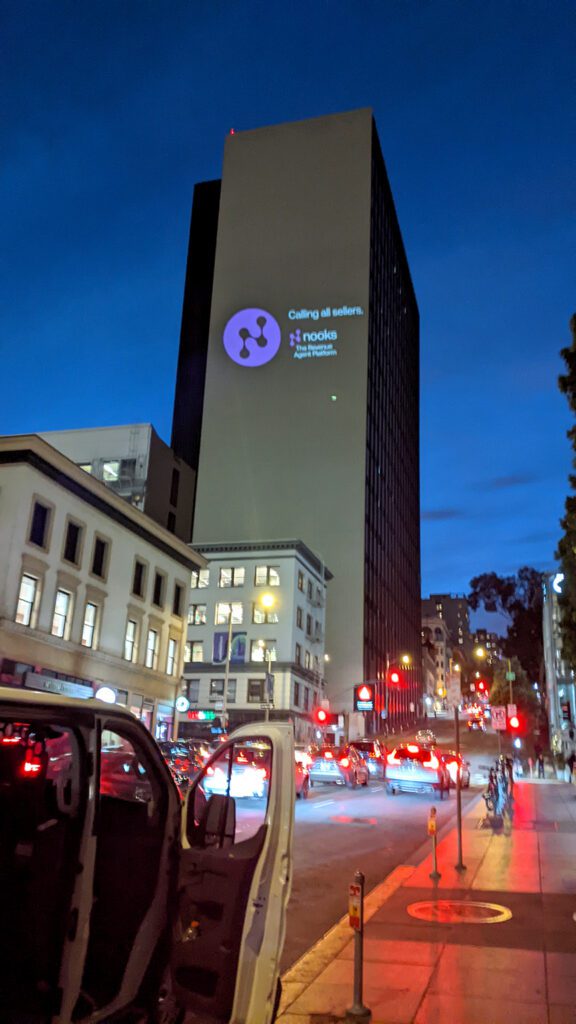
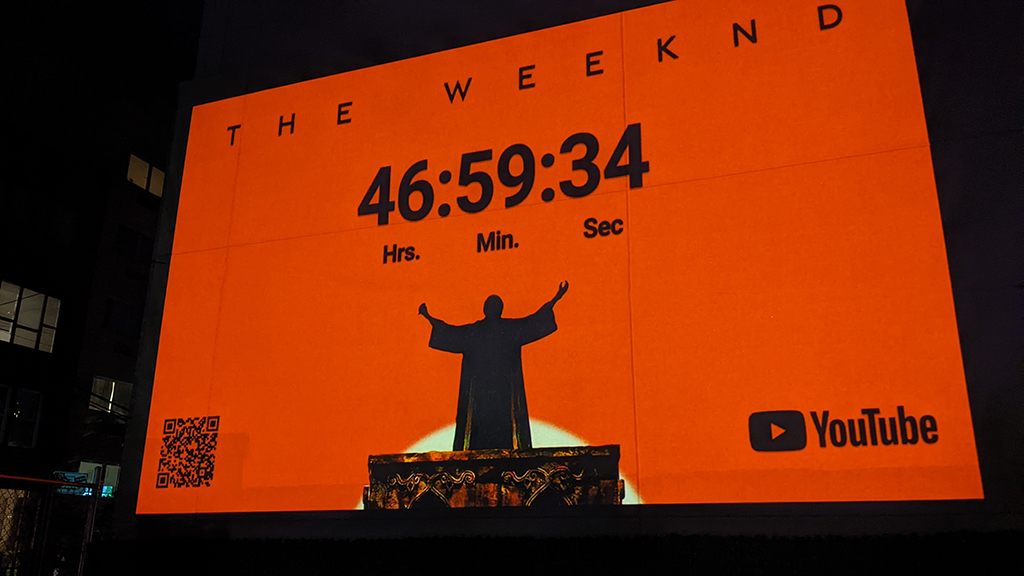
Central Nebraska’s commercial hub is ready for a campaign that matches its regional reach. AGM deploys 20,000-lumen building projections on Grand Island’s downtown corridors — reaching an audience drawn from across a wide zone of Nebraska’s agricultural heartland that converges in this city every week.
Grand Island: The Commercial Crossroads of Central Nebraska
Grand Island anchors central Nebraska’s economy in a way that shapes every campaign decision made for this market. The city of nearly 55,000 residents serves not only its own population but functions as the primary commercial, healthcare, and entertainment destination for consumers across a wide zone of central Nebraska’s farm country. On any given weekend, Grand Island’s commercial districts draw visitors from rural communities spanning Hall, Hamilton, Merrick, and adjoining counties — people who may live 30, 40, or 60 miles from the city but who make Grand Island their destination for shopping, dining, healthcare, and entertainment.
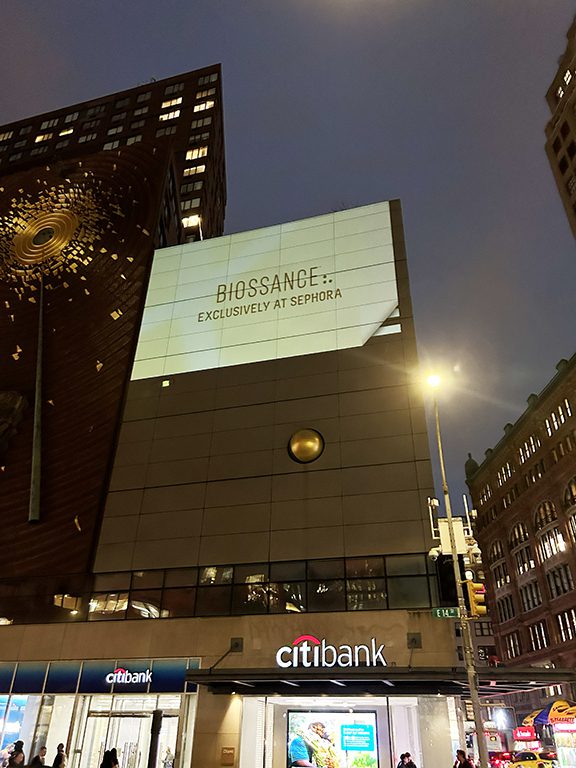
Past AGM projection clients include Coca-Cola, Live Nation, and iHeartRadio, with multi-night campaigns that generated earned media coverage and massive organic social sharing.
That regional draw pattern is what makes Grand Island more valuable as a projection advertising market than its resident population numbers alone suggest. A campaign night in Grand Island’s downtown entertainment corridor reaches not just 55,000 city residents but the full regional population that converges in the city’s commercial core on weekends. For brands targeting Nebraska’s agricultural community — farmers, ranchers, rural families, and the businesses that serve them — Grand Island offers concentrated access to that audience in a single urban location.
The city also carries a cultural anchor that distinguishes it from other mid-sized Nebraska markets: the Stuhr Museum of the Prairie Pioneer. The museum complex — encompassing historic buildings, agricultural heritage exhibits, and significant collections documenting Nebraska’s pioneer history — draws visitors from across the region and gives Grand Island a cultural identity that extends its market significance beyond its commercial role. The museum’s presence has supported the development of an arts district adjacent to the facility, creating a zone where cultural tourism and local arts community intersect.
Grand Island’s industrial and agricultural processing economy creates a working-class professional community that differs in character from university towns or state capital cities. The city’s residents include a significant proportion of workers in food processing, manufacturing, and agriculture-related industries — audiences with strong brand loyalty, practical spending priorities, and genuine connection to the region’s agricultural heritage. Building projection campaigns in Grand Island reach this community with a visual impact format that most advertising channels serving rural Nebraska markets don’t provide.
The city’s downtown core has invested in commercial and entertainment renewal over the past decade, with Third Street’s entertainment corridor and the downtown business district developing the kind of evening foot traffic that makes guerrilla projection campaigns viable. While Grand Island’s evening pedestrian environment is more modest in scale than Omaha’s Old Market or Lincoln’s Haymarket, the concentration of the city’s social audience in a small geographic zone — and the fact that that audience draws from a broad regional geography — makes projection advertising here effective per dollar spent on a regional market basis.
Central Nebraska's Commercial Hub Is Your Next Campaign Stage
Stolley Park Road. The Stuhr Museum arts district. Third Street. AGM deploys 20,000-lumen building projections across Grand Island's downtown with a crew that handles every detail. Tell us your message and your timing.
Our Campaign Locations
Browse Cities in Nebraska
Select a city to explore Guerrilla Projections opportunities.
Grand Island's Projection Districts: Where The Walls Are
Grand Island’s downtown building stock reflects the city’s development as a railroad and agricultural commerce center — with historic commercial blocks along its main streets providing the flat, masonry-faced building surfaces that perform well for projection advertising. The city’s compact downtown core means that the best projection sites are concentrated within a walkable zone, making single-night campaigns that cover multiple streets operationally efficient.
Downtown Stolley Park Road Corridor
Stolley Park Road forms one of Grand Island’s primary downtown commercial spines — a corridor where the city’s retail and commercial activity concentrates alongside civic and community institutions. Historic commercial buildings along the Stolley Park Road corridor provide building surfaces with the flat masonry facades and adequate street setback that projection campaigns require. Evening activity in this corridor picks up on weekends when the city’s dining and entertainment venues draw the community’s social audience. The corridor’s value lies in its combination of surface quality and its function as the commercial destination that serves both Grand Island residents and the regional visitors who make the city their commercial hub. A projection on a Stolley Park Road building face reaches both communities simultaneously on a busy Friday or Saturday evening.
Arts District Near the Stuhr Museum
The arts district adjacent to the Stuhr Museum of the Prairie Pioneer has developed as a zone where Grand Island’s cultural tourism and local arts community intersect. Galleries, studios, and arts-related businesses have established in the area, creating an audience that is culturally motivated and specifically drawn by arts engagement. Building surfaces near the museum vary in age and architectural character — the area includes both historic structures and more recent construction — requiring careful site evaluation to identify walls with the flat facades and adequate projection clearance that deliver optimal image quality. For arts-adjacent brands, cultural institutions, and advocacy campaigns targeting Grand Island’s engaged cultural community, the Stuhr Museum arts district offers a contextually resonant projection environment with an audience pre-disposed to visual engagement.
Third Street Entertainment Zone
Third Street serves as Grand Island’s primary evening entertainment corridor — the stretch where bars, restaurants, and social venues draw the city’s nightlife audience through Friday and Saturday evenings. The foot traffic on Third Street peaks later than the dinner-hour concentration on Stolley Park Road, making it the strongest environment for campaigns targeting Grand Island’s younger adult demographic during the late evening. Building stock along Third Street varies, but the corridor includes several structures with exterior wall sections that meet projection quality standards — confirmed during AGM’s pre-campaign scouting process. For campaigns targeting Grand Island’s entertainment and nightlife audience, Third Street delivers the right demographic at the right hours with adequate surface opportunities for effective projection work.
Creative Formats That Work In Grand Island
Agricultural and Regional Brand Campaigns
Grand Island’s agricultural identity creates a receptive environment for brands in farm equipment, rural lifestyle, food production, and agricultural services. A projection campaign on Stolley Park Road reaches the agricultural community in its regional commercial center — creating visual impact at the point where rural consumers make their spending decisions and where agricultural brand recognition is most valuable.
AGM’s projection client roster includes Netflix, Disney, Coca-Cola, FanDuel, Live Nation, iHeartRadio, and the US Marine Corps. A confirmed case study: the US Marine Corps × CMA Fest Nashville — multi-night projections onto architectural surfaces throughout the festival footprint, reaching 80,000+ attendees across the campaign window. Projection advertising scales across every brand category; what our campaigns share is scale, precision, and a physical presence digital cannot replicate.
Community Events and Festival Promotion
Grand Island’s event calendar — including the Nebraska State Fair and various community festivals — creates natural audience concentration moments for projection advertising campaigns. Event-aligned projection campaigns reach elevated foot traffic volumes while benefiting from the elevated community engagement and out-of-town visitor presence that major events bring to the city.
Civic and Advocacy Campaigns
Nebraska’s agricultural and rural policy debates play out with particular intensity in markets like Grand Island, where the agricultural community’s economic stakes are immediate and personal. Advocacy organizations working on water rights, agricultural labor, rural healthcare, and related issues find Grand Island a strategically important market for reaching the community most directly affected by these policy questions.
Entertainment and Touring Brand Announcements
Concert announcements, tour previews, and entertainment releases targeting Nebraska’s central markets use Grand Island projection campaigns to reach the regional audience that treats the city as their entertainment destination. Building projection advertising in a market this size achieves visibility that feels surprising and significant — creating earned media and word-of-mouth in a community where visual novelty commands genuine attention.
Plan Your Guerrilla Projection Campaign in Grand Island, NE
Tell us about your campaign goals, target audience, and preferred locations. Our team will help you plan a high-impact guerrilla projection campaign tailored to your needs.
Award Winning Personalized Service
You will get thoughtful, devoted, and individualized attention from our experienced, qualified, and professional personnel. Being one of the most illustrious agencies in Brooklyn, New York, American Guerrilla Marketing has been awarded the Best of Brooklyn title.
Nationwide
Industry City, Brooklyn, New York 11232
American Guerrilla Marketing
Hours
Mon - Fri: 9 AM - 5 PM
Sat & Sun: Closed
Automate your campaign with AGM’s Request for Proposal Builder.
Automate your campaign with AGM’s Request for Proposal Builder. Simply answer a few quick questions about your campaign goals, markets, and timeline, and the system will generate a tailored presentation with recommended strategies, quantities, and pricing. Click the RFP Builder to instantly receive your customized proposal.
What the Mizzou × Cotton Bowl Campaign Taught AGM About Regional Markets
When the University of Missouri earned its spot in the Cotton Bowl and AGM deployed guerrilla projections in Arlington, Texas to amplify the moment, the campaign revealed something important about how sports and event energy concentrates regional audiences. The projection appeared in corridors adjacent to the game-day environment, capturing fans who were already emotionally heightened around the event — and the visual documentation that resulted traveled through social networks that extended well beyond the physical audience at the projection site.
The regional market lesson from that campaign applies directly to Grand Island. In mid-sized regional markets, collective moments — the Nebraska State Fair, a major community event, a significant local sports achievement — create exactly the kind of concentrated audience engagement that makes projection advertising most effective. When Grand Island’s community is gathered around a shared experience, a building projection appears not as an intrusion but as a contribution to the moment. The city’s compact geography means that a projection during the Nebraska State Fair draws from an audience already primed with community excitement and social documentation behaviors.
For brands wanting to reach Nebraska’s agricultural and rural community at peak engagement moments, Grand Island during major community events is the strategic investment. The combination of elevated foot traffic, heightened community emotion, and the novelty of building projection advertising in a market that rarely sees this format creates a campaign impact disproportionate to the city’s baseline population numbers.
How Agm Executes Grand Island Campaigns
Grand Island campaigns begin with AGM’s standard dual-track scouting process: digital mapping and building record review to identify candidate wall sections and equipment positions, followed by physical on-the-ground confirmation of every surface committed to a campaign. In a compact downtown like Grand Island’s, the scouting process can often evaluate multiple potential sites in a single visit, shortening the total pre-campaign timeline.
Creative files are adapted for confirmed Grand Island surfaces. Downtown Stolley Park Road facades and Third Street building faces have different dimensional characteristics and ambient lighting conditions that affect the optimal creative file specifications. AGM prepares all projection assets for confirmed surface dimensions before campaign night, ensuring the image reads as intended on the actual wall rather than on a design screen.
The two-person crew deploys the complete AGM equipment package on campaign night. Projection begins at dusk and runs four to six hours through Grand Island’s peak evening activity window. Post-campaign documentation — GPS-logged site records, campaign photography, and a run summary — is delivered promptly after the campaign night for client use in press outreach, social media, and reporting.
Projection Advertising Cost in Grand Island
Grand Island campaigns are priced at contact us for a quote. — the standard all-in rate for markets outside New York City. The rate covers the 20,000-lumen commercial projector, generator and power solution, full electronics bundle, AGM’s mobility unit, and the two-person technical crew managing all setup, operation through the full evening run, and complete breakdown. No additional labor or equipment charges apply on top of the campaign rate.
Advance location scouting for Grand Island runs approximately contact us for pricing. Private-property location arrangements — coordinated access to specific Stolley Park Road or Third Street building faces — add Contact us for a custom quote. to Contact us for a custom quote. or more depending on the site. Multi-night Grand Island campaigns are available at the standard nightly rate, and event-aligned campaign timing (Nebraska State Fair, community festivals) is planned and confirmed during the campaign development phase.
Who Runs Projection Campaigns In Grand Island
Agricultural brands targeting Nebraska’s farming community find Grand Island uniquely efficient — a market where the regional agricultural audience converges for commercial and entertainment activity in a single compact downtown zone. Farm equipment manufacturers, agricultural service companies, rural lifestyle brands, and food producers all find Grand Island’s audience more concentrated and more agriculturally invested than comparable urban markets in the state.
Civic organizations and advocacy groups working on agricultural policy, water rights, and rural community issues use Grand Island projection campaigns to reach the community most directly affected by those issues in its primary commercial and social hub. A projection night in downtown Grand Island during an active legislative session or policy campaign creates visual documentation that reaches the affected community directly.
Entertainment promoters targeting Nebraska’s central market corridor use Grand Island projection campaigns to build awareness for concerts, events, and entertainment programming that will draw audiences from across the regional trade area. The city’s role as a regional entertainment destination makes it the appropriate anchor market for campaigns seeking to reach central Nebraska’s dispersed rural population through their urban commercial center.
Coverage & Estimated Impressions
| Zone / Area | Peak Hours | Foot Traffic | Est. Nightly Impressions | Best For |
|---|---|---|---|---|
| Downtown Stolley Park Road Corridor | 8PM–12AM | Moderate | 2,500–12,000 | Product Launch |
| Arts District Near the Stuhr Museum | 8PM–12AM | Moderate | 2,500–12,000 | Event Promotion |
| Third Street Entertainment Zone | 8PM–12AM | Moderate | 2,500–12,000 | Brand Awareness |
Frequently Asked Questions
The Stuhr Museum arts district concentrates Grand Island’s culturally motivated audience — visitors who make deliberate trips to the museum and the surrounding arts businesses, and local arts community members who engage with the district’s programming. This audience is specifically drawn by cultural engagement, making it receptive to arts-adjacent brand messaging and projection campaigns that treat building facades as visual art. The district’s building surfaces require site-specific evaluation, but when AGM’s scouting confirms suitable wall sections, the audience quality in this zone is distinctly different from the commercial audience on Stolley Park Road — more culturally engaged and more likely to photograph and share unexpected visual content.
Grand Island’s geographic position at the center of Nebraska’s I-80 corridor makes it the regional commercial hub for a wide zone of central Nebraska’s agricultural communities. Consumers from communities 30 to 60 miles in any direction make regular trips to Grand Island for shopping, dining, healthcare, and entertainment. A projection campaign on a Grand Island downtown building face on a weekend evening reaches both city residents and the regional visitors who have made Grand Island their destination — effectively extending the campaign’s geographic reach across a much larger zone than the city’s own population would suggest. For brands targeting Nebraska’s agricultural community, this regional convergence effect is Grand Island’s most distinctive advertising advantage.
Third Street’s evening foot traffic concentrates primarily on Friday and Saturday nights, when Grand Island’s entertainment venues and bars draw both city residents and regional visitors into the corridor. The pedestrian density on Third Street is modest compared to entertainment districts in Omaha or Lincoln, but it serves a community that rarely encounters guerrilla projection advertising — meaning that a projection on a Third Street building face creates a level of novelty and attention that campaigns in larger, more media-saturated markets don’t achieve. For campaigns where audience engagement depth matters more than raw impression volume, the Third Street environment’s novelty factor is a genuine asset.
Yes. The Nebraska State Fair, held annually in Grand Island, is one of the highest-value timing windows for a Grand Island projection campaign. The fair draws hundreds of thousands of visitors to the city over its multi-week run, dramatically elevating the foot traffic through Grand Island’s commercial and entertainment districts during fair weeks. A projection campaign running during State Fair brings creates a visual moment for an audience that includes visitors from across Nebraska and beyond, extending the campaign’s geographic reach exponentially. Fair-week campaign dates book earlier than typical Grand Island campaign timing, so beginning the planning conversation well in advance of the target dates is particularly important for State Fair alignment.
Stolley Park Road functions as Grand Island’s primary daytime commercial spine, with evening activity building on weekends around restaurants and entertainment venues. Building surfaces along the corridor include historic commercial structures with the flat masonry facades that perform well for projection work. The corridor’s community significance — as the street where Grand Island does its commercial life — gives projection campaigns here an authenticity that campaigns in more transitional urban zones don’t achieve. Passersby on Stolley Park Road are community members engaging with their own city, not transient visitors, and the community-embedded quality of the audience increases the word-of-mouth durability of projection campaigns in this environment.
Grand Island’s agricultural market mix calls for messaging that respects the practical, community-oriented values of the farming and rural professional audience. Campaigns that directly reflect the agricultural context — farm equipment launches, rural lifestyle brands, food company community campaigns — achieve the strongest resonance. Agricultural advocacy organizations working on water rights, commodity pricing, or farm bill policy find Grand Island audiences deeply invested in outcomes that directly affect their livelihoods. Entertainment campaigns work well when they’re genuinely relevant to the community’s cultural interests; generic urban entertainment messaging that doesn’t account for Grand Island’s agricultural character tends to feel disconnected from the audience it’s trying to reach.
Grand Island campaigns are priced at contact us for a quote. — the standard all-in rate covering the 20,000-lumen projector, generator, power solution, electronics bundle, mobility unit, and two-person crew for all setup, operation, and breakdown. Advance scouting runs approximately Contact us for a custom quote. for the market. Private-property location coordination, when required, adds Contact us for a custom quote. to Contact us for a custom quote. or more. State Fair timing campaigns follow the same pricing structure as standard campaign dates.
Grand Island’s audience skews toward practical, community-rooted values rather than the cosmopolitan or arts-community sensibilities that drive creative engagement in markets like Omaha’s Old Market or Lincoln’s Haymarket. Projection creative for Grand Island works best when it’s visually bold but thematically direct — clear messaging, strong imagery, and a connection to the community’s agricultural and rural identity. Abstract or conceptual campaigns that perform well in arts-district environments may not land with the same force in Grand Island’s more pragmatic audience context. The scale and visual impact of projection advertising are effective here precisely because the format itself is surprising in this market, not because the audience regularly consumes sophisticated visual art.
Yes. AGM’s national scouting team and technical crew operate across markets of all sizes, from New York City to mid-sized regional hubs like Grand Island. The execution process is identical regardless of market size — same equipment, same crew model, same scouting rigor. Smaller markets often present fewer surface options than major cities, which makes the pre-campaign scouting process even more important for confirming high-quality sites before campaign night. AGM’s dual-track scouting (digital analysis plus physical confirmation) ensures that every Grand Island campaign operates from confirmed, tested positions rather than assumptions based on market size or city character.
The best Third Street surfaces for projection work are the structures with flat, light-colored masonry facades on their street-facing walls — typically older commercial buildings that have been painted or stucco-finished in light colors rather than more recently constructed buildings with complex cladding systems. Within the Third Street corridor, surfaces with minimal window coverage above the first floor produce the largest uninterrupted projection canvas. AGM’s scouting process maps and evaluates every viable surface along the corridor before confirming a campaign site, identifying the specific wall sections that will produce the sharpest, most vivid projected imagery at the confirmed throw distance from the available equipment positions.
Our Campaign Locations
Browse All States
Explore Guerrilla Projections opportunities across the United States.
49 States • 192 Cities
More AGM Outdoor Advertising Services
Led Billboard Trucks
Mobile LED displays that bring your brand to any location, any event.

Fly Posting
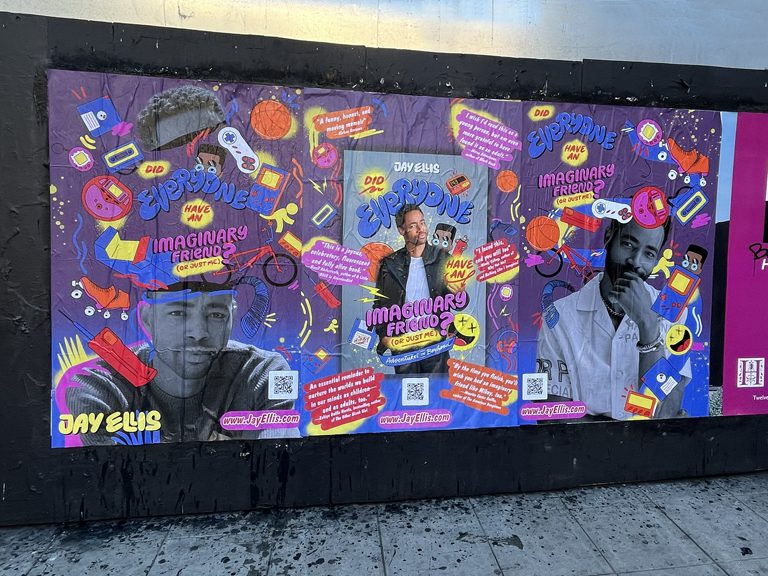
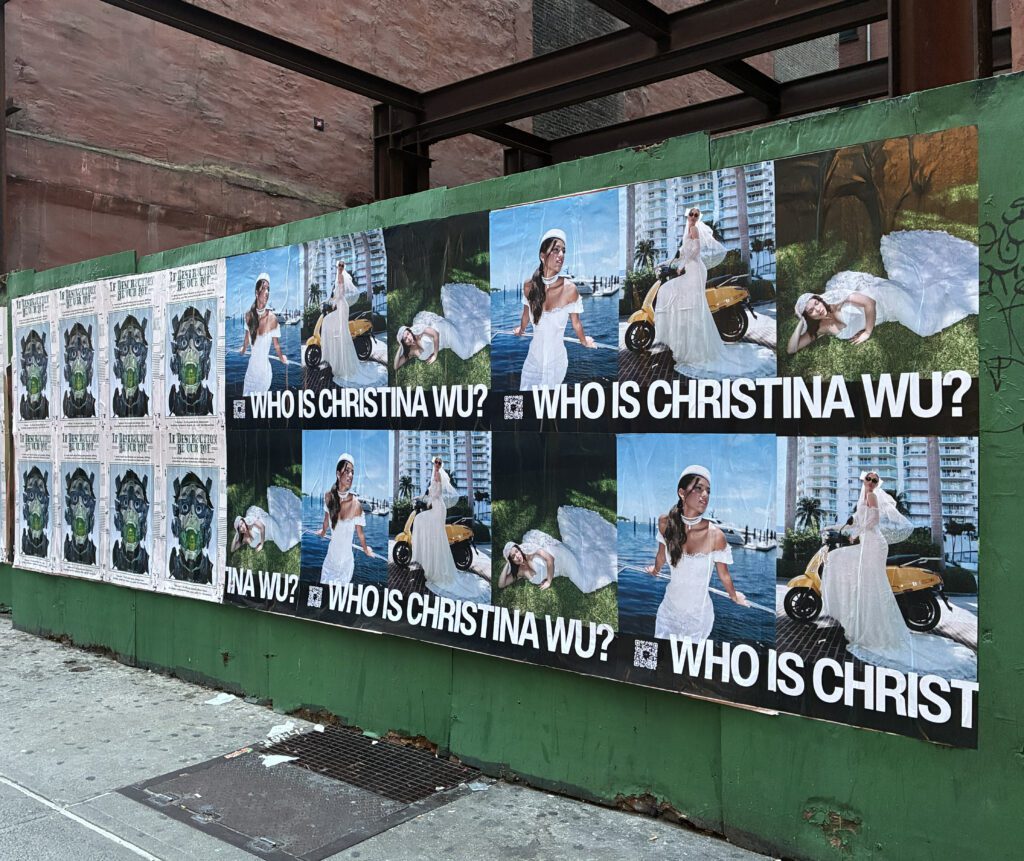
Street-level poster saturation across walls, construction sites, and corridors.

Sidewalk Decals
Ground-level branded decals at pedestrian hotspots and event entrances.

Sidewalk Stencils
Creative stencil campaigns that put your brand in the path of pedestrians.