American Guerrilla Marketing
Nationwide Service
Media planning, media buying, billboard advertising, & guerrilla marketing
Guerrilla Projections in Oklahoma City, OK
Oklahoma City’s comeback created five distinct activation zones — Paseo’s Spanish Revival stucco, Film Row’s warehouse scale, Bricktown’s canal-area brick, the Plaza District’s converted storefronts, and Midtown’s growing entertainment corridor. AGM’s 20,000-lumen projection system brings brand campaigns to all of them.
Oklahoma City’s transformation over the past three decades is one of the most dramatic urban revival stories in the American Southwest. The MAPS initiative launched in the 1990s rewired the city’s investment priorities toward its downtown core, and the ripple effects have been producing distinct, walkable entertainment districts ever since. Where other mid-size capitals offer a single downtown corridor, OKC now has at least five recognized arts-and-entertainment zones — each with its own character, its own building stock, and its own pedestrian audience — giving projection advertising campaigns a range of deployment environments that most comparable markets can’t offer. A brand that wants to reach the Thunder basketball crowd, the Bricktown canal-area dinner crowd, the Paseo gallery community, and the Film Row creative-class scene can do it all within the same Oklahoma City campaign, on different nights and in different physical environments, without leaving the metro.
The OKC Thunder NBA franchise has been central to the city’s identity since 2008, and the energy that Thunder season brings to the Paycom Center corridor and surrounding Bricktown entertainment zone creates predictable, recurring windows of concentrated pedestrian activity that projection advertising can target with precision. OKC Dodgers baseball at Chickasaw Bricktown Ballpark adds a summer sports calendar that layers onto the entertainment district’s foot traffic from April through September. The city’s growing conference and corporate event infrastructure — driven partly by the energy sector companies headquartered in OKC — brings business-decision-maker audiences into the entertainment districts on evening circuits that projection advertising reaches where digital B2B channels cannot.
What makes Oklahoma City genuinely exceptional for building facade campaigns is the breadth and variety of its projection surface inventory. No two OKC activation zones look the same. Paseo’s Spanish Revival stucco is architecturally unique in the Great Plains — smooth, broad, light-colored, and historically preserved in a way that creates exterior wall conditions that would be expensive to manufacture synthetically. Film Row’s former distribution warehouses offer industrial scale: massive exterior faces with minimal fenestration that scale a projected image to building-height dimensions. Bricktown’s canal warehouse conversions bring brick masonry and pedestrian canal-side viewing angles into the mix. The OKC surface inventory alone is reason to add this market to any national projection advertising rotation.
Ready to Project in Oklahoma City?
AGM deploys 20,000-lumen guerrilla projections across OKC's five arts-and-entertainment zones — Paseo, Bricktown, Film Row, the Plaza District, and Midtown. Tell us your district, your audience, and your event window — we'll scout the wall and activate the campaign.
Browse Cities in Oklahoma
Select a city to explore Guerrilla Projections opportunities.
Five Projection Environments In Oklahoma City
OKC’s five primary arts-and-entertainment activation zones each present distinct surface profiles, audience demographics, and optimal activation windows. AGM’s national scouting team conducts physical on-the-ground assessment in each zone before any campaign deploys, evaluating ambient light conditions, pedestrian flow patterns, wall geometry, and projector placement options at operating hours. GPS-documented location analysis accompanies every OKC engagement.
Paseo Arts District — OKC’s Premier Projection Environment
Paseo is Oklahoma City’s original arts district — a collection of galleries, studios, restaurants, and event venues in an architecturally distinctive Spanish Revival neighborhood that dates to the 1920s. The defining feature of Paseo’s built environment, from a projection advertising perspective, is its stucco. Spanish Revival architecture uses smooth exterior stucco as both structural finish and decorative surface, producing the large, flat, light-toned wall planes that constitute ideal projection real estate. Unlike brick, which scatters light across its textured surface and reduces image sharpness, stucco absorbs and reflects a projected image with minimal diffusion — delivering color saturation and detail clarity at the full brightness level AGM’s 20,000-lumen system produces. Evening gallery events in Paseo draw culturally engaged crowds with consistent Friday and Saturday night activity, and the gallery-walking pedestrian audience has direct sightlines to the district’s broad exterior wall faces. For projection advertising in Oklahoma City, Paseo is the first evaluation — its surface quality, audience profile, and evening pedestrian concentration are hard to match anywhere else in the metro.
Bricktown Entertainment Canal Area
Bricktown is OKC’s flagship entertainment destination — the canal-area warehouse conversion zone that anchors the city’s major event and dining economy. The canal corridor and surrounding blocks contain converted brick warehouse buildings with flat masonry exterior faces, consistent pedestrian activity through Thursday-to-Saturday evenings, and proximity to both Chickasaw Bricktown Ballpark and the Paycom Center that makes it the natural gathering zone for sports event audiences before and after games. Brick masonry performs differently from Paseo stucco — it carries more texture and requires slightly higher contrast in creative assets to maintain sharpness at operating distances. Light-painted brick, which is common in Bricktown’s converted warehouse stock, performs significantly better than darker exposed brick. The canal-side building orientation creates favorable sightline geometry: pedestrians on the canal walking path have extended dwell time in front of building faces across the water, building projection exposure per viewer in ways that street-perpendicular wall placement doesn’t always achieve. On Thunder game nights and OKC Dodgers home dates, Bricktown’s pedestrian volume reaches levels that make it the highest raw impression count per activation night in the OKC market.
Plaza District Arts Corridor — NW 16th Street
The Plaza District is OKC’s mid-city arts revival zone along NW 16th Street — a converted commercial corridor of galleries, coffee shops, independent bars, and creative-class gathering spaces that has developed a consistent Thursday-through-Saturday evening culture. The building stock on the Plaza District strip consists of former commercial storefronts converted to gallery and hospitality use, with flat exterior faces along the sidewalk corridor. Surface quality in the Plaza District varies by block — some buildings present smooth-painted masonry or stucco in the projection zone; others have brick frontages or signage-heavy facades that reduce usable wall area. The Plaza District’s audience profile skews toward OKC’s young professional and creative-class demographic: a socially active, arts-engaged population with high social media documentation behavior and strong organic content sharing. Brand campaigns targeting this demographic — creative, younger-skewing, socially active — find the Plaza District a complementary activation environment to Paseo, reaching a similar audience in a different physical context and on different evenings.
Midtown OKC — Transitional Arts and Dining Zone
Midtown OKC occupies the corridor between downtown’s established entertainment districts and the older residential neighborhoods to the northwest, and its transitional character is part of what makes it useful for projection advertising: the buildings that populate this zone are predominantly renovated commercial structures with flat facades, varying from smooth-painted block to light-colored brick, in a neighborhood where after-dark foot traffic is growing but has not yet reached the density of Paseo or Bricktown. That lower ambient competition can be an advantage for projection — a well-placed image in Midtown OKC faces less visual noise from competing commercial signage than it would in Bricktown’s more developed entertainment corridors. The diverse dining scene along the primary Midtown OKC corridors draws a consistent early-evening crowd of young professionals and neighborhood residents who are responsive to brand experiences embedded in their local environment. Midtown functions well as a supplementary OKC activation zone when a campaign needs to extend reach beyond Paseo and Bricktown without activating in a brand-new market.
Film Row Arts District — Industrial Scale West of Downtown
Film Row is Oklahoma City’s former movie distribution warehouse district, located west of downtown and now converting to creative offices, event venues, galleries, and production spaces. The defining architectural feature of Film Row — and its primary asset for projection advertising — is sheer building scale. The former distribution warehouses that line Film Row’s primary blocks are large-footprint, high-wall industrial buildings with exterior masonry faces that dwarf the scale of the commercial storefronts in Paseo or the Plaza District. A single Film Row warehouse exterior can receive a projection at dimensions that approach building-wrap scale, creating an image statement that is visible from substantial distances down the street or across open urban lots. The surface profile of these former industrial buildings tends toward the favorable: large uninterrupted masonry faces, minimal window coverage on the exterior walls facing the street, and building orientations that give projectors favorable placement angles from adjacent lots or roadways. Film Row’s evening pedestrian density is lower than Bricktown or Paseo, but the sheer visual impact of a properly placed large-scale projection on a Film Row warehouse face — visible from the approaches to downtown — gives this zone a reach geometry that purely pedestrian-count metrics understate. For brands that need scale and visual dominance over precision audience concentration, Film Row is the OKC activation environment of choice.
Reading The Okc Surface Inventory: What Makes A Great Projection Wall
Oklahoma City’s five projection zones each require a specific surface-reading approach because the buildings are genuinely different from one another. What makes Paseo’s stucco exceptional — smooth texture, light tone, broad flat face — is not present in every Bricktown warehouse or Film Row distribution building. And what makes a Film Row warehouse worth activating — sheer scale and minimal fenestration — matters far less in Paseo where scale is moderate but surface quality is premium. A national-experience scouting team with direct knowledge of each zone’s building stock is the difference between a projection that delivers the creative’s full impact and one that discovers on activation night that the target wall has characteristics the original brief didn’t account for.
The consistent technical requirements that AGM’s team evaluates across all five OKC zones: surface flatness (curved walls, angled corner buildings, and irregular facades all distort projected images to varying degrees); surface reflectivity (light-toned or white exterior paint or stucco delivers maximum brightness; dark brick absorbs lumen output and requires significant creative contrast compensation); surface texture (smooth stucco and flat masonry produce sharp images; rough stone or deeply textured brick scatter light and reduce image resolution); window coverage (windows are transparent and reflective, creating dead zones in the projected image; walls with minimal or zero window coverage in the projection area are strongly preferred); and sightline clearance (trees, utility poles, parked vehicles, signage, and scaffolding between projector and wall interrupt image quality in ways that advance physical scouting can flag and route around). Every OKC engagement produces GPS-documented location records of the specific wall selected and the sightline confirmed during advance reconnaissance.
Plan Your Guerrilla Projection Campaign in Oklahoma City, OK
Tell us about your campaign goals, target audience, and preferred locations. Our team will help you plan a high-impact guerrilla projection campaign tailored to your needs.
Award Winning Personalized Service
You will get thoughtful, devoted, and individualized attention from our experienced, qualified, and professional personnel. Being one of the most illustrious agencies in Brooklyn, New York, American Guerrilla Marketing has been awarded the Best of Brooklyn title.
Nationwide
Industry City, Brooklyn, New York 11232
American Guerrilla Marketing
Hours
Mon - Fri: 9 AM - 5 PM
Sat & Sun: Closed
Automate your campaign with AGM’s Request for Proposal Builder.
Automate your campaign with AGM’s Request for Proposal Builder. Simply answer a few quick questions about your campaign goals, markets, and timeline, and the system will generate a tailored presentation with recommended strategies, quantities, and pricing. Click the RFP Builder to instantly receive your customized proposal.
The Mizzou × Cotton Bowl Model: Reaching Visiting Fan Bases in Entertainment Districts
The most directly applicable precedent for understanding how projection advertising functions in a sports-event entertainment environment like OKC’s Bricktown during Thunder playoffs or OKC Dodgers postseason baseball is AGM’s campaign with the University of Missouri during Cotton Bowl week in Arlington, Texas. The campaign projected University of Missouri school pride imagery on building facades in the entertainment zone surrounding AT&T Stadium during Cotton Bowl week, reaching the concentrated traveling Mizzou fan base assembled in hotels, restaurants, and entertainment venues across the event corridor.
The insight driving that campaign was precise: the visiting fan base does not behave like a local audience. Traveling fans are in an unfamiliar city, exploring its entertainment zones, spending heavily on food and nightlife, and sharing their entire experience on social media. They are not in their home-market media environment — they’re not watching local OKC television or listening to local radio. Standard local media channels don’t reach them efficiently because they’re visitors. What does reach them is physical presence in the entertainment district they’re actually exploring. Building facades in Bricktown during a major OKC sporting event reach the visiting fan base exactly where they are — walking the canal, looking for dinner, photographing the city — and they generate social media documentation from thousands of visitors who share the experience with their home-market networks.
This mechanism applies across the OKC sports calendar. A brand targeting the visiting Charlotte Hornets fan base during a Thunder home game has no effective local media path to that audience — but a Bricktown projection on the game night reaches them in the canal corridor they’re exploring before tip-off. The same logic applies to visiting OKC Dodgers fan bases from other Triple-A markets, conference attendees who have flown in for an energy industry summit, and out-of-town family groups in town for University of Oklahoma graduation who are spending their Friday evening in Bricktown before the Saturday ceremony.
Campaign Formats For Oklahoma City
Sports Event Fan Activation
Projection deployed in Bricktown’s canal corridor and entertainment zone during Oklahoma City Thunder games and OKC Dodgers home dates. Reaches the combined local fan base and visiting fan audience in the Bricktown pedestrian environment on game evenings. Sports brands, sponsors, and entertainment companies targeting OKC’s sports fan demographic use this as a primary Bricktown activation window.
Arts District Brand Campaign
Paseo and Plaza District activations reaching OKC’s culturally engaged evening audience — gallery-goers, arts-community participants, and young-professional diners. Ideal for consumer brands, entertainment releases, and advocacy campaigns whose target demographic overlaps with the creative-class, socially active audience that concentrates in OKC’s arts districts on Friday and Saturday evenings.
Industrial Scale — Film Row
Large-format projection on Film Row warehouse exterior walls reaching building-height scale. Appropriate for brands that need visual dominance and image scale over precise audience concentration — entertainment releases, major product launches, brand awareness campaigns that benefit from projection at a scale that digital advertising and standard outdoor advertising cannot approach.
Energy Sector & Corporate B2B
Projection campaigns targeting OKC’s energy industry executive audience during conference, trade event, and corporate evening windows. Bricktown and Paseo entertainment corridors fill with energy sector professionals during major OKC industry conferences, creating a defined B2B audience in a casual, high-attention environment where corporate brand messaging resonates outside the competitive noise of the conference floor.
Advocacy & Civic Campaign
Policy messaging and issue advocacy delivered into Paseo’s civically engaged gallery audience, the Plaza District’s socially active young professional community, or the Midtown OKC dining corridor. Advocacy organizations, political campaigns, and civic initiatives targeting OKC’s arts-district voter demographic have used these zones for projection advertising with documented earned media results.
Multi-District OKC Campaign
Sequential activations across multiple OKC districts within a single campaign window — Bricktown on a Thunder game night, Paseo on gallery Friday, Film Row for scale on Saturday. AGM’s mobility unit moves between OKC districts efficiently, giving brands coverage across different audience segments within a unified campaign structure without the cost of multiple separate production budgets.
The Oklahoma City Projection Calendar: Sports, Events, and Year-Round Opportunities
OKC’s diverse entertainment calendar creates a year-round projection advertising schedule that few comparable markets can match. The Oklahoma City Thunder NBA regular season runs from October through April, with each home game generating a Bricktown and Paycom Center-area pedestrian surge that persists through the evening. OKC Dodgers baseball at Chickasaw Bricktown Ballpark overlaps with and then extends the sports calendar from April through September, maintaining Bricktown entertainment district foot traffic through the summer months when Thunder season is dormant.
Oklahoma City’s growing conference infrastructure adds a business-event layer. The Oklahoma City Convention Center and the broader downtown hospitality complex host major industry events throughout the year, including energy sector conferences that concentrate a specific corporate executive audience in Bricktown and the downtown entertainment corridor. These conference-adjacent evening windows are projection opportunities for brands targeting business decision-makers in an environment where they’re already in an exploratory, social mood — receptive to brand experiences in a way that conference-floor interactions don’t allow.
Paseo, the Plaza District, and Film Row operate on arts-district calendars that run independently of the sports schedule — gallery events, first Friday programming, community arts events, and the ongoing rhythm of arts-district dining and nightlife that makes these zones active even during periods when sports venues are dark. A brand that needs year-round OKC presence can build a 12-month projection calendar that moves between sports-event windows in Bricktown and arts-district windows in Paseo, maintaining consistent brand presence across different audience segments through every season.
Scouting And Execution Standards In Oklahoma City
AGM’s national scouting team approaches each OKC district with the understanding that five distinctly different physical environments require five distinctly different scouting assessments. A Bricktown canal-corridor scouting walk is not informative about Paseo stucco wall options; a Film Row reconnaissance reveals nothing about the Plaza District strip’s surface quality. The team walks each target zone during operating hours — an evening assessment, not a daytime site visit — because ambient lighting from Bricktown’s commercial entertainment district looks fundamentally different at 9 PM than at noon, and the wall positions that perform best under nighttime conditions are not always the ones that appear most promising in daytime photographs.
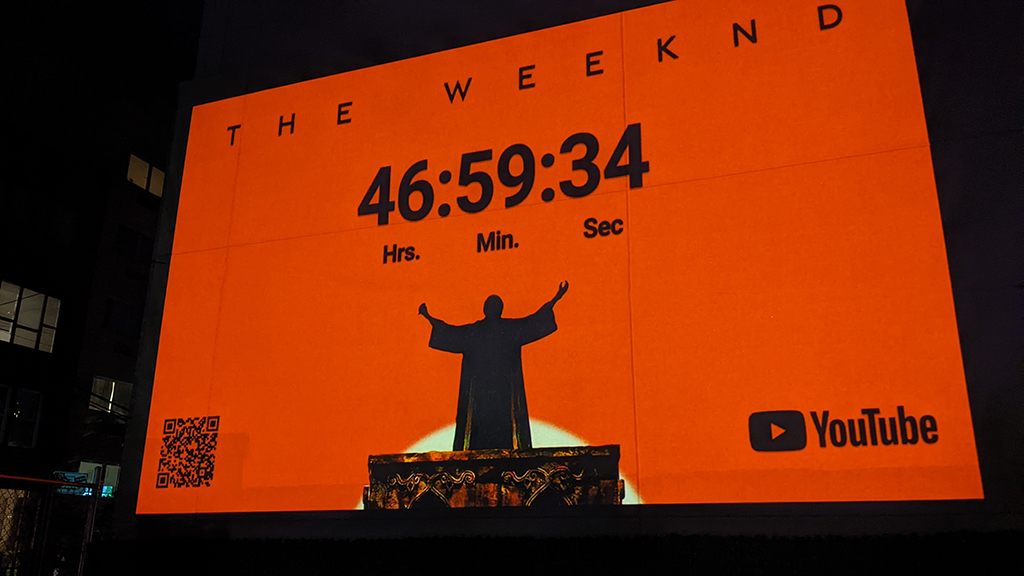
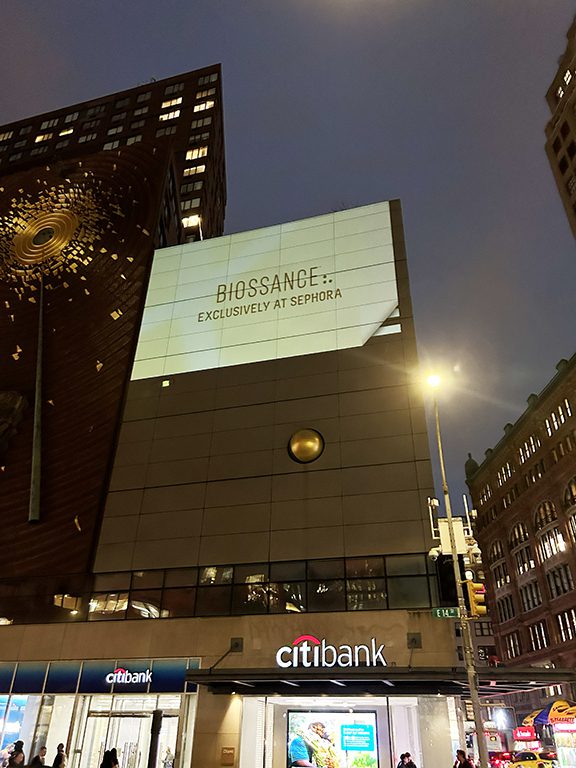
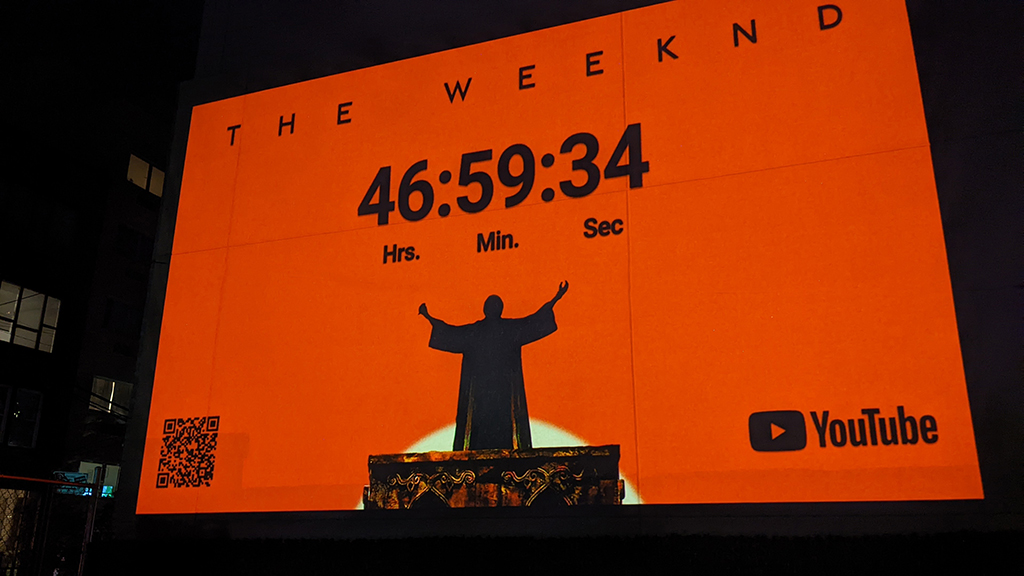
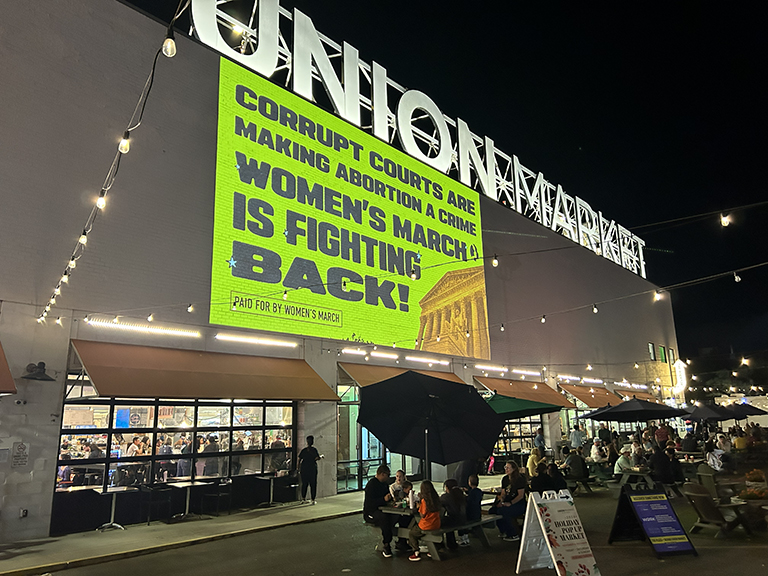
AGM’s own technical crew — not subcontractors — handles every stage of OKC activations: equipment delivery, projector setup, operation through the full four-to-six-hour activation window, and breakdown at close. This direct-crew model ensures the same operational standards that have made AGM a Best of Brooklyn award-recognized operation nationally apply consistently to every Oklahoma City engagement. Photography and video documentation captured during the run, GPS-documented location records, and post-campaign reporting are delivered as standard deliverables. Our client roster — including Biossance, The Weeknd, the US Marine Corps, Women’s March, Reproductive Freedom for All, and YouTube — reflects the breadth of campaign contexts AGM brings to every new OKC market engagement.
AGM’s projection client roster includes Netflix, Disney, Coca-Cola, FanDuel, Live Nation, iHeartRadio, and the US Marine Corps. A confirmed case study: the US Marine Corps × CMA Fest Nashville — multi-night projections onto architectural surfaces throughout the festival footprint, reaching 80,000+ attendees across the campaign window. Projection advertising scales across every brand category; what our campaigns share is scale, precision, and a physical presence digital cannot replicate.
Oklahoma City Projection Advertising Pricing
Building projection advertising in Oklahoma City runs at contact us for a quote. The rate is all-inclusive: AGM’s 20,000-lumen commercial projector, generator and complete power solution, electronics bundle, mobility unit, and the two-person direct technical crew for the full activation. No subcontracted crew, no equipment rental line items, no hidden costs — the published rate covers everything from equipment arrival through crew departure at end of night.
Activation windows begin at dusk, typically running four to six hours through Oklahoma City’s peak evening entertainment period. Multi-district OKC campaigns — activating Bricktown one night, Paseo another, Film Row a third — are available within a single campaign structure, with mobility between OKC zones requiring minimal logistics given the compact geography of the district cluster. Advance location scouting in OKC runs approximately Contact us for a custom quote. for initial physical reconnaissance. Private-property permitted placements with guaranteed sightlines and extended site control — valuable for campaign configurations that require a specific wall position over multiple consecutive nights — are available contact us for a custom quote. depending on the building and arrangement negotiated.
Oklahoma City campaign inquiries can be directed to AGM’s Las Vegas regional office: 5940 S Rainbow Blvd, PMB 1205, Las Vegas, NV 89118, (702) 996-1806. National operations headquarters: Industry City, Unit 28, Brooklyn, NY 11232, (646) 776-2770. Miami regional office: 2915 Biscayne Blvd, Suite 300, Miami, FL 33137, (305) 792-4523.
Who Deploys Projection Advertising In Oklahoma City
Oklahoma City’s projection advertising clients span the full range of sectors that the city’s entertainment and economic profile supports. Sports marketing brands — official Thunder sponsors, OKC Dodgers-aligned consumer products, and national brands seeking to activate around the NBA and Minor League Baseball calendar — are consistent users of Bricktown and Paycom Center-area projection windows. The game-night pedestrian environment around Chickasaw Bricktown Ballpark and the Paycom Center-adjacent entertainment corridor provides concentrated sports-fan audience access that no static outdoor media placement in OKC can match for event-night alignment.
Energy sector brands — oil and gas companies, midstream and downstream operators, energy tech firms, and professional services firms with Oklahoma City headquarters or major client concentrations — use OKC projection advertising during conference and corporate event windows when their target executive audience is concentrated in Bricktown and downtown entertainment environments. A projection on a Bricktown canal-area building face on the evening of an energy industry conference dinner reaches C-suite decision-makers in their leisure environment in a way that conference-floor advertising explicitly cannot.
Entertainment companies have used OKC’s arts-district environments — Paseo, the Plaza District — for streaming release campaigns and touring concert announcements targeting the 25–40 culturally engaged OKC creative-class demographic. Advocacy organizations and political campaigns have found Paseo’s gallery audience and the Plaza District’s young professional community productive environments for civic messaging. And national consumer brands seeking an efficient South-Central regional activation point have added OKC to multi-city campaign structures as a market with strong surface inventory, an engaged evening audience, and a geography that connects efficiently to Tulsa and Norman in the same state campaign window.
Coverage & Estimated Impressions
| Zone / Area | Peak Hours | Foot Traffic | Est. Nightly Impressions | Best For |
|---|---|---|---|---|
| Paseo Arts District | 9PM–2AM | Very High | 25,000–120,000 | Product Launch |
| Bricktown Entertainment Canal Area | 9PM–2AM | Very High | 25,000–120,000 | Event Promotion |
| Plaza District Arts Corridor | 9PM–2AM | Very High | 25,000–120,000 | Brand Awareness |
| Midtown OKC | 9PM–2AM | Very High | 25,000–120,000 | Political |
| Film Row Arts District | 9PM–2AM | Very High | 25,000–120,000 | Sports |
Frequently Asked Questions
Paseo’s Spanish Revival stucco exterior walls are architecturally exceptional for projection advertising — smooth, broad, light-toned, and historically preserved without the window density or architectural ornamentation that interrupts projected images on other building types. The stucco finish reflects maximum brightness from AGM’s 20,000-lumen system, delivering color saturation and image sharpness that brick or rough masonry walls cannot match at the same lumen output. Combined with consistent Friday and Saturday gallery-event crowds who have direct sightlines to the district’s exterior wall faces, Paseo represents OKC’s highest-quality projection environment across both surface performance and audience profile.
Yes. Chickasaw Bricktown Ballpark’s location within the Bricktown entertainment canal zone means game nights drive substantial pedestrian volume into the surrounding restaurant and bar corridor — audience that fills the Bricktown streets before first pitch, during mid-game breaks, and through the post-game entertainment period. A projection on a Bricktown canal-area building face on an OKC Dodgers home date reaches both the baseball-attending audience and the broader Bricktown entertainment crowd that gathers independently of the game. Summer baseball season gives brands a six-month Bricktown activation calendar that spans April through September across the full warm-weather entertainment season.
Oklahoma City projection advertising runs at contact us for a quote. — the all-inclusive outside-NYC rate covering AGM’s 20,000-lumen projector, generator and power solution, electronics bundle, mobility unit, and direct two-person technical crew for the full activation. Multi-district OKC campaigns that activate in Bricktown one evening and Paseo or Film Row on subsequent nights operate within the same per-night rate structure. Advance market scouting in OKC runs approximately contact us for pricing. Private-property permitted placements are available starting at contact us for a quote. for arrangements requiring guaranteed sightlines or extended site occupation.
Yes. The Paycom Center sits at the eastern edge of Bricktown, and Thunder game nights generate sustained pedestrian flow between the arena and the Bricktown canal entertainment corridor through pre-game dining, post-game bar activity, and the general crowd movement surrounding a major NBA event. A projection activated in Bricktown on a Thunder home game night reaches the fan audience during this pedestrian window — including visiting fans from the opposing team’s market who are exploring Bricktown before and after the game and who are actively documenting and sharing their OKC experience across social platforms.
Film Row’s former distribution warehouses offer the largest available projection surface scale in Oklahoma City. These industrial buildings have exterior masonry faces that extend to warehouse heights — two to four stories of largely uninterrupted wall plane — with minimal window coverage on street-facing elevations and building footprints that produce projection image sizes well beyond what commercial entertainment-district buildings can support. For brands that need visual scale — entertainment releases, major product announcements, political campaigns that benefit from building-height message display — Film Row provides a projection canvas that the smaller-scale commercial buildings in Paseo and the Plaza District simply cannot match.
Bricktown is a developed entertainment district with meaningful ambient light from canal-side restaurants, bar signage, street fixtures, and the general commercial lighting of a busy evening entertainment zone. This ambient light is a real technical consideration for projection placement — projector position and wall selection need to account for competing light sources that can wash out image edges or reduce contrast on lower-reflectivity surfaces. AGM’s scouting process specifically evaluates each candidate Bricktown wall under operating-hour conditions to identify positions where the 20,000-lumen system maintains sufficient contrast advantage over ambient sources. Light-painted brick walls positioned away from the highest-intensity commercial signage perform best; darker brick walls in high-ambient-light zones require creative contrast compensation that affects image design.
Yes, and the conference-adjacent activation model is one of the strongest use cases for OKC projection advertising in a B2B context. Major energy industry conferences that bring executive attendees to Oklahoma City concentrate a specific corporate decision-maker demographic in the downtown and Bricktown entertainment corridors during evening networking and dinner periods. A brand targeting this audience can run a projection on a Bricktown canal-area building or a Paseo district wall on conference evenings, reaching energy executives in the casual social environment that formal conference programming explicitly cannot access. The leisure context improves message receptivity relative to in-conference advertising formats that compete directly with session content.
Paseo has a superior physical projection environment — smoother stucco surfaces, broader wall planes, and architecturally consistent exterior faces across the district. The Plaza District’s building stock is more variable: some converted commercial buildings on NW 16th Street present smooth-painted masonry that performs well; others have textured brick frontages or signage-dense facades that reduce usable wall area and image quality. Where the Plaza District competes with or exceeds Paseo is audience demographic composition — the Plaza District’s young professional and creative-class audience skews slightly younger and is more heavily represented on social platforms, producing stronger organic content amplification from a projection activation. Campaigns that prioritize surface quality and image fidelity target Paseo first; campaigns that prioritize audience social amplification often find the Plaza District worth the surface tradeoff.
Yes. AGM’s national scouting team conducts advance location reconnaissance in OKC — both digital and physical on-the-ground assessment — as part of every engagement, with GPS-documented location records delivered as standard campaign documentation. Permitting for guerrilla-style activations, where the projector operates from a public or properly permitted position targeting a building face, is addressed as part of the advance planning process. Private-property permitted placements — formal agreements with building owners providing guaranteed sightlines and multi-night site control — are available for campaigns that require them and are negotiated and executed by AGM as part of the campaign setup. AGM advises clients on the appropriate permitting approach for each specific OKC activation zone and configuration.
Yes — multi-district OKC campaigns are a common structure for brands that need to reach different audience segments within the metro. Bricktown on a Thunder game night reaches the sports fan and entertainment crowd; Paseo on gallery Friday reaches the arts-community and culturally engaged professional audience. These two zones are geographically close — roughly five miles within the metro — and AGM’s mobility unit moves between them easily within a single campaign structure. A brand can activate Bricktown on Tuesday and Thursday game nights, then deploy at Paseo on Friday, covering two distinct OKC audience demographics within a single weekly campaign budget.
Midtown OKC and Film Row offer different value propositions based on their physical characteristics and audience profiles. Midtown has more consistent evening pedestrian traffic — its dining and bar culture brings a regular crowd to the corridor — but smaller building scales and more variable surface quality than Film Row’s dedicated warehouse blocks. Film Row offers far greater surface scale — warehouse-height building faces that create projection images at dimensions no Midtown commercial building can match — but lower base pedestrian density because the district is still in earlier stages of nightlife activation. Midtown is the choice when audience volume and consistency matter more than image scale; Film Row is the choice when visual dominance and projection image size are the campaign priority.
Film Row’s warehouse scale rewards creative content designed for large-format display — imagery that gains impact from sheer size rather than fine detail, and messaging with enough visual weight to read from the extended viewing distances that warehouse-scale projections enable. Bold typography, high-contrast visual compositions, and animated sequences with clean geometric motion all scale effectively onto warehouse exterior faces. Portrait-orientation imagery — designed for building-height wall proportions rather than landscape-format screens — makes the best use of Film Row’s tall masonry faces. Campaigns using Film Row specifically for scale impact should calibrate creative to the actual wall dimensions identified during scouting, since different Film Row buildings offer different aspect ratios and usable projection areas.
Oklahoma City campaigns range from single-night activations tied to specific events — a Thunder playoff game, a major conference evening, a gallery opening night — to multi-week runs covering multiple districts over an extended period. One to three nights is the most common single-market OKC deployment. Multi-district campaigns that move between Bricktown, Paseo, and Film Row within the same week typically run three to five nights. Campaigns tied to a full NBA playoff series or a sustained conference week may run five to seven consecutive or alternating nights. Multi-night runs generally improve cost efficiency per audience impression because setup, scouting, and logistics costs are amortized across more activation hours.
More AGM Outdoor Advertising Services
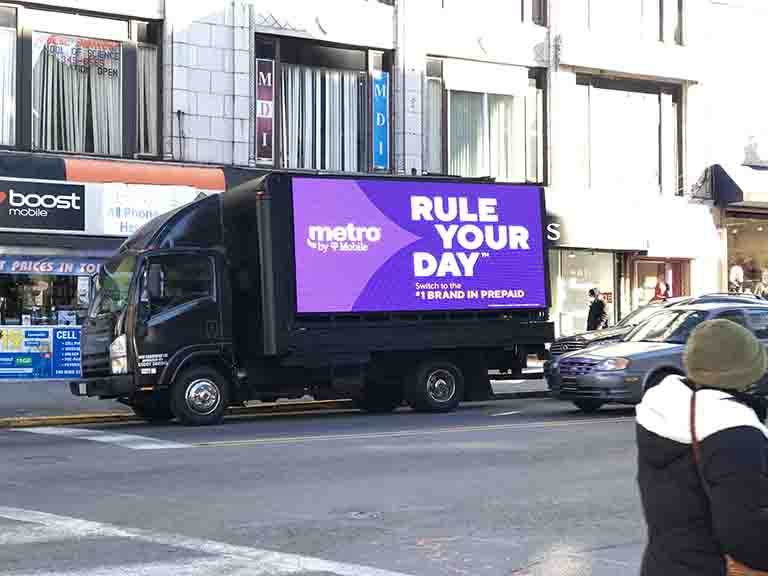
Led Billboard Trucks
Mobile LED displays that bring your brand to any location, any event.
Fly Posting
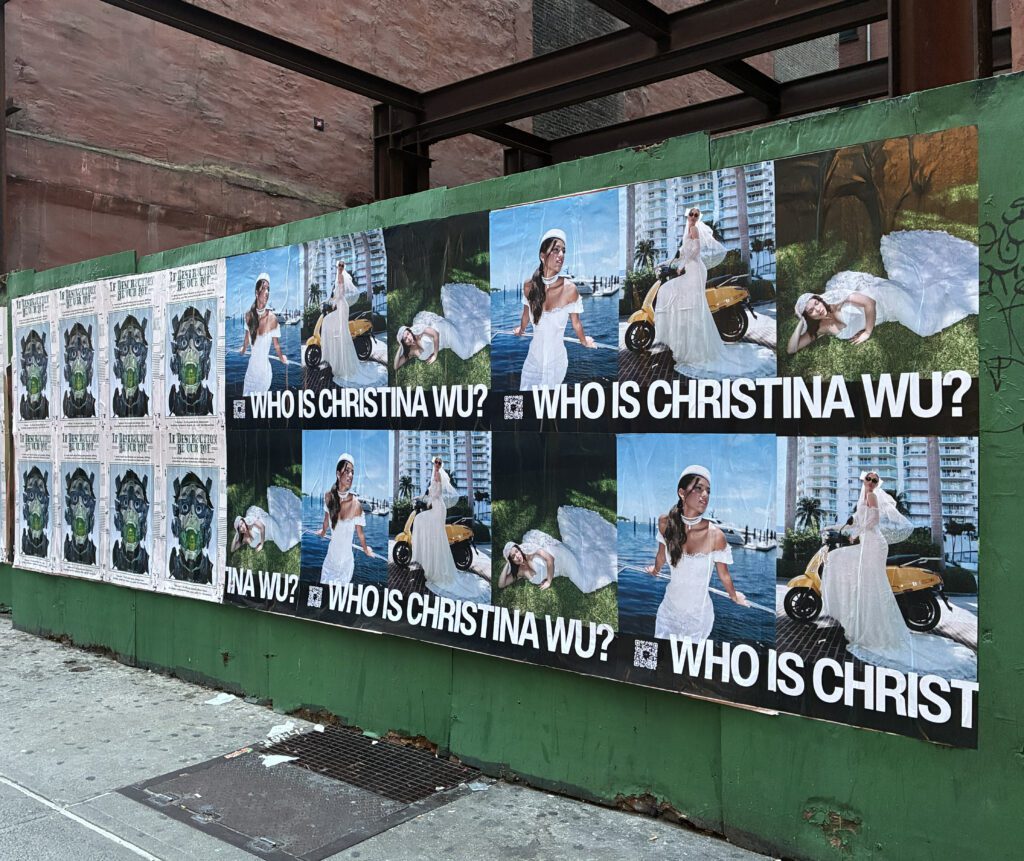
Street-level poster saturation across walls, construction sites, and corridors.

Sidewalk Decals
Ground-level branded decals at pedestrian hotspots and event entrances.

Sidewalk Stencils
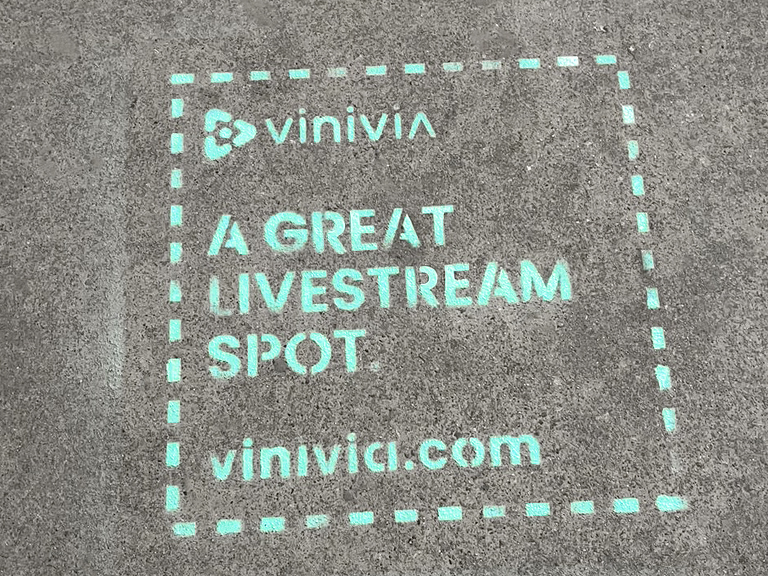
Creative stencil campaigns that put your brand in the path of pedestrians.