American Guerrilla Marketing
Nationwide Service
Media planning, media buying, billboard advertising, & guerrilla marketing
Guerrilla Projections in San Jose, CA
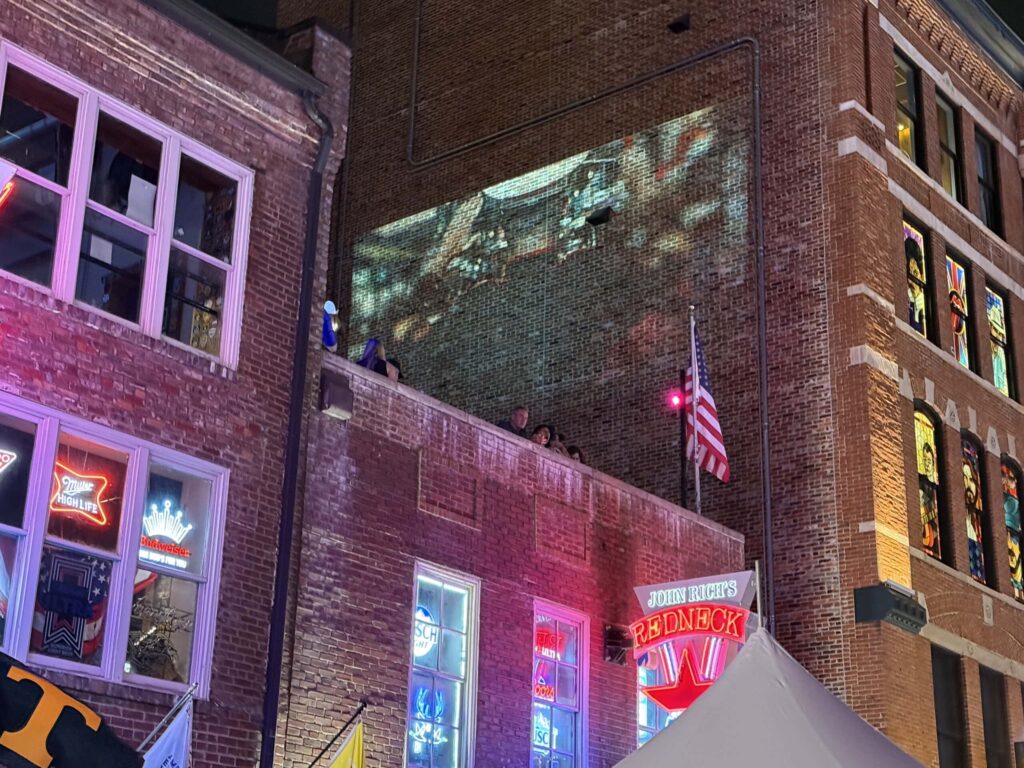
Silicon Valley’s commercial capital gives AGM’s 20,000-lumen projection system a technically sophisticated audience and an urban core that’s ready for bold brand statements. From the SAP Center district to Japantown, San Jose delivers.
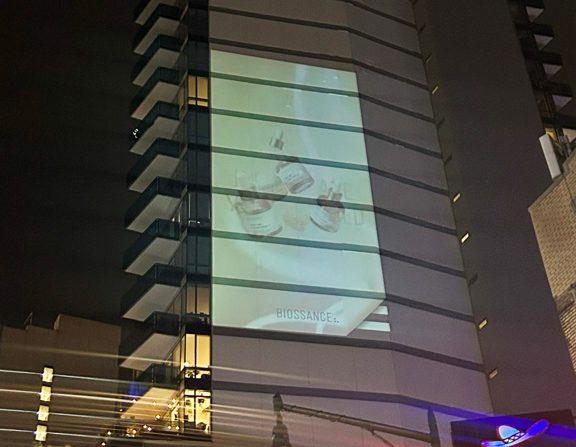
San Jose sits at the center of one of the most economically powerful regions on earth. Silicon Valley’s commercial core, the tenth-largest city in the United States, and the home base of some of the world’s most influential technology companies — San Jose is a market whose commercial density and professional audience profile give guerrilla projection advertising a specific, high-value purpose. American Guerrilla Marketing deploys 20,000-lumen commercial projection systems across downtown San Jose and its surrounding urban neighborhoods, creating brand moments that speak directly to the engineers, executives, entrepreneurs, and investors who make this city move.
San Jose is underappreciated as an outdoor advertising market. The conventional wisdom about Northern California concentrates on San Francisco, but San Jose’s downtown core has developed significantly over the past decade — the SAP Center arena district anchors consistent nighttime foot traffic, the downtown arts corridor supports a growing creative and restaurant economy, Japantown offers one of the most culturally distinctive projection environments in the Bay Area, and the Willow Glen entertainment zone reaches a high-income neighborhood audience that drives significant retail and dining spending. These are not secondary markets. They are distinct audiences with distinct spending power, and guerrilla projection reaches them at street level in ways that digital advertising cannot.
For technology and B2B brands, San Jose offers something no other California market can provide: direct geographic proximity to the decision-making infrastructure of the global technology industry. Projecting your brand on a downtown San Jose building wall during a major industry conference, during a product launch week, or during a competitive market positioning push puts your message in front of the senior engineers, product managers, and executives who are the actual targets of enterprise technology campaigns — people who have trained themselves to ignore most advertising but who notice and respond to unexpected physical brand moments in their daily environment.
Project in the Heart of Silicon Valley
San Jose's SAP Center district, downtown arts corridor, Japantown, and Willow Glen are waiting. AGM's 20,000-lumen system turns Silicon Valley's walls into your brand's statement. Tell us your campaign window and we'll build the activation.
Browse Cities in California
Select a city to explore Guerrilla Projections opportunities.
Why San Jose Works For Guerrilla Projection Advertising
The case for San Jose as a projection market begins with its professional population. The workforce concentrated in downtown San Jose and the surrounding Silicon Valley is among the highest-earning and most educated in the United States. It is also, paradoxically, among the most resistant to conventional advertising. Technology professionals are the most aggressive ad-blocker adopters in the country. They scroll past digital ads without processing them, they ignore email marketing at rates that frustrate even the most sophisticated B2C programs, and they have developed genuine immunity to the kind of repetition-based advertising that conventional media buys rely on. Guerrilla projection advertising bypasses all of these filters. It does not appear in a feed. It does not load in a browser. It appears on a building, in the physical world, during the commute or the dinner or the post-conference walk — and it commands attention precisely because it is unexpected in that context.
San Jose’s downtown geography supports projection campaigns in specific ways. The city’s commercial core is compact relative to its overall metropolitan size — downtown San Jose covers a walkable area centered on Plaza de César Chávez and the surrounding blocks, with the SAP Center arena to the northwest and the Diridon Station transportation hub to the west. This concentration means that evening foot traffic routes through a limited number of corridors, making projection placements along those routes unusually efficient. A single well-placed projection can reach the after-work professional crowd, the arena event audience, the dinner and bar-going residents, and the late-night corridor travelers — all within a standard four-to-six hour projection window.
San Jose’s event calendar also creates predictable audience concentration windows that amplify projection campaigns well beyond their baseline impact. SAP Center hosts Sharks hockey games, concerts, and arena events throughout the year. The San Jose Convention Center hosts a packed calendar of technology, healthcare, and business conferences. Major annual festivals in the downtown core bring tens of thousands of visitors to the streets around Plaza de César Chávez and the arts corridor. Each of these events concentrates exactly the audiences that projection campaigns target, in locations where AGM has documented effective projection surfaces.
The city’s active investment in downtown cultural infrastructure — including the San Jose Museum of Art, the California Theatre, the tech-oriented exhibitions at the Children’s Discovery Museum, and the growing restaurant and gallery scene along the arts corridor — has produced a downtown population that increasingly engages with its urban environment as a cultural space rather than merely a transit corridor. That shift in how residents relate to the downtown streetscape increases the baseline receptivity to unexpected brand moments in public space. San Jose’s downtown has become the kind of place where people look around rather than look down.
San Jose Projection Locations — Ideal Surfaces By District
Downtown San Jose Arts Corridor Near the SAP Center
The blocks surrounding the SAP Center arena anchor San Jose’s highest-volume nighttime foot traffic outside of major festival periods. On event nights — Sharks games, arena concerts, comedy shows, and family entertainment events — the streets connecting the arena to downtown restaurants and the Diridon transit hub fill with tens of thousands of attendees. Projection campaigns positioned along these corridors during event nights reach a massive, concentrated audience in a high-engagement state. The surrounding commercial buildings provide exterior walls suited to projection work, and the event-anchored audience creates conditions for immediate social documentation at scale. For consumer brands, entertainment companies, and B2C technology campaigns targeting the Silicon Valley consumer, the SAP Center district is San Jose’s single highest-impact projection environment.
SoMa District — San Jose’s Technology Corridor
San Jose’s SoMa district — the area south of San Carlos Street extending toward Guadalupe River Park — contains a significant concentration of technology company offices, startup campuses, and mixed-use commercial developments that generate consistent daytime and evening professional foot traffic. The district’s building stock includes former light-industrial and commercial structures that provide the kind of large, flat exterior walls that projection campaigns perform best on. SoMa San Jose is particularly valuable for enterprise technology and B2B campaigns targeting the professional workforce moving between offices, lunch spots, and evening destinations in this corridor. The audience here is dense with the engineering and product management professionals who are the decision-makers for enterprise technology purchasing — a demographic that few other advertising formats can reach with the same efficiency that physical projection delivers.
Japantown District
San Jose’s Japantown is one of only three remaining Japantowns in the United States and one of the most culturally distinctive neighborhoods in the Bay Area. The district’s Jackson Street corridor and surrounding blocks support a dense ecosystem of Japanese and Japanese-American restaurants, shops, cultural organizations, and community institutions that draw visitors from across the Bay Area. Japantown’s visual identity — cultivated through decades of community stewardship — makes it an environment where unexpected visual interventions in public space land with particular resonance. The audience in Japantown is culturally engaged, diverse, and active on the social channels that carry street-level brand moments to broader networks. For brands seeking genuine cultural connection rather than generic audience volume, Japantown offers a projection environment with distinctive community character and strong earned media potential.
Willow Glen Entertainment Zone
Willow Glen is San Jose’s most prosperous neighborhood retail and dining district — a walkable strip anchored by Lincoln Avenue that draws consistent evening foot traffic from one of the Bay Area’s highest-income residential communities. The neighborhood’s restaurants, wine bars, boutiques, and galleries support a thriving evening economy that keeps pedestrian density high well into the late evening hours. Willow Glen’s audience is demographically distinct from the downtown core — skewing older, more affluent, and more oriented toward lifestyle and premium consumer categories than the technology-professional concentration in SoMa and the downtown arts corridor. For luxury brands, premium consumer goods companies, financial services firms, and lifestyle labels targeting the Bay Area’s high-income family demographic, Willow Glen is a differentiated projection market that serves a specific audience profile unavailable in the downtown districts.
Plan Your Guerrilla Projection Campaign in San Jose, CA
Tell us about your campaign goals, target audience, and preferred locations. Our team will help you plan a high-impact guerrilla projection campaign tailored to your needs.
Award Winning Personalized Service
You will get thoughtful, devoted, and individualized attention from our experienced, qualified, and professional personnel. Being one of the most illustrious agencies in Brooklyn, New York, American Guerrilla Marketing has been awarded the Best of Brooklyn title.
Nationwide
Industry City, Brooklyn, New York 11232
American Guerrilla Marketing
Hours
Mon - Fri: 9 AM - 5 PM
Sat & Sun: Closed
Automate your campaign with AGM’s Request for Proposal Builder.
Automate your campaign with AGM’s Request for Proposal Builder. Simply answer a few quick questions about your campaign goals, markets, and timeline, and the system will generate a tailored presentation with recommended strategies, quantities, and pricing. Click the RFP Builder to instantly receive your customized proposal.
Case Study — The Weeknd × YouTube Countdown Projection
When The Weeknd and YouTube collaborated on a promotional campaign, the objective was to generate anticipation and cultural conversation in advance of a specific release window — to make the public aware that something significant was approaching without revealing all the details at once. AGM executed a guerrilla projection countdown campaign that turned building facades in high-traffic urban environments into countdown clocks for the upcoming moment.
The effectiveness of the countdown format lies in its relationship to the audience’s behavior pattern. A static brand projection commands attention at the moment of encounter and fades from memory as the audience moves on. A countdown projection does something different — it creates a sense of pending resolution that the audience carries with them after the encounter. People who saw the countdown projection and photographed it had reason to share it immediately (to document the unexpected visual moment) and reason to return to it later (to follow the countdown’s progress). This two-stage engagement pattern generates earned media value that a single-impression campaign cannot replicate.
For entertainment and technology brands in San Jose whose audiences have deep social network penetration and high social sharing rates, the countdown format is one of the most powerful projection approaches AGM deploys. The Silicon Valley audience is precisely the audience that turns a well-executed countdown campaign into a social media moment — technically curious, socially active, and inclined to share things that feel like insider access to an upcoming event.
What To Project — Creative Formats For San Jose Campaigns
Enterprise & B2B Brand Campaigns
Brand positioning and awareness campaigns targeting the technology and business professional audience concentrated in downtown San Jose and the surrounding Silicon Valley corridor. Projection advertising reaches this demographic in the physical environment where digital blocking tools don’t apply — delivering brand impressions to the exact audience that programmatic buying consistently misses.
Product Launch & Countdown Campaigns
Technology product launches, software release campaigns, and consumer hardware introductions that use countdown sequences and reveal projections to build anticipation in San Jose’s technically attuned market. The Weeknd × YouTube countdown campaign demonstrated the format’s effectiveness for generating social sharing and earned media from a single projection activation.
Conference Adjacency Projections
Campaigns timed to San Jose Convention Center conferences and major industry summits that position brands in the pedestrian corridors connecting convention venues to downtown hotels, restaurants, and entertainment destinations. Conference-adjacent projections capture an audience that is at peak professional attentiveness and actively evaluating the market landscape.
Community & Cultural Brand Campaigns
Brand campaigns that connect to San Jose’s diverse cultural neighborhoods — Japantown, the downtown arts corridor, and the East Side communities — with creative that respects and engages with the neighborhood’s cultural identity. These campaigns generate community goodwill and social amplification that broad-reach commercial projections do not typically produce.
The AGM Campaign Process in San Jose
Brief and Strategy: AGM’s team works with San Jose clients to establish the campaign objective, target neighborhood or neighborhoods, audience profile, event adjacency opportunities, and timing. For technology-sector campaigns tied to product launches or conference schedules, we build the campaign calendar around the specific event or launch window rather than defaulting to generic timing.
Location Scouting: Our national scouting team evaluates surfaces across client-specified San Jose districts using a combination of GPS-documented site research and physical on-the-ground assessment conducted after dark. San Jose’s downtown core is compact enough that our scouting team can evaluate multiple districts in a single field session. Every recommended location has been physically assessed for surface quality, ambient light levels, sight-line clearance, pedestrian traffic volume, and equipment access logistics. Advance scouting for the San Jose market runs approximately contact us for pricing.
Creative Preparation: AGM’s technical team works with client creative to optimize projection files for the specific surface dimensions and viewing conditions at each selected San Jose location. San Jose’s urban lighting environment — bright in the downtown core and darker in residential-adjacent districts like Japantown and Willow Glen — requires different contrast and brightness calibration for each location type. Our team handles this optimization as part of standard campaign preparation.
Equipment and Crew Deployment: AGM’s direct technical crew — our own employees, not subcontracted production — arrives at each San Jose location with the complete equipment package: 20,000-lumen commercial projector, generator and power solution, electronics bundle, and mobility unit. All setup, operation, and breakdown are managed entirely by AGM.
Execution: Campaigns begin at dusk and run for four to six hours. Multi-night campaigns are particularly effective in San Jose for conference-adjacent activations where the event spans multiple days and the audience changes each evening as new conference day attendance cycles in. Sequential district campaigns — running the downtown arts corridor one night and Willow Glen the next, for example — build cumulative market coverage without multiplying per-night complexity.
Documentation and Reporting: Post-campaign documentation includes professional photography, video content, GPS location records, and a performance summary. For enterprise and B2B clients who need to justify campaign investment to internal stakeholders, AGM provides documentation formatted for board-level or marketing-committee reporting alongside the standard social-distribution assets.
Pricing For San Jose Guerrilla Projection Campaigns
San Jose campaigns are priced at contact us for a quote. . This rate covers the complete campaign package: 20,000-lumen commercial projector, generator and full power solution, electronics bundle, mobility unit, and a two-person technical crew managing setup, operation, and breakdown. No subcontractor markups and no hidden equipment charges.
Advance location scouting for San Jose runs approximately . mitted private-property locations — which provide the position stability that conference-adjacent and multi-night campaigns require — range from Contact us for a custom quote. per night depending on the specific property and its position in the market. Multi-night campaigns and activations that combine San Jose with other Bay Area markets receive custom pricing based on the full scope of the engagement.
Who Uses Guerrilla Projections in San Jose
Enterprise technology companies are the largest single category of San Jose projection clients. These brands face a specific challenge in reaching their target audience — the engineers, product managers, architects, and C-suite executives who buy enterprise software and hardware — through digital channels where ad-blocking is ubiquitous and attention spans are conditioned against commercial interruption. Guerrilla projection in San Jose’s technology corridors and conference-adjacent locations reaches exactly this audience in the physical environment where ad-blocking tools have no effect and the unexpected nature of the medium commands genuine attention.
Consumer technology brands use San Jose projections for product launch campaigns that target the Bay Area’s early-adopter and technology enthusiast demographic — a population that influences purchasing decisions well beyond its own numbers through the review content, social commentary, and word-of-mouth recommendation networks it generates. A well-executed product launch projection in downtown San Jose during a launch week can generate coverage in technology press outlets with global readership, turning a local activation into a national conversation.
Entertainment companies — streaming platforms, music labels, gaming companies — use San Jose projections to reach the Bay Area’s young professional audience in a market that has traditionally been dominated by San Francisco in entertainment marketing planning. San Jose’s growing arts and entertainment infrastructure, its large young professional population, and its underserved status in street-level brand marketing create a combination of audience access and creative impact that entertainment brands increasingly recognize as a complement to their San Francisco activations.
Advocacy organizations and civic campaigns use San Jose’s downtown core for message-driven projections that carry large-scale statements into the public square of Silicon Valley — a location whose concentration of national and international press and its role as a symbol of technological power give advocacy campaigns in San Jose specific cultural and media resonance. AGM has executed advocacy campaigns for national organizations across civic, political, and social cause categories, and the San Jose market supports these campaigns with the same operational capability we bring to purely commercial activations.
Agm's Eeat — Credentials Behind Every San Jose Campaign
American Guerrilla Marketing is a Best of Brooklyn award winner with a national deployment record across entertainment, consumer, enterprise, government, and advocacy sectors. Our 20,000-lumen commercial projection system significantly outperforms the equipment available through event rental companies, producing images that hold contrast and resolution on architectural surfaces that would wash out or blur with lower-powered rigs.
AGM’s projection client roster includes Netflix, Disney, Coca-Cola, FanDuel, Live Nation, iHeartRadio, and the US Marine Corps. A confirmed case study: the US Marine Corps × CMA Fest Nashville — multi-night projections onto architectural surfaces throughout the festival footprint, reaching 80,000+ attendees across the campaign window. Projection advertising scales across every brand category; what our campaigns share is scale, precision, and a physical presence digital cannot replicate.
AGM’s national scouting infrastructure combines digital location analysis tools with physical on-the-ground evaluation by team members who assess every recommended location after dark. For San Jose campaigns, this means the specific ambient light conditions, sight-line geometry, and pedestrian traffic patterns of each downtown district have been documented by someone who was physically present at that location when the city’s evening economy was active — not someone working from satellite imagery alone.
Our direct technical crew model — AGM’s own employees operating every campaign — means the team that scouts your San Jose location and prepares your creative files is connected to the team that deploys your projector. There is no subcontractor gap, no communication break between the planning phase and the execution phase, and no diffusion of accountability that subcontracted production routinely introduces. When your campaign runs in San Jose, the people responsible for its success are the same people who designed its strategy.
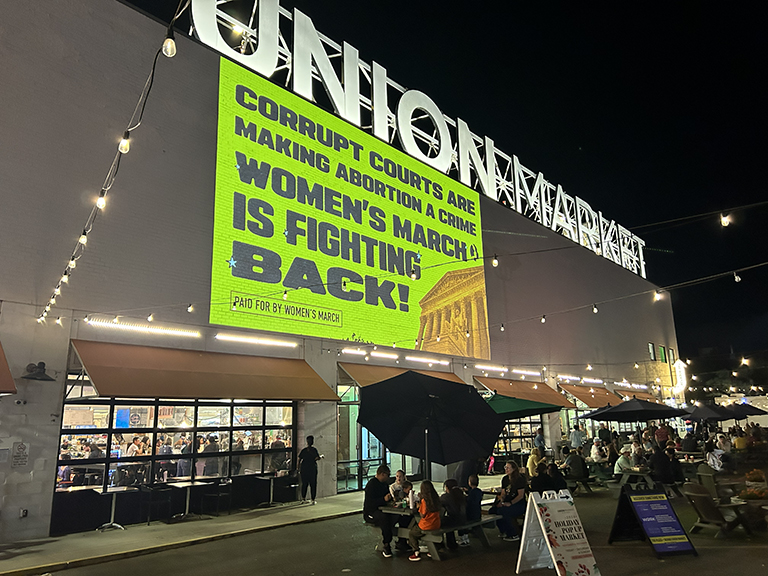
Past AGM clients including The Weeknd, YouTube, Biossance, the US Marine Corps, Women’s March, and Reproductive Freedom for All represent the full range of commercial, cultural, and cause-driven projection campaigns — and each represents a deployment that required the same technical precision, location intelligence, and operational reliability that every San Jose campaign demands.
Coverage & Estimated Impressions
| Zone / Area | Peak Hours | Foot Traffic | Est. Nightly Impressions | Best For |
|---|---|---|---|---|
| Downtown San Jose Arts Corridor Near the SAP Center | 9PM–2AM | Very High | 25,000–120,000 | Product Launch |
| SoMa District | 9PM–2AM | Very High | 25,000–120,000 | Event Promotion |
| Japantown District | 9PM–2AM | Very High | 25,000–120,000 | Brand Awareness |
| Willow Glen Entertainment Zone | 9PM–2AM | Very High | 25,000–120,000 | Political |
Frequently Asked Questions — Guerrilla Projections in San Jose
The SAP Center arena creates San Jose’s most predictable and concentrated evening audience concentration. On event nights — Sharks hockey games, concerts, arena shows — the streets surrounding SAP Center fill with tens of thousands of attendees moving between the arena, downtown restaurants, and the Diridon transit hub. Projection campaigns timed to these events can reach audiences at the scale of a major outdoor placement at a fraction of the cost, because the event itself delivers the audience concentration rather than requiring the location to generate it independently. AGM coordinates campaign timing with the SAP Center event calendar to ensure projection windows align with peak audience flow.
San Jose’s arts corridor is distinctive because it serves a dual function: it is both a genuine creative and cultural district — with the San Jose Museum of Art, the California Theatre, and an independent gallery scene — and a commercial transit corridor connecting the technology-heavy SoMa and downtown office zones to the arena district and residential neighborhoods to the south. This dual function produces a foot-traffic mix that combines the culturally engaged local audience typical of arts districts with the professional transit audience of commercial corridors. Projection campaigns in this zone reach both simultaneously, with creative flexibility to address either demographic depending on the campaign objective.
Yes. SAP Center event nights are among the most requested projection campaign timing windows in San Jose because they guarantee predictable, large-scale audience concentration in the surrounding streets. AGM scouts locations in the SAP Center district specifically for event-night suitability — evaluating pedestrian flow routes, optimal projection surfaces relative to foot traffic direction, and operational vehicle access that doesn’t interfere with event crowd management. For campaigns tied to specific games or events, booking should occur with sufficient lead time to secure AGM’s crew and equipment availability during high-demand event calendar windows.
The technology professional audience in Silicon Valley is resistant to conventional digital advertising — ad-blocking rates, subscription media consumption, and conditioned scrolling behavior all reduce the effectiveness of programmatic and display formats with this demographic. But the same audience that ignores online ads responds strongly to unexpected, high-quality physical brand moments in their daily environment. Technology professionals in San Jose are curious about technical production, attuned to creative quality, and active sharers on professional and personal social networks. A well-executed projection campaign captures their attention at the point where digital defenses are absent — in the physical world — and the socially active portion of that audience carries the campaign further through their own networks.
San Jose’s Japantown is one of only three remaining Japantowns in the United States, making it an inherently distinctive location for brand campaigns that want to engage authentically with cultural significance rather than just demographic targeting. The district’s Jackson Street corridor supports a thriving community of Japanese and Japanese-American restaurants, shops, and cultural institutions that draw Bay Area visitors specifically because of what Japantown represents. Projection campaigns in Japantown benefit from the neighborhood’s reputation as a meaningful place rather than just a commercial corridor, which means the brand association carries a cultural context that more generic urban environments don’t provide. For brands with Japanese, Asian-American, or culturally aware campaign positioning, Japantown offers a location that amplifies that positioning through environmental association.
Willow Glen’s Lincoln Avenue commercial corridor operates as a destination dining and retail district for one of the Bay Area’s most affluent residential communities. The neighborhood’s evening foot traffic is consistent, unhurried — composed of couples and families dining out, couples wine-bar hopping, and local residents on evening walks — which means projection campaigns in Willow Glen encounter an audience with significantly higher dwell time than high-transit commercial corridors. This extended dwell time improves impression quality substantially: viewers at Willow Glen’s pace engage with projection content for longer than fast-moving urban pedestrians, increasing both message retention and social documentation. For premium consumer, lifestyle, and financial services brands targeting high-income Bay Area households, Willow Glen delivers the audience with a level of receptivity that more urban districts don’t match.
Enterprise software companies, cloud infrastructure providers, cybersecurity firms, semiconductor brands, and technology services companies all represent active or likely segments of San Jose’s projection market. These brands face a specific challenge: their target buyers are senior technology professionals who have developed effective personal advertising immunity, particularly to digital formats. Guerrilla projection in the corridors these professionals use daily — the streets between their offices, conference hotels, and restaurant districts — delivers brand impressions in the physical environment where avoidance behaviors don’t apply. The result is genuine brand recall in a demographic that marketing dollars rarely penetrate effectively through conventional channels.
Conference adjacency is one of AGM’s strongest San Jose campaign formats. The San Jose Convention Center hosts a year-round calendar of technology, healthcare, and business conferences that concentrate thousands of senior decision-makers in downtown San Jose for multi-day periods. AGM times projection windows to the specific evening hours when conference programs have concluded and attendees are moving through the surrounding streets to dinner, hotel bars, and evening events. This timing targets the audience at peak social availability — out of sessions, away from conference-center screens, and moving through the city’s pedestrian environment in a relaxed and receptive state.
Silicon Valley’s commute patterns differ meaningfully from other major urban markets. A significant portion of the technology workforce commutes into San Jose by car rather than on foot, which means standard after-work pedestrian foot traffic is lower per capita than in transit-heavy markets like San Francisco. AGM accounts for this by focusing San Jose projection timing on the event-anchored and destination-driven pedestrian concentrations — arena events, conference dinner hours, festival evenings, and the restaurant and bar traffic that draws people to the downtown core by choice rather than by commute route. These destination audiences are more engaged, more stationary, and more socially active than commute-corridor pedestrians, which actually makes them higher-value projection audiences despite lower raw volume.
San Jose’s downtown building stock is predominantly mid-rise rather than high-rise, with a significant portion of the projection-viable surface area concentrated in the two-to-six story range. This scale is well-suited to AGM’s 20,000-lumen system, which produces images that fill mid-rise facades at full brightness and clarity without requiring the extended throw distances that very large buildings demand. The mid-rise scale also creates projection experiences that feel more intimate than skyscraper-scale campaigns — the image sits closer to street level, the viewer’s eye doesn’t have to travel upward significantly to engage with it, and the brand presentation feels less like an advertisement and more like the image belongs in the architectural context. For campaigns prioritizing audience engagement quality over pure impression volume, San Jose’s mid-rise scale is a structural advantage.
San Jose is most effectively treated as one component of a Bay Area multi-market strategy rather than as a standalone market. An AGM Silicon Valley campaign might combine a downtown San Jose activation for arena-event and conference-adjacent audiences with a San Francisco SoMa placement for the broader Bay Area technology audience — giving the brand presence in both the geographic heart of Silicon Valley and the cultural capital of the Bay Area. Multi-market Bay Area campaigns are coordinated from AGM’s national operations infrastructure with support from our California team, and sequential or simultaneous activations across San Jose and San Francisco are structured as a single campaign engagement for logistics and pricing purposes.
Multi-city Bay Area campaigns are coordinated through AGM’s national operations infrastructure with California-specific logistics support. For clients who want simultaneous activations in San Jose and San Francisco on the same evening, AGM deploys independent crew sets and equipment packages in each market, operating under a shared campaign timeline and unified creative strategy. For sequential campaigns — running San Jose one night and San Francisco the next — the same crew and equipment can be repositioned efficiently given the two cities’ proximity on the peninsula. AGM provides a single campaign management contact for multi-city Bay Area activations, eliminating the coordination complexity that would come from managing two separate production teams.
More AGM Outdoor Advertising Services
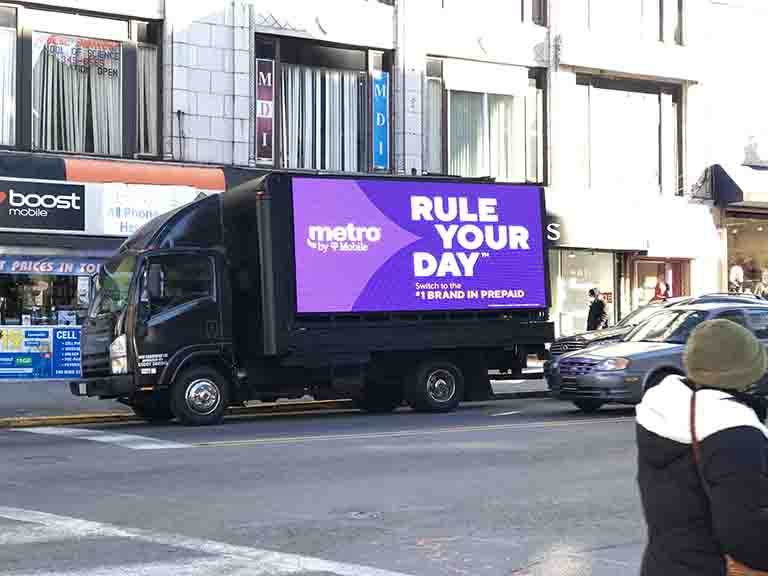
Led Billboard Trucks
Mobile LED displays that bring your brand to any location, any event.
Fly Posting
Street-level poster saturation across walls, construction sites, and corridors.

Sidewalk Decals
Ground-level branded decals at pedestrian hotspots and event entrances.

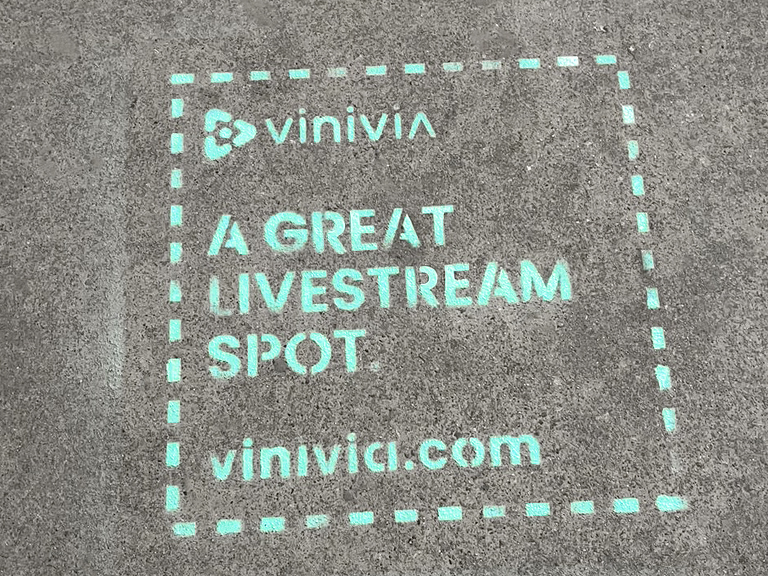
Sidewalk Stencils
Creative stencil campaigns that put your brand in the path of pedestrians.