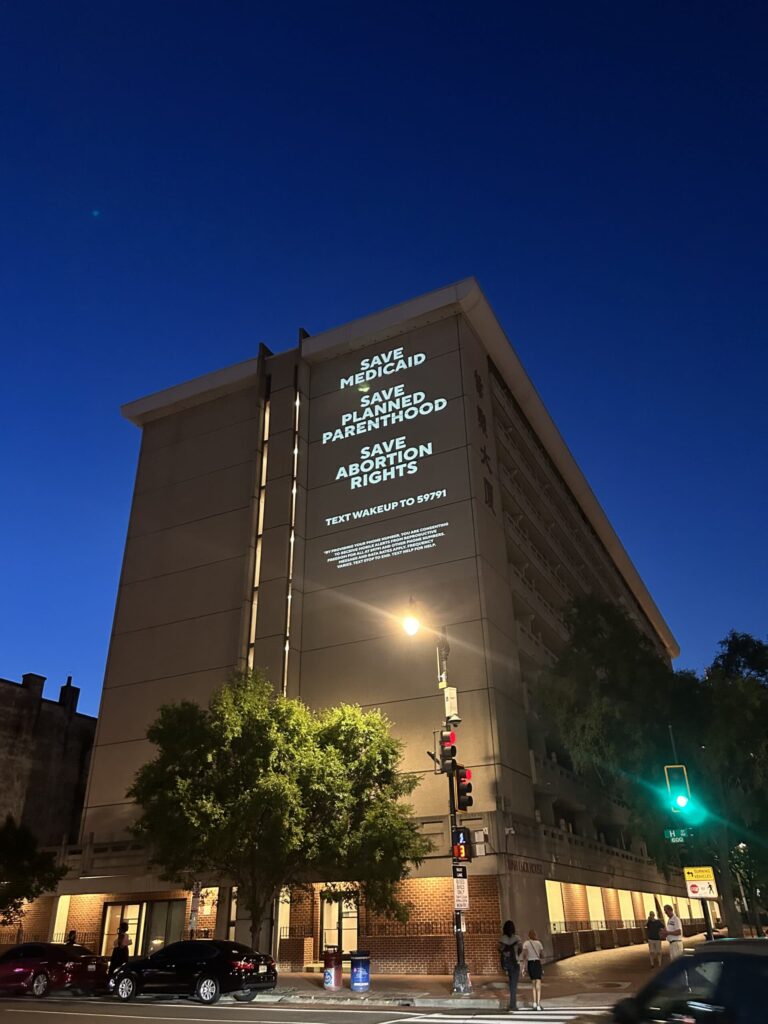
American Guerrilla Marketing
Nationwide Service
Media planning, media buying, billboard advertising, & guerrilla marketing
Guerrilla Projections in Columbia, SC
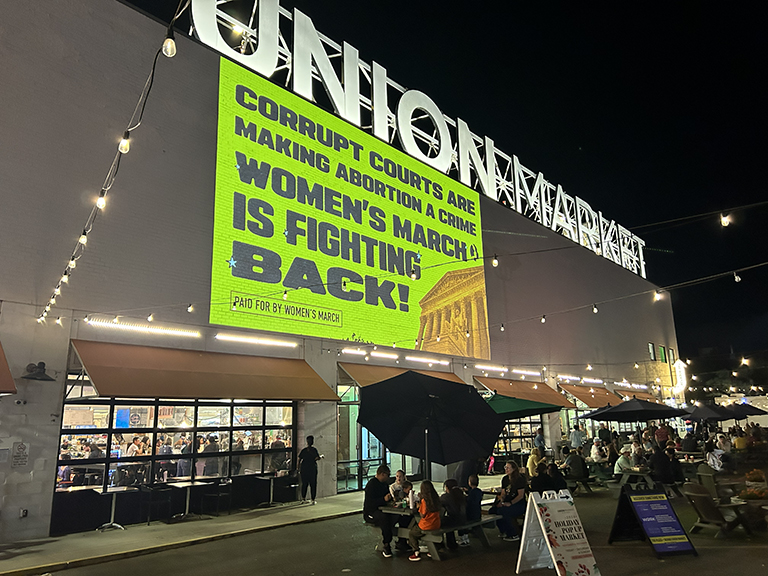
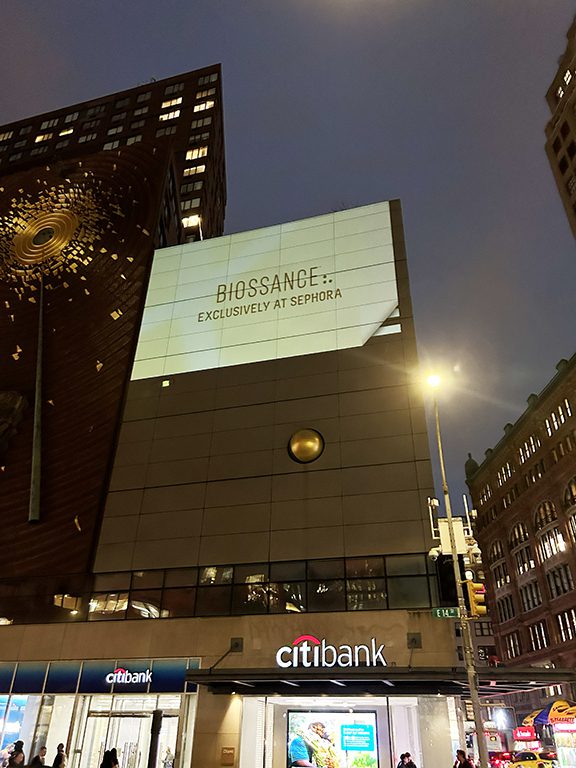
Columbia’s Vista arts and entertainment district puts converted warehouse walls in the middle of one of South Carolina’s highest foot-traffic nighttime corridors. The University of South Carolina’s 35,000 students add the social-media-engaged young adult audience that makes projection documentation travel fast. AGM’s 20,000-lumen system brings it all together on the right wall at the right moment.
Columbia occupies a unique position among South Carolina’s major cities: it is simultaneously the state capital, home to South Carolina’s largest university, and the host to Fort Jackson — one of the Army’s largest basic training installations. That convergence of government, academia, and military creates a population that is diverse in background, concentrated in the entertainment districts around the University of South Carolina campus and the Vista waterfront corridor, and exceptionally active on the social media platforms that amplify building projection campaign documentation. The University of South Carolina’s enrollment of approximately 35,000 students places a massive young-adult population within walking distance of the Vista’s converted warehouse entertainment zone — a population segment that is, on a per-capita basis, the most active social media content generator and the most likely to document and distribute an unexpected visual media experience like a building projection campaign.
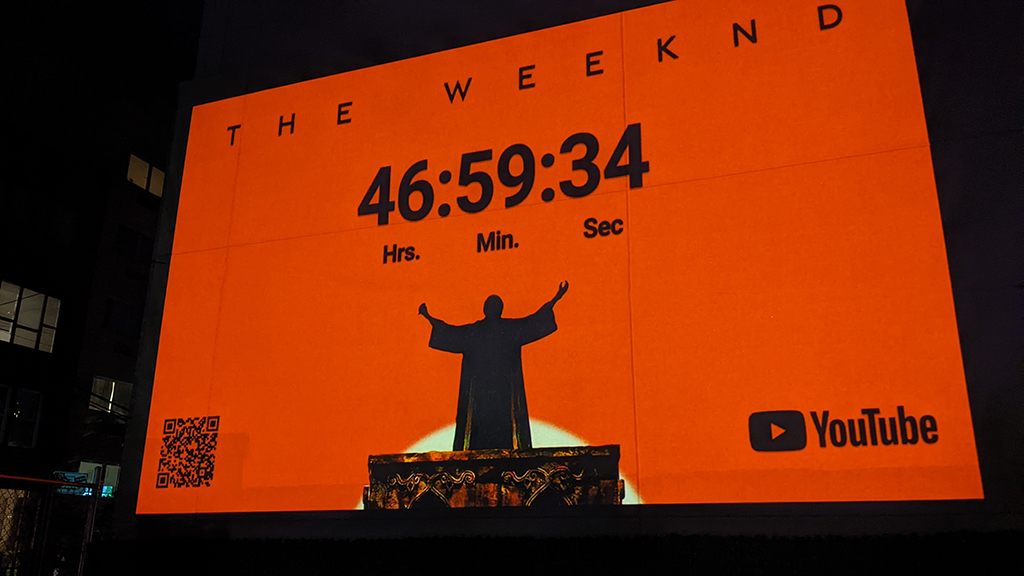
AGM’s projection client roster includes Netflix, Disney, Coca-Cola, FanDuel, Live Nation, iHeartRadio, and the US Marine Corps. A confirmed case study: the US Marine Corps × CMA Fest Nashville — multi-night projections onto architectural surfaces throughout the festival footprint, reaching 80,000+ attendees across the campaign window. Projection advertising scales across every brand category; what our campaigns share is scale, precision, and a physical presence digital cannot replicate.
The Vista — Columbia’s primary arts and entertainment district, occupying converted warehouse buildings along Gervais Street and adjacent corridors on the west bank of the Congaree River — provides projection surface inventory that directly parallels the most productive projection environments in more celebrated Southern cities. Former warehouse and commercial buildings with large exterior wall planes, minimal fenestration on non-entry elevations, and the authentic industrial character of the district’s converted manufacturing heritage create the physical conditions for projection campaigns at scale. When those surfaces are paired with the Vista’s density of restaurants, bars, and entertainment venues — and the consistently high Friday and Saturday evening foot traffic they generate — the result is one of South Carolina’s strongest guerrilla projection environments, and one whose university-demographic audience carries campaign documentation through social platforms at rates that commercial-audience-only corridors cannot match.
Put Columbia's Warehouse Walls to Work
The Vista. Main Street. Congaree Vista warehouse zone. Cottontown. Columbia's converted warehouse and arts district walls deliver a university audience, a government professional audience, and a military community that no other South Carolina city combines in one market. Contact AGM to plan your Columbia guerrilla projection campaign.
Our Campaign Locations
Browse Cities in South Carolina
Select a city to explore Guerrilla Projections opportunities.
Columbia's Vista — Where The Warehouse Walls Are
The Vista’s development as an arts and entertainment district was made possible by the same characteristic that makes it a projection advertising asset: the former warehouse buildings that defined the corridor’s pre-gentrification character provided both the adaptive reuse opportunities that attracted restaurants and bars and the blank exterior wall surfaces that now serve as projection canvases. The district’s former warehouse and light-industrial buildings along Gervais Street, Lady Street, and the surrounding blocks carry exterior surfaces in the conversion-era condition — painted or raw brick, smooth stucco sections, former loading dock elevations — that range in projection quality from excellent to workable depending on the specific building and its current surface condition.
AGM’s Vista scouting process evaluates the district’s wall inventory through the same criteria applied across the national network: surface size, surface quality (smooth and light-toned preferred over rough and dark), window interruption density, projector positioning options from the street and parking infrastructure, and pedestrian sight-line geometry relative to the primary foot-traffic flow. The Vista’s grid provides multiple approach geometries for many of its candidate walls — corner buildings with blank side-wall faces visible from two street directions, mid-block warehouse structures with clear projector access from the Congaree Vista park and river access areas, and former loading dock bays with large wall sections accessible from the adjacent alley and parking zone. The scouting phase identifies the specific wall-projector combination that maximizes image size, image quality, and audience sight-line exposure for each campaign’s specific target location within the district.
Columbia's Projection Zones — A District-by-district Guide
The Vista Arts and Entertainment District
The Vista is Columbia’s premier projection zone — a converted warehouse entertainment district where the building facades of former commercial and industrial structures face a pedestrian zone dense with restaurants, bars, and nightlife venues. The district’s evening foot traffic concentrates most heavily on the Gervais Street and Pulaski Street corridors between the Main Street intersection and the Congaree River, with the strongest density on Friday and Saturday evenings from approximately 6:00 PM through midnight. Former warehouse buildings on Gervais Street and adjacent blocks carry the district’s best projection surfaces — multi-story masonry exteriors with large blank wall sections, some painted in light tones that produce excellent projection brightness, others in raw brick that produce a warmer and more textured but still fully viable projection result. AGM’s Vista wall inventory includes documented surfaces with projection dimensions ranging from 30 to 70 feet in width at two to four stories of height, confirmed during prior scouting cycles with current surface condition verification conducted for each new campaign engagement.
Main Street Arts Corridor
Columbia’s Main Street runs through the heart of the downtown commercial district and connects the state capital’s government and institutional buildings to the Vista and USC campus at its southern and western approaches. The corridor’s arts and entertainment component — galleries, music venues, restaurants, and bars concentrated in the blocks between Blanding Street and the Vista gateway — provides a secondary projection zone with building facades of mixed commercial construction: some former commercial buildings of the early-to-mid twentieth century with projection-viable exterior surfaces, others of more recent commercial construction with panel and glass facades that do not support projection. AGM’s Main Street scouting identifies the buildings within the corridor with viable surfaces and adequate projector positioning access, which are typically the former commercial and light-industrial structures on the corridor’s blocks rather than the newer institutional and commercial buildings that make up an increasing share of Main Street’s contemporary facade character.
Congaree Vista Warehouse Zone
The Congaree Vista warehouse zone occupies the blocks adjacent to the Congaree Riverfront on the western edge of the Vista district, where the densest concentration of former warehouse and industrial buildings in the corridor carries the most consistently large and uninterrupted exterior wall surfaces available in the Columbia market. Buildings in this zone tend to be older than the Vista’s primary entertainment corridor — many date from the early-to-mid twentieth century commercial and transportation infrastructure that served Columbia’s railroad and river freight economy — and their exterior conditions reflect a range of maintenance histories that the scouting process evaluates on a case-by-case basis. The best Congaree Vista warehouse surfaces combine the large dimensions of genuine former industrial construction with exterior conditions — painted brick, smooth masonry coatings — that produce strong projection reflectivity. The warehouse zone’s proximity to the Congaree Riverfront provides projector positioning options from the open river access areas that allow approach geometries not available within the tighter grid of the Vista’s primary entertainment corridor.
The Cottontown Neighborhood
Cottontown is a historic residential and commercial neighborhood immediately north of the Vista, characterized by a mix of nineteenth and early-twentieth century commercial buildings and residential structures along its primary corridors. The neighborhood’s former commercial buildings carry brick exterior walls with the same projection-viable characteristics as the Vista’s warehouse stock, at somewhat smaller scale and in a more community-oriented, lower-foot-traffic context. Cottontown is best suited to projection campaigns targeting Columbia’s engaged local residential community — arts organizations, advocacy campaigns, and brands seeking authentic neighborhood character — rather than campaigns requiring maximum direct foot-traffic viewership from the Vista’s entertainment-corridor density. The neighborhood’s proximity to the Vista makes Cottontown deployments effective as a secondary component of multi-night Columbia campaigns that want to reach both the entertainment corridor audience and the local community context in successive campaign evenings.
Plan Your Guerrilla Projection Campaign in Columbia, SC
Tell us about your campaign goals, target audience, and preferred locations. Our team will help you plan a high-impact guerrilla projection campaign tailored to your needs.
Award Winning Personalized Service
You will get thoughtful, devoted, and individualized attention from our experienced, qualified, and professional personnel. Being one of the most illustrious agencies in Brooklyn, New York, American Guerrilla Marketing has been awarded the Best of Brooklyn title.
Nationwide
Industry City, Brooklyn, New York 11232
American Guerrilla Marketing
Hours
Mon - Fri: 9 AM - 5 PM
Sat & Sun: Closed
Automate your campaign with AGM’s Request for Proposal Builder.
Automate your campaign with AGM’s Request for Proposal Builder. Simply answer a few quick questions about your campaign goals, markets, and timeline, and the system will generate a tailored presentation with recommended strategies, quantities, and pricing. Click the RFP Builder to instantly receive your customized proposal.
Creative Formats That Perform in the Columbia Market
University-Demographic Brand Campaigns
The University of South Carolina’s 35,000-student enrollment places Columbia’s largest social media audience segment within the Vista’s walking distance on every evening of the academic year. Consumer brands, entertainment companies, and technology platforms targeting the 18-to-24 demographic use Vista projections to reach this audience in its primary off-campus entertainment zone, generating documentation rates and social distribution speeds that reflect the USC student population’s above-average social media activity.
Government and Institutional Campaigns
Columbia’s role as South Carolina’s state capital concentrates government agencies, advocacy organizations, lobbyists, and institutional stakeholders in the downtown and Vista corridors throughout the legislative session and advocacy calendar. State-level advocacy campaigns, public health and safety campaigns, and government institutional communications use Columbia building projections to reach this concentrated professional and political audience in the entertainment and dining zones where they socialize after working hours.
Military and Defense Brand Campaigns
Fort Jackson’s presence in the Columbia metro area — one of the Army’s largest and most active basic training installations — contributes a substantial military and military-family population to the Columbia entertainment audience. Military service branches, defense brands, and veteran-serving organizations use Vista projections to reach active-duty personnel, recent veterans, and military-adjacent families in their primary off-base entertainment environment, delivering institutional and brand messages with the authenticity of an in-community placement.
Entertainment and Sports Campaigns
Columbia’s major events calendar — USC Gamecock football at Williams-Brice Stadium, basketball at Colonial Life Arena, concerts and events at the arena and at Segra Park — creates predictable high-density audience windows throughout the year. Entertainment and sports brands timing campaigns to major event dates reach concentrated audiences of tens of thousands of Gamecock fans and event-goers in the Vista and surrounding entertainment zones before and after major events.
Building A Columbia Projection Campaign — Process And Timeline
Vista Scouting and Wall Confirmation
AGM’s Columbia scouting process draws on existing Vista district knowledge from prior campaign cycles while conducting fresh surface verification for each new campaign engagement. The Vista’s warehouse building stock changes in surface condition as buildings are renovated, repainted, or modified for new tenants, making current physical verification important even for buildings previously documented in AGM’s Columbia inventory. The scouting phase covers Gervais Street, Lady Street, and the Congaree Vista warehouse zone, with additional evaluation of Main Street candidate buildings for campaigns targeting that corridor. The scouting phase is priced at approximately Contact us for a custom quote. for Columbia markets where current verified inventory is insufficient for the campaign’s wall requirements.
Creative and Technical Calibration
Columbia Vista warehouse buildings carry brick exterior surfaces that are typically warmer in tone than the light stucco or painted plaster surfaces that produce the most vivid projection results in other markets. AGM’s creative guidance for Columbia Vista campaigns recommends color palettes and contrast treatments that perform well on brick tones — bold, high-contrast graphic treatments that read strongly against the warm brick background rather than competing with it. For specific Vista buildings with painted or stucco-clad exteriors, standard creative specifications apply with color and contrast optimization for the confirmed surface. The creative template for any Columbia campaign is locked to the confirmed wall dimensions before any creative development begins, ensuring that the delivered projection is sized correctly for the specific surface rather than requiring adjustment on the campaign night.
Campaign Night and Post-Campaign Delivery
AGM’s crew activates the self-contained 20,000-lumen system at the confirmed Columbia position at effective darkness, running the campaign through the Vista’s peak foot-traffic window. Post-campaign documentation — GPS records, timing logs, and professional still photography from multiple angles — is delivered within forty-eight hours. For Vista campaigns timed to major USC or arena events, AGM captures documentation that includes both the projected building surface and the event-night ambient environment, producing campaign imagery that tells the story of the projection in the context of the Columbia entertainment and sports culture that surrounds it.
Military Brand Projection at Scale — The US Marine Corps × CMA Fest Nashville
When AGM deployed the United States Marine Corps campaign at the Country Music Association Festival in Nashville, the projection reached one of the largest and most demographically coherent single-event audiences in the American South. The CMA Fest draws hundreds of thousands of country music fans to Nashville over its multi-day programming, with a demographic profile — rural and suburban Southern, military-adjacent and military-sympathetic, community-oriented and strongly patriotic — that aligns with the Marine Corps’s recruitment and institutional brand communication objectives more precisely than any conventional media placement could achieve. The projection operated in the direct visual field of that concentrated, pre-engaged audience during peak festival evening hours, generating documentation that circulated through the social networks of an audience whose geographic distribution spans the rural and suburban South — precisely the territory where Marine Corps recruiting has its highest per-capita yield.
Columbia’s military audience presents an analogous opportunity with specific South Carolina character. Fort Jackson’s basic training mission brings tens of thousands of recruits through the Columbia area annually, leaving behind a community of graduates, families, and veterans with strong institutional Marine Corps and Army connection. A projection campaign in the Vista timed to a Fort Jackson graduation weekend — when military families from across the state converge on Columbia’s entertainment zones for celebratory dining and social activity — reaches a military-affiliated audience with the precision and authenticity that the CMA Fest deployment achieved in Nashville. For brands with military brand alignment, veteran-serving missions, or institutional relationships with the armed forces, Columbia’s Fort Jackson-generated military community concentration makes it the most strategically valuable projection market in South Carolina for military-focused campaign objectives.
Columbia Projection Advertising — Investment Breakdown
Guerrilla projection campaigns in Columbia are priced at contact us for a quote. The rate covers the complete AGM deployment system: the 20,000-lumen commercial projection unit, generator and power solution, electronics bundle, mobility unit, and the two-person technical crew for setup, full operation, and breakdown. The system is self-contained — no external electrical connection or venue coordination is required for standard Vista or Main Street deployments.
For Columbia campaigns where AGM holds current Vista district scouting records, the advance scouting phase may be abbreviated or waived depending on the currency of the existing documentation. Fresh scouting for Columbia campaigns without current inventory documentation adds approximately contact us for pricing. Private-property access for Congaree Vista warehouse zone campaigns requiring coordination with building management adds Contact us for a custom quote. per night based on specific access parameters. Multi-night Columbia campaigns are priced at the per-night rate with logistics coordinated across the full campaign run.
Who Uses Guerrilla Projection Campaigns in Columbia
Columbia’s projection advertising clients reflect the city’s distinctive convergence of university, government, and military audiences. Consumer brands targeting the USC student demographic — entertainment, technology, lifestyle, and food and beverage categories — use Vista projections for launch and awareness campaigns timed to the academic calendar. State and federal government agencies and advocacy organizations use Main Street and Vista placements for public awareness campaigns targeting the state capital’s professional and political community. Military brands and veteran-serving organizations use Vista campaigns timed to Fort Jackson graduation windows and military-family events. Sports and entertainment brands use the Vista for Columbia’s major event windows — Gamecock football and basketball, Colonial Life Arena concerts — when the entertainment district’s foot traffic peaks with tens of thousands of sports and event fans.
Frequently Asked Questions
The Vista combines the physical requirements for strong projection results — converted warehouse buildings with large exterior wall planes, minimal window interruptions, and accessible projector positioning from the street and parking infrastructure — with the audience conditions that make projection campaigns commercially productive: consistent high-density Friday and Saturday evening foot traffic from the district’s restaurant and bar concentration, a university-affiliated young adult audience with high social media documentation propensity, and a corridor character that makes an unexpected visual media event feel like an extension of the district’s creative identity rather than an intrusion.
The Congaree Vista warehouse zone carries the Vista district’s best building surface inventory — the oldest and largest former commercial and transportation buildings in the corridor, with the most consistently large wall sections — but lower direct pedestrian foot traffic than the Gervais Street and Lady Street entertainment concentration. It is the stronger choice for campaigns prioritizing maximum projection image size and the visual authority of genuine former warehouse architecture, while the Vista’s primary entertainment corridor is stronger for campaigns prioritizing maximum direct audience density and social documentation from the bar and restaurant pedestrian flow. Many Columbia campaigns combine elements of both zones in the scouting evaluation to find the optimal balance of surface quality and audience access.
Columbia’s Main Street generates consistent evening foot traffic in the arts and entertainment block concentration between Blanding and the Vista gateway, with Friday and Saturday evenings producing the strongest pedestrian density. The USC calendar affects Main Street foot traffic significantly — home football game weekends produce extraordinary pedestrian concentrations throughout downtown and the Vista, while semester breaks reduce the student-generated baseline. State legislative session periods bring a secondary professional audience to Main Street’s lunch and dinner service that carries into the early evening, providing a weekday foot-traffic supplement to the weekend peak that the student audience dominates.
Yes, for campaigns targeting Columbia’s local residential and arts community rather than the Vista’s entertainment-corridor volume. Cottontown’s community character — established Columbia residents, arts-engaged professionals, and neighborhood businesses — provides a projection audience with high local engagement and strong community social network connectivity. Projection campaigns in Cottontown perform particularly well for arts organizations, local business launches, and advocacy campaigns seeking to reach Columbia’s engaged residential community in its own neighborhood context rather than in the tourist and visitor-oriented entertainment corridor of the Vista.
Columbia’s brand mix for projection advertising reflects the city’s university, government, and military character. Consumer lifestyle, entertainment, and technology brands target the USC student demographic with Vista projections timed to the academic calendar. Government communications and advocacy organizations target the state capital’s professional and political community. Military and defense brands target the Fort Jackson military community in the Vista’s entertainment zone. Sports and entertainment brands target Gamecock fans and Colonial Life Arena event audiences on major event days. Food and beverage brands launching in the South Carolina market use the Vista’s young adult consumer concentration for launch campaigns that generate statewide social distribution through the USC student network.
The University of South Carolina’s 35,000-student enrollment creates one of the most projection-receptive audience segments available in any South Carolina market. USC students — concentrated in the Vista and adjacent entertainment zones on Thursday, Friday, and Saturday evenings throughout the academic year — are above-average social media content generators with strong visual documentation habits and platforms with reach that extends through student networks to home communities across South Carolina and the broader Southeast. A projection campaign timed to a major USC event — a home football weekend, a campus-wide awareness campaign moment — reaches this concentrated, high-sharing audience at its most active and most interconnected moment of the academic calendar.
The Vista’s building stock presents primarily brick masonry exterior surfaces in tones ranging from red to tan, reflecting the varied construction history of the district’s former warehouse and commercial buildings. The most projection-favorable surfaces in the Vista are the buildings with painted exterior masonry — where a light-toned exterior paint coat significantly improves the reflectivity of the underlying brick surface — and the occasional smooth stucco or EIFS-clad exterior that appears on some of the corridor’s mid-twentieth century commercial buildings. Raw unpainted brick in darker tones, while common, produces a workable but lower-brightness projection result that AGM’s creative guidance addresses with contrast and color palette recommendations specific to the surface tone.
Yes. AGM’s Columbia campaign planning process incorporates the Colonial Life Arena and Williams-Brice Stadium event calendars when designing campaign timing for maximum audience concentration. Major USC Gamecock football home games at Williams-Brice concentrate tens of thousands of fans in the Vista and surrounding entertainment zones before and after each game. Colonial Life Arena concerts, basketball games, and special events create similar but smaller-scale audience concentrations that drive Vista foot traffic on specific event evenings throughout the year. AGM identifies the highest-yield event-timing windows for any Columbia campaign based on the confirmed projection zone and the event calendar’s density in the planning period.
The Vista reaches its peak pedestrian density between 7:00 and 10:30 PM on Friday and Saturday evenings, with the sharpest concentration occurring in the 8:00 to 10:00 PM window as dinner service peaks and the bar and nightlife portion of the evening begins. On USC football game days, the Vista’s peak density occurs in the several hours following game conclusion — timing that varies by kickoff time and game duration but typically produces the heaviest foot traffic between 6:00 and 9:00 PM for afternoon and early-evening games, or 9:00 PM to midnight for evening kickoffs. AGM calibrates projection activation timing to the specific event or standard evening peak based on the confirmed campaign date and timing context.
Columbia’s outdoor advertising regulations are primarily directed at permanent and semi-permanent sign installations — billboards, building-mounted signs, and similar fixed structures. Temporary projection campaigns from mobile units occupy a distinct regulatory category that is not specifically governed by Columbia’s standard sign regulations, operating instead under general public-space use provisions that vary by specific location and campaign parameters. AGM navigates Columbia’s applicable regulatory environment for each campaign deployment location, confirming the applicable rules for the confirmed position before the campaign is scheduled. For Vista district campaigns, the commercial entertainment zoning of the corridor generally provides a permissive regulatory context for standard mobile-unit projection operations.
Most first-time Columbia projection advertisers deploy one to two nights as an initial campaign. A single night confirms the format’s operational performance in the Columbia market and produces the initial documentation and social distribution that demonstrates earned media value. Two consecutive nights compound the documentation reach — the second night benefits from word-of-mouth and social sharing generated on the first night, which drives additional foot traffic from residents and students who heard about the campaign from their social networks. For campaigns tied to a specific USC event weekend or a major Vista programming moment, two nights aligned with the event window are typically more productive than a single night at a non-event time, even for a first-time market entry.
Our Campaign Locations
Browse All States
Explore Guerrilla Projections opportunities across the United States.
49 States • 192 Cities
More AGM Outdoor Advertising Services
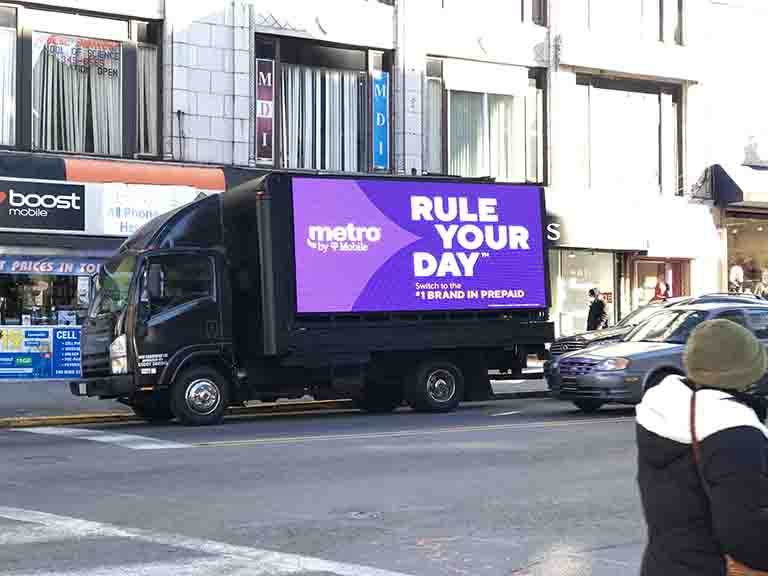
Led Billboard Trucks
Mobile LED displays that bring your brand to any location, any event.
Fly Posting
Street-level poster saturation across walls, construction sites, and corridors.

Sidewalk Decals
Ground-level branded decals at pedestrian hotspots and event entrances.

Sidewalk Stencils
Creative stencil campaigns that put your brand in the path of pedestrians.