American Guerrilla Marketing
Nationwide Service
Media planning, media buying, billboard advertising, & guerrilla marketing
Guerrilla Projections in Charleston, SC

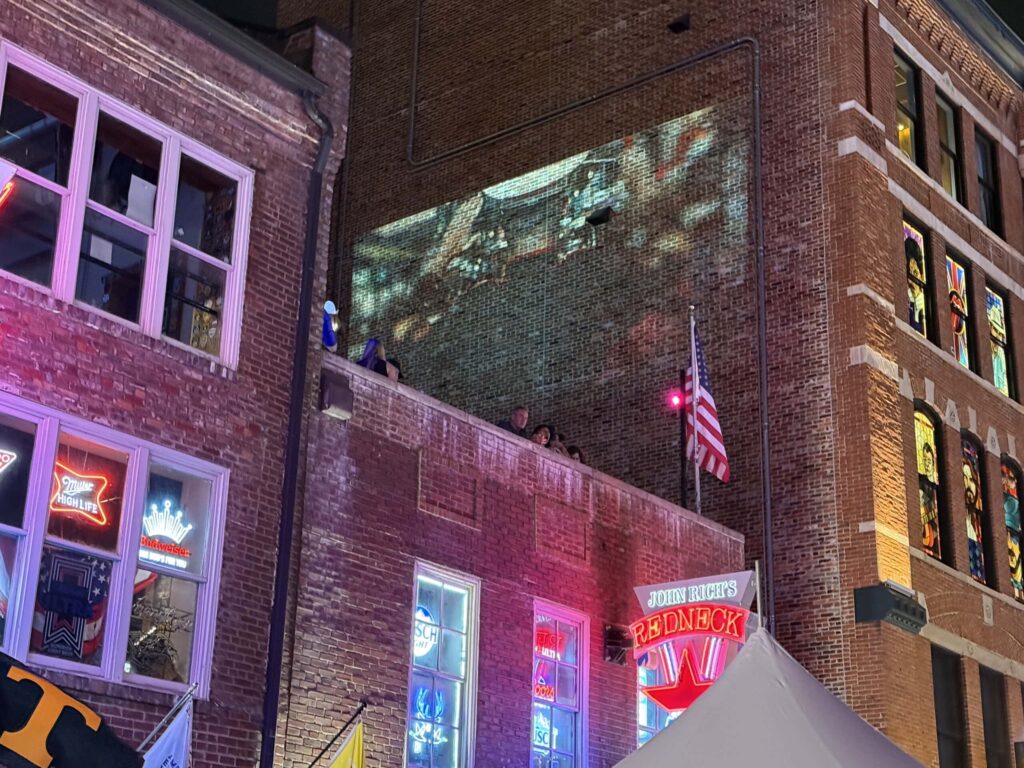
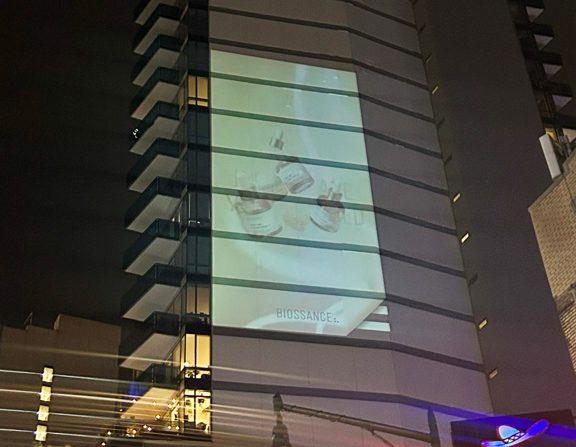
Upper King Street’s vibrant pedestrian zone carries blank building faces that light up beautifully after dark. The former Navy Yard at Noisette adds industrial-scale walls that dwarf anything in the city’s historic district. Charleston attracts visitors from across the country — and a well-placed projection gives your campaign a nationally distributed earned media moment from a single South Carolina deployment.
Charleston is one of the most visited cities in the American South — a nationally recognized culinary, hospitality, and cultural destination that draws tourists, food enthusiasts, and weekend travelers from across the country to its historic streets, vibrant restaurant scene, and walkable entertainment corridors. That visitor diversity, combined with an engaged local arts and professional community, creates a guerrilla projection audience with an unusually wide geographic distribution: the organic social documentation from a well-placed Charleston projection circulates through social networks anchored in Atlanta, Charlotte, Washington, New York, and dozens of other markets whose residents have visited or plan to visit Charleston, amplifying the campaign’s earned media reach well beyond the local audience who sees it directly.
AGM’s projection client roster includes Netflix, Disney, Coca-Cola, FanDuel, Live Nation, iHeartRadio, and the US Marine Corps. A confirmed case study: the US Marine Corps × CMA Fest Nashville — multi-night projections onto architectural surfaces throughout the festival footprint, reaching 80,000+ attendees across the campaign window. Projection advertising scales across every brand category; what our campaigns share is scale, precision, and a physical presence digital cannot replicate.
AGM has executed guerrilla projection campaigns for brands including Netflix, Disney, and FanDuel — deploying high-impact visual activations onto architectural surfaces in major markets nationwide.
Upper King Street has emerged as the commercial and cultural anchor of contemporary Charleston — a corridor of nationally recognized restaurants, boutique retailers, bars, and creative businesses that draws both locals and visitors through a walkable pedestrian zone with genuine blank-wall projection real estate. The former Navy Yard at Noisette, a decommissioned shipyard complex on the peninsula, adds a completely different projection scale opportunity: former industrial and ship maintenance buildings with wall faces at dimensions that no commercial building on Upper King Street can approach, in a setting that carries the weight and character of a major piece of American naval and industrial history. Together, Upper King Street and the Navy Yard define Charleston’s projection landscape as a market with both the density and intimacy of a thriving entertainment corridor and the architectural drama of an extraordinary industrial heritage.
Charleston's Walls — Your Campaign
Upper King Street. Cannonborough-Elliotborough. North Morrison. The Navy Yard at Noisette. Charleston's projection zones reach the national tourism audience, the local arts community, and the military-heritage context that no other South Carolina city can provide. Contact AGM to plan your Charleston building projection campaign.
Browse Cities in South Carolina
Select a city to explore Guerrilla Projections opportunities.
Charleston's Upper King Street — Why This Corridor Changes Everything
Upper King Street’s transformation from a light-industrial and commercial service corridor to one of the South’s premier restaurant and entertainment destinations is the central fact of Charleston’s projection advertising story. The corridor’s former commercial and warehouse buildings were not demolished when the neighborhood transformed — they were adapted, repurposed, and in many cases simply fitted with new tenants while their exterior walls remained as they were. The result is a pedestrian entertainment zone with the culinary and social energy of a major metropolitan corridor and the physical infrastructure of a former light-industrial district: blank brick and plaster building facades, multi-story wall planes, and projector sight-line geometry accessible from the street and adjacent parking areas.
Upper King Street’s foot traffic profile adds another dimension of campaign value. On Thursday, Friday, and Saturday evenings, the corridor concentrates thousands of pedestrians — a mix of Charleston residents, regional visitors, and national tourists — in a dense pedestrian zone where outdoor visual media is not a routine part of the experience. The neighborhood’s culinary identity creates an audience orientation that is fundamentally different from a standard entertainment district: these are people who travel specifically to dine, to experience, and to document the experience for social sharing. That documentation propensity — already primed by the food culture social sharing habits of the culinary tourism audience — is directly transferable to an unexpected visual media moment on a building wall. A projection on Upper King Street is not just reaching a large audience; it is reaching an audience that is already in a social-sharing mode and already documenting its Charleston experience for distribution to home social networks.
Charleston's Best Projection Surfaces — District By District
Upper King Street Arts and Entertainment Corridor
Upper King Street between Cannon Street and Spring Street represents Charleston’s highest-density evening foot traffic zone for projection advertising purposes. The corridor’s building stock — former commercial and light-industrial structures of the late-nineteenth and early-twentieth century — carries exterior wall faces of brick, plaster, and painted stucco that vary in projection quality from building to building. The most projection-favorable surfaces on Upper King Street are the blank side-wall and upper-floor facades of the corner commercial buildings and former warehouse structures that face the primary pedestrian flow from positions accessible to a projector in the street or adjacent parking zone. Light-painted plaster and stucco exteriors on some of the corridor’s mid-block buildings produce the most vivid projection results, with AGM’s 20,000-lumen output reflecting at near-maximum brightness and color accuracy. AGM’s Upper King Street scouting evaluates each candidate wall for surface quality, projector access geometry, and pedestrian sight-line orientation before confirming any campaign placement in the corridor. The historic preservation character of the neighborhood requires particular attention to sight-line geometry — projection from positions within the historic district must account for the visual context of adjacent preserved structures.
Cannonborough-Elliotborough Historic Neighborhood
Cannonborough-Elliotborough, adjacent to Upper King Street and defined by its blocks of nineteenth-century residential and small commercial buildings, provides a projection context with a distinctly different character from Upper King Street’s restaurant-and-nightlife energy. The neighborhood’s pedestrian scale — narrow streets, tree-lined sidewalks, a mix of residential and small commercial uses — creates an intimate projection environment where a building projection lands not as one media event among many but as the visual centerpiece of a block. Building facades in Cannonborough-Elliotborough include the side and rear walls of commercial buildings fronting onto Upper King Street, as well as the exterior walls of former commercial and light-industrial buildings within the neighborhood grid. The neighborhood’s character makes it particularly suited to campaigns with a community-oriented, local-resonance quality — arts organizations, neighborhood businesses, and advocacy campaigns that want to connect with Charleston’s engaged local residential community rather than the broader tourist and visitor audience.
The North Morrison Arts District
The North Morrison corridor on the upper peninsula is an emerging arts district in transition — a zone of former industrial and commercial buildings being activated by artists, creative businesses, and arts organizations in a neighborhood whose physical character retains the functional industrial aesthetic of its manufacturing and warehousing past. The building facades along North Morrison and adjacent blocks are typically of the type that makes strong projection surfaces: large, relatively plain brick and masonry exteriors with minimal decorative treatment, significant wall sections without window interruptions, and projector positioning access from the street and surrounding commercial and industrial sites. For campaigns targeting Charleston’s arts community and the culturally engaged young professional demographic, North Morrison provides a more authentic, less tourist-oriented projection context than Upper King Street — a zone where a building projection registers as an arts district event rather than a commercial activation in a tourist entertainment corridor.
The Former Navy Yard at Noisette
The former Navy Yard at Noisette is among the most extraordinary projection surface environments available in South Carolina. Decommissioned in the 1990s and subsequently redeveloped as a mixed-use district on the upper Charleston peninsula, the Navy Yard campus retains former ship maintenance buildings, warehouse structures, and naval industrial facilities with exterior wall faces of a scale and character that no commercial building district in South Carolina can replicate. Individual building wall sections at the Navy Yard span multiple stories of continuous masonry or structural steel exterior at dimensions of 60 to 150 feet or more in width — surfaces capable of holding projection images at truly monumental scale that are visible from distances of several hundred feet across the campus and adjacent waterfront. Access and logistics at the Navy Yard require advance coordination with campus property management, which AGM handles as part of the campaign planning process. For campaigns requiring maximum projection scale, or seeking the visual authority of a historic military-industrial setting, the Navy Yard at Noisette provides a projection environment that is unique in the Southeast.
Plan Your Guerrilla Projection Campaign in Charleston, SC
Tell us about your campaign goals, target audience, and preferred locations. Our team will help you plan a high-impact guerrilla projection campaign tailored to your needs.
Award Winning Personalized Service
You will get thoughtful, devoted, and individualized attention from our experienced, qualified, and professional personnel. Being one of the most illustrious agencies in Brooklyn, New York, American Guerrilla Marketing has been awarded the Best of Brooklyn title.
Nationwide
Industry City, Brooklyn, New York 11232
American Guerrilla Marketing
Hours
Mon - Fri: 9 AM - 5 PM
Sat & Sun: Closed
Automate your campaign with AGM’s Request for Proposal Builder.
Automate your campaign with AGM’s Request for Proposal Builder. Simply answer a few quick questions about your campaign goals, markets, and timeline, and the system will generate a tailored presentation with recommended strategies, quantities, and pricing. Click the RFP Builder to instantly receive your customized proposal.
Campaign Types That Work in the Charleston Market
Culinary and Hospitality Brand Campaigns
Charleston’s nationally recognized culinary identity makes it one of the best markets in the Southeast for food, beverage, and hospitality brand campaigns. A projection on Upper King Street reaches an audience that is fundamentally oriented toward culinary and hospitality experiences — tourists who came specifically to eat and drink well, local residents who define their social lives around the corridor’s restaurant culture. Brands in these categories land in their most receptive possible audience context with a Charleston Upper King Street projection.
Tourism and Destination Marketing
Charleston’s geographic position as a nationally known tourism destination makes it uniquely valuable for regional tourism campaigns: a projection on Upper King Street reaches tourists from dozens of markets simultaneously, with each visitor carrying organic social documentation of the campaign back to their home market and social network. State and regional tourism boards, destination marketing organizations, and hospitality brands use Charleston projections to reach national audiences at their point of experiential concentration.
Consumer Brand and Retail Launches
National consumer brands entering the South Carolina market, or establishing presence with the Southeast’s growing affluent-lifestyle demographic, use Upper King Street projections to generate cultural credibility in the city that defines the region’s culinary and lifestyle identity. A brand that projects on Upper King Street is positioning itself within Charleston’s cultural authority — a position that carries weight with the Southeast’s aspirational consumer segment well beyond the immediate Charleston market.
Large-Format Institutional Campaigns
The Navy Yard at Noisette’s monumental building scale makes Charleston uniquely suited to campaigns requiring projection images at architectural dimensions not achievable in any conventional Charleston neighborhood context. Institutional clients, military brands, arts organizations, and advocacy campaigns seeking maximum physical projection scale use the Navy Yard for deployments that produce images visible from extraordinary distances across the campus and waterfront.
How A Charleston Building Projection Campaign Is Planned And Executed
Charleston Scouting and Surface Verification
AGM’s Charleston scouting process maintains separate evaluation tracks for Upper King Street, Cannonborough-Elliotborough, North Morrison, and the Navy Yard at Noisette — each zone with distinct physical characteristics and access requirements. Upper King Street scouting focuses on blank-wall building faces accessible from street-level projector positions, with attention to Charleston’s historic preservation context and the clearance requirements that apply in proximity to historic structures. North Morrison scouting covers the emerging district’s former industrial building inventory, which changes more rapidly than the established Upper King Street corridor as new arts tenants activate previously underused buildings. Navy Yard access requires advance coordination with campus management and is handled during the planning phase for campaigns targeting that location. The scouting phase for Charleston markets is priced at approximately contact us for a quote. for campaigns entering locations without current confirmed AGM wall inventory.
Campaign Night Execution
AGM’s two-person crew deploys the self-contained 20,000-lumen system at the confirmed Charleston position before dusk, aligns and calibrates the projection against the confirmed wall surface, and activates the image at the onset of effective darkness — which occurs earlier in Charleston’s winter and autumn months, providing an extended evening projection window in the peak culinary tourist season of September through November. The system requires no external power source or venue coordination. Documentation photography is captured throughout the campaign night from multiple angles, with particular attention to imagery that captures both the projected content and the Charleston street or naval yard context — documentation that performs well in both culinary and hospitality media channels and in the general earned media distribution ecosystem.
Advocacy at Building Scale — The WakeUp Coalition Austin Deployment
AGM’s projection campaign for the WakeUp Coalition in Austin, Texas placed a large-scale building projection in one of Austin’s highest-foot-traffic entertainment corridors, reaching a concentrated young-adult audience with an advocacy message at the exact moment when that audience was most present, most engaged, and most active on the social platforms that carry advocacy content most effectively. The campaign deployed in a music and entertainment district analogous in character and audience profile to Charleston’s Upper King Street — dense, walkable, populated by a socially connected young professional and creative community whose documentation of the campaign distributed through networks extending far beyond the Austin audience who saw it in person.
Charleston’s Upper King Street operates on identical principles. The corridor’s nationally sourced tourist audience, combined with its engaged local entertainment community, creates the precise conditions under which an advocacy building projection generates the kind of distributed social documentation that makes the format valuable for campaigns with goals beyond direct local viewership. A projection on Upper King Street for an advocacy organization targeting the Southeast’s politically engaged urban professional demographic reaches not just the Charleston audience in person but the social networks of visitors from Atlanta, Charlotte, Washington, and a dozen other markets who document the campaign and carry it home. The WakeUp Coalition Austin campaign’s results — in a city with similar entertainment corridor character — provide a direct evidence base for what a comparable Charleston deployment can be expected to achieve.
Charleston Projection Advertising — What The Investment Covers
Guerrilla projection campaigns in Charleston are priced at contact us for a quote. covering the complete AGM campaign system: the 20,000-lumen commercial projection unit, generator and power solution, electronics bundle, mobility unit, and the two-person technical crew for full setup, operation, and breakdown. For Upper King Street campaigns where AGM holds current scouting records, campaigns can often proceed without an additional scouting fee. For North Morrison, Cannonborough-Elliotborough, and Navy Yard campaigns, the scouting phase adds approximately contact us for a quote.
Navy Yard at Noisette campaigns requiring campus property access coordination may involve additional private-property access costs ranging from Contact us for a custom quote. per night based on the specific building and access parameters negotiated with campus management. Multi-night Charleston campaigns and multi-zone deployments are priced at the same per-night unit rate with logistics coordinated through a single campaign engagement.
Who Runs Guerrilla Projection Campaigns in Charleston
Charleston’s projection advertising clients reflect the city’s position at the intersection of national culinary tourism, Southeastern lifestyle and consumer growth, and South Carolina’s unique military and civic heritage. Culinary and hospitality brands use Upper King Street for launch campaigns targeting the national food-culture audience that concentrates in Charleston year-round. National consumer brands in lifestyle, fashion, and personal care use Charleston’s tourist-heavy demographic for Southeast market entry campaigns that benefit from the city’s nationally distributed social documentation. Arts organizations — particularly those connected to the Spoleto Festival USA and the city’s resident arts community — use North Morrison and Cannonborough-Elliotborough for programming awareness campaigns. Military-adjacent organizations and brands use the Navy Yard at Noisette for campaigns that connect the brand’s identity with Charleston’s deep naval history. Tourism and destination marketing organizations use Upper King Street to reach visitors already present in the market who will carry documentation of the campaign to home markets across the country.
Frequently Asked Questions
Upper King Street combines three factors that together create exceptional projection campaign conditions: a dense pedestrian flow of both local residents and national visitors with strong social media documentation propensity; blank building wall faces accessible from clear projector positions in the street and adjacent parking; and a culinary and lifestyle identity that primes the audience for visual experience documentation and social sharing. The corridor’s tourist audience means that documentation from an Upper King Street projection distributes across social networks in dozens of markets beyond Charleston, giving the campaign a geographic earned media reach that purely local audiences cannot provide.
Charleston’s historic preservation framework — administered by the Board of Architectural Review for properties within the Old and Historic Charleston District — governs permanent exterior modifications to historic structures. Temporary projection campaigns, which involve no physical modification to any building surface, typically fall outside the Board’s jurisdictional scope. AGM’s campaign planning process verifies the applicable regulatory conditions for each confirmed Charleston location and designs the campaign logistics to operate within the applicable framework. Projection from public rights-of-way onto building surfaces that are themselves outside the most restricted historic protection zones provides additional regulatory clarity for standard campaign deployments.
Upper King Street’s pedestrian density peaks between 7:00 and 11:00 PM on Thursday, Friday, and Saturday evenings, driven by the dinner-to-nightlife transition in the corridor’s dominant restaurant and bar economy. The corridor’s tourist component means that the Thursday evening peak is often comparable to Friday in absolute pedestrian numbers during peak tourist seasons — spring and fall are the strongest windows, with summer evenings delayed in their density onset due to Charleston’s heat pushing dinner reservations later. AGM aligns projection activation timing with the corridor’s specific peak window for the campaign date, ensuring the image is live and calibrated before the densest pedestrian concentration arrives.
Yes, with advance property access coordination. The former Navy Yard campus is managed by the Noisette development entity, and projection campaigns targeting specific buildings on the campus require advance coordination with property management to confirm access for projector positioning. AGM manages this coordination as part of the campaign planning process. The scale of projection achievable on Navy Yard building faces — multi-story continuous masonry walls spanning 60 to 150 feet or more in width — justifies the access coordination effort for campaigns requiring monumental projection dimensions not available in any commercial Charleston neighborhood context.
Cannonborough-Elliotborough provides a more intimate, community-character projection environment compared to Upper King Street’s higher-volume tourist-and-entertainment corridor. The neighborhood’s residential and small-commercial scale means that foot traffic is lower in absolute terms but the audience is more likely to be engaged local Charleston residents rather than the tourist segment that dominates Upper King Street. For campaigns seeking local-community resonance and authentic neighborhood character — arts organizations, local retail and restaurant launches, advocacy campaigns targeting Charleston residents — Cannonborough-Elliotborough is often the stronger choice. For campaigns seeking maximum direct viewership and wide geographic documentation distribution, Upper King Street’s higher-volume tourist audience is the stronger option.
Charleston’s culinary tourism identity makes it the strongest market in South Carolina for brands in food, beverage, hospitality, lifestyle, and travel categories. The Upper King Street audience’s self-selection as experiential consumers — people who travel specifically for dining and cultural experiences — aligns most naturally with brands that position themselves within those values. Fashion and personal care brands with lifestyle positioning find a receptive demographic in Charleston’s affluent visitor and resident mix. Arts organizations and cultural institutions target the city’s engaged resident arts community through North Morrison and Cannonborough-Elliotborough campaigns. Military-heritage and institutional brands use the Navy Yard’s physical context for campaigns that draw on Charleston’s deep naval identity.
Yes. North Morrison’s industrial corridor provides accessible projector positioning from the street and surrounding commercial and industrial sites in most of the zone’s active sections. The district’s emerging character — arts businesses and creative tenants alongside operating commercial and light-industrial uses — means that projection access in North Morrison is often more flexible than in the tightly managed historic district of Upper King Street, with fewer competing visual media placements and more varied projector approach geometries available in the industrial site surroundings. AGM’s North Morrison scouting identifies the specific buildings and approach geometries that produce the best projection result for each campaign’s wall size and visual scale requirements.
Upper King Street’s building stock — primarily two-to-four-story former commercial and light-industrial structures — limits projection image scale compared to the Navy Yard’s monumental industrial buildings, but provides workable projection surfaces in the 20-to-50-foot-width range at two to four stories of height for the most favorable blank-wall sections. The specific achievable dimensions for any Upper King Street deployment depend on the confirmed wall section and the projector-to-wall distance available from the confirmed approach geometry. The scouting phase provides the client with confirmed dimensional specifications before creative development begins, ensuring that the projected image is designed to fill the actual available surface rather than a hypothetical specification.
Substantially, yes. Charleston’s tourist audience carries documentation of their Charleston experience to home social networks in Atlanta, Charlotte, New York, Washington, and dozens of other markets, giving a single Upper King Street projection campaign a geographic earned media distribution that local-audience markets cannot provide. A tourist who photographs and shares a projection on Upper King Street is effectively delivering that campaign’s message to their home city’s social network — reaching an audience that has not visited Charleston but that trusts the tourist’s curation of a genuine experience. This geographic distribution multiplier makes Charleston’s per-night campaign investment generate earned media reach that substantially exceeds what the direct in-person viewership number would suggest.
Yes. The Spoleto Festival USA, which runs for seventeen days in late May and early June, and the Southeastern Wildlife Exposition, which occurs in February, are two of Charleston’s highest-concentration cultural event windows — both drawing tens of thousands of visitors to the city over their respective programming periods. AGM’s campaign planning process incorporates these and other major Charleston event calendars when timing campaigns for maximum audience concentration. A projection deployed on Upper King Street during Spoleto reaches a concentrated, arts-engaged visitor audience from across the country at a single activation, generating an exceptional combination of direct viewership volume and nationally distributed earned media documentation.
Charleston’s historic district character and the city’s preservation orientation toward its streetscape limits the conventional outdoor advertising inventory available in the most desirable entertainment zones — billboards and large-format digital displays are relatively uncommon in the Upper King Street and historic district corridors compared to other Southeastern cities of similar size. This preservation-driven limitation makes guerrilla projection advertising particularly valuable in Charleston: it provides large-format visual impact in exactly the zones where conventional outdoor media is most restricted, with none of the permanent physical installation that preservation regulations would prohibit. A building projection on Upper King Street achieves the visual scale of a billboard without requiring any of the physical infrastructure that preservation regulations would not permit in that zone.
More AGM Outdoor Advertising Services
Led Billboard Trucks
Mobile LED displays that bring your brand to any location, any event.

Fly Posting
Street-level poster saturation across walls, construction sites, and corridors.

Sidewalk Decals
Ground-level branded decals at pedestrian hotspots and event entrances.

Sidewalk Stencils
Creative stencil campaigns that put your brand in the path of pedestrians.