
November 23, 2026
Experiential Marketing Agency San Francisco: Where It Works
San Francisco is a small city that behaves like four different cities depending on the hour, the block and the month. Most experiential activations here fail for the same reason: the brand picked a location that looks good on a map and a time that suits their own calendar.
I have worked street level campaigns in this city in fog, in wind that takes a banner off a table, and on a Tuesday in a financial district that emptied at 4pm. I have also watched a small, well sited activation pull a crowd for three straight hours because it was in the right doorway on the right afternoon.
This page is about which is which. Where experiential work genuinely lands in San Francisco, where it reliably dies, and what the crew deals with on the ground.
No prices here. What drives the size of an activation is footprint, staff count, hours, permissions, build complexity and city. I will explain how each of those behaves specifically in San Francisco.
If you are evaluating an experiential marketing agency for a San Francisco activation, these are the questions you should be able to ask them.
The city is four cities and they do not share a clock
This is the single biggest planning error I see.
The Financial District and the surrounding downtown core fill on weekday mornings and empty hard in the late afternoon. Weekend foot traffic there is thin in a way that surprises people who only know the city from a map. An activation on Montgomery Street on a Saturday is talking to tourists and almost nobody else.
The Mission is the opposite. Valencia and 24th Street carry heavy evening and weekend pedestrian traffic, slower walking pace, people in groups, people willing to stop. It is the best street level conversation in the city for most consumer brands.
Hayes Valley is small, walkable, retail dense and affluent. It rewards a compact, well designed footprint. It punishes anything that looks cheap.
The Marina and Chestnut Street have their own weekend rhythm, younger and more social, strong brunch hours.
SoMa is uneven block to block. Some stretches carry real daytime density around offices and event venues, others are genuinely dead. You cannot treat it as one area.
Union Square is tourist heavy and high traffic, but the audience composition is different from what most brands assume, and the permission environment around it is more complicated.
The Haight, the Castro and Divisadero each carry strong local pedestrian culture and a community that notices when a brand parachutes in without context.
Chinatown and North Beach have dense foot traffic and tight sidewalks, which changes what footprint is even physically possible.
Picking the neighbourhood is ninety percent of the result. I have had this argument with clients who wanted downtown because their office was there.
Fog, wind and the microclimate problem
San Francisco weather planning is not about rain. It is about fog and wind, and they are hyper local.
Morning fog through much of the summer sits heavily over the western half of the city and the Sunset in particular, while the Mission can be in full sun at the same hour. A client planning an outdoor activation for 10am in a fog belt neighbourhood in July is planning a cold grey event.
The practical rule we use is that the Mission and the eastern side of the city clear earlier and stay warmer. The afternoon is more reliable than the morning across almost the whole city.
Wind is the thing that actually damages activations. Afternoon wind, especially near the water, along the Embarcadero and through the corridors between tall buildings downtown, will take light signage, tablecloths, banners and anything A frame shaped off its feet.
We weight everything. Sandbags on every leg of every structure, no exceptions, and we specify tension fabric over loose banner where we can. Light pop up canopies are a liability here in a way they are not in most cities. I have talked clients out of a branded canopy on the Embarcadero more than once.
Temperature swings matter for staff. Seventy at 2pm in the Mission can be fifty five and windy by 6pm. Crew need layers and the client needs to understand why staff energy drops when people are cold.
Rain is seasonal and concentrated. From roughly late autumn into early spring, outdoor activations need a wet weather plan or a covered alternative. Summer rain is not the planning problem here that it is in Miami.
Permissions, sidewalks and a grey area
This is the part a serious agency will slow you down on.
Street level activity in San Francisco touches sidewalk use, public right of way and in some cases special event processes. It is a grey area. It varies by exactly where you stand, who owns the ground, and how local enforcement treats it on that block on that day.
I will not tell you something is legal or illegal here. That is not a statement anyone can make responsibly across every block and every format, and we are not lawyers.
What I will tell you is the practical hierarchy we use.
Private property with owner permission is the cleanest ground. A retailer's forecourt, a private plaza, a partner's doorway, a parking lot. If you have a written or clearly agreed arrangement with the property owner, most of the ambiguity disappears.
Partnership with an existing business is the easiest route to private ground. A café, a shop, a gym on the right corridor. They get traffic, you get a legitimate footprint.
Permitted public space is the formal route. It takes lead time and it constrains your dates. If your activation needs to occupy public sidewalk or a plaza at scale, build that lead time in from the start rather than discovering it two weeks out.
Light touch street team work is a different risk profile from a built footprint. Staff moving on foot, handing out, talking to people, occupy a very different position from a structure bolted to the pavement.
Whatever the format, we document. Who gave permission, when, what was agreed, what was installed and what was removed. And we remove completely. Leaving material behind is how a brand burns a neighbourhood relationship permanently, and this city has a long memory about that.
Enforcement is inconsistent, which is precisely why I do not treat an uneventful previous activation as proof that something is fine.
Crew reality on a San Francisco activation
A small footprint activation runs a lead plus two to four brand ambassadors. The lead handles the client relationship, the property owner, the crew and the problems. The ambassadors work the street.
Load in for a modest build is typically early morning, before retail opens, because sidewalk space and parking are both scarce. Parking is the hidden cost of every San Francisco activation. There is nowhere to put the van. We plan load in around that reality and sometimes stage a vehicle blocks away and hand cart in.
Steep streets are not a joke. If your site is anywhere on a real grade, wheeled cases need brakes and staff need to know not to let anything roll. We have lost a case down a hill. Once.
Shift length for ambassadors should cap around four to five hours in cold or wind. Beyond that, performance drops and it shows. For a full day, we run two shifts rather than one long one.
Build out for anything structural adds a crew and often a day. Anything requiring power needs a plan that is not a generator on a public sidewalk.
Load out happens the same day, almost always. Overnight storage of branded material on a street in this city is not something I recommend.
Where experiential actually works here
The formats that earn their place in San Francisco.
Sampling in high dwell retail corridors. Valencia, 24th Street, Hayes Street, Chestnut. People are walking slowly, often in pairs, and they are already in a browsing mindset.
Partner doorway activations. A compact setup in a partner business's frontage on a strong corridor consistently outperforms a larger footprint in a weak one.
Campus adjacent work. The university and college populations here cluster in specific pockets and follow the academic calendar. Timing an activation to the start of term works. Timing it to finals week or summer break does not.
Event adjacency. This city hosts a dense conference and event calendar, and the hours around a major event in SoMa or at the convention district are genuinely valuable. The discipline is to be in position before the crowd moves, not with it.
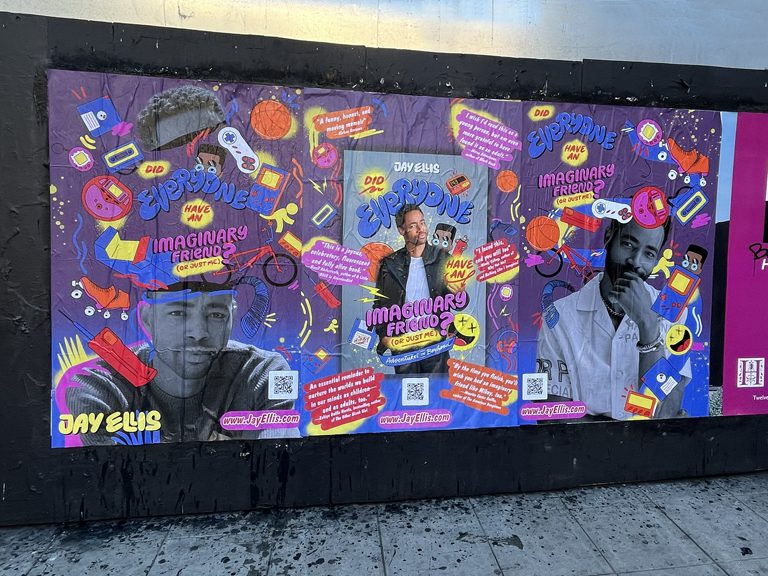
Street Teams paired with physical media. This is the combination I push hardest, and it is the natural upsell. Street Teams and Experiential staff on the pavement, supported by a surrounding poster presence in the same neighbourhood, means the brand is still in the corridor after the crew has gone home. The activation creates the moment. The poster run holds the memory for the following two weeks.
Evening activations in the Mission. Thursday through Saturday evening density there is the strongest pedestrian window in the city for most consumer brands.
Where it fails
The honest list.
Downtown on a weekend. Low density, wrong audience, and the buildings funnel wind.
Any outdoor footprint in a fog belt neighbourhood before noon in summer. Cold, grey, and nobody lingers.
Large footprints in tight sidewalk neighbourhoods. Chinatown, North Beach and parts of the Mission have sidewalks that cannot accommodate what the client sketched. The activation becomes an obstruction, which creates friction with the businesses whose frontage you are near.
Activations with no reason to exist. San Francisco pedestrians are heavily marketed to and read a brand setup instantly. If the only offer is a branded tote, people walk past. There has to be a reason to stop that is worth their thirty seconds.
Tourist corridor activations for local consumer products. Fisherman's Wharf and the busiest stretches of Union Square generate footfall numbers that look great and conversion that does not, if you are selling something that requires the person to live here.
Single day activations with no surrounding media. One day, one corner, nothing before or after. The reach is tiny and the cost of staging is the same as it would be for a campaign with actual legs.
Anything light and unweighted outdoors in the afternoon. The wind will find it.
What I talk clients out of
I lose briefs over these conversations. Worth it.
I talk clients out of downtown. Almost always. The office density is real on weekday mornings and the rest of the week is thin. Unless the activation is specifically targeting a weekday working population during those hours, it belongs in the Mission, Hayes Valley or the Marina.
I talk clients out of oversized builds. A smaller, better looking footprint in a strong corridor beats a big one in a weak corridor every time, and it is far easier to get permission for.
I talk clients out of booking a single day. One day is a photo shoot, not a campaign. If the budget only allows one day of staff, I would rather pair that day with a surrounding poster run so the neighbourhood keeps seeing the brand.
I talk clients out of summer morning starts outdoors. Push to the afternoon. The city is warmer, clearer and busier.
I talk clients out of canopies and light A frames in exposed locations. If the wind takes a structure into traffic, nothing else about the campaign matters.
I talk clients out of scripts. Ambassadors who recite a script read as telemarketing on a sidewalk. Brief them on the three things that matter and let them be people.
I talk clients out of expecting precise attribution. We can give you scan counts, sample counts, conversation counts, photos and staff debriefs. We will not hand you a fabricated impression figure or a conversion model we cannot stand behind.
And I talk clients out of parachuting into neighbourhoods with strong local identity without a local partner. The Mission, the Castro and the Haight all notice. A local partner changes how the activation is received, completely.
The San Francisco calendar nobody plans around
Timing here is not a minor variable. The city's rhythm swings hard across the year and across the week.
Late summer and early autumn are the strongest outdoor months. The fog pattern eases, afternoons are warm and clear across more of the city, and street life is at its peak. If you have flexibility, this is the window I ask for.
The winter months bring the rain season. Outdoor footprints need a covered fallback or a partner interior, and I would rather move a date than run a wet activation to a thin crowd.
The conference and event calendar reshapes downtown and SoMa repeatedly through the year. Those weeks bring an out of town professional audience into specific blocks at specific hours. That is an opportunity if your product suits that audience and a liability if it does not, because hotel rates, parking and street access all tighten at the same time.
The academic calendar matters in the pockets around the universities and colleges. Term start is high energy and high receptivity. Finals weeks and the summer gap are not.
Weekly rhythm is just as sharp. Downtown lives Monday to Thursday daytime. The Mission, Hayes Valley and the Marina live Thursday evening through Sunday afternoon. Friday evening is the strongest single block in the city for consumer street work, and it is also the hardest to staff well, which is why we book crews for it early.
Major street events and parades close corridors with real notice but enormous local effect. We check the calendar before we commit a site, because being adjacent to one of those is either the best day of a campaign or a logistical disaster.
What goes wrong and how the crew handles it
Weather turns. The fog does not burn off, or the wind picks up early. The lead makes the call to reconfigure the footprint, lower anything tall, or move under a partner's awning. Clients hear about it in real time.
A permission falls through on the day. A property owner changes their mind or a manager on shift knows nothing about the arrangement. This is why we confirm the day before and arrive with the agreement in hand and a named contact.
Parking is impossible. Frequently. We stage further out and hand cart.
A staff member drops out. We overstaff slightly on multi day builds for exactly this reason, and the lead can work the street if needed.
Someone unhoused or in distress is near the footprint. This city, this reality. Our crews are briefed to be decent, not to escalate, and never to treat a person as a problem to be removed. If the site genuinely is not workable, the lead relocates.
A passerby wants to argue about the brand. It happens here more than most places. Ambassadors are briefed to be gracious and disengage, not to debate.
Material runs out early. Good problem, bad planning. We track consumption hourly on the first day and adjust.
Frequently asked questions
Which San Francisco neighbourhood is best for a street activation?
For most consumer brands, the Mission along Valencia or 24th Street, because pedestrian density is high, walking pace is slow and evenings and weekends are strong. Hayes Valley suits compact premium builds. Chestnut Street works for weekend social audiences. Downtown works only for weekday morning and lunch targeting of office populations.
Do I need a permit for an activation in San Francisco?
It is a grey area and depends on exactly where you stand. Private property with owner permission is the cleanest ground and removes most of the ambiguity. Occupying public sidewalk or plaza space at scale involves formal processes and real lead time. Enforcement is inconsistent across blocks. We are not lawyers and will not give legal advice.
What time of day should an outdoor activation run here?
Afternoon, in most of the city, most of the year. Summer morning fog sits heavily over western neighbourhoods while eastern ones clear earlier. Late afternoon wind is the main structural risk, particularly near the water and in downtown corridors. For nightlife and hospitality brands, Thursday through Saturday evening in the Mission is the strongest window.
How many staff does a typical activation need?
A compact footprint runs a lead plus two to four brand ambassadors. The lead manages the property owner, the crew and problems on the day. In cold or windy conditions we cap ambassador shifts at around four to five hours and run two shifts for a full day, because performance visibly drops when staff get cold.
Can experiential work be combined with other street formats?
Yes, and it should be. Our most effective San Francisco campaigns pair street team activity with a surrounding poster presence in the same neighbourhood. The activation creates the moment and the conversations. The posters keep the brand in that corridor for the following weeks, so the same pedestrians see it repeatedly after the crew has gone.
How do you measure results?
With things we can actually count. Samples distributed, conversations logged, scans or sign ups generated, photography from the day, and a structured staff debrief covering what people said and asked. We do not supply invented impression figures or attribution models we cannot defend. Ask any agency to show you which of their numbers are measured and which are modelled.
Ready to scope a San Francisco activation
Tell me the neighbourhood you are thinking about, the dates, what you want people to do, and whether you have a local partner or property relationship already.
If the neighbourhood is wrong for your audience I will say so on the first call, and I will tell you which corridor I would use instead.
Request a campaign quote and bring your dates and your objective. The format follows from those, not the other way round.

Ready to Run Your Campaign?
Call us or email us. We’ll tell you exactly what we can do in your market and what it costs.
Related Services
Explore similar advertising solutions offered by American Guerrilla Marketing.
American Guerrilla Marketing — Los Angeles
Street-level campaigns in Los Angeles and nationwide. Wheatpasting, LED trucks, street teams, and more.
(646) 776-2770
Related Articles
-
Santa Monica Projection Advertising: Permits, Corridors and
November 23, 2026
-
Digital experiential agency: How It Actually Works
November 23, 2026
-
Guerilla Marketing Campaign: How It Actually Works
November 23, 2026
-
Tucson Projection Advertising: Permits and Corridors
November 23, 2026
-
Planning an Experiential Marketing Campaign With a Local
November 23, 2026