American Guerrilla Marketing
Nationwide Service
Media planning, media buying, billboard advertising, & guerrilla marketing
Guerrilla Projections in Greensboro, NC

The Piedmont Triad’s gateway city sits at the crossroads of the ACC, the I-85 corridor, and an industrial warehouse district that most national advertisers have never touched. AGM’s 20,000-lumen projection campaigns are built for exactly this kind of overlooked opportunity.
Greensboro Is the Piedmont’s Untapped Projection Market
Greensboro is the kind of city that national advertisers frequently pass over in favor of Charlotte or Raleigh-Durham, and that calculus is a meaningful opportunity for brands willing to engage it directly. As the geographic and commercial center of the Piedmont Triad, Greensboro sits on the I-85 corridor in the exact midpoint between Charlotte and the Research Triangle, serving as the region’s logistical and cultural pivot point. The city hosts the ACC’s spiritual home at Greensboro Coliseum — historically the primary venue for the Atlantic Coast Conference basketball tournament — and commands a dedicated sports-going population that floods downtown corridors on major athletic event weekends with a consistency and density that far smaller metro populations have no business producing. The High Point furniture market, just minutes away, brings one of the country’s largest concentrations of commercial buyers twice annually to the Triad, adding a professional trade demographic unlike anything available in the Triangle or Charlotte.
Building projection advertising finds its most powerful expression in markets where the format is genuinely unexpected. In Greensboro, a 20,000-lumen building facade campaign has essentially no competition from comparable advertising formats — the city’s outdoor media inventory is dominated by conventional static and digital billboard placements in commuter corridors, not in the walkable entertainment and arts districts where projection advertising operates. When a building-scale projection activates the Railroad District’s blank warehouse faces or illuminates a South Elm Street building across from the restaurant patio district, it lands on an audience that has never encountered the format in this neighborhood context. That novelty produces the social sharing, earned media, and genuine attention that brands spend far more trying to generate through digital advertising in markets where consumers have been conditioned to filter everything.
Greensboro’s arts and creative community has been quietly building a genuine cultural infrastructure that most national brands haven’t mapped. The Greensboro Arts District, the Railroad District’s incoming creative tenants, and the South Elm Street gallery and performance scene are producing a sustained after-dark pedestrian culture in downtown Greensboro that simply did not exist at this scale a decade ago. This growing nighttime economy creates the audience base that makes building facade projection productive — people who are out in the evening, moving slowly through an entertainment environment, socially engaged with companions, and visually receptive in a way that commuters and screen-bound consumers never are. Greensboro is at the stage in its downtown evolution where the audience is beginning to aggregate but the advertising market hasn’t caught up, which is exactly when building projection advertising delivers its highest return.
Greensboro's Walls Haven't Seen Anything Like This Yet.
The Railroad District. South Elm Street. LeBauer Park. The Piedmont Triad's projection market is wide open — and AGM is ready to activate it. contact us for a quote. complete crew and equipment included.
Our Campaign Locations
Browse Cities in North Carolina
Select a city to explore Guerrilla Projections opportunities.
Advocacy Campaigns And The Power Of Projection At Scale
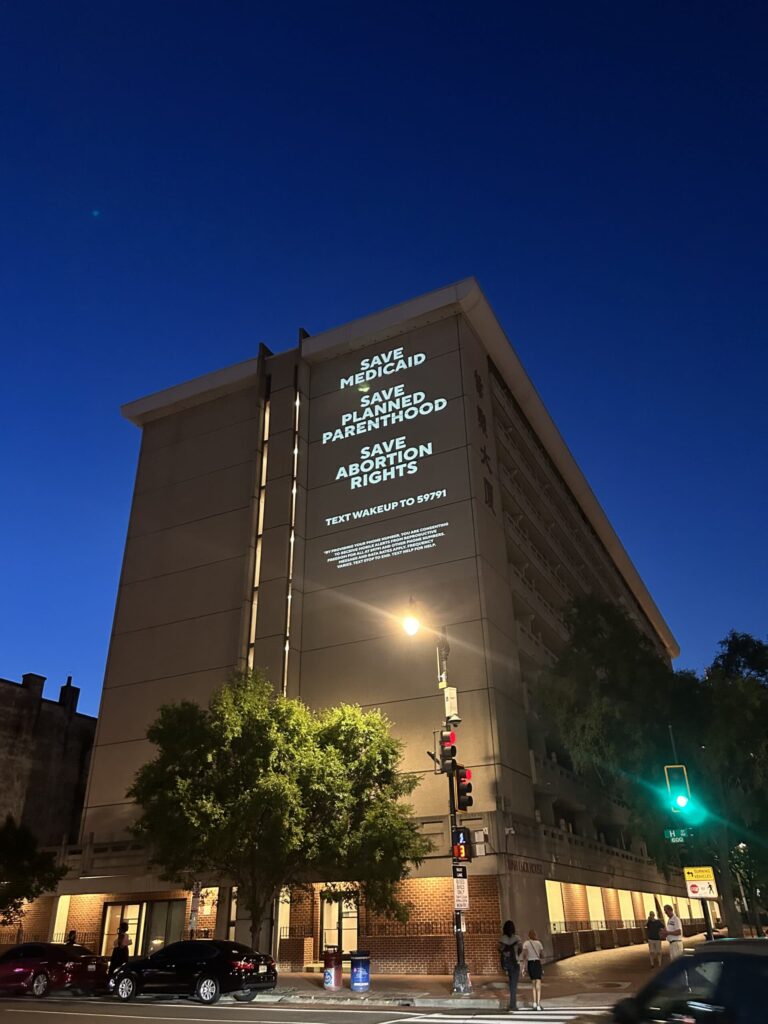
American Guerrilla Marketing ran building projection campaigns during the Women’s March in Washington, DC — deploying illuminated advocacy messaging onto the exterior faces of DC buildings in the hours after dusk, when traditional signage goes dark and the physical mass of the march has dispersed into the city’s streets. The campaign demonstrated a principle that has become central to how AGM thinks about advocacy projection: when a large public gathering generates thousands of people in motion through an urban corridor, a building-scale projection turns any wall within sight into a broadcast medium reaching every person in the vicinity simultaneously. The Women’s March campaign extended the movement’s visual presence into the evening cityscape in a way that no banner, placard, or digital ad could replicate at comparable scale.
The strategic logic of that DC campaign translates directly to Greensboro’s civic environment. North Carolina’s status as a perennial battleground state means Greensboro regularly hosts major civic moments — legislative advocacy campaigns, social justice gatherings, public health mobilizations, and community organizing events that bring large and activated audiences into the city’s downtown corridors. Greensboro’s own history as a site of significant civil rights events gives civic and advocacy messaging a resonance in this city that it carries in few other Southeast markets. A building projection campaign deployed in connection with a Greensboro civic gathering — onto the South Elm Street building faces opposite the restaurant patio district, or onto the Railroad District’s blank warehouse walls visible from a community gathering point — reaches an assembled audience with visual messaging at a scale that creates the kind of social moment that generates organic media coverage and social amplification.
Advocacy organizations have increasingly recognized that the most effective moments for projection advertising are not isolated brand impressions but rather interventions in a crowd that is already assembled, already emotionally engaged, and already primed for the kind of shared visual experience that projection advertising uniquely provides. The Women’s March approach — projecting in the immediate aftermath of a large public gathering, when the audience is still spatially concentrated but the formal programming has concluded — delivers projection’s maximum impact because the audience is present, stationary, and paying attention to the urban environment around them. Greensboro’s civic calendar, LeBauer Park’s open gathering geometry, and South Elm Street’s civic procession routes all create natural execution opportunities for advocacy campaigns structured around this logic.
Greensboro's Best Projection Environments
Greensboro’s downtown building stock and neighborhood layout create four distinct projection environments, each with different surface characteristics, audience profiles, and logistical requirements. AGM scouts every proposed Greensboro surface individually, but the locations below describe the city’s established projection-viable corridors — the areas where wall quality, pedestrian density, and site logistics combine to make building facade advertising genuinely productive.
Railroad District
The former rail corridor warehouse cluster north of downtown Greensboro is the city’s single most technically valuable projection environment — and one of the least utilized advertising surfaces in the entire Piedmont Triad. The blank masonry walls of the district’s former industrial buildings are large, flat, and feature minimal window interruption across substantial surface areas: exactly the configuration that makes a 20,000-lumen projection system operate at peak visual output. Foot traffic in the Railroad District is actively growing as arts tenants, creative studios, and event spaces continue to arrive, but the density has not yet reached the levels that introduce competing ambient lighting or visual advertising noise. This combination — excellent walls, growing audience, minimal visual competition — makes the Railroad District an exceptionally high-value projection environment for brands willing to engage Greensboro before the rest of the national market discovers it. Equipment staging throughout the district is accessible via the rail corridor infrastructure and adjacent surface areas, and line-of-sight geometry from the street-level approach roads to the warehouse faces is generally clear.
South Elm Street Entertainment Corridor
South Elm Street is Greensboro’s primary dining and nightlife artery, with restaurant patios lining both sides of the street and a pedestrian culture that peaks Thursday through Saturday evenings. The particular advantage of South Elm Street as a projection environment is the seating geography: outdoor dining patrons sit at tables facing across the street, with building facades on the opposite side directly in their sightlines throughout a meal or an evening of leisure. A projection activated on a South Elm Street building face visible from patio seating reaches an audience that is stationary, comfortable, and visually oriented toward the projected surface for extended dwell times — 30 to 90 minutes in some cases, as opposed to the few seconds of attention a passing pedestrian provides. This stationary-audience dynamic makes South Elm Street one of Greensboro’s most effective locations for projection content with a secondary reading layer — brand stories, advocacy messaging, or detailed product imagery that benefits from extended viewing time rather than a single immediate impression.
Greensboro Arts District
The creative enclave of galleries, studios, and performance venues that constitutes Greensboro’s Arts District occupies a cluster of converted commercial buildings with flat painted exterior faces suitable for mid-scale projection campaigns. The district’s audience character is similar to Charlotte’s NoDa at an earlier stage of development: arts-forward, community-oriented, digitally connected, and predisposed to engage with and share visual experiences that feel genuinely creative rather than purely commercial. Gallery opening events and performance nights in the Arts District concentrate this audience in the streets and plazas adjacent to gallery buildings on scheduled evenings, creating organic viewing groups for projection campaigns positioned on the faces of surrounding buildings. The building scales in the Arts District tend toward two and three stories rather than the larger warehouse dimensions of the Railroad District — projection campaigns here work best with content calibrated for closer viewing distances and the more intimate scale of the neighborhood’s street geometry.
LeBauer Park Area
LeBauer Park occupies a downtown position ringed by commercial buildings, with the park’s open lawn and seating areas creating natural unobstructed viewing angles for projections on the surrounding building facades. The park’s benches and grass areas hold audiences stationary in the open air during evening hours — particularly during warmer months and during the programming events that the park’s management organizes throughout the year — giving projection campaigns an unusually sustained viewing window relative to moving-pedestrian corridor locations. The commercial buildings around LeBauer Park include smooth facade surfaces on several of the newer and renovated structures, and the park’s open geometry eliminates the tree-line and utility pole obstructions that can complicate beam path clearance in more densely planted urban environments. LeBauer Park projection campaigns are particularly effective for advocacy, civic, and community messaging that benefits from reaching an assembled audience in a shared public space — the park’s programming events create built-in crowds without requiring any additional event activation from the advertiser
Plan Your Guerrilla Projection Campaign in Greensboro, NC
Tell us about your campaign goals, target audience, and preferred locations. Our team will help you plan a high-impact guerrilla projection campaign tailored to your needs.
Award Winning Personalized Service
You will get thoughtful, devoted, and individualized attention from our experienced, qualified, and professional personnel. Being one of the most illustrious agencies in Brooklyn, New York, American Guerrilla Marketing has been awarded the Best of Brooklyn title.
Nationwide
Industry City, Brooklyn, New York 11232
American Guerrilla Marketing
Hours
Mon - Fri: 9 AM - 5 PM
Sat & Sun: Closed
Automate your campaign with AGM’s Request for Proposal Builder.
Automate your campaign with AGM’s Request for Proposal Builder. Simply answer a few quick questions about your campaign goals, markets, and timeline, and the system will generate a tailored presentation with recommended strategies, quantities, and pricing. Click the RFP Builder to instantly receive your customized proposal.
Campaign Types That Perform in the Piedmont Triad
Advocacy & Public Interest Campaigns
Greensboro’s civic history, its engaged community organizations, and North Carolina’s swing-state political environment make the city one of the Southeast’s most productive markets for advocacy projection. The Women’s March model — projection onto building faces during and after major public gatherings — translates directly to Greensboro’s LeBauer Park area, South Elm Street civic procession routes, and the downtown corridors where community events regularly draw large assembled audiences.
ACC & Sports Event Activations
ACC tournament windows and Greensboro Coliseum event nights produce pedestrian density in the surrounding downtown corridors that building facade advertising can directly exploit. Sports brands, beverage companies, sports-adjacent consumer products, and entertainment properties find Greensboro’s Coliseum-area pedestrian peaks to be among the most specific and predictable high-density audience windows in North Carolina’s non-Charlotte entertainment calendar.
Furniture Industry & Trade Campaigns
The High Point Market Authority’s semiannual furniture market — one of the largest trade events in the world — brings an international concentration of buyers, designers, and industry professionals to the Triad twice annually. This commercial buyer demographic is sophisticated, aesthetically attuned, and not reached effectively by traditional outdoor advertising. A Greensboro projection campaign during furniture market week reaches this professional audience in the entertainment corridors they occupy in the evenings after showroom hours.
University & HBCU Market Campaigns
UNCG (University of North Carolina at Greensboro) and Guilford College anchor a substantial student and young faculty population in Greensboro’s northwest neighborhoods that moves into downtown dining and arts corridors throughout the academic year. N&C A&T State University’s enrollment adds one of the country’s largest HBCU student bodies to the Greensboro demographic mix — a community with strong cultural identity and high brand engagement in the entertainment and lifestyle categories that building projection advertising reaches most effectively.
Consumer Brand Launches in the Triad
Brands entering the Carolinas market frequently sequence Charlotte first, Raleigh-Durham second, and overlook the Greensboro metro — a strategic gap that creates an opportunity for differentiated market entry in a city where the format has no precedent and no competition from comparable advertising. A Greensboro Railroad District projection launch carries the novelty advantage that brand-saturated Charlotte and Raleigh campaigns increasingly struggle to generate.
Arts & Cultural Institution Campaigns
Greensboro’s arts community — the Arts District, the Weatherspoon Art Museum, the Steven Tanger Center for the Performing Arts, and the city’s gallery circuit — generates a recurring audience of culturally engaged residents who are highly receptive to projection advertising as a visual art form in the public space. Arts institution campaigns targeting this audience find building projection a format that aligns with the community’s values around public creative expression, producing organic engagement rather than advertising resistance.
Evaluating Projection Surfaces In Downtown Greensboro
Greensboro’s downtown building inventory presents a mix of surface qualities that requires careful advance evaluation — the kind of evaluation that AGM’s national scouting team performs for every proposed market engagement before any campaign commitment is made. The city’s varied building stock, which spans late-nineteenth-century commercial masonry to mid-twentieth-century industrial to newer mixed-use development, produces a wide range of surface reflectivity, flatness, and continuity that determines where a 20,000-lumen projection campaign can deliver its maximum visual output.
The Railroad District’s warehouse walls represent the highest end of Greensboro’s surface quality range. These former industrial structures were finished with smooth masonry or painted surfaces across large, flat, uninterrupted wall planes — the physical characteristics that produce the sharpest, brightest, most color-accurate projection images. The buildings’ construction-for-function philosophy, similar to the tobacco factory buildings in Durham, means there was no architectural interest in ornamenting the exterior walls with features that would interrupt a projected image. What the building needed was a wall, and what was built was a wall — massive, flat, blank, and increasingly valuable as a projection canvas as the surrounding neighborhood evolves into a creative destination.
South Elm Street’s commercial building faces present more varied surface qualities. Some of the district’s older downtown commercial buildings feature brick exteriors that absorb light more than the ideal white stucco or painted plaster, reducing projected image brightness and requiring closer throw distances to maintain visual impact. Newer and renovated structures along the corridor often feature light-colored stucco or painted concrete finishes that perform much closer to the Railroad District’s warehouse ideal. AGM’s scouting team evaluates each proposed South Elm Street surface for its specific reflectivity and recommends projector positioning and throw distances calibrated to that surface’s actual characteristics rather than assuming uniform performance across the corridor.
LeBauer Park’s surrounding building faces introduce a different geometry consideration: the projector must be positioned within or adjacent to the park’s open space to achieve the throw distance and sightline clearance required to illuminate the surrounding commercial facades at usable brightness. The park’s open lawn provides good staging options for the mobility unit, but the projector position within a public park requires coordination with the city’s parks management team. AGM’s advance scouting covers this permitting and access dimension as a standard component of the LeBauer Park location analysis, and the parks management outreach is initiated during the scouting phase to ensure that execution night has no logistical surprises.
Throughout all Greensboro location evaluations, AGM assesses obstructions in the beam path — trees, light poles, street signage, and parked vehicles — that can interrupt the projected image between projector and wall. Greensboro’s downtown tree plantings, which are more extensive in some corridor sections than others, require particular attention in the beam path analysis. A tree canopy that occupies the upper portion of the beam path will cast a shadow across the upper section of the projected image, reducing the effective display area and fragmenting the visual composition. AGM’s scouting maps beam path obstructions at the specific throw position and angle for each proposed Greensboro surface, identifying positions that achieve clean beam-to-wall delivery within the required throw distance.
The AGM Campaign Process for Greensboro Engagements
Greensboro campaigns follow AGM’s standard four-phase operational process, adapted to the specific logistical and regulatory environment of the Piedmont Triad market. Advance scouting deploys both digital analysis and physical on-the-ground evaluation to document every candidate surface in Greensboro’s target corridors. The scouting team assesses surface reflectivity, flatness, window interruption, beam path clearance, pedestrian traffic volume and patterns, and the specific permitting landscape for the proposed location — whether that’s a public right-of-way placement, a private-property building owner agreement, or a parks management authorization for a LeBauer Park staging position. The scouting phase costs approximately Contact us for a custom quote. for the Greensboro market and delivers a full location analysis package with GPS records, photography, and ranked location recommendations.
Creative development is calibrated to the specific Greensboro surface and audience identified by scouting. Railroad District warehouse campaigns, with their large flat walls and growing creative-class audience, accommodate bold, graphic content that rewards the visual boldness of the large-format display. South Elm Street campaigns, with their stationary restaurant-patio audience and closer viewing distances, can incorporate more compositional detail because the viewing window is longer and the audience is oriented to engage rather than pass. LeBauer Park campaigns, targeting assembled park audiences during events, should prioritize clarity and message legibility at the range of distances that park geometry creates — from close-proximity bench seating to the far edge of the lawn area.
Execution deploys AGM’s own direct technical crew — never subcontractors — with the complete operational package: 20,000-lumen commercial projection system, self-contained generator and power solution, full electronics bundle, and mobility unit. Setup precedes dusk. The campaign runs for four to six hours with continuous crew presence, and post-campaign, every Greensboro engagement receives GPS-verified location documentation, on-site photography and video from the active projection window, and full structured reporting. This documentation supports client evaluation, proof-of-performance reporting, and the earned media cycle that well-positioned Greensboro projection campaigns produce in local and regional media channels.
Pricing For Greensboro Building Projection Campaigns
Projection advertising in Greensboro is priced at contact us for a quote. This single rate covers the complete operational package: the 20,000-lumen commercial projection system, generator and power solution, electronics bundle, mobility unit, and a two-person technical crew for the full night. There are no hidden line items, no separate crew charges, and no equipment rental fees layered on top of the nightly rate — contact us for a quote. is the complete cost of execution on the street.
Location scouting for the Greensboro market runs approximately Contact us for a custom quote. covering the full advance evaluation of proposed surfaces — physical and digital assessment, pedestrian traffic analysis, beam path documentation, permitting research, and the ranked location shortlist delivered before any campaign commitment. For campaigns requiring private-property access agreements or parks management authorization for specific Greensboro surfaces, location rights costs are structured separately, typically ranging from Contact us for a custom quote. per night depending on the specific access required.
Greensboro’s position as a market where building projection advertising has essentially no competitive precedent means that every dollar of the scouting and execution investment delivers returns undiminished by audience desensitization or advertising saturation. The format operates in Greensboro at the same level of novelty that projection advertising carried in Charlotte and Raleigh-Durham several years ago — and those early-market campaigns consistently generated the highest earned media returns of any window in those cities’ projection advertising histories.
Who Runs Building Projection Campaigns in Greensboro
Greensboro’s projection advertising clients reflect the city’s position at the intersection of several distinct market forces. Advocacy organizations — public health campaigns, social justice organizations, political advocacy groups, and community mobilization efforts — find Greensboro’s civic geography and assembled-audience events productive windows for projection campaigns that reach large groups simultaneously. ACC tournament-aligned brands use Greensboro as a targeted event window, projecting in Coliseum-adjacent corridors during the highest pedestrian density nights the city produces annually. Furniture industry brands and home goods manufacturers use furniture market week’s unique professional buyer audience for B2B-adjacent projection campaigns in South Elm Street and the surrounding downtown corridors.
Local and regional consumer brands find Greensboro’s relative lack of guerrilla advertising precedent a genuine competitive advantage — arriving in the Railroad District or South Elm Street as the first projection campaign in that corridor carries novelty value that commands organic social attention in a way that the fifth or tenth campaign in the same corridor cannot replicate. Entertainment properties targeting the substantial UNCG and NC A&T student demographic use projection to reach a campus-adjacent audience in off-campus entertainment environments where the engagement rate is higher and the competitive advertising noise is lower than on the digital platforms where university students are typically targeted.
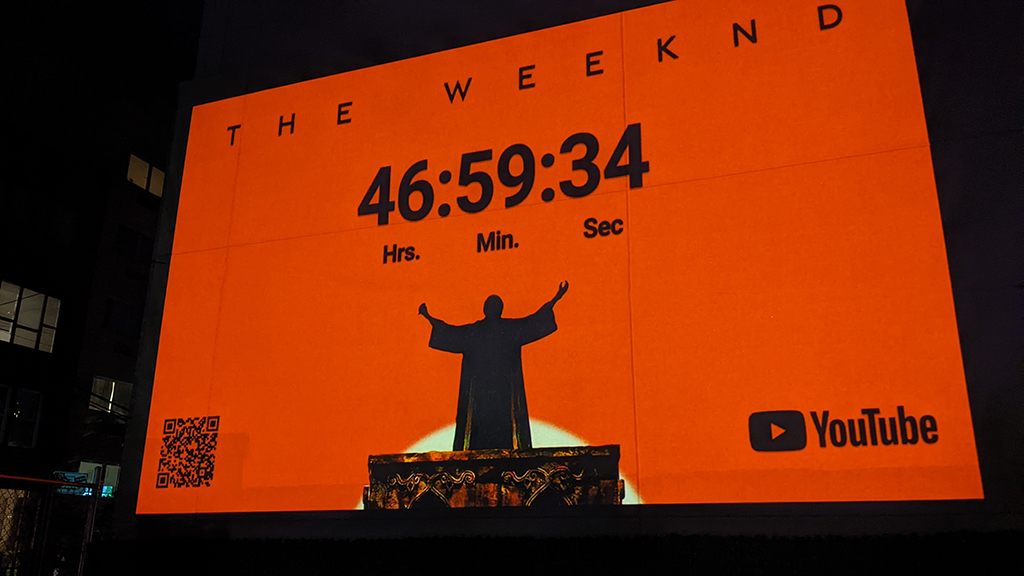
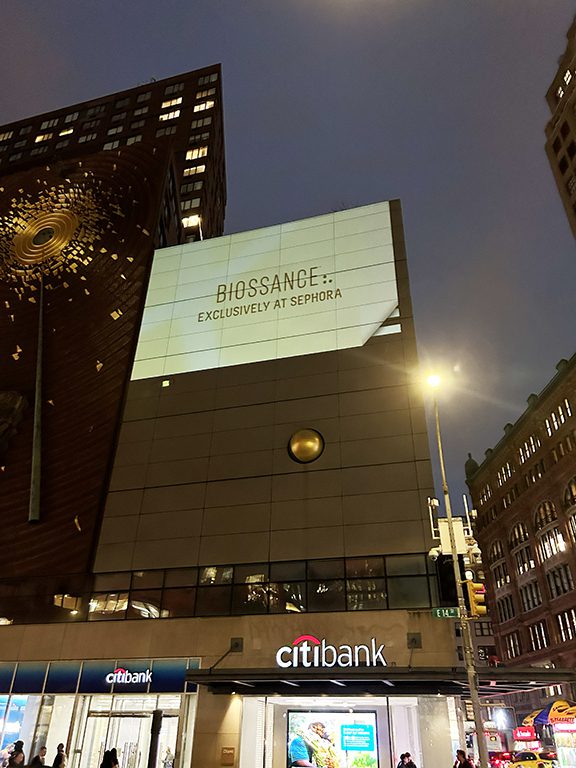
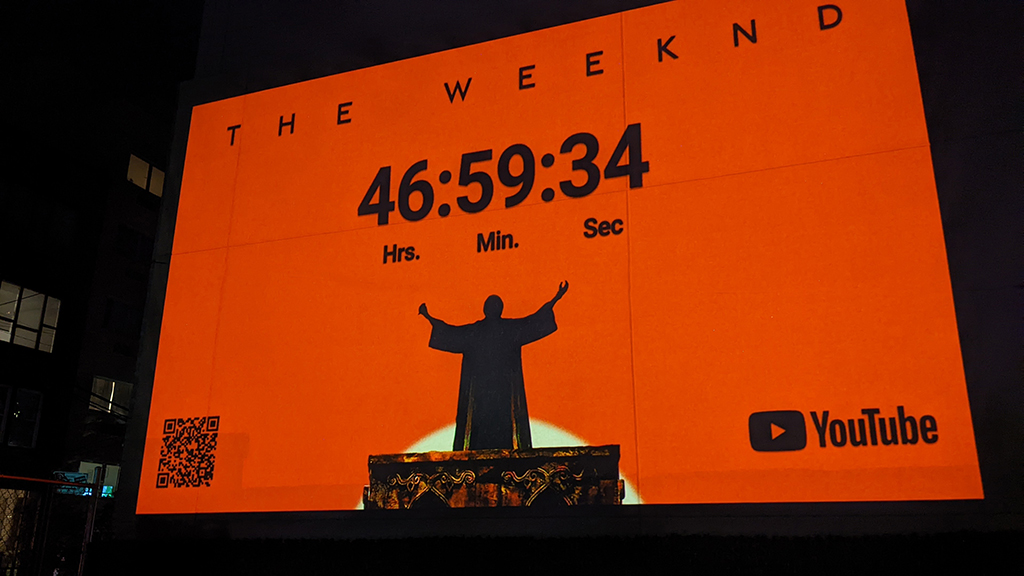
AGM brings a Best of Brooklyn award-winning track record and a national client roster — including the US Marine Corps, Women’s March, Biossance, The Weeknd, Reproductive Freedom for All, and YouTube — to every Greensboro engagement. Our national scouting team has both the digital analysis capability and the physical on-the-ground presence to identify the best Greensboro surfaces for any campaign objective, and our GPS-documented post-campaign reporting provides every Greensboro client with the same accountability standards applied to our highest-profile national campaigns.
AGM’s projection client roster includes Netflix, Disney, Coca-Cola, FanDuel, Live Nation, iHeartRadio, and the US Marine Corps. A confirmed case study: the US Marine Corps × CMA Fest Nashville — multi-night projections onto architectural surfaces throughout the festival footprint, reaching 80,000+ attendees across the campaign window. Projection advertising scales across every brand category; what our campaigns share is scale, precision, and a physical presence digital cannot replicate.
Coverage & Estimated Impressions
| Zone / Area | Peak Hours | Foot Traffic | Est. Nightly Impressions | Best For |
|---|---|---|---|---|
| Railroad District | 8PM–1AM | High | 8,000–35,000 | Product Launch |
| South Elm Street Entertainment Corridor | 8PM–1AM | High | 8,000–35,000 | Event Promotion |
| Greensboro Arts District | 8PM–1AM | High | 8,000–35,000 | Brand Awareness |
| LeBauer Park Area | 8PM–1AM | High | 8,000–35,000 | Political |
Frequently Asked Questions
Greensboro Coliseum events — including ACC basketball tournament sessions, concerts, and major sports events — generate pedestrian spill-out into the surrounding commercial corridors before and after events that significantly elevates audience density in downtown Greensboro. For ACC tournament windows in particular, the concentration of fans in the area creates multiple high-density evenings in succession, making multi-night projection campaigns aligned to tournament scheduling an efficient way to accumulate large impression totals. AGM’s scouting team identifies the specific pedestrian flow routes from the Coliseum toward downtown dining and entertainment areas to position projection surfaces on the paths of maximum event crowd movement.
Many Railroad District properties are privately owned by a mix of individual property owners, development companies, and arts organizations that are bringing the district to life as a creative destination. Access for projection campaigns depends on the specific building and owner. Some property owners in the district are actively interested in co-activating the creative energy their buildings’ walls provide — projection campaigns can be a benefit they see value in supporting. AGM’s advance scouting phase includes property ownership research and owner outreach for the specific Railroad District surfaces identified as campaign candidates, and the team advises on the access pathway and likely cost structure for each proposed location.
LeBauer Park’s open lawn geometry means that audiences inside the park are not moving along a linear corridor toward a destination — they are distributed across a two-dimensional space, seated on benches and lawn areas, with the surrounding commercial building facades as the visual boundary of their environment. This distributed audience positioning creates viewing angles from multiple distances and directions relative to the projected wall, meaning that more of the park’s occupants receive an adequate view of the projection than would be the case in a narrow street corridor where viewing geometry is constrained to people directly facing the wall. The park’s open space also eliminates the tree-line, utility pole, and parked vehicle obstructions that typically complicate beam path clearance in denser urban street environments — the primary beam path consideration at LeBauer Park is positioning the projector within the park’s open space at the required throw distance from the target building facade.
The High Point Market Authority’s semiannual furniture market — held in spring (late April) and fall (late October) — brings one of the world’s largest concentrations of design-industry buyers, architects, interior designers, and home goods manufacturers to the Triad for approximately ten days each session. Many of these attendees stay in Greensboro and commute to High Point’s showrooms during the day, filling Greensboro’s South Elm Street and downtown hotel corridors in the evenings when showroom hours have ended. A Greensboro projection campaign timed to furniture market week reaches an unusual professional demographic — aesthetically sophisticated commercial buyers with high purchasing authority — in an entertainment environment where they’re social and visually receptive. This is one of the only windows during which Greensboro’s downtown hosts a significant concentration of design-industry professionals.
Yes, significantly so. The outdoor dining patios on South Elm Street position their occupants in chairs facing across the street — directly oriented toward the building facades on the opposite side. A dining patron sitting at a South Elm Street patio table may spend 45 to 90 minutes with the projected building face squarely in their field of view, receiving an entirely different quality of impression than a passing pedestrian who glimpses the projection for a few seconds while moving toward a destination. This extended dwell time per impression makes South Elm Street projection campaigns particularly effective for content with a narrative dimension — advocacy messaging that benefits from reading time, brand stories that unfold across a viewing window, or product campaigns where sustained visual engagement produces meaningful recall improvements.
Yes. UNCG and NC A&T students both move through Greensboro’s downtown South Elm Street corridor and arts district during evening hours on weekdays and weekends throughout the academic year. NC A&T’s student body — one of the country’s largest HBCU enrollments — represents a distinct and highly valuable demographic for brands in entertainment, apparel, technology, and lifestyle categories. UNCG’s arts and social science student population concentrates particularly in the Arts District and South Elm Street environments. A Greensboro projection campaign positioned in the South Elm Street corridor on a Thursday or Friday evening reaches both campuses’ student populations in the same execution night without requiring campus-specific event access or permissions.
Greensboro’s I-85 position makes it a natural addition to a statewide North Carolina projection campaign that’s already covering Charlotte and Raleigh-Durham. From a logistics standpoint, a campaign team moving equipment between Charlotte and Raleigh-Durham can stage a Greensboro night as part of the transit between the two larger markets, effectively adding a third-city impression footprint at relatively low incremental cost compared to mounting a standalone Greensboro campaign. Strategically, including Greensboro in a statewide campaign ensures coverage of the Piedmont Triad’s distinct demographic — the ACC basketball audience, the furniture industry professional class, the NC A&T and UNCG student populations — that Charlotte and Raleigh campaigns don’t reach by default.
The Railroad District’s former industrial warehouse walls generally outperform the Arts District’s converted commercial building faces in terms of raw projection surface quality. Warehouse walls are larger, flatter, and more consistently finished in smooth or painted masonry that reflects 20,000 lumens at higher efficiency. Arts District buildings tend toward smaller surface areas with more architectural variation — irregular window configurations, mixed surface finishes, and closer street geometry that reduces available throw distance. That said, the Arts District’s audience character — arts-forward, creative-community-oriented, high organic sharing rate — may make it the right environment for specific campaign types even if the surface performance is slightly lower than the Railroad District standard. AGM evaluates both environments for every Greensboro campaign and recommends placement based on the combination of surface quality and audience relevance for the specific campaign objective.
Greensboro’s history as the site of the 1960 Woolworth’s lunch counter sit-ins — and its ongoing role as a civic touchstone for civil rights history in the South — gives the city a distinctive resonance for advocacy and social justice messaging that few other Southeast markets possess. Organizations working on civil rights, voting access, public health equity, and community empowerment campaigns find Greensboro audiences receptive to advocacy projection messaging in a way that reflects the city’s own self-understanding as a place where public acts of conscience matter. The International Civil Rights Center and Museum’s presence in downtown Greensboro creates an additional civic framing for advocacy campaigns that activate in the surrounding corridors.
Greensboro’s optimal projection windows cluster around three annual periods. ACC tournament season — typically late February to mid-March — delivers the city’s highest event-driven pedestrian density in the downtown corridors, with extended multi-night campaign opportunities during the tournament’s multiple-session format. Fall semester (September through November) activates both the university student demographic and the fall furniture market buyer audience simultaneously, creating a high-value four-to-six-week window with strong pedestrian consistency. Spring furniture market week in late April supplements the post-winter pedestrian rebound with the professional buyer demographic. Summer weather is operationally viable but downtown foot traffic is lower than during the academic year. Winter months outside the ACC tournament window represent Greensboro’s lowest-density pedestrian windows and are generally the weakest projection timing for this market.
The commercial building facades facing LeBauer Park’s east and south edges — particularly those on the South Elm Street adjacent block — provide the most accessible projection surfaces relative to staging positions within the park’s open lawn area. The park’s internal pathway network and open grass provide multiple candidate positions for the mobility unit at various throw distances and angles, allowing AGM’s scouting team to identify the staging position that optimizes image coverage of the target wall while maintaining the beam path clearance required for a sharp, uninterrupted projection. Coordination with Greensboro Parks and Recreation regarding staging permissions within the park is part of AGM’s standard scouting deliverable for any LeBauer Park area campaign.
Our Campaign Locations
Browse All States
Explore Guerrilla Projections opportunities across the United States.
49 States • 192 Cities
More AGM Outdoor Advertising Services
Led Billboard Trucks
Mobile LED displays that bring your brand to any location, any event.

Fly Posting
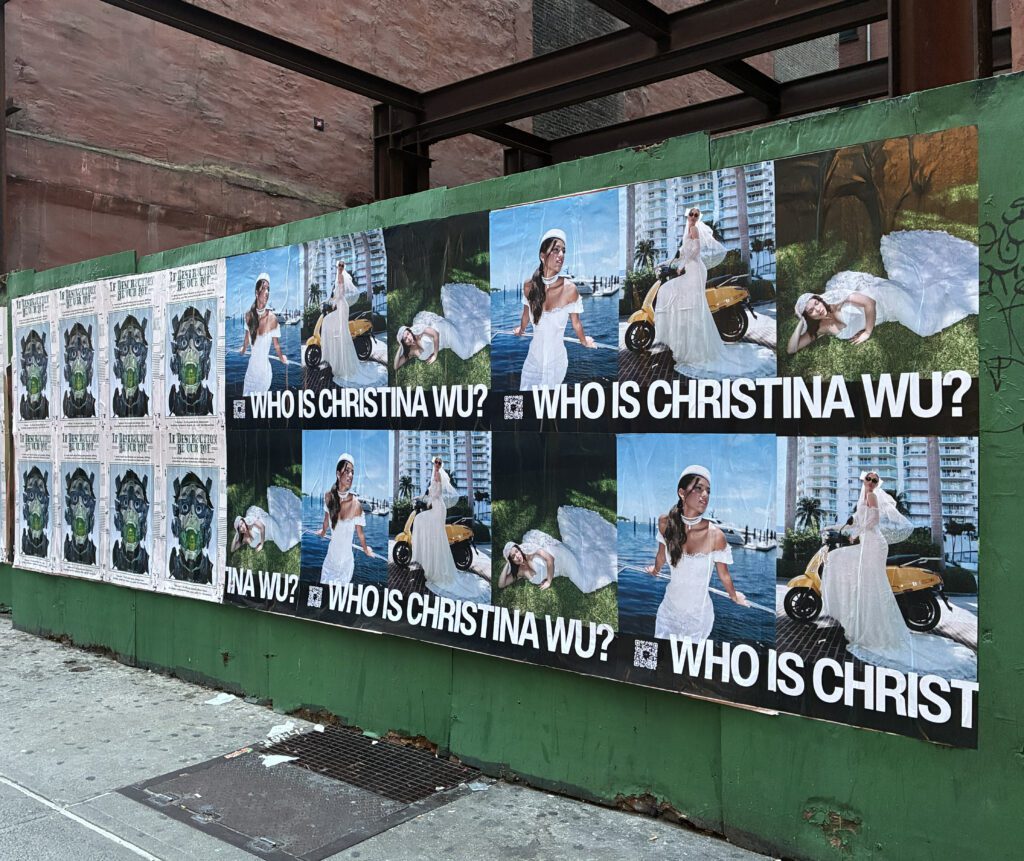
Street-level poster saturation across walls, construction sites, and corridors.

Sidewalk Decals
Ground-level branded decals at pedestrian hotspots and event entrances.

Sidewalk Stencils
Creative stencil campaigns that put your brand in the path of pedestrians.