American Guerrilla Marketing
Nationwide serivce
Media planning, media buying, billboard advertising, & guerrilla marketing

American Guerrilla Marketing places interior bus and shelter advertising across the Utah Transit Authority network. Salt Lake City, Ogden, Provo, Orem, and the full Wasatch Front. One statewide agency, one statewide buy. Silicon Slopes tech market, BYU, University of Utah, 2034 Winter Olympics. Direct execution. 500+ campaigns nationwide.
Utah has one dominant transit agency: the Utah Transit Authority, known as UTA. Unlike most states where transit is fragmented across dozens of independent municipal systems, Utah’s public transportation is unified under a single regional authority that operates buses, light rail (TRAX), commuter rail (FrontRunner), and streetcar service across the entire Wasatch Front, the geographic corridor that contains approximately 85 percent of Utah’s total population. This consolidation is both an operational reality and an advertising advantage. A brand that wants to reach the Utah transit market does not need to negotiate with six different transit authorities or coordinate creative specifications across a dozen different systems. A single UTA advertising relationship covers the full Wasatch Front from Weber County in the north through Davis County, Salt Lake County, and Utah County in the south, and extends to services in St. George, Tooele, and other communities beyond the immediate Wasatch Front corridor.
The Wasatch Front is one of the most concentrated geographic markets in the American West. Ogden, Salt Lake City, and Provo-Orem form an almost unbroken urban and suburban development corridor along the eastern edge of the Great Salt Lake, with the Wasatch Mountains providing a natural eastern boundary and the lake’s western shore defining the western limit of the developed area. Within this corridor, UTA’s TRAX light rail system, FrontRunner commuter rail, and extensive bus network create a transit infrastructure that connects the full Wasatch Front population in a single integrated system. For advertisers, this means that a UTA transit campaign effectively reaches the full Utah urban population through a single system relationship rather than the multi-system coordination that statewide campaigns require in most other states.
Utah’s growth trajectory over the past two decades has been among the most dramatic of any Rocky Mountain state. Salt Lake City and the surrounding Wasatch Front have absorbed technology company relocations, startup growth from the Silicon Slopes cluster, population migration from California and other high-cost states, and continued expansion of the LDS Church’s institutional and business presence in the region. The result is a transit market that is growing in ridership, economic scale, and demographic complexity, creating an advertising audience that is substantially different from what a Utah transit buy would have delivered a decade ago.
The announcement of the 2034 Winter Olympics for Salt Lake City is a defining future event that places Utah’s transit market on a trajectory toward increased national and international advertising attention over the next eight years. The 2002 Salt Lake Olympics built much of the transportation infrastructure that UTA operates today, and the 2034 games will generate new transit investment, expanded UTA service, and a massive increase in international visibility for the Salt Lake metro that will translate directly into higher advertising demand for UTA inventory. Brands that secure a presence in the Utah transit market before 2034 Olympics advertising competition intensifies are positioning themselves in a growth market at current pricing before the events of 2034 permanently elevate it.
Interior bus ads and shelter placements on UTA across the Wasatch Front. Routes serve the...
Learn MoreAGM covers the full UTA network from Ogden through Salt Lake City to Provo, Orem, and beyond. One agency, one buy, full Wasatch Front coverage. Tell us your target and we will build the plan.
The core of the UTA network. Downtown Salt Lake City, the University of Utah campus, the Rio Tinto stadium area, Sugar House, the airport corridor, and the residential neighborhoods of the Salt Lake Valley. TRAX light rail lines connect to bus routes throughout the county.
Northern Wasatch Front transit serving Ogden, Roy, Clearfield, Layton, and Weber County. Connects the northern corridor communities to the FrontRunner commuter rail and the broader UTA network. Serves Hill Air Force Base employment and the northern Utah manufacturing economy.
Southern Wasatch Front transit serving Provo, Orem, and Utah County. Brigham Young University (33,000+ students), Utah Valley University, the Silicon Slopes tech corridor in Lehi and American Fork, and the residential communities of rapidly growing Utah County.
Southern Utah transit serving St. George and Washington County. Utah’s fastest-growing geographic market by percentage. Retiree and recreation-oriented consumer demographic. Gateway to Zion National Park and the broader southern Utah outdoor recreation economy.
Salt Lake City and the Salt Lake Valley are the economic and cultural core of Utah’s transit advertising market. The downtown Salt Lake employment zone, anchored by the state government complex at the Capitol and by the financial and professional services businesses of the central business district, is connected to the surrounding residential neighborhoods and suburban employment centers by UTA’s TRAX light rail system and an extensive bus network. The ridership on Salt Lake’s UTA routes reflects the full economic complexity of one of the West’s most rapidly growing metro areas: technology industry professionals commuting to the downtown and mid-valley tech campuses, state government workers on the Capitol Hill routes, healthcare professionals at Intermountain Health and University of Utah Health, and the broader working adult population of a metro area that has grown by hundreds of thousands of residents over the past decade.
Utah County, anchored by Provo and Orem, is one of the most distinctive consumer markets in the American West. The Brigham Young University campus in Provo enrolls 33,000-plus students and is one of the largest private universities in the United States. BYU’s student body reflects the LDS demographic profile of its sponsoring institution: overwhelmingly LDS, with a high proportion of returned missionaries who have lived abroad, speak foreign languages, and have international life experience that is uncommon in university populations of similar age and educational stage. The BYU student consumer is also distinctively family-oriented: a high proportion of BYU students are married, many have children, and the consumption patterns of the BYU campus community reflect a conservative, family-focused value set that is commercially distinct from the typical college campus consumer profile.
Ogden and the Weber County communities north of Salt Lake City represent the northern anchor of the UTA network. Hill Air Force Base in Clearfield is the primary economic driver of the northern Wasatch Front, employing tens of thousands of military, civilian, and contractor workers at what is the Air Force’s largest depot-level maintenance facility. The workforce associated with Hill AFB — the active duty military personnel, the civilian defense contractors, the support services employees — represents a significant transit ridership on the UTA routes serving Clearfield, Roy, and Layton. For brands targeting the military and defense contractor demographic in northern Utah, the UTA routes connecting the Ogden and Clearfield communities to the Hill AFB employment zone are the primary transit advertising channel in the region.
St. George and Washington County represent Utah’s most rapidly growing geographic market by percentage growth rate, driven by migration from higher-cost western states seeking Utah’s lower housing costs, favorable business environment, and proximity to the exceptional outdoor recreation landscape of southern Utah. The Zion National Park gateway creates a recreation and tourism economy that gives St. George a visitor and seasonal-worker demographic in addition to its growing permanent population. The St. George consumer market reflects the growing influx of California and Nevada migrants who have shaped the community’s demographic character in recent years, creating a consumer base that is somewhat less uniformly LDS in its composition than the northern Wasatch Front communities. For brands targeting the western migrant consumer, the retiree recreational market, and the outdoor tourism workforce in southern Utah, the UTA St. George routes provide direct transit advertising access to this distinct and growing market segment.
King and queen posters, interior cards, headliners, seat-back displays, and overhead cards are available across Utah’s transit fleet. Interior formats reach every rider on the bus for the full duration of their trip in a low-distraction reading environment. Format availability varies by system and fleet type. AGM advises on which interior formats are available on each Utah system and recommends the format mix that best matches the campaign’s creative approach and budget.
Full bus wraps, tail displays, and window vinyls are available on most Utah transit systems. Exterior formats reach vehicle traffic, pedestrians, and the communities along each route as the bus moves through the service area. Full wraps transform a bus into a moving billboard across the system’s entire route network. AGM coordinates exterior format availability and installation across all Utah transit systems.
Covered shelter advertising is available at primary stop locations on the larger Utah city transit systems. Shelter panels reach waiting riders during their stop dwell time and vehicle traffic passing the stop location. Shelter advertising combined with interior bus placements creates a two-touchpoint campaign that reaches riders both at the stop and on the vehicle. AGM advises on shelter inventory availability by system and recommends shelter positions that match the advertiser’s geographic and demographic targets.
Bus shelter advertising in Utah places your brand at the exact locations where riders wait for transit service. The dwell time at a shelter, typically five to fifteen minutes per stop visit, creates an uninterrupted, low-distraction exposure window that in-vehicle advertising alone cannot deliver at equivalent duration.
Utah’s shelter advertising inventory is concentrated at the primary boarding and alighting points on the state’s larger transit systems, where ridership volumes and wait times are highest. AGM identifies the shelter positions that deliver the most rider exposure for each campaign’s geographic and demographic targets, and structures shelter buys around the stop locations that create maximum frequency among the target audience.
AGM manages all aspects of shelter advertising placement in Utah, from inventory identification and booking through creative production, installation, and monitoring for the full campaign posting period.
Utah’s transit advertising market is less competitive than comparable markets in states with higher national advertiser awareness. Brands that target the digital advertising ecosystem for the same audiences often pay a premium for fragmented, avoidance-prone digital impressions when Utah’s transit systems deliver the same demographics with sustained, physical exposure during their daily transit routine.
The working adult, student, and community transit rider in Utah is reachable through transit advertising at a cost-per-impression that digital advertising in the same markets consistently fails to match. AGM has executed transit campaigns across more than 500 national engagements and understands exactly which Utah systems and routes deliver the audience volume and demographic profile that each advertiser needs.
Brands that enter the Utah transit advertising market now are securing placements at pre-competitive pricing on systems that will attract more national advertiser attention as the market matures.
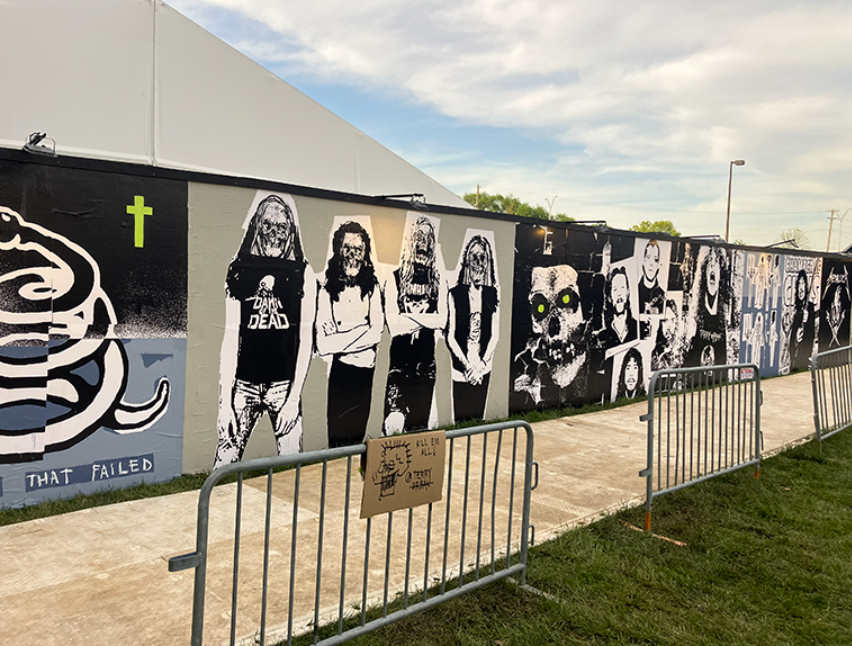
AGM’s full range of guerrilla marketing formats is available alongside UTA transit advertising campaigns in Utah’s major market areas. The combination of transit and street-level guerrilla creates the frequency reinforcement that single-format campaigns cannot generate independently.
Snipe advertising along the UTA bus routes through downtown Salt Lake City, the 9th and 9th neighborhood, the Sugar House commercial district, and the Capitol Hill residential corridors in Salt Lake creates street-level touchpoints that reinforce bus interior and TRAX station campaigns at the block level. Along the Provo routes, snipe placements in the BYU-adjacent commercial strips on University Avenue and Center Street in Provo create campus-adjacent presence that reaches the student consumer outside the transit environment.
Sidewalk stencils at the primary UTA transit hubs in downtown Salt Lake City, the Intermodal Hub at 600 West and 300 South, and the TRAX platform areas at the high-ridership downtown stations create ground-level brand presence at the maximum foot-traffic concentration points in the UTA network. In Provo, stencils on the BYU campus-adjacent pedestrian corridors and the downtown Provo Center Street area reach the campus consumer demographic in the walking environment.
Wheatpasted poster campaigns in Salt Lake City’s 9th and 9th arts and retail neighborhood, the Granary District arts community, the Gilgal Sculpture Garden area, and the East Salt Lake residential and commercial corridor create large-format street-level impressions for the walking and transit audience in the most pedestrian-active neighborhoods adjacent to UTA’s Salt Lake City routes.
Utah’s single-agency structure makes the campaign planning and execution process more streamlined than any comparable-population multi-system state. AGM’s Utah transit advertising process begins with route and corridor analysis within the UTA network, identifying which segments of the Wasatch Front system align with the advertiser’s target audience. A campaign targeting the technology professional demographic requires a different route selection than a campaign targeting BYU students in Provo, a healthcare professional audience in Salt Lake, or a military and veteran demographic in the Ogden and Clearfield area. The audience-to-route mapping is the foundation of every Utah transit campaign plan, and AGM builds that analysis before making any format or placement recommendation.
Once the route and format plan is developed and approved, AGM manages all media buying with UTA, coordinates production specifications with the advertiser’s creative team, schedules installation across the Wasatch Front, and delivers post-installation photography and documentation. For campaigns that include multiple UTA format types — bus interior, FrontRunner commuter rail, TRAX station, and shelter — AGM coordinates all format installations for simultaneous launch. The unified campaign approach means that every UTA format in the campaign goes live at the same time, creating the multi-touchpoint exposure pattern from day one that makes transit advertising campaigns more effective than staggered format launches.
Utah’s growth trajectory and the 2034 Winter Olympics horizon make this an unusually timely moment to begin a UTA transit advertising program. Contact AGM to begin planning your Utah transit campaign.
UTA’s status as Utah’s single statewide transit authority is the most significant structural advantage of Utah transit advertising compared to multi-system states. A brand that wants to cover the full Wasatch Front transit market from Ogden through Salt Lake City to Provo-Orem negotiates one contract, manages one set of creative specifications, coordinates one installation schedule, and receives one consolidated post-campaign report. In comparable states with multiple municipal transit systems, achieving that same geographic coverage requires separate negotiations with three or four different transit authorities, separate production specifications for each system’s format requirements, and separate installation coordination across multiple agencies. UTA’s statewide structure eliminates all of that complexity and makes Utah one of the simplest states to execute a comprehensive transit advertising campaign in, regardless of the geographic scope.
FrontRunner and UTA bus advertising reach different audience profiles and create different advertising exposure conditions. FrontRunner carries commuters between Ogden, Salt Lake City, and Provo-Orem on longer journeys that average twenty to sixty minutes per trip, creating extended exposure time for interior advertising and a ridership profile that skews toward full-time commuters who use FrontRunner as their primary transportation for a meaningful daily journey. The Silicon Slopes technology worker demographic is particularly concentrated on FrontRunner’s southern corridor between Salt Lake and Provo County. UTA bus advertising reaches a broader range of trip types — short local trips, medical appointments, student commutes, and longer cross-city journeys — and a more diverse ridership demographic across the full Wasatch Front. For brands targeting the technology professional commuter specifically, FrontRunner interior advertising offers a high concentration of that demographic in extended reading-distance contact. For brands seeking broad Wasatch Front coverage across all demographic segments, the full UTA bus network delivers greater reach.
The LDS consumer demographic that is dominant in many Wasatch Front communities has specific characteristics that affect advertising strategy on UTA. Content restrictions are the starting point: alcohol and tobacco advertising faces restrictions or prohibition on Utah transit advertising, consistent with UTA’s service to a population with high rates of LDS membership. Beyond content restrictions, creative strategy for the Utah market benefits from awareness of LDS consumer values: family orientation, community trust networks, emphasis on education and professional achievement, and conservative content sensibilities that prefer family-appropriate creative execution over content that would be unremarkable in other markets but may generate friction in the Utah context. AGM reviews creative for Utah-specific content appropriateness as part of the campaign planning process and advises on any adjustments that would improve performance in the specific Wasatch Front communities where placements are concentrated.
The UTA routes serving the BYU campus in Provo are the primary transit advertising channel for reaching the BYU student demographic. The campus routes along University Avenue, the 9th East corridor, and the downtown Provo stops adjacent to the BYU campus carry the highest concentration of BYU student ridership. BYU’s student body of 33,000-plus is one of the largest student populations in the Mountain West, and the campus transit routes serve both the residential communities where students live and the academic and campus employment zones where they spend their days. For brands targeting the BYU student specifically — a demographic that is distinctively LDS, family-oriented, internationally experienced from missionary service, and concentrated in Provo during the academic year — the UTA Provo campus routes are the most direct physical advertising channel available in the market.
The 2034 Olympics announcement creates an eight-year window during which Utah transit advertising will likely see increasing national and international advertiser attention and corresponding increases in competitive pressure for premium inventory. Brands that want to establish a UTA advertising presence before that competitive escalation begins will find current market pricing and inventory availability significantly more favorable than what the 2033 and 2034 Olympic-year market will offer. For brands in outdoor recreation, winter sports, consumer technology, hospitality, and travel that will want a Utah market presence during the Olympic year, the strategic case for beginning UTA transit advertising campaigns now is strong: establish market presence, build brand familiarity with the Utah consumer, and secure favorable pricing before the Games create a competitive bidding environment for transit inventory across the Wasatch Front.
Enterprise software companies, SaaS platforms, B2B technology services, cloud infrastructure brands, and professional services firms targeting technology industry clients all benefit from UTA Silicon Slopes corridor advertising because the FrontRunner and bus routes through Draper, Lehi, and American Fork carry the engineering, product, and business professional workforce of Adobe, Domo, and the dozens of mid-size and startup technology companies that make up the Silicon Slopes cluster. Consumer technology brands, financial services products targeting technology professionals, and career and education platforms targeting upward-mobile technology workers also perform well in this corridor. The demographic match between the Silicon Slopes UTA ridership and the target audience for these categories is strong, and the corridor’s concentration of this demographic in a single transit geography makes it one of the most cost-efficient ways to reach the technology professional in the Mountain West region.
Yes. AGM regularly manages Utah UTA advertising placements as components of Rocky Mountain regional campaigns that include Denver RTD in Colorado, Phoenix Valley Metro in Arizona, and other Mountain West transit systems. Utah transit markets are frequently included in regional campaigns targeting the western technology corridor, the Mountain West outdoor recreation consumer, and the high-growth western metro populations that advertising strategies increasingly recognize as distinct from the mature coastal markets. AGM can execute the Utah UTA component of a multi-state regional campaign with the same creative standards and reporting documentation as any other market in the regional buy, and can coordinate the Utah placement timing to synchronize with the broader regional campaign launch across multiple Mountain West transit authorities.
Standard production and installation lead time for UTA bus interior advertising is two to four weeks from final artwork approval. Shelter advertising at primary UTA stop locations typically requires three to five weeks. TRAX station advertising may require four to six weeks for permitting and installation coordination with UTA’s station management protocols. Full bus wraps require five to seven weeks from artwork approval through vehicle installation. For campaigns that include multiple UTA format types — interior bus, FrontRunner commuter rail, TRAX station, and shelter simultaneously — AGM recommends beginning planning six to eight weeks before the intended launch date to allow for coordinated multi-format installation that brings all campaign elements live simultaneously. For 2034 Olympic-aligned campaigns requiring specific timing in the lead-up to the Games, AGM recommends beginning planning conversations considerably earlier to ensure availability at the highest-priority UTA positions.
Yes. All UTA transit advertising placements managed through AGM are documented with installation photographs for every placement position, route and stop location records, campaign period dates, and estimated impression counts based on UTA’s official ridership data. For regulated industry advertisers including pharmaceutical companies, healthcare systems, financial institutions, and insurance companies that require formal proof-of-performance documentation for compliance or internal marketing records, AGM structures reporting deliverables to meet those requirements. Post-campaign documentation is provided within ten business days of full campaign installation across all UTA formats included in the buy.
Yes. Utah and the broader Wasatch Front market represent one of the better-value entry points for national brands expanding their Mountain West transit advertising presence. The single-agency structure of UTA simplifies the market entry process compared to multi-system states, the market is growing rapidly in both population and economic scale, and the competitive pressure for premium inventory remains lower than in Denver, Phoenix, or Las Vegas. For national brands that have built transit advertising programs in the major coastal and Sun Belt markets and are now looking to extend their physical advertising presence into the Mountain West, Utah UTA is a logical and accessible starting point. AGM can provide Utah-specific market analysis and audience data to support the internal rationale for adding Utah to a national transit advertising program.