American Guerrilla Marketing
Nationwide Service
Media planning, media buying, billboard advertising, & guerrilla marketing
Bus & Transit Advertising in Arkansas
AGM works as your media planning and buying partner for bus and transit line advertising — we source placements through established vendor and transit authority relationships, negotiate rates on your behalf, and manage the campaign from creative specs through to proof-of-performance reporting. You work with one team; we handle the operators and inventory owners.
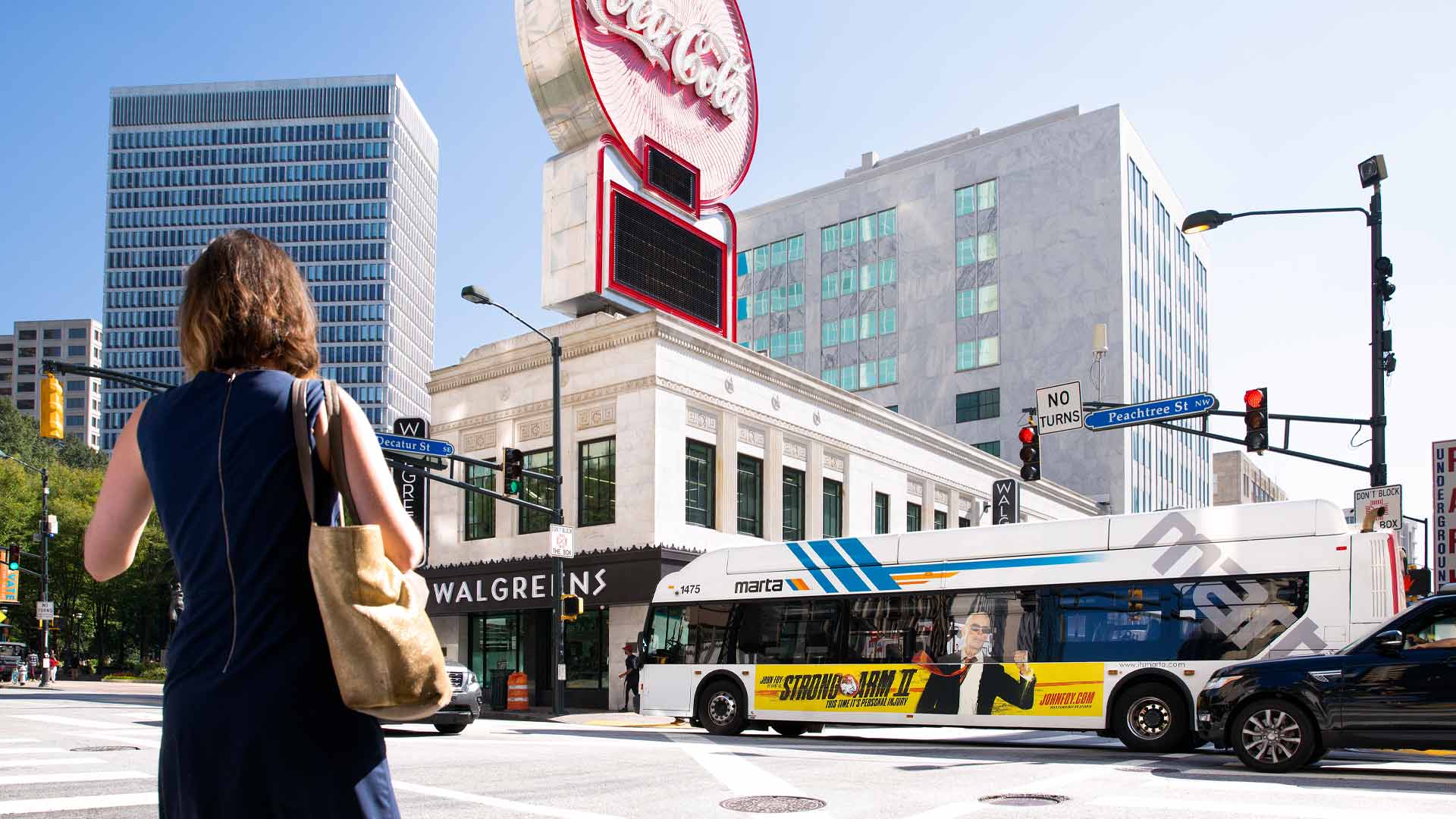
American Guerrilla Marketing places interior bus and shelter advertising across every major Arkansas transit system. Little Rock, Fayetteville, NW Arkansas, Fort Smith, Hot Springs, Jonesboro, Pine Bluff, West Memphis, and Texarkana. Direct execution, 500+ campaigns nationwide.
Arkansas’s transit landscape spans five genuinely distinct market environments, each with its own economic character, ridership profile, and advertising value proposition. Little Rock is the capital, where Rock Region Metro connects state government workers, UAMS medical professionals, and UALR students on West Markham, University Avenue, and the River Rail Electric Streetcar downtown. Northwest Arkansas is the fastest-growing region in the state, where Razorback Transit carries 28,000 UA students on the Fayetteville campus and Ozark Regional Transit connects Walmart’s headquarters community in Bentonville to the professional and working-class populations of Springdale and Rogers on the College Avenue corridor. Fort Smith is the Arkansas River Valley’s industrial and educational hub. Pine Bluff is the Arkansas Delta’s HBCU city. Jonesboro is the northeast Arkansas university and healthcare center. Hot Springs is the resort and spa capital with its Oaklawn racing tourism overlay. West Memphis is the Arkansas gateway to Memphis. And Texarkana is the uniquely bi-state city where T-Line crosses the Texas-Arkansas state line as a matter of daily operational routine.
Each of these markets is different. AGM has been executing transit advertising across Arkansas’s full market spectrum for over a decade, and we know the specific characteristics that make advertising in Razorback Transit’s Fayetteville campus environment different from advertising on Pine Bluff Transit’s HBCU community routes, which is different again from advertising on MATA West Memphis’s cross-river bridge service. We treat each market as its own specific opportunity rather than applying a single Arkansas framework that flattens the differences between the state’s most economically dynamic growth corridor in NW Arkansas and its most transit-dependent working communities in the Delta.
The statewide Arkansas transit advertising environment is substantially less competitive than equivalent-sized Southeastern states like Tennessee or Louisiana. The brands that establish Arkansas transit advertising relationships now are achieving market-dominant placements at pre-competition pricing across a state that is growing, changing, and developing the transit ridership that will make these markets progressively more valuable for transit advertising investment over the coming decade.

Advertise with Fort Smith Transit
Fort Smith Transit serving Arkansas's second-largest city. Rogers Avenue commercial corridor, historic Garrison Avenue downtown,...
Learn More
Advertise with Hot Springs Intracity Transit
Hot Springs Intracity Transit in America's Spa City. Bathhouse Row on Central Avenue, Oaklawn Racing...
Learn MoreTransit Systems Serving Arkansas

Advertise with Jonesboro Economical Transit
Jonesboro Economical Transit (JET) in northeast Arkansas. Arkansas State University, NEA Baptist Hospital, St. Bernards...
Learn More
Advertise with MATA West Memphis Routes
MATA West Memphis Routes serve Crittenden County's transit-dependent working community, the Southland Casino Racing corridor,...
Learn More
Advertise with Ozark Regional Transit
Ozark Regional Transit across the Fayetteville, Springdale, Rogers, and Bentonville corridor of Northwest Arkansas. American...
Learn More
Advertise with Pine Bluff Transit
Pine Bluff Transit in Pine Bluff, Arkansas. University of Arkansas Pine Bluff campus, Southeast Arkansas...
Learn More
Advertise with Razorback Transit
Razorback Transit serves the University of Arkansas campus bus system in Fayetteville. 28,000+ enrolled students...
Learn More
Advertise with Rock Region Metro
Rock Region Metro in Little Rock, Arkansas. Main Street, University Avenue, West Markham, UAMS Medical...
Learn More
Advertise with T-Line Texarkana
T-Line Texarkana serving both Texarkana, Arkansas and Texarkana, Texas. State Line Avenue, the Red River...
Learn MoreStart Your Arkansas Transit Campaign
AGM covers every major Arkansas transit system from Little Rock and NW Arkansas to Fort Smith, Hot Springs, Jonesboro, Pine Bluff, West Memphis, and Texarkana. Tell us your target and we'll build the campaign.
Arkansas Transit Systems: Choose Your Market
Rock Region Metro (Little Rock)
Little Rock’s city bus and River Rail Electric Streetcar. West Markham UAMS, University Ave/UALR, Main Street downtown, Rivermarket District. Arkansas’s largest transit system and primary urban market.
Razorback Transit (University of Arkansas)
UA Fayetteville campus bus system. 28,000+ students on MLK Jr Blvd, Maple Street, Garland Ave. Game day shuttles to Razorback Stadium. SEC football season and academic year campaigns.
Ozark Regional Transit (NW Arkansas)
Regional transit on College Avenue connecting Fayetteville, Springdale, Rogers, and Bentonville. Walmart headquarters corridor, Tyson Foods, NW Arkansas professional market. Spanish language for Springdale.
Fort Smith Transit
Arkansas’s second city. Rogers Avenue (Mercy Hospital), Garrison Avenue downtown, UAFS campus, and east Fort Smith Latino community routes. Spanish-language available.
Hot Springs Intracity Transit
America’s Spa City. Central Avenue Bathhouse Row, Oaklawn Racing Casino season (Jan-May), CHI St. Vincent medical corridor, Lake Hamilton resort corridor.
Jonesboro Economical Transit (JET)
Arkansas State University campus, NEA Baptist Hospital, St. Bernards Medical Center, downtown Jonesboro. Northeast Arkansas’s university and healthcare market.
Pine Bluff Transit
UAPB (University of Arkansas Pine Bluff) HBCU campus, Southeast Arkansas Medical Center, downtown Main Street. Arkansas Delta working community and Jefferson County.
MATA West Memphis Routes
Memphis Area Transit Authority West Memphis service. Cross-river commuters to Memphis, Southland Casino Racing, distribution workforce, and Crittenden County community.
T-Line (Texarkana)
Bi-state transit crossing Texas-Arkansas State Line Avenue. Red River Army Depot, Christus St. Michael Health System, Texarkana College, and the Texarkana twin cities community.
Arkansas Transit Advertising: Market by Market
Little Rock: The Capital City’s Government, Medical, and University Market
Rock Region Metro is Arkansas’s largest transit system, connecting state government workers on Dexter Avenue to UAMS medical professionals on West Markham and UALR students on University Avenue. The River Rail Electric Streetcar adds a tourism and downtown entertainment audience on the Main Street Bridge and Rivermarket District loop that no other Arkansas city can offer. For brands targeting the Arkansas professional class, state government workers, or the University Avenue and UALR campus community, Rock Region Metro is the primary transit advertising channel in the state.
Northwest Arkansas: Two Systems, Three Distinct Audiences
NW Arkansas has two transit advertising systems with distinct audiences. Razorback Transit carries the UA Fayetteville student body of 28,000-plus on campus routes and game day shuttles, making it the state’s dominant campus transit advertising platform. Ozark Regional Transit carries the broader NW Arkansas community on the College Avenue corridor from Fayetteville through Springdale and Rogers to Bentonville, connecting the Walmart headquarters community, the Tyson Foods workforce, and the region’s fastest-growing professional population in a single system that spans the economic diversity from corporate Bentonville to working-class immigrant Springdale. Combined, these two NW Arkansas systems reach more total transit riders than any other part of the state outside Little Rock.
Fort Smith: The Arkansas River Valley’s Industrial and Educational Hub
Fort Smith Transit serves Arkansas’s second-largest city on the Oklahoma border, connecting the Rogers Avenue medical and commercial corridor, the historic Garrison Avenue downtown, and the UAFS campus to the working-class and Latino residential communities of east Fort Smith. Fort Smith’s transit advertising environment is less saturated than Little Rock or NW Arkansas, meaning campaigns here achieve a market presence that requires proportionally greater investment in the state’s more competitive markets. The east Fort Smith Latino community routes specifically offer Spanish-language advertising reach in the Arkansas River Valley that no other format in the market provides comparably.
The Mid-State and Delta Markets: Hot Springs, Jonesboro, Pine Bluff
Hot Springs Intracity Transit, JET in Jonesboro, and Pine Bluff Transit each serve distinctly different mid-sized Arkansas markets. Hot Springs offers a tourism overlay from Oaklawn Racing and the national park that no other Arkansas transit system provides. JET in Jonesboro carries the A-State Red Wolves community in northeast Arkansas’s primary university city. Pine Bluff Transit carries the UAPB HBCU community in the Arkansas Delta. These three systems collectively cover the middle tier of Arkansas’s transit advertising market, reaching communities that the state’s major metro systems do not touch.
Border Markets: West Memphis and Texarkana
MATA West Memphis and T-Line Texarkana are the most geographically distinctive Arkansas transit advertising opportunities because they operate in bi-state metropolitan areas. West Memphis is the Arkansas half of the Memphis metro, and MATA West Memphis routes provide the Arkansas community access to the full MATA bi-state system. Texarkana’s T-Line literally crosses the Texas-Arkansas state line during normal operations, making it the only Arkansas transit system that delivers advertising impressions in two states simultaneously. For brands targeting these specific bi-state communities as unified markets rather than separate state targets, these systems are the only transit advertising formats that serve the full community geography.
Arkansas University Transit: The Three-campus Opportunity
Arkansas has three publicly accessible university-adjacent transit systems that together create a comprehensive statewide university market advertising opportunity. Razorback Transit in Fayetteville serves UA’s 28,000-plus enrollment with campus routes and game day shuttles. JET in Jonesboro carries the A-State community of 14,000 students. Pine Bluff Transit’s UAPB route serves the HBCU campus community in the Delta. A combined campaign across all three systems reaches Arkansas’s three most historically significant public university communities, covering both the flagship SEC university market, the regional university market in northeast Arkansas, and the HBCU community in the Delta in a unified Arkansas university transit advertising strategy.
For brands targeting the 18-to-24 Arkansas college student demographic specifically, a combined Razorback Transit plus JET fall semester campaign provides campus transit advertising across the two largest Arkansas public university campuses during the most ridership-intensive academic period. Adding Rock Region Metro’s University Avenue/UALR component adds the Little Rock university market to create a genuinely statewide Arkansas student transit buy through a single AGM engagement.
Format Pricing Across Arkansas
What Stronger Planning Looks Like On Bus & Transit Advertising In Arkansas
Good transit media planning on Bus & Transit Advertising in Arkansas starts with honest route behavior instead of generic circulation claims. AGM looks at where riders actually board, what they are doing before they get on, what they are doing after they get off, and whether the ad unit has enough repeat exposure to earn recall. In practical terms, that means separating commuter corridors from errand routes, transfer hubs from one-seat rides, and weekday patterns from weekend traffic. A message for appointment-based healthcare demand needs a different placement logic than a campaign for a restaurant launch, a public notice, or a college recruitment push. Bus & Transit Advertising in Arkansas works best when the buy reflects those differences at the route level instead of flattening the whole system into one audience bucket.
That route-first approach also helps with creative discipline. Some campaigns need a blunt headline with a phone number large enough to catch from three rows back. Some need a QR code that only makes sense in a seated interior environment. Some need a shelter panel beside a transfer point because the stop itself creates the dwell time that the message requires. On Bus & Transit Advertising in Arkansas, the smartest plan is rarely the flashiest one. It is usually the one that respects how people move through Little Rock, Fayetteville, Springdale, Jonesboro, and Arkansas corridor planning and pairs the right message with the right pause in their day.
We also pay attention to the surrounding street life, because transit ads do not exist in isolation. A bus running the same arterial every day becomes part of that corridor’s visual rhythm. Riders see the ad inside the coach, pedestrians catch the king panel on approach, and drivers sit behind the tail when traffic stacks at a light. That layered exposure is the real value of transit media. It is why a well-placed campaign on Bus & Transit Advertising in Arkansas can outperform louder media categories that seem bigger on paper but disappear from memory five seconds after the impression lands.
How AGM Extends Bus & Transit Advertising in Arkansas Campaigns Beyond the Vehicle
Transit media gets stronger when it is treated as the anchor instead of the whole plan. If a client wants to own a corridor for a few weeks, AGM can pair Bus & Transit Advertising in Arkansas placements with street-level support around the same transfer points, campus edges, downtown blocks, or retail approaches that riders already use. That might mean legal wheatpaste near nightlife foot traffic, flyer boxes near commuter stops, or stencil and snipe support on the pedestrian path between the stop and the destination. The point is not to create clutter. The point is to make the transit impression feel familiar when the same person sees the brand again ten minutes later on foot.
This is especially useful for shorter campaigns that need to build memory fast. A four-week transit run can do a lot, but a four-week transit run with matching guerrilla support around the heaviest boarding zones usually feels bigger than the budget behind it. That matters in markets where people notice repetition quickly and talk about new brands through local routines, whether that is a downtown lunch crowd, a student loop, a hospital shift change, or a county service run. Bus & Transit Advertising in Arkansas gives you the repetition. Guerrilla support turns that repetition into presence.
Execution matters just as much as the idea. We schedule installs so that transit and street-level elements launch together, we keep the visual language consistent across formats, and we make sure the CTA fits the environment. A rider at a shelter can handle a little more information than a driver passing a wrapped bus. A seated passenger has time for a QR scan. A pedestrian leaving a transfer center might respond better to a simple directional prompt. When those details are handled well, Bus & Transit Advertising in Arkansas stops being a line item on a media plan and starts acting like a real local campaign.
How Agm Executes Transit Advertising Campaigns
American Guerrilla Marketing’s transit advertising process begins with market research and route analysis, not a phone call to the transit authority’s advertising sales department. Before recommending any format or placement, AGM reviews ridership data, stop-level pedestrian counts, and route demographic profiles to identify the specific corridors and stops that align with your target audience. This research phase typically takes one to two weeks and produces a placement recommendation with supporting data that explains why each specific route and stop was selected, what audience volume and demographics to expect, and what creative approach will work best in the specific format environments being recommended.
Once the placement plan is approved, AGM handles all media buying negotiations directly with the transit authority or its authorized advertising representative. We manage the contract terms, the installation timeline, and the creative specification requirements. Your responsibility is the final creative approval — the actual buying, placement coordination, production vendor management, and installation scheduling are handled by AGM from contract through installation. Post-installation, AGM provides photographic documentation of all placements for your records and for use in internal campaign reporting.
For campaigns that include both transit advertising and guerrilla elements, AGM coordinates the timing of guerrilla deployments to align with the bus wrap or interior card installation schedule. The goal is to have all campaign elements live simultaneously so that the multi-touchpoint sequence begins on the same day and runs for the same duration. A guerrilla element that goes up two weeks before or after the transit placement misses the opportunity for simultaneous reinforcement that makes the combined campaign more effective than either format alone. AGM’s coordination process ensures that the transit and guerrilla components of your campaign go live together and stay live together for the full campaign duration.
The Case for Transit Advertising in This Market
In a media landscape defined by digital ad blocking, streaming ad skips, and the constant fragmentation of audience attention across an ever-expanding range of content platforms, transit advertising offers something that the digital formats cannot: a captive audience in a physical space where they have no mechanism to skip or block the message. A person riding the bus cannot swipe past an interior card. A driver stuck behind a bus at a red light cannot close the browser tab on the tail display. A pedestrian waiting at a bus stop cannot turn off the shelter backlit panel. These are passive, non-interruptive exposures that the audience accepts as part of the physical environment they move through every day, and that acceptance is what makes transit advertising’s recall rates consistently higher than digital display advertising at comparable media costs per thousand impressions.
The transit rider audience is also a more economically diverse audience than most digital advertising platforms can deliver. The working adult who rides the bus every day to get to work is a different consumer profile from the user who reaches streaming content from a high-income household with multiple devices. Transit advertising reaches both the upwardly mobile young professional who uses the bus because it is faster than driving downtown and the transit-dependent working adult who relies on the bus as their primary transportation. For brands that need to reach both income segments within a single market, transit advertising is one of the few formats that delivers both in the same placement.
Contact AGM to begin the planning process for your transit advertising campaign. We bring market research, media buying expertise, creative specification guidance, and full campaign execution to every transit advertising engagement. The first conversation is about understanding your campaign objectives and your target audience — everything else follows from that starting point.
Frequently Asked Questions
Yes. AGM manages statewide Arkansas transit campaigns across Rock Region Metro, Razorback Transit, Ozark Regional Transit, Fort Smith Transit, Hot Springs Intracity Transit, JET, Pine Bluff Transit, MATA West Memphis, and T-Line through a single client engagement. Statewide campaigns benefit from coordinated creative production, unified scheduling, and consolidated post-campaign reporting across all Arkansas systems. Contact AGM for statewide Arkansas transit campaign planning and pricing.
Rock Region Metro in Little Rock delivers the highest absolute ridership of any single Arkansas transit system, followed by Razorback Transit in Fayetteville during the academic year and Ozark Regional Transit on the NW Arkansas College Avenue corridor. For a statewide campaign prioritized by absolute ridership volume, Little Rock, NW Arkansas, and Fort Smith should receive the largest shares of the transit budget. For campaigns with specific university, healthcare, or community demographic targets, the priority allocation may shift toward the systems that best match the target audience regardless of overall ridership volume.
The Arkansas Razorback football season from September through November creates extraordinary ridership spikes on Razorback Transit game day shuttle service at Donald W. Reynolds Razorback Stadium. For brands targeting the UA Fayetteville market and the Arkansas Razorback athletic community, the fall semester campaign window captures both the academic-year daily rider and the game day spike ridership. The NW Arkansas market also sees higher visitor and fan activity during home game weekends, with some impact on Ozark Regional Transit as well. For the broadest Arkansas transit reach, fall semester campaigns across the state’s university and capital markets are the highest-value timing window.
Yes. Spanish-language and bilingual creative is accepted across all Arkansas transit systems where the ridership demographics support it. AGM specifically recommends Spanish-language creative for Fort Smith Transit east-side routes (Fort Smith Latino community), Ozark Regional Transit Springdale routes (the Marshallese and Latino food processing workforce), and advises on language strategy for other routes where Spanish-speaking ridership is present but less dominant. The Arkansas River Valley corridor from Fort Smith through Springdale has a significant Spanish-speaking population that is underserved by English-only advertising, and transit advertising in Spanish is one of the most direct channels to these communities available in the state.
AGM has placed transit advertising campaigns across Arkansas systems including Rock Region Metro in Little Rock, Razorback Transit in Fayetteville, and Ozark Regional Transit in NW Arkansas as part of our 10-plus year, 500-plus campaign national practice. We understand the specific characteristics of Arkansas’s transit market: the seasonal patterns of the university campus systems, the healthcare worker demographics on the medical center routes in Little Rock, Jonesboro, and Fort Smith, the community character of the Delta systems in Pine Bluff, and the bi-state market dynamics in both West Memphis and Texarkana. We bring that market knowledge to every Arkansas campaign rather than treating the state as a generic secondary market.
Arkansas transit advertising is generally more cost-effective per placement than comparable systems in Tennessee (Nashville and Memphis), Missouri (Kansas City and St. Louis), or Oklahoma (Tulsa and Oklahoma City) because the Arkansas market has lower advertiser competition for premium transit inventory. Brands that include Arkansas in regional transit campaigns often find that the Arkansas portion of the campaign achieves above-average market penetration at below-average cost relative to the neighboring state markets. AGM can provide comparative rate information across Arkansas and neighboring state transit systems for brands planning regional mid-South or South-Central transit advertising strategies.
Yes. AGM places transit advertising across all Arkansas systems and executes guerrilla marketing formats including snipe advertising, sidewalk stencils, take-one flyer distribution, and wheatpasted poster campaigns across all major Arkansas markets. A coordinated Arkansas transit-plus-guerrilla campaign can be structured and managed through a single AGM engagement for clients who want transit frequency and street-level presence reinforcing the same brand in the same Arkansas corridor simultaneously. This integrated approach is how AGM has executed 500-plus campaigns nationally, and the Arkansas markets including the Fayetteville campus environment, the downtown Little Rock Rivermarket District, and the Fort Smith and NW Arkansas commercial corridors are all environments where the transit-guerrilla combination creates compound brand frequency at cost levels that individual formats alone cannot match.
The three most consistently overlooked Arkansas transit advertising opportunities are: (1) Ozark Regional Transit Springdale routes with Spanish-language creative targeting the Latinx and Marshallese working community, which virtually no national brand uses effectively despite the size and transit dependency of this community; (2) Hot Springs Intracity Transit during the Oaklawn spring racing season, where brands with horse racing or entertainment cultural positioning miss a specific, concentrated audience in a nationally prominent racing destination; and (3) the UAPB route on Pine Bluff Transit, which is the only HBCU campus transit advertising opportunity in the state and reaches an underserved African American student demographic with community loyalty that extends beyond graduation into the Arkansas Delta region’s professional and civic life.
Yes. AGM places transit advertising across all Southern and Mid-South states and can structure campaigns that combine Arkansas systems with Memphis MATA (Tennessee side), Texarkana Texas T-Line routes, Oklahoma City transit, and Kansas City Metro for multi-state regional campaigns. The bi-state systems of MATA West Memphis (AR/TN) and T-Line Texarkana (AR/TX) create natural cross-state campaign anchors that connect Arkansas transit advertising to the neighboring state markets these systems already serve. Contact AGM for multi-state regional transit campaign planning across the South-Central corridor.
Yes. For regulated industry advertisers including healthcare systems, insurance companies, financial institutions, and pharmaceutical brands running advertising on Arkansas transit systems, AGM provides the formal documentation and proof-of-performance reporting that regulated marketing activities require. All placements are documented with installation photographs, placement location records, campaign period dates, and estimated impression counts. For clients with specific CMS, state insurance, financial services, or pharmaceutical compliance reporting requirements, AGM structures the post-campaign reporting deliverables to meet those requirements explicitly across all Arkansas transit systems included in the campaign.