American Guerrilla Marketing
Nationwide serivce
Media planning, media buying, billboard advertising, & guerrilla marketing

American Guerrilla Marketing places interior bus and shelter advertising across every major Ohio transit system. Cleveland, Columbus, Cincinnati, Dayton, Akron, Toledo, and university markets statewide. Direct execution. 500+ campaigns nationwide.
Ohio is one of the most structurally diverse transit advertising states in the country. Four major metropolitan markets, each with its own character and economic base, sit within a three-hour drive of each other in the state’s northern and central geography. Cleveland is the rust belt anchor, a working-class industrial city rebuilt around one of the country’s great healthcare employment hubs at Cleveland Clinic and MetroHealth. Columbus is the fastest-growing large city in the Midwest, driven by state government employment, a technology sector that arrived in the 2010s, and Ohio State University’s 60,000-plus student population that makes the COTA system one of the most university-saturated transit markets in the region. Cincinnati is the corporate headquarters city, home to Procter and Gamble’s global operations and a concentration of consumer goods professionals whose commuting patterns are shaped by the SORTA Metro system connecting the downtown basin to the northern suburbs. Dayton carries the distinction of adjacency to Wright-Patterson Air Force Base, which creates a workforce transit demographic with specific professional characteristics found nowhere else in the Ohio market.
Below those four major markets, Ohio operates a secondary tier of transit systems that serve mid-sized cities and university communities with genuine advertising value for brands willing to look past the metro anchors. Akron Metro RTA serves Summit County’s rubber industry successor economy and the University of Akron community. TARTA in Toledo serves the glass and auto industry workforce on the Michigan border. SARTA in Canton covers Stark County’s manufacturing and healthcare workforce. Athens Public Transit serves Ohio University’s 21,000-plus student population in one of the most underserved university transit advertising markets in the state. Each of these secondary markets carries a specific audience profile that major brands consistently overlook, which means the available inventory is underpriced relative to the audience quality it delivers.
AGM has executed transit advertising campaigns across Ohio’s major and secondary markets as part of a 500-plus campaign national execution record. We know the difference between a Cleveland RTA campaign targeting healthcare workers on the HealthLine corridor and a COTA campaign targeting OSU students on the High Street routes. We know which Dayton routes serve the Wright-Patterson adjacent workforce and which Canton routes serve the Aultman Hospital employment center. That route-level knowledge is what separates a campaign that reaches your actual target audience from a campaign that generates impression counts without demographic precision.
AGM covers every major Ohio transit system from Greater Cleveland RTA to Athens Public Transit. Tell us your target market and we'll build the media plan that reaches them directly.
Ohio’s largest transit system serving Cuyahoga County. Fixed-route bus, the HealthLine BRT on Euclid Avenue, rapid transit rail, and the Waterfront Line. Connects the working-class east and west side neighborhoods to downtown and the Cleveland Clinic district.
Central Ohio Transit Authority serving the Columbus metro. Fixed-route bus across Franklin County connecting OSU’s campus to downtown, the Short North, and the east-side neighborhoods. The fastest-growing major Ohio transit system by ridership.
Southwest Ohio Regional Transit Authority serving Hamilton County and the Greater Cincinnati metro. Routes connecting downtown Cincinnati, the Procter and Gamble campus, the University of Cincinnati, and the northern suburbs.
Regional Transit Authority serving Montgomery County and the Dayton metro. Routes connecting downtown Dayton, Wright State University, the University of Dayton, and the communities adjacent to Wright-Patterson AFB on the east side.
Summit County transit connecting downtown Akron, the University of Akron campus, and the surrounding residential communities. Serves a workforce population shaped by healthcare, education, and the manufacturing successor industries of the rubber city era.
Toledo Area Regional Transit Authority serving Lucas County. Routes connecting downtown Toledo, the University of Toledo campus, ProMedica hospital system employment centers, and the Maumee and Sylvania residential corridors.
Stark Area Regional Transit Authority serving Stark County and Canton. Routes connecting downtown Canton, Aultman Hospital, Mercy Medical Center, and the residential communities of North Canton, Massillon, and Alliance.
Lake County transit serving the Cleveland eastern suburbs including Mentor, Painesville, Willoughby, and Eastlake. Connects Lake County’s residential and employment base to the broader Greater Cleveland regional economy via park-and-ride and fixed-route services.
Serving Hamilton’s Cincinnati-area suburbs including Middletown, Oxford, and Fairfield. Connects the Butler County workforce to the Cincinnati metro. Oxford routes serve the Miami University campus of 18,000-plus students.
Community transit serving Newark and Licking County east of Columbus. Connects the Newark workforce to Columbus metro employment and serves the Licking County healthcare and social services network.
City transit serving Athens and the Ohio University campus of 21,000-plus students. One of the most underserved university transit advertising markets in Ohio. Routes connecting campus, Court Street, and the surrounding Athens community.
Greater Cleveland RTA is Ohio’s largest transit system and one of the most structurally layered transit advertising markets in the Midwest. The system’s crown asset is the HealthLine BRT on Euclid Avenue, a dedicated bus rapid transit corridor running from Public Square downtown through Midtown to University Circle and the Cleveland Clinic and University Hospitals medical campuses. No other transit advertising placement in Ohio delivers the healthcare professional and medical research audience as directly as the HealthLine. Cleveland Clinic employs more than 50,000 people in the Greater Cleveland area, and a substantial portion of the clinical and support workforce on the east side of downtown uses the HealthLine as a daily commuter route. For pharmaceutical, medical technology, healthcare software, and professional services brands targeting the healthcare workforce, the HealthLine is the single most targeted transit placement in the state.
COTA serves the Columbus metropolitan area through a fixed-route network that has grown alongside the city’s remarkable population expansion over the past two decades. Columbus has added more residents than any other Ohio city during this period, and COTA’s ridership reflects both the city’s growth and the demographics driving it: Ohio State University students on the High Street corridor, state government workers on the Capitol Square routes, and the young professional workforce in the Short North, German Village, and Franklinton neighborhoods that have become the geographic center of Columbus’s economic resurgence.
SORTA Metro’s Cincinnati network is shaped by the city’s distinctive geography, with the downtown basin at the bottom of hills that create radial travel patterns from the residential neighborhoods of Price Hill, Westwood, Mt. Lookout, and Hyde Park to the downtown employment center. The Procter and Gamble corporate headquarters on the north edge of downtown is one of the system’s most significant employment anchors, and the routes serving the P&G campus and the Cincinnati downtown corporate corridor carry a consumer goods and corporate professional demographic that is unusually concentrated compared to other Ohio systems.
Greater Dayton RTA serves Montgomery County in a transit market defined by two overlapping characteristics: the presence of Wright-Patterson Air Force Base on the eastern edge of the metro and the dual university presence of Wright State University and the University of Dayton within the RTA service area. Wright-Patterson is one of the largest Air Force installations in the country and is the primary employer in the Dayton metro for a defense contractor, aerospace engineering, and military professional workforce that commutes on the east-side RTA routes serving the Fairborn and Beavercreek corridors adjacent to the base.
Athens Public Transit serves the Ohio University campus and the city of Athens, a self-contained college town in southeastern Ohio with limited connection to the broader state transit network. Ohio University’s 21,000-plus student population is concentrated in Athens year-round during the academic year, and the transit system serves the campus-to-Court Street corridor that is the geographic center of the Athens student experience. Athens is an underpriced transit advertising market precisely because it is geographically isolated from the major Ohio metro markets, which means national and regional brands rarely consider it independently. For brands targeting the university young adult demographic in southeastern Ohio, Athens Public Transit offers a captive audience with genuinely limited competition from other transit advertisers.
King and queen posters, interior cards, headliners, seat-back displays, and overhead cards are available across Ohio’s transit fleet. Interior formats reach every rider on the bus for the full duration of their trip in a low-distraction reading environment. Format availability varies by system and fleet type. AGM advises on which interior formats are available on each Ohio system and recommends the format mix that best matches the campaign’s creative approach and budget.
Full bus wraps, tail displays, and window vinyls are available on most Ohio transit systems. Exterior formats reach vehicle traffic, pedestrians, and the communities along each route as the bus moves through the service area. Full wraps transform a bus into a moving billboard across the system’s entire route network. AGM coordinates exterior format availability and installation across all Ohio transit systems.
Covered shelter advertising is available at primary stop locations on the larger Ohio city transit systems. Shelter panels reach waiting riders during their stop dwell time and vehicle traffic passing the stop location. Shelter advertising combined with interior bus placements creates a two-touchpoint campaign that reaches riders both at the stop and on the vehicle. AGM advises on shelter inventory availability by system and recommends shelter positions that match the advertiser’s geographic and demographic targets.
Bus shelter advertising in Ohio places your brand at the exact locations where riders wait for transit service. The dwell time at a shelter, typically five to fifteen minutes per stop visit, creates an uninterrupted, low-distraction exposure window that in-vehicle advertising alone cannot deliver at equivalent duration.
Ohio’s shelter advertising inventory is concentrated at the primary boarding and alighting points on the state’s larger transit systems, where ridership volumes and wait times are highest. AGM identifies the shelter positions that deliver the most rider exposure for each campaign’s geographic and demographic targets, and structures shelter buys around the stop locations that create maximum frequency among the target audience.
AGM manages all aspects of shelter advertising placement in Ohio, from inventory identification and booking through creative production, installation, and monitoring for the full campaign posting period.
Ohio’s transit advertising market is less competitive than comparable markets in states with higher national advertiser awareness. Brands that target the digital advertising ecosystem for the same audiences often pay a premium for fragmented, avoidance-prone digital impressions when Ohio’s transit systems deliver the same demographics with sustained, physical exposure during their daily transit routine.
The working adult, student, and community transit rider in Ohio is reachable through transit advertising at a cost-per-impression that digital advertising in the same markets consistently fails to match. AGM has executed transit campaigns across more than 500 national engagements and understands exactly which Ohio systems and routes deliver the audience volume and demographic profile that each advertiser needs.
Brands that enter the Ohio transit advertising market now are securing placements at pre-competitive pricing on systems that will attract more national advertiser attention as the market matures.
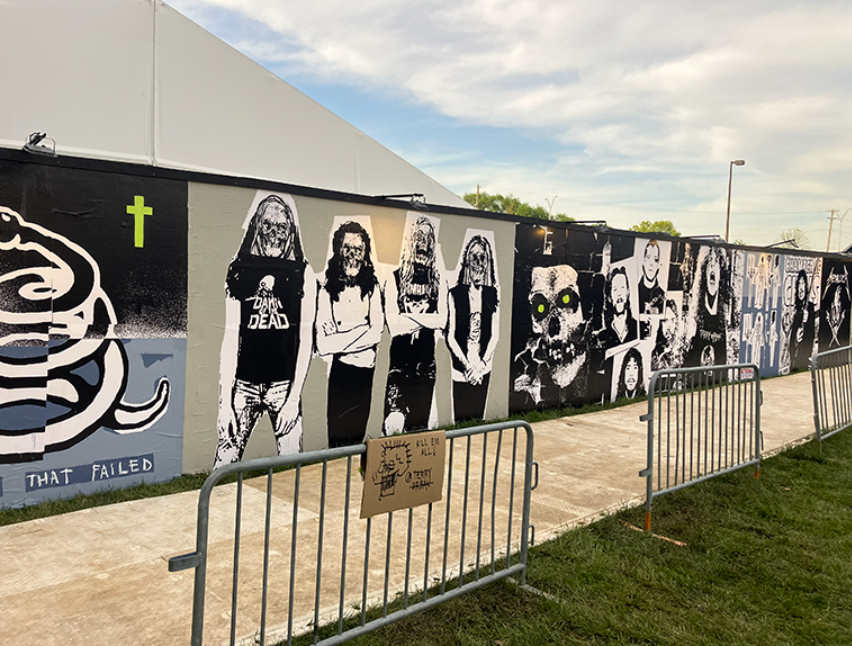
AGM’s full range of guerrilla marketing formats is available alongside transit advertising campaigns in every Ohio market. The combination of transit and street-level guerrilla creates the frequency stack that single-format campaigns cannot achieve independently.
Snipe advertising along the corridors served by Cleveland RTA’s HealthLine, COTA’s High Street routes, SORTA’s Reading Road corridor, and the Dayton RTA’s Main Street downtown routes creates street-level touchpoints that reinforce bus interior campaigns at the route level. Riders who see your transit interior card also encounter your snipes at stop intersections and along the commercial strips their routes travel.
Sidewalk stencils at the primary transit hubs in each Ohio city, including Public Square in Cleveland, the COTA downtown Columbus hub on High and Broad Streets, and the Fountain Square hub in Cincinnati, create ground-level brand presence at the maximum foot-traffic concentration points in each system’s network.
Wheatpasted poster campaigns in the Ohio City and Tremont neighborhoods of Cleveland, the Short North and Franklinton corridors in Columbus, and the Over-the-Rhine neighborhood in Cincinnati create large-format street impressions for the walking and transit audience in the pedestrian-dense areas adjacent to Ohio’s most active transit networks.
AGM’s Ohio transit advertising process begins with market research and route analysis specific to the Ohio systems included in your campaign. Before recommending any format or placement, AGM reviews ridership data, stop-level pedestrian counts, and route demographic profiles to identify the specific corridors and stops that align with your target audience. For an Ohio campaign, this research phase distinguishes between the HealthLine’s healthcare professional audience, the COTA campus routes’ student audience, and the SORTA corporate corridor’s professional workforce audience, and produces placement recommendations with supporting data that explains the audience rationale for each selected route and stop.
Once the placement plan is approved, AGM handles all media buying negotiations directly with each Ohio transit authority or its authorized advertising representative. Media buying, contract terms, installation timeline management, and creative specification compliance across Cleveland RTA, COTA, SORTA, and Dayton RTA simultaneously are handled by AGM from contract through installation. Your responsibility is the final creative approval. Post-installation, AGM provides photographic documentation of all Ohio placements for your records.
For Ohio campaigns that include both transit advertising and guerrilla elements, AGM coordinates timing so that guerrilla deployments in Cleveland’s Ohio City neighborhood, Columbus’s Short North, and Cincinnati’s Over-the-Rhine go live simultaneously with the transit interior installations. The simultaneous launch maximizes the multi-touchpoint reinforcement that makes combined campaigns more effective than either format running independently.
Yes. AGM manages multi-market transit campaigns across Ohio through a single client engagement. A statewide Ohio campaign covering Greater Cleveland RTA, COTA Columbus, SORTA Metro Cincinnati, and Greater Dayton RTA can be coordinated through one AGM point of contact with unified creative management, production coordination, and post-campaign reporting. Multi-market Ohio campaigns benefit from coordinated planning that ensures synchronized launch timelines across the four major systems and consistent creative application across different transit system specification requirements.
Greater Cleveland RTA delivers the highest absolute ridership of any Ohio transit system, driven by the density of Cuyahoga County’s population and the transit dependency of the working-class neighborhoods on the system’s east and west side routes. COTA Columbus is the fastest-growing by ridership trajectory, with Columbus’s population growth expanding the system’s reach year over year. For a statewide Ohio campaign prioritized by absolute ridership, Cleveland RTA should receive the largest budget share. For campaigns with university audience priorities, COTA’s OSU campus routes may warrant proportionally larger investment than absolute ridership numbers alone suggest.
The HealthLine is a dedicated bus rapid transit corridor with station-based infrastructure, not standard bus stops. The station environments create shelter-style advertising opportunities with consistent passenger dwell time that differs from the variable stop experiences on standard fixed-route buses. The HealthLine’s dedicated right-of-way means service frequency is higher than standard routes, which increases the impression frequency for advertising along the corridor. Most importantly, the Euclid Avenue alignment from Public Square to University Circle tracks directly through the largest healthcare employment concentration in Ohio, which gives HealthLine advertising a demographic specificity that general system buys cannot replicate.
OSU’s academic year runs from late August through early May, with the highest ridership concentration during the fall and spring semesters when the full student population is on campus. Summer ridership on the campus routes drops substantially as most students leave Columbus between May and August. For campaigns specifically targeting the OSU student demographic, the fall semester from late August through mid-December and the spring semester from mid-January through late April are the primary windows. For campaigns targeting the broader Columbus young professional and non-student demographic, year-round COTA placements deliver consistent ridership without the summer trough that affects the campus-specific routes.
Butler County RTA operates routes connecting Oxford to the broader Butler County transit network, and Miami University’s 18,000-plus student population in Oxford represents a concentrated campus audience that is rarely targeted by transit advertisers focused on the major Ohio systems. Oxford is geographically isolated enough that the student population is fully concentrated within the city during the academic year, making the campus-adjacent routes on Butler County RTA an unusually captive audience for brands targeting the university demographic. The advertising cost on Butler County RTA is substantially lower than comparable university transit placements in Columbus or Cincinnati, and the audience demographic quality for university-focused brands is directly comparable.
The systems listed here represent the primary fixed-route transit advertising markets in Ohio. Additional community transit, specialized transit, and demand-responsive services operate across the state’s 88 counties, and many of these services have advertising availability that AGM can investigate on a case-by-case basis. Ohio’s rural transit infrastructure is extensive relative to most Midwestern states, and community transit serving smaller markets in Chillicothe, Zanesville, Mansfield, and Lima may offer advertising opportunities for brands targeting those specific regional markets. Contact AGM to discuss advertising options in Ohio transit markets not listed on this page.
Ohio transit advertising consistently delivers lower cost-per-impression than digital advertising for comparable demographic segments in the same geographic markets. The working adult and commuter demographic on Cleveland RTA and COTA is reachable through digital channels, but the fragmentation of digital media, the ad-blocking behaviors of mobile users, and the cost escalation of programmatic targeting in competitive Ohio market categories means that physical transit advertising delivers sustained, frequency-building exposure at cost levels that digital campaigns in the same markets rarely match. For brands with specific Ohio market focus and a target demographic that uses the state’s transit systems regularly, physical transit advertising is typically more efficient per effective impression than digital alternatives at comparable Ohio budget levels.
Standard production and installation lead time for Ohio transit interior advertising is two to four weeks from final artwork approval. Shelter advertising at premium locations, particularly the HealthLine stations in Cleveland and the Short North corridor shelters in Columbus, may require four to six weeks for the most in-demand positions. Full bus wraps require the most lead time at five to six weeks minimum across all Ohio systems. AGM recommends beginning Ohio campaign planning six to eight weeks before the intended launch date to ensure availability confirmation, production time, and installation scheduling across all systems included in the campaign.
Yes. For regulated industry advertisers including healthcare systems, financial institutions, insurance companies, and legal services operating in Ohio, AGM provides installation photographs, placement location records, campaign period dates, and estimated impression counts for all Ohio transit placements. For healthcare and financial services clients who need formal proof-of-performance documentation for compliance records, AGM structures reporting deliverables that meet those documentation requirements across all Ohio transit systems included in the campaign.
Greater Dayton RTA’s east-side routes serving the Fairborn and Beavercreek corridors adjacent to Wright-Patterson Air Force Base are the strongest defense and aerospace workforce transit placements in Ohio. Wright-Patterson employs more than 27,000 military and civilian workers and thousands of additional defense contractor personnel, and the RTA routes serving the base-adjacent residential and commercial corridors carry a professionally specific demographic with household incomes and educational attainment levels significantly above the Dayton metro average. For brands targeting the defense and aerospace workforce in Ohio, the east-side Dayton RTA routes are the primary transit advertising channel for that demographic.