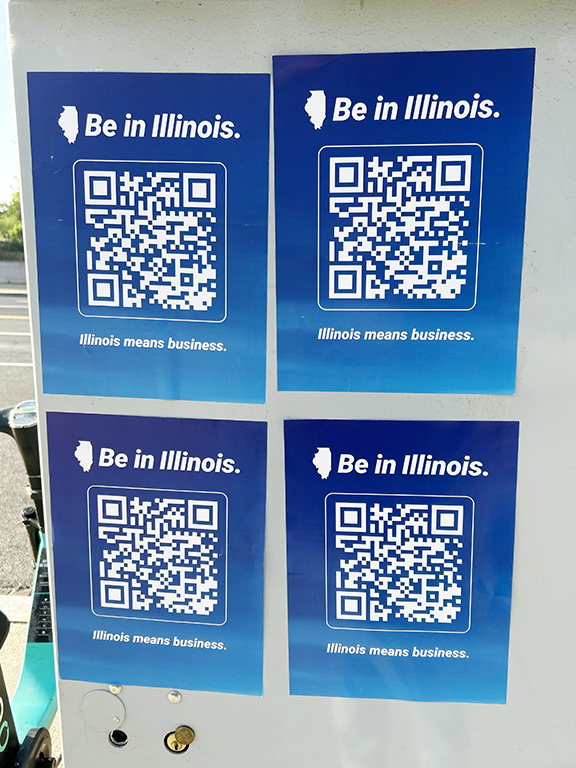
Guerrilla marketing has a reputation as an unmeasurable format — a spray-and-pray approach where you put posters on walls, hope people see them, and have no meaningful way to know what happened next. That reputation is outdated and, for campaigns designed properly, wrong.
Modern guerrilla marketing campaigns can be designed with the same attribution rigor as digital campaigns. The tools are different — QR codes instead of pixels, vanity URLs instead of UTM parameters, geo-fenced digital overlays instead of retargeting pools — but the underlying measurement logic is identical: track the path from exposure to action, and calculate the cost per action against the value of that action.
The problem is not that guerrilla marketing is unmeasurable. The problem is that most campaigns are not designed for measurement from the start. Measurement infrastructure needs to be built into the campaign brief, the creative, and the execution plan before the first panel goes up. Retrofitting attribution after launch is expensive, imprecise, and often impossible.
This guide covers the tracking methods that work for guerrilla campaigns, the metrics that matter, and the attribution models that translate street-level activity into ROI numbers your CFO will find credible. Our team at American Guerrilla Marketing operates GPS-documented campaigns across 50+ U.S. markets and includes measurement infrastructure in every campaign we build.
The Measurement Framework: Start With the Objective
ROI is not a single metric — it is a ratio that relates investment to outcome. The outcome you are measuring must be defined before the campaign launches. Different campaign objectives produce different outcome definitions, and different outcome definitions require different measurement approaches.
Awareness Objectives
For campaigns designed to build brand awareness, the relevant outcomes are: brand search volume increase in the campaign geography during the campaign period, direct website traffic increase from the campaign geography, aided and unaided brand recall measured through pre and post surveys, and social mention volume for brand terms during the campaign window. None of these are as clean as a conversion metric, but they are measurable and comparable across periods.
Conversion Objectives
For campaigns designed to drive specific actions — app downloads, store visits, purchases, phone calls — the relevant outcomes are the actions themselves, tracked through campaign-specific attribution elements. QR codes, vanity URLs, promo codes, and unique phone numbers all create hard links between the guerrilla placement and the downstream action.
Trial and Sampling Objectives
For sampling campaigns where the primary objective is product trial, the relevant outcome is the number of samples distributed, the post-trial purchase rate among people who sampled, and repeat purchase data for the cohort that first encountered the brand through the sampling event. Our brand ambassador teams track distribution volume at every sampling activation with a documented count per session.
QR Codes: The Primary Tracking Tool for Guerrilla Campaigns
A unique QR code at each placement location turns a static visual into a measurable touchpoint. The code links to a campaign-specific landing page with location parameters in the URL. When scanned, the scan is logged with timestamp, device type, and the location identifier embedded in the URL.
Per-Location QR Code Strategy
Rather than one QR code across all placements, use a unique code per placement location. Each code points to the same landing page but carries a different location parameter (example: ?loc=williamsburg-myrtle-ave). The QR code management platform logs each scan by location, giving you performance data at the individual placement level — which walls are generating scans and which are not.
That location-level data is the most actionable output of a guerrilla campaign measurement system. It tells you which neighborhoods are driving engagement, which specific streets are outperforming, and where to concentrate placements in the next campaign flight. Over multiple campaigns, you build a ranked map of your highest-performing placements in each market.
QR Code Placement on Creative
A QR code that is too small or poorly positioned does not get scanned. The code should be at minimum 1 inch by 1 inch on a standard 24×36 poster, positioned in the lower third of the composition where it does not compete with the primary visual or headline. Include a brief instruction near the code — “Scan for [offer]” — because unprompted QR scanning behavior is not universal across all demographic groups.
Vanity URLs and Direct Traffic Attribution
A vanity URL printed on a guerrilla marketing piece drives a specific and attributable traffic signal. A URL like yourbrand.com/nyc or yourbrand.com/launch is short enough to type and distinctive enough that direct navigation to it is almost certainly driven by the print campaign. Monitor direct traffic to that URL during the campaign period — spikes correlate with deployment density and foot traffic volume at placement locations.
Pair the vanity URL with UTM parameters on the redirect so the analytics platform properly segments traffic from the campaign. When someone types the vanity URL and is redirected to the full campaign URL with UTM tags, that session is attributed to the out-of-home campaign in your reporting dashboard.
Promo Codes for Hard Conversion Attribution
A promo code that appears only on the guerrilla marketing piece creates a hard attribution link. Every redemption of that code is a confirmed conversion from the campaign. For e-commerce and retail clients, promo code redemptions are often the most compelling measurement metric because they connect directly to revenue. A campaign that drives 500 promo code redemptions at an average order value of $80 produced $40,000 in directly attributable revenue. The math is clear.
Set up separate promo codes for different placements or geographies if you want location-level conversion data. The operational complexity is low — promo codes are cheap to create in most e-commerce platforms — and the data quality improvement is significant.
Geo-Fenced Digital Campaigns as a Measurement Complement
A geo-fenced digital ad campaign running simultaneously with a guerrilla campaign creates a measurement bridge between the physical and digital environments. Device IDs detected within the geographic boundary of guerrilla placements are pooled into an audience segment. That segment receives digital ads that reinforce the guerrilla creative. The digital campaign’s performance data — CTR, conversion rate, cost per conversion — reflects the combined effect of the physical and digital exposure.
This approach does not cleanly isolate the guerrilla campaign’s independent contribution, but it produces attributable digital performance from an audience that was physically exposed to the street campaign. For brands that need digital performance data to justify street-level spend to internal stakeholders, geo-fencing is an effective bridge strategy.
Control Market Testing
The most rigorous guerrilla marketing attribution model is the before/after + test/control framework. Select a campaign market (where the guerrilla campaign runs) and a comparable control market (where no campaign runs during the same period). Establish baseline metrics in both markets before the campaign launches — brand search volume, direct website traffic, social mention volume, sales data. Run the campaign in the test market only. Compare the change in metrics between the two markets over the campaign period. The incremental difference in the campaign market, controlling for the baseline trend, is attributable to the campaign.
This is the same attribution model used for television, direct mail, and other non-digital media. It is methodologically sound and produces results that quantitative-minded stakeholders find credible. The limitation is that it requires sufficient baseline data and a meaningful volume of trackable outcomes to produce statistically significant results — it works better for large brands in major markets than for small campaigns in niche markets.
Impression Estimates: How to Calculate Them Responsibly
Every guerrilla marketing campaign we execute includes estimated impression calculations based on documented foot traffic data. For each placement location, we use available pedestrian count data, transit ridership numbers, and intersection volume estimates to calculate a daily impression estimate. We apply a conservative visibility multiplier — not every passerby will notice every placement — to produce a net impression figure for each location.
These estimates are explicitly presented as estimates, not guarantees. They provide a basis for CPM calculation (cost per thousand impressions) that allows the campaign to be compared against other media buys in the same period. A guerrilla campaign with a calculated CPM of $2.50 in a market where digital CPMs run $8 to $15 is a straightforward media efficiency argument, even with conservative impression assumptions.
Social and Earned Media Tracking
A well-executed guerrilla campaign generates organic social documentation. Pedestrians photograph posters, murals, stencils, and activations. Those posts appear on Instagram, TikTok, and Twitter/X with geo-tags that place them in the campaign geography. Brand mention tracking tools (Sprout Social, Brandwatch, or even manual hashtag monitoring) capture this organic content.
Social documentation volume is a useful secondary metric — it correlates with visual quality, placement in high-foot-traffic locations, and the presence of photogenic creative elements. It does not directly prove ROI, but it provides evidence of reach and organic amplification that supplements the primary tracking data.
Phone Number Attribution for Guerrilla Campaigns
Unique tracking phone numbers are an underutilized attribution tool for guerrilla campaigns targeting local service businesses or any brand where phone calls are a primary conversion action. A tracking number that appears only on the guerrilla campaign materials is answered by the business’s standard line (through call forwarding) and generates a call log that shows exactly when calls came in and from what area code. For campaigns in a specific city or neighborhood, incoming calls from local area codes during the campaign window that are above baseline call volume provide direct attribution evidence.
Call tracking platforms (CallRail, Marchex, and others) provide detailed call analytics: call duration, caller location, call disposition, and timestamp. When the tracking number is printed on take-one cards, poster QR code landing pages, and brand ambassador leave-behind materials, the call data directly ties inbound calls to the campaign. For businesses where phone calls are the primary booking or inquiry mechanism, call attribution from guerrilla campaigns can be as reliable as digital conversion tracking.
Setting Up Attribution Before the Campaign Launches
The most common measurement failure in guerrilla marketing is not the absence of tracking tools — it is the absence of tracking setup before the campaign goes live. QR codes that are not set up until after installation cannot be tracked from day one. Landing pages without conversion events installed generate traffic data that cannot be attributed to conversions. Vanity URLs that are not monitored create data that nobody sees. The tracking infrastructure needs to be in place, tested, and confirmed working before the first panel goes up or the first stencil is applied.
Pre-Launch Measurement Checklist
Before any guerrilla campaign installation begins, confirm the following are in place: QR codes created and tested (scan from a phone and confirm the destination page loads correctly), landing page live and conversion events firing in the analytics platform, vanity URL created and redirecting correctly with UTM parameters in the redirect URL, baseline metrics captured for all KPIs that will be measured (so the before-and-after comparison is available), and the geo-fenced digital campaign set up if one is being used as a measurement complement. Any tracking element that is not confirmed working before launch cannot produce data that is used in the post-campaign analysis.
The Baseline Data Requirement
Attribution requires a baseline. You cannot measure the incremental effect of a campaign on brand search volume if you do not know what brand search volume was before the campaign. You cannot measure direct traffic lift if you do not have direct traffic data from the equivalent period before the campaign. Capture baseline data for all primary KPIs in the four to six weeks before the campaign window opens. That baseline is the reference point against which campaign-period performance is compared to calculate incremental impact.
Building a Measurement Dashboard for Guerrilla Campaigns
A measurement dashboard for a guerrilla marketing campaign aggregates all tracking data into a single view that allows real-time and post-campaign performance assessment. The dashboard does not need to be complex — it needs to surface the metrics that matter and do it clearly enough that a marketing director can read it in 60 seconds and know whether the campaign is performing.
Core Dashboard Metrics
For a standard guerrilla campaign with QR tracking, the dashboard should display: total QR scans by date (to show performance over time), total scans by location (to show which placements are driving engagement), landing page sessions from the campaign-specific URL, conversion events on that landing page (signups, purchases, phone calls), and estimated total impressions based on documented foot traffic data. These five metrics tell you how the campaign is performing at every level from individual placement to overall program.
For campaigns without digital attribution elements, the simplified dashboard tracks: estimated impressions by location, proof of posting documentation status (confirming each placement is documented), any social documentation observed (posts, mentions, content tagged at campaign locations), and earned media coverage during the campaign period. This baseline reporting confirms the campaign ran correctly even when digital conversion tracking is not available.
Reporting Cadence
For campaigns running 4 weeks or longer, a weekly performance check — even informal, even a brief email summary — allows the campaign team to identify underperforming placements early and make mid-campaign adjustments. A placement location that is generating zero QR scans after two weeks is a candidate for creative refresh or location replacement. Making that call at week two is far more productive than waiting until the post-campaign report to discover a placement that never worked.
Communicating Guerrilla Campaign Results to Internal Stakeholders
Guerrilla marketing ROI arguments face a skepticism challenge with finance teams and executives who are accustomed to the precise attribution metrics that digital advertising generates. The measurement tools we have described — QR codes, vanity URLs, promo codes, geo-fencing, control markets — produce data that is defensible and specific. The communication challenge is framing that data in terms that non-marketing stakeholders find credible.
The CPM Argument
Calculate the CPM (cost per thousand impressions) for the guerrilla campaign using documented foot traffic data for each placement location. Compare that CPM to the digital CPM in the same market during the same period. In major urban markets, guerrilla CPMs of $2 to $5 compare favorably against digital CPMs of $8 to $20 for comparable geographic targeting. That comparison gives a finance team a familiar metric framework to evaluate the campaign’s media efficiency against known benchmarks.
The Conversion Cost Argument
When QR tracking or promo code data produces actual conversion events, the calculation is straightforward: total campaign cost divided by number of conversions equals cost per conversion. Compare that to the cost per conversion on digital channels for the same offer during the same period. When guerrilla CPL or CPA is lower than the digital equivalent — which it often is in markets where digital CPMs are high — the ROI argument is direct and requires no estimation.
The Proof of Posting Report
Every guerrilla campaign we execute delivers a proof of posting report — a document that includes GPS-tagged photos of every placement, installation timestamps, the specific address of each location, and the campaign dates for each placement. This report serves as the documentation baseline for all subsequent measurement work and as the accountability record for the execution.
The proof of posting report is non-negotiable. Any outdoor advertising campaign without documented proof of placement cannot be measured — you do not know what ran, where it ran, or for how long. Our GPS documentation system is built into every campaign we execute, and the report is delivered as a standard part of the campaign deliverable package.
Frequently Asked Questions
Can guerrilla marketing ROI actually be measured?
Yes. QR codes, vanity URLs, unique phone numbers, geo-fenced digital campaigns, before/after brand lift studies, and GPS-documented placement data all provide measurable signals. The key is designing for measurement before the campaign launches, not trying to retrofit attribution after the fact.
What metrics should I track for a guerrilla marketing campaign?
Core metrics: QR code scans by placement location, vanity URL direct traffic, promo code redemptions, call volume to campaign-specific phone numbers, website direct traffic in the campaign geography, and any conversion data attributable to campaign-specific tracking elements. Secondary: social mentions and geo-tagged posts during the campaign period.
How do QR codes help measure guerrilla marketing performance?
Each placement location gets a unique QR code with location-specific URL parameters. When someone scans, the scan is logged with timestamp and device data. Aggregate QR scan data tells you which placements are generating engagement. Combined with conversion tracking on the landing page, QR codes provide end-to-end attribution from physical placement to online conversion.
What is a geo-fenced digital campaign and how does it support guerrilla measurement?
A geo-fenced digital campaign serves digital ads to devices that have been physically present within the geographic boundary of your guerrilla placements. The digital campaign’s performance data can serve as a proxy for the guerrilla campaign’s reach and provides digital attribution data for an audience that was physically exposed to street-level placements.
How should I set up a control market to measure guerrilla campaign impact?
Select a comparable city or neighborhood where no guerrilla campaign runs during the same period. Establish baseline metrics in both markets before launch. Compare the change in metrics between the two markets over the campaign period. The incremental difference in the campaign market is attributable to the campaign.
What does American Guerrilla Marketing include in campaign reporting?
Our standard reporting package includes GPS-tagged photos of every placement, timestamped installation reports, estimated impression volumes based on foot traffic data, QR code scan data if applicable, and a campaign summary document. For campaigns with digital integration, we include geo-fenced ad performance data and website analytics for the campaign geography and period.