American Guerrilla Marketing
Nationwide serivce
Media planning, media buying, billboard advertising, & guerrilla marketing

American Guerrilla Marketing places interior bus and transit advertising across every major Georgia system. MARTA in Atlanta, Cobb Linc, Gwinnett County Transit, Chatham Area Transit in Savannah, Athens Transit, Augusta Public Transit, and regional systems statewide. Direct execution. 500+ campaigns nationwide.
Georgia’s transit advertising landscape is anchored by one of the largest transit systems in the Southeast and surrounded by a collection of secondary and university markets that deliver specific, high-value audience segments to advertisers who know where to look. MARTA, the Metropolitan Atlanta Rapid Transit Authority, is the undisputed center of the Georgia transit market. With 110-plus bus routes across Fulton and DeKalb counties, combined with heavy rail connecting the airport to the northern suburbs and Avondale Estates on the east, MARTA is a multi-modal transit advertising platform of national competitive standing. Atlanta is the entertainment, film production, corporate headquarters, and music industry capital of the Southeast, and MARTA carries the workforce that staffs those industries daily.
The Atlanta suburban systems, Cobb Linc in Cobb County and Gwinnett County Transit in Gwinnett County, represent a different advertising market from MARTA proper. These are commuter-oriented suburban systems serving the exploding residential growth corridors northwest and northeast of Atlanta. Cobb County has become one of the largest employment centers in suburban Atlanta, with Dobbins Air Reserve Base, the Cumberland business district, and the Truist Park Braves stadium complex in the Cumberland-Galleria area drawing significant commuter bus traffic. Gwinnett County is the most ethnically diverse county in Georgia, with a large South Asian, East Asian, and Latino population that has transformed suburban Atlanta over the past two decades and created a transit ridership demographic profile distinct from both downtown MARTA and the traditional Atlanta suburbs.
Beyond Atlanta, Georgia’s transit advertising market is surprisingly rich. Athens is a 40,000-plus student university town with Athens Transit and the UGA Campus Transit system serving the University of Georgia, making it one of the Southeast’s most concentrated young adult transit advertising markets outside of a major metro. Savannah’s Chatham Area Transit serves the historic district, the Savannah College of Art and Design (SCAD) campus, and the Port of Savannah’s surrounding working-class communities. Augusta hosts the Masters Golf Tournament every April, creating a narrow but high-value event-synchronized advertising window for premium brands. Macon, Columbus, and Albany each have smaller transit systems serving distinct regional markets in middle and southwest Georgia.
The GRTA Xpress network operates regional express bus service from suburban counties including Cherokee, Cobb, Gwinnett, Henry, Newton, and Paulding into Atlanta’s downtown core. These routes carry the suburban-to-downtown Atlanta commuter demographic: higher household incomes, longer commute distances, and a transit preference driven by I-285 and I-75 congestion rather than transit dependency. For brands targeting the suburban Atlanta professional commuter, GRTA Xpress routes deliver that audience in a way that MARTA local routes, with their urban ridership mix, cannot replicate precisely.
AGM covers every major Georgia transit system from MARTA in Atlanta to Chatham Area Transit in Savannah. Tell us your target market and we'll build the media plan that reaches them directly.
Atlanta’s multi-modal transit authority. 110+ bus routes across Fulton and DeKalb counties. The Southeast’s largest transit system and the dominant Georgia transit advertising platform. Connects the airport, downtown, Midtown, Buckhead, and surrounding neighborhoods.
Cobb County transit serving Marietta, Smyrna, Kennesaw, and the Cumberland-Galleria employment district. Connects to MARTA at the Arts Center and Lindbergh stations. Growing commuter ridership on the Northwest Atlanta corridor.
Gwinnett County bus service serving Lawrenceville, Duluth, Norcross, and Lilburn. One of Georgia’s most ethnically diverse transit markets. Express routes connect Gwinnett’s suburban workforce to the Atlanta downtown core.
Regional express bus connecting suburban Georgia counties to Atlanta. Serves Cherokee, Cobb, Gwinnett, Henry, Newton, and Paulding county park-and-ride lots. The suburban Atlanta professional commuter market.
Athens-Clarke County city bus service. Connects UGA campus to the downtown Athens entertainment district, residential neighborhoods, and East Athens communities.
University of Georgia’s internal campus bus system. Free for UGA students and faculty. Serves North Campus, South Campus, the intramural fields, and the East Campus research facilities. 40,000+ students.
Augusta-Richmond County bus service. Connects downtown Augusta, Augusta University, Fort Eisenhower (formerly Fort Gordon), and the commercial corridors of Wrightsboro Road and Gordon Highway.
Macon-Bibb County bus service connecting downtown Macon, Mercer University, Medical Center of Central Georgia, and the Riverside Drive and Eisenhower Parkway commercial corridors.
Savannah and Chatham County transit. Serves the historic district, SCAD campus, River Street, the Port of Savannah employment area, and Savannah State University. One of the Southeast’s most distinctive transit markets.
Albany city bus service in southwest Georgia. Connects downtown Albany, Phoebe Putney Memorial Hospital, Albany State University, and the residential communities of Dougherty County.
Columbus city bus service in Muscogee County. Connects downtown Columbus, Columbus State University, Fort Moore (formerly Fort Benning), and the Phenix City, Alabama cross-river market.
Warner Robins city transit in Houston County. Serves Robins Air Force Base, one of the largest Air Force installations in the country, and the Warner Robins commercial and residential community.
MARTA’s bus network in Atlanta is one of the most geographically and demographically complex transit advertising environments in the Southeast. The 110-plus bus routes span a territory that includes the downtown CBD, the Midtown arts and technology corridor, the Buckhead luxury retail and office district, the Westside BeltLine-adjacent neighborhoods experiencing rapid gentrification, the historic Southwest Atlanta communities, and the East Atlanta and Decatur corridors in DeKalb County. Each of these geographic zones carries a meaningfully different ridership demographic, and the best MARTA advertising campaigns are planned at the corridor level based on route-specific demographic data rather than as blanket system-wide placements.
Atlanta’s film and entertainment industry presence creates a transit ridership dynamic that does not exist in other Southeastern markets. Georgia has produced more film and television content than any other US state outside California in recent years, and the workforce employed by that industry, including production crew, costume and makeup professionals, extras, and studio support staff, moves around the Atlanta metro largely via transit and rideshare. For brands targeting the creative and entertainment professional demographic, MARTA routes serving the EUE/Screen Gems studios corridor in Panthersville and the Tyler Perry Studios area in Greenbriar are specific placements not available in other southeastern transit markets.
MARTA’s multi-modal structure, integrating heavy rail with the bus network, creates a multi-surface advertising environment where bus interior campaigns can be reinforced by rail station advertising at the major transfer stations on the Red, Gold, Blue, and Green lines. A coordinated bus and rail station campaign in Atlanta delivers the multi-touchpoint frequency that makes transit advertising most effective, and AGM can plan both bus and station components as part of a unified Atlanta campaign.
The suburban Atlanta transit market represents a fundamentally different advertising opportunity from MARTA. Cobb County has transformed from a traditional suburb into one of the largest employment centers in the Metro Atlanta region. The Cumberland-Galleria district, with its concentration of financial services, insurance, and corporate headquarters tenants, generates a high-income professional commuter ridership on Cobb Linc routes that exceeds the income profile of most MARTA local bus routes. The Truist Park stadium connection routes carry a leisure and entertainment demographic specifically around Braves home games during the baseball season from April through October.
Gwinnett County Transit delivers what may be the most ethnically diverse single-county transit ridership in Georgia. Gwinnett County’s South Asian community is centered in Duluth and Norcross, with a significant concentration of Indian and Pakistani restaurants, shops, and businesses along Buford Highway and Peachtree Industrial Boulevard. The East Asian community is concentrated in Lilburn and Stone Mountain. The Latino community is present across multiple Gwinnett cities. This demographic complexity means that Gwinnett transit advertising campaigns need to account for multilingual creative considerations more deliberately than most suburban Georgia markets.
GRTA Xpress is the outlier in the suburban Atlanta market because it specifically carries the highest-income, longest-commute suburban professional who has chosen express bus commuting as an alternative to solo driving on congested I-75, I-85, and I-285. These riders board at park-and-ride lots in Cherokee, Paulding, Henry, and Newton counties and commute to downtown Atlanta. The captive dwell time on GRTA Xpress routes, which can run 45 to 90 minutes each way depending on the county of origin, is among the longest in the Georgia transit system and creates the most extended advertising exposure opportunity in the state.
Athens is one of the most concentrated university transit advertising markets in the Southeast, and it operates as a two-system market split between Athens Transit and UGA Campus Transit. Athens Transit serves the Athens-Clarke County community: the working Athens resident population, the downtown entertainment district, and the East Athens communities that are predominantly African-American and lower-income relative to the student-facing west and central Athens neighborhoods. UGA Campus Transit serves the university population specifically, operating the on-campus routes between dorms, academic buildings, the athletics complex, and the north campus parking decks.
UGA’s 40,000-plus student enrollment makes Athens the largest university transit advertising market in Georgia and one of the largest in the Southeast. The fall football season at Sanford Stadium creates ridership spikes on UGA Campus Transit and on Athens Transit routes serving downtown Athens bars and tailgating areas during home game weekends. For brands targeting the 18-to-24 college demographic in Georgia, UGA Campus Transit and Athens Transit during the fall semester deliver a concentration of that demographic comparable to any college market in the region.
Chatham Area Transit in Savannah is one of the most visually distinctive transit advertising markets in the Southeast because the historic district context in which CAT routes operate, the squares, the Federal architecture, the riverfront, creates a tourism and pedestrian environment unlike any other Georgia transit system. CAT routes through the Savannah historic district carry a mix of tourism workers, hotel and hospitality employees, SCAD students and faculty, and downtown Savannah residents. The SCAD campus, spread across the historic district rather than concentrated on a single campus, means that SCAD-related ridership is distributed across multiple CAT routes serving different historic district neighborhoods.
The Port of Savannah, the largest container port on the East Coast, generates a significant working-class transit ridership in the Garden City and Pooler areas west of downtown Savannah. These routes carry the port workforce, the logistics and distribution center employees, and the Savannah industrial community that exists alongside but is largely separate from the tourism and arts district economy. For brands targeting working-class adults in the logistics, transportation, and manufacturing sectors, the port-adjacent CAT routes are the specific placements that reach that demographic in Savannah.
Augusta Public Transit serves a city shaped by two major institutions: Augusta University and its health system, and Fort Eisenhower (formerly Fort Gordon), the Army Cyber Command headquarters. The Augusta University Medical Center is one of Georgia’s largest hospital systems and a major employer on the downtown Augusta routes. Fort Eisenhower is one of the largest Army cyber and intelligence installations in the country, with a significant civilian contractor and military dependent population in the Augusta metro that uses public transit to access the downtown Augusta employment and commercial core.
The Masters Golf Tournament in April creates a one-week window each year when Augusta becomes the center of the golf world and attracts an affluent, national audience to the Augusta National Golf Club. While the Masters crowd is not primarily a transit audience, the event-week demand for transportation to downtown Augusta restaurants, hotels, and the periphery of the course creates ridership spikes and advertising opportunities on Augusta Public Transit routes serving the downtown and Washington Road corridor. For luxury brands, automotive brands, and financial services brands that want to align with Masters timing, Augusta transit advertising during the Masters week provides physical market presence during a period of concentrated affluent visitor attention.
Columbus’s Metra Transit System serves a city defined by Fort Moore, one of the largest Army installations in the world and the home of the Army Infantry Center. The military and defense contractor workforce in Columbus creates a transit ridership demographic skewed toward younger adults, military families, and civilian defense workers. The Phenix City, Alabama connection via cross-river routes creates a bi-state advertising opportunity where Metra transit placements reach consumers on both sides of the Chattahoochee River in the Columbus-Phenix City metro area.
Warner Robins Transit serves one of the most concentrated Air Force communities in Georgia, with Robins Air Force Base employing over 22,000 military and civilian personnel. The base is the largest industrial complex in Georgia and a major driver of the Houston County economy. Transit routes serving the Robins AFB access corridors and the Warner Robins commercial districts carry a defense-oriented workforce demographic that is specifically valuable for brands with military market programs, financial services targeting military families, and housing and retail brands serving the Robins community.
Available on: MARTA, Cobb Linc, Gwinnett County Transit, Athens Transit, Chatham Area Transit, Augusta Public Transit
Complete exterior vehicle wraps on major Georgia fleet vehicles. The highest-visibility format in each market. MARTA full bus wraps on the highest-ridership routes achieve some of the highest transit advertising impression volumes in the Southeast.
Available on: All Georgia fixed-route systems
30-by-144-inch interior postings across the full bus interior. The primary interior advertising format across all major Georgia transit systems. A system-wide MARTA king poster buy delivers the largest single-placement transit audience in Georgia.
Available on: All Georgia fixed-route systems
Mid-format interior postings for route or corridor-specific campaigns. The right format for advertisers targeting specific geographic or demographic segments within Georgia’s transit systems.
Available on: All Georgia transit systems
Distributed card placements throughout the bus interior. The most accessible entry-point format for local and regional Georgia advertisers across all systems from MARTA to Warner Robins Transit.
Available on: MARTA, Cobb Linc, GRTA Xpress, Gwinnett County Transit, Chatham Area Transit
Reading-distance placements on bus seat backs. Most effective on the longer commuter routes where dwell times allow for extended reading engagement. GRTA Xpress routes deliver the longest average dwell times in Georgia transit.
Available on: MARTA, Cobb Linc, Athens Transit, Chatham Area Transit, Augusta Public Transit
Backlit full-panel shelter advertising at major Georgia transit stop locations. Day-and-night visibility at the highest-ridership nodes in each system. Most competitive on MARTA’s Five Points and Peachtree Center adjacent stops.
Available on: MARTA, Cobb Linc, Athens Transit, Chatham Area Transit
Mid-size shelter panel at accessible pricing for local and regional advertisers. The entry-level outdoor format for brands targeting specific Georgia transit corridors and communities without committing to full system-wide buys.
Available on: MARTA, Cobb Linc, Athens Transit, Chatham Area Transit, Augusta Public Transit, Macon Transit Authority
Bench advertising at stop locations across Georgia’s transit networks. Sustained neighborhood-level presence for brands targeting community-level geographic audiences throughout the campaign period.
Bus shelter advertising in Georgia places your brand at the exact locations where riders wait for transit service. The dwell time at a shelter, typically five to fifteen minutes per stop visit, creates an uninterrupted, low-distraction exposure window that in-vehicle advertising alone cannot deliver at equivalent duration.
Georgia’s shelter advertising inventory is concentrated at the primary boarding and alighting points on the state’s larger transit systems, where ridership volumes and wait times are highest. AGM identifies the shelter positions that deliver the most rider exposure for each campaign’s geographic and demographic targets, and structures shelter buys around the stop locations that create maximum frequency among the target audience.
AGM manages all aspects of shelter advertising placement in Georgia, from inventory identification and booking through creative production, installation, and monitoring for the full campaign posting period.
Georgia’s transit advertising market suffers from a perception problem: MARTA is so well-known among national advertising buyers that it gets full competitive attention, while the rest of the state’s transit systems are effectively invisible to most national brands. The result is that MARTA in Atlanta is a fully competitive, actively contested transit advertising market with national brand presence and relatively high inventory pricing, while Athens Transit, Chatham Area Transit in Savannah, Augusta Public Transit, and the Cobb and Gwinnett suburban systems can be accessed at a fraction of the cost with minimal competitive pressure.
The strategic implication is clear. A brand that cannot afford dominant MARTA placements can own the Athens Transit and UGA Campus Transit market during the UGA football season for a budget that would buy a fraction of equivalent MARTA inventory. A brand targeting affluent visitors can align with the Augusta Masters market through Augusta Public Transit without any of the competitive noise that would accompany a MARTA campaign during the same period. Savannah’s CAT offers a historic district context for brand adjacency that no other Georgia transit system provides, and it is available to well-planned campaigns without the waitlist pressure of the MARTA competitive environment.
Georgia also benefits from being the Southeast’s entertainment and film production capital. The creative class, the film industry workforce, and the music industry ecosystem centered in Atlanta create a transit-using demographic with higher cultural relevance and purchasing intent in entertainment, fashion, lifestyle, and consumer brand categories than transit audiences in comparable-sized non-entertainment industry cities. Brands that want to be present in the cultural conversation in the Southeast have a specific argument for MARTA advertising that goes beyond pure ridership demographics.
AGM’s full suite of guerrilla marketing formats is available alongside transit advertising campaigns across all Georgia markets. The combination of transit and street-level guerrilla creates the frequency and multi-surface presence that single-format campaigns cannot achieve.
Snipe advertising along MARTA’s bus corridors on Peachtree Street, Memorial Drive, and Martin Luther King Jr. Drive creates street-level reinforcement of bus interior placements throughout the Atlanta urban core. In Athens, snipes along the College Avenue and Broad Street corridors adjacent to Athens Transit routes connect the transit campaign to the street-level audience at the intersections their routes travel.
Sidewalk stencils at primary Georgia transit hubs, including MARTA’s Five Points station, the Athens Transit downtown transfer point, and the CAT transit hub adjacent to the Savannah historic district squares, create ground-level brand presence at the maximum pedestrian concentration points in each system.
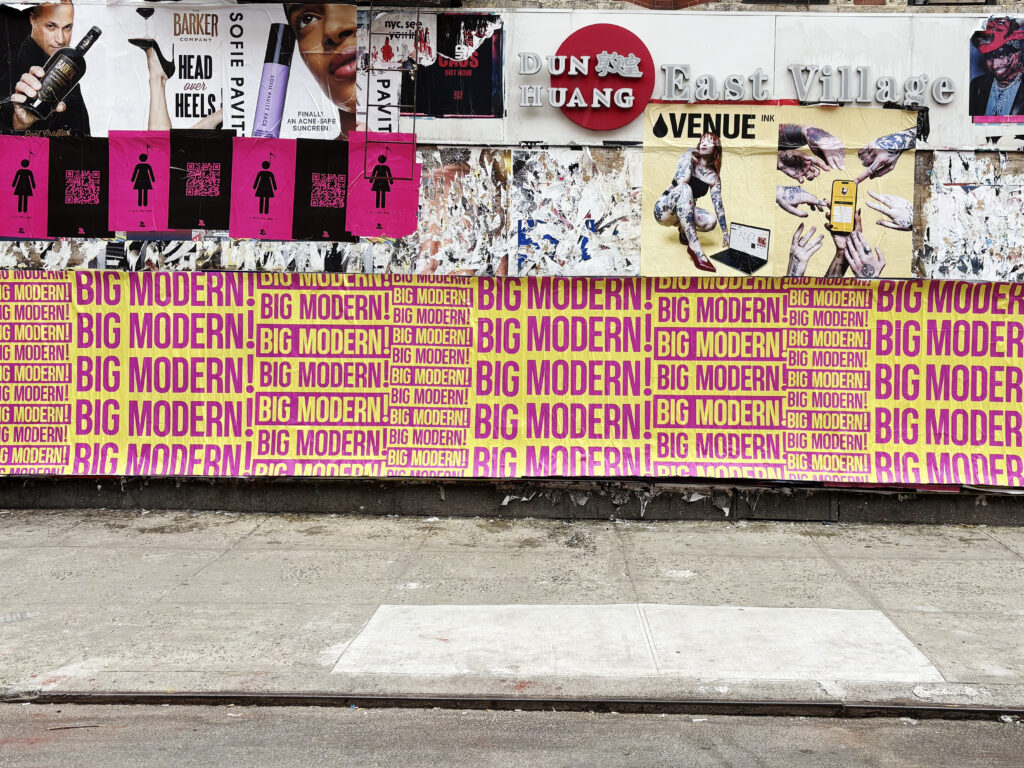
Wheatpasted poster campaigns in Atlanta’s Ponce City Market corridor, the BeltLine Eastside Trail and Westside Trail neighborhoods, Athens’s Normaltown and downtown bar district, and Savannah’s Starland District create large-format street-level impressions in the walkable, transit-adjacent neighborhoods where Georgia’s most advertising-receptive demographics live and spend time.
Georgia transit advertising campaigns begin with market analysis and route selection based on your target audience profile. Before any recommendation is made, AGM reviews current ridership data, demographic information by route corridor, and competitive advertising activity on the systems you are considering. The route selection and format recommendation that results from this analysis is specific to your advertiser profile, not a generic high-ridership list that applies regardless of who the advertiser is targeting. Once the plan is approved, AGM manages all media buying directly with MARTA, Cobb Linc, Gwinnett County Transit, GRTA, and the other Georgia transit operators through their respective advertising sales channels. We handle contract terms, creative specifications, installation scheduling, and post-campaign documentation. Your role is to provide final creative approval. AGM handles everything from the signed plan through the post-campaign photo documentation report. For campaigns combining transit and guerrilla elements in Georgia, AGM coordinates the deployment schedule so that all elements launch simultaneously and run for the same duration. This synchronized approach is particularly important in Atlanta, where the pedestrian-dense neighborhoods around MARTA stations are also the highest-density guerrilla marketing zones, and where simultaneous transit and street-level presence creates the multi-touchpoint frequency that makes campaigns more memorable and more effective than either format in isolation.
Yes. AGM manages multi-market Georgia transit campaigns as unified client engagements with one point of contact for planning, buying, creative management, production, installation, and reporting. A statewide Georgia campaign covering MARTA in Atlanta, Athens Transit and UGA Campus Transit, Chatham Area Transit in Savannah, Augusta Public Transit, and Macon Transit Authority can be coordinated through AGM with synchronized launch timing and consistent creative standards across all markets.
MARTA’s highest-ridership bus routes include the 12 Buford Highway route, one of the most heavily used corridors in the system serving the international dining and commerce district along Buford Highway in Doraville and Chamblee. The 15 Peachtree route through Midtown and Buckhead carries a high-income professional ridership. The 51 and 54 routes serving the Westside neighborhoods deliver the African-American working and middle class residential ridership that is a major demographic in the MARTA system. For campaign-specific route selection, AGM reviews current MARTA ridership data and aligns route recommendations with each advertiser’s specific target demographic rather than defaulting to highest absolute ridership numbers regardless of audience fit.
MARTA’s Southwest Atlanta and South DeKalb routes carry the highest concentration of African-American ridership of any Georgia transit corridors. Atlanta historically has one of the largest and most economically diverse Black middle-class communities of any US city, and the MARTA routes serving College Park, East Point, Decatur, Stone Mountain, and the Cascade Road corridor reach that demographic across a range of income levels. Savannah’s Chatham Area Transit and Albany Transit System also have majority African-American ridership profiles. For brands with specific Black consumer marketing objectives, a coordinated MARTA Southwest Atlanta plus CAT Savannah buy covers Georgia’s two largest Black consumer transit markets.
UGA home football games at Sanford Stadium in Athens create significant ridership spikes on both Athens Transit and UGA Campus Transit during the fall semester. Home game Saturdays bring 92,000-plus fans to the stadium, and transit ridership on the tailgate shuttle and residential routes increases dramatically during those weekends. For brands targeting the UGA fan base and the broader Athens market, fall semester campaigns that include football game-weekend timing deliver the highest ridership concentration windows of the year. The combination of year-round student ridership with fall game day spikes makes September through November the highest-value transit advertising window in the Athens market.
The Masters Golf Tournament runs in the first full week of April each year, with practice rounds beginning Tuesday and Wednesday, the Par 3 Contest on Wednesday, and competitive rounds Thursday through Sunday. Augusta Public Transit ridership spikes during this week as the metro area fills with golf visitors, media, and event workers. For brands aligning with Masters timing, an Augusta transit campaign running from late March through the Masters week delivers presence during the period of maximum affluent visitor concentration in the Augusta market. The specific route alignment for a Masters-timing campaign should prioritize the Washington Road corridor connecting Augusta hotels to the Augusta National vicinity and the downtown Augusta routes where visitors concentrate for dining and entertainment.
Yes, substantially different. GRTA Xpress routes serve suburban county park-and-ride lots and carry predominantly higher-income, car-owning suburban professionals who choose express bus for the downtown Atlanta commute to avoid highway congestion. The median household income of GRTA Xpress riders is typically significantly higher than MARTA local bus ridership because the express service draws from the outer suburban counties where housing costs reflect higher income levels. The dwell time advantage is also significant: a Cherokee County-to-downtown Atlanta express run can take 60 to 90 minutes, creating one of the longest captive advertising exposure windows in Georgia transit. For financial services, luxury goods, and professional services brands targeting high-income suburban Atlanta commuters, GRTA Xpress is the most direct transit advertising channel in the state for that demographic.
The systems listed on this page cover Georgia’s major fixed-route transit operations. Additional rural and community transit systems, including those operated by regional commissions in North Georgia, Central Georgia, and South Georgia, may have advertising availability on a case-by-case basis. If your target community is served by a Georgia transit system not listed here, contact AGM and we will investigate available advertising options within that system’s inventory and policies.
MARTA bus advertising inventory, particularly for full bus wraps on the highest-ridership routes and premium shelter positions at Five Points and the downtown Peachtree Street stops, is among the most competitive transit advertising inventory in the Southeast. MARTA draws national brand advertising competition from consumer goods, entertainment, healthcare, financial services, and telecommunications companies that recognize Atlanta’s market importance. This means that campaign planning and booking lead times for premium MARTA positions should be six to eight weeks minimum, and for the highest-demand positions during peak demand periods like the NFL season, the ACM Awards, and the SEC Championship, earlier booking may be required. For the secondary Georgia markets, lead times are shorter and competition is lower.
Standard interior poster production and installation lead time for Georgia transit systems is two to four weeks from final artwork approval. Full bus wraps require five to six weeks minimum for production and installation coordination. Premium shelter positions at the highest-demand MARTA locations may require additional lead time depending on current inventory availability. AGM recommends beginning the Georgia campaign planning process six to eight weeks before the intended launch date to ensure system availability confirmation, production time, and installation scheduling across all Georgia markets included in the campaign.
Yes. AGM structures multi-system Georgia packages combining placements across two or more state systems at package pricing reflecting the combined buy. An Atlanta plus Athens plus Savannah package, for example, covers Georgia’s three most culturally distinctive transit markets at coordinated pricing through a single AGM engagement. Contact AGM for Georgia multi-market package pricing and availability.