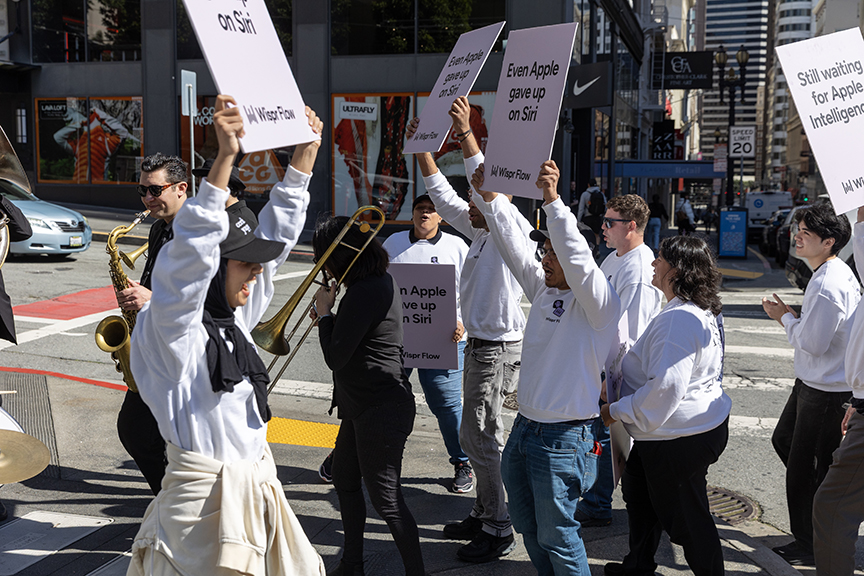
Brand activation is a broad category. It covers guerrilla marketing campaigns on city streets, produced experiential events in rented venues, pop-up installations, product sampling programs, LED truck activations, and projection campaigns on building facades. The common thread across all of these is physical presence in the real world — a brand creating an encounter with an actual person in an actual place, not an impression on a screen.
The companies that execute brand activation range from small specialty agencies with deep expertise in one format to large integrated agencies that handle the full spectrum. Choosing the right partner for your campaign is not primarily about finding the biggest agency or the one with the most impressive client list. It is about finding the agency that operates with the infrastructure, market access, and documentation discipline to execute your campaign correctly and prove that it happened.
This guide covers what brand activation companies actually do, how the different types differ, what to look for when evaluating a partner, the red flags that signal an agency you should avoid, and how to structure a working relationship that produces measurable results. Our team at American Guerrilla Marketing has operated across 50+ U.S. markets and is based in Industry City, Brooklyn, NY. Call us at (646) 776-2770.
What Brand Activation Companies Actually Do
The term “activation” describes a specific marketing objective: activating a consumer — moving them from awareness to engagement, and from engagement toward a purchase decision or brand relationship. Brand activation campaigns create the conditions for that activation through direct, physical encounter.
Street and Guerrilla Marketing Agencies
Street marketing agencies specialize in outdoor, ambient, and guerrilla formats. This includes wheatpaste poster campaigns, sidewalk stencil programs, brand ambassador street teams, snipe advertising, and outdoor poster campaigns. These agencies have existing relationships with property owners, know where pedestrian traffic concentrates in specific neighborhoods, and have the operational infrastructure to deploy, document, and manage campaigns across multiple locations simultaneously.
Experiential and Event Agencies
Experiential agencies produce physical brand experiences — pop-ups, interactive installations, sampling events, and brand-produced moments that attendees participate in rather than observe. These agencies specialize in build management, staffing, permitting for event use of public or private space, and the logistical management of complex productions.
Sports and Fan Engagement Agencies
These agencies specialize in activations at sporting events, stadiums, and fan zones. Their expertise is in the regulated, high-density environment of a major sports event — working within venue restrictions, managing crowd dynamics, and creating activations that are visible and engaging in a competitive visual environment.
Full-Service Brand Experience Agencies
Larger agencies handle the full spectrum — from strategic planning through creative development, production, execution, and measurement. They typically have higher minimum budgets and longer lead times but offer a more integrated capability for brands that need a single point of accountability across a complex, multi-format campaign.
Types of Brand Activation: Format by Format
Understanding the specific formats helps clarify which type of agency is the right fit for your campaign objective.
Street-Level Activation
Wheatpaste, stencils, snipes, and outdoor poster placement create visual presence in neighborhoods and pedestrian corridors. These formats are high-frequency, cost-efficient, and capable of creating saturation in a defined geographic area quickly. Our guerrilla marketing team deploys these formats across any major U.S. market with existing property owner relationships and documented placement networks.
Mobile and LED Truck Activations
Mobile LED trucks bring your campaign to specific locations — outside events, in high-traffic corridors, in specific neighborhoods — with a large-format video screen that generates impressions at scale. Our LED billboard trucks operate across the markets where our clients run campaigns, with GPS tracking of every route and timestamped photo documentation of each deployment location.
Sampling and Street Team Activations
Product sampling at high-traffic locations puts your product directly in the hands of potential customers. Combined with brand ambassador conversations, sampling creates the highest-intent encounter of any outdoor format — the person who has tried a product is far more likely to purchase than the person who has only seen an ad for it.
Pop-Ups and Brand Installations
Temporary physical retail or brand experience spaces give customers an immersive encounter with the brand in a setting the brand controls. Pop-ups work particularly well for DTC brands building physical touchpoints, product launches that benefit from hands-on experience, and limited-edition brand moments designed to generate social content.
Projection Advertising
High-powered projectors aimed at building facades create large-scale visual moments that stop foot traffic and generate social sharing. Our projection advertising team sources locations, manages equipment, handles permitting where required, and delivers photo and video documentation of every projection event.
Where Street-Level Brand Activation Works Best
Market selection matters as much as format selection. The same campaign budget produces significantly different results in different cities based on pedestrian density, neighborhood culture, and the concentration of your target audience.
New York City
New York offers the highest pedestrian density of any U.S. market. Brooklyn neighborhoods — Williamsburg, Bushwick, DUMBO, Crown Heights — are particularly effective for brand activation because the resident and visitor population is young, culturally engaged, and highly active on social media. Manhattan provides scale; the outer boroughs provide cultural credibility.
Chicago
Wicker Park, Logan Square, and the West Loop are high-value neighborhoods for street-level activation. Chicago’s street grid and transit corridors create consistent pedestrian flows at predictable times. The city’s cultural event calendar provides ongoing opportunities for event-adjacent activations.
Los Angeles
The Arts District, Silver Lake, and Fairfax Avenue are the primary street-level activation corridors in Los Angeles. LA’s car-dependent geography concentrates pedestrian opportunity in specific commercial strips, which requires more precise location selection than a dense walking city like New York. Vehicle-based activations — mobile billboards, LED trucks — perform particularly well in LA given the commuter population.
Miami
Wynwood is the center of brand activation activity in Miami. The neighborhood’s density of galleries, restaurants, bars, and cultural programming creates a consistent foot traffic pattern that makes street-level campaigns highly effective. Miami Beach and Brickell serve different demographic segments and are increasingly active for branded activations.
How to Evaluate a Brand Activation Partner
Choosing a brand activation company is a decision that deserves more rigor than most brands apply to it. A poor execution in the real world is visible, documented, and associated with your brand. The wrong partner can waste budget, damage brand perception, and generate legal exposure if their placements are not properly permitted.
Portfolio and Case Studies
Ask for case studies in your specific campaign category — not just in the agency’s general portfolio. A case study for a pharma launch does not tell you how the agency would handle a consumer goods street campaign. Look for documentation: photos that show actual placements in actual locations, not just rendered concepts. Any agency that shows you mock-ups rather than real installation photos is showing you aspirational work, not proven execution.
Market-Specific Knowledge
Ask the agency to describe, specifically, where they would place your campaign in the neighborhoods you are targeting. A well-prepared agency can name specific corridors, describe foot traffic patterns, and explain why certain placements are better than others. Vague answers about “high-traffic areas in Brooklyn” signal a lack of genuine market presence. Specific knowledge of specific streets, corners, and property owners signals an agency that actually operates in that market.
Documentation and Reporting
Documentation is non-negotiable. Every professional brand activation company should provide GPS-tagged photos of every placement, timestamped installation reports, and a post-campaign analytics document that summarizes coverage, estimated impressions, and any campaign-specific tracking results. If an agency cannot explain its documentation process in specific terms, do not engage them.
Questions to Ask Before You Sign
Before signing a contract with any brand activation company, ask these questions and evaluate the specificity of the answers.
Who specifically on your team will manage this campaign day-to-day? How do you document placements — what format do you deliver proof of posting in? Can you provide property owner agreements for every placement in advance? What is your removal process and timeline at end of campaign? What happens if a placement is removed early — how do you respond and what do you provide as a replacement? Who are three recent clients in a similar category that we can contact as references?
Red Flags to Watch For
No Documentation Process
If an agency cannot explain, specifically and in advance, how they prove that placements happened, that is a disqualifying problem. Documentation is the minimum viable accountability mechanism in street-level marketing. Agencies without a clear documentation process either do not know how to do it or do not want you to know whether they actually executed.
Vague Pricing
Bundle pricing with no line-item breakdown prevents you from understanding what you are actually paying for. Insist on an itemized estimate: location fees, production costs, installation labor, documentation costs, and management fees should all be separated. Vague pricing is often a signal that the agency does not want you to compare their costs to competitive alternatives.
Overpromising Outcomes
No agency can guarantee viral results, specific impression numbers, or sales outcomes from a guerrilla marketing campaign. Agencies that promise these things are telling you what they think you want to hear. The legitimate promise is: specific placements, in documented locations, for the agreed duration, with GPS-tagged proof of posting. Everything beyond that is aspiration, not a deliverable.
The Difference Between a Broker and an Operator in Brand Activation
One of the most important structural distinctions in the brand activation industry is the difference between a broker and an operator. A broker takes client briefs and sources execution capacity from third-party vendors in each market. An operator has owned execution infrastructure — trained crews, established property relationships, equipment, and direct control over quality — in the markets they serve. Both types of agencies present themselves similarly in proposals. The difference becomes apparent when problems occur during execution.
When a broker’s third-party vendor fails to execute a placement correctly, the broker finds out when the client notices the problem. When an operator’s own crew fails to execute correctly, the operator knows immediately because they have direct visibility into the execution. The response time difference between these two scenarios is the difference between a problem corrected in 24 hours and a problem discovered during the post-campaign review two weeks after the campaign ended.
For high-profile campaigns where execution quality is non-negotiable — entertainment releases with hard launch dates, product launches tied to live events, campaigns where documentation must be delivered on a specific timeline — the operator model’s accountability advantage over the broker model justifies the evaluation. Ask any prospective agency: who specifically will be installing this campaign? Are they your employees or contractors? Do you have a direct relationship with the property owners being used? The answers reveal the operational structure behind the proposal.
Understanding Brand Activation ROI: Setting Expectations
Brand activation campaigns produce results that are real and measurable, but the measurement framework is different from digital advertising and requires a different set of expectations. The failure to set appropriate measurement expectations before a campaign launches is one of the most consistent sources of client-agency conflict in the activation space.
What Activation Can and Cannot Guarantee
What a professional activation company can guarantee: specific placements in documented locations, specific ambassador staffing with verified training, specific reach estimates based on foot traffic data at confirmed locations, and GPS-tagged documentation of every execution element. What no activation company can guarantee: specific sales lift, specific viral reach, specific press coverage, or specific social sharing volume. These outcomes depend on variables — market conditions, competitive activity, creative resonance, organic social behavior — that are outside the agency’s control. Any agency that promises specific outcomes in these categories is making promises it cannot keep.
The Attribution Window
Brand activation campaigns often produce delayed conversions. A pedestrian who sees a wheatpaste campaign for a new restaurant may not visit for two weeks. A person who receives a product sample at a street event may not purchase for 30 days. A conference attendee who sees a brand’s LED truck may not research the brand until the following week when they are back at their desk. Attribution models that only capture same-day conversions dramatically undercount the activation campaign’s true contribution. Build an attribution window of 30 to 60 days into any post-campaign analysis to capture the delayed conversion behavior that is characteristic of the format.
Campaign Brief Best Practices: What to Give an Activation Agency
The quality of the campaign an activation agency executes is directly proportional to the quality of the brief they receive. A vague brief produces a generic proposal. A specific brief produces a targeted strategy. Investing time in the brief before the first agency conversation produces better results at lower cost because the agency does not waste proposal resources on directions that do not fit the actual need.
A complete brief for a brand activation campaign should include: the specific campaign objective (awareness, trial, product launch, event amplification — state which one), the target audience in specific terms, the target markets with specific cities and neighborhoods, the campaign window with specific dates, the budget range, and the measurement criteria. A brief missing any of these elements produces proposals that either miss budget or miss objective.
Activation Campaign Timelines: What to Realistically Expect
Street-level activation campaigns have production timelines that clients frequently underestimate. The enthusiasm to move quickly on a launch or event collides with the reality that physical campaign logistics — location sourcing, permitting, print production, installation scheduling — take time that cannot be compressed below certain minimums.
Minimum Timeline by Campaign Type
A straightforward wheatpaste and stencil campaign in a single major market can be executed in 10 to 14 days from confirmed brief to first installation, assuming creative is production-ready and no special permitting is required. A brand ambassador program requires 2 to 3 weeks minimum for staffing, training, and logistics. A multi-market campaign covering 5 or more cities requires 3 to 5 weeks from confirmed brief to simultaneous deployment.
Campaigns that include permitting requirements for public space activations — sidewalk activations, event-adjacent deployments, transit hub activations — add 2 to 6 weeks to the minimum timeline depending on the city. Permitting lead time is the most common cause of compressed execution that forces quality compromises. Any agency that promises to do a permitted activation in 5 days does not understand what permitting requires in most major markets.
What AGM Does Differently
Our team at American Guerrilla Marketing operates across 50+ U.S. markets with owned relationships — we are not brokering capacity from sub-vendors who may have different documentation standards and accountability structures. Every placement is sourced, negotiated, installed, documented, and reported by our team.
We provide GPS-tagged photos of every placement, timestamped installation reports, wall agreements for every permitted surface, and post-campaign analytics that track any QR or URL data your campaign includes. For multi-market campaigns, we deliver a unified reporting package that aggregates placements across all markets into a single document your team can review and share internally.
We build outdoor advertising campaigns for brands that need to be visible in the real world — not just on screens. That means understanding which formats work in which markets, which neighborhoods are the right fit for each brand, and how to execute with the operational discipline that protects the brand and the budget.
Frequently Asked Questions
What do brand activation companies do?
Brand activation companies plan, produce, and execute campaigns that create direct, physical engagement between a brand and its audience. This includes street-level guerrilla campaigns, experiential events, pop-up installations, product sampling, brand ambassador programs, and LED truck or projection activations.
How much do brand activation campaigns cost?
Street-level guerrilla campaigns start at $5,000 to $20,000 for a single market. Experiential events and pop-up activations typically run $25,000 to $150,000+ depending on build complexity and staffing. Multi-market campaigns multiply these figures by the number of markets.
What types of brand activation companies exist?
The main categories are street and guerrilla marketing agencies, experiential and event agencies, sports and fan engagement agencies, and full-service brand experience agencies. Each type has different strengths and cost structures.
What should I look for when evaluating a brand activation partner?
Look for documented portfolio with real case studies, market-specific knowledge and existing relationships, a clear documentation and reporting process, transparent pricing with itemized estimates, and references from similar-scale campaigns.
What are red flags when evaluating brand activation companies?
Major red flags: no documentation process, vague or bundle-only pricing, no market-specific knowledge, overpromising reach or viral outcomes, and no references or case studies you can verify.
How is American Guerrilla Marketing different from other brand activation companies?
We specialize in street-level and outdoor brand activation across 50+ U.S. markets. Every campaign includes GPS-tagged photo documentation of every placement, a proof of posting report, and campaign analytics. We own our market relationships and are not a brokerage reselling third-party capacity.