American Guerrilla Marketing
Nationwide serivce
Media planning, media buying, billboard advertising, & guerrilla marketing

American Guerrilla Marketing places interior bus and transit advertising across every major Illinois system. CTA in Chicago, Pace Suburban Bus, CUMTD in Champaign-Urbana, Rockford Mass Transit, Peoria CityLink, Sangamon MTD in Springfield, and 20 more Illinois transit systems. Direct execution. 500+ campaigns nationwide.
Illinois has one of the most extensive and demographically diverse transit advertising landscapes of any US state. The Chicago Transit Authority’s bus network alone, with 130-plus fixed routes serving Chicago’s 77 community areas, ranks alongside New York City’s MTA and Los Angeles Metro as one of the three largest bus systems in the country. CTA is the gravity center of Illinois transit advertising, and it draws national brand competition for premium placement on the highest-ridership routes with the intensity of a top-five US media market, which is what Chicago effectively is. But the state’s transit landscape extends far beyond the city limits, and the downstate Illinois systems, the university systems, the suburban Pace network, and the Metro East St. Louis-adjacent systems in Madison and St. Clair counties, deliver specific, high-value audiences at costs that reflect their smaller market scale rather than Chicago’s competitive pricing.
Pace Suburban Bus is the second half of the Chicago-area transit story. Pace operates fixed routes and on-demand service across suburban Cook, DuPage, Lake, Will, Kane, and McHenry counties, connecting the Chicago suburbs to each other and to CTA rail stations along the Blue, Red, Orange, and other lines. Pace ridership is fundamentally different from CTA ridership: suburban commuters who use Pace to reach transit connections to the downtown Chicago Loop, workers in the suburban employment centers of Schaumburg, Naperville, O’Hare, and Rosemont who cannot reach their jobs by CTA, and lower-income suburban residents in the inner-ring south and west suburbs who are transit-dependent in communities with limited car ownership. The Pace suburban demographic mix is more economically heterogeneous than the CTA and reflects the enormous demographic diversity of the Chicago suburbs themselves.
The University of Illinois at Urbana-Champaign is the anchor of the downstate Illinois transit market. CUMTD, the Champaign-Urbana Mass Transit District, is consistently ranked among the best university transit systems in the country and is one of the few university transit systems in Illinois where student fares are fully subsidized through university fees, generating ridership intensities that rival major urban transit systems. The 46,000-plus UIUC students riding free on CUMTD create a captive young adult advertising audience in Champaign-Urbana that is proportionally larger relative to the metro area’s total population than virtually any other US transit market.
The Metro East market, comprising Madison County and St. Clair County on the Illinois side of the St. Louis metropolitan area, is the most strategically underused transit advertising market in the state. Madison County Transit and St. Clair County Transit District serve Illinois communities that function as St. Louis suburbs, including Granite City, Edwardsville, O’Fallon, and Belleville. The riders on these systems are St. Louis metro area consumers who can be reached through Illinois transit advertising at Illinois market pricing, without the competition and cost premium of advertising directly in the Missouri transit market. For brands with St. Louis metro market objectives, the Metro East transit buy is one of the most cost-efficient ways to reach that metro’s consumer base.
Beloit Transit serves the Beloit metro area straddling the Illinois-Wisconsin border. Interior bus ads and...
Learn More
Champaign County Rural Transit connects rural Champaign County communities with the Champaign-Urbana urban core. Interior...
Learn More
Champaign-Urbana MTD serves the University of Illinois and the Champaign-Urbana community. Interior bus ads along...
Learn More
The Chicago Transit Authority operates 100+ bus routes across America's third largest city. Interior bus...
Learn More
CityLink serves Peoria and the surrounding communities with routes along Adams Street, Jefferson Avenue, and...
Learn More
Coles County Zipline serves Charleston and Eastern Illinois University with bus routes connecting the EIU...
Learn More
Connect Transit serves Bloomington-Normal with routes connecting Illinois State University, Heartland Community College, State Farm...
Learn More
Danville Mass Transit serves Danville and Vermilion County with routes along Vermilion Street and Gilbert...
Learn More
Decatur Public Transit serves Decatur and Macon County with routes along MLK Jr Drive, Pershing...
Learn More
DeKalb Public Transit serves DeKalb and Northern Illinois University with routes along Lincoln Highway and...
Learn More
Galesburg Transit serves Galesburg and Knox County with routes along Main Street and Seminary Street....
Learn More
Jackson County Mass Transit serves Carbondale and Southern Illinois University with routes along University Avenue...
Learn More
Madison County Transit serves Granite City, Edwardsville, and the Illinois side of the St. Louis...
Learn More
McDonough County Public Transportation serves Macomb and Western Illinois University with routes connecting the WIU...
Learn More
MetroLINK serves Rockford with routes along East State Street, South Main Street, and Auburn Street....
Learn More
Monroe Randolph Transit serves the rural communities of Monroe and Randolph Counties in southwest Illinois,...
Learn More
Pace operates suburban bus service across the six-county Chicago metro area including Cook, DuPage, Kane,...
Learn More
Quincy Transit Lines serves Quincy and Adams County with routes along Broadway, Hampshire Street, and...
Learn More
Rides Mass Transit District serves Mount Vernon and Jefferson County with routes connecting the downtown...
Learn More
River Valley Metro serves Kankakee and Bourbonnais with routes connecting the downtown area, Riverside Healthcare,...
Learn More
Rockford Mass Transit District serves Rockford with comprehensive fixed routes across Northern Illinois' largest city....
Learn More
Shawnee Mass Transit District serves the rural communities of far southern Illinois at the confluence...
Learn More
SHOW Bus serves the rural communities of northwest Illinois' Henry, Bureau, and Rock Island Counties....
Learn More
South Central Illinois Mass Transit serves Centralia and the south-central Illinois communities along the I-64...
Learn More
St. Clair County Transit District serves Belleville, O'Fallon, Swansea, and the St. Louis Metro East...
Learn More
AGM covers every major Illinois transit system from the CTA in Chicago to CUMTD in Champaign-Urbana, Springfield to Peoria. Tell us your target market and we'll build the media plan that reaches them directly.
Chicago’s multi-modal transit authority. 130+ bus routes serving all 77 Chicago community areas. One of the three largest bus systems in the US. The dominant Illinois and national-level transit advertising market.
Suburban Chicago bus service across Cook, DuPage, Lake, Will, Kane, and McHenry counties. Connects suburban employment centers, CTA rail stations, and Metra commuter rail hubs. The Chicago suburb transit advertising market.
Rockford city bus service. Illinois’s second largest city. Connects downtown Rockford, Rockford University, OSF Saint Anthony hospital, and the residential communities of Winnebago County.
Winnebago County community transit connecting Rockford and the surrounding county communities. Serves the working adult population outside the Rockford urban core.
University of Illinois transit system. 46,000+ students ride free. One of the best university transit systems in the country by ridership intensity. The dominant downstate Illinois young adult advertising market.
Normal and Bloomington transit serving Illinois State University (ISU) and Illinois Wesleyan University, plus the Twin Cities community ridership. The McLean County university and professional market.
Decatur city bus service in Macon County. Connects downtown Decatur, Millikin University, Decatur Memorial Hospital, and the Caterpillar and ADM employment communities.
Springfield city transit serving the Illinois state capital. State government workforce routes, University of Illinois Springfield, and the Sangamon County residential communities. The Illinois government professional market.
Madison County Illinois transit serving Alton, Granite City, Edwardsville, and the Metro East St. Louis communities. St. Louis metro reach at Illinois market pricing.
St. Clair County transit serving East St. Louis, Belleville, O’Fallon, and the southern Metro East communities. Connects to the St. Clair County MetroLink light rail extension into Missouri.
Peoria city transit serving Peoria and East Peoria. Bradley University, OSF Saint Francis Medical Center, and the Caterpillar global headquarters community. Central Illinois’s primary transit advertising market outside Champaign-Urbana.
Danville city transit in Vermilion County. Connects the Danville employment community, Danville Area Community College, and the residential areas of eastern Champaign County.
Quincy city transit serving the Missouri-border Illinois city of Quincy. Connects the Blessing Hospital workforce, Quincy University, and the residential communities of Adams County.
Kankakee Area Transit System serving Kankakee and Bourbonnais. Connects the Kankakee employment community, Olivet Nazarene University, and the Will and Kankakee county residential corridors.
Stephenson County transit serving Freeport and the northwest Illinois community. Regional transit for the agricultural and manufacturing communities of Stephenson County.
Southeast Illinois regional transit serving multiple counties in the far southeastern corner of the state. Connects rural communities to the regional employment and medical centers in the RIDES coverage area.
Southern Illinois regional transit covering the communities of Centralia, Sandoval, Patoka, and the surrounding Bond, Marion, and Clinton county communities.
Southern Illinois transit serving Pope, Hardin, and Massac counties in the extreme southeastern tip of Illinois. Remote regional transit for the Shawnee National Forest corridor communities.
Carbondale and Jackson County transit serving Southern Illinois University Carbondale. University, healthcare, and residential community routes in the SIU market.
Galesburg city transit in Knox County. Connects Knox College, the Galesburg healthcare community, and the Amtrak-served downtown Galesburg rail corridor.
Coles County transit serving Charleston and Mattoon. Eastern Illinois University market. EIU’s 7,000-plus students drive ridership on the campus and downtown Charleston routes.
DeKalb city transit serving Northern Illinois University. NIU’s 15,000-plus students drive campus ridership. The DeKalb university market 60 miles west of Chicago.
Monroe and Randolph county transit in southwestern Illinois. Serves the Waterloo, Red Bud, and Sparta communities adjacent to the St. Louis metro area.
Macomb and McDonough County transit serving Western Illinois University. The WIU campus market in west-central Illinois.
Rural Champaign County transit serving the communities outside the CUMTD service area. Connects rural Champaign County to the Urbana-Champaign urban core.
Beloit transit serving the Wisconsin border city with strong Illinois community ties. Industrial workforce ridership on the Rock County-Winnebago County manufacturing corridor.
The Chicago Transit Authority bus system is one of three transit systems in the United States, alongside the MTA in New York and Metro in Los Angeles, where transit advertising competes at a fully national scale for brand attention and inventory. CTA’s 130-plus bus routes cover every Chicago neighborhood from Rogers Park on the far north to Pullman on the far south, from the Gold Coast lakefront to the Austin neighborhood on the western boundary. Each geographic zone within the CTA network carries a distinctly different demographic profile, and the most effective CTA advertising campaigns are planned at the corridor and route level rather than as generic system-wide placements that blend demographic segments without intentional targeting.
Pace’s suburban bus network reaches a fundamentally different population from CTA, and the difference is not simply geography. Suburban Chicago’s transit ridership includes a meaningful population of choice riders, people who own cars and could drive but choose Pace for cost or convenience reasons for specific trips, alongside the transit-dependent population in the inner-ring south and west suburbs where car ownership rates are lower. This mix creates a more economically heterogeneous Pace ridership than most suburban transit systems in comparable-sized metropolitan areas.
CUMTD is in a select category of US university transit systems, alongside systems at the University of Michigan, Ohio State, and UNC Chapel Hill, where the combination of free student fare, high campus density, and active route planning has produced ridership levels that approach urban system intensity in a mid-size college city. The University of Illinois at Urbana-Champaign has 46,000-plus students across its undergraduate, graduate, and professional programs, and the overwhelming majority of those students use CUMTD daily for the campus-to-town movement that defines the U of I student lifestyle.
Sangamon Mass Transit District in Springfield serves a city whose economy is defined by state government in a way that few other state capitals in the country can match. Illinois state government is Springfield’s largest single employer by a wide margin, and the SMTD routes serving the Capitol district, the Stratton Office Building, and the surrounding state agency campuses carry the Illinois government professional workforce on their daily commutes. This is a stable, educated, professionally employed commuter demographic that is valuable for financial services, insurance, legal services, and technology brands targeting the government professional sector.
The Metro East transit market is the most strategically overlooked opportunity in Illinois for brands with St. Louis metro market objectives. Madison County Transit serves Illinois municipalities including Alton, Granite City, Wood River, Maryville, and Edwardsville, all of which are part of the St. Louis metropolitan statistical area. St. Clair County Transit District serves East St. Louis, Belleville, Fairview Heights, O’Fallon, and Shiloh, with connections to the St. Clair County MetroLink light rail extension that crosses the Mississippi River into downtown St. Louis and Clayton, Missouri.
Peoria CityLink serves a city that is defined nationally by two things: Caterpillar Inc., which has its global headquarters in Deerfield, Illinois but has its largest manufacturing presence and deepest workforce roots in the Peoria area, and OSF Saint Francis Medical Center, one of the largest Catholic healthcare systems in the Midwest. The Caterpillar manufacturing workforce in Peoria, East Peoria, and the surrounding manufacturing communities represents a blue-collar, skilled trades, and technical workforce demographic on CityLink routes serving the East Peoria plant sites and the residential neighborhoods housing Caterpillar workers across both sides of the Illinois River.
Rockford Mass Transit District serves Illinois’s second-largest city, a manufacturing and healthcare center in Winnebago County that has faced the same post-industrial economic challenges as many Midwest manufacturing cities. The Rockford transit ridership is predominantly working class and transit dependent, with routes serving the manufacturing plant employment corridors on South Main Street and the residential communities of Loves Park, Machesney Park, and Rockford’s east side. For brands targeting working adults in manufacturing and service industries in a mid-size Midwest city, Rockford Mass Transit delivers that audience at a cost structure that reflects the Rockford market’s size rather than the Chicago market’s competitive pricing.
Available on: CTA, Pace, Rockford MTD, CUMTD, Connect Transit, CityLink Peoria
Complete exterior vehicle wraps on major Illinois transit fleet vehicles. The highest-visibility transit advertising format in each market. CTA full bus wraps on the highest-ridership Chicago routes achieve some of the highest transit advertising impression volumes in the Midwest.
Available on: All Illinois fixed-route systems
30-by-144-inch interior postings across the full bus interior. The primary interior format for Illinois transit advertising campaigns. CTA system-wide king poster buys deliver the largest single-placement transit audience in Illinois and one of the largest in the country.
Available on: All Illinois fixed-route systems
Mid-format interior postings for corridor or route-specific campaigns. The right format for advertisers targeting specific geographic or demographic corridors within any Illinois transit system from CTA to the southern Illinois district systems.
Available on: All Illinois transit systems
Distributed card placements throughout the bus interior. The most accessible format for local, regional, and national Illinois transit advertisers. Available on every system from CTA to the smallest rural district systems in southern Illinois.
Available on: CTA, Pace, CUMTD, Connect Transit, SMTD Springfield
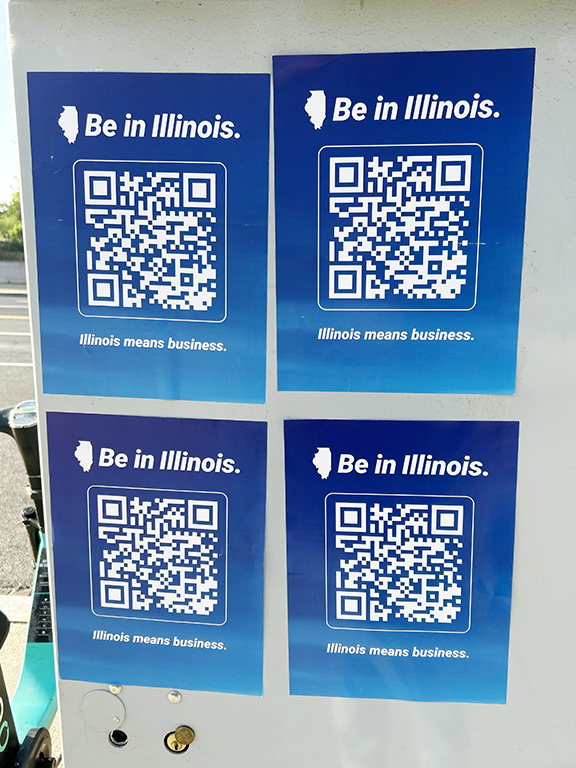
Reading-distance placements on bus seat backs. Most effective for detailed information, QR code campaigns, and content that benefits from the close attention of a seated transit rider. Particularly valuable on the longer Pace commuter routes.
Available on: CTA, Pace, CUMTD, Rockford MTD, CityLink Peoria, SMTD Springfield
Backlit full-panel shelter advertising at major transit stop locations. Day-and-night visibility at the highest-ridership nodes in each system. Most competitive at CTA’s Michigan Avenue and State Street stop locations on the downtown Chicago routes.
Available on: CTA, Pace, CUMTD, Rockford MTD, CityLink Peoria
Mid-size shelter panel at accessible pricing for regional Illinois advertisers. The entry-level outdoor transit advertising format for brands targeting specific Illinois transit corridors and communities in markets outside the Chicago core.
Available on: CTA, Pace, CUMTD, Rockford MTD, CityLink Peoria, SMTD Springfield, Decatur Public Transit
Bench advertising at stop locations across Illinois transit networks. Sustained neighborhood-level presence for brands targeting community-level geographic audiences throughout the campaign period.
Bus shelter advertising in Illinois places your brand at the exact locations where riders wait for transit service. The dwell time at a shelter, typically five to fifteen minutes per stop visit, creates an uninterrupted, low-distraction exposure window that in-vehicle advertising alone cannot deliver at equivalent duration.
Illinois’s shelter advertising inventory is concentrated at the primary boarding and alighting points on the state’s larger transit systems, where ridership volumes and wait times are highest. AGM identifies the shelter positions that deliver the most rider exposure for each campaign’s geographic and demographic targets, and structures shelter buys around the stop locations that create maximum frequency among the target audience.
AGM manages all aspects of shelter advertising placement in Illinois, from inventory identification and booking through creative production, installation, and monitoring for the full campaign posting period.
Illinois’s transit advertising market is not overlooked as a whole. CTA in Chicago draws enough national brand attention that it is one of the most competitive transit advertising markets in the country. The oversight is specific: the non-Chicago Illinois transit systems are almost universally ignored by national brands that allocate Illinois transit budget exclusively to CTA and overlook the downstate university markets, the Springfield government market, the Metro East St. Louis-reach markets, and the Rockford and Peoria manufacturing city markets that collectively represent millions of impressions available with minimal competition.
CUMTD in Champaign-Urbana is the most glaring example. The system carries proportionally more riders per capita than most urban transit systems in Illinois outside Chicago, because of the free-fare program for U of I students and the scale of the university relative to the city’s population. Advertising on CUMTD reaches one of the most concentrated young adult audiences in the Midwest at prices that reflect the Champaign-Urbana market size, not the ridership intensity. A brand that would pay premium prices for a CTA system-wide student-targeting campaign could achieve similar young adult concentration at CUMTD for a fraction of the investment and with almost no competing national brand presence on the system.
The Metro East arbitrage is perhaps the most straightforward case. If a brand wants to reach St. Louis metro consumers, it can pay Missouri market transit rates through Metro in St. Louis, or it can purchase Madison County Transit and St. Clair County Transit advertising at Illinois pricing and reach the same metro area’s Illinois residents through a system with less competitive pressure and lower base rates. For regional brands with multi-state market objectives that include the St. Louis metro area, the Metro East approach consistently delivers better cost efficiency than the direct Missouri transit buy.
AGM’s full suite of guerrilla marketing formats is available alongside transit advertising campaigns in all Illinois markets. The combination of transit and street-level guerrilla creates the multi-touchpoint frequency that single-format campaigns cannot achieve.
Snipe advertising along CTA bus corridors on Milwaukee Avenue, Western Avenue, Division Street, and 95th Street creates street-level reinforcement of bus interior campaigns throughout the Chicago neighborhood fabric. In Champaign-Urbana, snipes on Green Street, Wright Street, and University Avenue adjacent to CUMTD routes connect the transit campaign to the student foot-traffic corridors at the intersections the routes travel.
Sidewalk stencils at major CTA bus stop locations and transfer points, including the Chicago Transit Center at LaSalle and the Magnificent Mile stop locations on Michigan Avenue, create ground-level brand presence at the maximum pedestrian concentration points in the city. In Champaign-Urbana, stencils at the CUMTD main stop on Green Street adjacent to the U of I campus reach the student transit audience at the most high-traffic campus gateway location.
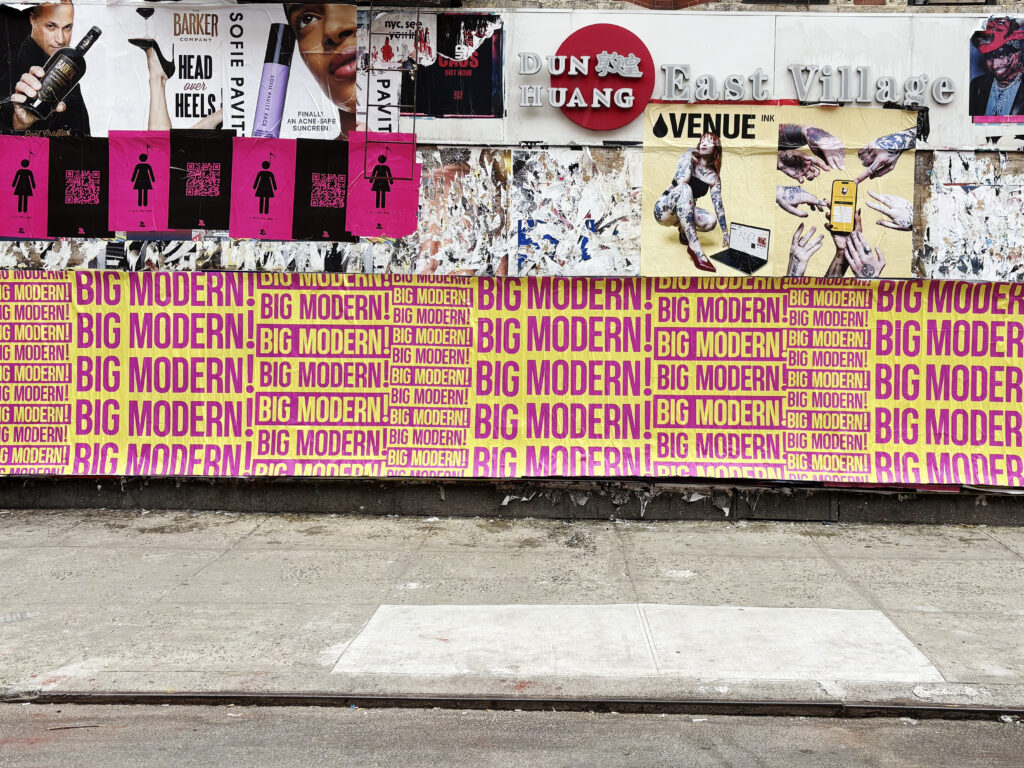
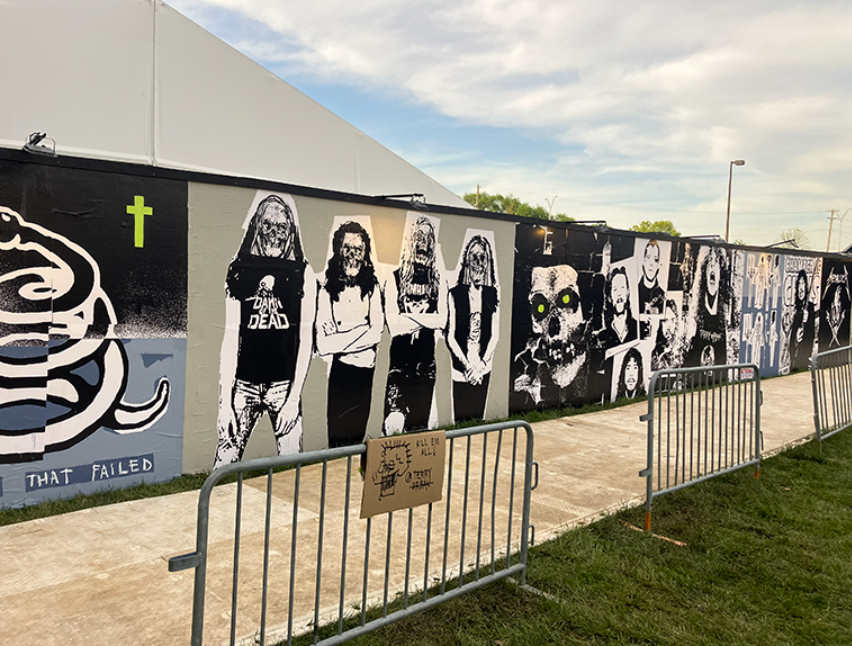
Wheatpasted poster campaigns in Chicago’s Wicker Park, Logan Square, and Pilsen neighborhoods, in Champaign’s Campustown Green Street corridor, and in Rockford’s and Peoria’s downtown arts districts create large-format street impressions in the walkable, transit-adjacent neighborhoods where Illinois’s most advertising-receptive demographics live and spend time.
Illinois transit advertising campaigns require careful market segmentation because the range of systems, demographics, and competitive environments across the state is wider than almost any other US state. A CTA campaign in Chicago is a national-scale advertising buy with corresponding competitive and planning complexity. A CUMTD campaign in Champaign-Urbana is a university market buy with specific student demographic targeting requirements. A Sangamon MTD campaign in Springfield is a government professional market buy. AGM approaches each Illinois market with the research and planning rigor appropriate to its specific character, not with a one-size-fits-all Illinois transit advertising playbook.
For CTA campaigns, AGM manages the buying process through CTA’s authorized advertising sales channel, coordinates creative specifications and installation scheduling with the CTA advertising operations team, and delivers post-installation documentation across all contracted placements. For the downstate Illinois systems, AGM works directly with each transit authority’s advertising contacts to confirm inventory, secure placements, and manage the installation and documentation process. In all cases, the client has one AGM point of contact who manages the full campaign execution from planning approval through post-campaign reporting.
Yes. AGM manages multi-market Illinois transit campaigns as unified client engagements with one point of contact for planning, buying, creative management, production, installation, and post-campaign reporting. A statewide Illinois campaign spanning CTA in Chicago, Pace suburban, CUMTD in Champaign-Urbana, Sangamon MTD in Springfield, and CityLink in Peoria can be coordinated through AGM with synchronized launch timing and consistent creative standards across all systems.
CTA is among the most competitive transit advertising markets in the country. Premium exterior positions on the highest-ridership routes and shelter locations on the Magnificent Mile and the State Street corridor see year-round competition from national consumer brands, entertainment advertisers, and major healthcare and financial services companies. For premium CTA positions, AGM recommends initiating the planning and booking process eight to twelve weeks before the intended campaign launch. For secondary CTA routes in specific neighborhood corridors, two to four weeks lead time is generally sufficient. CTA system-wide interior poster campaigns, which cover all routes rather than selecting specific corridors, can typically be booked on shorter lead times than premium exterior and shelter positions on individual high-ridership routes.
CUMTD is distinctive for the combination of free student fares, high-density route coverage across the campus and surrounding neighborhoods, and the scale of the U of I student population relative to the city size. The free-fare program generates ridership numbers that approach urban transit intensity for a city of Champaign-Urbana’s population, and the geographic concentration of student ridership on a small number of high-frequency campus routes creates advertising placement opportunities where virtually every person on the bus is in the 18-to-25 college demographic. Few university transit systems in the country offer that level of demographic concentration at prices reflecting a downstate Illinois market rather than a major metro transit authority.
CTA’s bus network serves the city of Chicago with a ridership that reflects the city’s demographic diversity: working-class, middle-class, and professional riders across all neighborhoods from the Loop to the far south side. Pace’s suburban network serves a geographically larger area with more economic variation: high-income collar county suburbs where Pace connects to Metra commuter rail, middle-income inner-ring suburbs where Pace is the primary transit mode for car-optional households, and lower-income inner-ring south and west suburbs where Pace serves transit-dependent working adults. The right Pace routes to select for any campaign depend entirely on the income, geographic, and demographic profile of the target audience, and AGM advises on Pace route selection with the same demographic targeting rigor applied to CTA route selection.
Sangamon Mass Transit District in Springfield is the direct answer. The SMTD routes serving the Capitol district on Second and Third Streets and the surrounding state agency campuses carry Illinois state government employees on their daily commutes. This is a professionally employed, college-educated workforce with stable government income, and SMTD advertising on the Capitol corridor routes reaches this demographic with more specificity than any other transit advertising channel in downstate Illinois. For brands targeting government professionals, legal services workers, and the Springfield professional community, SMTD is the transit buy that delivers that audience directly.
The southern Illinois district systems, including Jackson County Mass Transit in Carbondale (Southern Illinois University market), RIDES Mass Transit, South Central Illinois Mass Transit, and Shawnee Mass Transit, serve rural and semi-rural communities that are not reachable through any other transit advertising format in their respective geographic areas. For regional advertisers covering the southern Illinois market, particularly in healthcare, insurance, financial services, and consumer goods categories serving the rural and small-city audience, these systems provide advertising access to communities that are otherwise transit-advertising-dark. They are not appropriate for national brand campaigns with efficiency minimums that require high ridership, but they are valuable for regional advertisers with specific southern Illinois market coverage objectives.
The Metro East arbitrage is the strategy of reaching St. Louis metropolitan area consumers through Illinois transit advertising rather than Missouri transit advertising. Madison County Transit and St. Clair County Transit District serve Illinois municipalities that are part of the St. Louis metro, meaning their ridership consists of St. Louis metro consumers who happen to live on the Illinois side of the Mississippi River. Illinois transit advertising rates on these systems are set at Illinois market pricing, not St. Louis market pricing through Metro (the Missouri transit authority). For brands with St. Louis metro objectives that include the Metro East Illinois portion of the market, purchasing Madison County Transit and St. Clair County Transit advertising provides St. Louis metro reach at Illinois pricing with lower competitive pressure than the Missouri Metro system advertising environment.
Standard interior poster production and installation for CTA bus campaigns requires two to four weeks from final artwork approval. Full bus wraps on CTA fleet vehicles require five to six weeks minimum for production and installation coordination. Premium shelter positions at the highest-demand CTA stop locations may require additional advance booking depending on current inventory availability. For a standard CTA system-wide interior poster campaign with no premium shelter or wrap components, AGM can typically complete the full planning, buying, production, and installation cycle in four to six weeks from initial engagement. For the most competitive exterior and shelter positions, eight to twelve weeks advance planning is recommended.
Yes. The Pilsen, Little Village, Humboldt Park, and Aurora-Elgin communities served by CTA bus routes and Pace suburban routes have significant Spanish-dominant populations, and bilingual or Spanish-primary creative is recommended for campaigns targeting those communities. AGM advises on the appropriate language strategy for specific CTA and Pace routes based on the demographic composition of each route’s ridership and the advertiser’s specific targeting objectives. Spanish-language creative for Illinois transit campaigns is proofed by a native Spanish speaker before submission to the transit authority to ensure accuracy and cultural appropriateness for the specific community being targeted.