American Guerrilla Marketing
Nationwide Service
Media planning, media buying, billboard advertising, & guerrilla marketing
Bus & Transit Advertising in South Carolina
AGM works as your media planning and buying partner for bus and transit line advertising — we source placements through established vendor and transit authority relationships, negotiate rates on your behalf, and manage the campaign from creative specs through to proof-of-performance reporting. You work with one team; we handle the operators and inventory owners.
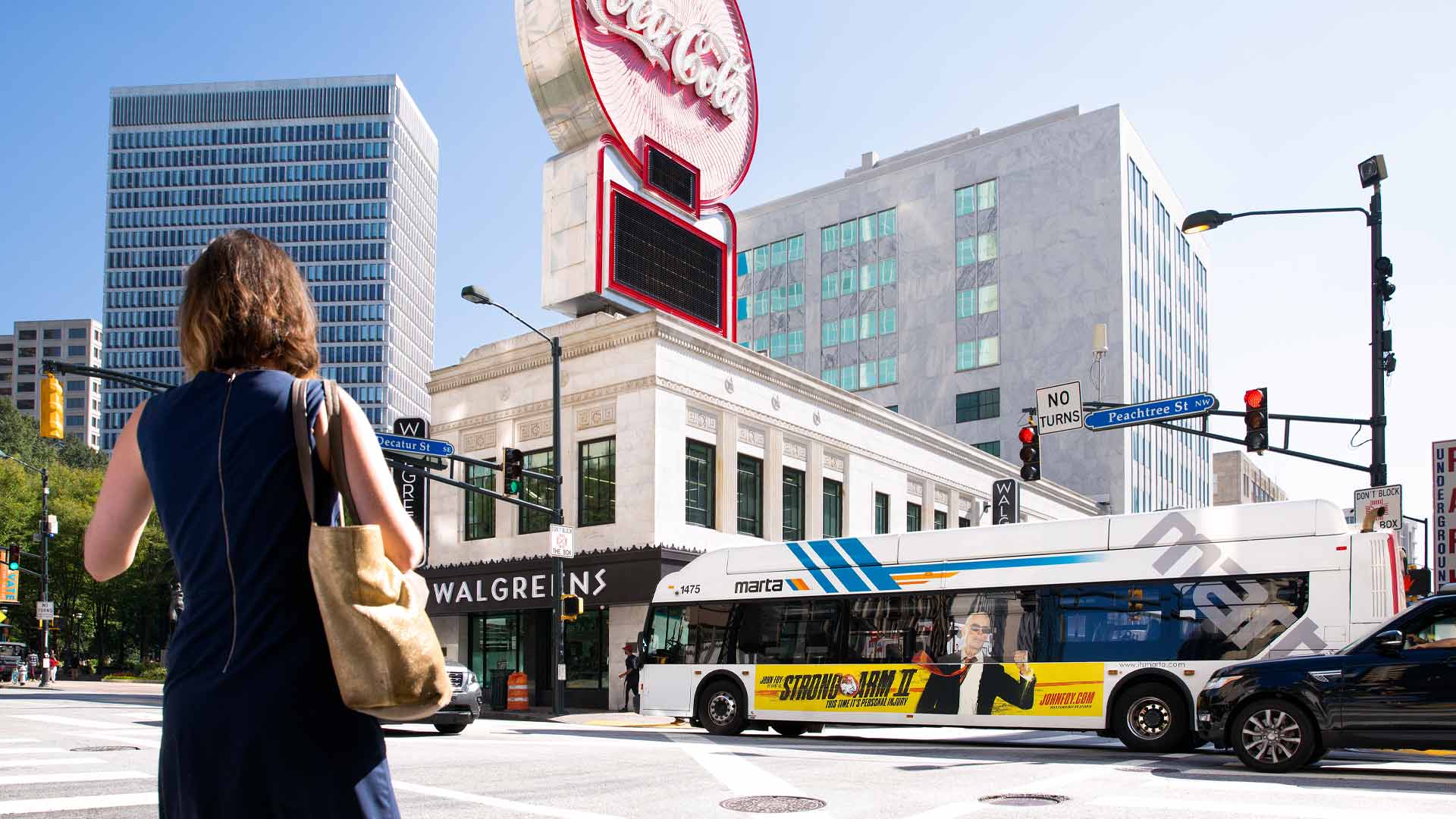
American Guerrilla Marketing places interior bus and shelter advertising across every major South Carolina transit system. Charleston, Columbia, Greenville, and Rock Hill. Four distinct markets, four distinct audiences. Direct execution. 500+ campaigns nationwide.
South Carolina’s transit advertising market is defined by four cities that share a state but operate in fundamentally different economic and demographic environments. Charleston and CARTA sit at the intersection of major tourism, military employment, and a rapidly expanding port economy. Columbia and The Comet serve the state capital and home to the University of South Carolina, with 35,000-plus enrolled students creating a concentrated young adult demographic alongside the professional government workforce. Greenville and Greenlink represent the most economically transformed transit market in the state, with a downtown revitalization anchored by BMW and Michelin manufacturing operations and a European corporate professional demographic that few other South Carolina advertisers have found ways to reach. Rock Hill and Lynx exist in the shadow of Charlotte, a cross-state metro positioning that gives advertisers access to a Charlotte-adjacent suburban consumer base without the media cost premium of the Charlotte designated market area.
AGM approaches South Carolina as four separate advertising markets that happen to share a state boundary. A campaign that performs well in Charleston because it targets tourism-adjacent hospitality workers will not deliver the same results in Greenville, where the ridership skews toward manufacturing and professional services workers commuting from the surrounding Upstate communities. A campaign optimized for the USC student demographic on The Comet in Columbia will require a fundamentally different creative and placement strategy than a Rock Hill-focused Lynx buy targeting Charlotte-area suburban commuters. The transit system is the context, and the context determines the audience, the message, and the format selection.
What connects all four South Carolina markets is the same structural advantage that characterizes transit advertising across the Southeast outside of Atlanta: the competitive pressure for premium inventory is substantially lower than in peer markets in the Northeast and West Coast, and brands that plan campaigns with adequate lead time can secure the highest-ridership routes and stop locations without the waitlist constraints and price escalation that define transit advertising in Chicago, New York, or Los Angeles. South Carolina’s transit advertising is underpriced relative to audience volume, and that gap between media cost and audience delivery is the primary reason AGM recommends the state’s transit inventory to national advertisers seeking efficient Southeast market coverage.

Advertise withCharleston Area Regional Transportation Authority CARTA
Interior bus ads and shelter placements on Charleston Area Regional Transportation Authority CARTA in Charleston....
Learn More
Advertise withGreenlink Greenville
Interior bus ads and shelter placements on Greenlink Greenville in Greenville. Greenville is South Carolina's...
Learn MoreTransit Systems Serving South Carolina

Advertise withLynx Rock Hill
Interior bus ads and shelter placements on Lynx Rock Hill in Rock Hill. Rock Hill...
Learn More
Advertise withThe Comet Columbia
Interior bus ads and shelter placements on The Comet Columbia in Columbia. Columbia is the...
Learn MoreStart Your South Carolina Transit Campaign
AGM covers every major South Carolina transit system from Charleston to Greenville, Columbia to Rock Hill. Tell us your target market and we will build the media plan that reaches them directly.
South Carolina Transit Systems: Choose Your Market
CARTA Charleston (Charleston Area Regional Transportation Authority)
Fixed-route bus service across the Charleston region including the historic peninsula, North Charleston, Summerville, and Johns Island. South Carolina’s largest transit system. Serves tourism, military, port, and residential commuters.
The Comet (Columbia/Richland County)
Bus service across the Columbia metro serving the University of South Carolina, the State House district, downtown Columbia, and the Richland County residential communities. State capital and university transit market.
Greenlink (Greenville)
Greenville’s municipal bus service connecting downtown Greenville to the surrounding Upstate communities. Serves a workforce shaped by BMW, Michelin, and the growing professional services sector in South Carolina’s fastest-growing city.
Lynx (Rock Hill/York County)
Rock Hill’s transit service in York County, adjacent to the Charlotte metro. Cross-state suburban positioning with a Charlotte-adjacent consumer base. Serves Rock Hill’s growing residential and commercial development.
South Carolina Transit Advertising: Market by Market
Charleston: Tourism, Military, and the Port Economy on CARTA Routes
CARTA is the dominant transit system in South Carolina by ridership volume and geographic scope, covering the Charleston Peninsula, North Charleston’s commercial and residential corridors, the Summerville suburban communities, and the rural routes extending to Johns Island and James Island. The system’s ridership reflects the full economic complexity of the Charleston region: tourism-industry service workers commuting to the historic district hotels and restaurants, civilian employees of the Joint Base Charleston and Naval Weapons Station complex in North Charleston, port and logistics workers at the South Carolina Ports Authority terminals, students at the College of Charleston and the Citadel, and the broader workforce of one of the Southeast’s most economically active metros.
Columbia: Government Professionals and 35,000 USC Students on The Comet
The Comet in Columbia serves a dual-market transit system that gives advertisers access to two of South Carolina’s most valuable demographic segments simultaneously: the state government professional workforce centered on the State House district and the University of South Carolina student body of 35,000-plus enrolled students. These two demographics share routes through downtown Columbia but diverge into very different neighborhoods on the outer corridors, creating a placement strategy that can target each segment independently or combine them in a single unified buy.
Greenville: Upstate’s Manufacturing and Corporate Corridor on Greenlink
Greenville is the fastest-growing city in South Carolina and one of the fastest-growing mid-size cities in the Southeast, driven by a manufacturing and corporate base that includes BMW’s only North American vehicle assembly plant in nearby Greer, Michelin’s North American headquarters in Greenville proper, and a growing cluster of international manufacturing and professional services operations that give the Upstate region one of the highest concentrations of European corporate investment in the American South. This economic base shapes the Greenlink ridership in ways that distinguish it from every other South Carolina transit system.
Rock Hill: Charlotte’s South Carolina Suburb and the Lynx Cross-State Opportunity
Lynx in Rock Hill operates in York County, South Carolina’s northernmost county and the part of South Carolina most directly integrated into the Charlotte, North Carolina metropolitan economy. Rock Hill is a Charlotte suburb in every practical sense: residents work in Charlotte, shop in Charlotte, and consume Charlotte media. The city has grown substantially over the past two decades as Charlotte’s suburban sprawl extended south across the state line, and the residential and commercial development in York County reflects that growth trajectory.
Interior Bus Advertising Formats Available Across South Carolina
Bus Shelter Advertising in South Carolina
Bus shelter advertising in South Carolina places your brand at the exact locations where riders wait for transit service. The dwell time at a shelter, typically five to fifteen minutes per stop visit, creates an uninterrupted, low-distraction exposure window that in-vehicle advertising alone cannot deliver at equivalent duration.
South Carolina’s shelter advertising inventory is concentrated at the primary boarding and alighting points on the state’s larger transit systems, where ridership volumes and wait times are highest. AGM identifies the shelter positions that deliver the most rider exposure for each campaign’s geographic and demographic targets, and structures shelter buys around the stop locations that create maximum frequency among the target audience.
AGM manages all aspects of shelter advertising placement in South Carolina, from inventory identification and booking through creative production, installation, and monitoring for the full campaign posting period.
Why South Carolina Is An Overlooked Transit Advertising Market
South Carolina’s transit advertising market is less competitive than comparable markets in states with higher national advertiser awareness. Brands that target the digital advertising ecosystem for the same audiences often pay a premium for fragmented, avoidance-prone digital impressions when South Carolina’s transit systems deliver the same demographics with sustained, physical exposure during their daily transit routine.
The working adult, student, and community transit rider in South Carolina is reachable through transit advertising at a cost-per-impression that digital advertising in the same markets consistently fails to match. AGM has executed transit campaigns across more than 500 national engagements and understands exactly which South Carolina systems and routes deliver the audience volume and demographic profile that each advertiser needs.
Brands that enter the South Carolina transit advertising market now are securing placements at pre-competitive pricing on systems that will attract more national advertiser attention as the market matures.
Guerrilla Marketing Alongside South Carolina Transit
AGM’s full range of guerrilla marketing formats is available alongside transit advertising campaigns in every South Carolina market. The combination of transit and street-level guerrilla creates the frequency stack that single-format campaigns cannot achieve independently.
Snipe advertising along the CARTA routes through North Charleston and the Charleston Peninsula, the Comet corridors through downtown Columbia and the USC campus area, and Greenlink’s Main Street and Donaldson Center corridors creates street-level touchpoints that reinforce bus interior campaigns at the intersection and block level. Riders who see your interior card during their commute encounter your snipes at the stops and commercial strips along their daily routes.
Sidewalk stencils at the primary transit hubs in South Carolina’s transit markets, including the CARTA transfer points in downtown Charleston and North Charleston, the central Columbia bus hub near the State House, and Greenville’s downtown Main Street transfer station, place ground-level brand presence at the maximum foot-traffic points in each system.
Wheatpasted poster campaigns in Charleston’s Upper King Street corridor and the NoMo neighborhood, Columbia’s Five Points entertainment district and the Vista arts district, and Greenville’s West End and the Augusta Road commercial strip create large-format street impressions for the walking and transit audience in the pedestrian-dense neighborhoods that South Carolina’s transit networks serve.
How Agm Executes South Carolina Transit Advertising Campaigns
AGM’s process for South Carolina transit advertising starts with route and ridership analysis before any media buying contact is made. Understanding which CARTA routes carry the tourism service workforce versus which carry the North Charleston manufacturing employees, which Comet routes concentrate USC student ridership versus which serve the State House professional corridor, and which Greenlink routes align with Donaldson Center industrial employment versus downtown professional services are the foundational questions that determine whether a South Carolina transit campaign reaches the right audience or simply generates generic impressions.
Once the route analysis and audience mapping are complete, AGM builds a placement plan with specific route recommendations, format selections, and stop priorities tied to the advertiser’s demographic targets. This placement plan is the document you review and approve before AGM initiates any media buying negotiations. The plan explains why each specific placement was selected, what audience volume and demographic profile to expect, and how the placement fits within the overall campaign strategy. No South Carolina transit placement is made without a documented rationale connecting it to the campaign’s audience and objective.
After placement plan approval, AGM handles all media buying with the transit authority or its authorized advertising representative, manages the contract and production specifications, coordinates installation scheduling, and provides post-installation photography of all placements. For multi-system South Carolina campaigns, AGM coordinates all four system relationships and ensures synchronized installation across CARTA, The Comet, Greenlink, and Lynx. Your creative team provides the final artwork. AGM handles everything else from media buying through installation documentation.
Frequently Asked Questions
Yes. AGM coordinates multi-system South Carolina transit campaigns across CARTA in Charleston, The Comet in Columbia, Greenlink in Greenville, and Lynx in Rock Hill through a single client engagement. A statewide South Carolina buy is managed through one AGM point of contact with unified creative management, production coordination across all four systems, and consolidated post-campaign reporting. Multi-system campaigns benefit from coordinated planning that ensures consistent creative standards across different transit systems and synchronized launch timelines so all placements go live simultaneously.
CARTA in Charleston delivers the highest absolute ridership of any South Carolina transit system, driven by the Charleston region’s population base, the tourism economy’s year-round workforce, and the geographic scope of service that extends from the downtown peninsula through North Charleston, Summerville, and the outlying island communities. For a statewide South Carolina buy prioritized by raw ridership volume, Charleston CARTA should receive the largest share of the transit budget. For campaigns with specific demographic targets, The Comet’s USC campus routes may deliver a more valuable audience per impression for youth-oriented brands regardless of the absolute ridership comparison with CARTA.
The Comet in Columbia is the strongest South Carolina transit platform for reaching the college student demographic, given USC’s enrollment of 35,000-plus students and the concentration of USC campus routes within The Comet’s network. CARTA in Charleston also serves the College of Charleston and the Citadel, providing a supplementary student audience in the Charleston market. For a statewide South Carolina youth advertising campaign, combining a Comet USC campus-route buy in Columbia with CARTA placements on the College of Charleston and Citadel-adjacent routes creates comprehensive state coverage of the major university markets. The fall and spring semesters are the primary timing windows for student-targeted transit campaigns in South Carolina.
Charleston’s tourism season runs longer than most East Coast destinations, with significant visitor traffic from March through November and a compressed but meaningful December holiday season. The peak tourism advertising window on CARTA is April through June and September through November, when visitor volumes are highest and the weather draws the most sustained tourist activity through the historic district. Summer months bring high absolute visitor counts but also higher local heat that can affect outdoor shelter advertising durability. For brands targeting the tourism-adjacent workforce and service economy on CARTA rather than visitors directly, the year-round commuter ridership makes any month a viable advertising period without the seasonal skewing that pure tourism-targeted campaigns experience.
Lynx Rock Hill is not a substitute for a full Charlotte metro transit buy, but it is a highly efficient supplement for brands that want to extend a Charlotte campaign into the South Carolina portion of the Charlotte metro area, or for brands that specifically target the York County, South Carolina consumer market without wanting to pay for the full Charlotte designated market area. A brand that sells in both Carolinas can use a combined Lynx Rock Hill and Charlotte transit placement to cover the full cross-state metro footprint. A brand with a specific Rock Hill and York County distribution presence can use Lynx as a standalone targeted buy without the budget scale that a Charlotte-full media plan would require.
Greenville’s transit advertising market is distinct because the city’s economic base is anchored by international manufacturing corporations rather than government employment or tourism. BMW and Michelin give Greenville a manufacturing and professional services workforce composition that is rare among cities of similar size in the Southeast, and Greenlink’s routes serve that workforce in a way that no other local advertising format does with comparable route-level specificity. For brands targeting skilled manufacturing workers, engineering and operations professionals, and the European corporate business community that has established a substantial presence in the Upstate, Greenlink is the only transit platform in South Carolina with this audience profile.
South Carolina transit advertising delivers lower cost-per-effective-impression than digital advertising for comparable demographic targets in the same geographic markets, particularly in the Charleston and Greenville markets where digital advertising costs have risen as those cities have attracted broader national advertiser attention. The daily commuter on The Comet or CARTA who rides the same route five days a week sees your interior advertising placement dozens of times per campaign period, generating frequency levels that digital campaign budgets in the same market would struggle to match at comparable costs. Physical transit advertising’s immunity to ad-blocking and its captive-environment exposure make it consistently more efficient per effective impression than digital display campaigns targeting the same South Carolina demographics.
Yes. AGM regularly manages South Carolina transit advertising placements as components of larger regional campaigns run by national brands. South Carolina transit markets are frequently included in Southeast regional transit buys alongside Georgia, North Carolina, Virginia, and Florida markets. AGM can execute the South Carolina components of a multi-state regional campaign with the same creative standards and reporting documentation as any other market in the regional buy. For national brands that have not previously included South Carolina transit markets in their Southeast regional plans, AGM can provide market-specific rationale for adding the state based on the brand’s specific demographic targets and distribution footprint.
Standard production and installation lead time for South Carolina transit interior advertising is two to four weeks from final artwork approval. Shelter advertising at primary stop locations may require four to six weeks for the highest-demand positions. Full bus wraps require the most production lead time at five to six weeks minimum. For multi-system statewide South Carolina campaigns covering all four transit systems, AGM recommends beginning planning six to eight weeks before the intended launch date to allow for availability confirmation, production coordination across multiple systems, and synchronized installation scheduling. CARTA in Charleston has the most competitive shelter inventory due to the system’s size and market activity, so advance booking is particularly important for priority Charleston shelter positions.
Yes. All South Carolina transit advertising placements are documented with installation photographs, placement location records by route and stop, campaign period dates, and estimated impression counts based on system ridership data. For regulated industry clients in healthcare, financial services, insurance, and legal services who require formal proof-of-performance documentation for compliance or internal marketing records, AGM structures campaign reporting deliverables to meet those documentation requirements. Post-campaign reporting is included as standard practice for all AGM transit advertising engagements in South Carolina and every other state where AGM manages placements.