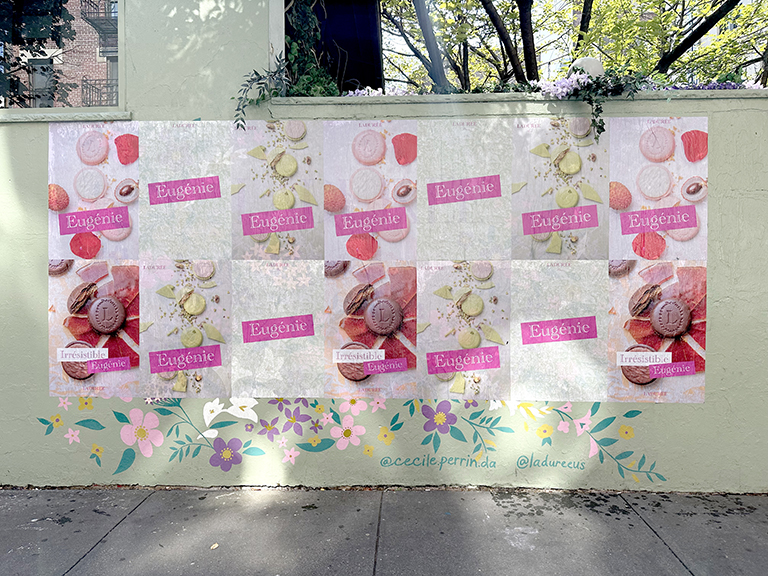
Most tech startups spend their early marketing budget on digital: paid search, social ads, influencer posts, and content marketing. All of those channels work, but they share a fundamental problem: every other startup in your category is doing the same thing. When every startup on Product Hunt is running Google Ads on the same keywords and competing for the same LinkedIn impressions, the cost goes up and the differentiation goes down.
Guerrilla marketing solves a specific problem for early-stage tech companies: how do you create visible, credible brand presence in the physical world — in the neighborhoods where your target users live and work — without the budget of an established brand? The answer is that you cannot replicate the media scale of a large brand, but you can dominate a specific geography so thoroughly that your target user feels like your brand is everywhere in their daily life.
A $15,000 guerrilla campaign covering the SoMa district in San Francisco or the Flatiron neighborhood in New York can create the kind of physical brand saturation that would require $80,000 or more in digital spend to approximate through digital channels in the same geography. The format punches above its budget weight precisely because it is physical — you cannot target it to move past without seeing it.
This guide covers the formats, markets, targeting approach, and campaign structure that make guerrilla marketing an effective launch tool for tech startups. Our team at American Guerrilla Marketing has executed campaigns for tech companies at Series A, launch, and product release moments across 50+ U.S. markets.
Why Physical Presence Matters for Tech Brands
Tech companies build products that exist in the digital world. The irony is that physical presence — showing up in the real spaces where users live and work — communicates legitimacy and scale in a way that digital advertising cannot. A user who sees your app’s campaign on a wheatpaste poster on their walk to the subway in the morning and then sees it again on a stencil near their office building experiences your brand as part of their physical environment. That is a fundamentally different brand signal than a sponsored post on a feed they scroll through at the same time they are looking at 40 other brands.
The Credibility Signal
For early-stage tech companies that have not yet achieved widespread name recognition, physical marketing creates a credibility signal that digital-only campaigns struggle to generate. A brand that exists in the real world — on walls, on sidewalks, in the hands of brand ambassadors at events — signals that there is a real company behind the product. That signal disproportionately matters for consumer apps where social proof and perceived momentum influence adoption decisions.
Local Market Domination
A startup does not need to win everywhere at once. It needs to win in the specific geography where its earliest and most valuable users are concentrated. For most tech products, that geography is defined: it is a handful of neighborhoods in one or two cities. Concentrating guerrilla campaign resources in those specific neighborhoods produces a density of presence that is more valuable than the same budget spread thinly across a national campaign.
Targeting Tech Corridors: Where to Place Campaigns
The neighborhood is the targeting mechanism in guerrilla marketing. Where you place your campaign determines who sees it. For tech startups, the target neighborhoods are the places where early adopters, tech professionals, and innovation-oriented consumers concentrate.
San Francisco Bay Area
SoMa (South of Market) is the primary tech corridor in San Francisco — the highest concentration of tech company offices and tech workers in the U.S. The Caltrain corridor from 4th and King down to the Mission District is the commute spine of the startup ecosystem. Placements along 2nd Street, Folsom Street, and near the Caltrain station at 4th and King reach the target audience at commute speed. The Mission District adds a younger, creative-adjacent demographic that skews toward early adoption of consumer products.
New York City
The Flatiron District and Silicon Alley broadly — from 14th Street to 30th Street between the West Side and Park Avenue — is the primary tech concentration in Manhattan. Chelsea and the Meatpacking District add DTC and media tech companies. DUMBO in Brooklyn has become a significant tech cluster. Our wheatpaste campaigns in these neighborhoods reach tech workers at their subway exits, on their lunch walks, and in the pedestrian corridors they use daily.
Seattle and Austin
South Lake Union in Seattle, anchored by Amazon’s campus, is the most accessible tech concentration in the Pacific Northwest. Campus perimeters, transit stops, and the pedestrian corridors around the neighborhood produce high-frequency impressions for the Amazon and adjacent tech worker population. In Austin, the East 6th Street corridor and the domain area serve the tech community, with significant additional concentration around downtown conference venues during SXSW and related events.
Format Selection for Tech Startup Campaigns
Wheatpaste Poster Campaigns
Large-format wheatpaste posters on construction fencing, permitted walls, and targeted surfaces in tech corridors create visual presence at scale. For tech product launches, the poster creative should be message-minimal — a product visual, a key benefit, a QR code, and the brand name. The QR code links to the app download or landing page. Every scan is a trackable conversion from the physical placement to the digital funnel.
Sidewalk Stencils
Sidewalk stencils near targeted office buildings, transit exits, and coffee shops create brand encounters at the moment the pedestrian is looking down — transitioning from transit, watching for curbs, or navigating a busy sidewalk. For app launches targeting a specific type of professional, stencils near the buildings where those professionals work create daily impressions without requiring any demographic targeting technology.
Brand Ambassadors at Events and Coworking Spaces
Our brand ambassador teams deploy at tech events, conference adjacents, and coworking spaces for startup campaigns that need human engagement alongside ambient outdoor presence. An ambassador who can demo the product, explain the core use case, and walk someone through their first session creates a depth of engagement that no poster can replicate. For complex tech products where the value proposition requires explanation, ambassador programs are a core execution component.
LED Billboard Trucks for Conference and Event Launches
Our LED billboard trucks are particularly effective for tech launches timed around major industry conferences. The truck circulates around the conference venue perimeter during event hours, reaching the entire attendee population with large-format video creative that can include product demos, key messages, and conference-specific CTAs. The concentration of a precisely targeted audience at a single location makes conference-adjacent LED truck campaigns among the most efficient buys available for any format.
Campaign Structure for a Product Launch
The most effective guerrilla campaigns for tech product launches follow a three-phase structure that builds awareness before the launch, saturates the market during the launch window, and maintains presence in the weeks following.
Pre-Launch Awareness Phase
Two to four weeks before launch, deploy teaser creative in target neighborhoods. The teaser reveals enough to create curiosity without explaining what the product is — a date, a concept, a visual that signals something is coming. Teaser creative generates social documentation and word-of-mouth among early adopters who encounter it and want to know what it is. QR codes on teaser creative can drive to a waitlist or early access signup, converting curiosity directly into email list growth before launch.
Launch Week Saturation
During launch week, full creative covering the target neighborhoods with complete product messaging: what it is, what it does, how to get it, and the QR code to download or sign up. Deploy brand ambassadors at high-traffic points on launch day and the following day. If the budget allows, add an LED truck circling the primary target corridor on launch day. The goal is maximum presence in the first 48 hours — tech products rely on launch momentum to climb app store charts and generate press coverage, and guerrilla presence in the physical world contributes to that momentum signal.
Post-Launch Sustaining Presence
After the launch window, a sustained ambient presence in target neighborhoods — ongoing wheatpaste, snipe advertising, and stencil programs — keeps the brand visible to users who missed the launch window and reinforces the brand for users who adopted early. Post-launch sustaining campaigns can run at a lower budget than the launch burst while maintaining meaningful neighborhood presence.
Budget Planning for Startup Guerrilla Campaigns
A credible single-market guerrilla launch campaign for a tech startup covers design, printing, wheatpaste installation, stencil deployment, and documentation. For a 4-week program in a market like New York or San Francisco, budget $8,000 to $25,000 depending on the intensity of coverage and the number of formats included. Multi-market launches covering two to four cities run $20,000 to $60,000 for simultaneous deployment.
Compare that to digital advertising in the same markets: a 4-week paid social campaign reaching 500,000 tech professionals in San Francisco might cost $15,000 to $30,000 with no guarantee of attribution and significant competition for attention in a feed that is already saturated with startup advertising. The guerrilla campaign reaches a smaller raw audience but creates encounters that are harder to ignore and more memorable.
Using Guerrilla Marketing to Support Tech Product Hunt Launches
Product Hunt and similar launch platforms have become standard launch channels for tech products. The typical Product Hunt launch is entirely digital — social posts, community upvotes, newsletter mentions, and digital press outreach. Brands that add a physical guerrilla component to their Product Hunt launch day create a unique amplification vector that most competing launches do not have.
The physical campaign on launch day serves a specific function: it gives the digital community something to share that is not a screenshot or a product link. A photo of a Product Hunt-branded wheatpaste campaign in SoMa or the Flatiron district is genuinely novel content for a tech community audience that primarily consumes digital media. The street-level campaign becomes a social post, the social post becomes a signal of momentum, and the momentum signal drives upvotes and attention within the Product Hunt community.
For Product Hunt launches, deploy street-level creative on the day of and immediately preceding the launch. Target the neighborhoods where your Product Hunt hunter and early adopter audience is concentrated. Include a reference to the launch itself in the creative when appropriate — “Launching today on Product Hunt” with a QR code to the listing creates a direct connection between the physical placement and the digital platform that the creator community will appreciate and share.
Guerrilla Marketing for Startup Investor Visibility
Beyond user acquisition, guerrilla marketing serves a secondary function for early-stage startups: signaling momentum and ambition to the investment community. Investors who see a startup’s brand on the walls of SoMa in San Francisco or in the Flatiron district in New York — particularly if they have seen it multiple times over a campaign window — register the brand as one that is investing in market presence. That perception of momentum and marketing competence influences investor confidence in ways that are not easily quantified but are consistently observed by startup founders who have run guerrilla campaigns alongside fundraising rounds.
For startups in fundraising mode, timing a guerrilla campaign to coincide with the period when target investors are most visible — around major tech conferences, during the weeks when VC firms are conducting portfolio reviews, or in the neighborhoods where target investment firms are headquartered — creates a specific impression in the audience that controls the next funding decision.
Creative Strategy for Tech Startup Guerrilla Campaigns
Tech startup campaign creative faces a specific challenge: communicating what the product does to a pedestrian audience who may have no context for the category, in the 2 to 3 seconds of contact available on a street-level placement. The creative brief for a guerrilla campaign must prioritize instant comprehension over clever messaging. The pun, the industry insider reference, the clever play on a technical concept — these work on a screen where the viewer can pause and re-read. They frequently fail on a sidewalk.
Benefit-First Creative Principles
Lead with the specific, concrete benefit — not the product category, not the company name, not a tagline. “Cut your commute time in half” is a guerrilla creative headline. “The Future of Urban Mobility” is not. The first communicates a specific benefit to a specific person. The second communicates nothing actionable to anyone. For consumer tech products, every guerrilla creative brief should pass the “so what” test: if someone reads only the headline, do they know what they get? If the answer is no, revise the headline.
App Store QR Codes vs. Web Landing Pages
For mobile app launches, the QR code destination should route directly to the app store listing rather than through a web landing page. The additional click from landing page to app store creates friction that reduces the conversion rate from scan to download by an estimated 20 to 40%. A QR code that lands the user directly at the “Get” button in the App Store or Play Store is the highest-conversion destination for a consumer app launch campaign.
Startup-Specific Campaign Formats: What Delivers Best ROI
Not all guerrilla formats are equal value for early-stage tech startups. The decision should be driven by where the target user is concentrated and which format creates the most relevant brand encounter for the product.
Why Stencils Over Posters for Software Products
Software products with no physical form benefit from stencil campaigns that integrate into the physical environment without claiming wall space. A stencil that appears repeatedly on the sidewalk paths of the target neighborhood creates a brand encounter that feels almost ambient — the user stumbles on it multiple times without registering it as advertising. That ambient quality is particularly appropriate for software brands that want to communicate “this is part of your everyday environment” rather than “this is a product being advertised at you.”
Compare that to a wheatpaste poster campaign, which is visually prominent and works well for consumer apps or hardware products with a strong visual identity. If the product has a distinctive interface or physical form, a poster at scale communicates the product’s visual identity better than a stencil. If the product is conceptual — a B2B tool, a platform, a service — a stencil-and-message approach often outperforms a photo-based poster approach because there is no compelling visual to display.
Documentation and Proof of Campaign
Every guerrilla campaign we execute delivers GPS-tagged photo documentation of every placement, timestamped installation reports, and a post-campaign analytics summary. For startups reporting to investors or to internal leadership teams, that documentation proves the campaign happened, shows what it looked like in the market, and provides the data foundation for ROI analysis.
We integrate QR tracking data, vanity URL analytics, and any geo-fenced digital campaign data into the post-campaign report. The combined document gives startup marketing teams the evidence they need to evaluate the format’s contribution to overall launch performance and to plan the next campaign with better data than they had for the first.
Frequently Asked Questions
Does guerrilla marketing work for tech startups?
Yes. A $15,000 guerrilla campaign covering SoMa in San Francisco or the Flatiron neighborhood in New York can generate brand visibility that would require $80,000+ in digital spend to approximate in the same geography. The format punches above its budget because it is physical and unavoidable in its placement area.
What guerrilla marketing formats work best for tech startups?
Highest-performing formats: wheatpaste poster campaigns in tech corridors, sidewalk stencils near target office buildings or transit hubs, brand ambassador programs at tech events and coworking spaces, and LED billboard trucks near conference venues. The right format depends on your specific launch objective.
Which cities are best for guerrilla marketing by tech startups?
San Francisco Bay Area (SoMa, Mission), New York City (Flatiron, Chelsea, DUMBO), Seattle (South Lake Union), Austin (East 6th, downtown), and Boston (Seaport, Kendall Square) are the primary markets. The right city is wherever your target users are concentrated.
How much should a tech startup budget for guerrilla marketing?
A credible single-market launch campaign runs $8,000 to $25,000 for a 4-week program. Multi-market launches covering two to four cities run $20,000 to $60,000. These budgets produce meaningful visual presence and are significantly more cost-efficient than digital advertising in the same markets.
How do you target tech professionals specifically with guerrilla marketing?
Target by location: the commute corridors, transit stops, coffee shops, and co-working spaces that tech professionals use daily. Placements near Caltrain stations in SF, near Grand Central in NYC, or near South Lake Union transit stops in Seattle reach tech professionals with high frequency without any demographic targeting technology required.
Can guerrilla marketing support a tech conference or event launch?
Yes. A wheatpaste and stencil campaign in the conference neighborhood, combined with brand ambassadors at entry points and an LED truck circling the venue, creates saturation exposure for the entire attendee population. Event-adjacent campaigns are among the most efficient guerrilla buys because the target audience is already concentrated in one location.