American Guerrilla Marketing
Nationwide serivce
Media planning, media buying, billboard advertising, & guerrilla marketing
American Guerrilla Marketing places interior bus and shelter advertising across every major Maryland transit system. Baltimore’s MTA Maryland network, Montgomery County’s Ride On, and Prince George’s County’s TheBus. Direct execution. 500+ campaigns nationwide.
Maryland’s transit advertising landscape is defined by its geography: a state split between the gritty industrial city of Baltimore and two of the wealthiest, most politically connected suburban counties in the country. MTA Maryland is the anchor in Baltimore, running 60-plus bus routes through a city of deep neighborhood character, a massive healthcare and university employment base, and a transit-dependent working adult population that gets on the bus every day because it is how they move through the city. Montgomery County’s Ride On system serves a different Maryland entirely, one of high household incomes, federal contractor corridors, Bethesda biotech employers, and a diverse suburban population that includes some of the most educated communities in the United States. Prince George’s County’s TheBus connects a majority-Black suburban county directly adjacent to Washington DC, a market that includes the 35,000-plus student population at the University of Maryland in College Park and a dense residential workforce that commutes toward DC and Annapolis along congested suburban corridors.
The structure of Maryland’s transit advertising opportunity comes from this three-part geography. Baltimore is the underpriced urban market relative to DC, where comparable ridership demographics and transit density come at advertising costs significantly below what those same audience profiles would command on Metro buses in the District. Montgomery County’s Ride On is the premium suburban market, where Bethesda, Rockville, Silver Spring, and Gaithersburg routes carry a consumer profile defined by high income, high educational attainment, and proximity to federal government and private sector professional employment. Prince George’s County’s TheBus is the university market plus the dense suburban working-adult market, where the UMD campus routes alone create a concentrated young adult demographic that no other transit buy in the state can replicate.
AGM has executed transit advertising campaigns in the mid-Atlantic region as part of our 10-plus year, 500-plus campaign national record. We understand how Maryland’s three systems differ from each other, how their ridership profiles map to specific advertiser target audiences, and how to build a Maryland transit media plan that allocates budget to the markets and routes that best serve each campaign’s specific objectives. Maryland is not a single transit market. Baltimore, Montgomery County, and Prince George’s County are three markets with different demographics, different advertising environments, and different strategic value propositions depending on what a campaign is trying to accomplish.
MTA Maryland is the state's primary bus network -- Johns Hopkins Hospital workers, Morgan State...
Learn More
RideOn serves Montgomery County, Maryland -- the Washington DC metro's most affluent suburb, home to...
Learn More
TheBus serves Prince George's County -- the University of Maryland's flagship campus, Joint Base Andrews,...
Learn MoreAGM covers MTA Maryland in Baltimore, Ride On in Montgomery County, and TheBus in Prince George's County. Tell us your target audience and we'll build the Maryland media plan that reaches them directly.
60-plus fixed bus routes across Baltimore City and Baltimore County. Maryland’s largest transit system, connecting workforce communities, healthcare corridors, and university campuses across the Baltimore metro.
Montgomery County’s bus network serving Bethesda, Rockville, Silver Spring, Gaithersburg, and Germantown. Connects one of the wealthiest counties in the US to Metro stations and DC employment centers.
Prince George’s County’s fixed-route bus network serving Upper Marlboro, Largo, Hyattsville, Greenbelt, and College Park. Serves the University of Maryland campus and connects dense suburban communities to Metro rail.
MTA Maryland in Baltimore is one of the most strategically underpriced transit advertising markets relative to audience size on the entire East Coast. Baltimore sits 40 miles from Washington DC, operates in the same media market orbit, and produces comparable ridership volumes per capita to the DC transit system — yet MTA Maryland transit advertising rates run substantially below what comparable placements command on DC Circulator buses or on the Washington Metro bus network. The gap exists because Baltimore attracts less national advertiser competition than DC, not because the Baltimore audience is smaller or less valuable. For brands that have been priced out of premium DC transit inventory, MTA Maryland in Baltimore is the direct alternative with a comparable audience profile at a fraction of the competition pressure.
Montgomery County’s Ride On system serves what is consistently ranked among the wealthiest counties in the United States by median household income. The communities of Bethesda, Chevy Chase, Potomac, and North Bethesda represent the highest-income suburban residential areas accessible through any Maryland transit advertising buy, and Ride On routes connecting those communities to the Bethesda Metro station and the DC employment corridor carry a rider demographic defined by professional careers, advanced degrees, and household incomes that far exceed the national average for transit riders.
TheBus in Prince George’s County operates in a market that is defined by two distinct audience segments: the 35,000-plus student population at the University of Maryland in College Park and the dense majority-Black suburban residential community that occupies the county’s northern and central corridors adjacent to DC. These two audiences coexist within the same transit system but occupy different routes and different segments of the county’s geography, and the most effective TheBus advertising strategies address them separately rather than trying to reach both simultaneously through generic system-wide placements.
King and queen posters, interior cards, headliners, seat-back displays, and overhead cards are available across Maryland’s transit fleet. Interior formats reach every rider on the bus for the full duration of their trip in a low-distraction reading environment. Format availability varies by system and fleet type. AGM advises on which interior formats are available on each Maryland system and recommends the format mix that best matches the campaign’s creative approach and budget.
Full bus wraps, tail displays, and window vinyls are available on most Maryland transit systems. Exterior formats reach vehicle traffic, pedestrians, and the communities along each route as the bus moves through the service area. Full wraps transform a bus into a moving billboard across the system’s entire route network. AGM coordinates exterior format availability and installation across all Maryland transit systems.
Covered shelter advertising is available at primary stop locations on the larger Maryland city transit systems. Shelter panels reach waiting riders during their stop dwell time and vehicle traffic passing the stop location. Shelter advertising combined with interior bus placements creates a two-touchpoint campaign that reaches riders both at the stop and on the vehicle. AGM advises on shelter inventory availability by system and recommends shelter positions that match the advertiser’s geographic and demographic targets.
Bus shelter advertising in Maryland places your brand at the exact locations where riders wait for transit service. The dwell time at a shelter, typically five to fifteen minutes per stop visit, creates an uninterrupted, low-distraction exposure window that in-vehicle advertising alone cannot deliver at equivalent duration.
Maryland’s shelter advertising inventory is concentrated at the primary boarding and alighting points on the state’s larger transit systems, where ridership volumes and wait times are highest. AGM identifies the shelter positions that deliver the most rider exposure for each campaign’s geographic and demographic targets, and structures shelter buys around the stop locations that create maximum frequency among the target audience.
AGM manages all aspects of shelter advertising placement in Maryland, from inventory identification and booking through creative production, installation, and monitoring for the full campaign posting period.
Maryland’s transit advertising market is less competitive than comparable markets in states with higher national advertiser awareness. Brands that target the digital advertising ecosystem for the same audiences often pay a premium for fragmented, avoidance-prone digital impressions when Maryland’s transit systems deliver the same demographics with sustained, physical exposure during their daily transit routine.
The working adult, student, and community transit rider in Maryland is reachable through transit advertising at a cost-per-impression that digital advertising in the same markets consistently fails to match. AGM has executed transit campaigns across more than 500 national engagements and understands exactly which Maryland systems and routes deliver the audience volume and demographic profile that each advertiser needs.
Brands that enter the Maryland transit advertising market now are securing placements at pre-competitive pricing on systems that will attract more national advertiser attention as the market matures.
AGM’s full guerrilla marketing format portfolio is available alongside transit advertising campaigns in every Maryland market. The combination of transit interior presence and street-level guerrilla formats creates the frequency stack that single-format campaigns cannot build on their own.
Snipe advertising along the corridors served by MTA Maryland in Baltimore, Ride On in Montgomery County, and TheBus in Prince George’s County creates street-level touchpoints that reinforce bus interior campaigns at the route level. Riders who see your interior card also encounter your snipes at intersections and along commercial strips their routes travel through every day.
Sidewalk stencils at Baltimore’s primary transit hubs including the Lexington Market station area and the Charles Center bus stops create ground-level brand presence at the maximum foot-traffic concentration points in the city’s transit network. In Silver Spring and Bethesda, sidewalk stencils at the transit center and Metro station bus bays reach the high-income Montgomery County commuter demographic at the moment of transit transfer.
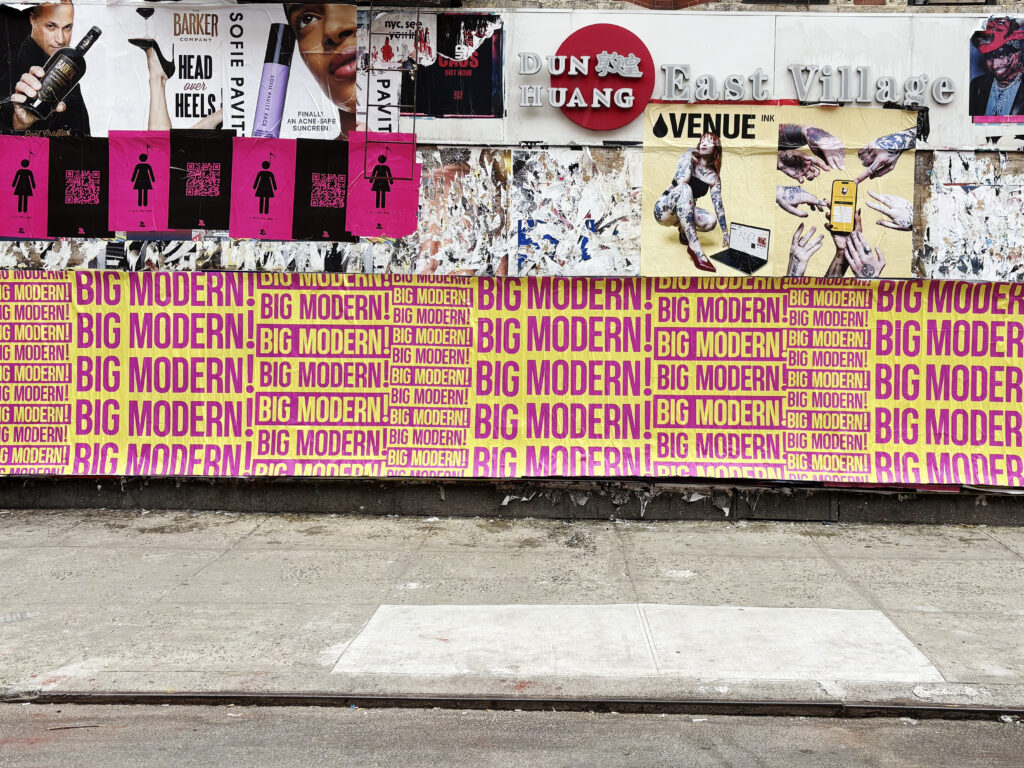
Wheatpasted poster campaigns in Baltimore’s Fells Point, Station North Arts District, Charles Village, and Federal Hill corridors create large-format street impressions for the young professional and university audience that walks and transits through those neighborhoods. In College Park, wheatpasting along the Route 1 corridor reaches the University of Maryland student demographic in the commercial zone immediately adjacent to campus.
AGM’s Maryland transit advertising process begins with route analysis and ridership demographic research, not a generic placement request to the transit authority. Before recommending any format or location, AGM reviews the route-level ridership data, stop-level pedestrian counts, and demographic profiles for each Maryland system to identify the specific corridors and stops that best match your target audience. For a Baltimore campaign, this means mapping MTA Maryland route demographics against your target audience profile and recommending the specific routes — not just the system as a whole — where your audience concentration is highest. For a Montgomery County campaign, it means understanding the difference between Bethesda corridor routes and Silver Spring corridor routes in terms of household income, commute behavior, and advertiser category relevance.
Once the placement plan is approved, AGM handles all media buying negotiations directly with each Maryland system’s advertising management. We manage contract terms, installation timelines, creative specification requirements, and compliance with each system’s content policies. Your responsibility is final creative approval. The buying, placement coordination, production management, and installation scheduling are handled by AGM from contract through installation completion. Post-installation documentation includes photographic verification of all placements for your compliance records and campaign reporting.
For Maryland campaigns that combine transit advertising with guerrilla marketing elements, AGM coordinates the deployment timing of street-level placements to align with the transit installation schedule. A Maryland campaign that combines MTA Maryland interior cards with Baltimore corridor snipes and sidewalk stencils at major transit hubs is coordinated so that all elements go live simultaneously, maximizing the multi-touchpoint reinforcement effect that single-format campaigns cannot achieve. The transit interior placement and the street-level placement support each other when they run at the same time — that synchronization is built into every AGM multi-format Maryland campaign.
Yes. AGM manages multi-market transit advertising campaigns across Maryland’s three primary transit systems through a single client engagement. A statewide Maryland transit campaign covering MTA Maryland in Baltimore, Ride On in Montgomery County, and TheBus in Prince George’s County can be coordinated through one AGM point of contact with unified creative management, production coordination, and post-campaign reporting. Multi-market campaigns benefit from synchronized launch timelines and consistent creative standards across all three systems.
MTA Maryland in Baltimore delivers the highest absolute ridership of any Maryland transit system, with 60-plus routes across Baltimore City and Baltimore County producing passenger volumes that significantly exceed either Montgomery County’s Ride On or Prince George’s County’s TheBus. For a Maryland campaign prioritized purely by ridership volume, Baltimore MTA should receive the largest budget share. For campaigns prioritizing audience income, Montgomery County’s Ride On delivers higher household income demographics. For campaigns targeting the university market, Prince George’s County’s TheBus on the College Park corridors is the strongest single-market option.
Baltimore’s MTA Maryland transit advertising consistently runs at lower rates than comparable DC Metro bus placements for audience profiles that are demographically similar. The cost differential exists because Baltimore attracts less national advertiser competition than DC, not because the Baltimore audience is meaningfully smaller or less consumer-active. For brands that have been priced out of premium DC transit inventory or that want to extend a DC-area campaign into the Baltimore market, MTA Maryland delivers the most cost-efficient expansion of mid-Atlantic transit reach in the region.
The DC-ward commuter routes on both Ride On in Montgomery County and TheBus in Prince George’s County serve the highest concentration of federal employees accessible through Maryland transit. Ride On routes connecting Bethesda, Rockville, and Silver Spring to Metro stations carry federal workers from NIH, FDA, and the numerous federal contracting firms in the I-270 corridor. TheBus routes connecting Greenbelt, College Park, and Hyattsville to the Green Line Metro carry federal workers commuting to agencies across DC and at the Prince George’s County federal facility cluster around the Beltway. A combined Ride On and TheBus buy targeting the Metro-connection routes is the most targeted Maryland approach to the federal professional demographic.
Maryland’s transit systems generally follow standard transit advertising content policies that apply nationally. Montgomery County’s Ride On, as a county-operated system, may apply county government content guidelines in addition to standard transit advertising restrictions. Alcohol and cannabis advertising policies vary across the three systems, with MTA Maryland, Ride On, and TheBus each maintaining their own category-specific guidelines. AGM reviews the applicable content policies for each Maryland system during campaign planning and advises clients on any category restrictions before production begins.
TheBus operates routes that connect College Park’s University of Maryland campus to the Prince George’s County road network, complementing the UM Shuttle and the Metro Green Line station at College Park. Routes serving the Route 1 commercial corridor through College Park and Hyattsville carry significant UMD student ridership alongside the general Prince George’s County transit population. For advertising campaigns specifically targeting the UMD student demographic, AGM recommends TheBus route placements concentrated on the College Park and Hyattsville corridors where student ridership is highest, combined with UM Shuttle interior advertising if the target audience is students moving on campus rather than students traveling off-campus.
Standard production and installation lead time for Maryland transit interior advertising is two to four weeks from final artwork approval. Shelter advertising at the highest-demand locations in Baltimore, Silver Spring, and Bethesda may require four to six weeks for confirmed placements during peak demand periods. Full bus wraps on MTA Maryland or Ride On require five to six weeks minimum from artwork approval through installation. AGM recommends beginning campaign planning six to eight weeks before the intended launch date to ensure availability confirmation, production scheduling, and installation coordination across all Maryland systems included in the campaign.
Yes. MTA Maryland’s 60-plus route network creates granular neighborhood-level targeting capability within Baltimore. Routes through Fells Point, Canton, and Federal Hill concentrate the young professional demographic. Routes through Charles Village and Waverly serve the university neighborhood demographic around Johns Hopkins Homewood. Routes through Sandtown-Winchester, Park Heights, and Cherry Hill serve the working-class community demographic. Routes through the Hopkins medical complex corridor concentrate the healthcare professional audience. AGM maps MTA Maryland route demographics to specific advertiser target audiences and recommends route-level placements that maximize the match between campaign creative and the ridership demographic on those specific routes.
AGM structures multi-system Maryland packages combining placements across MTA Maryland, Ride On, and TheBus at package pricing that reflects the combined buy scale. The specific package structure depends on the systems included, formats selected, and campaign duration. For brands entering the Maryland market comprehensively and wanting presence across Baltimore, Montgomery County, and Prince George’s County, AGM builds a Maryland market package proposal allocating budget across all three systems based on specific market priorities and demographic targets. Contact AGM for Maryland multi-system package pricing.
Maryland is one of the strongest transit advertising states in the country for healthcare and pharmaceutical brands, specifically because of the concentration of healthcare employers on or adjacent to transit routes. The MTA Maryland routes serving Johns Hopkins Medicine, University of Maryland Medical System, MedStar Health, and Mercy Medical Center in Baltimore deliver among the highest concentrations of healthcare professional transit audiences in the mid-Atlantic region. The NIH campus in Bethesda is accessible via Ride On routes in Montgomery County. For healthcare and pharmaceutical brands that want to reach clinical professionals, administrative healthcare workers, and medically aware transit demographics, Maryland’s three transit systems collectively represent a high-value regional advertising portfolio.