American Guerrilla Marketing

Nationwide serivce

Media planning, media buying, billboard advertising, & guerrilla marketing

Bus & Transit Advertising in Indiana

Indiana

American Guerrilla Marketing places interior bus and transit advertising across every major Indiana system. IndyGo in Indianapolis, Fort Wayne Citilink, Transpo in South Bend, Bloomington Transit, METS in Evansville, CityBus in Lafayette, and 18 more Indiana systems. Direct execution. 500+ campaigns nationwide.

Indiana has one of the most geographically distributed and demographically varied transit landscapes relative to its state size of any Midwestern state. The state’s transit map is shaped by two overlapping realities: a capital city that is investing seriously in transit infrastructure for the first time in a generation, and a collection of mid-size cities each anchored by a major university that drives transit ridership intensity far above what the surrounding community populations would otherwise support. The result is a transit advertising state where the anchor system in Indianapolis is expanding and modernizing, the university corridor markets from Bloomington to Lafayette to South Bend are delivering concentrated young adult audiences, and the northwest Indiana market at Gary and Michigan City operates as a Chicago metro overflow zone that functions economically and culturally more like a Chicago suburb than a Indiana regional city.

IndyGo in Indianapolis is the state’s largest transit system and the system most visibly transforming. The Purple Line Bus Rapid Transit route, which launched in 2019 as Indiana’s first BRT corridor, runs along Washington Street on the city’s east side, with dedicated lanes, off-board fare collection, and level boarding at station platforms that make it operate more like light rail than a conventional bus. The Red Line BRT on College and Madison Avenues is IndyGo’s north-south spine, running from Broad Ripple on the north end to the University of Indianapolis on the south end. These BRT investments have changed the character of Indianapolis transit advertising from a traditional bus interior medium to a multi-format environment that includes station platforms, BRT vehicle exteriors, and the street-level pedestrian environments surrounding the dedicated stations along both BRT routes.

Indiana’s university corridor is one of the densest concentrations of higher education transit markets relative to state size in the Midwest. Indiana University’s Bloomington Transit, Purdue University’s CityBus in Lafayette, Notre Dame’s Transpo in South Bend, Ball State University’s Muncie Indiana Transit System, Indiana State University’s Terre Haute Transit, and Vincennes University’s V-Line in Vincennes create a chain of university-adjacent transit systems running from the northwest Indiana border to the southwestern corner of the state. For brands with college student marketing programs that want Midwest reach beyond Illinois’s CUMTD market, Indiana’s university corridor delivers six distinct university markets across a single state’s transit system portfolio.

Northwest Indiana presents a unique transit advertising case. Gary, Hammond, East Chicago, Michigan City, and Portage are geographically part of Indiana but function as part of the Chicago metropolitan area in almost every economic and demographic sense. Many northwest Indiana residents commute to Chicago via the South Shore Line commuter rail or via bus connections that overlap with the regional transit network. The transit systems in northwest Indiana, including Gary Public Transportation, Michigan City Transit, East Chicago Transit, and the Interurban Trolley serving Portage and Valparaiso, carry riders who shop in Chicago, work in Chicago, and consume Chicago media. Advertising on northwest Indiana transit reaches the Chicago metro consumer base at Indiana market pricing, which is meaningfully lower than the CTA and Pace advertising rates that dominate the Chicago advertising environment.

Advertise onACCESS Johnson County

Advertise onACCESS Johnson County

ACCESS Johnson County serves Greenwood, Franklin, and Johnson County with routes connecting the rapidly growing...

Learn More
Advertise onBloomington Transit

Advertise onBloomington Transit

Bloomington Transit serves Bloomington and Indiana University with routes along College Avenue and Kirkwood Avenue....

Learn More

Transit Systems Serving Indiana

Advertise onCentral Indiana Regional Transportation Authority

Advertise onCentral Indiana Regional Transportation Authority

CIRTA operates commuter bus routes connecting Indianapolis's suburban counties with downtown employment. Interior bus ads...

Learn More
Advertise onChicaGo Dash

Advertise onChicaGo Dash

ChicaGo Dash operates express commuter bus service from northwest Indiana to downtown Chicago. Interior bus...

Learn More
Advertise onCity of Anderson Transit System

Advertise onCity of Anderson Transit System

Anderson Transit System serves Anderson and Madison County with routes along Main Street and Scatterfield...

Learn More
Advertise onCityBus

Advertise onCityBus

CityBus serves Lafayette, West Lafayette, and Purdue University with routes along Sagamore Parkway and the...

Learn More
Advertise onColumBUS

Advertise onColumBUS

ColumBUS serves Columbus and Bartholomew County with routes along 25th Street and Jonathan Moore Pike....

Learn More
Advertise onEast Chicago Transit

Advertise onEast Chicago Transit

East Chicago Transit serves East Chicago and the Calumet Region with routes along Indianapolis Boulevard...

Learn More
Advertise onFort Wayne Citilink

Advertise onFort Wayne Citilink

Citilink serves Fort Wayne and Allen County with 20+ routes connecting the downtown area, Parkview...

Learn More
Advertise onGary Public Transportation Corporation

Advertise onGary Public Transportation Corporation

Gary Public Transportation serves Gary and Lake County with routes along Broadway, 5th Avenue, and...

Learn More
Advertise onIndyGo

Advertise onIndyGo

IndyGo operates Indianapolis's transit network with 30+ routes including the Red Line BRT. Interior bus...

Learn More
Advertise onInterurban Trolley

Advertise onInterurban Trolley

Interurban Trolley serves Muncie and Ball State University with routes along Kilgore Avenue and McGalliard...

Learn More
Advertise onKokomo City-Line

Advertise onKokomo City-Line

Kokomo City-Line serves Kokomo and Howard County with routes along Main Street and Superior Street....

Learn More
Advertise onMarion Transit System

Advertise onMarion Transit System

Marion Transit System serves Marion and Grant County with routes along 3rd Street and MLK...

Learn More
Advertise onMetropolitan Evansville Transit System

Advertise onMetropolitan Evansville Transit System

METS serves Evansville and Vanderburgh County with routes along Diamond Avenue, Lynch Road, and Lloyd...

Learn More
Advertise onMichigan City Transit

Advertise onMichigan City Transit

Michigan City Transit serves Michigan City and La Porte County with routes along Franklin Street...

Learn More
Advertise onMuncie Indiana Transit System

Advertise onMuncie Indiana Transit System

Muncie Indiana Transit System serves Muncie and Delaware County. Interior bus ads and shelter placements...

Learn More
Advertise onRose View Transit

Advertise onRose View Transit

Rose View Transit serves Terre Haute and Indiana State University with routes along Wabash Avenue...

Learn More
Advertise onSouth Bend TRANSPO

Advertise onSouth Bend TRANSPO

TRANSPO serves South Bend and St. Joseph County with routes connecting Notre Dame, Indiana University...

Learn More
Advertise onSouthern Indiana Transit System

Advertise onSouthern Indiana Transit System

Southern Indiana Transit System serves the regional communities of southwest Indiana, connecting Warrick, Gibson, and...

Learn More
Advertise onTerre Haute Transit

Advertise onTerre Haute Transit

Terre Haute Transit serves Terre Haute and Vigo County with fixed routes along Wabash Avenue,...

Learn More
Advertise onTransit Authority of River City

Advertise onTransit Authority of River City

Transit Authority of River City operates Louisville Kentucky's primary transit system with select service extending...

Learn More
Advertise onV-Line

Advertise onV-Line

V-Line serves Vincennes and Knox County with routes connecting Vincennes University with the downtown area...

Learn More
Advertise onWashington Transit System

Advertise onWashington Transit System

Washington Transit System serves Washington and Daviess County with routes connecting the county seat with...

Learn More

Start Your Indiana Transit Campaign

AGM covers every major Indiana transit system from IndyGo in Indianapolis to CityBus at Purdue, Bloomington Transit at IU to Transpo at Notre Dame. Tell us your target market and we'll build the media plan that reaches them directly.

Indiana Transit Systems: Choose Your Market

IndyGo

Indianapolis’s bus and BRT system. Purple Line and Red Line BRT plus 30+ conventional routes. Indiana’s largest transit system and the dominant Indiana transit advertising market. Downtown Indianapolis, Broad Ripple, the east side, and the University of Indianapolis corridor.

Fort Wayne Citilink

Fort Wayne city bus service. Indiana’s second-largest city transit system. Connects downtown Fort Wayne, Parkview Regional Medical Center, IPFW/Purdue Fort Wayne, and the residential communities of Allen County.

South Bend Transpo

South Bend city transit serving the Michiana region. University of Notre Dame connections, Memorial Hospital routes, and the downtown South Bend entertainment district. The northern Indiana transit market.

Bloomington Transit

Bloomington city bus service serving Indiana University’s 45,000+ students. Free for IU students with BusPass program. One of Indiana’s highest-ridership transit systems relative to city size. The quintessential Indiana university transit market.

Metropolitan Evansville Transit System (METS)

Evansville city bus service. Indiana’s third-largest city on the Ohio River. University of Southern Indiana and University of Evansville routes, downtown Evansville, and the Vanderburgh County residential corridors.

CityBus Lafayette

Lafayette and West Lafayette transit serving Purdue University’s 50,000+ students. Connects the Purdue campus, downtown Lafayette, and the residential communities of Tippecanoe County. One of Indiana’s highest-ridership per capita transit systems.

Gary Public Transportation

Gary city transit in Lake County. Northwest Indiana Chicago metro overflow market. Connects Gary’s residential communities, the Gary South Shore rail station, and the Lake County employment corridors.

Terre Haute Transit

Terre Haute city bus service serving Indiana State University’s 11,000+ students, Indiana State’s campus, Terre Haute Regional Hospital, and the Vigo County residential and commercial communities.

Columbus Transit

Columbus city transit serving Bartholomew County. The Cummins Inc. company town with globally significant architecture. Professional and manufacturing workforce ridership in Indiana’s design and engineering capital.

Michigan City Transit

Michigan City bus service in LaPorte County. Lake Michigan shoreline community and Chicago metro overflow market. Indiana Dunes tourism ridership and manufacturing workforce in the southwest Lake Michigan corridor.

East Chicago Transit

East Chicago city transit in Lake County. Heavy industrial community adjacent to the Chicago metro. Steel and oil refining workforce ridership in the Calumet region of northwest Indiana.

Interurban Trolley

Northwest Indiana regional transit serving Portage, Valparaiso, Crown Point, and Merrillville. Connects the growing Porter and Lake County suburban communities to the Chicago metro transit network via South Shore Line.

Chicago Dash

Express bus service from northwest Indiana communities to downtown Chicago. Connects Valparaiso, Chesterton, Portage, and Merrillville to Chicago’s Loop. The commuter express market between Indiana and Chicago.

Muncie Indiana Transit System (MITS)

Muncie city transit serving Ball State University’s 18,000+ students. BSU campus routes, downtown Muncie, IU Health Ball Memorial Hospital, and the residential communities of Delaware County.

Central Indiana Regional Transportation Authority (CIRA)

Regional transit connecting the suburban communities surrounding Indianapolis to the IndyGo network and the Indianapolis metropolitan employment core. The Indianapolis suburban commuter market.

Transit Authority of River City (TARC)

Louisville-connected transit serving southern Indiana communities with cross-river service. New Albany, Jeffersonville, and Clarksville riders accessing the Louisville Kentucky metro area via the Ohio River bridge routes.

V-Line Vincennes

Vincennes city transit serving Vincennes University and the Knox County community. Rural southwest Indiana’s primary transit connection between campus life and the regional commercial center.

Rose View Transit

Terre Haute regional transit complementing city bus service in Vigo County. Connects rural Vigo County communities to the Terre Haute urban core and ISU campus.

Kokomo CityLine

Kokomo city transit in Howard County. Connects the Kokomo automotive manufacturing community, IU Kokomo campus, and the residential neighborhoods of Howard County.

Marion Transit System

Marion city transit in Grant County. Indiana Wesleyan University and the Grant County industrial and residential community ridership in north-central Indiana.

Washington Transit System

Washington city transit in Daviess County. Regional community transit for the agricultural and manufacturing communities of southwest Indiana.

City of Anderson Transit

Anderson city transit in Madison County. Ivy Tech Community College Anderson, the Madison County healthcare corridor, and the residential communities of the post-industrial Anderson metro.

Access Johnson County

Johnson County community transit serving Greenwood, Franklin, and the Indianapolis south suburban communities. A growing suburban market directly south of Indianapolis along the US-31 corridor.

Southern Indiana Transit System

Regional transit serving Clark and Floyd counties in the Louisville Kentucky metro area on the Indiana side. New Albany and Charlestown community transit with Louisville metro economic connections.

Indiana Transit Advertising: Market By Market

Indianapolis: IndyGo and the BRT Transformation

IndyGo is in the middle of the most significant transit infrastructure transformation in Indiana’s history. The Purple Line BRT along Washington Street and the Red Line BRT along College and Madison Avenues have changed the physical advertising environment in Indianapolis transit from a conventional bus interior medium to a multi-surface platform that includes dedicated BRT station shelters, branded BRT vehicle interiors and exteriors, and the street-level environments along the dedicated bus lanes on both BRT corridors. The BRT stations are fixed, identifiable locations that function more like rail stations than bus stops, with higher dwell times, more pedestrian traffic, and greater shelter advertising visibility than conventional bus stops.

The Indiana University Corridor: Bloomington Transit and IU

Bloomington Transit serves Indiana University’s 45,000-plus students under the BusPass program that gives IU students free transit access using their university ID card. The free-fare program drives ridership on the campus-adjacent routes to levels that disproportionately reflect the student population, and for brands targeting the 18-to-25 college demographic in Indiana, Bloomington Transit delivers that audience with the same demographic concentration that CUMTD delivers at the University of Illinois. The difference is scale: CUMTD’s market is larger because U of I is larger, but Bloomington Transit’s cost structure reflects the smaller Bloomington market, making the per-impression cost of reaching IU students on Bloomington Transit potentially more efficient than reaching U of I students on CUMTD.

Lafayette: CityBus and Purdue University

CityBus in Lafayette serves one of the largest university transit markets in Indiana. Purdue University in West Lafayette has over 50,000 students across its undergraduate, graduate, and professional programs, and the campus lies directly across the Wabash River from the city of Lafayette, creating a cross-river transit dynamic where CityBus routes serve both the Purdue campus in West Lafayette and the downtown Lafayette commercial and residential communities across the river. The routes crossing the bridges between Lafayette and West Lafayette carry mixed student and community ridership, while the on-campus routes in West Lafayette are predominantly student ridership going to and from academic buildings, the Purdue Memorial Union, and the student residence hall quadrangles.

South Bend: Transpo, Notre Dame, and the Michiana Market

South Bend Transpo serves the Michiana region, a bi-state metro area that straddles the Indiana-Michigan border north of Elkhart and includes South Bend, Mishawaka, and the adjacent Michigan communities of Niles and Benton Harbor. The University of Notre Dame dominates South Bend’s cultural and economic identity in a way that is comparable to IU’s relationship with Bloomington, and Transpo routes serving the Notre Dame campus carry the 8,500-student undergraduate population plus the graduate and professional school enrollment of one of the country’s most prestigious private universities.

Northwest Indiana: The Chicago Metro Overflow Market

The northwest Indiana transit market, encompassing Gary, Hammond, East Chicago, Michigan City, and Portage, operates in a geographic and economic context that is inseparable from the Chicago metro area. Residents of these communities shop in Chicago, attend Chicago sports and entertainment events, and frequently commute to Chicago via the South Shore Line commuter rail and local bus connections that link to the Gary and Miller stations. The transit systems serving northwest Indiana, including Gary Public Transportation, East Chicago Transit, Michigan City Transit, and the Interurban Trolley, carry riders who are, in most consumer behavior respects, Chicago metro consumers.
Evansville: The Ohio River Regional Market

METS in Evansville serves Indiana’s third-largest city, a regional economic center on the Ohio River that is geographically and economically more connected to the Owensboro, Kentucky market across the river and the Henderson, Kentucky market downstream than to any Indiana city. Evansville is the dominant city in a tri-state regional market covering southwestern Indiana, western Kentucky, and the adjacent Illinois communities in White and Gallatin counties. The METS ridership reflects the Evansville economy: manufacturing, healthcare, retail, and university employment at the University of Southern Indiana and the University of Evansville.

Fort Wayne: Indiana’s Second City

Fort Wayne Citilink serves Indiana’s second-largest city and the economic center of northeast Indiana. The Fort Wayne market is defined by manufacturing, healthcare, and financial services industries, with the Lincoln Financial Group headquarters, Parkview Regional Medical Center, and a strong manufacturing base in the Allen County economy. Citilink routes serve the manufacturing employment corridors on the south and east sides of Fort Wayne, the Parkview Health system facilities along Dupont and Coliseum Boulevard on the north side, and the Purdue University Fort Wayne (PFW) campus on the northeast edge of the city.

Transit Ad Formats Available Across This State

Interior Cards and Posters

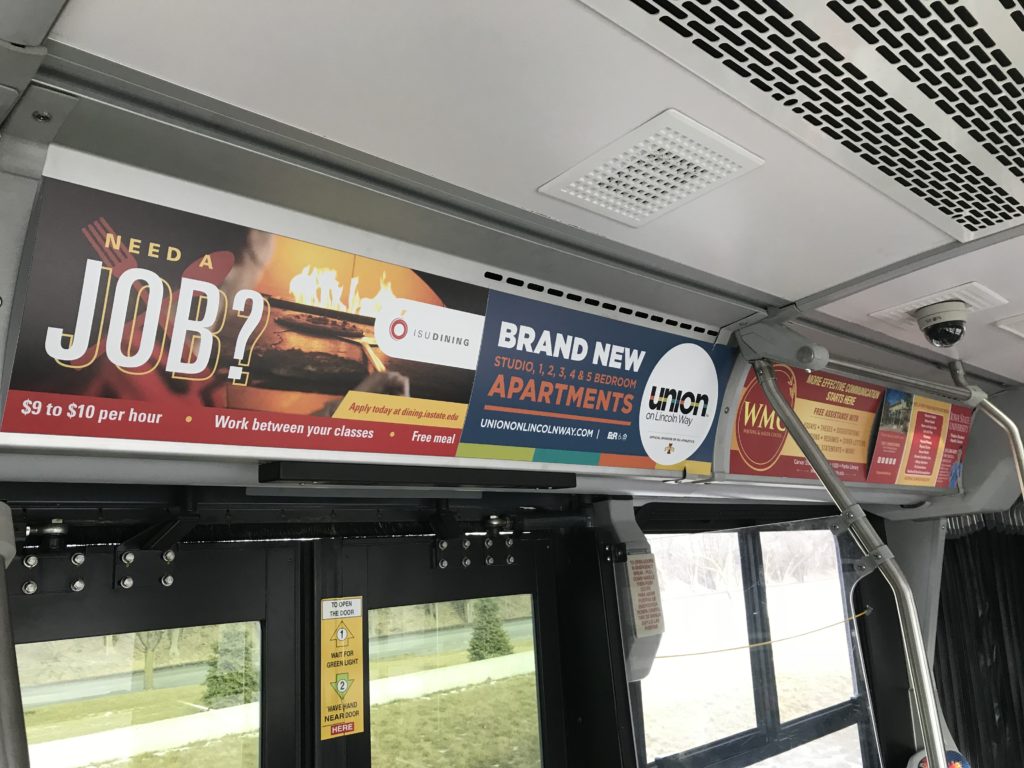
King and queen posters, interior cards, headliners, seat-back displays, and overhead cards are available across Indiana’s transit fleet. Interior formats reach every rider on the bus for the full duration of their trip in a low-distraction reading environment. Format availability varies by system and fleet type. AGM advises on which interior formats are available on each Indiana system and recommends the format mix that best matches the campaign’s creative approach and budget.

Exterior Formats

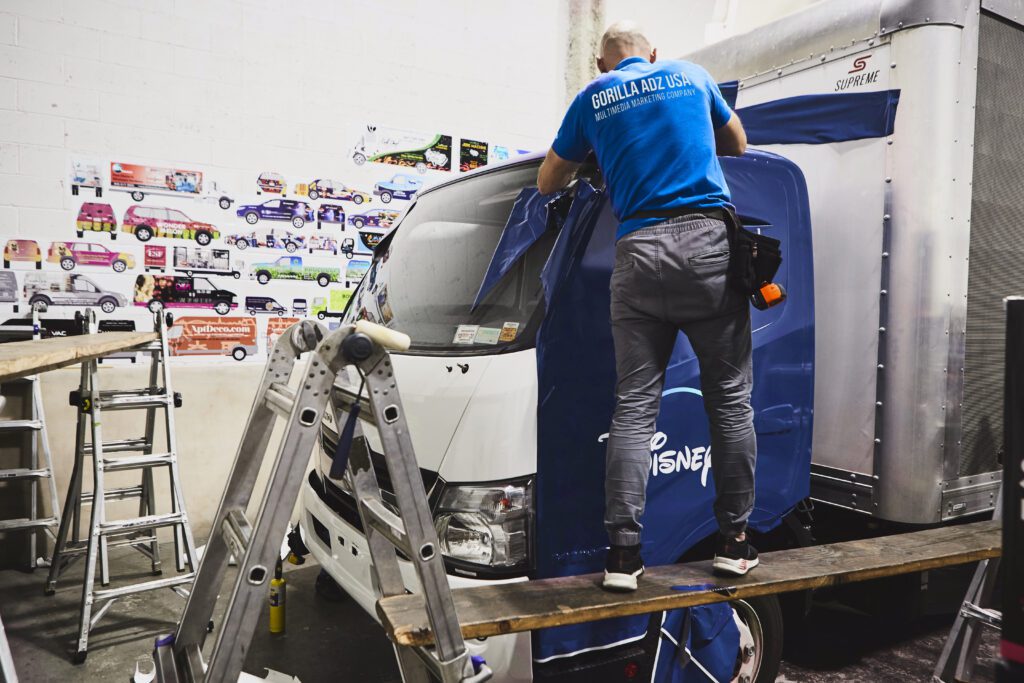
Full bus wraps, tail displays, and window vinyls are available on most Indiana transit systems. Exterior formats reach vehicle traffic, pedestrians, and the communities along each route as the bus moves through the service area. Full wraps transform a bus into a moving billboard across the system’s entire route network. AGM coordinates exterior format availability and installation across all Indiana transit systems.

Shelter Advertising

Covered shelter advertising is available at primary stop locations on the larger Indiana city transit systems. Shelter panels reach waiting riders during their stop dwell time and vehicle traffic passing the stop location. Shelter advertising combined with interior bus placements creates a two-touchpoint campaign that reaches riders both at the stop and on the vehicle. AGM advises on shelter inventory availability by system and recommends shelter positions that match the advertiser’s geographic and demographic targets.

Bus Shelter Advertising In Indiana

Bus shelter advertising in Indiana places your brand at the exact locations where riders wait for transit service. The dwell time at a shelter, typically five to fifteen minutes per stop visit, creates an uninterrupted, low-distraction exposure window that in-vehicle advertising alone cannot deliver at equivalent duration.

Indiana’s shelter advertising inventory is concentrated at the primary boarding and alighting points on the state’s larger transit systems, where ridership volumes and wait times are highest. AGM identifies the shelter positions that deliver the most rider exposure for each campaign’s geographic and demographic targets, and structures shelter buys around the stop locations that create maximum frequency among the target audience.

AGM manages all aspects of shelter advertising placement in Indiana, from inventory identification and booking through creative production, installation, and monitoring for the full campaign posting period.

Why Indiana Is An Overlooked Transit Advertising State

Indiana is systematically overlooked as a transit advertising state for a reason that has less to do with the actual transit market than with the state’s automotive industry identity. Indiana is the state where the Indianapolis 500 runs, where Chevrolet was founded, and where car culture is embedded more deeply in the civic identity than in most Midwestern states. Brands making transit advertising decisions based on state identity rather than transit data miss the fact that Indiana’s university corridor systems deliver young adult ridership numbers that rival comparable university markets in far more transit-positive states.

The university corridor is the most compelling argument. Bloomington Transit at IU, CityBus at Purdue, Transpo at Notre Dame, MITS at Ball State, Terre Haute Transit at ISU, and Connect Transit at Illinois State in Bloomington-Normal (across the border) create a connected chain of university transit markets where an advertiser could reach 200,000-plus college students across six university campuses through coordinated Indiana transit buys, with minimal national brand competition and at cost structures that reflect small-city transit market pricing rather than major metro transit advertising rates.

IndyGo’s BRT investment is changing the Indianapolis transit narrative in ways that the market has not yet fully priced. The dedicated BRT lanes, the station-based advertising infrastructure, and the growing ridership on the Red and Purple lines are creating a transit advertising environment in Indianapolis that is more comparable to a mid-size rail system than a conventional bus network. Brands that recognize this transition early and establish transit advertising presence on IndyGo’s BRT corridors before the competitive pricing catches up with the ridership and infrastructure quality are getting market-entry pricing for an advertising environment that is physically improving faster than advertising rates are rising to match.

The northwest Indiana Chicago metro arbitrage is the third overlooked opportunity. Brands wanting Chicago metro reach at Indiana market prices can access the Gary, East Chicago, Hammond, and Porter County transit markets through Indiana transit advertising and reach the same metro area’s Indiana residents. This is not a perfect substitute for CTA and Pace advertising, but for brands with northwest Indiana specific distribution, retail, or service presence, or for brands testing Chicago metro messaging at lower cost in a less competitive environment, northwest Indiana transit advertising is a consistently underused option.

Guerrilla Marketing Alongside Indiana Transit

AGM’s full suite of guerrilla marketing formats is available alongside transit advertising campaigns across all Indiana markets. The combination of transit and street-level guerrilla creates the frequency and multi-surface brand presence that single-format campaigns cannot achieve independently.

Snipe advertising along IndyGo’s BRT corridors on College Avenue and Washington Street creates street-level reinforcement of bus advertising at the block-by-block level throughout the IndyGo network. In Bloomington, snipes on Kirkwood Avenue and College Avenue adjacent to Bloomington Transit routes connect the transit campaign to the student foot-traffic corridors. In Lafayette, snipes on State Street and the Harrison Street corridor near the Purdue campus amplify CityBus campaigns at the street intersections the routes travel.

Sidewalk stencils at major Indiana transit hubs, including the IndyGo transit hub at Washington and Meridian, the Bloomington Transit central stop on Kirkwood, and the CityBus stop at the Purdue Memorial Union, create ground-level brand presence at the maximum foot-traffic points in each system.

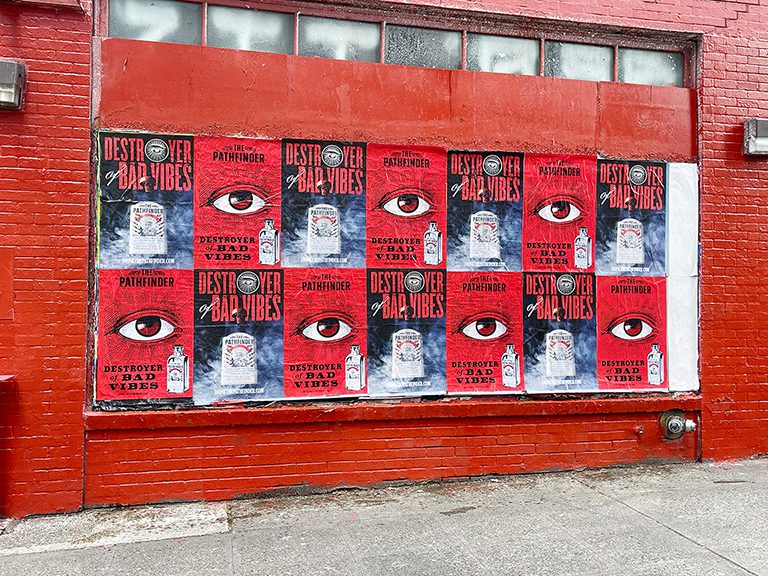
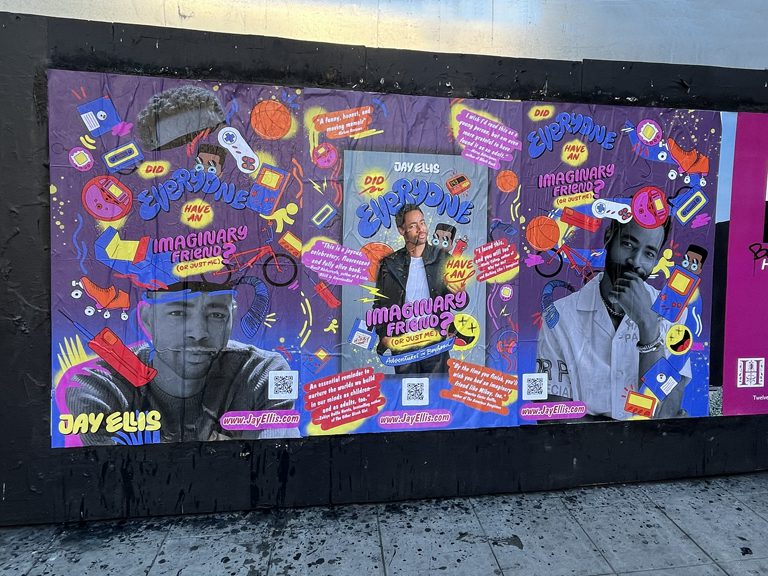
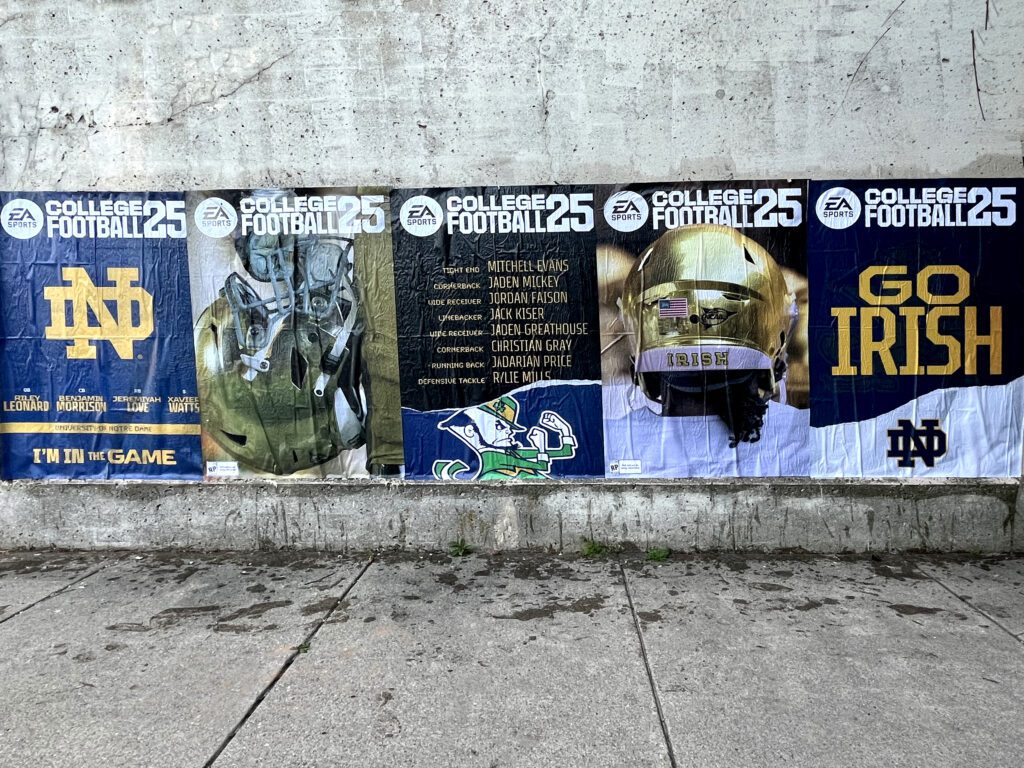
Wheatpasted poster campaigns in Indianapolis’s Fountain Square, Mass Ave Arts District, and the IUPUI corridor, in Bloomington’s Kirkwood Avenue student commercial strip, and in South Bend’s downtown Colfax Avenue arts and entertainment district create large-format street impressions in the walkable, transit-adjacent neighborhoods where Indiana’s most advertising-receptive young adult and creative demographics live and spend time.

How Agm Executes Indiana Transit Advertising Campaigns

Indiana transit advertising campaigns are planned with demographic targeting driving system and route selection, not ridership volume alone. The university transit systems in Indiana, which deliver the state’s highest per-route demographic concentration but not the state’s highest absolute ridership, are often the highest-efficiency placements for brands with young adult market objectives precisely because of the demographic uniformity on campus routes rather than despite their smaller absolute size. AGM’s planning process for Indiana begins with your target demographic and maps backward to the Indiana systems and routes where that demographic is most concentrated.

For IndyGo campaigns, AGM manages buying through IndyGo’s advertising sales process, coordinates creative specifications for both BRT and conventional vehicle formats, and schedules installation across both BRT station and vehicle placements. For the university transit systems, AGM works directly with each system’s advertising contacts to confirm availability, manage creative specifications, and coordinate installation timing. For northwest Indiana campaigns, AGM manages the Gary, East Chicago, Michigan City, and Interurban Trolley buying relationships independently.

Post-installation, AGM provides photographic documentation of all Indiana placements and a post-campaign report covering placement locations, installation confirmation, and estimated campaign impressions. For multi-system Indiana university corridor campaigns, the report consolidates data across all systems into a single client-facing document that makes cross-system performance comparison straightforward. The goal is to give Indiana advertisers the same comprehensive campaign reporting that national advertisers expect from major metro transit buys, regardless of whether the Indiana campaign spans one system or six.
Frequently Asked Questions

Yes. AGM manages multi-market Indiana transit campaigns as unified client engagements with one point of contact for planning, buying, creative management, production, installation, and reporting. A statewide Indiana campaign covering IndyGo, Bloomington Transit, CityBus in Lafayette, Transpo in South Bend, and METS in Evansville can be coordinated through AGM with synchronized launch timing and consistent creative across all markets. Indiana’s university corridor, spanning six systems serving university populations across the state, can be planned and executed as a single coordinated buy through one AGM engagement.

IndyGo’s Red and Purple Line BRT routes have dedicated travel lanes, off-board fare collection, and station-style platforms that make the transit experience, and the advertising environment, meaningfully different from conventional bus routes. The BRT stations are fixed, branded locations with higher dwell times and more predictable pedestrian volumes than conventional bus stops. BRT vehicle wraps are more visible because the vehicles are distinctively branded and operate on dedicated lane segments where they are not mixed with general traffic in the same way conventional buses are. The Red Line’s geographic span from Broad Ripple through Fountain Square and the University of Indianapolis creates one of the highest demographic-range single-route transit advertising opportunities in Indiana.

CityBus in Lafayette is the direct answer. Purdue University’s 50,000-plus students in West Lafayette represent the primary ridership driver on the CityBus system, and the routes serving the Purdue campus, the student residential areas along Northwestern Avenue and State Street, and the downtown Lafayette entertainment district across the Wabash River carry a ridership that is predominantly Purdue-affiliated. For brands with specific Purdue or STEM university market objectives, CityBus is the most direct transit advertising channel for that demographic in Indiana. CityBus ridership skews heavily toward engineering, science, and technical program students, which is a specific demographic attribute not shared by most other Indiana university transit systems.

Notre Dame’s six home games each fall are the highest-ridership events in the South Bend Transpo calendar. The combination of 80,000-plus game-day fans, overnight hotel guests using transit to reach the campus, and the extended duration of game-day campus activity from morning tailgating through post-game departure creates transit ridership spikes that are among the most dramatic in Indiana’s university transit calendar. For brands with Notre Dame sponsorship programs or fan community marketing objectives, Transpo advertising timed to coincide with the fall football season, particularly the three or four highest-profile home games against traditional rivals and ranked opponents, delivers the maximum concentration of Notre Dame-affiliated affluent fan ridership in a transit advertising format.

It is not a full substitute, but it is a viable complement or a cost-efficient partial substitute for brands with specific northwest Indiana retail, service, or distribution presence and Chicago metro market objectives. Gary Public Transportation, East Chicago Transit, Michigan City Transit, and the Interurban Trolley reach consumers who are part of the Chicago metro consumption economy but who live on the Indiana side of the state line. These systems advertise at Indiana market rates rather than CTA and Pace Chicago market rates, which creates a cost efficiency for brands that want to extend Chicago metro reach into the Indiana portion of the market without paying Chicago advertising rates for the full metro-wide buy.

Evansville sits at the geographic center of a tri-state regional market covering southwestern Indiana, western Kentucky, and the adjacent southeastern Illinois counties. The Owensboro, Kentucky market is directly across the Ohio River, and the Henderson, Kentucky market is downstream. METS routes serving the US-41 bridge corridor carry riders who cross the Ohio River for work, shopping, and healthcare on a regular basis. For brands with distribution or retail presence in the tri-state region centered on Evansville, METS advertising reaches the Indiana portion of that regional market. For broader tri-state market coverage, METS would be combined with Kentucky transit advertising and potentially southern Illinois transit advertising in a coordinated regional buy.

Ball State University’s 18,000-plus students in Muncie are the primary driver of MITS ridership on the campus-adjacent routes in central Muncie. BSU’s campus on University Avenue is close to downtown Muncie, and MITS routes connecting the campus to the downtown business district, the IU Health Ball Memorial Hospital, and the student residential neighborhoods in west and south Muncie carry a predominantly student ridership during the academic year. For brands targeting the Indiana university student market, MITS Muncie is one of the six Indiana university transit systems that collectively create the Indiana university transit corridor opportunity. MITS is smaller than Bloomington Transit or CityBus Lafayette in absolute ridership, reflecting Ball State’s smaller enrollment relative to IU and Purdue, but it serves a specific east-central Indiana market with no other transit advertising coverage.

Columbus is notable as a transit market because the city is home to Cummins Inc., the diesel engine manufacturer, and has been described as having more buildings designed by renowned architects per capita than any city in the world outside of Chicago. The Cummins-driven economy creates a city with a higher proportion of engineering and professional workers relative to its population than most Indiana cities of comparable size, and the Columbus Transit ridership reflects a more educated, technically employed workforce than most small Indiana city transit systems. For brands targeting the engineering and manufacturing professional demographic in Indiana, Columbus Transit is a niche but demographically specific transit advertising market that is not reachable through any other transit system in the south-central Indiana area.

Standard interior poster production and installation lead time for Indiana transit systems is two to four weeks from final artwork approval. IndyGo BRT vehicle wraps require five to six weeks minimum for production and installation coordination given the specific vehicle branding requirements for the BRT fleet. Shelter advertising at IndyGo’s BRT station locations may require additional advance booking for the most in-demand positions. For the university transit systems including Bloomington Transit, CityBus, and Transpo, two to three weeks is typically sufficient for interior card and poster campaigns. AGM recommends initiating campaign planning four to six weeks before the intended launch date for standard Indiana transit campaigns and six to eight weeks for IndyGo BRT campaigns with premium station or vehicle wrap components.

American Guerrilla Marketing Blog Posts