American Guerrilla Marketing
Nationwide serivce
Media planning, media buying, billboard advertising, & guerrilla marketing
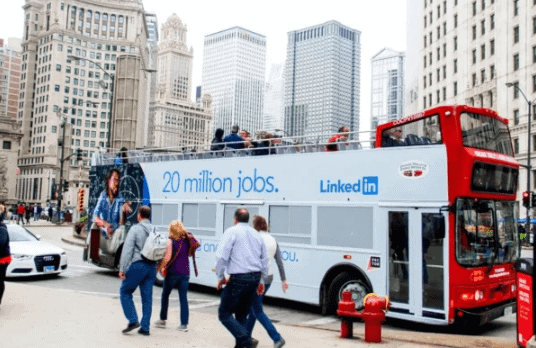
MetroWest RTA serves Framingham and the surrounding communities — the largest Brazilian community in Massachusetts, Framingham State University students, MetroWest Medical Center workers, and the Route 9 technology and pharmaceutical corridor between Boston and Worcester.
Framingham is one of Massachusetts’ most economically and demographically interesting mid-sized cities: the home of the largest Brazilian immigrant community in New England, a significant technology and pharmaceutical employment corridor along Route 9, Framingham State University, and MetroWest Medical Center. Saucony, TJX Companies, and Bose Corporation headquarters add corporate employment anchors. The MetroWest RTA connects these elements to the residential neighborhoods of Framingham, Natick, Ashland, and the surrounding communities.
AGM handles transit media buying, guerrilla execution, and street-level campaign coordination across Framingham and the MetroWest Regional Transit Authority service area. Interior placements, exterior wraps, shelter panels, bench ads, snipes, stencils, and wheatpaste. One call, full coverage.
Framingham’s Brazilian community is the largest and most established Brazilian immigrant community in Massachusetts, concentrated in the neighborhoods around Waverley Street and in the downtown area. Brazilian-owned businesses — restaurants, services, and retail — have transformed the commercial character of downtown Framingham. For brands targeting Brazilian and Portuguese-speaking consumers in Massachusetts, MetroWest RTA routes through Framingham’s Brazilian community corridors are the most direct transit advertising access point in the state.
Route 9’s technology and pharmaceutical corridor — with Bose, TJX, and numerous biotech and pharmaceutical companies occupying office parks along the corridor between Natick and Framingham — creates a professional and technical workforce audience on MetroWest routes. This corridor’s employees are high-income professionals who use park-and-ride and transit access along Route 9.
Framingham State University’s enrollment and MetroWest Medical Center’s healthcare workforce add student and professional ridership to the system’s predominantly commuter base.
Every bus in the MetroWest Regional Transit Authority fleet is a moving advertising platform. Interior formats reach riders from the moment they board to the moment they step off — and exterior formats turn the bus into a street-level billboard on every corridor it travels. The nine formats below cover every advertising position on the vehicle, from the overhead valance to the rear tailgate.
Understanding which format serves your specific campaign objective is the first step in building an effective MetroWest Regional Transit Authority transit advertising buy. AGM’s media planning process matches your audience, budget, and creative to the right combination of formats and routes. A full wrap maximizes impressions on the highest-traffic routes. Interior cards build frequency among regular riders on commuter-pattern routes. Seat-back QR codes convert casual riders into digital leads on university and young-professional routes.
Waverley Street and Concord Street in downtown Framingham run through the heart of the Brazilian commercial district, where Portuguese-language signage, Brazilian restaurants, and immigrant community services create one of New England’s most distinctive ethnic commercial environments.
Advertising in Portuguese and bilingual formats on these routes reaches the Brazilian community in their daily commercial environment.
Waverley Street Framingham
Concord Street
Brazilian community
Portuguese-language corridor
The Route 9 corridor serves the Natick-Framingham office park zone, carrying professional and technical workers to Bose, TJX, and the biotech and pharmaceutical companies along the corridor.
This route reaches a high-income suburban professional audience in a Route 128/MetroWest corridor context.
Route 9
Cochituate Road
Technology corridor
High-income professional workforce
Routes serving Framingham State University’s campus and MetroWest Medical Center carry the student and healthcare professional audiences.
Framingham State University
MetroWest Medical Center
Student and healthcare
North Framingham
What it is: Complete exterior vehicle coverage — sides, rear, and front — turning the entire bus into a branded rolling billboard.
Best for: Brand launches, major campaigns, product introductions requiring maximum market impact.
Why buy it: A full wrap makes every mile the bus travels a branded impression. Routes that repeat daily give the same commuters and pedestrians dozens of exposures per week.
What it is: A 30 by 144 inch printed panel on the streetside of the bus — the primary exterior visibility zone.
Best for: Local retail, healthcare, financial services, and any advertiser needing consistent route-corridor impressions.
Why buy it: The king poster is transit advertising’s proven format. Strong creative cuts through for both vehicle traffic paralleling the bus and pedestrians at stops.
What it is: Approximately 30 by 88 inch panel on the curbside of the bus, facing the sidewalk and crosswalk audience.
Best for: Pedestrian-heavy corridors, retail districts, campus and downtown routes where foot traffic is high.
Why buy it: Curbside placement faces directly toward sidewalk pedestrians at intersections and stops. Retailers within walking distance of the route see direct foot traffic conversion.
What it is: A long horizontal card in the overhead valance running the length of the bus interior, in continuous sightline of seated passengers.
Best for: Long-copy campaigns, healthcare and insurance offers, anything benefiting from extended read time.
Why buy it: Interior riders have nowhere to look but forward. The headliner stays in their sightline for the full ride duration.
What it is: A rear-panel display visible to vehicles following behind the bus, typically 21 by 72 inches on the tailgate.
Best for: QSRs, automotive services, and any brand targeting commuters in traffic behind the bus.
Why buy it: Every vehicle stuck behind a bus at a red light reads the tail display. In congested corridors, a single bus generates dozens of forced-exposure impressions per mile.
What it is: An 11 by 28 inch framed card in the interior card rack above the windows, at eye level for standing passengers.
Best for: Promotional offers, event announcements, healthcare services, and community information.
Why buy it: Interior cards are read at close range by a captive audience for the full ride. Commuters on the same route see the card every trip, delivering the message repetition that response campaigns need.
What it is: A smaller card (approximately 6 by 9 inches) affixed to the back of bus seats, at reading distance for the rider behind.
Best for: QR code campaigns, app download offers, event listings — anything benefiting from close-proximity engagement.
Why buy it: Seat-back placement puts your message at reading distance with a QR code or URL that a seated rider can engage with on their phone.
What it is: A card mounted flush to the ceiling directly above the aisle, in the sightline of standing passengers during peak loads.
Best for: Short, bold messages — five words or fewer. Brand awareness, event dates, offer callouts.
Why buy it: Standing passengers during peak periods are a compressed, captive audience. Overhead cards reach the highest-density load moments of the day.
What it is: Full-window perforated vinyl applied to exterior glass — opaque from outside, see-through from inside.
Best for: Image-forward creative that benefits from large format and unusual texture. Fashion, entertainment, consumer lifestyle brands.
Why buy it: Window vinyls occupy a surface most advertisers ignore. On a moving bus, a full window treatment creates a visual break that catches pedestrians’ eyes at every stop.
The nine interior and exterior formats above work best when they are planned as a coordinated sequence instead of isolated placements. A strong transit buy usually combines at least one high-visibility exterior format for street reach, one interior format for dwell-time reading, and a stop-level format for repeat exposure at the boarding environment. That combination lets a campaign reach drivers, pedestrians, and riders in the same service area while reinforcing the same message multiple times in a single trip pattern.
Format selection should follow the audience and the trip pattern. Routes with longer ride times reward interior cards, headliners, and seat-back creative because riders have time to read and scan. Fast urban corridors with heavy street traffic reward king posters, wraps, and tails because the moving bus behaves like a rolling billboard. Campus, hospital, and downtown transfer routes often perform best with a mix of interior messaging and stop-level shelter placements because the same riders repeat those trips throughout the week.
AGM plans transit media by route context, creative goal, and campaign duration. That means matching your message to the corridors where your audience actually travels, then choosing the combination of formats that creates both reach and frequency in the same geography.
Shelter advertising puts your brand at the exact moment a potential customer is stationary, waiting, and with nothing else demanding their attention. MetroWest Regional Transit Authority shelter placements are available at the system’s highest-traffic stops across Framingham. Unlike the moving bus formats, shelter advertising is fixed in one location — which means your message reaches every rider who boards at that stop, every pedestrian who passes, and every vehicle driver who passes the stop face on the street.
Shelter placement selection is about identifying the stops where your target audience concentrates. The stop outside a hospital entrance serves a healthcare audience. The stop at a university gate serves students. The stop at a downtown commercial block serves professionals and shoppers. AGM identifies the right MetroWest Regional Transit Authority shelter inventory for your specific campaign objective and coordinates placement across all shelter format types.
The downtown Framingham hub serves as the MetroWest RTA transfer point in the city’s commercial core.
Downtown Framingham hub
Concord Street
Brazilian community hub
Transfer point
The FSU campus stop serves the university’s student and faculty population.
Framingham State University
Student audience
Campus stop
What it is: An illuminated full-panel display inside the shelter, facing the sidewalk. Runs 24 hours.
Best for: Retail, entertainment, healthcare — any advertiser where after-dark visibility matters.
Why buy it: Backlit shelter panels are the premium placement in street-level transit. At pedestrian eye level, illuminated at peak foot traffic hours, they function as mini-billboards anchored to the exact block where your consumer waits.
What it is: A non-illuminated printed panel on the exterior face of the shelter, readable from the sidewalk and street.
Best for: Local advertisers, event promotions, nonprofit campaigns where street-level presence outweighs after-dark need.
Why buy it: Exterior panels face vehicle traffic — drivers passing the shelter see this panel from the street, extending reach beyond the pedestrian waiting at the stop.
What it is: A printed panel on the transit bench back or seat-front, at seated eye level for the waiting rider.
Best for: Hyper-local advertisers whose target customer is literally the person sitting on the bench waiting for the bus.
Why buy it: No format delivers closer physical proximity to the rider than the bench ad. Average wait times of five to twelve minutes mean your message sits directly in front of a stationary reader for a full dwell period.
Shelter inventory matters because stop context matters. A shelter outside a hospital reaches people in a healthcare mindset. A stop outside a university reaches students between classes. A downtown transfer point reaches the broadest cross-section of the network but in a faster-moving transfer environment. The best shelter location is not always the busiest one. It is the one where the audience and the trip purpose line up with the advertiser’s offer.
AGM looks at stop role, surrounding land use, pedestrian movement, and the rider mix at each candidate location. That lets us recommend shelter placements that are more than just high-traffic boards. They become contextually relevant placements that match how the audience is moving through the corridor.
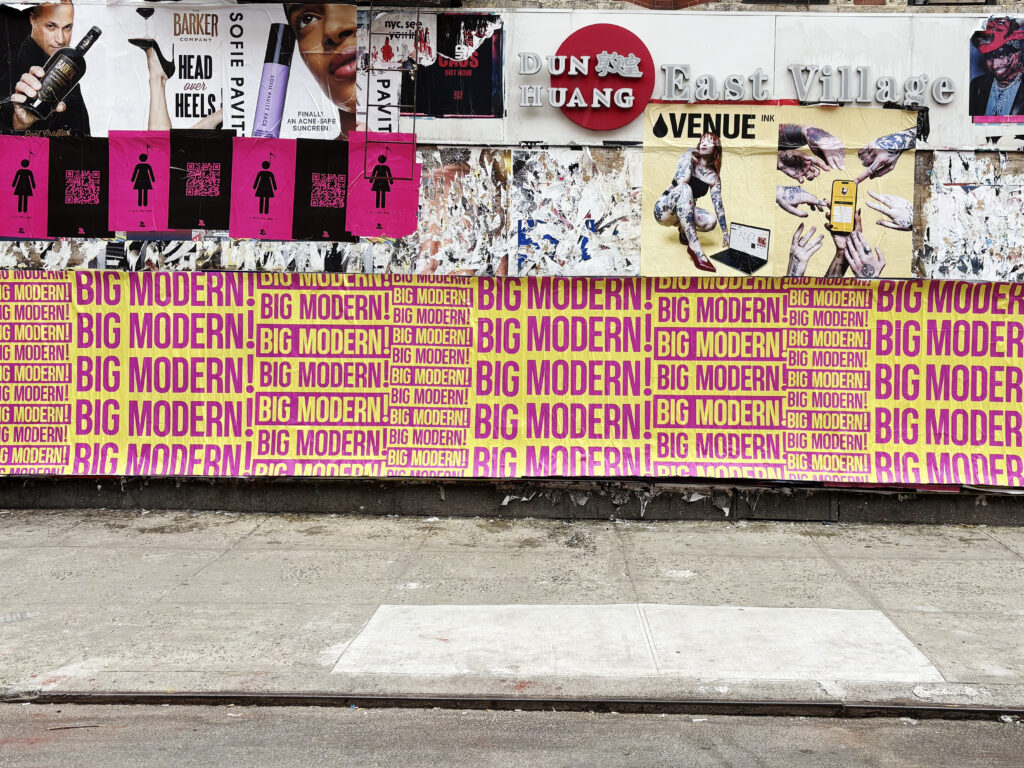
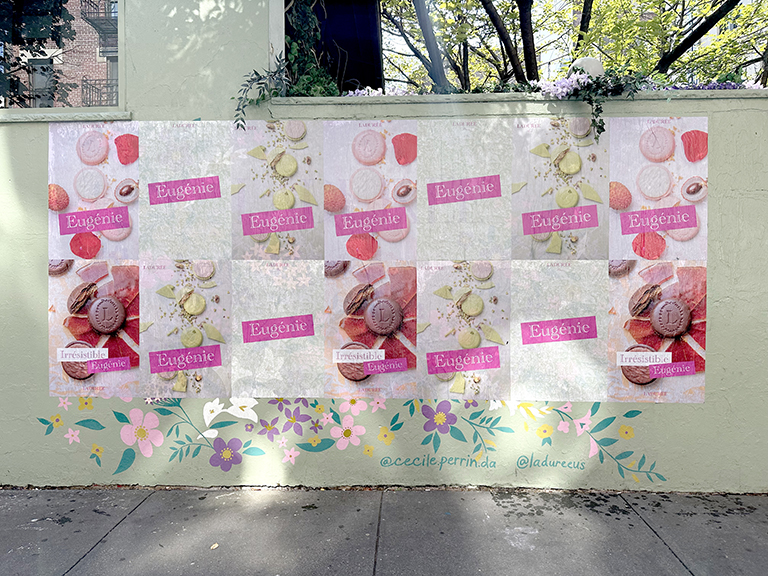
Framingham’s Brazilian commercial district on Waverley Street and Concord Street supports Portuguese-language wheatpaste and stencil placements that reach the Brazilian community authentically.
The connection between bus advertising and guerrilla marketing is straightforward: the bus brings your audience to the stop, and guerrilla elements are waiting for them when they arrive. A rider who has seen your interior card during a 20-minute commute and then encounters a sidewalk stencil of the same brand at their exit stop is experiencing a multi-touchpoint sequence that builds recall far faster than either format alone.
Transit advertising works best when the campaign is built around routes, not just around formats. The route determines the audience, the average dwell time, the commercial context, and the type of action a rider can realistically take. A hospital corridor supports healthcare, insurance, and financial planning. A campus route supports food delivery, student banking, and event promotion. A downtown commuter line supports broad brand awareness, professional services, and retail reminders tied to destinations along the route.
Campaign duration matters just as much as placement. Four weeks can establish awareness, but eight to twelve weeks is where repetition creates actual recall for regular riders. A rider who sees the same message on the same route morning and evening over a multi-month campaign develops the kind of familiarity that digital display almost never achieves. That is why transit is especially strong for market-entry campaigns, recurring service offers, and brands that need neighborhood-level credibility.
Creative should be built for the environment. Exterior units need bold contrast and fast readability. Interior cards need clarity at close range. Shelter creative benefits from simple hierarchy and a single call to action. AGM helps align those creative decisions with the actual route and format mix so the campaign performs on the street, not just in a mockup.
Framingham’s Brazilian community service brands, MetroWest Medical Center healthcare system, Framingham State University student brands, Route 9 technology corridor professional services, and national brands seeking the MetroWest Boston market are the primary MetroWest RTA advertisers.
Healthcare brands consistently perform well on bus systems because transit riders regularly use those routes for appointments, shift work, and pharmacy or clinic access. A hospital corridor placement reaches both employees and patients in an environment where healthcare messaging feels relevant rather than interruptive. That makes transit one of the strongest offline channels for provider awareness, enrollment pushes, urgent care launches, and specialty service promotion.
Financial services and insurance brands benefit from transit because regular riders develop route familiarity and message recall quickly. When a commuter sees the same bank, credit union, lender, or insurer on the same corridor for weeks at a time, the brand begins to feel local and dependable. That matters in working-class neighborhoods, university markets, and suburban commuter networks where trust and repeated visibility drive response.
Retail, food, entertainment, and consumer service brands should treat transit as part of the purchase path. A route serving a mall, a downtown dining district, a casino corridor, or a campus commercial strip is not just a reach play. It is a directional medium that can move people toward a specific destination. The strongest campaigns tie the message to where the rider is heading and what they are likely to do next.
The decision to advertise on MetroWest Regional Transit Authority is not about reaching the largest possible audience — it is about reaching the right audience at the right place and time, with a format that cannot be skipped, blocked, or scrolled past. Transit advertising reaches a captive audience in motion, in a physical environment that demands presence in a way that digital advertising never can. For the brands whose customers ride MetroWest Regional Transit Authority every day, that captive audience is the most efficient available media buy in the Framingham market.
AGM starts with route analysis, rider context, and local geography. Before recommending a bus wrap, a king poster, or a shelter panel, we map where the audience actually travels, how often they repeat the trip, and what other street-level media can reinforce the same corridor. That keeps the recommendation practical and location-specific instead of generic.
Once the route and format plan is approved, AGM handles media buying coordination, creative specifications, and deployment timing. For campaigns that combine transit advertising with guerrilla extensions, we sync the launch windows so the rider sees the same brand on the bus, at the stop, and in the nearby walking environment at the same time.
That coordination matters because transit works best when it behaves like a corridor takeover. The bus provides motion and repetition. The shelter delivers fixed-location presence. Guerrilla elements fill the gaps between boarding, transfer, and destination. The combined effect is larger than any individual format on its own.
Transit advertising remains valuable because it reaches people in physical environments where the message cannot be skipped, muted, or blocked. Riders see interior cards during the entire trip. Drivers sit behind tails at signals. Pedestrians pass shelter panels at the same corners again and again. That repeated, unavoidable visibility is why transit still outperforms many digital awareness channels when the goal is local memory and route-level presence.
For brands that need relevance inside a city, a campus district, a hospital zone, a casino corridor, a coastal tourism strip, or a suburban commuter market, bus advertising creates a form of neighborhood credibility that broader media often cannot match. It feels local because it is local. It appears on the same streets the audience uses to get to work, school, shopping, and entertainment.
Contact AGM to plan the route mix, creative approach, and guerrilla extension that fits your target audience. We handle strategy, buying, and execution so your campaign shows up where the market actually moves.
Transit advertising is often treated as a pure awareness channel, but the strongest campaigns are measured far more concretely than that. On a route-specific buy, AGM tracks the audience logic behind each selected corridor, the frequency created by the schedule, and the likely decision window tied to the trip purpose. A hospital corridor campaign can be evaluated through appointment lift, branded search growth, and direct traffic from QR-based creative. A campus route campaign can be evaluated through scan activity, promo code usage, and on-campus foot traffic during the campaign window. A retail corridor campaign can be measured through stop-specific offer redemption, web traffic from location-based calls to action, and in-store timing aligned to route schedules.
Because transit advertising is physical and repeated, it supports attribution methods that are simpler than many digital channels. A rider who sees the same message every morning on the same corridor is not interacting randomly. They are moving through a repeated pattern that can be paired with store visits, clinic inquiries, lead form timing, and promotional redemptions tied to the neighborhoods and destinations served by the route. Even when exact one-to-one attribution is not possible, trend lines around corridor-level traffic, call volume, and location-specific conversions often make the value of a transit buy much clearer than advertisers expect going in.
Campaigns also gain strength when they are staggered intelligently across formats. A first phase can establish street-level recognition with wraps, king posters, or shelter panels. A second phase can introduce direct response through interior cards or seat-back creative once the audience already recognizes the brand. In markets where the same riders repeat the same routes weekly, that phased sequencing helps move a campaign from visibility to familiarity and from familiarity to action. The point is not just to be seen. It is to become the brand that feels already known on the corridor where the audience makes recurring daily decisions.
Every transit system covered on this page has its own geography of intent. Some corridors are dominated by hospital shift changes. Some are built around student movement between campus and off-campus commerce. Some serve county-seat government traffic, while others exist primarily to move casino workers, suburban commuters, or retail employees. That is why route context matters more than abstract reach. A generic media buy that simply chases the largest possible impression count usually misses the fact that different trip purposes create different levels of message receptivity.
Local route context also shapes how creative should sound. Riders traveling toward a medical district respond differently than riders moving through nightlife, university, or shore-tourism environments. A healthcare campaign can be more specific on a hospital corridor because the context already supports the message. A student campaign can be more direct on a campus route because the audience is already primed for food, events, housing, and financial products relevant to student life. A commuter campaign can lean into reliability, trust, and routine because weekday express riders repeat the same pattern over and over. The best transit advertising feels native to the corridor it occupies.
That local specificity is what makes transit stronger than many forms of broad local advertising. The bus is not floating above the city. It is moving through the exact streets where the audience boards, transfers, works, studies, shops, eats, and waits. The shelter is not abstract media space. It is fixed at the same corner where riders and pedestrians pause every day. When campaigns are built around those realities, the result is a form of local repetition that turns ordinary route exposure into durable neighborhood-level brand memory.
MetroWest Regional Transit Authority inventory includes exterior king and queen poster panels, full bus wraps, interior headliner cards, seat-back cards, overhead cards, window vinyl, tail displays, and shelter advertising at key stops. AGM handles media buying across all formats.
Rates vary by format, duration, and placement. AGM provides a full rate card and placement recommendation based on your campaign budget and target audience. Contact us for current availability and pricing.
MetroWest Regional Transit Authority serves Framingham’s working population, including Framingham’s Brazilian immigrant community and MetroWest Medical Center healthcare workers and Framingham State University students and Route 9 professional and technology workforce. The system connects residential neighborhoods to major employers including MetroWest Medical Center and Framingham State University.
Typical campaigns run four to twelve weeks for interior and exterior formats. Shelter advertising contracts run one to six months. Longer placements are available at favorable rates.
Yes. Route-specific buying lets you concentrate on the downtown Framingham Waverley Street Brazilian community corridor or the Route 9 technology corridor. AGM recommends a placement mix aligned with your campaign objective.
MetroWest Regional Transit Authority serves thousands of riders per week, with peak ridership in morning and afternoon commute windows. Route-specific ridership data is available during media planning.
Yes. AGM deploys snipes, sidewalk stencils, take-one boxes, and wheatpaste campaigns in Framingham alongside transit advertising buys.
Healthcare performs strongly on MetroWest Regional Transit Authority because the system serves the residential and employment corridors of Framingham’s healthcare workforce and patients.
Specifications vary by format. AGM provides a complete creative spec sheet at campaign initiation.
Contact AGM through americanguerrillamarketing.com/contact-us. We assess your campaign objective, recommend format and route mix, and manage the full media buy from contract through installation.