American Guerrilla Marketing
Nationwide serivce
Media planning, media buying, billboard advertising, & guerrilla marketing

Johnson County Transit serves Overland Park, Olathe, and Johnson County with routes along Mission Road and College Boulevard. Interior bus ads and shelter placements reach Kansas City’s wealthiest suburb and its growing professional population.
Johnson County is the wealthiest county in Kansas and one of the highest-income suburban counties in the Midwest, home to major corporate headquarters including Sprint (T-Mobile), Cerner, and numerous financial and professional services firms. Johnson County Transit connects the county’s communities with the broader Kansas City metro transit network via Kansas City Area Transportation Authority connections.
Johnson County Transit ridership is suburban working adults commuting to the county’s corporate campuses, retail workers in the Oak Park Mall corridor, and transit-dependent seniors and lower-income households in the county’s more economically diverse communities.
AGM has placed transit advertising on Kansas bus systems for over a decade, with 500+ campaigns executed nationwide across comparable systems. We know the Johnson County Transit service area, the routes that matter for specific advertiser objectives, and the shelter locations that deliver the highest pedestrian dwell time in Overland Park. What follows is a detailed breakdown of interior bus advertising, shelter advertising, and guerrilla marketing opportunities across the Johnson County Transit network. Every section includes specific route information, shelter location context, and format recommendations based on AGM’s direct execution experience.
AGM handles media buying, production, installation, and documentation for Johnson County Transit advertising. Tell us your budget, target audience, and campaign window. We will build the buy and execute it directly.
Johnson County Transit routes serve Mission Road running north-south through the Shawnee Mission area, College Boulevard through the primary corporate corridor, Quivira Road through the suburban residential zone, and connections to KCATA at the county border.
The College Boulevard corridor in Overland Park is one of the most concentrated suburban corporate employment zones in the Kansas City metro, with Sprint/T-Mobile, Garmin, and dozens of other technology and professional services companies generating commuter transit demand.
Oak Park Mall in Overland Park is one of the largest shopping malls in the Kansas City metro, generating retail worker transit ridership and connecting shoppers with the transit network.
Johnson County Transit’s transit advertising inventory is underutilized relative to the consumer reach it provides. Compared to digital advertising costs in the Overland Park market, transit interior and shelter advertising delivers cost-per-impression rates typically 40 to 60 percent lower for comparable audience size. Brands that establish consistent Johnson County Transit media presence reach the same riders daily throughout the campaign, building brand recall through the repetition frequency that transit advertising delivers and digital channels rarely sustain. Transit riders are a captive audience in a closed environment with nothing to compete for their attention except what is posted on the bus walls around them. This captivity is the core value proposition of the format, and it is why brands that commit to consistent transit advertising in Overland Park generate above-average aided recall compared to equivalent spend in digital, print, or traditional out-of-home channels.
Johnson County Transit operates routes across Overland Park’s primary corridors, with fleet vehicles making multiple daily runs that accumulate interior advertising impressions across each bus’s full ridership. Interior advertising reaches a captive audience during every trip, with average ride durations creating dwell-time exposure that no other format in the Overland Park market replicates at comparable cost. The following route corridors represent the system’s highest-value interior advertising environments by audience quality, ridership volume, and demographic targetability. Each route section includes specific geographic and demographic context for the advertising environment on that corridor.
The Mission Road and Shawnee Mission Corridor corridor serves Shawnee Mission area, Mission Farms, Overland Park commercial zone along Mission Road, Shawnee Mission Parkway. This route is among Johnson County Transit’s most consistently-ridden corridors, carrying Johnson County working adults and suburban professionals throughout the day. Morning commute peaks from 6:30 to 9 AM and afternoon peaks from 3:30 to 6:30 PM generate the highest boarding and alighting volumes, while midday ridership from healthcare workers, retail employees, and transit-dependent residents maintains consistent daily impression delivery. The geographic reach of this corridor across Shawnee Mission area, Mission Farms, Overland Park commercial zone means the brand message travels through multiple distinct neighborhood contexts in a single bus run, accumulating impressions across the full range of the route’s service territory every time a bus completes the loop.
Interior advertising on this corridor reaches Johnson County working adults and suburban professionals during their full trip duration on Johnson County Transit. Riders on this route are a captive audience for an average of 18 to 35 minutes per trip. That sustained dwell time is the defining advantage of transit interior media over every other format in the Overland Park market. A commuter riding this route five days a week sees the same interior ad 10 or more times in a two-week campaign flight, building the kind of brand frequency that drives genuine recall and purchase consideration. Consistent creative across multiple vehicles on this corridor builds brand recognition that accumulates across every trip the same rider takes during the campaign period. No other Overland Park advertising channel delivers this combination of audience specificity, captive dwell time, and repetition frequency at comparable cost per impression.
Mission Rd, Shawnee Mission areaCorporate + suburban professionalHigher-income suburban demographicJohnson County primary corridor
The College Boulevard and Corporate Campus Zone corridor serves Overland Park corporate campuses, Sprint/T-Mobile area along College Boulevard, Antioch Road. This route is among Johnson County Transit’s most consistently-ridden corridors, carrying corporate and technology sector employees throughout the day. Morning commute peaks from 6:30 to 9 AM and afternoon peaks from 3:30 to 6:30 PM generate the highest boarding and alighting volumes, while midday ridership from healthcare workers, retail employees, and transit-dependent residents maintains consistent daily impression delivery. The geographic reach of this corridor across Overland Park corporate campuses, Sprint/T-Mobile area means the brand message travels through multiple distinct neighborhood contexts in a single bus run, accumulating impressions across the full range of the route’s service territory every time a bus completes the loop.
Interior advertising on this corridor reaches corporate and technology sector employees during their full trip duration on Johnson County Transit. Riders on this route are a captive audience for an average of 18 to 35 minutes per trip. That sustained dwell time is the defining advantage of transit interior media over every other format in the Overland Park market. A commuter riding this route five days a week sees the same interior ad 10 or more times in a two-week campaign flight, building the kind of brand frequency that drives genuine recall and purchase consideration. Consistent creative across multiple vehicles on this corridor builds brand recognition that accumulates across every trip the same rider takes during the campaign period. No other Overland Park advertising channel delivers this combination of audience specificity, captive dwell time, and repetition frequency at comparable cost per impression.
College Blvd, Overland ParkSprint/T-Mobile + corporate campus zoneProfessional + technology workerOverland Park corporate hub
The Oak Park Mall and 95th Street Retail Corridor corridor serves Oak Park Mall, 95th Street commercial zone along 95th Street, Quivira Road. This route is among Johnson County Transit’s most consistently-ridden corridors, carrying retail workers and suburban shoppers throughout the day. Morning commute peaks from 6:30 to 9 AM and afternoon peaks from 3:30 to 6:30 PM generate the highest boarding and alighting volumes, while midday ridership from healthcare workers, retail employees, and transit-dependent residents maintains consistent daily impression delivery. The geographic reach of this corridor across Oak Park Mall, 95th Street commercial zone means the brand message travels through multiple distinct neighborhood contexts in a single bus run, accumulating impressions across the full range of the route’s service territory every time a bus completes the loop.
Interior advertising on this corridor reaches retail workers and suburban shoppers during their full trip duration on Johnson County Transit. Riders on this route are a captive audience for an average of 18 to 35 minutes per trip. That sustained dwell time is the defining advantage of transit interior media over every other format in the Overland Park market. A commuter riding this route five days a week sees the same interior ad 10 or more times in a two-week campaign flight, building the kind of brand frequency that drives genuine recall and purchase consideration. Consistent creative across multiple vehicles on this corridor builds brand recognition that accumulates across every trip the same rider takes during the campaign period. No other Overland Park advertising channel delivers this combination of audience specificity, captive dwell time, and repetition frequency at comparable cost per impression.
Oak Park Mall + 95th StJohnson County primary retailRetail worker + suburban shopperSouth Overland Park commercial
Every route in the Johnson County Transit system carries a captive audience for the full duration of each trip. Interior bus advertising builds brand recall through frequency of exposure that digital advertising rarely sustains. Repeated daily exposures on the same route accumulate into genuine recognition. A rider who commutes five days a week on the same Johnson County Transit route sees the same interior ad poster more than forty times over a four-week campaign flight, an impression frequency that no digital channel delivers against a specific geographic audience at comparable cost. The following nine format options are available across the Johnson County Transit fleet, from individual car cards to full interior bus takeovers.
The full-length horizontal run above the windows, spanning the complete window bay. King size posters command attention from every seated passenger for the full ride duration. Largest single-panel interior transit format. Ideal for brand campaigns and product launches needing visual scale. Average dwell time: 18 to 35 minutes per trip. Production in full-color durable vinyl. Creative that fills the full king format makes the bus interior feel branded from the moment a rider boards, sustaining awareness through the complete journey.
Standard transit poster running approximately two-thirds of a window bay. Fits every bus model in the fleet including hybrid and low-floor vehicles. High-contrast creative with a single clear message performs best at this scale. Many advertisers run queen posters system-wide as the foundation format, adding king placements on priority corridors for additional visual impact. Queen posters allow multiple creative rotations across a campaign flight at lower per-unit production cost than king formats.
Complete exterior domination using perforated one-way vision vinyl on windows and solid vinyl on body panels. A fully wrapped bus turns every square foot of vehicle exterior into brand creative. On the route, the wrapped bus generates impressions from every vehicle alongside it, every pedestrian at stops, and every driver behind it at signals. Per-impression cost on a high-frequency wrapped bus is among the lowest in any advertising format. A wrapped bus operating on a 40-mile daily route generates thousands of exterior impressions before the first passenger boards.
Above-the-window card panels running along the top of the window line on both sides of the bus. Visible from every seat and the standing zone. Works well for short-form messaging: a URL, a phone number, a single offer, a brand mark with tagline. Cost-effective per impression. Easy to swap between campaign flights. Typical materials: paper or light vinyl. Car cards running continuously on both sides of the bus interior create a brand presence that envelops the passenger rather than addressing them from a single direction.
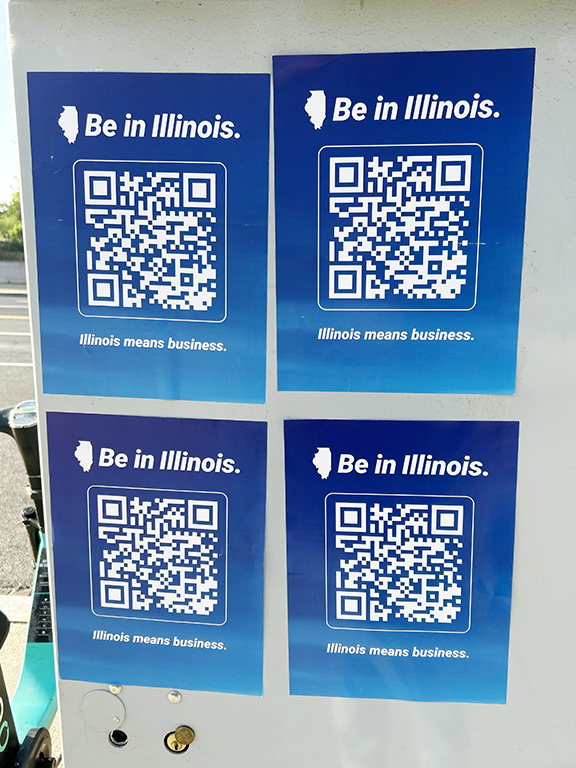
Longitudinal strip running above the center aisle. Primary format visible to standing passengers during peak hours. Text-forward, high-contrast creative reads cleanly from below. Effective for local businesses, QR response campaigns, and messages that benefit from the captive attention of a standing commuter in a dwell environment. Overhead banners are the dominant visual when a bus is fully loaded and standing room only, making them particularly valuable on high-frequency peak-hour routes.
Perforated vinyl on the interior face of bus windows. From outside: solid printed image. From inside: passengers see through with minimal obstruction. Converts empty glass into brand canvas along the full side profile. Effective at pedestrian scale when the bus is stopped, turning the vehicle into a street-level billboard for commuters, cyclists, and pedestrians alongside the route. Window transparencies create a continuous graphic band visible from the street on every bus that carries them, extending the campaign footprint beyond the vehicle interior.
Front and rear door panels capture the passenger at the two highest-attention moments: boarding and alighting. Passengers pause at the door, look at it, wait for it to open. That pause is the impression. Best for local businesses, services, and employers targeting commuters at the transition moment between transit and the street. Frequency builds fast on high-ridership routes. Over a four-week campaign flight, a door panel on a high-frequency route generates thousands of boarding-moment impressions, each at close range and high attention.
Continuous strips along the ceiling edge above the windows on both sides of the interior. Catches the eye of passengers leaning back or scanning the cabin during longer rides. Creates full-perimeter brand presence when combined with car cards and overhead banners. Works well for brand campaigns running multiple interior formats simultaneously. Headliner strips are the one interior format that reaches passengers during the quiet, contemplative moment in the middle of a long ride, when attention is highest and competition for it is lowest.
Every available ad position in a single bus, executed as one unified brand campaign. King or queen posters, all car card positions, overhead banners, door panels, and headliner strips designed as a single immersive brand environment. Passengers stepping on experience the brand on every surface from boarding to exit. Reserved for high-impact launch campaigns: store openings, product releases, or corridor-specific blitzes. The full interior takeover is the transit advertising equivalent of exclusive broadcast: every visual impression inside a specific vehicle, for every trip it makes on the route.
Johnson County Transit shelter advertising reaches riders at the moment the transit environment meets the street. Passengers at bus shelters are stationary for five to fifteen minutes, with the advertising panel directly in their visual field at close range. Shelter advertising at the system’s busiest stops delivers thousands of daily close-range impressions to Overland Park’s transit-riding population in the most attention-available moment of their commute. Shelter panels reach not only waiting riders but the steady stream of pedestrians passing each shelter structure throughout the day, extending the impression count beyond the boarding and alighting ridership at each stop. The following shelter locations represent the highest dwell-time advertising positions in the Johnson County Transit service area.
The shelter positions at Mission Road and State Line connection area serve Johnson County commuters connecting to Kansas City metro transit. Passengers waiting at this stop spend an average of five to fifteen minutes in direct proximity to the advertising panel. The shelter is visible to waiting passengers, pedestrians approaching from either direction, and vehicle traffic on the adjacent street. Unlike a billboard seen at highway speed, a shelter panel is read at walking pace and standing distance, giving advertiser creative enough time to communicate a complete message to every passenger who waits for the next Johnson County Transit bus. High-traffic stops generate dozens of waiting passengers per hour during peak periods, delivering concentrated close-range impressions at the moment riders are most stationary and attentive. The combination of physical proximity, dwell time, and repeat daily exposure makes shelter advertising one of the highest-quality outdoor impression environments available in the Overland Park market.
Johnson County to KCATA connectionSuburban commuter to KC metroProfessional + suburban working adultKansas-Missouri border transit hub
The shelter positions at College Boulevard, Overland Park corporate zone serve corporate professionals and Overland Park working adults. Passengers waiting at this stop spend an average of five to fifteen minutes in direct proximity to the advertising panel. The shelter is visible to waiting passengers, pedestrians approaching from either direction, and vehicle traffic on the adjacent street. Unlike a billboard seen at highway speed, a shelter panel is read at walking pace and standing distance, giving advertiser creative enough time to communicate a complete message to every passenger who waits for the next Johnson County Transit bus. High-traffic stops generate dozens of waiting passengers per hour during peak periods, delivering concentrated close-range impressions at the moment riders are most stationary and attentive. The combination of physical proximity, dwell time, and repeat daily exposure makes shelter advertising one of the highest-quality outdoor impression environments available in the Overland Park market.
College Blvd, Overland ParkCorporate professional + working adultTechnology sector demographicJohnson County premium commercial
Shelter advertising delivers a stationary close-range impression context that interior transit media does not replicate. At a bus stop, the audience stands in place, looking at the advertising panel for an average of five to twelve minutes. That dwell time is genuinely available to the advertiser. A shelter panel at a high-traffic Overland Park stop generates thousands of daily impressions at close range across the full ridership population waiting for the next Johnson County Transit service. Shelter panels are read fully, not glimpsed, and the message has time to land completely on each viewer. The following three shelter formats are available through Johnson County Transit.
The premium shelter format. Full-panel illuminated displays occupy the complete back panel of an enclosed shelter with internal backlighting for all-hours high-contrast visibility. Visible to pedestrians approaching, passengers waiting inside, and vehicle traffic on the adjacent street. Color accuracy maintained in all weather conditions. Positioned at highest-traffic shelter locations. Minimum four-week buy. Illuminated shelter panels generate verified impression counts through the daily pedestrian flow past the shelter structure, delivering outdoor advertising at a scale comparable to traditional street-level billboards at a fraction of the placement cost.
Rate: $3,850 / 4-week period
Internal backlighting at an accessible entry price, typically in smaller panel configurations or secondary network locations. Delivers all-hours visibility identical to full-panel illuminated placements. Ideal for corridor-specific targeting rather than system-wide reach. Multiple backlit panels in a zone buy deliver neighborhood saturation at efficient per-panel cost. Backlit shelter campaigns allow advertisers to establish presence across a defined geographic corridor without the investment required for system-wide full-panel placements.
Rate: $850 / 4-week period
Standard non-backlit shelter panels at covered bus stop structures. Positioned at eye level, visible to waiting passengers and nearby pedestrians at close range. Best in locations with strong ambient lighting or daytime-heavy ridership. Widest geographic distribution per dollar: multi-stop presence across the full service area at the most accessible price point in the lineup. Non-illuminated panels are the entry point for brands establishing transit shelter presence for the first time, providing market coverage and impression volume at minimum investment.
Rate: $700 / 4-week period
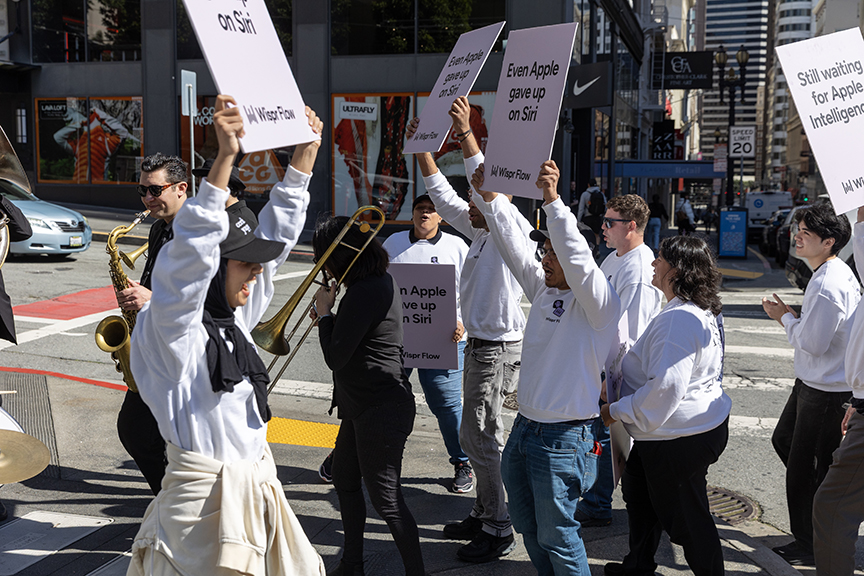
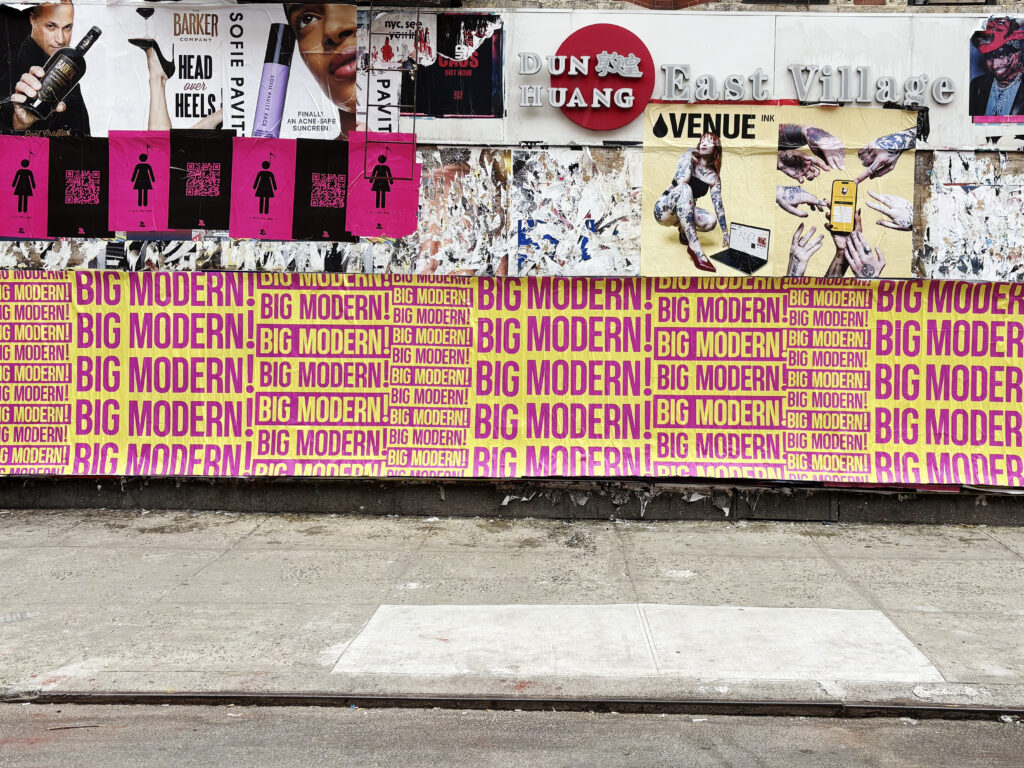
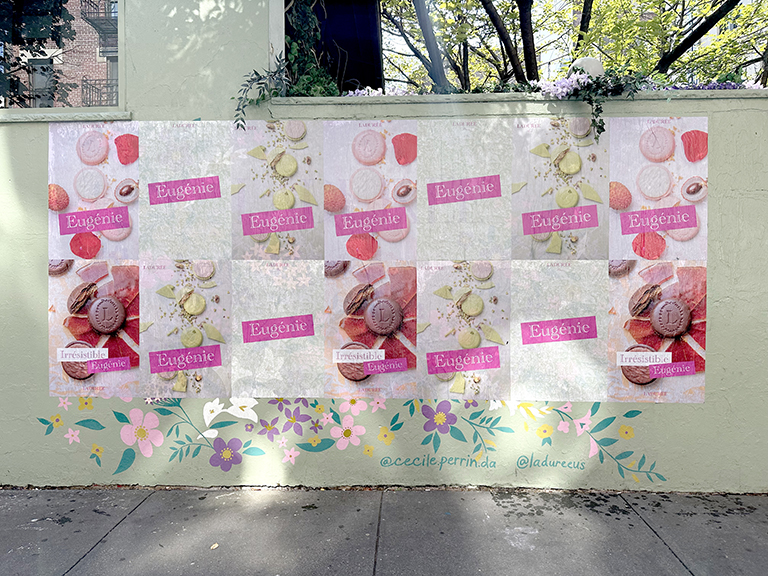
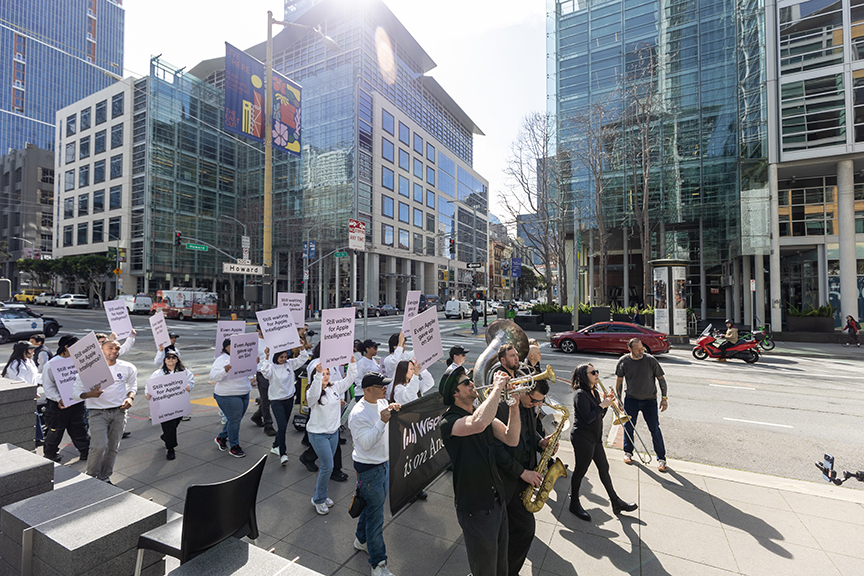
Overland Park’s transit corridors are ground-level advertising environments. The streets your bus and shelter placements run through are where well-executed guerrilla campaigns build street-level brand presence that reinforces the impressions generated inside the vehicles. AGM deploys the following formats along Johnson County Transit corridors to amplify transit media reach.
AGM executes all guerrilla formats in-house: location scouting, posting crews, GPS-tagged photo documentation of every placement. Transit advertising and guerrilla work the same corridor from different angles. Together they build Overland Park brand presence that commuters notice, remember, and act on. Brands that combine transit interior media with coordinated street-level guerrilla campaigns consistently report higher awareness and recall than those running transit alone.
The Johnson County Transit ridership covers the full working-adult consumer base of Overland Park and the surrounding communities. The following advertiser categories consistently generate strong results from Johnson County Transit transit media campaigns based on ridership demographics, geographic delivery, and response patterns across comparable systems. Transit advertising is particularly effective for brands that need to reach a defined geographic audience at high frequency, brands targeting working adults who are underserved by digital advertising, and brands that benefit from the sustained dwell-time exposure that only transit interior media provides.
AGM brings 10 years of transit advertising execution across 500+ campaigns nationwide. We know which formats drive response in which categories on systems comparable to Johnson County Transit, and we build Overland Park transit campaigns that work against your specific objective rather than just filling fleet inventory. Every Johnson County Transit campaign we execute is documented with GPS-tagged photography and a post-campaign impressions summary. We do not consider a campaign complete until you have verified proof that every placement ran as contracted.
Johnson County Transit is a suburban transit system focused on internal Johnson County circulation and connections to KCATA at the county border. KCATA serves the broader Kansas City metro including both Missouri and Kansas communities. Johnson County Transit’s riders tend to be higher-income suburban working adults than the broader KCATA ridership. For brands seeking full Kansas City metro coverage, a combined Johnson County Transit and KCATA buy provides both suburban and urban reach.
Johnson County is one of the most affluent counties in the Midwest, and transit ridership in the county skews toward higher incomes relative to typical transit markets. While transit riders in any market include a transit-dependent lower-income component, the overall demographic quality of Johnson County Transit advertising is elevated by the county’s affluence. Financial services, real estate, technology, and premium consumer brands find the Johnson County transit audience more receptive than comparable small-market transit systems.
From contract execution to first installation, most Johnson County Transit campaigns launch within two to four weeks. Production of vinyl interior posters takes approximately five to seven business days after final artwork approval. Installation is scheduled with the transit authority maintenance team. For campaigns tied to specific events or seasonal windows in Overland Park, build in at least four to six weeks from contract to live date. AGM manages the full timeline and provides status updates at each stage of the production and installation process.
Interior transit posters follow standard dimensions: king size (30″ x 144″), queen size (30″ x 88″), and car cards (11″ x 28″). Files should be at print resolution minimum 100 DPI at full size in CMYK color mode. Shelter panels have location-specific dimensions. AGM provides a complete specification sheet for every format in your campaign and handles all production and installation. Creative that uses high contrast, large type, and a single dominant visual performs best in transit interior environments at extended viewing distances.
Interior poster campaigns can start with a small number of buses on a targeted route, with pricing scaling by vehicle count and campaign length. Shelter campaigns start at individual panel purchases. AGM provides specific cost estimates based on your selected formats, routes, and duration during the proposal process. Most effective campaigns run a minimum four weeks to build adequate impression frequency. Shorter campaigns are available but transit advertising’s strength is in repetition and frequency, which requires sustained exposure to generate measurable brand recall.
Johnson County Transit’s route structure allows geographic targeting by corridor. Campaigns can concentrate spend on specific routes serving your target neighborhoods rather than buying the full system. AGM builds Johnson County Transit media plans based on your target audience geography rather than defaulting to a one-size system-wide approach. We map your target consumer profile against Johnson County Transit’s route ridership data to identify the specific corridors that deliver the highest concentration of your target demographic within the system.
AGM provides GPS-tagged installation photography for every bus interior and shelter placement, a post-installation confirmation report with vehicle or shelter identification numbers, and a final campaign summary at the end of the flight. For extended campaigns, periodic audits confirm creative condition. All documentation delivered digitally within 48 hours of installation completion. Documentation includes both installation confirmation and mid-campaign condition audits so you have verified proof of display for every placement in your buy.
AGM manages the complete production process: file specification consultation, print production, delivery to the transit authority, installation scheduling, and post-installation documentation. You provide final approved artwork. We handle everything between artwork delivery and the first paying impression. AGM has established relationships with the Johnson County Transit transit authority that streamline the approval and installation process. We know the system’s production requirements, maintenance scheduling, and installation access procedures.
Full exterior bus wraps are available subject to transit authority approval on a vehicle-specific basis. Wrap production uses perforated one-way vision vinyl for windows and solid vinyl for body panels. Wraps generate mobile billboard impressions across the full service area of the wrapped vehicle’s route. AGM manages approval, production, and installation. Wrap campaigns require additional lead time. A wrapped bus operating on a primary Overland Park route generates outdoor advertising impressions with every block it travels, turning the vehicle’s daily mileage into continuous branded outdoor media exposure.
Healthcare, financial services, QSR, community services, and workforce training consistently perform well across Johnson County Transit’s core transit ridership. Entertainment and dining brands targeting the Overland Park leisure population also find strong response. The specific category performance varies by route and audience segment. AGM advises on which corridors deliver the highest response rates for your category based on our experience across comparable transit systems. We match category performance patterns from similar markets to the specific route demographics of the Johnson County Transit system.