American Guerrilla Marketing
Nationwide serivce
Media planning, media buying, billboard advertising, & guerrilla marketing
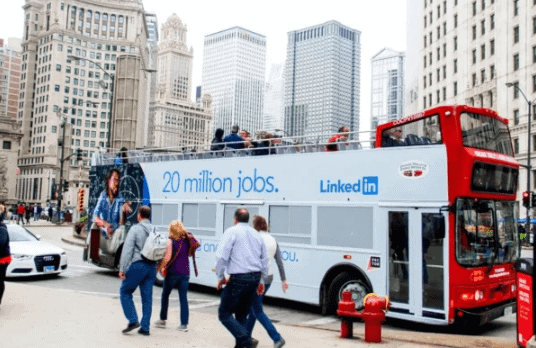
American Guerrilla Marketing places interior bus and shelter advertising on Golden Empire Transit (GET) serving Bakersfield and Kern County. Union Avenue, Chester Avenue, California Avenue, CSUB campus, Kern Medical Center, and the East Bakersfield working community. Spanish-language available.
Bakersfield is not an interchangeable market. The largest city in the San Joaquin Valley and the seat of Kern County, Bakersfield sits at the southern end of the valley where the Sierra Nevada and the Tehachapi Mountains converge to create the Tejon Pass gateway between Central California and Southern California. The city’s character is shaped by three economic forces: the petroleum industry (Kern County is one of the most prolific oil-producing counties in the United States), agriculture (the flat valley floor surrounding Bakersfield grows cotton, grapes, almonds, and citrus on an industrial scale), and the service economy that supports the 400,000-plus population of this frequently overlooked California city. Bakersfield is also home to a powerful country music heritage, having produced Merle Haggard and Buck Owens and giving birth to the “Bakersfield Sound” that defined the honky-tonk tradition in American country music from the 1950s through the 1970s.
Golden Empire Transit operates approximately 22 bus routes covering Bakersfield’s metropolitan geography, serving the working-class Latino and working-class non-Latino communities that form the backbone of the city’s transit ridership. Bakersfield’s transit-dependent population uses GET for daily commuting between the residential neighborhoods on the east side and the employment and services concentrated along Union Avenue, Chester Avenue, and the California State University Bakersfield corridor on Stockdale Highway. GET’s ridership is predominantly Latino (reflecting Kern County’s agricultural and oil-field service workforce demographics), transit-dependent, and working-class, creating a specific transit advertising market that connects brands directly to the Bakersfield household that the media-planning focus on the LA metro and Bay Area markets consistently overlooks.
California State University Bakersfield at 9001 Stockdale Highway generates transit demand on the GET routes serving the campus, creating a university campus transit advertising environment in the Central Valley’s southernmost major city. CSUB’s enrollment of approximately 11,000 students includes a high proportion of first-generation college students from the agricultural and working-class communities of Kern County and the surrounding San Joaquin Valley, creating a campus transit audience that is specifically more economically diverse and more Central Valley-rooted than the coastal California university markets.
AGM places interior bus and shelter advertising on GET across Union Avenue, Chester Avenue, CSUB campus, Kern Medical, and the full Bakersfield network. Spanish-language available. Direct execution in the San Joaquin Valley.
Union Avenue running north-south through the heart of Bakersfield is the city’s primary commercial and transit corridor, carrying GET routes through the neighborhoods that span the working-class residential geography of East and Central Bakersfield. The Union Avenue corridor from the downtown core south through the East Bakersfield Latino residential communities and north through the mixed commercial district toward the CSUB campus area carries the highest ridership of any GET route and reaches the most transit-dependent communities in Kern County. Advertising on Union Avenue routes reaches the Latino working adult community of Bakersfield in the most direct and specific transit channel available in the Central Valley’s southern anchor city.
East Bakersfield’s residential communities along Union Avenue, P Street, and the side streets connecting to the commercial district have a high concentration of working-class Mexican American and immigrant households with significant transit dependency. These communities are served by GET routes that carry the farmworkers, oil-field service workers, construction workers, and the retail and service economy employees who power Bakersfield’s economy from jobs that pay agricultural and industrial wages rather than the tech-industry compensation of the Bay Area or the entertainment industry premium of Los Angeles.
Kern Medical Center at 1700 Mount Vernon Avenue in Bakersfield is Kern County’s safety-net hospital and one of the largest employers in the county, operating the only Level II trauma center for a regional service area covering millions of square miles of Central California. GET routes connecting the surrounding residential communities to Kern Medical carry both the clinical and support workforce and the patient population of one of California’s most heavily used public hospital systems serving a predominantly low-income and Medi-Cal-covered patient population.
Union Avenue from the downtown transit hub at 1830 Golden State Avenue north and south through East and Central Bakersfield carries the highest ridership in the GET system and the most transit-dependent working community in Kern County. The East Bakersfield residential neighborhoods along Union Avenue and the commercial strip of taquerias, tiendas, and community businesses that serve the Latino working community create an advertising environment where Spanish-language advertising reaches a community with minimal competing English-language media penetration. Interior advertising on Union Avenue routes reaches this community in the daily transit environment of their most significant consumer geography.
Best advertiser categories: Spanish-language healthcare enrollment (Medi-Cal, Covered California, Kern Medical), financial services for the unbanked East Bakersfield community, consumer goods at working-class price points, QSR and grocery brands with East Bakersfield locations, remittance services, and community organizations serving Bakersfield’s Mexican American and agricultural worker community.
Chester Avenue through downtown Bakersfield connects the residential communities north and south of the downtown core to the civic, professional, and retail businesses of the city center. The downtown Bakersfield commercial district includes the county courthouse, city hall, the Rabobank Arena (now the Mechanics Bank Arena) entertainment venue, the convention center, and the professional services firms that serve Kern County’s oil, agricultural, and government employment base. GET routes on Chester Avenue serve a more economically mixed ridership than the Union Avenue corridor, including downtown office workers, courthouse visitors, and the professional community alongside the transit-dependent working class.
Best advertiser categories: downtown Bakersfield professional services brands, healthcare and legal services, Mechanics Bank Arena event promotions, Kern County government information campaigns, and financial services targeting the downtown Bakersfield professional and working community.
The GET routes serving California State University Bakersfield on Stockdale Highway connect the campus to the downtown transit hub and to the surrounding Bakersfield communities where students live. CSUB’s approximately 11,000 students include some of the highest proportions of first-generation college students from Kern County’s agricultural, oil-field worker, and working-class households among any campus in the CSU system. Campus transit advertising on GET’s CSUB routes reaches this student demographic during the fall and spring semesters in the most economically specific Central Valley university market.
Best advertiser categories: CSUB enrollment and campus services, student financial products, career development for CSUB graduates entering Kern County’s oil and agricultural economy, local Bakersfield businesses targeting the CSUB student community, and workforce development programs for the Central Valley career market.
GET routes connecting Bakersfield’s residential communities to Kern Medical Center on Mount Vernon Avenue and the surrounding healthcare campus carry both the clinical workforce and the patient community of Kern County’s primary public hospital. The Kern Medical community uses GET for daily commuting from the working-class neighborhoods to the hospital, creating a healthcare professional and paraprofessional ridership demographic on the routes serving the medical center corridor.
Best advertiser categories: Kern Medical patient outreach campaigns, Medi-Cal and Covered California enrollment, pharmaceutical brands, home health services, and healthcare recruitment advertising for Kern County’s healthcare workforce.
Complete exterior wrap on a GET bus creating brand presence across Bakersfield’s commercial and residential corridors. Contact AGM for pricing. Best for Bakersfield-wide brand campaigns and healthcare system campaigns reaching the full Kern County community.
Large-format interior posting on GET buses system-wide. Contact AGM for rates. Best for city-wide Bakersfield brand awareness across the full GET ridership base from East Bakersfield to CSUB.
Distributed card placements throughout GET interiors. Best for Spanish-language East Bakersfield campaigns, healthcare enrollment, CSUB campus services, and local Bakersfield businesses. Most accessible format for local Kern County advertisers.
Mid-format interior posting for route-specific GET campaigns. Best for Spanish-language Union Avenue community campaigns, CSUB campus route student advertising, or Chester Avenue professional corridor campaigns.
Cards at reading distance for longer GET route trips. Best for Spanish-language healthcare enrollment details, CSUB student QR codes, and financial service information for the Bakersfield working community with extended transit times.
Horizontal card at front of GET buses seen at every boarding stop. Best for simple messages on Union Avenue and Chester Avenue routes where GET boarding frequency creates steady impression accumulation.
Exterior rear-panel on GET buses facing vehicle traffic on Bakersfield’s arterials. Best for vehicle audience reach on Union Avenue, Chester Avenue, and the Stockdale Highway where GET buses share Bakersfield’s primary roads with significant vehicle traffic.
Cards in GET bus overhead panel for standing and seated riders. Best for supplemental interior placements on highest-ridership GET routes during morning and afternoon commute peaks.
Perforated vinyl on GET windows visible from outside. Best for exterior brand presence on Union Avenue through East Bakersfield’s commercial district and downtown Chester Avenue where GET buses are visible to pedestrian and vehicle traffic.
GET maintains covered shelters at key stop locations throughout Bakersfield, concentrated along Union Avenue, Chester Avenue, and at the downtown transit hub on Golden State Avenue. Shelter advertising accumulates daily impressions from the Bakersfield working community throughout the campaign period.
The GET downtown transit hub at 1830 Golden State Avenue serves as the convergence point for multiple GET routes and reaches the full cross-section of the Bakersfield transit community from all parts of the city at the geographic center of the transit network.
The shelter positions along Union Avenue through East Bakersfield serve the most transit-dependent working community in Kern County. Spanish-language shelter advertising at these positions reaches the East Bakersfield Latino community in the daily transit environment of the working corridor connecting their homes to employment and services.
$3,850/4-week cycle. Backlit shelter panel at a primary GET ridership location. Downtown hub and East Bakersfield Union Avenue positions reach the Bakersfield transit community at the system’s most-trafficked advertising positions in a low-competition Central Valley market.
$850/4-week cycle. Accessible entry to GET shelter advertising for local Bakersfield businesses, community health organizations, and Spanish-language campaigns. Four weeks of consistent community exposure.
$700/4-week cycle. Most accessible advertising in the GET inventory. Four weeks of Bakersfield community presence at the most accessible price in the Kern County transit network.
along Union Avenue in East Bakersfield’s commercial district, on Chester Avenue in downtown Bakersfield’s commercial blocks, and at the CSUB campus entry creates street-level brand contact alongside GET’s primary corridors in the San Joaquin Valley’s southernmost major city.
at the community organizations, churches, and gathering spaces in East Bakersfield, at the CSUB Student Union, and at the downtown Bakersfield gathering spaces extend the transit campaign into the off-bus community spaces of Bakersfield’s diverse working communities.
Kern Medical Center and Dignity Health Bakersfield Memorial Hospital use GET for patient outreach and healthcare enrollment campaigns. CSUB uses GET routes for enrollment advertising. Kern County government agencies use transit for public information campaigns. Spanish-language healthcare organizations use Union Avenue routes for community health outreach. Local Bakersfield businesses use interior cards for promotional advertising. The Mechanics Bank Arena and downtown Bakersfield entertainment venues use transit for event promotion. Agricultural worker benefit programs and community organizations targeting the Kern County farmworker community use GET for outreach campaigns.
Good transit media planning on Golden Empire Transit starts with honest route behavior instead of generic circulation claims. AGM looks at where riders actually board, what they are doing before they get on, what they are doing after they get off, and whether the ad unit has enough repeat exposure to earn recall. In practical terms, that means separating commuter corridors from errand routes, transfer hubs from one-seat rides, and weekday patterns from weekend traffic. A message for appointment-based healthcare demand needs a different placement logic than a campaign for a restaurant launch, a public notice, or a college recruitment push. Golden Empire Transit works best when the buy reflects those differences at the route level instead of flattening the whole system into one audience bucket.
That route-first approach also helps with creative discipline. Some campaigns need a blunt headline with a phone number large enough to catch from three rows back. Some need a QR code that only makes sense in a seated interior environment. Some need a shelter panel beside a transfer point because the stop itself creates the dwell time that the message requires. On Golden Empire Transit, the smartest plan is rarely the flashiest one. It is usually the one that respects how people move through Bakersfield, California Avenue, Ming Avenue, East Hills Mall trade area, and Kern County commuter flow and pairs the right message with the right pause in their day.
We also pay attention to the surrounding street life, because transit ads do not exist in isolation. A bus running the same arterial every day becomes part of that corridor’s visual rhythm. Riders see the ad inside the coach, pedestrians catch the king panel on approach, and drivers sit behind the tail when traffic stacks at a light. That layered exposure is the real value of transit media. It is why a well-placed campaign on Golden Empire Transit can outperform louder media categories that seem bigger on paper but disappear from memory five seconds after the impression lands.
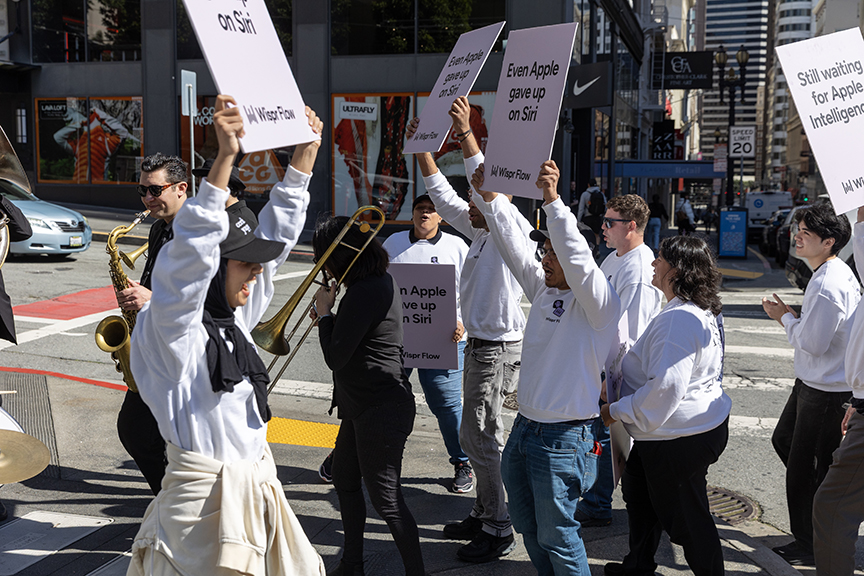
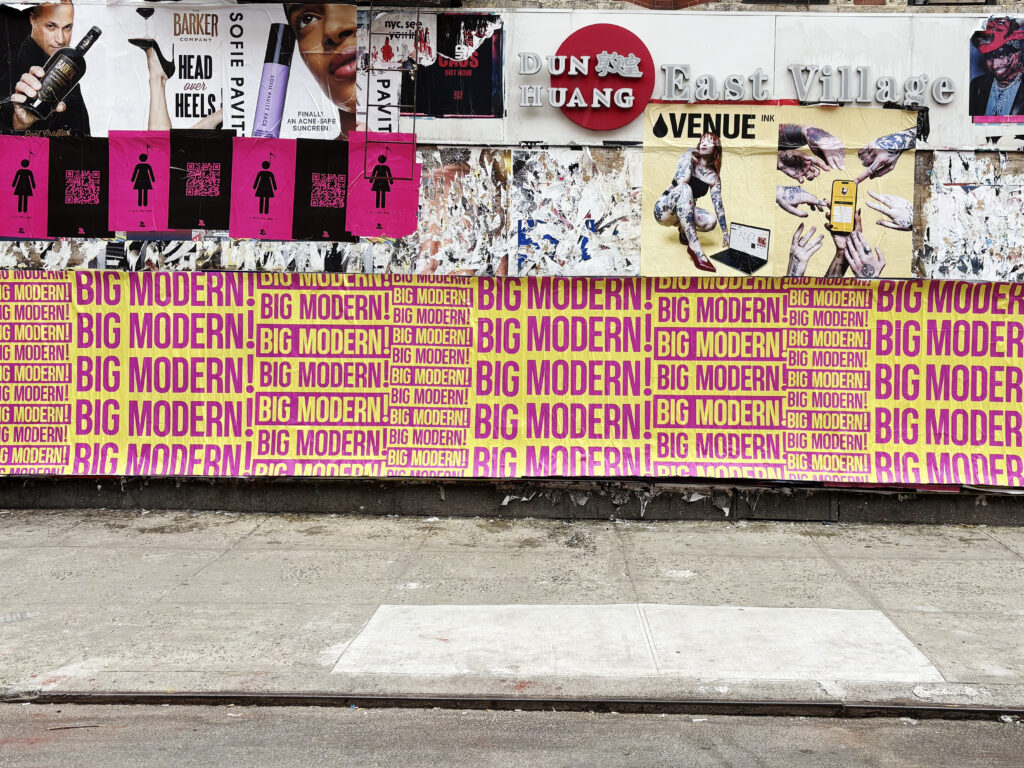
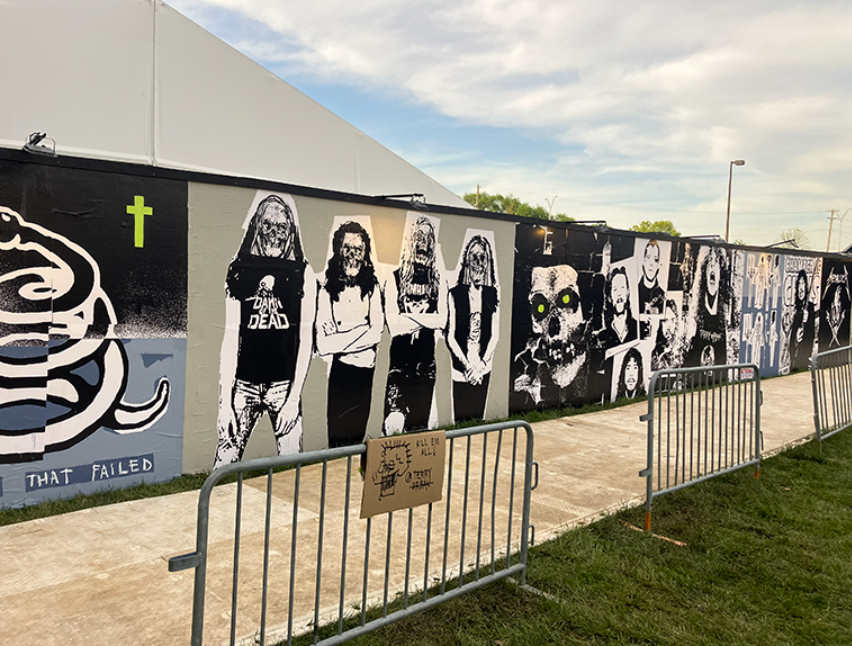
Transit media gets stronger when it is treated as the anchor instead of the whole plan. If a client wants to own a corridor for a few weeks, AGM can pair Golden Empire Transit placements with street-level support around the same transfer points, campus edges, downtown blocks, or retail approaches that riders already use. That might mean legal wheatpaste near nightlife foot traffic, flyer boxes near commuter stops, or stencil and snipe support on the pedestrian path between the stop and the destination. The point is not to create clutter. The point is to make the transit impression feel familiar when the same person sees the brand again ten minutes later on foot.
This is especially useful for shorter campaigns that need to build memory fast. A four-week transit run can do a lot, but a four-week transit run with matching guerrilla support around the heaviest boarding zones usually feels bigger than the budget behind it. That matters in markets where people notice repetition quickly and talk about new brands through local routines, whether that is a downtown lunch crowd, a student loop, a hospital shift change, or a county service run. Golden Empire Transit gives you the repetition. Guerrilla support turns that repetition into presence.
Execution matters just as much as the idea. We schedule installs so that transit and street-level elements launch together, we keep the visual language consistent across formats, and we make sure the CTA fits the environment. A rider at a shelter can handle a little more information than a driver passing a wrapped bus. A seated passenger has time for a QR scan. A pedestrian leaving a transfer center might respond better to a simple directional prompt. When those details are handled well, Golden Empire Transit stops being a line item on a media plan and starts acting like a real local campaign.
A lot of advertisers assume the biggest route is automatically the best route. That is only true when the audience mix matches the goal. A higher-ridership line filled with short errand trips may be less valuable than a slightly smaller line with longer dwell time, cleaner repetition, and a tighter fit with the brand. On this system, we look at who is riding, how often they repeat, what transfer behavior looks like, and whether the surrounding corridor gives the campaign extra visibility beyond the bus itself. That level of planning keeps money from leaking into inventory that looks impressive on a spreadsheet but does not create useful recall in the street.
We also watch the difference between image campaigns and response campaigns. If the objective is broad local familiarity, larger exterior units and major shelters do the heavy lifting. If the objective is appointment setting, recruitment, event turnout, or app downloads, interior units often carry more weight because the rider has the time to read, remember, and act. The best campaigns on this system usually mix those two functions instead of forcing one format to do everything.
That discipline is where AGM earns its keep. We are not just sourcing inventory. We are helping decide what deserves premium placement, what should stay simple, and what should be supported by guerrilla touches nearby so the campaign feels bigger without wasting spend. In a market where people notice the same corridors every day, those choices compound quickly.
Yes. Spanish-language creative is accepted on all GET routes, and AGM recommends Spanish-primary or bilingual creative for the Union Avenue and East Bakersfield routes serving the city’s predominantly Latino working community. Bakersfield’s East Side has a large Spanish-speaking working-class population for whom transit advertising in Spanish is a primary advertising touchpoint that English-only campaigns miss.
Standard GET interior card and poster campaigns require four to six weeks from final artwork to installation. Contact AGM at least six weeks before the intended launch date.
GET serves Bakersfield city proper and the surrounding urban communities. The active oilfield areas of Kern County are primarily in the rural areas outside the city limits where personal vehicle transportation is required. However, GET routes serve the neighborhoods where oil-field service workers and their families live in the urban Bakersfield community, reaching this community during their off-field daily mobility.
Bakersfield’s legendary country music heritage, anchored by the Crystal Palace at 2000 Buck Owens Boulevard (Buck Owens’s namesake venue), is part of the city’s cultural identity that transit advertising can connect to for brands wanting to associate with the Bakersfield Sound. The Crystal Palace and the Mechanics Bank Arena host country music events that attract the Bakersfield community and regional visitors, and GET routes serving the entertainment district connect these venues to the transit-riding community. For country music and entertainment brands, GET transit advertising on the Chester Avenue entertainment district routes provides a direct channel to the Bakersfield country music community and concert audience.
AGM provides photographic installation documentation for all GET placements, including interior card and poster photos, shelter panel photos, and exterior vehicle documentation for wraps. Post-campaign reporting includes documentation photographs and estimated impression counts using available GET ridership data.
Yes. Bakersfield and Kern County are systematically overlooked in California advertising campaigns that focus on the coastal metro markets. For brands that want to establish presence in the Central Valley’s southernmost major city without the budget requirements of LA or the Bay Area, GET provides cost-effective transit advertising access to Bakersfield’s working adult community at rates that reflect the Kern County market scale. The advertising competitive environment in Bakersfield transit is significantly less saturated than the coastal California metro markets.
GET’s service area focuses primarily on Bakersfield city proper. Delano and the northern Kern County agricultural communities are beyond GET’s primary service area, though certain routes may extend to the Bakersfield-Delano boundary areas. For campaigns targeting the northern Kern County agricultural communities including Delano, Wasco, and McFarland, AGM can advise on alternative formats including direct community advertising alongside any available regional transit options in those communities.
Yes. GET covers the southern San Joaquin Valley in Bakersfield while the Fresno Area Express (FAX) covers the central valley in Fresno. A combined GET and FAX campaign through AGM covers both the Bakersfield and Fresno markets in a unified Central Valley transit advertising buy, reaching the agricultural and working-class communities of California’s most productive interior valley from Bakersfield to Fresno in a single coordinated campaign. Contact AGM for Central Valley combined transit campaign pricing.
Bakersfield (population ~400,000) is smaller than Fresno (population ~540,000), and GET carries proportionally less ridership than FAX. Both systems serve working-class agricultural valley communities with similar demographic profiles, and both offer significantly less competitive advertising environments than the coastal California metro markets. For brands targeting the Central California working-class and agricultural community in both cities, a combined GET-FAX campaign provides comprehensive San Joaquin Valley coverage at a combined cost that is competitive with a single coastal California metro system buy.
GET operates year-round fixed-route service regardless of agricultural season cycles. While the surrounding agricultural economy has seasonal labor patterns, the Bakersfield urban community uses GET for year-round daily commuting and community mobility. The seasonal agricultural workforce concentration increases indirectly when the harvest season brings more agricultural workers to the Bakersfield area and the surrounding communities, which can modestly increase ridership on the routes serving the East Bakersfield agricultural community neighborhoods during peak harvest periods.