American Guerrilla Marketing
Nationwide serivce
Media planning, media buying, billboard advertising, & guerrilla marketing
American Guerrilla Marketing places interior bus and shelter advertising on City of Commerce Transit serving Commerce, California. Citadel Outlets and Telegraph Road, Commerce Casino and Washington Boulevard, Bandini Boulevard warehouse district, and Atlantic Boulevard and Garfield Avenue civic stops. AGM is the media buying partner, production manager, and execution team.
Commerce is not an interchangeable market. It has its own street logic, ridership rhythm, and local economy, and City of Commerce Transit sits inside that everyday movement in a way billboard or digital-only buys do not. Commerce draws people through Citadel Outlets and Telegraph Road, Commerce Casino and Washington Boulevard, Bandini Boulevard warehouse district, and Atlantic Boulevard and Garfield Avenue civic stops, while major anchors such as Citadel Outlets, Commerce Casino, Bandini warehouse district, Commerce City Hall help define where commuters, students, workers, and visitors move each day.
AGM approaches City of Commerce Transit as a local media system, not a generic transit line item. Over more than 10 years and 500 plus campaigns, we have learned that the value in a transit buy comes from knowing which corridors repeat, which transfer points stay busy all day, and which rider groups are most likely to notice and remember a message. In this market, that means understanding the pull of Citadel Outlets and Telegraph Road, the steady flow around Commerce Casino and Washington Boulevard, and the community routine that gathers near Citadel Outlets shuttle stops and Washington Boulevard employment shelters.
For advertisers, City of Commerce Transit matters because it reaches warehouse workers, casino staff, outlet shoppers, and southeast LA residents. Those riders are not abstract impressions. They are people moving to work, class, appointments, shopping trips, entertainment, and family errands. When your message stays on board and at the stop for a full cycle, it becomes part of the same streets and timing that shape life in Commerce.
AGM plans and executes bus interior and shelter advertising on City of Commerce Transit with direct oversight, clear posting proof, and local corridor strategy shaped around Commerce. Contact us to map routes, timing, and production.
The strongest transit advertising markets have one thing in common: riders keep seeing the same message in the same real places. City of Commerce Transit offers that kind of repetition on corridors like Citadel Outlets and Telegraph Road and Commerce Casino and Washington Boulevard, where commercial density and daily routine meet. These are not occasional sightseeing loops. They are lived-in streets with grocery runs, shift changes, school traffic, medical appointments, and neighborhood errands repeating all week.
Another reason City of Commerce Transit stands out is the mix of anchors in its footprint. Citadel Outlets, Commerce Casino, Bandini warehouse district, Commerce City Hall bring together workers, students, patients, visitors, and local households. That creates a transit audience with both reach and intent. If a brand wants awareness, it can buy broad system visibility. If it wants a tighter audience, AGM can shape a corridor-focused plan around the right stops and service pattern.
Transit also performs well here because the street environment gives the ads time to work. Riders wait at shelters, board in sight of the creative, and then spend more time inside the vehicle. In markets like Commerce, that repeated sequence often does more for recall than a one-second drive-by impression.
Citadel Outlets and Telegraph Road gives City of Commerce Transit one of its clearest advertising stories. This stretch pulls in warehouse workers, casino staff, outlet shoppers, and southeast LA residents and stays active across morning commute, midday errands, school trips, and late-afternoon return travel. Riders using this corridor pass recognizable local anchors and neighborhood businesses, so interior ads are seen in a setting that already feels relevant to daily decisions.
For brands that need practical response, this corridor is useful because people on board are often headed somewhere with intent. They are going toward work, class, medical appointments, or shopping rather than drifting through a leisure-only environment. That makes formats like interior cards and seat-back units especially strong here, since the message has a few minutes to register and a clear next step is easier to act on.
Advertiser fit on this stretch includes hospitals and clinics, colleges, QSR, grocery, telecom, financial services, entertainment, and local service businesses. When appropriate, AGM can also shape bilingual creative so the copy matches the neighborhood voice rather than sounding imported from somewhere else.
Commerce Casino and Washington Boulevard gives City of Commerce Transit one of its clearest advertising stories. This stretch pulls in warehouse workers, casino staff, outlet shoppers, and southeast LA residents and stays active across morning commute, midday errands, school trips, and late-afternoon return travel. Riders using this corridor pass recognizable local anchors and neighborhood businesses, so interior ads are seen in a setting that already feels relevant to daily decisions.
For brands that need practical response, this corridor is useful because people on board are often headed somewhere with intent. They are going toward work, class, medical appointments, or shopping rather than drifting through a leisure-only environment. That makes formats like interior cards and seat-back units especially strong here, since the message has a few minutes to register and a clear next step is easier to act on.
Advertiser fit on this stretch includes hospitals and clinics, colleges, QSR, grocery, telecom, financial services, entertainment, and local service businesses. When appropriate, AGM can also shape bilingual creative so the copy matches the neighborhood voice rather than sounding imported from somewhere else.
Bandini Boulevard warehouse district gives City of Commerce Transit one of its clearest advertising stories. This stretch pulls in warehouse workers, casino staff, outlet shoppers, and southeast LA residents and stays active across morning commute, midday errands, school trips, and late-afternoon return travel. Riders using this corridor pass recognizable local anchors and neighborhood businesses, so interior ads are seen in a setting that already feels relevant to daily decisions.
For brands that need practical response, this corridor is useful because people on board are often headed somewhere with intent. They are going toward work, class, medical appointments, or shopping rather than drifting through a leisure-only environment. That makes formats like interior cards and seat-back units especially strong here, since the message has a few minutes to register and a clear next step is easier to act on.
Advertiser fit on this stretch includes hospitals and clinics, colleges, QSR, grocery, telecom, financial services, entertainment, and local service businesses. When appropriate, AGM can also shape bilingual creative so the copy matches the neighborhood voice rather than sounding imported from somewhere else.
Atlantic Boulevard and Garfield Avenue civic stops gives City of Commerce Transit one of its clearest advertising stories. This stretch pulls in warehouse workers, casino staff, outlet shoppers, and southeast LA residents and stays active across morning commute, midday errands, school trips, and late-afternoon return travel. Riders using this corridor pass recognizable local anchors and neighborhood businesses, so interior ads are seen in a setting that already feels relevant to daily decisions.
For brands that need practical response, this corridor is useful because people on board are often headed somewhere with intent. They are going toward work, class, medical appointments, or shopping rather than drifting through a leisure-only environment. That makes formats like interior cards and seat-back units especially strong here, since the message has a few minutes to register and a clear next step is easier to act on.
Advertiser fit on this stretch includes hospitals and clinics, colleges, QSR, grocery, telecom, financial services, entertainment, and local service businesses. When appropriate, AGM can also shape bilingual creative so the copy matches the neighborhood voice rather than sounding imported from somewhere else.
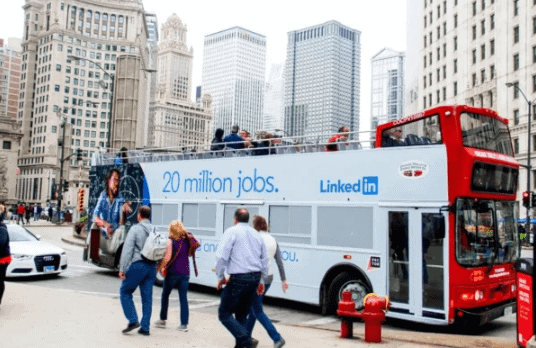
What it is: A full exterior skin that turns a bus into a moving billboard across the service area.
Best for: regional launches, healthcare systems, universities, entertainment campaigns, and brands that need the strongest visual footprint.
Why buy it: A wrap stays in view at signals, transfer points, and curbside stops, so it reaches riders plus the street traffic traveling next to the bus. On a system like City of Commerce Transit, that means presence on Citadel Outlets and Telegraph Road, Commerce Casino and Washington Boulevard, and the daily streets that carry the city’s routine movement. Contact AGM for pricing.
What it is: A large interior poster set where seated riders see the message over repeated trips.
Best for: broad awareness campaigns that need systemwide reach without the cost of a wrap.
Why buy it: King posters are strong when riders spend real time on board moving between work, school, medical appointments, and shopping. On City of Commerce Transit, that gives your message repeated exposure through the same households week after week. Contact AGM for pricing.
What it is: A mid-size interior poster with a strong balance of visibility and budget control.
Best for: route-focused campaigns, bilingual creative, student recruitment, and local retail pushes.
Why buy it: Queen posters work well when a brand wants to match one message to one corridor, such as Citadel Outlets and Telegraph Road or Bandini Boulevard warehouse district. AGM can help focus placements around the ridership segments most likely to respond.
What it is: A front interior panel placed near the driver area and boarding sightline.
Best for: short offers, URLs, QR-led messages, deadlines, and simple brand reminders.
Why buy it: This format captures the rider at boarding and again while standing near the front. In busy transfer systems like City of Commerce Transit, that repeated glance can matter more than one big impression. Contact AGM for pricing.
What it is: An exterior rear panel that speaks to the vehicle traffic following the bus.
Best for: auto services, healthcare, events, and brands that want street visibility beyond riders.
Why buy it: Tail displays extend the transit buy to drivers sitting behind the bus on corridors like Commerce Casino and Washington Boulevard and Atlantic Boulevard and Garfield Avenue civic stops. That adds non-rider reach in a way interior formats cannot. Contact AGM for pricing.
What it is: A distributed interior card visible throughout the cabin.
Best for: community outreach, bilingual campaigns, public health, education, and local service offers.
Why buy it: Interior cards are dependable because they stay in the rider environment for the whole trip. On City of Commerce Transit, they work especially well for messages aimed at warehouse workers, casino staff, outlet shoppers, and southeast LA residents. Contact AGM for pricing.
What it is: A reading-distance format for riders who spend enough time seated to absorb detail.
Best for: insurance, medical enrollment, school programs, QR codes, and appointment-driven offers.
Why buy it: Seat-back ads are useful when the message needs more than a slogan. The format gives room for a clear benefit statement, a phone number, and a next step without feeling crowded. Contact AGM for pricing.
What it is: A secondary interior panel visible to seated and standing riders.
Best for: campaign reinforcement, product awareness, and frequency layering with other interior units.
Why buy it: Overhead placements help a campaign own more than one sightline inside the bus. That is useful on high-turnover routes where riders board and exit often at transfer-heavy stops. Contact AGM for pricing.
What it is: Perforated vinyl or similar window placement that creates outside visibility while keeping rider sightlines.
Best for: high-impact launches, entertainment, tourism, and route-dominant branding.
Why buy it: Window ads stand out on curbside approaches and near busy pedestrian blocks. When a City of Commerce Transit vehicle passes Citadel Outlets shuttle stops or Citadel Outlets and Telegraph Road, the street audience gets a strong brand read. Contact AGM for pricing.
City of Commerce Transit shelter inventory matters because the best stops sit on the same daily corridors that drive ridership. In Commerce, the most dependable stop visibility usually comes from hubs like Citadel Outlets shuttle stops and neighborhood positions near Washington Boulevard employment shelters. Premium shelter faces, junior posters, and transit benches give advertisers a street-level foothold that stays in front of riders and nearby traffic all day.
Shelter advertising on City of Commerce Transit works because the stop itself is a pause point. People look up, check timing, and stand with the panel in their field of view. At Citadel Outlets shuttle stops, that means consistent exposure among warehouse workers, casino staff, outlet shoppers, and southeast LA residents, plus added visibility to passing drivers and pedestrians using the same corridor.
Because AGM buys transit with street context in mind, we look at the stop from both sides: rider dwell time and surrounding traffic. In Commerce, a good shelter face can reach waiting riders, nearby storefront traffic, and the vehicle audience moving through the same corridor. That makes shelters one of the cleanest ways to hold ground in the market for a full four-week run.
Shelter advertising on City of Commerce Transit works because the stop itself is a pause point. People look up, check timing, and stand with the panel in their field of view. At Washington Boulevard employment shelters, that means consistent exposure among warehouse workers, casino staff, outlet shoppers, and southeast LA residents, plus added visibility to passing drivers and pedestrians using the same corridor.
Because AGM buys transit with street context in mind, we look at the stop from both sides: rider dwell time and surrounding traffic. In Commerce, a good shelter face can reach waiting riders, nearby storefront traffic, and the vehicle audience moving through the same corridor. That makes shelters one of the cleanest ways to hold ground in the market for a full four-week run.
Shelter advertising on City of Commerce Transit works because the stop itself is a pause point. People look up, check timing, and stand with the panel in their field of view. At Citadel Outlets and Telegraph Road shelter cluster, that means consistent exposure among warehouse workers, casino staff, outlet shoppers, and southeast LA residents, plus added visibility to passing drivers and pedestrians using the same corridor.
Because AGM buys transit with street context in mind, we look at the stop from both sides: rider dwell time and surrounding traffic. In Commerce, a good shelter face can reach waiting riders, nearby storefront traffic, and the vehicle audience moving through the same corridor. That makes shelters one of the cleanest ways to hold ground in the market for a full four-week run.
What it is: Large shelter panel at a prime stop location.
Best for: Brands that want strong street presence on Citadel Outlets shuttle stops and other top waiting locations.
Why buy it: Premium shelter displays keep one message in view for a full four-week cycle and usually reach riders, pedestrians, and passing traffic at once. Price: $3,850 for a 4-week cycle.
What it is: A smaller shelter face or stop panel for focused neighborhood visibility.
Best for: Local businesses, event pushes, healthcare enrollment, and community outreach.
Why buy it: Junior posters give smaller budgets an entry point into transit real estate without giving up street presence. Price: $850 for a 4-week cycle.
What it is: Bench-facing branding at curbside waiting points.
Best for: Hyperlocal retail, service businesses, and repeated neighborhood exposure.
Why buy it: Benches hold the message close to eye level in the same place riders wait every day. Price: $700 for a 4-week cycle.
AGM often layers transit with nearby street work so the campaign feels bigger than one media unit. near Citadel Outlets and Telegraph Road, close to Commerce Casino and Washington Boulevard, placed around local businesses and campuses, and on legal inventory near transfer points can reinforce the same message where riders walk before and after the bus trip. That kind of corridor layering is one reason clients come back to AGM for repeat transit work.
Advertisers that make sense on City of Commerce Transit include healthcare systems, colleges, entertainment venues, retail centers, public agencies, restaurants, telecom providers, financial services, and local service businesses. In Commerce, the strongest fits usually have a real reason to talk to warehouse workers, casino staff, outlet shoppers, and southeast LA residents. Because AGM executes directly, we can recommend whether the campaign should stay broad across the network or focus on a smaller set of corridors tied to one neighborhood or institution.
One thing advertisers often miss is that transit works best when the message is matched to rider timing, not just rider volume. A route can look good on a map and still be wrong for the campaign if the trip pattern does not line up with the audience. AGM reviews where the rider starts, where the rider transfers, and what kind of errand or commute is happening around the stop. That is how a campaign turns from a generic presence play into a media buy with real purpose.
Creative matters just as much. Short copy tends to work best on high-turnover routes where boardings happen every few blocks. Detail-rich creative performs better when riders stay seated longer and can absorb a phone number, QR code, or offer. We also look at language, neighborhood tone, and whether the brand should sound direct, service-oriented, promotional, or institutional. Those choices are not cosmetic. They affect whether a rider remembers the ad five minutes later.
Transit also gives advertisers something that many digital plans do not: visible legitimacy in the market. When a bus or shelter carries the message for a full cycle, the campaign feels present in the city. That can be especially important for healthcare providers opening a new location, colleges trying to recruit locally, public agencies pushing enrollment or awareness, and retail groups that need to remind people they are nearby and open for business.
AGM handles transit this way because we execute campaigns directly. We do not treat posting proof as an afterthought, and we do not separate planning from what actually happens on the street. The same team that helps map the route mix also watches production, installation, and documentation. That reduces confusion, keeps schedules tighter, and gives clients a cleaner read on what was delivered.
If the goal is stronger recall, we usually recommend combining one high-visibility format with one frequency format. A shelter plus interior cards, or a wrap plus queen posters, often beats a scattered buy that tries to do too many things at once. The result is simpler, easier to remember, and better suited to the daily repetition that makes transit advertising pay off.
The strongest transit creative in local markets usually respects three rules. First, say the offer early. Second, make the next step obvious. Third, sound like the message belongs in the neighborhood where the rider is seeing it. That means naming the branch, clinic, store, campus, event date, or district when it helps, rather than writing vague copy that could run anywhere in the country.
For advertisers working with AGM, that local framing is part of the planning process. We look at whether the street environment is commuter-heavy, student-heavy, hospitality-heavy, or family-heavy, then adjust the message to fit that behavior. A campaign aimed at appointment booking should not read like a tourism ad. A student campaign should not sound like a hospital billboard. Transit gives enough repeated contact to make these distinctions worth the effort.
The strongest advertising value usually sits on the corridors where ridership, commercial activity, and community routine overlap. For City of Commerce Transit, that includes Citadel Outlets and Telegraph Road, Commerce Casino and Washington Boulevard, Bandini Boulevard warehouse district, and the transfer activity around Citadel Outlets shuttle stops. Those streets keep your message in front of the same households, workers, and students across the full four-week cycle.
Yes. AGM regularly manages English, Spanish, and other language creative when a market calls for it. In Commerce, the right language choice depends on the specific corridor and audience, and we can guide that decision before production.
Most advertisers start with one four-week cycle and get the best response when they stay live for eight to twelve weeks. Transit works through repetition, so the message gains strength as riders keep seeing it on their normal trip pattern.
A safe planning window is four to six weeks from approved artwork to installation. If you need a faster launch, AGM can review availability, printing schedules, and whether a partial rollout is possible.
Yes. AGM manages planning, creative guidance, production coordination, posting, and proof-of-performance. We have more than 10 years of transit media experience and 500 plus campaigns completed, and we do the work directly rather than handing the job off without oversight.
AGM provides photo documentation of installed units and a summary of placements. That gives your team a record of what went live and where the campaign was visible.
Yes. Pairing interior units with shelter faces usually gives the best mix of frequency and street dominance. Riders see the campaign while waiting, then again inside the vehicle, which helps recall and response.
Common buyers include hospitals, colleges, local retail groups, event promoters, public agencies, and brands that need repeated visibility among warehouse workers, casino staff, outlet shoppers, and southeast LA residents. The mix changes by season, but those categories tend to stay active.
Yes. We often build regional plans that connect neighboring systems when the market crosses city lines. If your audience moves between Commerce and the surrounding Los Angeles County, we can map a combined buy that matches that travel pattern.
Transit puts the message inside the physical routes people actually travel every day. In a market like Commerce, streets such as Citadel Outlets and Telegraph Road and hubs like Washington Boulevard employment shelters are part of daily habit, which gives the campaign a real-world presence that a scrolling ad cannot replace.