American Guerrilla Marketing
Nationwide Service
Media planning, media buying, billboard advertising, & guerrilla marketing
Sidewalk Stencil Advertising in Georgetown, Washington DC

Turn Georgetown’s most-walked corridors into high-visibility brand touchpoints. From M Street NW’s luxury retail strip to the cobblestone approaches of Georgetown University, Sidewalk Stencils™ by AGM put your message exactly where high-value pedestrians look — underfoot, unavoidable, and impossible to scroll past.
Georgetown is one of the most commercially and culturally concentrated neighborhoods in the United States. A historic district at the intersection of federal power, university life, and elite retail, it draws a remarkably diverse and high-value pedestrian audience — weekend shoppers from across the DMV, Georgetown University students and faculty, tourists tracing the C&O Canal towpath, diplomats and lobbyists walking between offices and restaurants, and DC residents who make the pilgrimage to M Street and Wisconsin Avenue for the kind of shopping and dining experience that no other quadrant of the city offers at the same density. That audience does not sit still. It moves on foot. And Sidewalk Stencils™ are built precisely for pedestrians in motion.
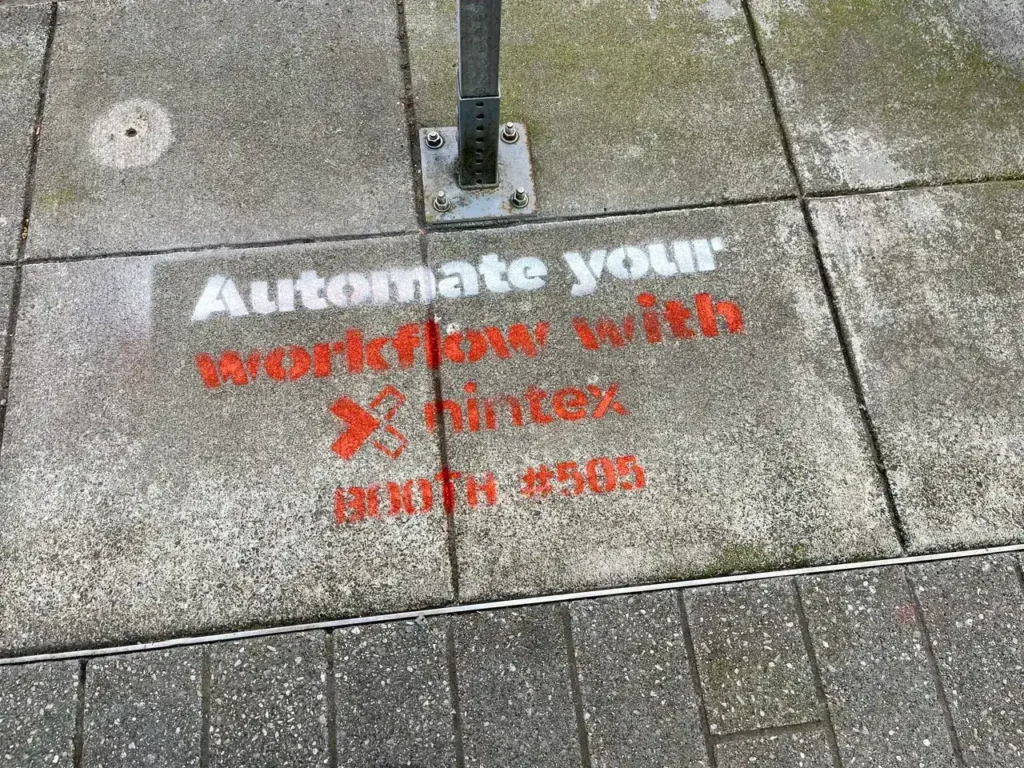
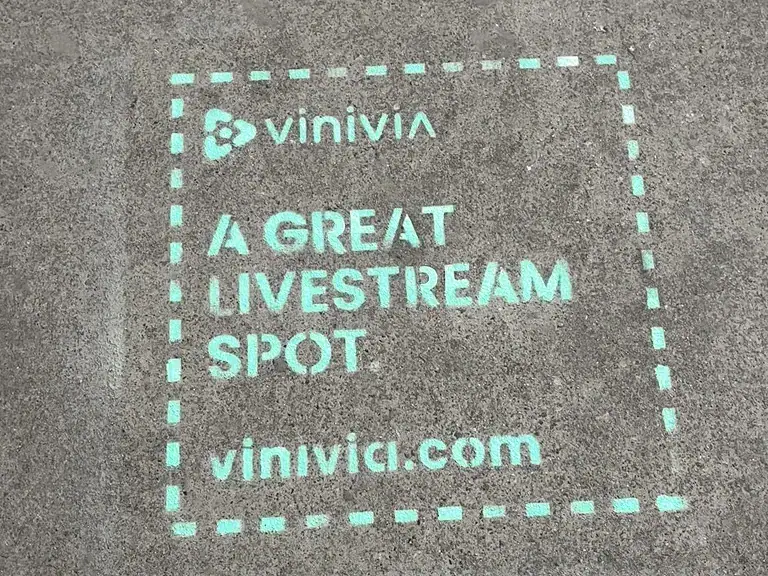
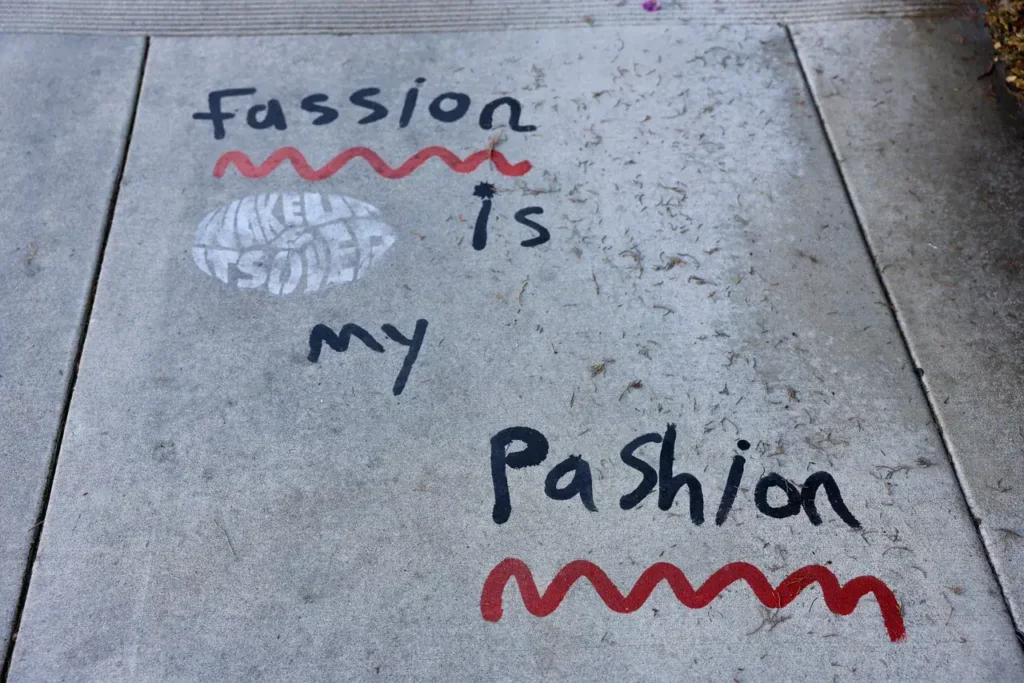
A Sidewalk Stencil™ is a brand impression applied directly to the pavement — the sidewalk, plaza, crosswalk, or any high-foot-traffic surface. Unlike a billboard that commands a viewer’s eyes upward or a digital ad that competes with every other content stream on a phone screen, a stencil intercepts attention naturally. It occupies the same visual field as the street beneath a pedestrian’s feet. Shoppers on M Street NW encounter it without anticipating it, which produces the kind of genuine, unguarded moment of brand engagement that most digital and traditional formats can no longer reliably deliver.
American Guerrilla Marketing has executed Sidewalk Stencil™ campaigns across the country for brands that include Nike, Wrangler, and EA Sports. The process is precise: we scout your preferred Georgetown locations, identify surfaces with the right foot traffic volume and pavement texture, determine the appropriate stencil method, and deploy on schedule. Every campaign is documented with photos and GPS-tagged placement reports so your team can verify coverage without leaving the office. Georgetown’s mix of original Federal-era brick and modern concrete sidewalks means surface conditions vary meaningfully by block — our advance scouting process accounts for every variable before a single stencil template is cut.
Georgetown is walkable in a way that almost no other DC neighborhood matches. The commercial corridor along M Street NW and Wisconsin Avenue NW compresses thousands of pedestrians onto sidewalks that are, in many places, deliberately narrow by contemporary standards — a product of the neighborhood’s eighteenth-century street grid. That compression is not a liability for a stencil campaign. It is an asset. Every person walking the block is within arm’s reach of your impression. There is no way to cross the street without encountering it. There is no lane of traffic that separates the audience from the message.
Whether you are a luxury brand activating around a Georgetown boutique opening, a financial services firm targeting the high-net-worth households that characterize Georgetown’s residential population, a tech company seeking proximity to university-aged talent at Georgetown University’s sprawling campus, or an event marketer building anticipation around a waterfront activation at Washington Harbour, Sidewalk Stencils™ give you a format that this neighborhood cannot ignore. The pavement is the medium. Georgetown’s foot traffic is the audience. We connect the two.
Ready to Own Georgetown's Sidewalks?
From M Street NW's flagship retail corridor to the Georgetown Waterfront, AGM puts your brand exactly where DC's highest-value pedestrians walk. Let's build your campaign.
Browse Cities in Washington DC
Select a city to explore Sidewalk Stencil Advertising opportunities.
Why Georgetown Is Built For Sidewalk Stencil Campaigns
Few DC neighborhoods compress as much pedestrian density into as many distinct zones as Georgetown does. That concentration is what makes a stencil campaign here so effective — you are not chasing dispersed foot traffic across a sprawling urban grid. You are placing impressions directly inside the corridors that DC’s highest-value consumers already choose to walk through, day in and day out.
M Street NW — The High-End Retail Corridor
M Street NW between 28th and 36th Streets is Georgetown’s commercial spine and one of the most productive retail sidewalks in the mid-Atlantic region. The blocks here host a concentration of flagship stores, boutique fashion brands, luxury beauty retailers, upscale restaurants, and entertainment destinations that draw weekend foot traffic rivaling any urban shopping district on the East Coast. Pedestrians on M Street NW are in a purchase-intent state of mind — they came specifically to shop, eat, and experience. A Sidewalk Stencil™ placed at the approach to a high-traffic block, at a crosswalk pause point, or in front of a flagship entrance intercepts shoppers in the exact moment of maximum receptivity. The cobblestone-adjacent brick sidewalks along certain M Street blocks respond exceptionally well to reverse graffiti, producing high-contrast brand impressions that photograph beautifully and generate organic social sharing.
Wisconsin Avenue NW — Dining, Beauty & Boutique Row
Wisconsin Avenue NW from M Street up through the mid-Georgetown commercial zone carries the neighborhood’s densest concentration of independent restaurants, beauty retailers, specialty food shops, and boutique apparel. The foot traffic here skews toward Georgetown residents, repeat visitors familiar with the neighborhood’s character, and an affluent demographic that actively seeks out brands that feel locally credible and premium. Wisconsin Avenue is narrower than many comparable retail streets, which means pedestrian flow is compressed and eye-level engagement — including ground-level stencils — is consistently high. A stencil campaign running simultaneously along Wisconsin Avenue NW and M Street NW creates a dual-axis coverage pattern that intercepts virtually every pedestrian who visits Georgetown’s commercial core during the campaign window.
Georgetown Waterfront Park & Washington Harbour
Georgetown Waterfront Park and the Washington Harbour complex anchor the southern edge of Georgetown along the Potomac River, drawing a consistent flow of recreational visitors, outdoor diners, morning runners, kayakers, and weekend leisure crowds throughout spring, summer, and fall. The wide promenade paths that connect the waterfront to the base of Wisconsin Avenue NW and the eastern end of the C&O Canal towpath are ideal surfaces for large-format stencil placements. Audiences here are in a relaxed, receptive state — moving at a leisure pace, photographing the river, and pausing at restaurant patios. A brand impression placed along the waterfront promenade gets extended dwell time that M Street’s faster-moving shopper traffic does not always provide. Washington Harbour’s fountain plaza is one of the most photographed public spaces in Georgetown, which makes any brand presence there eligible for significant organic social amplification.
Georgetown University Campus — Main Gate & 37th Street
Georgetown University’s main campus sits at the western end of the M Street corridor, with the primary pedestrian entry point at the Healy Gates on 37th Street NW. The streets surrounding the campus — 37th Street NW, O Street NW, and the commercial blocks of Wisconsin Avenue near the Hilltop — carry a continuous flow of students, faculty, visiting families, and campus event attendees throughout the academic year. The demographic profile here is distinct from the M Street shopper: younger, brand-aware, digitally connected, and highly influential within their social networks. A stencil campaign targeting the 37th Street approach and the campus-adjacent commercial strip on Wisconsin Avenue captures the Georgetown University audience at the point where campus life intersects with the neighborhood’s commercial energy — one of the most productive audience intersection points in the entire DC market.
C&O Canal Towpath — Canal Street Access Points
The Chesapeake and Ohio Canal National Historical Park runs directly through Georgetown, and the towpath along the canal is one of DC’s most heavily used recreational corridors. Cyclists, joggers, dog walkers, and leisure pedestrians access the towpath through several canal-level access points along the Georgetown stretch, with the highest concentration of foot traffic at the Thomas Jefferson Street NW entry near the eastern end of the Georgetown waterfront and the Wisconsin Avenue NW bridge crossing. Stencil placements at these access points reach an active, health-conscious, and predominantly affluent demographic that skews toward outdoor lifestyle brands, athletic apparel, wellness products, and experiences. The canal towpath audience is distinct from the M Street shopper, and combining placements across both zones broadens a Georgetown campaign’s total demographic coverage significantly.
Key Bridge Approaches & Potomac Street NW
The Key Bridge — formally the Francis Scott Key Memorial Bridge — is one of Georgetown’s most iconic pedestrian and cyclist thoroughfares, connecting the neighborhood to Rosslyn, Virginia across the Potomac. The pedestrian approaches on the DC side, running along Potomac Street NW and the riverfront path beneath the bridge, carry a high volume of commuter cyclists, recreational walkers, and tourists drawn by the river views. The approach corridors are narrowly channeled, which concentrates foot traffic precisely and makes stencil placements here visible to virtually every person who passes. For brands targeting active commuters, cyclist culture, or the cross-river DMV professional audience that moves between DC and Arlington daily, the Key Bridge approach is one of the most precisely targeted placement corridors in the Georgetown market.
Book Hill & Upper Wisconsin — Residential Commercial Mix
The Book Hill section of upper Wisconsin Avenue NW, running roughly from P Street to R Street, anchors a quieter but high-value commercial corridor serving Georgetown’s residential community. Home design studios, antique dealers, art galleries, and specialty boutiques line this stretch, drawing a neighborhood-resident audience that skews toward high household income, established career professionals, and buyers with strong brand loyalty once a relationship is established. Stencil placements along upper Wisconsin Avenue NW reach consumers at a slower pace than M Street — they are browsing, not rushing — which increases the average dwell time per impression and makes this zone particularly strong for brands seeking to build considered purchase decisions rather than impulse moments.
Stencil Types Available In Georgetown
Every Georgetown location has different pavement conditions, brand requirements, and campaign duration goals. AGM offers four distinct stencil methods, and we help you select the right one based on your specific surface, timeline, and objective. Georgetown’s historic streetscape — a mix of original brick pavers, aged concrete sidewalks, and modern plaza surfaces — creates a range of surface conditions that each method handles differently, and our advance scouting process matches the right technique to every location.
Chalk Stencil
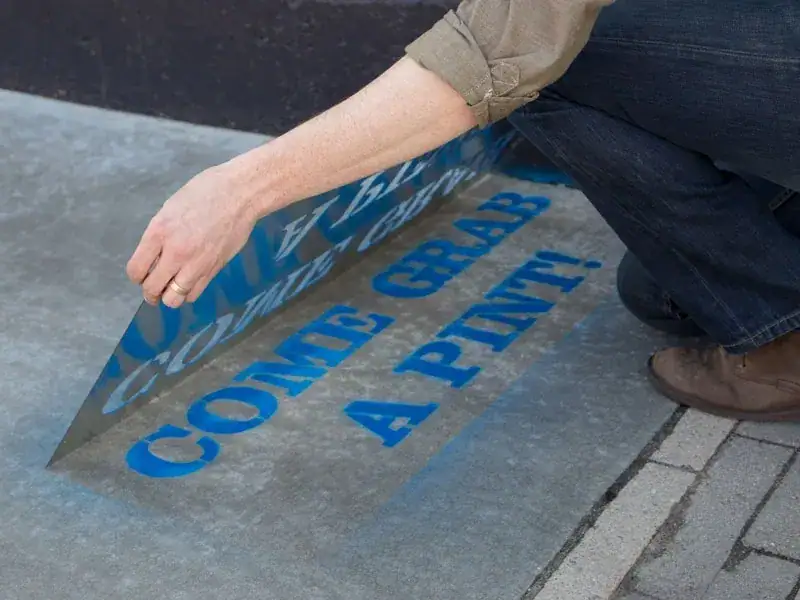
Chalk stencils use water-soluble chalk-based media applied through a precision stencil to produce bright, high-contrast impressions. They are fully temporary — lasting anywhere from several hours to a few days depending on weather and surface — which makes them ideal for event-driven campaigns in Georgetown. A chalk stencil campaign deployed ahead of a Georgetown waterfront festival weekend, a Georgetown University move-in or graduation event, or a major M Street retail activation can be placed the morning of the event and will dissipate naturally without any cleanup effort. Because chalk is non-damaging and water-soluble, it is broadly welcomed in approved public spaces and is the most accessible option for brands navigating DC’s placement landscape for the first time. Georgetown’s concrete sidewalk panels along lower Wisconsin Avenue NW and the waterfront promenade produce particularly clean and vivid chalk results.
Reverse Graffiti (Clean Graffiti)
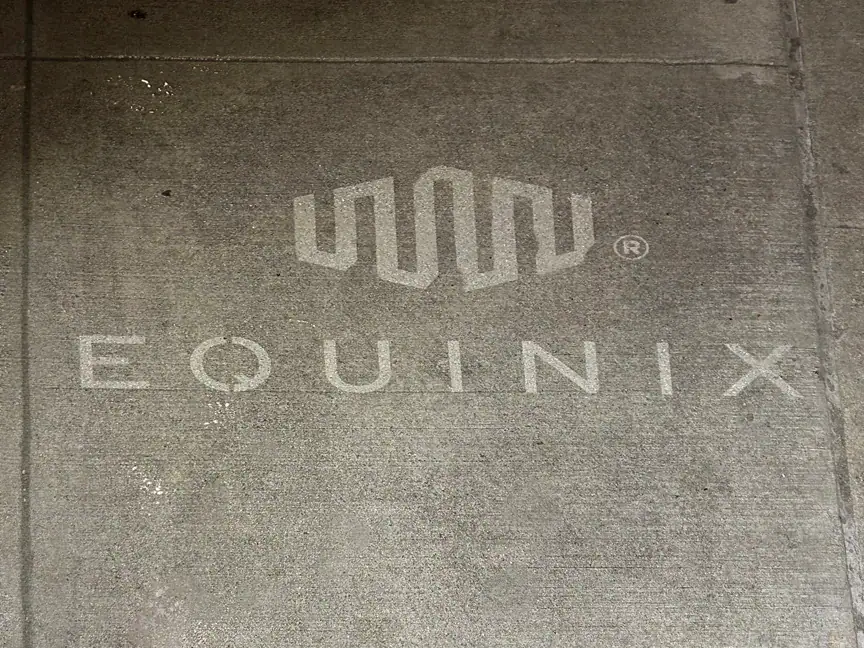
Reverse graffiti — also called clean graffiti — does not apply anything to a surface. Instead, it uses high-pressure water to selectively clean a brand pattern into an existing layer of grime, exhaust residue, or surface discoloration. The result is a photographic-quality impression in the contrast between clean and dirty pavement. Georgetown’s M Street NW sidewalks, worn smooth by decades of heavy foot traffic, have developed the kind of accumulated surface darkening that makes reverse graffiti results exceptionally striking. The technique generates significant organic social media attention because the concept is counterintuitive — cleaning a surface to create an ad — which makes it particularly effective for brands with a sustainability angle or any campaign with an earned media component built into the brief. A reverse graffiti activation on M Street can generate social posts from dozens of passersby within hours of deployment.
Paint Stencil
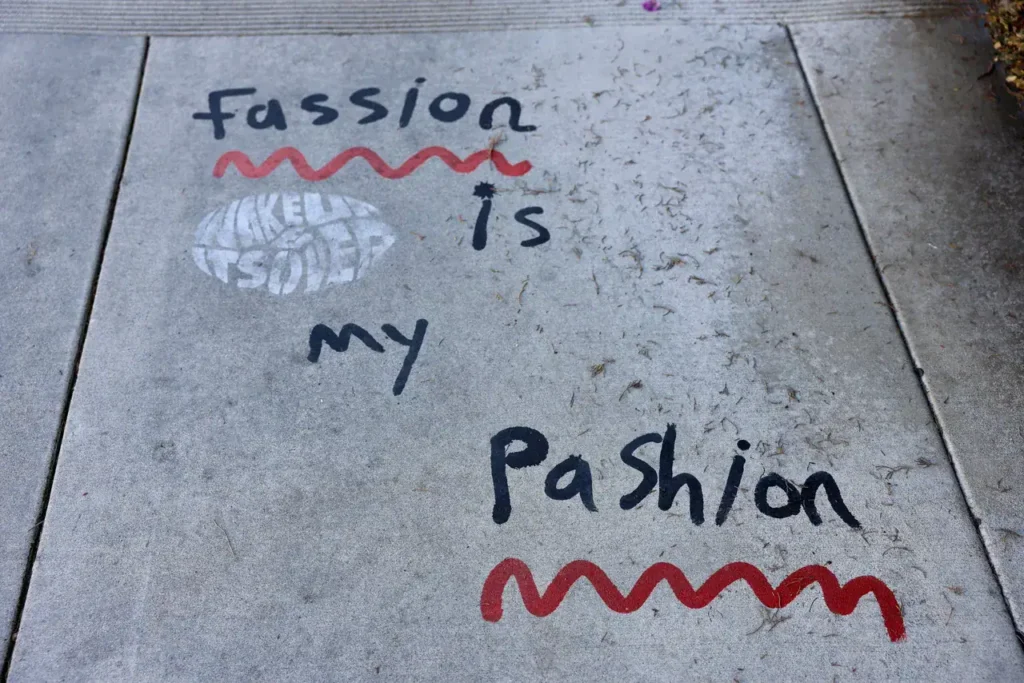
Paint stencils are the most durable format AGM deploys. Using water-based or specialty paints applied through precision-cut stencil templates, paint stencils produce sharp, lasting impressions suited for longer-duration campaigns or placements on private property. For a brand occupying a Georgetown retail space, a restaurant sponsoring an extended summer waterfront activation at Washington Harbour, or a real estate developer branding a new residential development in upper Georgetown, a paint stencil delivers consistent impressions across weeks or months. The format supports complex brand marks, full logos, and multi-color designs at any of our available sizes. Private property authorization is always confirmed and documented before deployment begins, and AGM handles all outreach to Georgetown property managers and building owners as part of the campaign planning process.
Water Stencil (Pressure Wash)
Water stencils use targeted pressure washing on specific surface types — typically concrete or brick-adjacent pavement with a natural patina — to create clean brand impressions. The technique is closely related to reverse graffiti but is tuned for surfaces where the contrast between cleaned and uncleaned areas produces a particularly sharp result at large format. For Georgetown campaigns targeting the wide concrete panels of the C&O Canal towpath access plazas or the weathered sidewalk surfaces along the older sections of M Street, water stencils can produce gallery-quality impressions at street scale. Like reverse graffiti, this method leaves no residue and requires no paint or chemical application, which makes it well suited to Georgetown’s historic district context and its associated property sensitivity.
Get A Free Sidewalk Stencil Advertising Quote
Ready to make your brand stand out with sidewalk stencil advertising? Contact American Guerrilla Marketing to plan your campaign. Tell us your target locations, campaign goals, and timeline, and our team will help you create a customized sidewalk stencil advertising strategy that fits your needs and budget.
Award Winning Personalized Service
You will get thoughtful, devoted, and individualized attention from our experienced, qualified, and professional personnel. Being one of the most illustrious agencies in Brooklyn, New York, American Guerrilla Marketing has been awarded the Best of Brooklyn title.
Nationwide
Industry City, Brooklyn, New York 11232
American Guerrilla Marketing
Hours
Mon - Fri: 9 AM - 5 PM
Sat & Sun: Closed
Automate your campaign with AGM’s Request for Proposal Builder.
Automate your campaign with AGM’s Request for Proposal Builder. Simply answer a few quick questions about your campaign goals, markets, and timeline, and the system will generate a tailored presentation with recommended strategies, quantities, and pricing. Click the RFP Builder to instantly receive your customized proposal.
Frequently Asked Questions
Yes. The pedestrian approaches to Georgetown University’s Healy Gates on 37th Street NW, and the surrounding campus-adjacent commercial corridor along Wisconsin Avenue NW, are among the most reliably high-volume foot traffic zones in the neighborhood during the academic year. AGM coordinates with the Georgetown BID and relevant city contacts to confirm approved placement zones on the public sidewalks surrounding the campus. Chalk stencils are the preferred format for campaign activations tied to academic calendar events — move-in weekend, fall homecoming, spring graduation — because they deploy quickly, produce vivid impressions on the concrete sidewalk panels of 37th Street, and dissipate naturally without cleanup after the event window closes. We recommend placing stencils along the main 37th Street approach and at the Wisconsin Avenue campus commercial strip the morning of the target event so the impression is fresh when the highest-volume pedestrian traffic arrives.
The highest sustained pedestrian traffic on M Street NW concentrates in the four-block run between 30th Street and 34th Street, which encompasses Georgetown’s densest cluster of flagship retailers, restaurants, and luxury brands. Within that corridor, the crosswalk approaches at 31st Street and 33rd Street are particularly strong placement points because they force pedestrian pauses — the brief stop at a traffic light produces guaranteed, unhurried exposure to whatever is on the pavement in front of the curb. Weekend foot traffic on M Street between these blocks can exceed tens of thousands of pedestrians per day during peak shopping season, making this stretch among the most productive raw-impression zones in the entire DC outdoor advertising market. For campaigns targeting maximum exposure in a compact geography, this four-block M Street core delivers concentration that few comparable DC corridors can match.
Wisconsin Avenue NW performs differently from M Street in ways that make the two corridors complementary rather than interchangeable. M Street delivers high-volume shopper traffic that is primarily lateral — moving east to west along the commercial strip. Wisconsin Avenue generates vertical traffic that flows between M Street and the upper residential neighborhoods, the Georgetown University campus, and the commercial services that serve Georgetown’s resident population. That traffic is often slower-paced and more locally rooted than the destination-shopper traffic on M Street. Wisconsin Avenue placements reach Georgetown residents, university community members, and repeat visitors — consumers who have an established relationship with the neighborhood’s commercial environment and are more likely to form lasting brand associations from a repeated stencil encounter. For brands prioritizing depth of engagement over raw impression volume, Wisconsin Avenue is often the stronger placement. Running both corridors in a single campaign delivers both reach and depth simultaneously.
Georgetown Waterfront Park and the Washington Harbour promenade are among AGM’s strongest DC placements for brands in the outdoor lifestyle, athletic, wellness, and premium food and beverage categories. The audience here — recreational walkers, cyclists, outdoor diners, kayakers, and weekend leisure visitors — is in a relaxed, experience-oriented mindset that is particularly receptive to brand discovery. The wide, open promenade surfaces allow for the largest stencil formats in the Georgetown market, and the naturally beautiful setting means post-campaign photography is consistently high quality. Washington Harbour’s fountain plaza is one of the most photographed public spaces in the neighborhood, and a brand impression placed in or near the plaza is likely to appear in the background of dozens of social posts per day throughout the campaign window. For brands that measure earned media amplification as a campaign KPI, the waterfront zone is a particularly strong ROI play.
M Street NW is one of AGM’s recommended DC markets for reverse graffiti. The corridor’s older concrete sidewalk panels, worn and darkened by decades of heavy foot traffic, exhaust residue, and surface weathering, produce exceptional contrast when selectively cleaned — the brand pattern emerges as a bright, almost luminous impression against the darker surrounding surface. Reverse graffiti on M Street is particularly effective in the blocks near major intersections where the surface darkening is most pronounced. The technique also performs strongly from a social media amplification perspective: pedestrians encountering a reverse graffiti impression for the first time often stop to photograph and share it because the concept of cleaning a brand into the pavement is novel enough to prompt organic documentation. That amplification effect is especially valuable on M Street, where the social media audience of shoppers is large and actively sharing content from the neighborhood throughout their visits.
The C&O Canal towpath access points in Georgetown — particularly the entry plazas near Thomas Jefferson Street NW and the Wisconsin Avenue bridge crossing — are excellent stencil activation locations for brands targeting active outdoor lifestyle demographics. The canal towpath audience skews toward affluent adult Washingtonians who are cyclists, runners, and outdoor recreation enthusiasts — a valuable and brand-loyal demographic that is underserved by most traditional outdoor advertising formats because they actively avoid commercial environments during their recreation time. A well-executed stencil at a canal access point intercepts this audience at a natural pause moment — the transition between the urban commercial streetscape and the recreational pathway. Canal-adjacent placements involve coordination with National Park Service guidelines for C&O Canal National Historical Park-managed surfaces, and AGM manages all of that liaison as part of the campaign planning process.
The Key Bridge pedestrian approaches on the Georgetown side of the Potomac are channeled by the bridge’s ramp structure into a narrow, directional foot traffic corridor — the ideal condition for a stencil campaign. Everyone who crosses the Key Bridge on foot or by bicycle from the DC side passes through the same approach path, which means a single well-placed stencil at the Georgetown end of the bridge achieves a capture rate approaching 100% of that corridor’s daily pedestrian volume. The bridge carries a significant volume of commuter cyclists and recreational walkers who make this crossing a regular part of their daily routine, which means stencil impressions at the Key Bridge approach accumulate repeated exposures from the same individuals over the life of a campaign — driving brand recall beyond what a single-impression format can achieve. For brands targeting the active commuter and outdoor recreation demographic, Key Bridge is one of Georgetown’s most efficient placements per stencil.
AGM manages all permitting and authorization coordination for every Georgetown campaign. Requirements vary meaningfully based on stencil method — chalk on public sidewalks operates under different DC DDOT parameters than paint stencils on private surfaces, and canal-adjacent placements involve NPS coordination that goes beyond standard municipal permitting. Our team navigates all of those requirements as part of the campaign planning process. We do not ask our clients to manage city contacts, research local code, or coordinate with property owners themselves. All permitting work, property-owner outreach for private-surface placements, and NPS liaison for canal-adjacent activations are handled by AGM as included services within the campaign scope. By deployment day, every placement point in your Georgetown campaign has been confirmed, documented, and cleared through the appropriate channels.
A meaningful M Street NW coverage campaign for the core commercial corridor — 28th Street to 36th Street — typically starts at 30 to 40 stencils positioned at crosswalk approaches, block midpoints, and major retail entrance zones. That count provides impression coverage at every significant pedestrian decision point along the strip without gaps. For a campaign that extends M Street coverage to include the Wisconsin Avenue intersection zone, the waterfront approach on 31st Street NW, and the key block midpoints where the heaviest retail foot traffic concentrates, 60 to 80 stencils provide saturation coverage with multiple impressions per pedestrian journey across the full commercial core. We can provide a specific placement map recommendation during your initial scoping call, with estimated daily impression counts per placement zone based on our Georgetown traffic assessment data.
Georgetown draws its own high-volume event foot traffic several times per year — Georgetown’s annual waterfront festival, the Georgetown French Market, holiday shopping season on M Street, and Georgetown University’s commencement and homecoming events each concentrate significantly above-baseline pedestrian volumes into the neighborhood’s walkable corridors. Beyond neighborhood-specific events, Georgetown also benefits from the overflow of major DC events that bring large out-of-market visitor populations to the city: presidential inaugurations, major concerts on the National Mall, and large convention events that place tens of thousands of visitors within a short ride or walk of Georgetown. AGM can time chalk stencil deployments to these peak-volume windows, placing impressions the morning of major event days and capturing audiences at their highest density. We track the DC event calendar as part of ongoing campaign planning for Georgetown clients and proactively flag event-day activation opportunities that align with campaign objectives.
Standard Georgetown campaign lead time is two to three weeks from brief confirmation to deployment. This window covers advance location scouting, DC DDOT and Georgetown BID coordination, NPS liaison for any canal-adjacent placements, stencil production, and crew scheduling. For event-driven campaigns tied to Georgetown University events, major DC calendar moments, or waterfront festival weekends, we recommend initiating the process four to five weeks in advance to ensure all placement clearances — including any historic district coordination specific to Georgetown’s Federal designation — are fully secured before deployment day. Rush campaigns can occasionally be accommodated for chalk stencil activations where placement is on concrete public sidewalks with straightforward permitting, but standard lead times give us the planning room to deliver a campaign that performs at the level Georgetown’s foot traffic and surface quality make possible. Longer-duration paint stencil campaigns on private surfaces require the same two-to-three-week lead time but benefit from additional advance notice to complete property-owner authorization documentation.
Our Campaign Locations
Browse All States
Explore Sidewalk Stencil Advertising opportunities across the United States.
49 States • 201 Cities