American Guerrilla Marketing
Nationwide Service
Media planning, media buying, billboard advertising, & guerrilla marketing
Sidewalk Stencil Advertising in Augusta, Georgia

Augusta is a city the world watches — and then walks through. From Broad Street’s historic corridor to the Riverwalk along the Savannah River, Sidewalk Stencils™ by AGM put your brand on the pavement exactly where Augusta’s residents, visitors, and Masters week crowds already move. Street-level advertising that no algorithm filters and no crowd outpaces.
Sidewalk Stencils™ in Augusta: Pavement Advertising for a City With a Global Audience
Augusta occupies a unique position among mid-sized American cities: one week every spring, it becomes one of the most-watched places on earth. The Masters Tournament at Augusta National Golf Club draws a global audience that fills Augusta’s hotels, restaurants, downtown streets, and surrounding neighborhoods for an entire week. But The Masters is not the whole story of Augusta’s advertising opportunity — it is the exclamation point on a year-round pedestrian landscape that offers significantly more than most markets its size. Understanding that full landscape is the key to understanding why Sidewalk Stencils™ work so well here.
Broad Street is Augusta’s commercial and cultural spine — a wide, walkable main street that anchors the downtown with restaurants, shops, music venues, and the James Brown Arena drawing consistent pedestrian traffic throughout the year. The Augusta Riverwalk, stretching along the south bank of the Savannah River, is one of the most pleasant urban greenways in the state of Georgia, drawing walkers, cyclists, and families through a continuously active recreational corridor. SRP Park, the Minor League Baseball stadium that opened in 2018, created a new dense activation zone along the downtown waterfront that generates game-day foot traffic in a concentrated, predictable pattern. Taken together, these assets give Augusta a walkable downtown core that punches above its population weight.
American Guerrilla Marketing has deployed Sidewalk Stencil™ campaigns for brands including Nike, Wrangler, and EA Sports across markets large and small. The fundamentals that make stencils work are the same in Augusta as in any major market: dense, predictable foot traffic; surfaces that hold impressions well; and audiences moving at a pedestrian pace with ambient attention available. Augusta delivers all three of those conditions, most dramatically during Masters week, but consistently enough throughout the year to support campaigns for brands with year-round Augusta presence.
Augusta’s identity as a military community — anchored by Fort Eisenhower, one of the largest Army bases in the United States — adds a distinct demographic layer to the city’s pedestrian audience. Military families, defense industry personnel, and the veterans’ community create a consistent consumer presence in Augusta’s commercial zones that is particularly valuable for brands serving active-duty and veteran demographics. Augusta University brings an academic and healthcare-focused population into the Summerville district. The combination of military, academic, and tourism demographics gives Augusta’s walkable zones a more diverse audience composition than many comparably sized cities.
Whether you are a brand activating around Masters week, a local Augusta business building name recognition along Broad Street, or a national company with a defense or healthcare industry presence in the Augusta market, Sidewalk Stencils™ give you a format that the city’s most-walked corridors cannot ignore. We scout the placements, clear the permissions, and deploy your brand on the surfaces where Augusta’s foot traffic concentrates. The pavement is the medium. Augusta’s pedestrians are the audience.
Ready to Own Augusta's Sidewalks?
From Broad Street to the Riverwalk, from Augusta National's gates to the GreenJackets' ballpark, AGM puts your brand exactly where Augusta walks. Let's build your campaign.
Why Augusta Is Built For Sidewalk Stencil Campaigns
Augusta’s walkable zones are concentrated and productive. The downtown core, the Riverwalk, and the corridors around major venues create a pedestrian landscape where consistent, day-over-day foot traffic flows through defined paths — exactly the condition that makes a stencil campaign perform.
Broad Street — Downtown Augusta
Broad Street is Augusta’s defining pedestrian corridor — a wide, historic main street that runs through the heart of downtown with a concentration of restaurants, bars, live music venues, and retail that draws foot traffic from lunch through late evening. The blocks between 8th Street and 13th Street are the densest part of the Broad Street commercial strip, and the sidewalks here see consistent activity from downtown workers, university students, and visitors staying in the nearby hotels. Augusta’s Eighth Street block in particular has become one of the city’s primary entertainment nodes, with a bar and restaurant concentration that generates significant weekend foot traffic. Chalk stencils placed along the Broad Street sidewalk in the week before a major event — Arts in the Heart, Ironman Augusta, or a packed James Brown Arena concert weekend — build brand awareness with exactly the audience that Augusta’s most active residents belong to.
Augusta Riverwalk — Reynolds Street Riverfront
The Augusta Riverwalk runs along the Savannah River levee from 5th Street to 10th Street, connecting the downtown commercial district to the waterfront recreational amenity that is one of Augusta’s most-used public spaces. The Riverwalk’s brick promenade and the adjacent Reynolds Street on the upper level create a two-tiered pedestrian corridor where walkers, joggers, cyclists, and families move throughout the day in good weather. The amphitheater at the Riverwalk’s center hosts concerts and public events that concentrate thousands of people into the riverside zone with a festival atmosphere. Stencil placements on the Reynolds Street sidewalk between the Riverwalk access points intercept pedestrians at the moment they transition between the downtown commercial strip and the recreational waterfront — a high-dwell, low-distraction pedestrian moment that is difficult to replicate in any other Augusta location.
SRP Park — Broad Street Station District
SRP Park, home of the Augusta GreenJackets and situated in the North Augusta Riverside Village development directly across the Savannah River from downtown Augusta, has catalyzed a new zone of pedestrian activity anchored by the ballpark, the adjacent hotel, and the retail and dining development surrounding it. The pedestrian bridge connecting Riverside Village to the downtown Augusta waterfront creates a direct, walkable connection between the two zones that concentrates foot traffic along a defined corridor on game days. Chalk stencils placed along this pedestrian bridge approach and on the Riverside Village plaza generate impressions from families, sports fans, and the hotel guests who make SRP Park a destination on both game and non-game days.
James Brown Arena & the Bell Auditorium Corridor
The James Brown Arena and Bell Auditorium sit on Telfair Street in the heart of downtown Augusta, creating a concentrated event activation zone that draws tens of thousands of visitors per event across a calendar that includes concerts, sporting events, circuses, wrestling, and convocations from Augusta University. The pedestrian corridors feeding into the arena — along 7th Street, Telfair Street, and Reynolds Street — concentrate event-goers into narrow sidewalk channels where a stencil impression is functionally unavoidable. Chalk stencils placed on these approach routes the morning of a major show intercept arriving fans at the peak-excitement moment before the event experience begins, when brand receptivity is at its highest.
Augusta University — Walton Way & Laney Walker Boulevard
Augusta University’s two primary campuses — the Health Sciences campus downtown on Laney Walker Boulevard and the Summerville campus on Walton Way — together enroll approximately 10,000 students and host thousands of faculty, staff, and healthcare workers daily. The Walton Way corridor through the Summerville neighborhood generates consistent pedestrian traffic from students and residents, with the commercial strip along Walton Way between Highland Avenue and Monte Sano Avenue providing the campus-adjacent retail environment where students and healthcare professionals shop, eat, and commute. Stencil campaigns targeting the Augusta University population perform well along Walton Way near the main Summerville campus entrance and along the pedestrian connections to the downtown Health Sciences campus.
Masters Week Activation — Washington Road & Downtown Corridors
The week of The Masters Tournament is Augusta’s highest-foot-traffic week by an enormous margin. Washington Road, the primary artery connecting downtown Augusta to Augusta National Golf Club, fills with golf fans, media, corporate hospitality guests, and vendors in a way that transforms a normally suburban commercial strip into a pedestrian corridor unlike any other event in American sports. The downtown hotels, restaurants, and bars simultaneously fill to capacity with out-of-market visitors from across the globe. Chalk stencils placed along Washington Road near Gate 2 of Augusta National, along the Broad Street entertainment strip, and at the Riverwalk — where Masters week visitors congregate in the evenings — reach an affluent, globally diverse audience that is spending actively, receptive to premium brand messaging, and documenting their experience through photography and social media in ways that extend the stencil’s reach far beyond the pedestrians who encounter it directly.
Stencil Types Available In Augusta
Augusta’s surface conditions — Broad Street’s historic concrete, the Riverwalk’s brick promenade, newer plaza surfaces near SRP Park — each call for a different stencil approach. AGM offers four distinct formats and recommends the right one based on surface type, campaign timeline, and brand objective.
Chalk Stencil
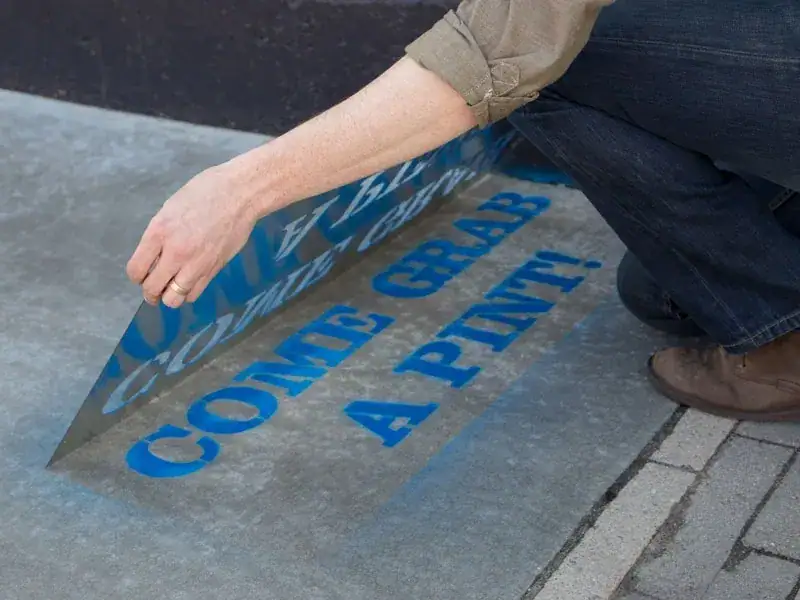
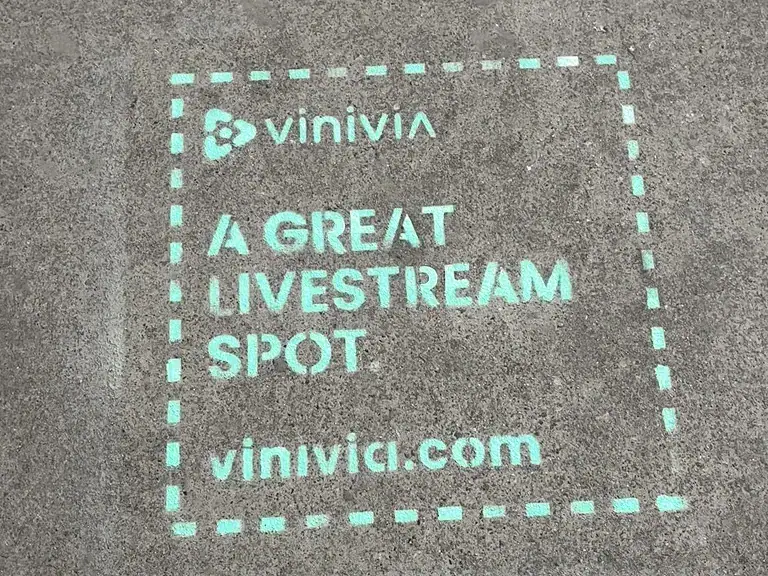
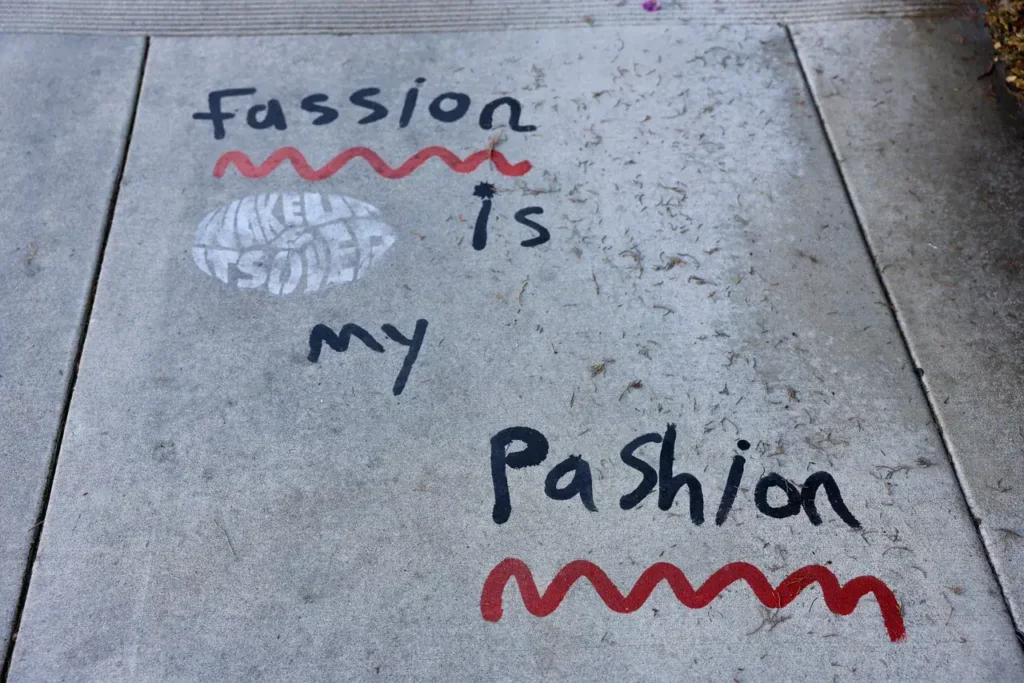
Chalk stencils use water-soluble media applied through precision stencil templates to produce vivid, high-contrast impressions that disappear naturally with rain or washing. They are the ideal format for Augusta’s event-driven campaign windows — Masters week, Arts in the Heart of Augusta, Ironman Augusta, and concert weekends at the James Brown Arena. A chalk stencil deployed along Broad Street or the Riverwalk the morning before a major event day is seen by thousands of people in a high-attention, experiential mindset and disappears naturally when the event window closes, with no cleanup required. Augusta’s climate — warm and humid through most of the year — means chalk stencils should be scheduled around rain forecasts, but dry-week deployments during Masters week or summer event weekends can deliver impression windows of several days.
Reverse Graffiti (Clean Graffiti)
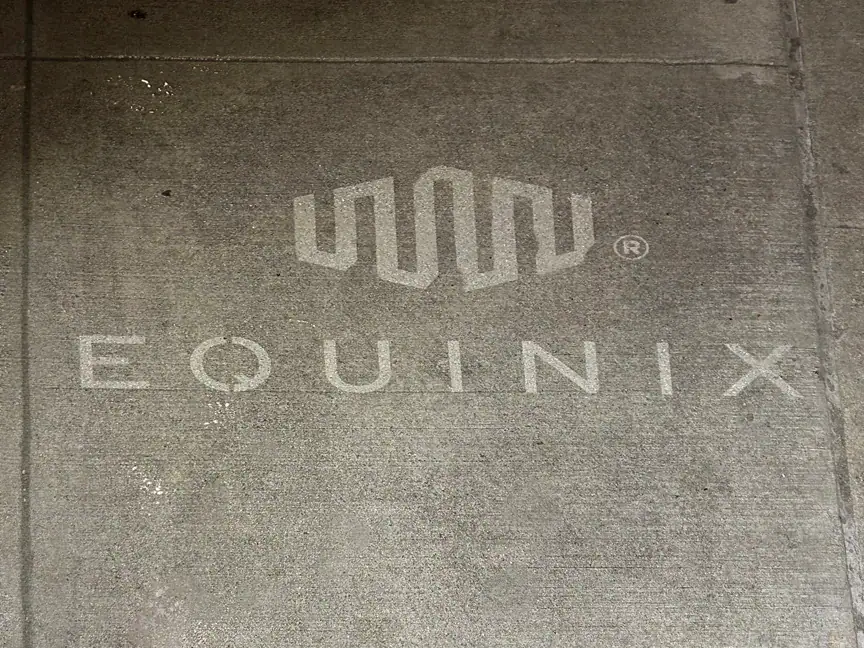
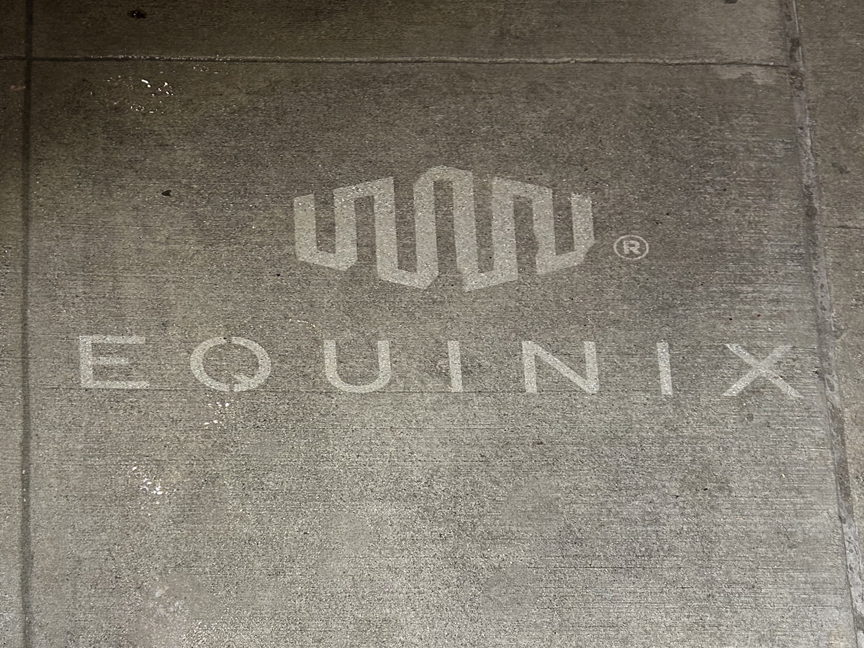
Reverse graffiti uses high-pressure water to selectively clean a brand pattern into an existing layer of surface grime or oxidation on older pavement, creating a photographic-quality impression in the contrast between cleaned and uncleaned concrete. Augusta’s older downtown sidewalks — along Broad Street through the historic commercial district, on Reynolds Street along the Riverwalk levee, and in the Olde Town neighborhood — have developed the surface character that makes reverse graffiti results particularly striking. A reverse graffiti campaign in the Broad Street corridor produces impressions that stop pedestrians and generate organic photo documentation — especially valuable during Masters week when out-of-town visitors are actively photographing Augusta’s downtown environment. No paint, no chemicals, no residue — just the city’s own patina shaped into your brand.
Paint Stencil
Paint stencils use water-based or specialty paints applied through precision templates to produce durable, lasting impressions suitable for longer-duration campaigns or private-property placements. For Augusta brands needing extended pavement presence — a seasonal activation tied to the golf season, a multi-month retail directional campaign near Augusta University, or a sponsor presence around SRP Park for the full GreenJackets season — paint stencils deliver consistent impressions across weeks or months without the maintenance requirements of a chalk campaign. Complex brand marks, full logos, and multi-color designs are all achievable in paint format. Private property authorization is confirmed and managed by AGM before any paint deployment.
Water Stencil (Pressure Wash)
Water stencils use targeted pressure washing on concrete or brick surfaces to create sharp, clean brand impressions in the differential between treated and untreated surface areas. The Riverwalk’s brick promenade and the older concrete sidewalks along Reynolds Street provide excellent candidates for water stencil treatment — the brick surface, in particular, produces a distinctive textured pattern when cleaned against its aged mortar and accumulated grime that gives the brand impression a gallery-quality aesthetic at street scale. Like reverse graffiti, water stencils leave no residue and disappear naturally over time, making them an appropriate choice for heritage surface environments where non-invasive treatment is preferred.
Get A Free Sidewalk Stencil Advertising Quote
Ready to make your brand stand out with sidewalk stencil advertising? Contact American Guerrilla Marketing to plan your campaign. Tell us your target locations, campaign goals, and timeline, and our team will help you create a customized sidewalk stencil advertising strategy that fits your needs and budget.
Award Winning Personalized Service
You will get thoughtful, devoted, and individualized attention from our experienced, qualified, and professional personnel. Being one of the most illustrious agencies in Brooklyn, New York, American Guerrilla Marketing has been awarded the Best of Brooklyn title.
Nationwide
Industry City, Brooklyn, New York 11232
American Guerrilla Marketing
Hours
Mon - Fri: 9 AM - 5 PM
Sat & Sun: Closed
Automate your campaign with AGM’s Request for Proposal Builder.
Automate your campaign with AGM’s Request for Proposal Builder. Simply answer a few quick questions about your campaign goals, markets, and timeline, and the system will generate a tailored presentation with recommended strategies, quantities, and pricing. Click the RFP Builder to instantly receive your customized proposal.
Chalk Stencil Campaigns
Custom-cut, professional-grade chalk stencils in single or multi-color, deployed across Birmingham's key pedestrian corridors. Standard turnaround 5–7 business days from artwork approval.

Vinyl Sidewalk Decals
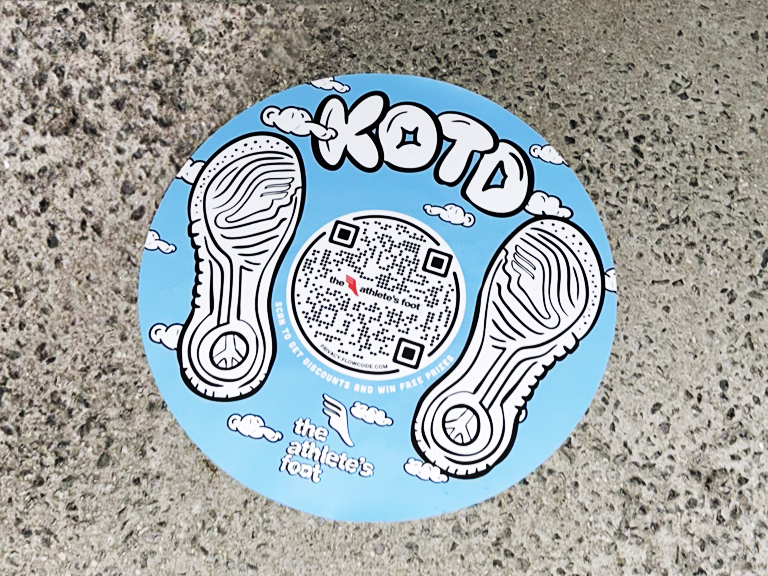
Durable, weather-resistant decals for 30–180-day brand placements. ADA-compliant anti-slip laminates available for high-foot-traffic zones.
Sidewalk Stencil Services in Birmingham

Reverse Stencils / Clean Graffiti
Power-wash brand imagery created on Birmingham's older concrete surfaces in Avondale, Lakeview, and downtown without any paint or chemicals.

Convention Center Approaches
Stencil and decal deployments targeting the Birmingham-Jefferson Convention Complex (BJCC) on 9th Avenue North, Richard Arrington Jr. Boulevard approaches, and Hall of Fame Drive.
Festival Corridor Stenciling
Multi-block deployments along Birmingham Bowl game day routes, Railroad Park event corridors, and Sloss Furnaces event approach paths.

Retail Zone Decals
Riverchase Galleria (Hoover), Summit Birmingham on US-280, and Crestwood Festival Centre on Crestwood Boulevard high-traffic approach sidewalks.
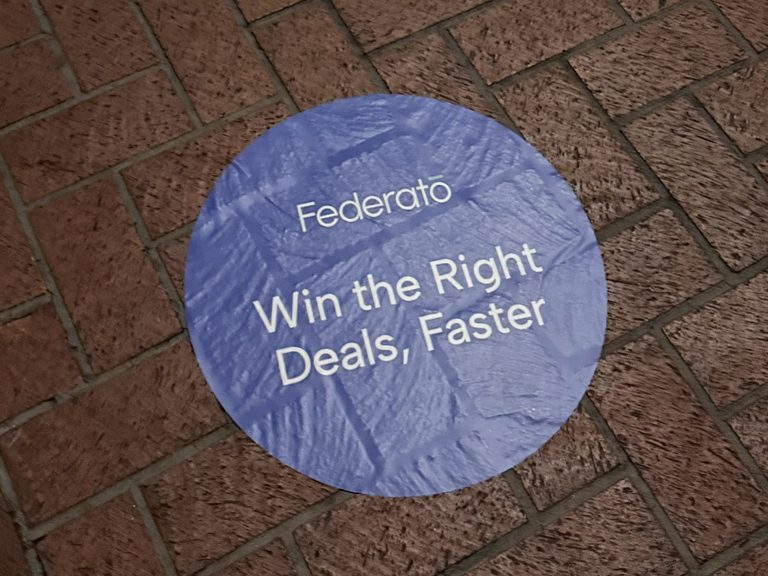
Campus Stenciling
UAB main campus pedestrian corridors, Birmingham-Southern College approaches on Arkadelphia Road, Samford University's Lake Drive corridor.

Rapid Awareness Stencil Launches
24–48-hour deployment capability for time-sensitive Birmingham activations. Same-day deployment available for qualifying campaigns.
Augusta Placement Strategy: Where to Put Your Stencils
Effective Augusta stencil campaigns concentrate placements in the corridors where foot traffic is most predictable and audience composition best matches the brand’s target demographic. Here is how AGM thinks about placement across Augusta’s primary pedestrian zones.
Broad Street (8th–13th Street): The core entertainment and commercial blocks of Broad Street generate the most consistent daily pedestrian volume in Augusta outside of major event days. Stencils placed at crosswalk approaches and building entrances along this stretch reach a broad mix of downtown workers, Augusta University students, and leisure visitors throughout the day. This is the anchor zone for any Augusta campaign that requires year-round brand presence rather than event-only activation.
Reynolds Street (Riverwalk Level): The sidewalks along Reynolds Street at the upper Riverwalk level are the primary pedestrian route between the downtown commercial zone and the waterfront recreational area. This corridor sees its highest traffic on weekend afternoons and during Riverwalk events. Stencils placed at the Riverwalk access stairways and along Reynolds Street intercept pedestrians making the transition between the commercial strip and the waterfront — a moment when attention is ambient and available.
Washington Road (Augusta National Approaches): During Masters week, Washington Road between Interstate 20 and Augusta National Golf Club is one of the most densely-traveled pedestrian and slow-vehicle corridors in American sports. Stencils placed on approach sidewalks near Gate 2 and the pedestrian routes from nearby parking areas to the course entrance reach an audience of affluent golf fans from around the world who are actively engaging with the Augusta environment and photographing their experience.
Walton Way (Summerville Commercial Strip): The commercial corridor along Walton Way through the Summerville neighborhood serves the dual student and professional healthcare population of Augusta University’s Summerville campus and the Medical College of Georgia. Stencils here reach a concentrated, educated, higher-income demographic in a corridor that sees consistent pedestrian traffic throughout the academic and medical year.
Ironman Augusta Race Route: Ironman Augusta draws thousands of athletes and spectators to the downtown waterfront zone for one of the Southeast’s largest triathlon events. The race route along the Savannah River levee and through downtown streets concentrates spectators along predictable corridors during race day. Pre-race stencils along the swim exit and transition zone corridors near the Riverwalk intercept athletes and their supporters in peak-engagement moments.
Sidewalk Stencil Pricing In Augusta
Every Augusta campaign is scoped by stencil count and method. Pricing includes creative development, location scouting, permitting coordination, professional installation, and post-campaign GPS-tagged photo documentation delivered to your team.
Not sure how many stencils your Augusta campaign requires? Our team will map your target corridors, estimate pedestrian coverage at each tier, and recommend the configuration that delivers the best impression density for your budget. Contact us for a no-obligation planning call.
Available Stencil Sizes
AGM’s Sidewalk Stencils™ are produced in four standard sizes. Smaller formats work well in Augusta’s tighter historic sidewalk corridors along Broad Street and in the Olde Town neighborhood. Larger formats command the open plaza spaces near the Riverwalk amphitheater, the SRP Park pedestrian bridge, and the wide approach sidewalks near Augusta National during Masters week. Every location assessment includes a size recommendation based on surface width, pedestrian flow direction, and visual sight lines.
- 11″ × 14″Precision placement at doorways, crosswalk corners, and tighter historic sidewalk corridors on Broad Street
- 48″ × 12″Horizontal banner format for curb edges, storefronts, and directional runs along the Riverwalk
- 36″ × 18″Versatile mid-scale format for main sidewalk panels along Reynolds Street and Walton Way
- 24″ × 24″Square format for logos, icons, and brand marks suited to Riverwalk plaza surfaces and SRP Park approaches
How An Augusta Sidewalk Stencil Campaign Works
Step 1 — Brief & Strategy: We start with your campaign objectives, target demographic, and preferred Augusta zones. If your campaign is tied to a specific event window — Masters week, Ironman Augusta, an Arts in the Heart activation — we build the timeline around that anchor. If you need year-round presence on Broad Street or the Augusta University corridor, we map the placements accordingly.
Step 2 — Location Scouting: Our team scouts your selected Augusta locations, assessing surface condition, foot traffic patterns, city placement requirements, and sight-line performance. Every approved placement point is photographed and GPS-tagged before any stenciling begins.
Step 3 — Permitting & Coordination: AGM handles coordination with City of Augusta contacts, property managers for private-surface placements, and event organizers for festival and race-adjacent activations. We confirm every placement point is cleared before deployment day — no surprises on installation morning.
Step 4 — Stencil Production: Your creative is translated into precision-cut stencil templates sized and configured for each specific placement location. We produce exact templates for every unique placement in the campaign with no generic resizing shortcuts.
Step 5 — Deployment: Our trained installation crews deploy your Augusta campaign on schedule. Chalk and reverse graffiti campaigns can be completed overnight for a morning reveal timed to the opening of foot traffic. Paint campaigns are deployed during lower-traffic hours for sharp, clean results.
Step 6 — Documentation & Reporting: Every stencil is photographed post-installation, GPS-tagged, and compiled into a post-campaign report delivered to your team. You receive exact placement confirmation with visual evidence for every Augusta location in the campaign.
Brands That Have Used AGM Sidewalk Stencils™
American Guerrilla Marketing’s Sidewalk Stencils™ program has been trusted by brands including Nike, Wrangler, and EA Sports — names that chose the sidewalk because it delivers a quality of attention that digital advertising cannot replicate. Nike used AGM pavement campaigns to build awareness around product launches, activating street-level impressions in the hours and days before major retail moments. Wrangler brought its denim identity to urban sidewalks in a format that felt authentic to an outdoor, working-class American identity. EA Sports has leveraged stencil campaigns near retail and entertainment destinations to intercept gaming audiences at peak receptivity.
What these brands share is a recognition that the pavement is one of the last genuinely uncluttered advertising surfaces in the built environment. No algorithm curates who sees it. No scroll removes it. No ad blocker hides it. A pedestrian encounters it without anticipating it — and that moment of unguarded attention is the rarest commodity in modern advertising. Augusta’s walkable corridors deliver that commodity reliably, whether it is a resident walking Broad Street on a Tuesday afternoon or a golf fan from Japan walking the Augusta National perimeter during Masters week.
For Augusta brands, the format works at every scale. A restaurant on Broad Street can own the visual field on the approach blocks from the Riverwalk. An Augusta University health sciences program can build name recognition with the Walton Way student community. A retail brand can build directional awareness with a stencil campaign along Reynolds Street that feels organic to the waterfront environment. The sidewalk is the medium. Augusta delivers the audience.
Frequently Asked Questions
Washington Road near Augusta National is one of the most compelling activation corridors in American sports during Masters week, and AGM scouts and plans placements in this zone specifically for brands activating around the tournament. The pedestrian corridors along Washington Road near Gate 2, the patron pedestrian approaches from the surrounding parking areas, and the sidewalks of the adjacent commercial strip all carry an extraordinary volume of affluent, globally diverse foot traffic during the tournament week. Chalk stencils are the preferred format for Masters week placements — they deploy quickly, produce bold visual impact, and disappear naturally after the tournament without requiring removal. We recommend initiating Masters week campaigns six to eight weeks in advance, as placement coordination in this corridor requires more lead time than standard Augusta activations.
The highest-concentration pedestrian blocks on Broad Street run from roughly 8th Street to 13th Street — the core of Augusta’s downtown entertainment and commercial district. Within that range, the Eighth Street block and the surrounding bars and restaurants on Broad Street and the adjacent cross-streets generate the highest evening pedestrian density. During business hours, the blocks nearest to the Augusta Metro Chamber of Commerce, the nearby office towers, and the government buildings between 8th and 10th Streets see the highest professional foot traffic. A campaign targeting Augusta’s evening entertainment demographic should anchor on Eighth Street. A campaign targeting professional adults should anchor in the late-morning and midday window on the government and commercial blocks.
Yes. The Augusta Riverwalk’s upper level — along Reynolds Street between the Riverwalk access points — is one of AGM’s most recommended Augusta placements for campaigns requiring a combination of recreational and leisure audience reach. The brick promenade and the Reynolds Street sidewalk above it carry consistent pedestrian traffic from joggers, families, cyclists, and leisure walkers throughout the year, with volume peaking on weekend afternoons and during the Riverwalk amphitheater event schedule. Reverse graffiti and water stencil techniques are particularly well-suited to the Riverwalk’s brick and older concrete surfaces, producing rich, photogenic impressions that align with the waterfront’s aesthetic character. Chalk stencils on the Reynolds Street upper sidewalk are effective for event-adjacent activations timed to Riverwalk concerts and outdoor programming.
The James Brown Arena on Telfair Street is one of Augusta’s primary event activation anchors. The arena’s concert, sporting event, and convention calendar draws tens of thousands of visitors annually, and the pedestrian approaches from the surrounding parking areas, the Broad Street corridor, and the Reynolds Street waterfront all create defined, predictable foot traffic channels on event days. AGM places chalk stencils along the Telfair Street approach, on 7th Street between Broad and Reynolds, and along the main pedestrian routes from the Convention Center parking to the arena entrance for event-driven activations. These placements intercept arriving attendees at the peak-anticipation moment before the event experience begins.
Ironman Augusta is one of the most heavily attended single-day sporting events in the Augusta calendar, drawing thousands of athletes and a significant spectator audience to the downtown waterfront zone. The race route along the Savannah River levee and through the downtown streets creates a natural pedestrian activation corridor that concentrates spectators along predictable positions throughout race day. AGM places chalk stencils at key spectator gathering points — near the swim exit at the Riverwalk, along the bike transition zone corridors, and at the run course spectator zones on Broad Street — to intercept the Ironman audience at the moments of highest crowd concentration and emotional engagement. Brands in fitness, nutrition, outdoor apparel, and health services consistently see strong performance from Ironman Augusta activations.
Augusta University’s Summerville campus on Walton Way generates consistent pedestrian traffic from approximately 10,000 enrolled students, faculty, and staff throughout the academic year. The Walton Way corridor and the commercial strip along Highland Avenue and Berckmans Road near the campus serve this population with coffee shops, restaurants, and retail that generate multiple daily pedestrian trips. Stencils placed at the main Walton Way campus entrance, along the commercial strip toward downtown, and at the pedestrian connections between the Summerville and Health Sciences campuses reach the AU student and healthcare professional population in the corridors they walk daily. The Health Sciences campus on Laney Walker Boulevard downtown adds a second activation zone with a distinct, medical-professional demographic.
Arts in the Heart of Augusta, held annually at the Augusta Common on Broad Street, is one of the Southeast’s largest multicultural arts festivals, drawing more than 100,000 attendees across its three-day run. The festival’s Broad Street and Augusta Common footprint creates a temporary pedestrian density on par with Augusta’s busiest event days of the year. The approach corridors along Broad Street from the east and west, along 8th and 10th Streets from Reynolds, and from the Convention Center parking areas all carry heavy festival foot traffic throughout the weekend. AGM deploys chalk stencils along these approach corridors and along the immediate perimeter of the festival footprint to intercept arriving attendees before they enter the event proper — maximizing brand exposure during the highest-traffic moments of each festival day.
Yes. AGM manages all permitting coordination for every Augusta campaign. Requirements vary based on stencil method and placement surface — chalk on public sidewalks, paint on private property, and reverse graffiti or water stencil on appropriate heritage surfaces each operate under different guidelines. Our team navigates those requirements as part of the campaign planning process. For private-surface placements near the Riverwalk or on properties adjacent to the James Brown Arena, AGM handles property owner outreach directly. By deployment day, every placement in your Augusta campaign has been confirmed and cleared through the appropriate channels.
Broad Street and the Riverwalk serve complementary campaign functions rather than competing ones. Broad Street delivers higher raw foot traffic volume, particularly during business hours and evening entertainment windows, and reaches a broader cross-section of Augusta’s resident and visitor population. The Riverwalk delivers a leisure and recreational audience that is in a lower-distraction, higher-dwell state — walking, pausing, and engaging with the waterfront environment at a pace where brand impressions have more time to register. For most Augusta campaigns, AGM recommends splitting the stencil count between both corridors to achieve both the volume of Broad Street and the dwell time of the Riverwalk. The two zones together cover Augusta’s primary outdoor pedestrian experience comprehensively.
Standard Augusta campaign lead time is two to three weeks from brief confirmation to deployment, covering location scouting, permitting coordination, stencil production, and crew scheduling. For Masters week activations — which require coordination with Augusta National perimeter placement protocols and city contacts managing the significant event-week pedestrian management plan — we recommend a minimum six to eight weeks of lead time. For other event-tied Augusta campaigns such as Ironman Augusta or Arts in the Heart, four weeks of lead time is sufficient to ensure all placements are confirmed and production is complete before deployment day.
Our Campaign Locations
Browse All States
Explore Sidewalk Stencil Advertising opportunities across the United States.
49 States • 201 Cities