American Guerrilla Marketing
Nationwide Service
Media planning, media buying, billboard advertising, & guerrilla marketing
Sidewalk Stencil Advertising in Tucson, Arizona

Tucson’s streets carry a distinctive energy — the steady flow of University of Arizona students along University Boulevard, weekend crowds filling 4th Avenue from end to end, and international visitors flooding the downtown corridor during the Gem and Mineral Show. Sidewalk Stencils™ by American Guerrilla Marketing puts your brand directly in the path of that movement, turning concrete and pavement into a canvas that commands attention at every step. From chalk stencil advertising along the Sun Link Streetcar corridor to reverse graffiti impressions on Congress Street, this is street-level advertising at its most direct.
What Are Sidewalk Stencils?
Sidewalk stencil advertising is one of the most direct forms of brand communication available to marketers today. Instead of competing for eyeballs above eye level — on billboards, bus shelters, or building wraps — sidewalk stencils place your message exactly where people are already looking: the ground beneath their feet. In a walking city like Tucson, where the Sun Link Streetcar corridor funnels pedestrians along Congress Street and 4th Avenue, and where the University of Arizona campus concentrates thousands of students into tight pathways every weekday, that positioning is extraordinarily powerful.
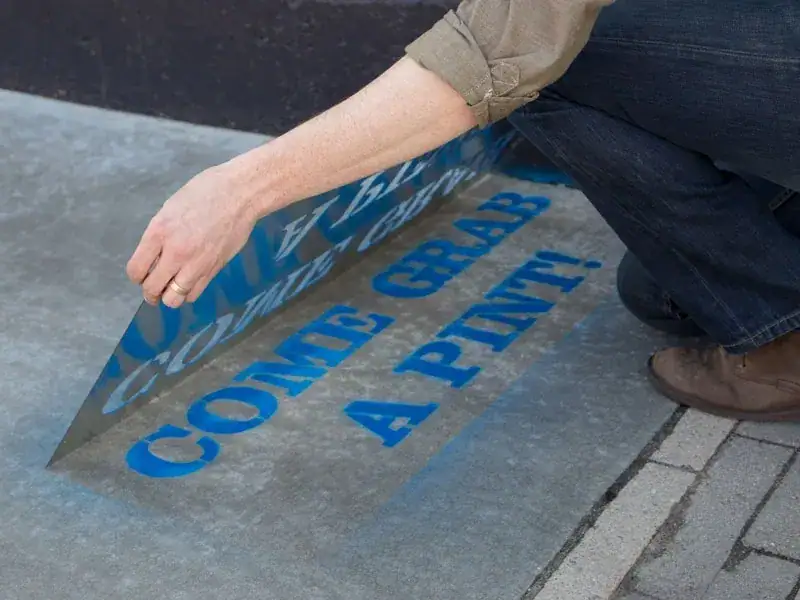
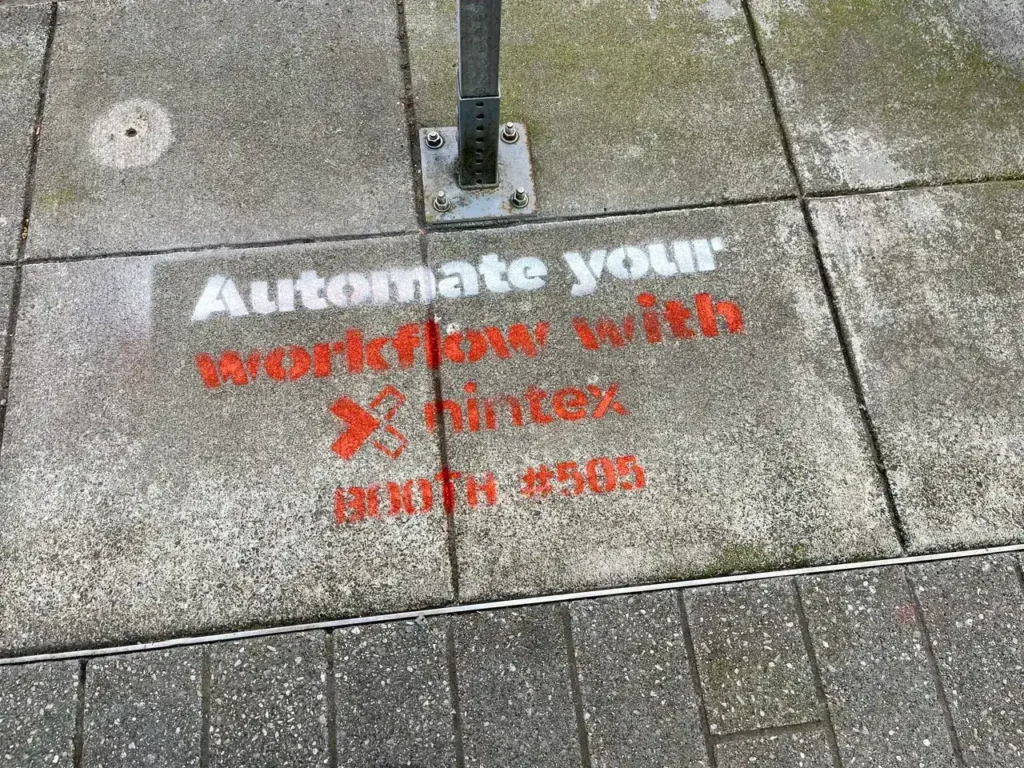
The medium itself is simple by design. A precision-cut stencil — produced to exact brand specifications in sizes ranging from 11″ × 14″ to 48″ × 12″ to 36″ × 18″ to 24″ × 24″ — is applied to pavement using chalk powder, water-based paint, or high-pressure water cleaning, depending on the campaign type selected. The result is a crisp, brand-accurate impression that reads clearly from a standing height and stops pedestrians mid-stride.
What makes sidewalk stencil advertising particularly compelling in Tucson is the texture of the city itself. Tucson blends historic sidewalks downtown along Congress Street with the busy commercial pavement of Main Gate Square, the polished plazas near Hotel Congress, and the well-worn paths of the 4th Avenue entertainment corridor. Each surface has its own character, and the team at American Guerrilla Marketing knows how to match stencil type and size to surface for maximum legibility and visual impact.
Unlike traditional advertising formats that interrupt content, sidewalk stencils are environmental. They become part of the streetscape. A well-placed chalk stencil on the approach to Rialto Theatre on a concert night becomes part of the evening’s experience. A reverse graffiti impression on the grimy concrete of a Speedway Boulevard approach strip catches the eye of commuters who would otherwise walk right past. Pavement stencils work because they meet people where they are — in the physical world, without requiring a screen, a scroll, or a click.
American Guerrilla Marketing has delivered Sidewalk Stencils™ campaigns nationally for clients including Nike, Wrangler, and EA Sports. The Tucson market offers a rare combination of concentrated pedestrian corridors, major annual events, and a culturally engaged audience that responds to creative, unexpected brand experiences. Whether you’re a national brand activating during the Gem and Mineral Show or a local business driving foot traffic to a new location on 4th Avenue, ground stencil advertising delivers impressions where they matter most — at eye level with the pavement, right before your customer walks through your door.
Ready to Put Your Brand on Tucson's Streets?
From the 4th Avenue Street Fair to the University of Arizona campus, from Congress Street to the Mercado District — American Guerrilla Marketing's Sidewalk Stencils™ put your brand exactly where Tucson is walking. Contact us for a free campaign consultation and custom placement map built around your target neighborhoods and activation timeline.
Browse Cities in Arizona
Select a city to explore Sidewalk Stencil Advertising opportunities.
Why Tucson Works For Sidewalk Stencil Campaigns
Not every city offers the same conditions for effective street-level advertising. Tucson does something unusual: it combines high-density pedestrian corridors with a culturally adventurous population, several massive annual events, and a university community that actively participates in brand culture. Understanding why sidewalk stencil campaigns perform so well here starts with the city’s geography and its rhythm across the calendar year.
The Sun Link Streetcar Corridor
The Sun Link Streetcar runs 3.9 miles through the heart of Tucson’s most walkable districts — from the Fourth Avenue Underpass through Downtown Tucson, along Congress Street, through the university district on University Boulevard, and out toward the medical campus. Every stop on that route is a point of pedestrian concentration. Riders exit, walk, pause, and explore at human pace, which means they’re exactly the kind of audience that sidewalk stencil advertising reaches best. A chalk stencil advertising campaign positioned along the Sun Link corridor can generate cumulative impressions that rival out-of-home placements costing many times more, simply by meeting riders as they transition from the streetcar to the sidewalk.
4th Avenue’s Independent Culture
4th Avenue is Tucson’s creative heart. The strip runs from University Boulevard south toward Downtown, lined with independent retailers, tattoo studios, bars, restaurants, and music venues that have defined the avenue’s identity for decades. The people who walk 4th Avenue tend to be curious and culturally aware — they notice things. A chalk stencil advertising campaign timed around the 4th Avenue Street Fair, which draws over 300,000 visitors combined across its spring and fall editions, reaches a crowd that is primed to discover new brands and share what they find. The foot traffic density on fair weekends rivals what you’d encounter in major metropolitan entertainment districts, concentrated on a single stretch of pavement that is uniquely well-suited for stencil advertising saturation.
University of Arizona Foot Traffic
The University of Arizona enrolls over 45,000 students and employs thousands more faculty and staff. Campus foot traffic concentrates along University Boulevard, Highland Avenue, and the UA Mall — high-volume pedestrian paths that lead into Main Gate Square, where retail, dining, and entertainment converge just outside the campus gates. Student populations are among the most responsive audiences for sidewalk stencil campaigns: they spend significant time outdoors moving between classes and social spaces, they share discoveries on social platforms, and they respond to brands that show up in their physical environment in ways that feel authentic rather than forced. A well-executed pavement stencil campaign in the UA zone reaches the same individuals multiple times per day as they cycle through their campus routes.
The Tucson Gem and Mineral Show
The Tucson Gem and Mineral Show is the largest gem, mineral, and fossil trade show in the world. It draws over 50,000 buyers, collectors, and enthusiasts from more than 50 countries during its two-week run each February, concentrating enormous foot traffic in and around the Tucson Convention Center, surrounding hotels, and the network of venues that host satellite shows throughout the city. For brands targeting jewelry, luxury goods, outdoor lifestyle, sustainability, or international audiences, the Gem Show represents a rare and time-compressed concentration of qualified buyers. Ground stencil advertising positioned around the show’s venue cluster — intercepting visitors as they move between hotels and exhibition halls — delivers premium-audience reach through a format that no digital channel can replicate.
Tucson Meet Yourself and the Arts Festival Calendar
Tucson’s festival calendar creates recurring opportunities for high-impact sidewalk marketing activations. Tucson Meet Yourself, the three-day multicultural arts and folk life celebration held in Armory Park each October, draws over 100,000 attendees who are deeply invested in discovering authentic experiences. The festival atmosphere is precisely the context where reverse graffiti advertising and chalk stencil campaigns generate the strongest organic social sharing and earned media — the format feels like part of the event rather than an interruption of it. Brands that activate with sidewalk stenciling during Tucson’s major festivals reach audiences who are already in a discovery mindset, moving on foot, and open to brand encounters that match the creative energy of the event around them
Stencil Types For Tucson Campaigns
American Guerrilla Marketing offers four stencil formats, each suited to different campaign objectives, surfaces, timeframes, and Tucson neighborhood contexts. The format you choose shapes not just the look of the campaign but its duration, its environmental footprint, and how it reads within the character of the district where it’s placed.
Chalk Stencil
Chalk stencils use water-soluble chalk powder applied through a precision-cut stencil, producing a vivid brand impression that lasts hours to days depending on weather and foot traffic volume. In Tucson, chalk stencil advertising is the natural choice for event activations — particularly the 4th Avenue Street Fair, where the concentration of foot traffic over a fair weekend means hundreds of thousands of impressions from a well-positioned placement on the avenue itself. Chalk stencils are also ideal for university activations tied to UA homecoming, campus orientation periods, and sports weekends when Highland Avenue and University Boulevard see peak pedestrian density. The temporary nature is a feature, not a limitation: chalk stencil campaigns signal urgency and create a find-it-before-it’s-gone quality that resonates with younger, culturally tuned-in audiences. When Tucson’s summer monsoon rains arrive, chalk stencils wash cleanly away, making them a genuinely zero-residue option for environmentally conscious campaigns.
Reverse Graffiti (Clean Graffiti)
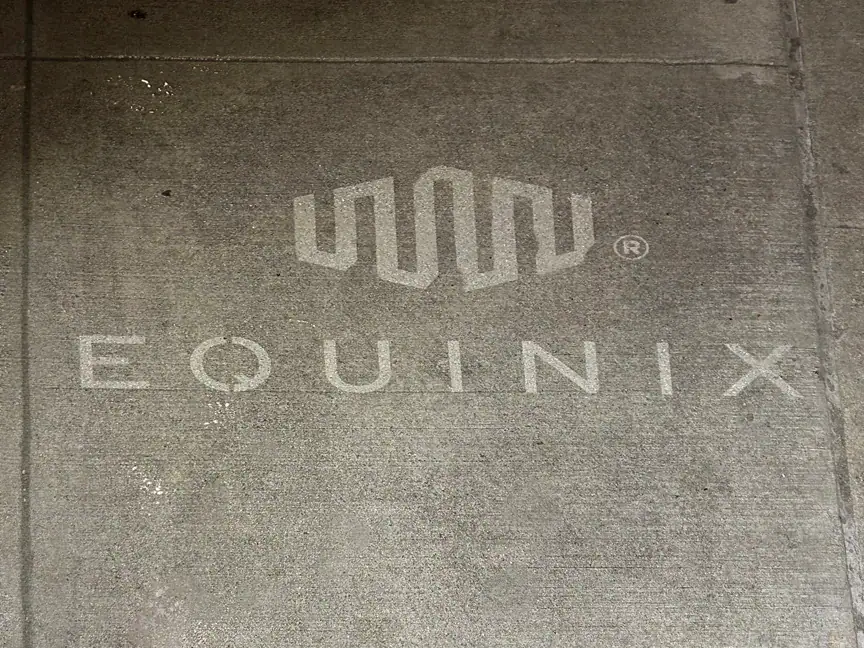
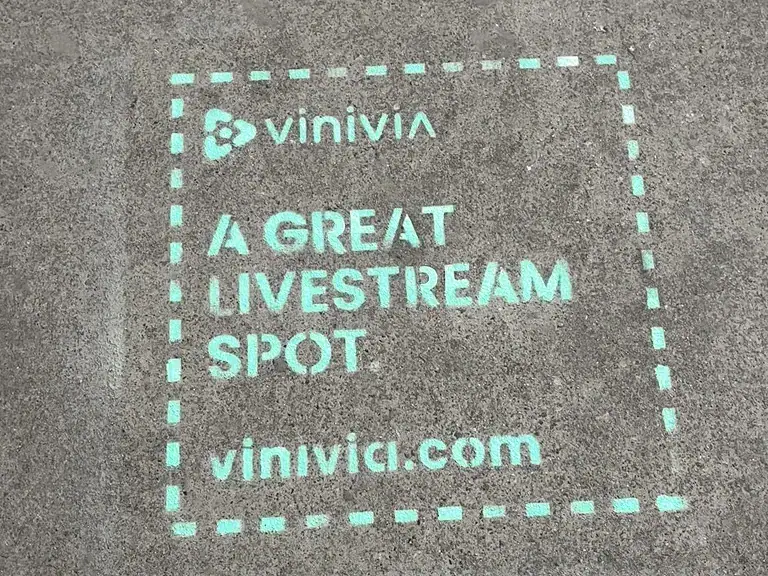
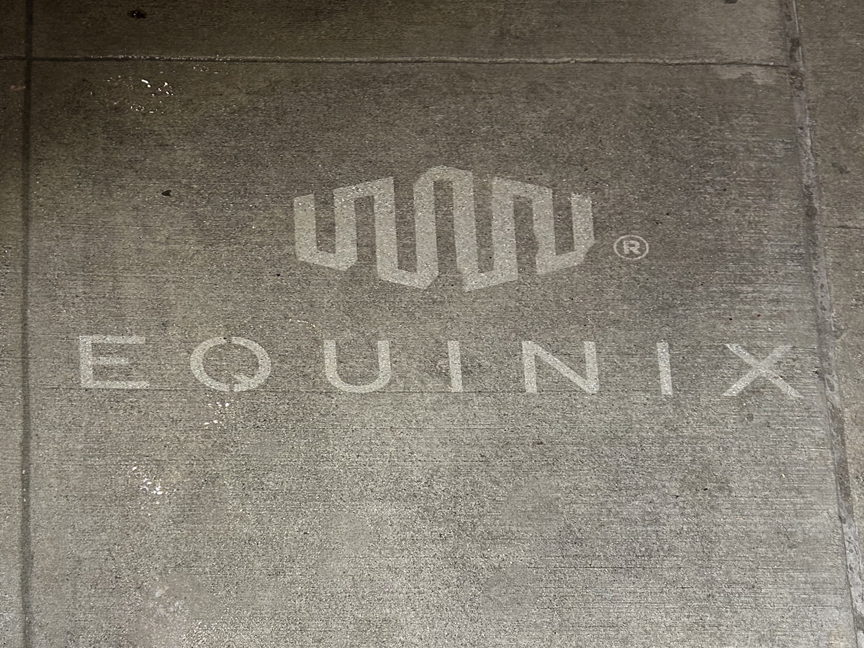
Reverse graffiti — also called clean graffiti advertising — is the most creative technique in the stencil toolkit. Instead of applying anything to a surface, high-pressure water is used to clean a brand shape into accumulated grime on pavement, leaving a crisp, bright impression where the rest of the surface remains dark. On Congress Street, where the historic downtown sidewalks accumulate the natural patina of a busy entertainment corridor, reverse graffiti produces striking contrast and commanding results. Sustainability brands find this format particularly well aligned with their messaging: nothing is added to the environment, and the impression is made purely by cleaning. The method generates strong earned media and social sharing because it surprises people — passers-by photograph it, ask how it was done, and post it because it looks like something they’ve never seen before. For brands activating near the Rialto Theatre or along the Sun Link Streetcar corridor, clean graffiti advertising delivers organic amplification that extends the campaign well beyond its physical footprint.
Paint Stencil
Paint stencils use water-based or specialty paints applied through a precision stencil onto pavement or other surfaces, producing the most durable and weatherproof result in the sidewalk stencil advertising category. In Tucson’s intense desert sun, which can fade chalk and accelerate weathering of less durable applications, paint stencils hold their color and definition for weeks. Paint stencil campaigns are particularly effective in the Main Gate Square district near the University of Arizona, where high-traffic commercial pavement sees heavy daily use and brands need impressions that survive the relentless foot traffic of a busy campus retail corridor. Paint stencils require either private property permission or coordination with appropriate property managers, and the American Guerrilla Marketing team handles all permitting and property coordination as a standard part of campaign production — clients do not need to manage this independently.
Water Stencil (Pressure Wash)
Water stenciling uses controlled high-pressure washing to produce brand impressions on specific surfaces — particularly effective on concrete, brick, and textured paving stone. The technique is closely related to reverse graffiti but is optimized for surfaces where the pressure and precision of the water application produces a branded shape through surface differentiation, creating a clean impression against the surrounding surface regardless of overall grime level. In Tucson, water stenciling is well-suited for activations at the Tucson Gem and Mineral Show, where venue operators often prefer formats that leave absolutely no permanent residue and can be applied efficiently across large exhibition approach areas. The technique also performs exceptionally well in the Mercado District, where textured brick and warm stone surfaces create natural contrast for pressure-washed brand impressions that stand out against the earthy character of the district’s architecture.
Get A Free Sidewalk Stencil Advertising Quote
Ready to make your brand stand out with sidewalk stencil advertising? Contact American Guerrilla Marketing to plan your campaign. Tell us your target locations, campaign goals, and timeline, and our team will help you create a customized sidewalk stencil advertising strategy that fits your needs and budget.
Award Winning Personalized Service
You will get thoughtful, devoted, and individualized attention from our experienced, qualified, and professional personnel. Being one of the most illustrious agencies in Brooklyn, New York, American Guerrilla Marketing has been awarded the Best of Brooklyn title.
Nationwide
Industry City, Brooklyn, New York 11232
American Guerrilla Marketing
Hours
Mon - Fri: 9 AM - 5 PM
Sat & Sun: Closed
Automate your campaign with AGM’s Request for Proposal Builder.
Automate your campaign with AGM’s Request for Proposal Builder. Simply answer a few quick questions about your campaign goals, markets, and timeline, and the system will generate a tailored presentation with recommended strategies, quantities, and pricing. Click the RFP Builder to instantly receive your customized proposal.
Chalk Stencil Campaigns
Custom-cut, professional-grade chalk stencils in single or multi-color, deployed across Birmingham's key pedestrian corridors. Standard turnaround 5–7 business days from artwork approval.

Vinyl Sidewalk Decals
Durable, weather-resistant decals for 30–180-day brand placements. ADA-compliant anti-slip laminates available for high-foot-traffic zones.
Sidewalk Stencil Services in Birmingham

Reverse Stencils / Clean Graffiti
Power-wash brand imagery created on Birmingham's older concrete surfaces in Avondale, Lakeview, and downtown without any paint or chemicals.

Convention Center Approaches
Stencil and decal deployments targeting the Birmingham-Jefferson Convention Complex (BJCC) on 9th Avenue North, Richard Arrington Jr. Boulevard approaches, and Hall of Fame Drive.
Festival Corridor Stenciling
Multi-block deployments along Birmingham Bowl game day routes, Railroad Park event corridors, and Sloss Furnaces event approach paths.

Retail Zone Decals
Riverchase Galleria (Hoover), Summit Birmingham on US-280, and Crestwood Festival Centre on Crestwood Boulevard high-traffic approach sidewalks.
Campus Stenciling
UAB main campus pedestrian corridors, Birmingham-Southern College approaches on Arkadelphia Road, Samford University's Lake Drive corridor.

Rapid Awareness Stencil Launches
24–48-hour deployment capability for time-sensitive Birmingham activations. Same-day deployment available for qualifying campaigns.
Placement Strategy: Tucson's Best Stencil Corridors
Effective sidewalk stencil campaigns in Tucson are built around the city’s natural pedestrian patterns. American Guerrilla Marketing’s production team maps foot traffic volumes, event calendars, and surface conditions before recommending placements — then executes overnight or in early-morning hours to have impressions in place before peak pedestrian activity begins. The districts below represent the highest-performing zones for sidewalk marketing in Tucson, each with its own surface character, audience profile, and strategic application.
4th Avenue & Congress Street
The 4th Avenue corridor between University Boulevard and Congress Street is the backbone of Tucson’s entertainment district and the single highest-return placement zone for most brand campaigns. During the 4th Avenue Street Fair weekends, foot traffic density on this strip reaches extraordinary levels — the avenue fills with pedestrians shoulder to shoulder for blocks. The intersection of 4th Avenue and Congress Street, where the Sun Link Streetcar turns and foot traffic from multiple directions converges, is the most valuable individual pavement placement in the city. Even outside fair weekends, the evening and weekend foot traffic on 4th Avenue ensures consistent impression volume across any campaign duration.
University Boulevard & Highland Avenue
University Boulevard, the main east-west artery through the UA campus zone, sees concentrated student foot traffic every day the university is in session. Highland Avenue, running north-south through the campus interior, connects academic buildings and feeds into the UA Mall — a central pedestrian spine that anchors campus social life. Placements along these corridors during move-in week, orientation, homecoming, and finals periods reach a captive student audience at peak engagement moments. University Boulevard stencil impressions benefit from the repeated-exposure effect: the same students walk the same routes daily, meaning each stencil generates multiple impressions per person across the campaign’s active duration.
Main Gate Square
Main Gate Square at the north edge of the UA campus is where campus foot traffic converts to retail and dining activity. The plaza and surrounding streets host restaurants, shops, entertainment venues, and the kind of informal gathering that turns a pedestrian cluster into a lingering social scene. Sidewalk stencil placements here bridge the gap between campus-facing and commercial messaging, reaching students at the moment they’re transitioning from academic to consumer mindset. The surface conditions in Main Gate Square accommodate both chalk stencils for event-driven campaigns and paint stencils for longer-duration brand presence that weathers the high foot traffic of this busy commercial zone.
Downtown Tucson: Hotel Congress, Rialto Theatre & Armory Park
The zone anchored by Hotel Congress and the Rialto Theatre on Congress Street, extending south to the Armory Park neighborhood, forms Tucson’s cultural and civic core. Concerts, community markets, the Tucson Meet Yourself festival footprint, and the Hotel Congress plaza’s constant foot traffic make this area ideal for chalk stencils and reverse graffiti that lean into the arts-forward, independent identity of the district. Armory Park hosts several of the city’s largest community events, creating recurring opportunities to place stencil impressions that intercept tens of thousands of festival-goers as they move through the neighborhood on foot from transit connections and nearby parking corridors.
Mercado District
The Mercado District on Tucson’s southwest side hosts the Mercado San Agustín and a growing cluster of independent restaurants, design studios, and specialty shops that have established the area as a destination for Tucson’s design-conscious and entrepreneurially minded residents. The district’s architecture — warm brick, textured stone, and open plazas — creates exceptional surface conditions for water stenciling and reverse graffiti, with natural contrast that makes brand impressions highly visible against the warm, earthy tones of the surroundings. Brands looking to reach Tucson’s creative professional community outside the university zone consistently find the Mercado District to be a high-return placement area.
Sam Hughes Neighborhood
Sam Hughes, the historic residential neighborhood east of the university, features neighborhood commercial corridors along Broadway Boulevard and 6th Street that attract a highly educated, professionally established, and community-oriented resident base. Sam Hughes residents are among the most engaged local audiences in Tucson — they support independent businesses, participate actively in neighborhood events, and tend to share discoveries within tight community networks that amplify organic word-of-mouth. Sidewalk stencil campaigns in the Sam Hughes commercial zones reach an audience whose household demographics and community engagement make them particularly valuable for brands targeting professional adults in the 30–55 age range.
Speedway Boulevard
Speedway Boulevard is one of Tucson’s primary east-west corridors, running through the university district and connecting major commercial nodes across the city. The stretch near the University of Arizona sees heavy pedestrian and cyclist traffic, particularly along the dedicated bike lanes and wide sidewalks that characterize this section of the boulevard. The surface conditions on Speedway — wide commercial concrete with accumulated grime in the sections most distant from regular municipal maintenance — are particularly well-suited for reverse graffiti advertising, which produces its strongest contrast on surfaces that have developed a distinctive weathered character over years of vehicle and foot traffic.
Sidewalk Stencil Pricing In Tucson
Sidewalk stencil campaigns are priced by stencil count. Every tier includes full-service production: stencil design and cutting, permitting coordination, placement by trained crew, and photography documentation of every impression. The table below reflects current pricing for Tucson campaign execution.
A 30-stencil campaign is well-suited for a focused district activation — for example, the 4th Avenue corridor during the Street Fair, or the Main Gate Square zone during UA move-in week. A 100-stencil campaign can cover multiple Tucson districts simultaneously, combining 4th Avenue placements with Congress Street, University Boulevard, and Downtown impressions in a single coordinated rollout. At 200 or 250 stencils, campaigns can blanket the entire Sun Link corridor and extend into Speedway Boulevard, the Mercado District, and Sam Hughes commercial zones for genuine city-wide brand presence. The sidewalk stencils cost at each tier reflects the full scope of production and placement — no hidden crew fees, no separate documentation charges.
Available Stencil Sizes
Sidewalk Stencils™ are produced in four standard sizes, each suited to different placement surfaces and campaign objectives. In Tucson, the choice of size is often shaped by the specific sidewalk or plaza surface being activated — 4th Avenue’s narrow historic sidewalks favor smaller formats, while the broad plazas around the Tucson Convention Center and the open festival grounds in Armory Park accommodate impressions at full scale.
- 11″ × 14″ — Compact format for dense placement patterns, narrow sidewalks on 4th Avenue, and high-detail brand marks that require precise line reproduction
- 48″ × 12″ — Wide horizontal format ideal for directional messaging, crosswalk adjacencies, and approaches to Sun Link streetcar stops
- 36″ × 18″ — Balanced format for standard commercial sidewalks along Congress Street, University Boulevard, and Main Gate Square
- 24″ × 24″ — Square format for plaza placements, open pedestrian zones in Armory Park and the Mercado District, and logo-forward brand impressions
The American Guerrilla Marketing creative team recommends sizes based on your specific placement map and brand guidelines. For campaigns that span multiple Tucson districts — from the compressed sidewalks of 4th Avenue to the open plazas of the Armory Park festival grounds — deploying a mix of sizes within a single campaign often delivers the strongest combination of legibility, brand accuracy, and placement flexibility.
How A Sidewalk Stencil Campaign Works
From initial consultation to final photo report, every Sidewalk Stencils™ campaign follows a structured production process that handles every detail — including the parts of campaign execution most brands have never had to think about before.
Step 1: Campaign Consultation
The process begins with a conversation about your objectives, timeline, target audience, and Tucson-specific activation goals. Whether you’re planning around the Gem and Mineral Show in February, the spring 4th Avenue Street Fair, a UA semester launch, or an ongoing brand presence campaign throughout the academic year, the consultation shapes every subsequent decision about format, district selection, and stencil count.
Step 2: Placement Mapping
Based on the consultation, the American Guerrilla Marketing team develops a detailed placement map identifying specific locations across Tucson’s neighborhoods and corridors. Placement maps account for surface conditions, foot traffic data, event proximity, and any location-specific requirements or surface restrictions that affect the choice of stencil format.
Step 3: Stencil Production
Stencils are precision-cut to your brand specifications in the selected size format. The creative team reviews artwork for readability at pavement level, adjusting contrast and line weight as needed for the specific stencil type and Tucson surface conditions — desert heat and UV exposure affect how different materials read over time, and this is accounted for in the production process.
Step 4: Permitting & Property Coordination
For public sidewalk campaigns in Tucson, American Guerrilla Marketing handles all necessary coordination with city departments and event organizers. For paint stencils on private property, the team secures property owner agreements as part of pre-production planning. Clients receive confirmation when all coordination is complete and placement is cleared to proceed.
Step 5: Overnight Placement
Stencil crews work overnight or in early-morning hours to place all impressions before peak pedestrian activity begins on Tucson’s streets. This ensures clean, undisturbed application and means your stencils are live and visually fresh when the morning foot traffic hits Congress Street, University Boulevard, and 4th Avenue.
Step 6: Photo Documentation
Every placement is photographed at the time of application. The complete photo set is delivered as part of campaign reporting, giving you a full record of each impression with location context — documentation that serves both internal reporting and organic content use for social channels.
Step 7: Campaign Review
After the campaign run, the team delivers a placement report with full photo documentation and any available campaign performance notes. For clients running recurring campaigns across multiple Tucson events or seasons, the review informs placement optimization for subsequent activations.
Brands That Trust Sidewalk Stencils™
American Guerrilla Marketing has executed Sidewalk Stencils™ campaigns for some of the most recognized brands in the world. Three campaigns in particular illustrate why street-level pavement advertising works at scale — and why the lessons from those activations translate directly to the Tucson market’s unique audience mix.
Nike
Nike’s sidewalk stencil campaigns have appeared in the pedestrian corridors outside arenas, along college campus routes, and in retail destination districts — precisely the kind of environments that Tucson’s University Boulevard, Main Gate Square, and 4th Avenue represent. Nike understood that young athletes and students don’t just respond to advertising they see on a screen; they respond to advertising they encounter in their physical world, unexpectedly, in places that feel like their own territory. A chalk stencil or reverse graffiti impression near a university campus isn’t an intrusion — it’s a discovery. Tucson’s UA population, with its strong athletic culture, outdoor recreation orientation, and dense social networks, is precisely the demographic where Nike-style sidewalk campaigns generate the most organic engagement and the most authentic connection between brand and audience. The sidewalk stencil format meets this audience on their own ground — literally.
Wrangler
Wrangler’s outdoor lifestyle positioning found a natural partner in ground stencil advertising. The brand’s connection to open spaces, physical activity, and authentic material culture aligns with a medium that is itself environmental — applied to the ground, encountered in the real world, requiring no device or subscription to experience. In Tucson, where outdoor recreation is central to local identity, the desert landscape shapes everyday aesthetics, and the Gem and Mineral Show draws an international audience with deep ties to natural materials and heritage craftsmanship, Wrangler’s brand values translate with unusual precision. A sidewalk stencil campaign along the Speedway Boulevard corridor or in the Mercado District reaches an audience whose daily lifestyle choices and environmental values map directly onto what Wrangler stands for.
EA Sports
EA Sports activated sidewalk stencil campaigns around major game release events and sports seasons, targeting the concentrated foot traffic zones where young gaming audiences live, socialize, and move. University campus environments — where students cycle through the same corridors multiple times daily and share discoveries through tight social networks — are among the highest-performing locations for gaming brand activations that use physical media. The University of Arizona’s campus corridors along University Boulevard and Highland Avenue, and the commercial energy of Main Gate Square, represent a textbook target zone for entertainment brands reaching the 18-to-24-year-old audience. EA Sports demonstrated that the sidewalk stencil format’s repeatability — the same individuals encountering the same impression multiple times as they walk their daily routes — creates brand recall that digital impression counting typically cannot match.
Frequently Asked Questions
Yes. The Sun Link corridor — running along Congress Street, 4th Avenue, and University Boulevard — is one of the highest-priority placement zones for Tucson sidewalk stencil campaigns. The corridor concentrates pedestrian traffic in a linear pattern that makes repeated impressions highly efficient: riders exiting the streetcar at Congress stops are on foot and moving at walking pace, which is exactly the speed at which pavement stencils generate the strongest individual impressions. American Guerrilla Marketing’s placement team maps streetcar stop approaches specifically and positions stencils to intercept foot traffic as it flows from stops into adjacent retail, dining, and entertainment districts. A campaign aligned with the Sun Link corridor can produce sequential impressions that guide audiences from streetcar stop to brand destination, turning a transit corridor into a branded pedestrian experience.
The Tucson Gem and Mineral Show’s venue footprint spans multiple hotels, the Tucson Convention Center, and surrounding blocks — a large geographic area requiring stencil formats that cover significant ground efficiently without leaving permanent residue. Water stenciling and chalk stencils are both strong choices for Gem Show activations because both can be applied across wide areas quickly and wash away cleanly, which matters when working around convention facilities and hotel properties that have existing maintenance schedules and surface-use guidelines. For brands that want longer impression life across the show’s two-week run, paint stencils on privately owned approaches — hotel parking lot entrances, privately maintained sidewalks adjacent to exhibition venues — can extend the campaign’s presence well beyond what event-area-only placements allow. The AGM team coordinates surface access as part of campaign pre-production for every format.
Chalk stencils on 4th Avenue during Street Fair weekends typically remain clearly visible for the duration of the fair event — 24 to 48 hours under normal conditions. The key variables are foot traffic volume, weather, and surface texture. The Street Fair’s concentrated foot traffic means impressions are seen by enormous numbers of people even as they naturally wear at the edges over time. In practice, the gradual degradation of chalk stencils in heavy foot-traffic events can actually enhance their organic quality — a slightly worn impression reads as authentic street art rather than a placed advertisement, which tends to increase the photography and social sharing that amplifies the campaign beyond its original physical placement count. Brands activating at the Street Fair should plan stencil placement for the night before the event opens to maximize visibility across both days of the fair.
Main Gate Square and the surrounding University Boulevard approach zone are among the most effective placement areas for campaigns targeting UA students. The commercial district at the north edge of campus sees students transitioning from academic to social contexts throughout the day — a shift in mindset that makes them receptive to brand discovery in ways that differ from in-class or digital environments. American Guerrilla Marketing has extensive experience with university-facing campaigns and understands the specific sensibilities of college audiences, particularly the importance of creative execution that feels like a genuine find rather than a corporate placement. For campaigns targeting the UA community, chalk stencil and reverse graffiti formats tend to generate the strongest organic engagement precisely because the medium itself signals that the brand put in creative effort to reach this audience on their own turf.
Permitting requirements for sidewalk advertising in Tucson vary by location, surface type, stencil format, and whether the activation is tied to a permitted event. Downtown Tucson placements on public sidewalks — including areas around Armory Park and the Hotel Congress plaza — typically require coordination with the City of Tucson and, for event-specific activations, communication with event organizers who hold venue permits. American Guerrilla Marketing manages all permitting and property coordination as a standard component of campaign production. Clients are not responsible for permit applications, property negotiations, or city department communication — the AGM team handles this in full, and campaign timelines account for the necessary lead time to complete all coordination before the scheduled placement dates. This permitting-included approach is standard across every campaign tier, from a 30-stencil focused activation to a 250-stencil city-wide campaign.
Speedway Boulevard — particularly the stretch running through the university district near Highland Avenue — offers strong surface conditions for reverse graffiti advertising. The wide commercial sidewalks along Speedway accumulate the kind of surface grime over time that makes reverse graffiti contrast particularly vivid, producing crisp, readable brand impressions from the high-pressure washing process. For sustainability-focused brands or campaigns that want to signal environmental consciousness through the medium itself, reverse graffiti is an especially appropriate choice along Speedway because it uses no paint or chemicals — the impression is created entirely through the act of cleaning. The technique also performs well along this corridor because of the combination of pedestrian and cyclist traffic, which includes a higher proportion of people moving at slower-than-vehicle speeds and with greater capacity to notice and engage with what’s at ground level.
The Rialto Theatre and Hotel Congress anchor Congress Street’s entertainment district and generate consistent evening and weekend foot traffic that makes the surrounding pavement some of the most valuable placement real estate in Tucson. Campaign planning for this zone begins with the event calendar — identifying high-attendance concert nights at the Rialto, weekend programming at Hotel Congress, and outdoor market or community events in the Hotel Congress plaza area. Chalk stencils placed on the approach paths from Sun Link streetcar stops to the Rialto and Hotel Congress entrances are particularly effective because they intercept audiences who are already in an entertainment and discovery mindset, moving on foot toward the evening’s main event. Reverse graffiti along the Congress Street sidewalk between the streetcar stop and the theatre entrance creates a branded pedestrian corridor that reinforces the campaign’s presence throughout the full approach walk, generating multiple impressions per person before they even reach the venue.
Tucson sidewalk stencil campaigns start at contact us for pricing for a 30-stencil placement. This price includes stencil design and production, permitting coordination, overnight placement by trained crew, and complete photo documentation of every impression in the campaign. Larger campaigns — 100 stencils at contact us for pricing 150 stencils at contact us for pricing 200 stencils at contact us for pricing or 250 stencils at contact us for pricing — cover proportionally larger geographic footprints and are designed for city-wide activations that span multiple Tucson districts simultaneously, from 4th Avenue and Congress Street to Speedway Boulevard and the Mercado District. Every campaign tier includes the same full-service production and documentation package regardless of size; there are no additional crew fees, documentation surcharges, or separate charges for permitting coordination layered on top of the listed price.
Yes. A 100-stencil or larger campaign can efficiently cover Tucson’s geographically distinct commercial neighborhoods in a single coordinated activation. The Mercado District and Sam Hughes are both relatively compact commercial zones, and combining them in one campaign is a strong strategy for brands targeting Tucson’s design-conscious and professionally educated adult audiences across multiple neighborhoods in a single flight. The Mercado District’s brick and stone surfaces suit water stenciling and reverse graffiti especially well, while the Sam Hughes commercial sidewalks along Broadway Boulevard are well-suited for chalk stencils timed to neighborhood retail activations and weekend foot traffic peaks. American Guerrilla Marketing’s placement team can develop a unified map covering both districts, plus linking corridors along Broadway or 6th Street, for campaigns at the 100-stencil tier and above, treating the two neighborhoods as complementary halves of a single Tucson professional-audience strategy.
Tucson Meet Yourself is a three-day multicultural arts and folk life festival held in Armory Park each October that draws over 100,000 attendees from across the region. The festival’s footprint includes the park itself and the surrounding streets, with significant pedestrian flow arriving from Downtown Tucson transit connections and from parking along 6th Avenue and nearby corridors. Stencil campaigns for Tucson Meet Yourself are placed overnight before the festival opens, positioning impressions on the primary approach paths from transit stops and parking access points into the festival grounds. Because Tucson Meet Yourself has a deep arts and cultural identity, reverse graffiti and chalk stencil formats tend to align best with the festival atmosphere — the medium feels like part of the creative environment that surrounds the event rather than a commercial interruption layered on top of it, which is exactly the tone that generates the strongest organic engagement from a culturally invested audience.
University Boulevard is among the most effective individual streets for sidewalk stencil advertising in all of Tucson. The boulevard runs directly through the campus approach zone, connecting student-dominated residential areas east of campus to Main Gate Square and the 4th Avenue entertainment corridor to the west. Foot traffic on University Boulevard is remarkably consistent across the academic year — early-morning pedestrian flow from student housing, midday activity from campus schedule transitions, and evening movement toward 4th Avenue and downtown. A stencil campaign on University Boulevard reaches the same individual students multiple times per day as they move along their established daily routes, creating the kind of repeated exposure that builds brand recognition with a precision that single-impression formats simply cannot match. For brands whose primary target is the 18-to-24 college demographic, University Boulevard is the single highest-efficiency placement corridor in Tucson.
4th Avenue’s sidewalks vary in width, with some of the historic sections between University Boulevard and 9th Street running quite narrow — particularly in front of established storefronts where outdoor seating or merchandise further reduces the available usable pavement width. For these sections, the 11″ × 14″ format is typically the most effective choice: compact enough to fit comfortably within the available sidewalk corridor while still producing a clear, readable impression at standing height. The 36″ × 18″ horizontal format works well at wider intersections and at the University Boulevard approach to the avenue, where the sidewalk broadens before the commercial strip narrows. For Street Fair activations specifically — when the avenue is closed to vehicle traffic and the full street surface becomes usable public space — the 24″ × 24″ format can be deployed in the street itself for maximum visual impact across the center of a pedestrian corridor that, during the fair, functions as one of the densest foot traffic zones in the state of Arizona.
Our Campaign Locations
Browse All States
Explore Sidewalk Stencil Advertising opportunities across the United States.
49 States • 201 Cities