American Guerrilla Marketing
Nationwide serivce
Media planning, media buying, billboard advertising, & guerrilla marketing
Boston is one of America’s most walkable major cities, a compact urban environment where dense neighborhoods, a world-class university system, and a deeply ingrained pedestrian culture create foot traffic concentrations that rival cities twice its size. From the morning commuter flow through Back Bay Station to the evening restaurant crowds filling Newbury Street and the South End, chalk stencil campaigns in Boston reach a highly educated, economically active, and visually engaged audience at the exact places they move through every day.
What makes Boston especially valuable for sidewalk stencil advertising is the city’s walkability combined with its extraordinary concentration of university students. Boston and Cambridge together host over 250,000 college and graduate students across MIT, Harvard, Boston University, Northeastern, Tufts, and dozens of other institutions, creating a sustained demographic of educated young adults who are on foot daily and receptive to street-level brand communication in ways that car-dependent markets simply cannot replicate. The neighborhoods around these institutions generate foot traffic that fills sidewalks from early morning through late evening throughout the academic year.
American Guerrilla Marketing executes sidewalk stencil campaigns across Boston’s key pedestrian zones, from Newbury Street and the Fenway neighborhood to Harvard Square in Cambridge, the South End’s Tremont Street corridor, and the Seaport District’s rapidly developing waterfront. Both chalk-based and vinyl sidewalk decal formats are available, and AGM brings local knowledge of Boston’s surface conditions, neighborhood culture, and permitting landscape to every campaign.
Select a city to explore Sidewalk Stencil Advertising opportunities.
Boston’s walkability is exceptional for a North American city of its size. The combination of a dense street grid, extensive MBTA transit coverage, and neighborhoods designed before the automobile forces pedestrian patterns that concentrate enormous numbers of people onto sidewalks daily. Newbury Street in Back Bay is the most consistently high-value commercial corridor in the city, eight blocks of boutiques, restaurants, and coffee shops that draw consistent daily foot traffic from residents, shoppers, and visitors. The sidewalks here are wide, well-maintained, and handle the kind of lingering, discovery-oriented pedestrian behavior that makes stencil placements particularly effective.
The Fenway neighborhood, centered on the blocks around Fenway Park and the Longwood Medical Area, creates a dual-audience zone that few other Boston locations match. On Red Sox game days, the approaches to Fenway on Brookline Avenue, Yawkey Way, and Lansdowne Street handle enormous volumes of sports fans in a predictable corridor. On non-game days, the Longwood Medical Area connects Boston’s medical and research institutions in a campus-like environment where thousands of healthcare workers and students walk daily between Brigham and Women’s, Children’s Hospital, and the Joslin Diabetes Center.
Cambridge’s Harvard Square is the most internationally recognized pedestrian zone in the Boston metro area, drawing students, tourists, academics, and retail visitors to a compact commercial hub that handles enormous daily volumes. The stretch from the Harvard MBTA station along Massachusetts Avenue through the Square and south toward Central Square forms one of the most consistently active stencil corridors in the region. MIT’s Kendall Square, directly accessible from the Kendall/MIT Red Line station, has emerged as one of the highest concentrations of technology and biotech professionals in the country, creating a distinct professional audience that few other Boston zones reach.
Boston’s climate presents the full range of Northeast seasonal conditions for sidewalk stencil campaigns. The optimal chalk stencil windows are late spring (May through June) and fall (September through October), when temperatures are mild and precipitation is lower than the summer thunderstorm and winter snow seasons. Boston’s harsh winters make chalk stencils impractical from November through March in most zones, and AGM focuses vinyl for winter activations near event venues and transit stations where campaigns need to run through cold and wet weather.
Boston’s granite and brick sidewalk surfaces in historic neighborhoods like Beacon Hill, the North End, and parts of Back Bay present challenges for both chalk and vinyl adhesion compared to smooth concrete surfaces. AGM assesses surface type during pre-campaign site visits and selects the appropriate format for each specific location. The smooth concrete sidewalks of the South End, Fenway, and the Seaport are excellent chalk and vinyl surfaces, while the textured historic surfaces of older neighborhoods require surface-specific approaches.
Vinyl sidewalk decals are particularly strong in Boston’s event corridors. The Fenway Park approaches during baseball season, the TD Garden pedestrian routes from North Station, and the MBTA Green Line surface stops in the Kenmore Square area all handle sustained event-driven foot traffic that suits vinyl’s longer-run durability. The Seaport District’s new construction has produced smooth concrete sidewalks that are excellent vinyl surfaces for the growing professional and residential population in that area.
Award Winning Personalized Service
You will get thoughtful, devoted, and individualized attention from our experienced, qualified, and professional personnel. Being one of the most illustrious agencies in Brooklyn, New York, American Guerrilla Marketing has been awarded the Best of Brooklyn title.
Nationwide
Industry City, Brooklyn, New York 11232
American Guerrilla Marketing
Hours
Mon - Fri: 9 AM - 5 PM

Sat & Sun:Â Closed
Automate your campaign with AGM’s Request for Proposal Builder. Simply answer a few quick questions about your campaign goals, markets, and timeline, and the system will generate a tailored presentation with recommended strategies, quantities, and pricing. Click the RFP Builder to instantly receive your customized proposal.
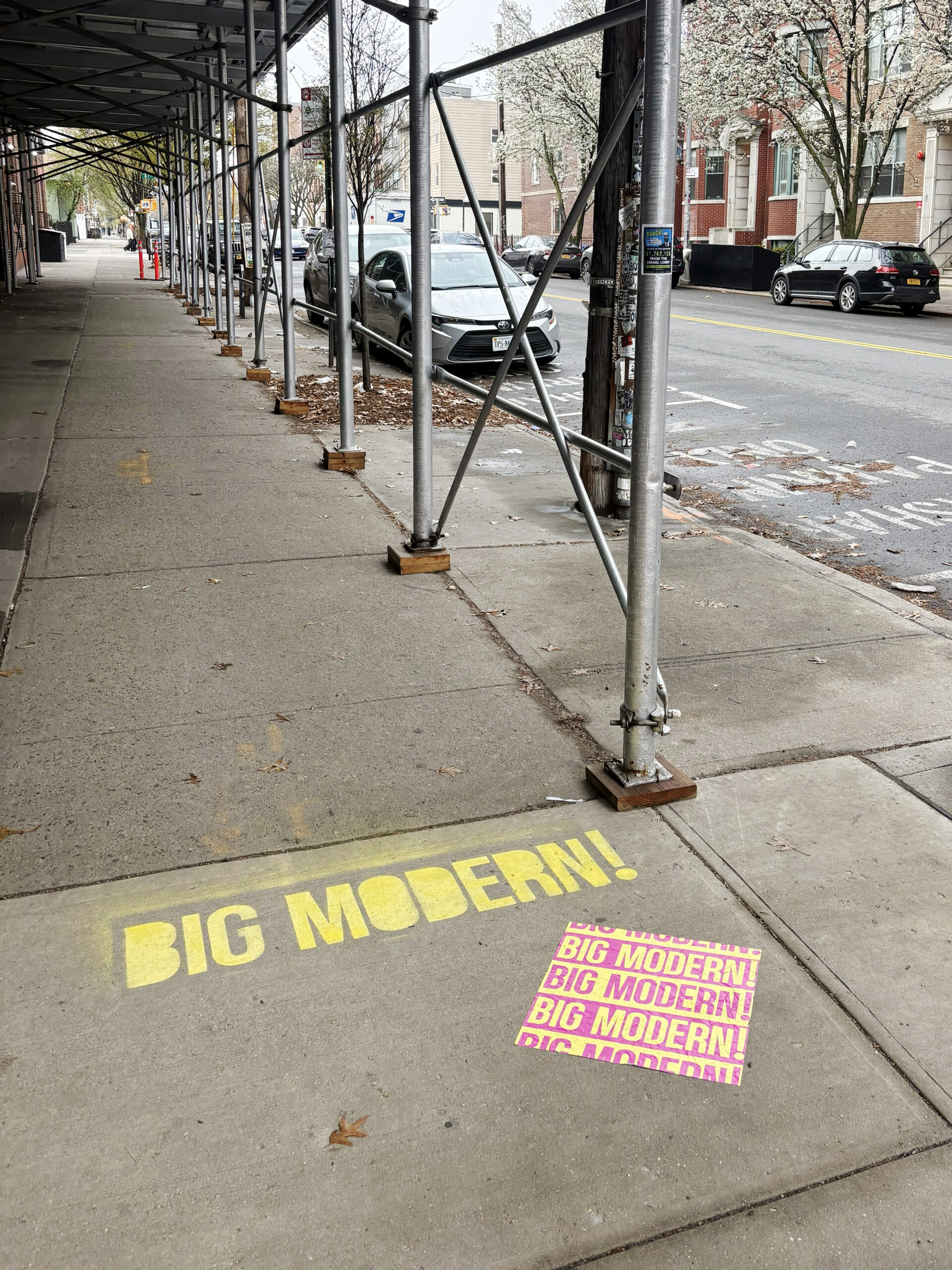
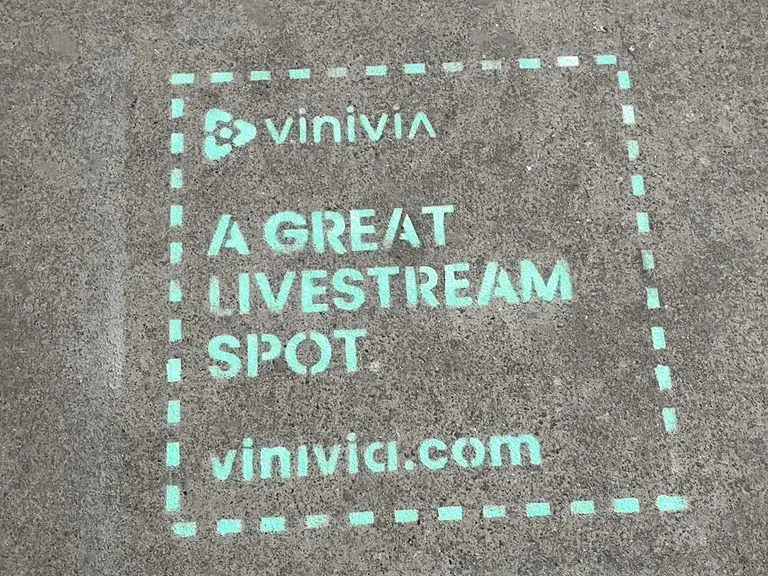
Chalk stencil campaigns on Newbury Street, in the Fenway, Harvard Square, and the South End targeting Boston's walkable neighborhoods.
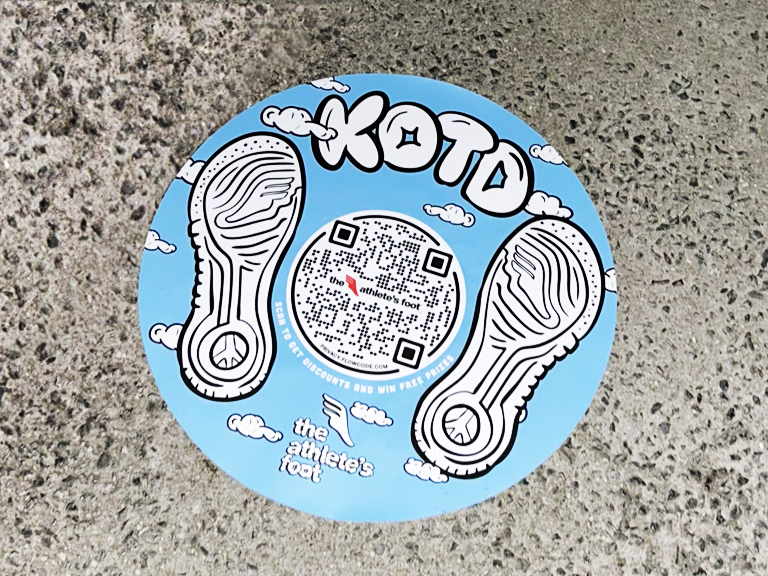
Durable vinyl decals for Fenway Park approaches, TD Garden corridors, the Seaport District, and long-run Boston activations.
Reverse graffiti campaigns on soiled sidewalks in Downtown Boston, the Financial District, and high-traffic commercial corridors.
Stencil and decal placement on Brookline Avenue, Yawkey Way, and Lansdowne Street for Red Sox games and Fenway concerts.
Targeted stencil drops for Boston Marathon week, Harborfest, the Boston Calling Music Festival, and neighborhood events.
Vinyl decal campaigns along Newbury Street, the Seaport District, and Downtown Crossing targeting Boston shoppers.
Stencil campaigns near MIT, Harvard, BU, Northeastern, and Tufts targeting Boston's exceptional university corridor.
Fast deployment across Boston and Cambridge neighborhoods for time-sensitive product launches and event activations.
Boston’s core stencil zones concentrate in Back Bay, the South End, the Fenway, and Cambridge. Newbury Street is the anchor of any Back Bay campaign, running eight blocks from the Public Garden to Massachusetts Avenue through a mix of boutiques, galleries, restaurants, and coffee shops that generate consistent foot traffic throughout the year. The adjacent Boylston Street corridor and the blocks connecting to Copley Square add volume from the T station and the Copley Place shopping complex.
The South End’s Tremont Street from Massachusetts Avenue south to East Berkeley Street has developed into one of Boston’s most active restaurant and bar corridors, drawing a young professional and creative audience from the neighborhood’s dense residential base. The SoWa Open Market on Harrison Avenue in the summer months draws thousands of visitors to the South End’s art gallery and market district, creating a concentrated foot traffic event that is ideal for lifestyle and food brand stencil placements.
Cambridge’s Massachusetts Avenue from Harvard Square through Central Square to MIT’s Kendall area forms one of the strongest continuous stencil corridors in the Boston metro. Each zone along this stretch has its own character: Harvard Square draws tourists and students, Central Square draws a more local creative and working-class demographic, and Kendall Square draws the biotech and technology professional population that has concentrated there over the past decade. A single campaign along this corridor can reach three distinct audience segments in sequence.
| Zone | Location | Peak Traffic Window | Audience Profile | Format | Avg. Daily Impressions |
|---|---|---|---|---|---|
| Newbury Street, Back Bay | Newbury St, Arlington to Mass Ave | 10am-8pm daily | Shopper, young professional, tourist, 25-45 | Chalk | 22,000+ |
| Harvard Square, Cambridge | Mass Ave, Harvard Station to Brattle | 9am-9pm daily | Student, academic, tourist, 18-38 | Chalk | 18,000+ |
| Fenway / Kenmore Square | Brookline Ave & Kenmore Square | Game days, 11am-9pm | Sports fan, student, young professional | Chalk or vinyl | 15,000+ (game days) |
| Tremont St, South End | Tremont St, Mass Ave to E Berkeley | 11am-10pm daily | Young professional, creative, LGBTQ+, 25-42 | Chalk | 10,000+ |
| Seaport District | Seaport Blvd & Congress St corridor | 7am-8pm weekdays, brunch weekends | Professional, tech, 28-45 | Vinyl | 12,000+ |
| Kendall Square, Cambridge | Main St & Third St, Kendall/MIT area | 7am-7pm weekdays | Biotech, tech professional, researcher | Vinyl | 8,000+ |
A direct-to-consumer fashion brand used chalk stencils at four positions along Newbury Street during fall fashion season to drive awareness for a Newbury Street pop-up. The placements ran for eight days in late September weather, hitting the consistent Back Bay shopper and tourist foot traffic along with the weekend surge that Newbury Street reliably generates. A QR code on the stencil linked to a pop-up location page.
An education technology company placed chalk stencils at the Harvard MBTA station exit and along the Massachusetts Avenue strip through Harvard Square at the start of fall semester. The placements ran for two weeks, reaching Harvard and Cambridge students during orientation week when they are most actively discovering new tools and services. The campaign extended to the MIT campus perimeter along Mass Ave.
A sports betting app used vinyl decals on the pedestrian approaches to Fenway Park along Brookline Avenue and Yawkey Way for a two-week window during the Red Sox playoff push. The decals handled the heavy event-night foot traffic of tens of thousands of fans approaching the stadium from the Kenmore Square MBTA stop over the entire run without deterioration.
A health and wellness brand placed chalk stencils along Tremont Street through the South End’s restaurant and bar corridor on a Thursday evening, hitting the peak foot traffic of the neighborhood’s dinner crowd over the following weekend. The campaign ran for six days and targeted the South End’s young professional demographic specifically, a zone that over-indexes on health and lifestyle products.
A B2B software company used vinyl decals on the sidewalks around the major Seaport office buildings along Seaport Boulevard and the Congress Street corridor to reach the tech and professional workforce concentrated in the district. The decals ran for three weeks during a fall conference season when the Seaport’s event venues were generating additional foot traffic beyond the normal office population.
Boston Marathon week in April is the city’s single most significant annual pedestrian traffic event, bringing over 500,000 spectators to the city over several days and concentrating them along the 26.2-mile route from Hopkinton to the Boylston Street finish line. The Back Bay neighborhoods around the finish line, Kenmore Square, and the Fenway are the highest-value stencil zones during Marathon week, with foot traffic that dwarfs normal daily volumes for several days running.
The fall academic semester return in September brings the highest sustained foot traffic increases to Boston’s university zones, with Harvard Square, the BU stretch of Commonwealth Avenue, and the Northeastern campus area all seeing dramatic increases as 250,000+ students return to the city. This window is the strongest of the year for brands targeting the college and graduate student demographic in the Boston market.
Red Sox regular season from April through September generates consistent event-night foot traffic spikes in the Fenway and Kenmore Square zones across 81 home games. Playoff runs further concentrate fan foot traffic in the corridor. The Boston Calling Music Festival in May, held at Harvard Athletic Complex, and the Harborfest celebrations in late June create additional one-time foot traffic spikes in Cambridge and the Downtown Waterfront zones respectively.
1. Newbury Street, Back Bay: The most consistently high-value commercial corridor in Boston, Newbury Street handles daily foot traffic from a mix of shoppers, tourists, students, and young professionals across eight walkable blocks of retail and dining. Weekend volumes are the highest in the city outside of major event corridors, and the demographic is broadly affluent and engaged with brand discovery.
2. Harvard Square, Cambridge: The most internationally recognized pedestrian zone in the Boston metro, Harvard Square handles enormous daily volumes from students, tourists, academics, and local residents. The MBTA Red Line station concentrates foot traffic at the Square’s core, and the surrounding blocks along Massachusetts Avenue and Brattle Street extend the active zone in multiple directions.
3. Fenway / Kenmore Square: The dual function of this zone, as both a sports venue approach and a residential/student neighborhood, makes it one of the most reliable stencil zones in Boston. Game-day volumes spike dramatically but the baseline foot traffic from BU students and Fenway residents is strong on non-event days as well. The Kenmore Square MBTA station is the focal point for all pedestrian approaches to the ballpark.
4. Tremont Street, South End: Boston’s most active restaurant and bar corridor outside of the waterfront area, Tremont Street through the South End handles consistent evening and weekend foot traffic from one of the city’s most desirable residential neighborhoods. The demographic skews young professional with high income and high social engagement.
5. Seaport District: The fastest-growing pedestrian zone in Boston, the Seaport has added enormous professional and residential density over the past decade. The Seaport Boulevard and Congress Street corridors handle growing daily volumes from tech company employees, convention center visitors, and the district’s restaurant and hotel guests. This zone reaches the highest concentration of technology and professional services workers in Boston.
Chalk Stencils: Boston’s best chalk stencil windows are May through June and September through October, avoiding the harsh winter months and summer heat that reduce chalk durability. The smooth concrete sidewalks of Back Bay, the South End, and the Seaport are ideal chalk surfaces, while the brick and granite surfaces of older neighborhoods require surface assessment before committing to chalk. AGM uses water-based chalk paint through precision stencils, producing sharp impressions that typically last six to nine days in optimal spring or fall Boston conditions.
Vinyl Sidewalk Decals: Boston’s winter creates strong demand for vinyl decals in event corridors and transit station approaches where campaigns need to run through cold, wet, and snowy conditions. The Fenway Park approaches, the TD Garden pedestrian routes from North Station, and the South Station transit hub all handle consistent foot traffic through winter that justifies vinyl’s all-weather durability. AGM uses cold-temperature vinyl formulations for Boston winter deployments that maintain adhesion in freezing conditions.
Reverse Graffiti / Clean Stencils: Boston’s Financial District, Downtown Crossing, and the Government Center area accumulate heavy grime on their sidewalks from the city’s heavy foot traffic and street conditions, creating strong contrast for reverse graffiti campaigns. The technique works particularly well around Government Center, the Congress Street corridor, and the approaches to South Station. This is one of AGM’s recommended formats for Boston winter activations, as it requires no materials that can be affected by temperature.
Boston is a city with a strong sense of its own character, and campaigns that fit the city’s culture and aesthetic are far more effective than generic national activations dropped into the Boston market without local context. AGM understands the micro-differences between Boston’s neighborhoods, from the prep school and tourist culture of Back Bay to the progressive academic culture of Cambridge and the creative professional culture of the South End, and brings that understanding to every placement decision.
AGM also navigates Boston’s specific regulatory environment, which varies significantly between Boston proper and Cambridge. The team handles all pre-campaign location assessment, surface evaluation, and format selection based on the specific conditions of each placement location. Every Boston campaign includes timestamped placement photography, weather monitoring for chalk campaigns, and post-campaign impression reporting using MBTA and published pedestrian count data for the city’s major corridors.
For brands running Boston as part of a multi-city academic market campaign alongside cities like New York, Philadelphia, and Chicago, AGM coordinates all markets simultaneously, maintaining creative consistency while adapting placement strategy to each city’s specific university corridors. Boston’s extraordinary density of university and research institution campuses makes it the anchor of any academic market campaign in the Northeast.
The City of Boston Public Works Department regulates commercial activity on public sidewalks. Chalk stencils rarely require permits when removed within 10 days. Vinyl decals require a Street Occupancy permit from Boston Public Works. Private property placements on Newbury Street retail frontage and Faneuil Hall approaches require only property owner or BID approval. AGM handles permit coordination for all Boston campaigns.
With approved artwork, AGM can deploy chalk stencils in Boston within 48 to 72 hours. Vinyl decals require 5 to 7 business days from artwork approval. For Boston Marathon event-week activations on Boylston Street, Red Sox playoff runs, and Head of the Charles Regatta weekend, AGM recommends starting at least 10 to 14 business days in advance.
In order of daily pedestrian density: Downtown Crossing at Washington and Summer Streets (40,000 to 65,000 weekdays), Faneuil Hall Marketplace on peak tourist days (25,000 to 50,000), Newbury Street between Dartmouth and Massachusetts Avenue (20,000 to 35,000 daily), Fenway Park on game days (30,000 to 45,000), and Harvard Square in Cambridge (15,000 to 25,000 daily).
Downtown Crossing and Back Bay smooth concrete sidewalks provide the best surface for chalk and vinyl. Beacon Hill and the North End brick pavers require heavier chalk formulations but produce excellent contrast for reverse graffiti on historic brick surfaces. Boston winters limit optimal chalk deployment to April through October. AGM uses cold-weather vinyl adhesive systems for fall and early spring campaigns.
Yes. Boston Marathon weekend concentrates 500,000 spectators along the course, with the highest density on Boylston Street near Copley Square. The Head of the Charles Regatta brings 400,000 spectators to the Charles River Esplanade. Red Sox playoff game days on Lansdowne Street deliver 35,000 to 45,000 concentrated foot traffic passes over a 4-hour window.
Yes. AGM covers the full Boston metro including Cambridge, Somerville, Jamaica Plain, South End, Fenway, Seaport, Allston, and Brookline. Campus deployments at MIT on Massachusetts Avenue and Harvard in Cambridge are among our most consistently booked Boston services. AGM can coordinate simultaneous multi-neighborhood campaigns across the greater Boston area.