American Guerrilla Marketing
Nationwide Service
Media planning, media buying, billboard advertising, & guerrilla marketing
Sidewalk Stencil Advertising in Mesa, Arizona

Mesa’s streets are alive — light rail riders streaming along Main Street, students cutting across campus at Mesa Community College, fans flooding Sloan Park on spring training game days. Sidewalk Stencils™ by American Guerrilla Marketing puts your brand exactly where that foot traffic flows, turning ordinary pavement into high-visibility impressions that Mesa pedestrians can’t walk past without noticing. Whether you’re launching a product along the Downtown corridor, running an event activation near the Mesa Arts Center, or building awareness across the Fiesta District and university campuses, we engineer street-level campaigns that earn attention on the ground and conversation online.
What Sidewalk Stencils Are — and Why They Work in Mesa
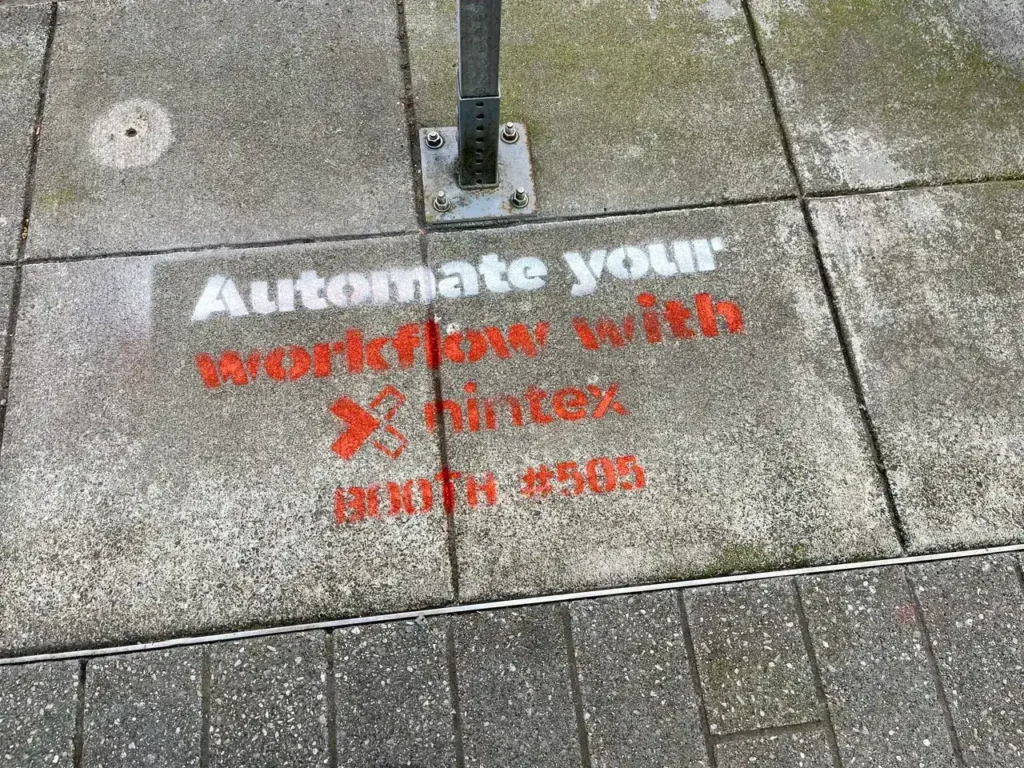
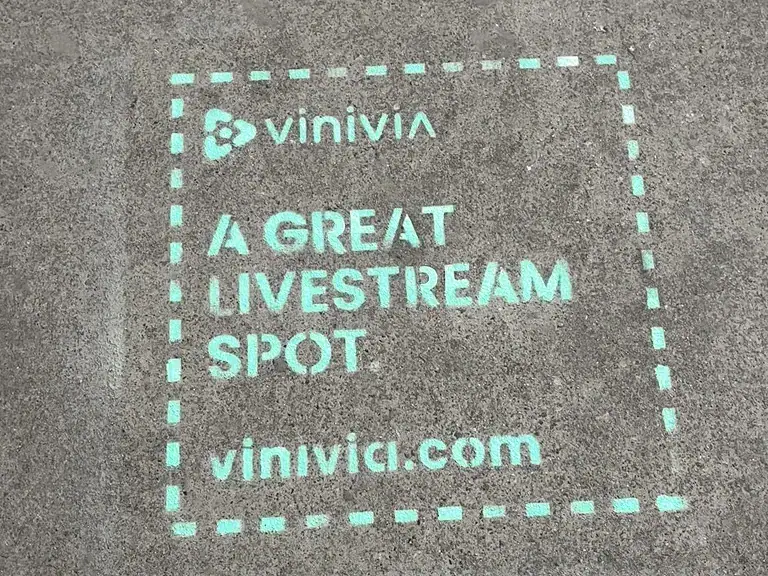
Sidewalk stencil advertising is the practice of applying custom-cut stencils to public or private pavement surfaces to create sharp, high-contrast brand impressions at ground level. The technique has been used for decades by brands looking to reach pedestrians in a way that bypasses cluttered digital feeds and ignores banner blindness entirely. When someone is walking to the light rail stop at Main Street and Centennial Way or grabbing lunch on the Center Street block near the Mesa Arts Center, a stencil placed directly in their path demands a split-second of attention that a billboard a hundred feet overhead simply cannot replicate.
What distinguishes this medium is intimacy. Traditional out-of-home advertising speaks from a distance — from towering structures above the street or from a bus wrap speeding past at 40 miles per hour. Sidewalk stencils meet your audience at ground level, in the exact physical space where they’re already moving, looking down, and registering their immediate environment. In a city like Mesa, where the redesigned downtown core has cultivated a genuinely walkable culture along the Main Street light rail corridor and around destination anchors like the Mesa Arts Center, the Mesa Market Place Swap Meet, and Sloan Park, that ground-level contact is extraordinarily valuable and surprisingly rare.
American Guerrilla Marketing developed Sidewalk Stencils™ into a full-service, turnkey campaign format. We handle design optimization, permitting guidance, materials production, on-the-ground execution, and post-campaign documentation. Brands don’t need to source operators, wrangle materials, or figure out surface compatibility on their own. Our crew arrives with everything needed to execute precisely, and we document every placement with geo-tagged photography so you can verify full coverage from wherever you’re sitting.
The medium is also remarkably flexible. Mesa’s landscape ranges from the dense pedestrian environment of the historic Downtown district to the parking-lot-heavy commercial corridors of the Fiesta District to the master-planned walkable paths of Eastmark in the far east. Different surfaces and formats call for different approaches — chalk stencils on the sidewalks flanking Sloan Park on game days behave differently than reverse graffiti impressions in the Riverview District’s high-traffic commercial zones, which are different again from paint stencils on private property near ASU Polytechnic Campus on Ray Road. Understanding that nuance is what makes an execution feel intentional rather than generic, and it’s precisely why campaigns designed for Mesa’s specific geography produce the earned media and social buzz that paid advertising rarely generates on its own.
Mesa’s population has crossed half a million, making it one of the largest cities in Arizona and the largest suburb in the United States by population. Its growth has been accompanied by a deliberate civic effort to densify and activate its downtown core, creating the walkable street environment that makes sidewalk stencil campaigns viable at scale. The Valley Metro light rail connection between Mesa and Tempe and Phoenix brings thousands of additional daily pedestrians through the Main Street corridor, expanding the organic reach of any ground-level impression placed along that spine. The city is building exactly the kind of urban environment in which sidewalk marketing thrives — and smart brands are taking notice.
Pavement stencils also benefit from something no digital format can deliver: physical permanence in space. A chalk stencil placed on the Main Street sidewalk near the Country Club Drive LRT stop doesn’t disappear when a user closes an app or scrolls past. It exists in the physical world, encountered repeatedly by the same commuters and residents who walk the same path every day, accumulating impressions across multiple contacts rather than delivering a single interruptive moment. That repetition is a core driver of brand recall, and it’s built into the medium itself.
Ready to Activate Mesa?
Whether you're targeting light rail commuters along Main Street, the spring training crowd at Sloan Park, students near Mesa Community College, or event audiences at the Mesa Arts Center — we know exactly where your audience walks and how to put your brand in their path. Let's build your Mesa stencil campaign.
Browse Cities in Arizona
Select a city to explore Sidewalk Stencil Advertising opportunities.
Why Mesa Is A Prime Market For Sidewalk Stencil Campaigns
Mesa occupies a remarkable position in the Valley of the Sun. It is simultaneously the quintessential American suburb — sprawling, car-centric in its outer rings — and a city actively constructing a walkable identity in its urban core. That contrast creates distinct campaign opportunities depending on what a brand is trying to accomplish. Understand Mesa’s geography, and you can execute stencil campaigns that feel native to each district rather than imported from a generic urban playbook.
The most obvious starting point for any Mesa sidewalk advertising strategy is the Main Street LRT corridor. The Valley Metro light rail runs east-west through the heart of Downtown Mesa, with stops depositing riders directly into the pedestrian environment of the historic downtown district. At peak commute hours, thousands of riders pass through these stations daily. The sidewalks along Main Street between Country Club Drive and Mesa Drive represent some of the highest-concentration pedestrian real estate in the entire East Valley. A chalk stencil campaign laid down on a Friday morning can achieve enormous organic reach through the weekend without a single dollar spent on additional placement or amplification.
The Mesa Arts Center anchors the downtown district’s creative identity and draws consistent foot traffic throughout the year. Positioned near Main Street and Center Street, the MAC hosts visual arts exhibitions, performing arts events, and the Mesa Arts Festival — one of the most attended outdoor cultural events in the state. Audience foot traffic before and after MAC events is dense, attentive, and drawn from an educated, creatively inclined demographic that responds particularly well to unexpected brand moments like reverse graffiti and high-concept chalk activations in the pedestrian approach zones.
Sloan Park near Riverview Drive transforms the surrounding area into one of Arizona’s most concentrated foot traffic environments during February and March. Chicago Cubs spring training draws not only local fans but baseball tourists from across the country, many of whom are experiencing Mesa for the first time and are primed to engage with the environment around them. The pedestrian corridors approaching Sloan Park’s gates from parking areas and transit connections see the kind of crowd density typically associated with major urban event venues, compressed into a compact geographic zone that makes stencil placement remarkably efficient.
The Fiesta District along Dobson Road functions as the commercial and entertainment heart of central Mesa. With dense retail, restaurant, and entertainment clusters drawing heavy foot traffic from across the East Valley every day of the week, a stencil campaign here can generate consistent daily impressions from a broad, mixed demographic. Country Club Drive between Main Street and Broadway Road is another high-value pedestrian corridor where stencils placed near bus stops, crosswalks, and restaurant entry paths fall naturally into the sightlines of walking consumers.
Mesa’s university campuses create two distinct, high-density pedestrian environments. Arizona State University’s Polytechnic Campus on Ray Road draws a tech-forward, engineering-oriented student population whose campus routines are geographically concentrated and highly predictable — and whose surrounding commercial corridors see the same faces daily. Mesa Community College on Southern Avenue hosts tens of thousands of students across a campus whose adjacent commercial strip is purpose-built for pedestrian traffic. Both represent ideal environments for sidewalk stencil campaigns targeting younger consumer demographics in the tech, gaming, athletic, and lifestyle categories.
What ties all of these zones together is Mesa’s fundamental character: a city in the act of becoming. The walkable Main Street corridor, the light rail connection westward to Tempe and Phoenix, the intentional investment in the arts district, the spring training tourism economy — all of these forces are concentrating foot traffic in ways that Mesa simply didn’t have a decade ago. The timing for ground stencil advertising in Mesa has never been better.
Sidewalk Stencil Types Available For Mesa Campaigns
Each campaign format carries distinct characteristics that make it appropriate for specific environments, timelines, surfaces, and brand objectives. We match the format to your goals rather than defaulting to a single approach regardless of context.
Chalk Stencils
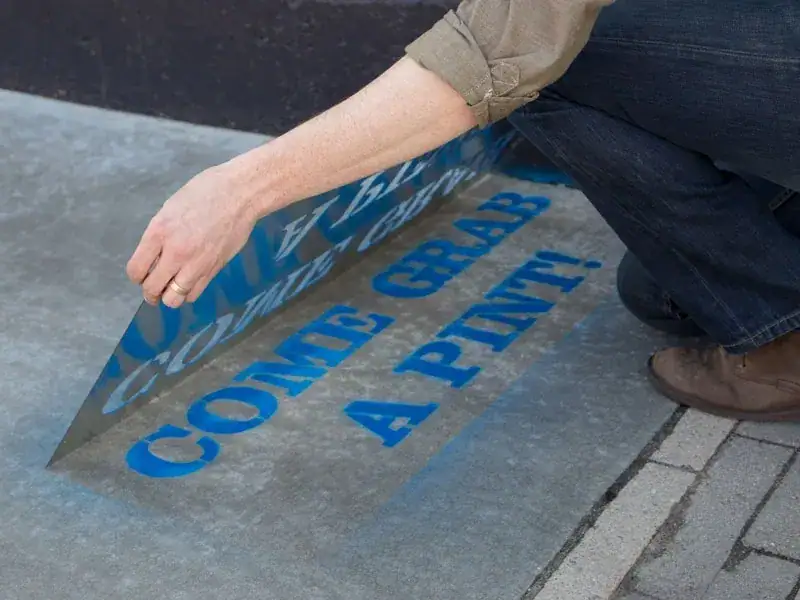
Chalk stencils use water-soluble chalk paint applied through a custom-cut stencil to create temporary, vivid impressions on public sidewalks and pavement. Longevity ranges from hours to several days depending on foot traffic volume, surface texture, and Mesa’s characteristically intense sun and seasonal monsoon rainfall. Chalk stenciling is the ideal format for event-driven activations — a campaign deployed along the Main Street corridor before the Mesa Arts Festival, or across the pedestrian approaches to Sloan Park during a Cubs spring training series, achieves high visibility exactly when and where it’s needed without requiring any post-event removal. The desert sun and heavy foot traffic handle that naturally. For brands that need a temporary, responsible, and visually impactful street presence with a quick deployment window, chalk stencil advertising in Mesa is the cleanest entry point.
Reverse Graffiti (Clean Graffiti)
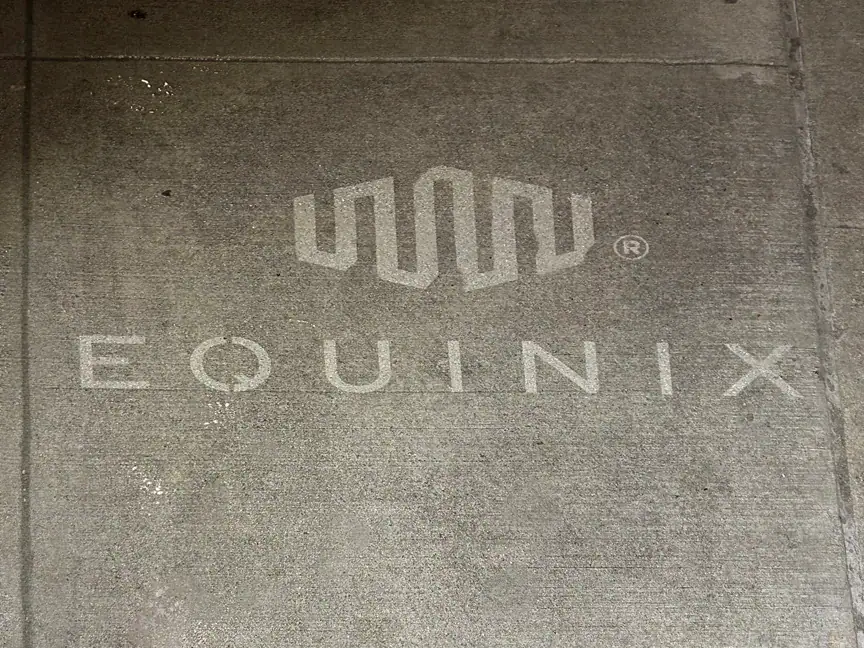
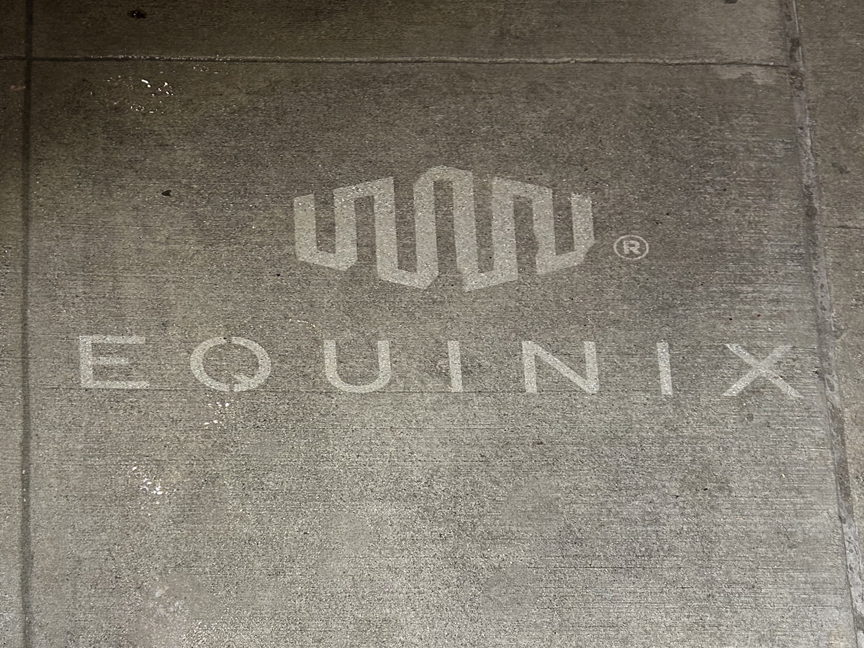
Reverse graffiti — also known as clean graffiti — inverts the conventional stenciling model entirely. Rather than adding material to a surface, a high-pressure water system strips away accumulated grime and desert dust from a dirty sidewalk or pavement area, leaving a bright, clean brand impression set against the surface’s natural patina. No paint, no chalk, no chemical agents of any kind. The result is a compelling visual contrast that reads as both visually sophisticated and environmentally responsible. In Mesa’s commercial corridors — the heavy-traffic zones along Dobson Road, Country Club Drive, and near the Riverview District’s retail clusters — desert dust accumulates quickly on pavement surfaces, making reverse graffiti particularly striking. Sustainability-forward brands find clean graffiti advertising creates a natural earned media hook: the implicit message that a brand is cleaning up rather than marking up resonates powerfully with audiences who pay attention to environmental signals.
Paint Stencils
Paint stencils are the most durable format in the Sidewalk Stencils™ portfolio. Using water-based or specialty paints applied through precision-cut stencils, paint campaigns produce sharp, vibrant impressions that persist for weeks or months depending on surface conditions, foot traffic volume, and UV exposure. This format is best suited for private property placements — parking lots, building approach paths, private plazas, or event venue surfaces — where property owner permission enables a longer-duration campaign without the constraints of public right-of-way timing. Brands looking to establish a sustained physical presence near ASU Polytechnic’s Ray Road corridor, within the Eastmark community’s retail village, or along private commercial corridors in the Fiesta District will find that paint stencils deliver the highest impression-per-dollar ratio over an extended campaign window. The color fidelity of paint also supports more intricate graphic treatments, making it the right choice when visual complexity matters as much as longevity.
Water Stencils (Pressure Wash)
Water stencils operate on a principle similar to reverse graffiti but are often optimized for specific surface types — sealed concrete, decorative pavers, or specialty surfaces where a targeted high-pressure wash creates clean, defined imagery without risk of surface disruption. This method is particularly well-suited to the decorative pavement environments found in Downtown Mesa’s historic streetscape, where vintage-finish concrete and brick-adjacent surfaces reward a delicate, high-precision application. Water stencils disappear naturally over time with normal weather patterns and foot traffic, leaving no permanent mark and requiring no removal process whatsoever. For brands that want the visual impact of clean graffiti in a tightly controlled, surface-specific format — particularly along the Mesa Arts Center’s pedestrian surrounds or the decorative sidewalk sections of the Main Street improvement corridor — water stenciling offers precise, responsible execution with a natural lifecycle.
Get A Free Sidewalk Stencil Advertising Quote
Ready to make your brand stand out with sidewalk stencil advertising? Contact American Guerrilla Marketing to plan your campaign. Tell us your target locations, campaign goals, and timeline, and our team will help you create a customized sidewalk stencil advertising strategy that fits your needs and budget.
Award Winning Personalized Service
You will get thoughtful, devoted, and individualized attention from our experienced, qualified, and professional personnel. Being one of the most illustrious agencies in Brooklyn, New York, American Guerrilla Marketing has been awarded the Best of Brooklyn title.
Nationwide
Industry City, Brooklyn, New York 11232
American Guerrilla Marketing
Hours
Mon - Fri: 9 AM - 5 PM
Sat & Sun: Closed
Automate your campaign with AGM’s Request for Proposal Builder.
Automate your campaign with AGM’s Request for Proposal Builder. Simply answer a few quick questions about your campaign goals, markets, and timeline, and the system will generate a tailored presentation with recommended strategies, quantities, and pricing. Click the RFP Builder to instantly receive your customized proposal.
Chalk Stencil Campaigns
Custom-cut, professional-grade chalk stencils in single or multi-color, deployed across Birmingham's key pedestrian corridors. Standard turnaround 5–7 business days from artwork approval.

Vinyl Sidewalk Decals
Durable, weather-resistant decals for 30–180-day brand placements. ADA-compliant anti-slip laminates available for high-foot-traffic zones.
Sidewalk Stencil Services in Birmingham

Reverse Stencils / Clean Graffiti
Power-wash brand imagery created on Birmingham's older concrete surfaces in Avondale, Lakeview, and downtown without any paint or chemicals.

Convention Center Approaches
Stencil and decal deployments targeting the Birmingham-Jefferson Convention Complex (BJCC) on 9th Avenue North, Richard Arrington Jr. Boulevard approaches, and Hall of Fame Drive.
Festival Corridor Stenciling
Multi-block deployments along Birmingham Bowl game day routes, Railroad Park event corridors, and Sloss Furnaces event approach paths.

Retail Zone Decals
Riverchase Galleria (Hoover), Summit Birmingham on US-280, and Crestwood Festival Centre on Crestwood Boulevard high-traffic approach sidewalks.
Campus Stenciling
UAB main campus pedestrian corridors, Birmingham-Southern College approaches on Arkadelphia Road, Samford University's Lake Drive corridor.

Rapid Awareness Stencil Launches
24–48-hour deployment capability for time-sensitive Birmingham activations. Same-day deployment available for qualifying campaigns.
Mesa Placement Strategy: Streets, Districts, and Venues
An effective sidewalk stencil campaign isn’t simply about coverage — it’s about precision placement in the locations where your specific target audience actually walks. In Mesa, that means understanding which corridors are pedestrian-dense and during which hours, which events create concentrated foot traffic windows, and how different districts attract fundamentally different consumer profiles. Every placement map we build for Mesa is rooted in that local knowledge.
Main Street — Downtown Mesa LRT Corridor
Main Street between Country Club Drive and Mesa Drive is the backbone of Downtown Mesa’s pedestrian environment and the single highest-value corridor for sidewalk stencil advertising in the East Valley. Light rail stops along this spine create natural congregation points — station platforms, crosswalks, and the approach paths that riders walk from stations to their destinations on foot. Chalk or reverse graffiti stencils placed within a block of each station encounter a captive audience in transit, with dwell time sufficient for a brand impression to register before riders move on. The stretch near Center Street is particularly high-value given its proximity to the Mesa Arts Center, the cluster of restaurants and retailers that has developed around the MAC, and the civic foot traffic generated by City Hall. A campaign concentrated along this corridor reaches commuters, students, arts attendees, and downtown workers in a single contiguous deployment.
Center Street — Arts and Civic Core
Center Street running north-south through downtown intersects the Main Street LRT corridor and leads directly to the Mesa Arts Center, City Hall, and several of Mesa’s most significant cultural and civic gathering places. Pedestrian traffic along Center Street is consistent during weekday business hours and surges dramatically on MAC event evenings, First Friday art walks, and city-sponsored outdoor programming. Stencil placements on the sidewalks leading toward and away from the MAC’s main entrance — whether chalk or reverse graffiti — can achieve thousands of impressions across a single weekend event cycle without any amplification beyond the physical placement itself. The audience quality here is exceptional: MAC attendees are culturally engaged, brand-literate, and precisely the kind of consumers who notice and share creative street-level advertising.
Country Club Drive — North-South Commercial Spine
Country Club Drive from Main Street south to Broadway Road carries some of the heaviest mixed-use pedestrian traffic in Mesa outside of the immediate downtown district. The corridor is anchored by retail, dining, and service businesses that generate consistent foot traffic throughout the day and well into evening hours. Bus stops along Country Club Drive are natural placement anchors — stencils positioned adjacent to transit stops benefit from the dwell time of waiting passengers and the stop-and-look behavior that transit environments naturally encourage. For brands seeking broad demographic reach across a geographically significant north-south corridor rather than the more concentrated downtown audience, Country Club Drive delivers consistent daily volume from a wide cross-section of Mesa consumers.
Dobson Road — Fiesta District Gateway
The Fiesta District’s commercial core sits along Dobson Road between US-60 and Main Street, drawing shoppers, diners, and entertainment-seekers from across the East Valley on a daily basis. The pedestrian environment here is denser than Mesa’s outer-ring residential suburbs but less refined in character than the curated downtown corridor, creating opportunities for high-visibility stencil placements near restaurant entry corridors, mall approaches, and entertainment venue sidewalks. Given the commercial density and the broad consumer mix it attracts, paint stencils on private property and chalk activations on public sidewalks can both operate effectively in this zone depending on permission status and campaign duration requirements. A Fiesta District campaign reaches a different demographic slice than a Main Street campaign — complementing rather than overlapping a downtown activation.
Sloan Park — Spring Training Season Window
Sloan Park near Riverview Drive is home to the Chicago Cubs’ spring training complex, and during February and March it transforms the surrounding area into one of the highest foot-traffic zones in Arizona. Fans arriving on game days flow through the stadium’s pedestrian approach corridors from multiple directions — from satellite parking areas, from Riverview Drive itself, and from transit connections — creating a dense, concentrated audience that moves at walking pace through identifiable physical channels. Chalk stencil campaigns deployed in overnight or early-morning windows before game days ensure placements are live when fans begin arriving, capturing foot traffic at its most concentrated. A full Cubs weekend series can deliver well over 100,000 combined pedestrian impressions from properly placed ground-level stencil advertising, concentrated into 48 to 72 hours of peak exposure.
Mesa Arts Center — Year-Round Cultural Anchor
The Mesa Arts Center at 1 East Main Street is the largest arts complex in the American Southwest, and its programming calendar ensures that there is almost always an event drawing attendees into the surrounding pedestrian environment. From symphony and chamber performances to large-scale theatrical productions, rotating gallery exhibitions, and major outdoor festivals, MAC audiences represent one of Mesa’s most consistently valuable pedestrian concentrations for brand exposure. Stencil placements coordinated with specific MAC event dates — positioned on the pedestrian approaches along both Main Street and Center Street — allow brands to reach this culturally engaged audience with precise timing and measurable geographic coverage. The combination of artistic context and dense foot traffic makes the MAC surroundings one of the most effective sidewalk stencil zones in the entire market.
ASU Polytechnic Campus and Mesa Community College
Arizona State University’s Polytechnic Campus on Ray Road and Mesa Community College on Southern Avenue each generate large, predictable daily pedestrian populations whose campus routines concentrate foot traffic along specific pathways at specific times. Students walk the same routes between classes, residence halls, dining facilities, and transit connections repeatedly across a full semester, meaning a stencil placed in a high-traffic campus-adjacent location accumulates impressions over its entire active lifespan from the same repeated audience rather than relying on a single-contact event. Brands in the technology, gaming, athletic apparel, and lifestyle categories find campus-adjacent sidewalk stencil advertising disproportionately effective for reaching the 18-to-25 demographic compared to almost any other format at comparable cost.
Sidewalk Stencil Pricing For Mesa, Arizona Campaigns
Sidewalk stencil campaigns are priced by stencil count, with each tier reflecting economies of scale in production, materials sourcing, and crew deployment. All tiers include creative review of your brand artwork, precision stencil production, full on-the-ground execution across your Mesa target zones, and a complete post-campaign photo documentation package. Contact us to discuss which tier fits your coverage goals and timeline.
A 30-stencil Starter campaign in Mesa might concentrate placements along the Main Street LRT corridor — covering each station approach, the entry paths to the Mesa Arts Center, and high-pedestrian crosswalks near Country Club Drive. A 100-stencil Growth campaign can extend that core coverage into the Fiesta District along Dobson Road and layer in a cluster around the university campuses. The 150- and 200-stencil tiers enable simultaneous activation across multiple districts, while the 250-stencil Domination tier produces a city-wide presence that makes the brand feel unmissable throughout Mesa’s major pedestrian corridors. For brands running event-specific campaigns — spring training, the Arts Festival, a major product launch — the Starter or Growth tiers often deliver exceptional return within a defined time window.
Available Stencil Sizes
Stencil dimensions are selected based on sidewalk width, viewing distance, placement surface, and the complexity of your brand graphic. Mesa’s Main Street sidewalks and the broad pedestrian corridors near the Mesa Arts Center accommodate larger formats comfortably, while narrower historic sidewalk sections in the downtown district and campus-adjacent paths may call for a more precisely fitted format. We assess each placement location and recommend the size that maximizes legibility in context.
- 11″ × 14″ — Compact format ideal for dense urban placements, wall-adjacent surfaces, stair risers, and repeating directional patterns. Works well in tight pedestrian zones near transit stops where sidewalk width is constrained.
- 48″ × 12″ — Wide banner-format stencil suited to pedestrian crossings, long approach paths, and corridor-style placements where a horizontal layout reads naturally with the direction of walking travel. Strong performer along the Main Street LRT corridor.
- 36″ × 18″ — Mid-size workhorse format that balances strong visual scale with broad placement flexibility. Works across most standard sidewalk widths found throughout Downtown Mesa, the Fiesta District, and commercial strips along Country Club Drive.
- 24″ × 24″ — Square format with compelling visual presence underfoot. Effective in transit environments, plaza settings, and any placement where viewers spend dwell time in close proximity — such as LRT platform waiting areas, the Mesa Arts Center entry plaza, or crosswalk waiting zones near Sloan Park.
How A Mesa Sidewalk Stencil Campaign Works
The process from initial conversation to post-campaign documentation is designed to be seamless for the brand and surgically precise in execution. Here is what the full engagement looks like from start to finish.
Step 1: Discovery and Strategy
Every campaign begins with a conversation about your objectives, target audience, and timeline. For Mesa specifically, this means mapping the pedestrian corridors, event calendars, and district-specific environments most relevant to your brand. If you’re activating around a Sloan Park spring training series, that establishes one strategic frame — a compressed, high-density event window with very specific geographic focus. If you’re targeting the ASU Polytechnic student corridor on Ray Road for a semester-long brand introduction, that’s a fundamentally different brief, calling for different formats, surfaces, and timing windows. We do not apply a generic city template to Mesa; we build the strategy around the city’s actual behavior.
Step 2: Location Mapping and Permitting Guidance
We identify exact placement locations across your target zones, working from firsthand knowledge of Mesa’s pedestrian infrastructure, traffic patterns, event corridors, and surface conditions. We provide clear guidance on permitting requirements for public right-of-way placements in the City of Mesa and actively help coordinate private property permissions for paint stencil applications on commercial real estate. Mesa’s city government has established protocols for temporary pavement markings, and our operational experience in this market means we navigate those requirements without creating delays for your campaign.
Step 3: Stencil Design and Production
Your brand artwork is translated into production-ready stencil files, optimized for the specific dimensions and format selected for your Mesa deployment. All stencil materials are precision-cut and quality-checked before crew deployment. For multi-format campaigns — such as a combination of 36″ × 18″ primary marks and 48″ × 12″ directional stencils leading pedestrians toward a venue entrance — all components are produced and reviewed as a coordinated set before any crew hits the ground.
Step 4: Surface Assessment
Before execution, our crew assesses each planned placement location for surface compatibility: concrete condition, porosity, cleanliness levels for reverse graffiti applications, and existing markings that might interfere with the brand impression. Mesa’s desert climate creates surface dynamics unique to this market — UV-bleached concrete behaves differently than shaded urban surfaces in wetter climates — and our execution protocols are calibrated for Arizona conditions specifically.
Step 5: Execution
Crew deploys at agreed times — typically early morning to allow chalk to fully set or reverse graffiti to reveal before peak pedestrian hours begin — and moves systematically through the placement map. Each stencil is applied to specification, checked for quality, and recorded for documentation before the team moves to the next location. For time-sensitive event activations like a Cubs game day at Sloan Park or an opening-night performance at the Mesa Arts Center, we execute in overnight or pre-dawn windows that guarantee placements are live when the audience arrives.
Step 6: Photography and Documentation
Every placement is photographed with geo-tagging and time-stamping. The complete documentation package you receive confirms coverage across your Mesa target zones with visual proof of each stencil in its real-world context. This package serves as your internal campaign record, as source material for social media content, and as documentation for any earned media or PR work that emerges from the campaign. It is standard on every tier, at every price point.
Step 7: Campaign Review and Forward Planning
After the campaign runs its course, we debrief with you on coverage achieved, any in-field placement adjustments, longevity observations for chalk deployments, and recommendations for follow-up activations or geographic expansion. Many Mesa clients run seasonal campaigns — a spring training chalk activation in March, a back-to-campus deployment in August targeting the MCC and ASU Polytechnic corridors, and a fall arts season push in October timed to the Mesa Arts Center’s performing arts calendar — building cumulative brand presence across the city’s pedestrian corridors across the full year.
Brands That Have Trusted Sidewalk Stencils™
American Guerrilla Marketing has executed Sidewalk Stencils™ campaigns for some of the most recognized brand names in the world. What those campaigns share is not simply the prestige of the client — it’s the strategic intelligence behind why each brand chose ground-level pavement stenciling over the other formats available to them, and what the medium delivered that nothing else could.
Nike
Nike campaigns through AGM have consistently leveraged sidewalk marketing’s ability to place brand energy at the exact moment and location where athletic culture is most alive — not inside arenas or behind retail glass, but on the streets, sidewalks, and pathways where people actually run, commute, and move through their cities. The precision of stencil placement allowed Nike to own specific pedestrian intersections in ways that felt authentic to the brand’s street-sport identity rather than corporate and calculated. When a Nike stencil appears on the sidewalk outside a running trail entrance or at a crosswalk that commuters cross twice a day, it reads as belonging to that environment rather than intruding on it. That sense of organic belonging generates earned media value — people photograph the stencils, share them, and create content around them — that amplifies well beyond the physical placement count at zero additional media cost.
Wrangler
For Wrangler, the appeal of sidewalk stenciling was its ability to feel genuinely embedded in the American outdoor and working-culture environments that the brand has built its identity around for generations. Rather than occupying a paid media slot in a stack of competing messages, a Wrangler stencil on pavement that reflects the brand’s values occupies physical territory in a way that feels earned and proprietary rather than rented. The campaign produced the kind of spontaneous consumer documentation — photos and videos taken and shared by people who encountered the stencils in the wild — that functions as a social proof signal that no amount of paid media budget can fully replicate. When real people share brand content because they genuinely found it interesting, not because they were targeted or incentivized, the trust value of that content is categorically different from anything the brand could purchase directly.
EA Sports
EA Sports understood that its core audience — young, culturally fluent gaming and sports fans — actively seeks out and documents street-level creative in a way that older demographics simply do not. This audience is hyperaware of advertising, skeptical of conventional formats, and disproportionately likely to engage with something that feels genuinely unexpected in a physical environment. A stencil campaign timed around a major title launch and positioned in pedestrian-dense zones near gaming retail corridors and university campuses turned physical placements into social content amplifiers: the brand’s audience photographed the stencils, created short-form video content around finding them, and distributed that content organically across platforms at a scale that would have cost multiples more through conventional paid channels. For EA Sports, sidewalk stenciling wasn’t just street-level advertising — it was physical content seeding that performed across digital platforms long after the pavement impressions had faded.
Frequently Asked Questions
Yes — the Main Street LRT corridor is one of our most frequently activated zones in Mesa. The public sidewalks flanking the Valley Metro light rail stops between Country Club Drive and Mesa Drive are high-pedestrian right-of-way, and chalk stencils applied in these areas are water-soluble, temporary, and fully consistent with the City of Mesa’s guidelines for temporary pavement markings. We typically schedule installations in early-morning windows so the chalk is fully set by the time the day’s commuter ridership peaks. The combination of transit dwell time and directional foot movement along this corridor makes it one of the highest-impression-efficiency placements in the market.
The sidewalk surfaces around the Mesa Arts Center on Center Street are excellent candidates for reverse graffiti because Mesa’s desert dust and urban grime accumulate on pavement at a rate that creates strong visual contrast when a high-pressure clean image is revealed against the surrounding surface. The MAC’s programming calendar provides reliable windows of concentrated foot traffic — opening nights, weekend performances, art walk evenings — when a reverse graffiti impression in the pedestrian approach zone generates peak exposure from a culturally engaged audience that tends to notice, appreciate, and share unexpected creative brand moments. We coordinate reverse graffiti installations at the MAC with specific event dates for maximum timing alignment.
Sloan Park during spring training is among the single best chalk stencil advertising windows in Arizona. The concentrated pedestrian movement in and around the stadium’s approach corridors — particularly along the paths leading from Riverview Drive, satellite parking areas, and nearby transit connections toward the gates — rivals major urban event venue environments in terms of impression density. We deploy chalk stencil campaigns in overnight or early-morning windows before game day to ensure every placement is live when fans begin arriving. A single Cubs weekend series at Sloan Park can generate well over 100,000 combined pedestrian impressions from a properly planned and placed chalk campaign, concentrated into a 48- to 72-hour peak exposure window.
The Fiesta District’s dense commercial environment along Dobson Road supports both chalk and reverse graffiti approaches on public sidewalks, with paint stencils available for private commercial property where property owner permission is secured. Given the high combined vehicle and pedestrian throughput in this zone, we generally recommend the 36″ × 18″ or 24″ × 24″ formats for street-level placements near restaurant corridors and shopping approaches, where a mid-scale stencil reads clearly from 10 to 15 feet away without being obscured by passing foot traffic. For brands needing sustained duration beyond a single weekend activation in the Fiesta District, paint on private commercial property delivers the longest impression lifecycle in this specific environment.
Mesa Community College’s Southern Avenue campus generates consistent, predictable daily foot traffic from tens of thousands of students across the academic year. The commercial corridor immediately adjacent to campus — along Southern Avenue and the connecting side streets — is a natural target zone for chalk stencil advertising aimed at the 18-to-25 demographic. We position stencils near transit stops, primary crosswalks, and the main campus entry pedestrian paths where students walk multiple times per day, ensuring that a single campaign deployment accumulates repeated impressions from the same individuals across its full active lifespan rather than delivering one contact moment and nothing further.
For Mesa Amphitheatre activations, we recommend booking a minimum of four to six weeks before your target event dates. This window allows adequate time for design finalization, stencil production, permitting coordination for any public right-of-way placements in the surrounding streets, and crew scheduling. For major headliner events that draw particularly heavy pedestrian traffic through the neighborhoods surrounding the Amphitheatre, booking earlier ensures your preferred execution dates are confirmed before the performance calendar fills. The outdoor seating environment of the Mesa Amphitheatre and the walkable residential and commercial streets surrounding it make the pedestrian run-up to showtime the highest-value placement window for any associated stencil campaign.
Reverse graffiti can be adapted to the decorative pavement surfaces found in newer Mesa commercial developments including the Riverview District, though surface assessment is a mandatory step before any execution. Sealed concrete, specialty-coated pavers, and decorative aggregate surfaces each respond differently to high-pressure washing, and our crew evaluates each proposed surface on-site before proceeding with any work. In cases where a specific surface is not well-suited to reverse graffiti, we recommend chalk stencil or water stencil alternatives that achieve comparable visual results without any risk of surface marking or unintended damage. We do not execute on any surface that has not passed our pre-deployment assessment, without exception.
Country Club Drive’s sidewalks are generally wide enough to accommodate the full range of available stencil formats comfortably. For placements in zones where vehicle pass-by legibility matters in addition to pedestrian readability — particularly along blocks with higher traffic speeds — the 48″ × 12″ horizontal format creates a strong impression visible from both walking and passing vehicle perspectives simultaneously. For strictly pedestrian-focused placements near bus stops and signalized crosswalks along the corridor, the 24″ × 24″ format provides excellent underfoot visual presence without requiring unusual sidewalk width clearance. We confirm final size recommendations for Country Club Drive placements after reviewing specific block-level conditions during the pre-deployment surface assessment.
ASU Polytechnic’s Ray Road corridor sees steady daily foot traffic from students, and the sidewalk surfaces in the surrounding commercial zones accumulate desert particulate at rates that make the contrast of a reverse graffiti reveal particularly striking in that environment. Technology, gaming, and digitally native brands find the clean-reveal concept especially resonant with a polytechnic campus audience that tends to appreciate the precision and craftsmanship behind the technique — it signals sophistication rather than conventional advertising. Campaigns timed around semester start periods — late August for fall and mid-January for spring — achieve the highest impression density when student population concentration on and around the Ray Road corridor is at its seasonal peak.
Eastmark and similar master-planned communities in Mesa’s eastern corridors require private property coordination because the walkable internal paths, parks, and commercial surfaces within these developments fall under HOA or developer jurisdiction rather than public right-of-way. We navigate private property permissions on behalf of our clients, working directly with property management to secure the access needed for paint or chalk stencil placements within these communities. The advantage of private-property coordination in Eastmark is the ability to place stencils in the community’s highest-traffic gathering zones — near community parks, the retail village areas, and shared pedestrian paths — where organic neighborhood foot traffic provides sustained, hyper-local exposure to a defined residential audience.
The Mesa Market Place Swap Meet at Country Club Drive draws massive, consistent weekend crowds — typically several thousand visitors on Friday through Sunday — making it one of the highest-concentration recurring foot traffic events in the East Valley. Chalk stencil placements on the public sidewalks approaching the Swap Meet from major pedestrian entry corridors can capture enormous consumer impression volume across a single weekend deployment. For brands targeting Mesa’s working-family demographic, bilingual consumer audiences, or the broad value-oriented shopper profile that the Swap Meet attracts from across the East Valley, the Country Club Drive entry corridor represents a unique weekly population concentration that few other placements in Mesa can match for raw volume or demographic specificity.
Our Campaign Locations
Browse All States
Explore Sidewalk Stencil Advertising opportunities across the United States.
49 States • 201 Cities