American Guerrilla Marketing
Nationwide Service
Media planning, media buying, billboard advertising, & guerrilla marketing
Sidewalk Stencil Advertising in Knoxville, Tennessee

From Market Square’s farmers market crowds to the University of Tennessee’s Cumberland Avenue corridor, from Old City’s gallery-district foot traffic to the walkable blocks of Gay Street — AGM puts your brand under every step in Knoxville’s most active pedestrian zones.
Knoxville is a city in motion. Market Square draws thousands of pedestrians on any given Wednesday or Saturday for its celebrated farmers market, swells further during the summer Sundown in the City concert series, and never truly goes quiet even on the slowest Tuesday afternoon. The square’s brick plaza is surrounded on every side by restaurants, craft cocktail bars, coffee shops, and boutique retail — creating a pedestrian ecosystem that circulates foot traffic in tight, concentrated loops. It is precisely the kind of environment where a well-placed sidewalk stencil campaign stops people mid-stride, sparks genuine curiosity, and generates the kind of organic social media sharing that paid digital advertising simply cannot replicate.
Gay Street is the civic spine of downtown Knoxville. Running from the Tennessee Theatre at the south end up toward Jackson Avenue and the Old City neighborhood at the north, Gay Street functions as Knoxville’s main street in the truest sense — the place where business lunches and evening bar hops share the same sidewalk, where historic architecture frames a dining and retail scene that has grown steadily more vibrant over the past decade. The pedestrian density on Gay Street’s wide sidewalks during lunch and dinner hours makes it one of the most high-value stencil corridors in the entire state of Tennessee.
Then there is the University of Tennessee campus and The Strip along Cumberland Avenue — a commercial corridor serving more than 30,000 enrolled students plus faculty, staff, and the enormous game-day influx that transforms the city’s west side every fall Saturday. The stretch of Cumberland Avenue between Volunteer Boulevard and James Agee Street is packed with fast-casual restaurants, bars, music venues, and convenience retail catering almost exclusively to the UT student population. On Volunteers home game weekends, the pedestrian volume around Neyland Stadium’s approaches and along the Strip reaches a scale that rivals major urban festival environments.
American Guerrilla Marketing has been executing sidewalk stencil campaigns in markets across the United States since the company’s founding, building a client roster that includes major national brands in footwear, apparel, technology, entertainment, and consumer goods. Our Knoxville campaigns are planned by operators who understand the rhythm of the city — which blocks peak on which days, how event programming shifts foot traffic from one district to another, and how to time deployments for maximum impression counts. We handle creative, production, logistics, on-the-ground installation, and comprehensive photo documentation so your team receives a complete record of the campaign’s reach.
Sidewalk stencils work in Knoxville because Knoxville’s pedestrian culture is genuinely engaged. The city has invested heavily in downtown walkability through streetscaping, public plazas, and event programming that draws residents out of their cars and onto the pavement. That investment creates the conditions for ground-level advertising to thrive. A brand that appears underfoot on Market Square during a Saturday farmers market is seen by a crowd that is actively present — not scrolling past a feed, not skipping a pre-roll ad, but physically present and moving through a shared urban space where unexpected, well-crafted brand moments register deeply.
Ready to Own Knoxville's Sidewalks?
From Market Square's farmers market crowds and Gay Street's evening foot traffic to the UT Strip's game-day surges and Old City's creative-class corridors — AGM puts your brand where Knoxville walks.
Browse Cities in Tennessee
Select a city to explore Sidewalk Stencil Advertising opportunities.
Prime Knoxville Stencil Placement Locations
Market Square
Market Square is the unambiguous heart of downtown Knoxville — a pedestrian plaza ringed by some of the city’s best-regarded restaurants, bars, and retail shops, and animated throughout the year by programming that draws foot traffic at a scale few other blocks in East Tennessee can match. Wednesday and Saturday farmers markets fill the square with vendors and shoppers from early morning through the afternoon. The Sundown in the City summer concert series fills the same space with evening crowds. Holiday programming, food festivals, and spontaneous warm-weather gatherings keep Market Square relevant every month of the year.
For stencil campaigns, Market Square offers both the brick-paved plaza surface and the surrounding sidewalk corridors on Market Street, Gay Street, and Union Avenue. Chalk stencils perform exceptionally well during farmers market days when foot traffic is densest and the crowd is in a browsing, discovery-oriented mindset. Reverse graffiti applied to the surrounding concrete sidewalks creates striking high-contrast imagery that photographs beautifully against the square’s historic brick and cast-iron architectural backdrop. AGM has mapped the square’s highest-dwell-time zones — the areas around the central fountain and the entrance corridors from the parking structures — and can concentrate placement for maximum impression efficiency.
Gay Street Corridor
Gay Street runs north-south through the core of downtown Knoxville, and its wide, well-maintained sidewalks have become one of the city’s signature pedestrian experiences. The southern anchor is the Tennessee Theatre, a grand 1920s movie palace that draws audiences for film screenings, live performances, and special events throughout the year. Heading north, Gay Street passes through blocks lined with restaurants, bars, art galleries, and a growing density of boutique retail before transitioning into the Old City neighborhood around Jackson Avenue. The corridor is active from early morning through late night, with distinct peaks at the lunch hour, happy hour, and post-dinner evening window.
Gay Street’s pavement surface — a mix of concrete sidewalk panels and historic brick sections — is particularly well-suited to reverse graffiti applications. The accumulated grime and weathering on older pavement sections creates the high contrast that makes clean-graffiti brand marks pop visually, and the photogenic quality of the surrounding architecture makes Gay Street stencil campaigns exceptionally strong social media performers. Daytime foot traffic skews toward the professional population from the surrounding office buildings and civic uses, while evening traffic draws a broader mix of residents and visitors. A campaign timed to span both windows captures Knoxville’s full downtown audience across a single deployment.
Old City District
Knoxville’s Old City is the city’s creative and nightlife district, centered on Jackson Avenue and Central Street north of downtown’s core. The neighborhood takes its identity from repurposed warehouse and industrial buildings that now house restaurants, live music venues, art galleries, cocktail bars, and creative-sector businesses. The Square Room is one of the city’s most active music venues, and the surrounding blocks have developed an arts ecosystem that draws Knoxville’s creative class and their social networks on a regular basis. Old City foot traffic is concentrated heavily in the evening and late-night hours, with a crowd demographic that skews younger, more culturally engaged, and more socially connected than the broader downtown population.
For brands targeting Knoxville’s tastemaker demographic — the artists, musicians, designers, and culturally influential young professionals who seed trend adoption across the city — Old City is the essential entry point. Paint stencils on private property in the Old City warehouse district can achieve durations of weeks or months, making them a cost-efficient choice for brands that want sustained impressions in this high-influence neighborhood. Chalk stencils work particularly well as event-night activations around venue entrances and on Jackson Avenue’s wider sidewalk sections. AGM coordinates with property owners and venue operators in Old City to identify the highest-visibility placement positions in this distinctive and visually rich neighborhood.
University of Tennessee Campus & The Strip / Cumberland Avenue
Cumberland Avenue — known universally among Knoxvillians simply as “The Strip” — is the commercial artery that serves the University of Tennessee’s campus population of more than 30,000 enrolled students. The stretch running west from the campus core past the fraternity and sorority houses, restaurants, and bars toward the stadium approaches is one of the highest foot-traffic corridors in all of East Tennessee during the academic year. On regular weekday evenings, The Strip generates pedestrian counts that rival many larger cities. On home football Saturdays, when Tennessee Volunteers fans descend on Knoxville from across the region, those numbers multiply dramatically, and the approaches to Neyland Stadium along Phillip Fulmer Way and Peyton Manning Pass become pedestrian thoroughfares handling tens of thousands of people.
Chalk stencil campaigns on The Strip and around the stadium approaches on game-day weekends represent some of the highest single-day impression counts AGM can deliver anywhere in the state. The UT student population is also an exceptionally high-value demographic for brands in apparel, technology, entertainment, food and beverage, and lifestyle categories — precisely the categories that have historically found the most success with stencil-format guerrilla marketing. AGM’s game-day activation protocols account for security perimeters, event staffing, and pedestrian flow patterns specific to Neyland Stadium home games, ensuring placement that maximizes visibility without disrupting event operations.
World’s Fair Park & Marble Alley
World’s Fair Park occupies the site of the 1982 World’s Fair on Knoxville’s west end, between downtown and the UT campus. The park grounds, anchored by the iconic Sunsphere, host concerts, festivals, and outdoor events throughout the spring, summer, and fall. The Clinch Avenue corridor connecting World’s Fair Park to downtown passes the Knoxville Convention Center, which draws convention attendees, trade show participants, and event audiences throughout the year. Adjacent to the convention center, the Marble Alley mixed-use development has added hotel rooms, apartments, and street-level retail that have increased the pedestrian population in this transitional zone between downtown proper and the park.
Convention center event days create concentrated, captive pedestrian audiences moving along predictable routes between hotels, the convention center entrance, and the surrounding restaurant and entertainment options. Stencil campaigns timed to coincide with major conventions and festivals at World’s Fair Park can deliver highly targeted impressions to professional audiences and event visitors who may not otherwise be reached through Knoxville’s regular pedestrian corridors. AGM monitors the Knoxville Convention Center’s public event calendar as part of our campaign planning process, allowing us to time deployments in this zone for maximum relevance against specific audience profiles.
4th & Gill Neighborhood & Henley Street Bridge Approaches
The 4th and Gill neighborhood is one of Knoxville’s most beloved historic residential districts, characterized by Victorian-era architecture, tree-canopied streets, and a neighborhood commercial strip that anchors community life for the surrounding blocks. The neighborhood’s proximity to downtown makes its commercial corridors a natural extension of the downtown pedestrian network, drawing both residents and visitors who prefer the quieter, more intimate scale of a neighborhood main street to the density of Market Square and Gay Street. Foot traffic here is steady, local, and loyal — conditions that favor longer-duration stencil formats that build familiarity over repeated daily exposures.
The Henley Street Bridge, which spans the Tennessee River and connects downtown Knoxville to the South Knoxville neighborhood, carries significant pedestrian and cycling traffic, particularly since the completion of the South Waterfront greenway connections. The bridge approaches on the downtown side, along Henley Street and the connecting sidewalk network, represent a high-visibility corridor for commuter and recreational pedestrian audiences who use the river crossing regularly. South Knoxville’s ongoing development and the growing popularity of the Urban Wilderness trail system have increased the pedestrian counts on and around the bridge, making its approach corridors an increasingly valuable stencil placement zone for brands targeting Knoxville’s outdoor-active and neighborhood-oriented demographic.
Stencil Types For Knoxville Campaigns
Chalk Stencil
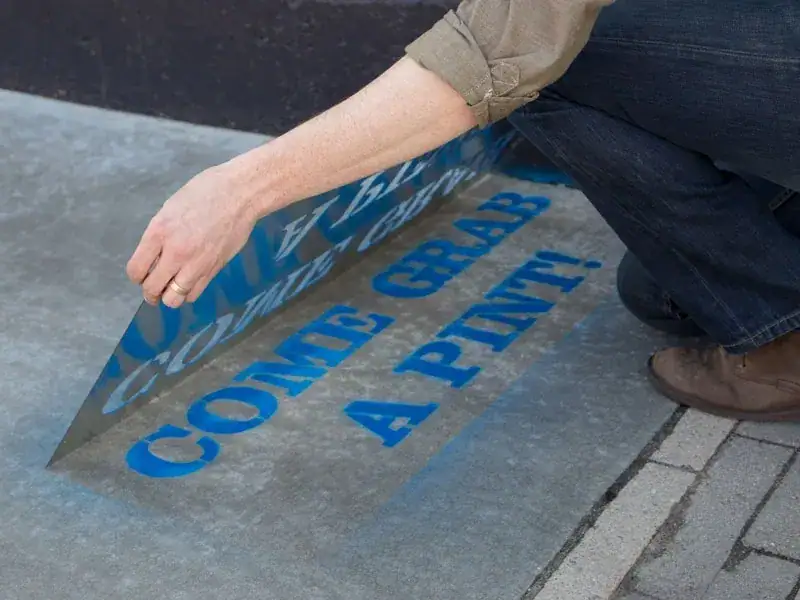
Water-soluble chalk stencils are temporary by design — they last hours to days depending on weather and foot traffic, then dissipate naturally without leaving any permanent mark. This makes them the ideal format for time-bounded activations like UT Volunteers home game weekends on The Strip and around the Neyland Stadium approaches, Market Square farmers market days, and festival events at World’s Fair Park. Chalk stencils can be deployed quickly in high volume, making them effective for saturation-style campaigns that blanket a district during a peak-traffic event window. In Knoxville’s spring and fall seasons — the city’s most active outdoor periods — chalk stencils deliver enormous single-day impression counts at a cost-per-impression that digital advertising rarely matches.
Reverse Graffiti (Clean Graffiti)
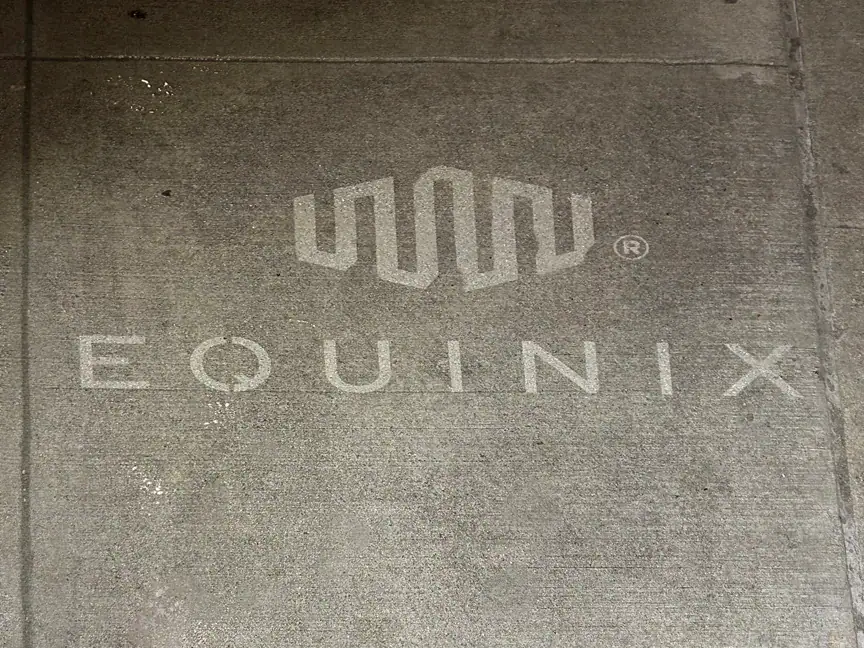
Reverse graffiti, also known as clean graffiti, is created by pressure-washing a brand pattern into an existing layer of grime on pavement or concrete surfaces. The result is a high-contrast, photographic-quality brand image that contains no paint, no chemicals, and no permanent alteration to the underlying surface. Gay Street’s older pavement sections are particularly well-suited to this technique — the accumulated weathering on historic sidewalk concrete creates the high-contrast base that makes reverse graffiti visually stunning. Market Square’s surrounding sidewalks and Old City’s Jackson Avenue are similarly effective surfaces. Clean graffiti campaigns generate exceptional organic social media sharing because the technique itself is visually compelling — the idea that cleaning a surface creates an image resonates with audiences and drives the kind of authentic documentation that paid campaigns cannot manufacture.
Paint Stencil
Paint stencils using water-based or specialty formulations are the most durable of AGM’s ground-level formats, capable of maintaining visibility for weeks or months under normal conditions. Because paint stencils involve a material application to the surface, they are deployed on private property with owner authorization — the Old City warehouse district’s loading docks, building aprons, and private parking areas are prime examples of the surfaces where this format excels. Brands that want sustained impressions over a multi-week campaign period, rather than the concentrated burst of a chalk activation, will find paint stencils offer the best duration-to-cost ratio. AGM handles all property-owner coordination as part of our campaign planning process, identifying private surfaces in Knoxville’s most active districts that can host durable brand applications with proper authorization.
Water Stencil (Pressure Wash)
Water stencils are executed with targeted pressure washing, using no paint, no chalk, and no chemicals — only water applied through a precision stencil template. The result is a clean, gallery-quality brand mark with crisp edges and zero residue. Market Square’s brick plaza surfaces and concrete approach sidewalks are particularly well-suited to this technique, as the porous brick and aged concrete respond beautifully to pressure washing, producing imagery that reads clearly from a distance while remaining indistinguishable from natural cleaning at close range. Water stencils are among the most regulation-friendly formats in our toolkit and are often the preferred choice for placements in historic downtown environments where the appearance of the public realm is actively managed. The technique requires no cleanup beyond the water itself and leaves no trace once the surface dries.
Get A Free Sidewalk Stencil Advertising Quote
Ready to make your brand stand out with sidewalk stencil advertising? Contact American Guerrilla Marketing to plan your campaign. Tell us your target locations, campaign goals, and timeline, and our team will help you create a customized sidewalk stencil advertising strategy that fits your needs and budget.
Award Winning Personalized Service
You will get thoughtful, devoted, and individualized attention from our experienced, qualified, and professional personnel. Being one of the most illustrious agencies in Brooklyn, New York, American Guerrilla Marketing has been awarded the Best of Brooklyn title.
Nationwide
Industry City, Brooklyn, New York 11232
American Guerrilla Marketing
Hours
Mon - Fri: 9 AM - 5 PM
Sat & Sun: Closed
Automate your campaign with AGM’s Request for Proposal Builder.
Automate your campaign with AGM’s Request for Proposal Builder. Simply answer a few quick questions about your campaign goals, markets, and timeline, and the system will generate a tailored presentation with recommended strategies, quantities, and pricing. Click the RFP Builder to instantly receive your customized proposal.
Knoxville Placement Strategy: Timing, Corridors, and Foot Traffic
A successful stencil campaign in Knoxville is not simply a matter of deciding where to place stencils — it is about understanding which corridors peak on which days, how event programming shifts pedestrian flows between districts, and how to time deployments so the freshest, highest-contrast images coincide with the highest foot-traffic windows. AGM’s Knoxville campaign planning begins with a detailed analysis of the specific dates, events, and seasonal patterns that will shape the pedestrian landscape during the proposed campaign period.
Market Square requires a split strategy depending on the programming calendar. Farmers market days — Wednesdays and Saturdays from late spring through early fall — concentrate shoppers and browsers in the square itself and on the surrounding approach sidewalks from mid-morning through early afternoon. A deployment the evening before or early morning of a farmers market day catches the square at its freshest and positions stencils for maximum visibility during peak shopping hours. Concert night deployments for the Sundown in the City series require a different approach, with stencils concentrated on the entertainment-facing sidewalks around the square and on Gay Street’s northern block approaching the Market Square intersection, where the concert-going audience flows in and out.
Gay Street’s dual nature — professional daytime traffic from nearby office buildings and civic uses, entertainment-oriented evening traffic — makes it a strong candidate for stencils that perform across a broad audience spectrum. A deployment on a Thursday or Friday captures the end-of-week professional foot traffic during lunch and happy hour, then transitions into weekend evening entertainment audience coverage without requiring a second deployment. The key timing consideration on Gay Street is placement before the Friday evening surge, which begins around 5:30 PM and extends through the late-night hours on Friday and Saturday.
Cumberland Avenue and The Strip require the most calendar-sensitive planning of any corridor in Knoxville. During the regular academic semester, The Strip peaks on Thursday, Friday, and Saturday evenings, with secondary peaks during the weekday lunch hours when student traffic from the campus dining areas spills over into the commercial strip. Home football Saturdays are a category unto themselves — the pedestrian volume on game-day weekends is five to ten times the regular weekday baseline, and the window of maximum concentration is roughly four hours before kickoff through two hours after the final whistle. AGM coordinates all game-day stencil activations specifically against the Tennessee Volunteers’ home schedule, treating each home game as a standalone activation event.
Old City’s Jackson Avenue late-night activation corridors see their heaviest foot traffic on Friday and Saturday evenings between 9 PM and 2 AM, with the crowd heavily concentrated around the Square Room entrance and the surrounding bar and restaurant cluster. Deployments for Old City campaigns should be timed to occur on Friday afternoons, when the surfaces are fresh and the approaching evening foot traffic will encounter stencils at their highest visual quality. World’s Fair Park and the convention center approaches are event-dependent — AGM pulls the public event calendar for the Knoxville Convention Center and times World’s Fair Park deployments to the one to three days immediately preceding and during major conventions, trade shows, or park festivals. The Henley Street Bridge approaches see their strongest pedestrian counts on weekend mornings and early afternoons, when recreational pedestrians and cyclists use the bridge to access South Knoxville greenway connections, making weekend morning deployments the most effective timing for this corridor.
Knoxville Sidewalk Stencil Campaign Pricing
AGM structures Knoxville campaigns around stencil volume tiers that correspond to different geographic scopes and campaign objectives. A single-district activation for a Market Square event or a Cumberland Avenue game-day push starts at 30 stencils. A full-city saturation campaign spanning multiple districts and multiple event windows is priced at 250 stencils. The table below reflects current campaign pricing for Knoxville deployments — all pricing includes creative consultation, production, on-the-ground installation by AGM-trained operators, and comprehensive photo documentation of every stencil placement.
Campaign pricing is based on standard Knoxville deployment conditions and the stencil formats described above. Campaigns requiring specialized surfaces, extended duration paint applications, or coordination with large-scale events such as UT home football weekends may be scoped differently. Contact AGM directly to discuss your specific Knoxville campaign objectives, preferred districts, and timing requirements — we will provide a detailed scope of work and pricing specific to your brand’s goals in this market.
Stencil Sizes for Knoxville Surfaces
Knoxville’s pedestrian environments span a range of surface types — the historic brick of Market Square’s plaza, the wide concrete sidewalk panels of Gay Street, the heavily trafficked pavement of Cumberland Avenue’s The Strip, and the narrower neighborhood walkways of 4th and Gill. AGM selects stencil dimensions based on the specific surface geometry and pedestrian approach angles at each placement location, ensuring that every stencil reads clearly at the viewing distance and angle most common for that particular spot.
11″ × 14″
Precision format for doorway thresholds, crosswalk corners, and tight placement zones where a larger stencil would obstruct pedestrian flow. Effective at building entrances along Gay Street and at the tighter sidewalk sections in Old City’s Jackson Avenue.
48″ × 12″
Horizontal banner format designed for curb edges, gutter lines, and the elongated approach zones before crosswalks. Works exceptionally well along Cumberland Avenue where pedestrians approach crosswalks from straight-line walking paths that allow the full horizontal dimension to read clearly.
36″ × 18″
The primary workhorse format for most Knoxville deployments — wide enough to hold complex brand marks and messaging, compact enough to fit cleanly within standard sidewalk panel dimensions. This is the default format for Market Square approach corridors and Gay Street mid-block placements.
24″ × 24″
Square format optimized for logo marks, icon-based brand assets, and QR code placements. The symmetrical geometry allows placement in any orientation without losing compositional integrity. Particularly effective on Market Square’s brick plaza where the square format echoes the geometry of the brick pavers themselves.
Agm's Six-step Knoxville Campaign Process
Step 1 — Brief & Strategy: Every Knoxville campaign begins with a strategic brief that aligns your brand’s objectives, target demographic, and campaign timing with the specific pedestrian patterns and event programming that define Knoxville’s ground-level landscape. We review your creative assets, define the districts and corridors that align with your audience, and establish the key performance indicators that will guide documentation and reporting. If your brand is targeting UT students, we calendar against the academic schedule and football home game dates. If you are targeting the broader downtown consumer population, we align deployment timing with Market Square’s event calendar and Gay Street’s peak traffic windows.
Step 2 — Location Scouting: AGM operators conduct on-the-ground location scouting in Knoxville prior to every campaign, walking the specific blocks, measuring surface dimensions, evaluating pavement conditions for stencil type suitability, and photographing the exact placement positions that will appear in your final documentation. For Market Square campaigns, we assess brick pavement conditions and identify the highest-dwell zones around the central plaza. For Gay Street, we map the wide sidewalk panels between building frontages and street furniture. For Cumberland Avenue game-day campaigns, we walk the stadium approach routes and identify the highest-concentration pedestrian pinch points.
Step 3 — Permitting & Coordination: AGM manages all permitting and coordination required for your Knoxville campaign. This includes outreach to the City of Knoxville’s relevant departments for public-space activations, coordination with private property owners for paint stencil placements in Old City and other private-surface locations, and communication with event organizers where campaigns are timed to coincide with Market Square concerts, World’s Fair Park festivals, or university-adjacent activations. We handle the administrative layer so your team can focus on creative and brand alignment.
Step 4 — Stencil Production: Campaign stencils are produced to AGM’s quality standards using materials and processes calibrated to the selected stencil type — chalk compound for temporary activations, precision templates for reverse graffiti and water stencils, and appropriate paint formulations for durable private-surface applications. All stencils are produced with Knoxville’s specific surface textures and dimensions in mind. Custom sizing for Market Square’s brick pavers or the concrete aprons of Old City’s warehouse buildings is built into the production specification, not treated as an afterthought.
Step 5 — Deployment: AGM’s on-the-ground operators deploy stencils on the agreed schedule, working during the timing windows identified in the strategy phase to ensure maximum freshness at peak traffic hours. Game-day activations on The Strip begin in the pre-dawn hours before stadium-area security protocols activate, ensuring full placement completion before the first wave of fans arrives. Market Square deployments are typically completed before the farmers market vendor setup begins, positioning stencils directly in the path of arriving shoppers. All deployments include real-time check-ins to account for unexpected surface conditions, weather changes, or access issues.
Step 6 — Documentation & Reporting: Every stencil placement in your Knoxville campaign is photographed at the time of deployment, with images capturing both the close-up brand detail and the surrounding environmental context that demonstrates the placement’s location and pedestrian relevance. Post-campaign, AGM compiles a full documentation package that includes geotagged placement records, photography, estimated impression counts by district and time window, and a campaign summary suitable for internal reporting and social media use. Brands frequently use AGM’s documentation photography as organic social content, and our operators are trained to capture images that work in both formats.
Brands That Have Used AGM Sidewalk Stencils
American Guerrilla Marketing’s sidewalk stencil client roster includes some of the most recognizable brands in global consumer culture. Nike has used AGM stencil campaigns to generate pre-launch awareness around sneaker drops in markets where the target consumer is physically active, culturally engaged, and resistant to conventional advertising — exactly the profile of Knoxville’s UT student population and downtown young professional community. The combination of Nike’s visual language and a high-contrast chalk or reverse graffiti execution at ground level creates the kind of ambient brand moment that sticks in memory long after the stencil has faded.
Wrangler has used AGM’s capabilities to reach heritage-brand consumers in markets where outdoor and working-life culture defines consumer identity — East Tennessee, with its strong connection to outdoor recreation, agriculture, and the working-class roots of the surrounding Appalachian region, is precisely the kind of market where Wrangler’s brand positioning resonates at the street level. EA Sports has activated AGM stencil campaigns around gaming release windows, targeting the dense college-town pedestrian environments that produce the highest per-capita gaming consumer density in the country — an exact description of The Strip and UT’s campus surroundings during fall semester.
For Knoxville specifically, the East Tennessee market is a natural fit for outdoor and adventure brands, university-adjacent consumer products, and regional consumer goods companies that want to establish visible brand presence in a fast-growing mid-sized city without the advertising cost structures of Nashville or Atlanta. Tennessee Volunteers-adjacent consumer products, outdoor gear and apparel brands targeting the hiking and trail-running community that uses the Smoky Mountains and Urban Wilderness trail systems, and craft food and beverage brands targeting Knoxville’s growing food culture are all categories where AGM’s stencil campaigns have proven particularly effective. The combination of cultural specificity, geographic precision, and the inherently shareable nature of guerrilla marketing makes Knoxville an unusually strong market for this format.
Frequently Asked Questions
Yes — Market Square’s summer programming, including the Sundown in the City concert series and the regular farmers market calendar, creates some of the strongest single-day pedestrian activation windows available anywhere in Knoxville. AGM plans stencil deployments specifically around the Market Square event calendar, timing chalk stencil placements to go down the evening before or early morning of a major event so the freshest, highest-contrast images are underfoot when the crowds arrive. The square’s brick plaza and surrounding sidewalks on Market Street, Gay Street, and Union Avenue all serve as viable surfaces, and our operators know which sections carry the heaviest foot traffic during festival programming versus a standard Saturday farmers market day. We coordinate any required permissions with event organizers and city departments as part of the standard campaign planning process.
Game-day weekends at Neyland Stadium represent one of the highest single-day impression opportunities in the entire state of Tennessee. The most effective strategy concentrates chalk stencils on the primary pedestrian approach routes — Cumberland Avenue and The Strip from the campus commercial district, Phillip Fulmer Way and Peyton Manning Pass approaching the stadium from the north, and the pedestrian corridors connecting the stadium parking areas to the gates. Deployments should be completed in the pre-dawn hours of game day before security perimeters are activated. A secondary layer of stencils on The Strip’s restaurant and bar blocks captures the post-game crowd returning to the commercial corridor after the final whistle. For brands with a strong UT student connection, combining a game-day activation on the stadium approaches with a simultaneous deployment in the residential Greek row corridors doubles the reach across the student population.
Gay Street is one of the strongest reverse graffiti corridors in East Tennessee. The technique requires pavement surfaces with a meaningful layer of accumulated grime or weathering to create the high-contrast effect that makes clean graffiti visually striking, and Gay Street’s older concrete sidewalk panels — particularly the sections between the Tennessee Theatre and the Market Square intersection — provide exactly the surface conditions the technique demands. The surrounding historic architecture, with its brick facades and cast-iron detailing, creates a photogenic backdrop that makes reverse graffiti brand marks on Gay Street exceptionally strong social media performers. Brands frequently receive significant organic sharing when their reverse graffiti placements are photographed against this visual context. AGM scouts Gay Street pavement conditions prior to every campaign to identify the highest-contrast surface sections for placement.
Market Square and Old City serve fundamentally different campaign objectives, and the right choice depends entirely on your brand’s target demographic and the timing of your campaign. Market Square delivers higher raw impression counts, a broader demographic cross-section, and peak traffic across multiple dayparts and weekday-to-weekend cycles. Old City delivers a more concentrated, culturally specific audience — younger, more creative-sector oriented, and more socially influential as early adopters and tastemakers — but with peak traffic concentrated tightly in the Friday and Saturday evening and late-night hours. For brands targeting broad consumer awareness in Knoxville’s downtown, Market Square is the primary location. For brands targeting cultural credibility, youth adoption, and social sharing among Knoxville’s creative community, Old City is the more strategic choice. Many AGM campaigns combine both districts for a strategy that achieves mass reach at Market Square while building cultural resonance in Old City simultaneously.
Yes, with careful planning and coordination. Neyland Stadium is managed by the University of Tennessee Athletics Department, and the stadium’s immediate footprint and official tailgating zones are subject to event management protocols on home game days. AGM’s game-day strategy focuses on the public sidewalk corridors in the approach zones — Cumberland Avenue, The Strip’s commercial blocks, Phillip Fulmer Way, and the connecting pedestrian routes from parking areas — which remain public right-of-way and are navigable for chalk stencil deployment in the pre-game hours. These corridors carry enormous pedestrian volume as tens of thousands of fans converge on the stadium from multiple directions, making them ideal for stencil saturation that intercepts the game-day audience before they reach the stadium perimeter. We have executed multiple game-day adjacent campaigns in similar major college football environments and have established deployment protocols specifically optimized for these high-traffic event scenarios.
World’s Fair Park and the Knoxville Convention Center approach corridors are highly effective stencil zones during major convention and trade show events. The convention center draws professional audiences that are often highly targeted for B2B brands, professional services, technology companies, and industry-specific consumer products — and the concentrated movement of convention attendees between the convention center, the surrounding hotels, and the restaurant and bar options along Clinch Avenue and into downtown creates predictable pedestrian flows that stencils can intercept efficiently. AGM monitors the public event calendar for the convention center and can time Knoxville campaign deployments to coincide with specific events that align with your brand’s target audience. The World’s Fair Park grounds themselves are also a valuable activation zone during park festivals and outdoor events, particularly the summer concert and cultural programming that draws large community audiences to the Sunsphere lawn and surrounding spaces.
Yes — permit management is a standard component of every AGM campaign, not an optional add-on. The permitting landscape for sidewalk stencil campaigns varies depending on the stencil type, the specific surface, and whether the placement is on public right-of-way or private property. Chalk stencils on public sidewalks in Knoxville are generally governed by the City of Knoxville’s special event and temporary signage regulations, and AGM manages any required notifications or applications as part of the campaign planning process. Paint stencils on private property require written authorization from the property owner, which AGM secures directly. Reverse graffiti and water stencil placements, which involve no permanent surface alteration, typically have the most favorable regulatory posture, but we handle all coordination regardless of stencil type. Your team never needs to navigate city bureaucracy directly — AGM handles the full permitting layer from start to finish.
Effective saturation of Cumberland Avenue’s primary commercial stretch — from the campus core to the residential and bar district extending west toward the stadium — typically requires between 30 and 60 stencils to achieve the visual density that creates genuine brand ubiquity for the pedestrian audience. At 30 stencils, a campaign can concentrate placement in the highest-traffic blocks immediately around the most popular restaurant and bar cluster, creating a strong brand presence in the core of The Strip’s activity zone. At 60 stencils, the campaign can extend coverage through the full commercial length of the corridor, including the crosswalk approaches at major intersections and the connecting sidewalk segments toward Greek row. For a game-day campaign that also covers the stadium approach routes, 100 stencils allows simultaneous Strip saturation and approach-route coverage across the multiple pedestrian corridors converging on Neyland Stadium. AGM can model specific placement plans at any stencil count for your review prior to commitment.
The Henley Street Bridge approaches on the downtown side are an underutilized but genuinely viable stencil placement zone for brands targeting Knoxville’s active outdoor and commuter pedestrian audience. The bridge carries a meaningful and growing volume of pedestrian and bicycle traffic, particularly since South Knoxville’s riverfront development has increased the appeal of the bridge crossing as a commuting and recreational route. The approach sidewalks along Henley Street and the connecting walkways from the Clinch Avenue and Hill Avenue intersections represent a linear corridor where pedestrians move in a consistent direction, creating ideal conditions for stencils placed in the walking path to be seen and read clearly. Weekend mornings are the peak traffic window, when recreational cyclists and walkers use the bridge to access South Knoxville’s greenway network and the Urban Wilderness trailheads. For brands targeting an outdoors-active, health-conscious Knoxville demographic, the Henley Street Bridge approaches are a strong complement to a primary Market Square or Gay Street campaign.
AGM recommends a minimum of two to three weeks of lead time for a standard Knoxville stencil campaign, and four to six weeks for campaigns with complex permitting requirements, custom creative production, or coordination with specific events like UT football home games or major Market Square festival programming. The lead time encompasses strategic brief development, location scouting in Knoxville, permitting outreach, stencil production, operator scheduling, and logistics coordination. Campaigns timed to coincide with specific high-value dates — a Tennessee Volunteers home game, the opening day of the Sundown in the City concert series, or a major Knoxville Convention Center event — benefit from the full four-to-six-week window to ensure every element is in place well before the target deployment date. Rush campaigns can sometimes be accommodated depending on our Knoxville operator availability and the complexity of the specific scope, but standard lead times produce better outcomes in every dimension of campaign quality.
Knoxville’s winters are milder than most of the country, making the city one of the more favorable cold-weather stencil markets in the Southeast. Average January temperatures in Knoxville typically remain above freezing during daytime hours, which means chalk stencils can be applied and will adhere to dry pavement surfaces through the winter months without the freezing and cracking problems that affect colder northern markets. Market Square’s year-round programming, Gay Street’s dining and entertainment scene, and UT’s academic calendar all continue through the winter semester, maintaining meaningful pedestrian volumes in the core downtown and campus districts even during the coldest months. The winter window from November through February is actually a strategically interesting time for Knoxville stencil campaigns because the competitive clutter is lower — fewer brands are running guerrilla activations in winter, which means your stencils face less visual competition and register more distinctly against the pedestrian environment. AGM’s operators have established winter-specific deployment protocols for Knoxville that account for morning cold and damp surface conditions to ensure maximum stencil adhesion and longevity.
Our Campaign Locations
Browse All States
Explore Sidewalk Stencil Advertising opportunities across the United States.
49 States • 201 Cities