American Guerrilla Marketing
Nationwide Service
Media planning, media buying, billboard advertising, & guerrilla marketing
Sidewalk Stencil Advertising in Santa Fe, New Mexico

America’s oldest capital city walks on history — and AGM puts your brand on the plaza stones, gallery streets, and Railyard paths that draw millions of culturally engaged visitors and discerning locals year-round.
Santa Fe is unlike any other city in America. At 7,000 feet elevation in the southern Rockies, it is the oldest continuously occupied state capital in the United States, a UNESCO Creative City of Design, and the third-largest art market in the world by dollar volume — behind only New York and Los Angeles. The city’s economy is built around culture, creativity, tourism, and government, and its pedestrian zones are among the most intensely walked, photographed, and experienced in the entire Southwest. For brands that want to exist at the intersection of culture and commerce, Santa Fe’s sidewalks are one of the most powerful surfaces in the country.
The historic Plaza at the heart of Downtown Santa Fe is the geographic and emotional center of the city — a public square that has been the focal point of Santa Fe’s civic life since 1610. The Palace of the Governors on the Plaza’s north side, where Native American artisans display handcrafted jewelry under the portal daily, draws a constant stream of visitors who move slowly, photograph everything, and are in a state of heightened aesthetic attention. The side streets radiating from the Plaza — Old Santa Fe Trail, Palace Avenue, San Francisco Street — are among the most walked and photographed pedestrian corridors in the American West. A well-placed stencil in this environment is not just an advertisement; it is a discovery.
Canyon Road, running southeast from the Plaza toward the foothills, is one of the most extraordinary gallery districts on earth — a narrow historic road lined with over 100 art galleries, studios, and restaurants set in converted adobe homes and compounds. Canyon Road pedestrians are among the most culturally engaged in any American city: they walk slowly, they spend money, they are open to new ideas, and they photograph constantly. The art-world positioning of Canyon Road means that a brand visible on the approach paths and footways of this district is associated in the viewer’s mind with creativity, quality, and cultural sophistication — associations that no billboard or transit advertisement can manufacture.
The Railyard Arts District — anchored by SITE Santa Fe, the Santa Fe Farmers Market, Meow Wolf’s immersive entertainment complex, and the Rail Trail linear park — has emerged as Santa Fe’s contemporary creative quarter. This district draws a younger, design-forward audience than the historic Plaza zone and Canyon Road, creating a different but equally engaged foot-traffic profile. American Guerrilla Marketing maps placement strategies across all three of Santa Fe’s major pedestrian ecosystems — historic Plaza zone, Canyon Road gallery district, and Railyard creative quarter — and calibrates stencil medium, size, and timing to the character of each zone and the objectives of each campaign.
Every AGM Santa Fe campaign is GPS-documented, photographed at every placement point, and delivered with a full reporting package. Santa Fe’s historic adobe aesthetic makes it one of the most photogenic reverse graffiti markets in the country — the contrast between cleaned imagery and the city’s dusty, ochre-toned historic pavement is visually dramatic in a way that generates extraordinary organic social media documentation from the tourists and locals who encounter the work. For Nike, Wrangler, EA Sports, and the other brands that have trusted AGM’s Sidewalk Stencils™ platform, Santa Fe represents the intersection of high cultural capital and measurable street-level performance.
Ready to Own Santa Fe's Sidewalks?
From the historic Plaza's perimeter paths to Canyon Road's world-class gallery walk and the Railyard's design-forward creative campus, AGM puts your brand at the heart of America's most culturally engaged walking city.
Browse Cities in New Mexico
Select a city to explore Sidewalk Stencil Advertising opportunities.
Santa Fe's Premier Pedestrian Zones For Stencil Activation
The Historic Plaza — America’s Oldest Public Square
Santa Fe’s central Plaza is arguably the most visited and most photographed public space in the American Southwest. Surrounded by galleries, museums, restaurants, and the Palace of the Governors — the oldest continuously occupied public building in the United States — the Plaza draws visitors from every corner of the country and the world throughout the year, with peak concentrations during Indian Market in August, Spanish Market in July, and the Santa Fe Fiesta in September. The foot paths around the Plaza’s perimeter, the approach sidewalks on San Francisco Street and Palace Avenue, and the pedestrian entries from the adjacent parking structures are all high-frequency stencil surfaces where placement guarantees repeated impressions from an audience that is actively looking, actively photographing, and actively sharing their Santa Fe experience on social media. Reverse graffiti on the Plaza’s historic concrete paths creates a particularly powerful brand impression — bright, precise imagery emerging from the aged and dust-patinated surfaces of America’s oldest capital city.
Canyon Road Gallery District — World’s Third-Largest Art Market
Canyon Road is where Santa Fe’s global art market lives at street level. The narrow historic road winds for approximately one mile from Paseo de Peralta southeast toward the foothills, lined continuously with over 100 galleries, studios, and curated eateries housed in converted adobe compounds. The pedestrians who walk Canyon Road are among the most high-value audiences in American urban space: they are affluent, culturally sophisticated, actively spending on art and design, and in a deeply aesthetic and receptive state of attention. The foot path along Canyon Road — narrow enough that art hangs visible from the sidewalk level and conversations between strangers are natural — creates a shared pedestrian experience unlike any standard commercial street. Stencil placements at the Paseo de Peralta entry to Canyon Road, at the midpoint galleries around the acequia crossing, and at the upper-road turn-around near Cristo Rey Church capture the full pedestrian flow across the gallery district’s complete walkable length.
Railyard Arts District — SITE Santa Fe, Meow Wolf & Farmers Market
The Santa Fe Railyard Arts District has transformed the city’s historic rail terminus into New Mexico’s most dynamic contemporary cultural campus. SITE Santa Fe presents international contemporary art exhibitions that draw collectors and curators from around the world. Meow Wolf’s Santa Fe location — the original House of Eternal Return — attracts over 400,000 visitors annually and is one of New Mexico’s most-visited paid attractions. The Santa Fe Farmers Market in the Railyard Pavilion is one of the most beloved weekly events in the city, drawing thousands of locals and visitors every Saturday and Tuesday morning. The Rail Trail linear park connects the Railyard district to the Downtown Plaza and Guadalupe Street through a dedicated pedestrian and cycling path, creating a continuous walkable connection between the city’s historic core and its contemporary arts quarter. Stencil placements at Meow Wolf’s entry approach, the Farmers Market pavilion approaches, and the Rail Trail crossing points reach a design-forward, socially active demographic that documents and shares extraordinary ground-level experiences compulsively.
Guadalupe Street — The Connector Between Downtown & Railyard
Guadalupe Street runs north-south between the historic Downtown and the Railyard Arts District, functioning as the connecting commercial artery between Santa Fe’s two most pedestrian-intensive zones. The street is lined with cafés, boutiques, artisan food producers, and specialty retailers that draw a steady flow of locals and visitors throughout the day and into the evening. The sidewalk zones on Guadalupe between the Railyard District and the Sanbusco Market Center on the north end are particularly valuable stencil surfaces — they are used by pedestrians transiting between Downtown and the Railyard, by Farmers Market visitors extending their Saturday outing into the surrounding restaurants, and by evening diners on their way to and from the neighborhood’s restaurant concentration. Guadalupe Street placements serve as directional connectors in multi-zone campaigns that run from the Plaza through Guadalupe and into the Railyard, creating a stencil-marked pedestrian trail that brands the full pedestrian journey through Santa Fe’s cultural corridor.
Old Santa Fe Trail & Museum Hill Approaches
Old Santa Fe Trail runs southeast from the Plaza toward the Museum Hill complex — the densest museum concentration in New Mexico, anchored by the Museum of International Folk Art, the Museum of Indian Arts and Culture, the Wheelwright Museum of the American Indian, and the Museum of Spanish Colonial Art. The approach sidewalks along Old Santa Fe Trail from the Plaza district toward Museum Hill carry a steady flow of culturally engaged visitors — many of them on foot between museum visits, making the full one-mile walk from the Plaza to the Museum Hill campus. This corridor reaches an audience with exceptional cultural capital: well-traveled, high-income, and deeply invested in the art, craft, and heritage objects that define Santa Fe’s museum collection. Stencil placements at intervals along Old Santa Fe Trail create a brand experience that accompanies the pedestrian’s full journey from the historic Plaza to the museum campus — a walking meditation on culture in which the brand is a subtle but consistent presence.
Cerrillos Road Commercial Corridor & Sanbusco Area
Cerrillos Road is Santa Fe’s primary commercial corridor — a four-lane arterial running south from Downtown that concentrates the city’s big-box retail, hotel properties, and regional service businesses. While Cerrillos Road is less pedestrian-intensive than the Plaza and Canyon Road zones, it generates significant on-foot traffic at the crosswalk approaches near major retail intersections and at the shopping center pedestrian entries between Guadalupe and the Sanbusco Market Center. The Sanbusco area at the intersection of Guadalupe and Montezuma is a boutique retail and restaurant hub that generates above-average pedestrian dwell time for the commercial section of Santa Fe. Stencil campaigns that need to reach Santa Fe residents — as opposed to the tourist-heavy Plaza and Canyon Road zones — find Cerrillos Road’s commercial perimeter and the Sanbusco area an effective residential consumer target zone, particularly on weekday mornings and Saturday mid-mornings when locals shop independently of the Plaza tourist concentration.
Stencil Types Available In Santa Fe
Santa Fe’s extraordinary range of surfaces — from the Plaza’s centuries-worn historic concrete to the Railyard’s modern poured plazas and Canyon Road’s packed-earth and old adobe approaches — calls for a carefully matched medium selection for each placement zone. AGM offers all four core formats in Santa Fe.
Chalk Stencil
Chalk stencils in Santa Fe benefit from the city’s dry, high-altitude climate — over 300 sunny days annually, minimal rainfall, and low humidity combine to produce exceptional chalk longevity on the Plaza’s approach sidewalks, the Railyard Pavilion paving, and the commercial sidewalks of Guadalupe Street. Santa Fe’s tourist-heavy zones receive enormous foot traffic that increases mechanical wear, but the dry conditions compensate to produce average campaign durations of one to three weeks even in the highest-traffic Plaza perimeter areas. For Indian Market in August — when the Plaza and surrounding streets see the highest pedestrian densities of the year — chalk stencil deployment is the recommended format, as the temporary character of chalk aligns with the event’s spirit and is compatible with the historic Plaza’s public space guidelines. The visual effect of chalk imagery on the warm adobe-toned concrete of Santa Fe’s historic streets is particularly rich — the color contrast is gentle rather than harsh, giving brand messages a presence that feels contextually appropriate to the city’s aesthetic character.
Reverse Graffiti (Clean Graffiti)
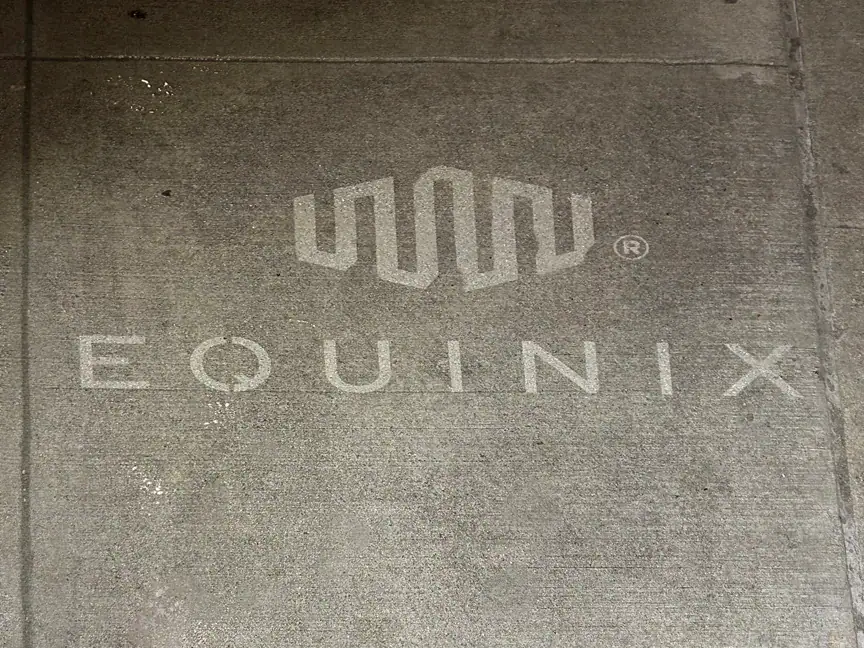
Santa Fe is arguably the premier reverse graffiti market on AGM’s entire network. The city’s historic concrete sidewalks — particularly the aged paths on Old Santa Fe Trail, the worn paving around the Plaza’s perimeter, and the approach walkways on Canyon Road’s Paseo de Peralta entry — have accumulated decades of the red-ochre desert dust and sun-bleached residue that makes the reverse graffiti contrast most striking and photogenic. A clean-scrubbed brand image on the Plaza perimeter path glows against the surrounding dust-patinated surface in a way that is visually extraordinary — particularly when photographed in Santa Fe’s intense, clear-sky afternoon light. The aesthetic of discovered cleanliness on an aged historic surface is deeply compatible with the sensibility of Santa Fe’s culturally sophisticated audience, who respond to unexpected beauty in familiar spaces. Reverse graffiti near Canyon Road’s gallery district entrance creates a brand association with the art world that paid advertising can never manufacture.
Paint Stencil
Paint stencil applications in Santa Fe are most appropriate for privately managed commercial surfaces — the boutique retailers and restaurant frontages along Guadalupe Street, the Sanbusco Market Center’s exterior plaza surfaces, and the private commercial approaches in the Railyard Arts District adjacent to Meow Wolf and SITE Santa Fe. Property manager coordination is required for all paint stencil applications on private surfaces, and AGM manages this process as standard campaign procedure. In Santa Fe’s historic zones, paint stencil applications on public surfaces require careful coordination with the City of Santa Fe’s Historic Design Review Board, and AGM navigates this review process for applicable campaign configurations. Paint stencils in Santa Fe are most effective for campaigns with longer active-window requirements — the brand durability of the format is valuable when the campaign objective is sustained presence over several weeks rather than event-specific activation.
Water Stencil (Pressure Wash)
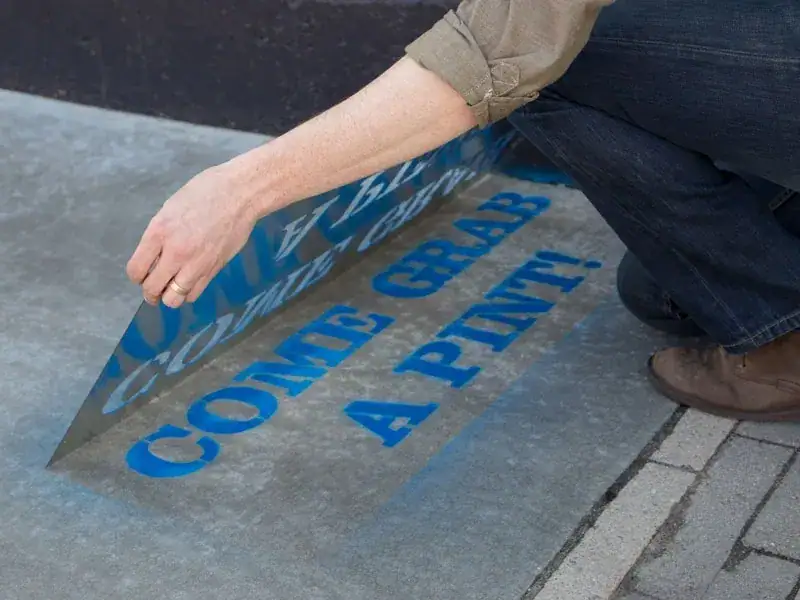
Pressure-wash stenciling on Santa Fe’s older concrete surfaces delivers results that are among the most visually dramatic in AGM’s portfolio. The Railyard district’s exterior concrete plazas — the open hardscape areas around SITE Santa Fe’s entrance, the Farmers Market pavilion approaches, and the Rail Trail hardscape connections — are wide, well-aged concrete surfaces with excellent pressure-wash response characteristics. The large-format imagery possible with water stenciling on Railyard plaza concrete is visible from across the entire open plaza area — a brand identity rendered at 48″ × 12″ on the Railyard’s main approach hardscape can be read from the parking area entry, generating brand impressions before the pedestrian even reaches the stencil’s immediate vicinity. For Meow Wolf visitor approach paths — where an audience primed for extraordinary visual experiences moves from parking areas to the entrance — a well-executed pressure-wash stencil creates exactly the kind of “what is that?” discovery moment that generates organic social documentation.
Get A Free Sidewalk Stencil Advertising Quote
Ready to make your brand stand out with sidewalk stencil advertising? Contact American Guerrilla Marketing to plan your campaign. Tell us your target locations, campaign goals, and timeline, and our team will help you create a customized sidewalk stencil advertising strategy that fits your needs and budget.
Award Winning Personalized Service
You will get thoughtful, devoted, and individualized attention from our experienced, qualified, and professional personnel. Being one of the most illustrious agencies in Brooklyn, New York, American Guerrilla Marketing has been awarded the Best of Brooklyn title.
Nationwide
Industry City, Brooklyn, New York 11232
American Guerrilla Marketing
Hours
Mon - Fri: 9 AM - 5 PM
Sat & Sun: Closed
Automate your campaign with AGM’s Request for Proposal Builder.
Automate your campaign with AGM’s Request for Proposal Builder. Simply answer a few quick questions about your campaign goals, markets, and timeline, and the system will generate a tailored presentation with recommended strategies, quantities, and pricing. Click the RFP Builder to instantly receive your customized proposal.
Strategic Placement in Santa Fe's Cultural Pedestrian Zones
Plaza Perimeter — The High-Impact Entry Experience: The most valuable stencil real estate in all of Santa Fe is the pedestrian approach zone around the Plaza’s perimeter — the sidewalks on San Francisco Street between the parking structures and the Plaza’s west entry, the Palace Avenue approach from the east, and the Old Santa Fe Trail southern approach from the municipal parking area. Every visitor to the Plaza passes through one of these three approach corridors, making complete Plaza-audience capture achievable with as few as six to eight carefully placed stencils at the choke points. These are Santa Fe’s highest-impression-per-stencil locations, and they should anchor any Santa Fe campaign that wants to reach the tourist and cultural visitor audience.
Canyon Road — Walking Speed, Extended Dwell: Canyon Road’s pedestrian pace is slower than any other commercial street in New Mexico — gallery visitors stroll, stop, photograph, and reverse direction constantly, creating multiple impression opportunities per stencil for every person who walks the full length of the road. The most effective stencil placements on Canyon Road are at the Paseo de Peralta entry (capturing every visitor who enters from the street), at the mid-road acequia crossing area (the natural midpoint pause in the walk), and at the upper entry near Cristo Rey Church (capturing return-walk pedestrians as they begin their descent). These three anchor points, combined with periodic placements at gallery cluster entries, create a Canyon Road brand presence that accompanies the visitor through their full gallery walk experience.
Railyard on Farmers Market Days — Saturday Morning Density: The Santa Fe Railyard Farmers Market on Saturday mornings is one of the most beloved community events in New Mexico and one of the highest foot-traffic concentrations in the Santa Fe metro. The Railyard Pavilion and its surrounding pedestrian plaza fill with thousands of shoppers, families, and visitors between 7 AM and 12 PM every Saturday, creating a pedestrian density in the Railyard district that rivals the Plaza at peak summer tourist season. Stencils placed on the approach paths from the Guadalupe Street entry, the parking areas off Cerrillos Road, and the Rail Trail pedestrian access capture every Farmers Market visitor at the moment of arrival — a high-dwell, community-minded audience in its most receptive weekly state.
Indian Market Week — August’s Unrivaled Peak: The Santa Fe Indian Market, held on the Plaza the third weekend of August, is the largest and most prestigious American Indian art market in the world. Over 150,000 people attend the two-day market, and the surrounding week’s programming — gallery previews, museum openings, collector dinners — draws tens of thousands more to the Plaza zone and Canyon Road. Indian Market week represents the single highest-volume pedestrian period of the year in Santa Fe, and chalk stencil campaigns deployed the Thursday before market weekend reach an audience that includes the global art world’s most influential collectors, curators, and gallery directors. This is the week to own the Plaza sidewalks.
Meow Wolf Approach — The Discovery Audience: Meow Wolf’s Santa Fe location at 1352 Rufina Circle draws over 400,000 visitors annually — a design-forward, experience-seeking, social-media-active demographic that is exactly the kind of audience that photographs and shares extraordinary street-level visual moments. The pedestrian approach from the Rufina Circle parking areas to Meow Wolf’s entrance passes through a defined hardscape zone where a pressure-wash or chalk stencil creates a pre-experience brand touchpoint for visitors who are already primed for visual discovery. This audience’s organic social media activity makes a single well-designed stencil near Meow Wolf capable of generating impressions well beyond its physical location through Instagram, TikTok, and travel documentation platforms.
Santa Fe Sidewalk Stencil Pricing
All AGM Santa Fe campaign packages include the complete service suite: location scouting and surface evaluation, custom stencil production, deployment crew, GPS coordinate logging at every placement, timestamped photography before and after application, and a full post-campaign documentation report within 48 hours of deployment completion.
In Santa Fe, where the pedestrian geography is concentrated into the Plaza zone, Canyon Road, Guadalupe Street, and the Railyard, 30 stencils can achieve saturation within a single district — particularly in the high-impression Plaza perimeter approach zone. Scaling to 100 stencils unlocks simultaneous coverage of the Plaza, Canyon Road, Guadalupe/Railyard, and Cerrillos commercial zones — a genuine city-wide presence across all of Santa Fe’s major pedestrian ecosystems. For Indian Market week or other peak-event campaigns where every pedestrian zone is operating at maximum volume simultaneously, the 100+ packages are strongly recommended
Available Stencil Sizes
Santa Fe’s varied pedestrian surfaces — from the narrow historic walks of Canyon Road to the wide Railyard plaza hardscape — call for strategic size selection. AGM matches size to surface and sightline at each placement point during the scouting process.
- 11″ × 14″Precision placement at doorways, crosswalk corners, tight urban corridors
- 48″ × 12″Horizontal banner format for curb edges, storefronts, and directional runs
- 36″ × 18″Versatile mid-scale format for main sidewalk panels and plaza approaches
- 24″ × 24″Square format for logos, icons, and visuals built around symmetrical brand marks
How A Santa Fe Sidewalk Stencil Campaign Works
Step 1 — Brief & Strategy: Santa Fe’s pedestrian zones are distinctly different in character — the Plaza’s tourist-cultural audience, Canyon Road’s art-world visitors, the Railyard’s contemporary creative community, and Cerrillos Road’s local resident population each require a different approach to placement, medium, and timing. Our strategy session establishes which zones the campaign should target, what medium is appropriate for each zone’s surface and regulatory environment, and how campaign timing should align with Santa Fe’s event calendar — Indian Market, Spanish Market, Fiesta, Folk Art Market, Film Festival, or the Meow Wolf visitor cycle.
Step 2 — Location Scouting: Santa Fe’s historic surfaces require more careful individual evaluation than those in newer commercial cities. AGM scouts every candidate placement location for surface material (concrete type, tile, flagstone, packed earth), condition, cleanliness, historical sensitivity, pedestrian flow volume, and the specific approach geometry that determines how many people will see the stencil and from what distance. We document all candidate surfaces with photographs and GPS coordinates and deliver a detailed scouting report for client review before any production commitment is made.
Step 3 — Permitting & Coordination: Santa Fe’s historic district designations and its UNESCO Creative City status create a regulatory environment that requires thoughtful navigation for stencil campaigns. AGM manages all coordination with the City of Santa Fe’s relevant departments, including the Historic Design Review Board for applicable placements, property owners for any private surface applications, and event organizers for activations timed to Indian Market, Fiesta, or other city-managed event periods. Chalk stencil applications on public sidewalks outside the strictest historic preservation zones follow applicable municipal guidelines for temporary art. AGM handles the full regulatory interface — clients do not manage permitting.
Step 4 — Stencil Production: All stencils are produced in-house to artwork specifications approved by the client. For Santa Fe campaigns, we pay particular attention to color selection — the warm, earth-toned visual environment of the historic city creates different contrast dynamics than a modern urban setting, and our design team advises on color choices that maximize legibility against the specific surfaces and ambient light conditions of each placement zone. Standard production timelines are five to seven business days from artwork approval to deployment-ready stencil sets.
Step 5 — Deployment: Santa Fe deployments are executed during early morning hours — typically before 7 AM — when the historic district’s pedestrian zones are at their quietest and crew operations have maximum access to placement surfaces. This timing also ensures that stencils are fully set and at their visual best by the time the day’s pedestrian flow begins building through the Plaza, Canyon Road, and Railyard zones. GPS tagging and before-and-after photography occur at every placement point in real time during deployment.
Step 6 — Documentation & Reporting: The full AGM documentation package for Santa Fe campaigns is delivered within 48 hours of deployment completion. It includes GPS coordinates for every stencil location plotted on a Santa Fe street-grid placement map, timestamped before-and-after photography for each site, surface condition notes for each placement, and a written campaign summary with impressions estimates by zone. For event-timed campaigns, we also provide a post-event addendum photograph set documenting stencils in context during peak pedestrian activity periods.
Brands That Have Used AGM Sidewalk Stencils™
Nike has activated AGM Sidewalk Stencils™ campaigns in cultural destination cities where the intersection of athletic lifestyle and creative community creates a particularly potent brand environment. Santa Fe — a city that draws world travelers, supports an extraordinary outdoor sports culture through the adjacent Sangre de Cristo Mountains, and hosts a year-round influx of design-conscious visitors — is exactly the kind of cultural-capital market where a Nike stencil on the Canyon Road approach or the Railyard plaza hardscape generates the brand-world associations that conventional out-of-home formats cannot create. The AGM format’s ability to feel like a found object rather than a placed advertisement is especially valuable in Santa Fe, where residents and visitors alike are allergic to the visual noise of conventional advertising.
Wrangler’s engagement with AGM’s Sidewalk Stencils™ platform has included activations in markets where Western heritage is genuine rather than stylistic — and Santa Fe is the capital of that territory. The city’s deep connection to Southwestern craft, Indigenous art, and the living traditions of New Mexican ranching and cowboy culture makes Wrangler a brand that belongs on Santa Fe’s streets in a way that no amount of billboard spend can manufacture. A Wrangler stencil on the Old Santa Fe Trail approach, near the galleries that sell the Western art that has shaped the brand’s visual identity for generations, creates a brand-environment dialogue that earns attention rather than demanding it.
EA Sports has deployed AGM stencils in cities where the gaming demographic concentrates in walkable, culturally active neighborhoods — and Santa Fe’s Railyard district, with its Meow Wolf anchor and its design-forward resident population, fits that profile precisely. The Meow Wolf visitor demographic skews toward design-interested, experience-seeking, digitally active consumers in their 20s and 30s — a cohort that overlaps substantially with EA Sports’s core gaming audience. A stencil on the Meow Wolf approach path reaches this audience at the moment they are most open to visual discovery, in a context that tells the brand’s story without a single word of explanatory copy.
Frequently Asked Questions
The Santa Fe Plaza and its immediate perimeter are among the most sensitive historic surfaces in New Mexico, and stencil applications in and around the Plaza require careful attention to the City of Santa Fe’s historic district guidelines and applicable public space regulations. Chalk stencil applications on the public sidewalks surrounding the Plaza — on San Francisco Street, Palace Avenue, and Lincoln Avenue — can be executed within the framework of the city’s temporary art guidelines where they apply. Applications on the Plaza’s interior paving require coordination with the City of Santa Fe Parks Division and are evaluated case-by-case based on the specific event context and medium. AGM manages all of this coordination and evaluates each Plaza-adjacent placement individually for regulatory compliance during the scouting phase. The approach sidewalks leading to the Plaza from the surrounding parking areas — which are public right-of-way outside the strictest Plaza preservation zone — are generally the most accessible high-impact placement surfaces for Plaza-audience campaigns.
Canyon Road presents a unique placement environment because the road itself is a mix of public right-of-way (the roadway and its narrow adjacent pedestrian paths) and private property frontage (the gallery and restaurant forecourts and approach paths that extend from each building to the pedestrian way). Public sidewalk-adjacent areas on Canyon Road are accessible for chalk stencil applications following the City of Santa Fe’s applicable guidelines. Private gallery forecourts and entry approaches — which are often the highest-traffic surfaces on the road because gallery visitors pause at them while deciding whether to enter — can be activated with property owner authorization, which AGM secures through direct coordination with gallery owners and managers. Reverse graffiti on Canyon Road’s aged concrete approach paths and the Paseo de Peralta sidewalk entry is particularly effective and sensitive to the historic aesthetic of the gallery district — creating a cleaned-surface brand impression that feels contextually appropriate to the art world environment.
The Santa Fe Indian Market — held the third weekend of August — is the city’s highest foot-traffic event of the year and the most prestigious activation window in the Santa Fe calendar for brands targeting culturally engaged, affluent consumers. With over 150,000 attendees across the two-day market, the Plaza and its surrounding street grid operate at pedestrian densities that are unmatched at any other time of year. The optimal deployment timing for Indian Market stencil campaigns is the Thursday before the market opens — this places fresh, high-contrast stencils on the Plaza approach sidewalks and the surrounding streets in time for the pre-market foot traffic buildup that begins Thursday evening with gallery previews and collector dinners. Chalk stencils deployed on Thursday morning are at their visual best for the full weekend of peak pedestrian activity. We recommend initiating the Indian Market campaign planning process in May or June — at least eight to ten weeks before deployment — given that scouting, production, permitting coordination, and crew scheduling all require longer lead times for this highest-priority activation window.
Santa Fe’s high-altitude, semi-arid climate is among the most favorable for chalk stencil longevity in the entire AGM operating network. At 7,000 feet elevation with over 300 sunny days annually, low humidity, and average annual precipitation of around 14 inches concentrated in brief monsoon season afternoon thunderstorms (July through September), chalk stencils in Santa Fe perform exceptionally well for most of the year. Outside the monsoon window — from October through June — chalk stencils on Santa Fe’s Plaza-area sidewalks and the Railyard’s concrete plazas routinely maintain legibility for two to four weeks. During the July-to-September monsoon season, afternoon rainstorms can degrade chalk faster, though Santa Fe’s intensely drying sunshine immediately following each storm event often restores surface conditions within hours. The UV intensity at 7,000 feet also contributes to slightly faster color fading over extended periods compared to lower-altitude markets, but this is offset by the dryness advantage for overall stencil duration. AGM accounts for seasonal climate variables in timing recommendations for Santa Fe campaigns.
Meow Wolf’s Santa Fe location — one of the most-visited paid attractions in New Mexico — draws over 400,000 visitors annually through a defined pedestrian approach from the Rufina Circle area into the venue. The hardscape approach zones, parking-to-entrance pedestrian corridors, and the Railyard plaza surfaces adjacent to the venue are accessible for stencil campaigns coordinated through the appropriate property and venue authorization channels, which AGM manages as part of the campaign setup process. Pressure-wash water stencils on the Railyard’s concrete plaza areas near the Meow Wolf complex are particularly effective — the format’s large-scale, high-contrast imagery creates an experience-preview quality that resonates with visitors who are arriving in a state of anticipation. For brands that want to associate with Meow Wolf’s extraordinary visitor audience — design-forward, experience-seeking, and highly social-media active — the Railyard district approach zone is one of the highest-value organic documentation environments in the entire Santa Fe market.
Canyon Road’s reverse graffiti opportunities are concentrated in two primary zones. The most impactful surface is the Paseo de Peralta sidewalk approach at the entry to Canyon Road from the Plaza direction — the paved sidewalk here has accumulated significant desert dust and exhaust residue that creates ideal reverse graffiti contrast, and it is the first surface every Canyon Road visitor traverses, making it the highest-impression entry point on the road. The secondary reverse graffiti zone is the concrete sidewalk areas at the mid-road acequia crossing, where the natural midpoint pause in the gallery walk creates extended dwell time at a surface that is well-aged and darkened by foot traffic and environmental accumulation. Reverse graffiti at both of these Canyon Road anchor points creates a brand presence that accompanies the visitor through the gallery walk from entry to midpoint — two visual touchpoints that build brand frequency within a single pedestrian journey. AGM evaluates each Canyon Road surface individually during scouting to confirm cleaning responsiveness before committing to reverse graffiti applications.
The Santa Fe Railyard Farmers Market is one of the best recurring stencil activation targets in the city. The market runs every Saturday morning and Tuesday morning from April through November, drawing thousands of locals and visitors to the Railyard Pavilion and surrounding plaza areas in a consistent, predictable foot-traffic pattern. Saturday mornings at the Farmers Market represent the highest weekly concentration of Santa Fe’s local resident population in any single outdoor location — a demographic that is distinct from the Plaza’s tourist-heavy audience and valuable for brands targeting the city’s permanent resident market. Stencil deployments timed to Thursday morning before the Saturday market ensure that stencils are fresh and visible during both the Saturday peak and the preceding Thursday evening Railyard Arts District foot traffic. For campaigns targeting the Farmers Market audience specifically, the approach paths from Guadalupe Street and the Cerrillos Road parking area into the Railyard Pavilion are the highest-value placement zones — every market visitor passes through these approach corridors at arrival.
Yes — AGM manages all interactions with the City of Santa Fe’s Historic Design Review Board and other applicable review bodies for stencil campaigns that require formal coordination in the historic district. Santa Fe’s historic district regulations are among the most stringent in New Mexico, and the review process for temporary art applications in the immediate Plaza zone and the Old Santa Fe Trail corridor requires experienced navigation. AGM’s regulatory coordination process begins during the campaign planning phase — well before production or deployment — to ensure that applicable reviews are completed on a timeline compatible with the campaign’s desired activation date. For chalk stencil campaigns on public sidewalks in the areas immediately adjacent to (but outside the strictest zone of) the historic Plaza, applicable guidelines typically do not require formal review board submission. AGM determines the applicable regulatory pathway for every placement location individually during the scouting phase and advises the client accordingly before any production commitment is made.
Santa Fe’s peak-event periods — Indian Market in August, Spanish Market in July, and Santa Fe Fiesta in September — require the longest lead times of any campaign window in the AGM Santa Fe calendar. For Indian Market and Fiesta activations, we recommend initiating the campaign planning conversation a minimum of eight to ten weeks before the desired deployment date. This extended lead time accommodates the historic district permitting coordination that these high-visibility event windows require, the elevated production demand during August and September (our busiest Santa Fe season), crew scheduling during the highest-competition period for Santa Fe activation teams, and the property owner coordination for any Canyon Road or Railyard private-surface applications. For non-event-timed Santa Fe campaigns during the shoulder seasons (October through June), standard three-to-four-week lead times are generally sufficient for chalk stencil campaigns and four-to-five weeks for paint or reverse graffiti applications requiring property coordination.
Combined Santa Fe and Albuquerque campaigns are a natural configuration for brands entering the New Mexico market that want comprehensive statewide presence across the two major population centers. AGM can manage simultaneous deployments in both cities as a single coordinated campaign — using dedicated deployment crews in each city that execute on the same morning for consistent timing, with a unified GPS documentation and photography package delivered in a single post-campaign report. The two cities have distinct pedestrian geographies and audiences that complement rather than overlap: Santa Fe’s culturally sophisticated, tourist-heavy pedestrian zones reach a different consumer profile than Albuquerque’s university-adjacent, Route 66-corridor audiences. A combined campaign of 100–150 stencils can achieve meaningful coverage in both markets simultaneously — approximately 50–75 stencils per city — or can be weighted toward whichever city’s pedestrian zones best match the brand’s primary demographic target in this market.
Our Campaign Locations
Browse All States
Explore Sidewalk Stencil Advertising opportunities across the United States.
49 States • 201 Cities