American Guerrilla Marketing
Nationwide serivce
Media planning, media buying, billboard advertising, & guerrilla marketing

We buy, install, and document St. Louis MetroLink advertising with zero broker layers — interior car cards, train wraps, station dominations, Lambert Airport transit advertising, and ground-level guerrilla surrounding every target station entrance. St. Louis, fully covered.
St. Louis MetroLink advertising reaches a uniquely valuable cross-section of the St. Louis metropolitan area — and uniquely among mid-size U.S. transit systems, MetroLink includes direct airport rail access to St. Louis Lambert International Airport (STL). Bi-State Development’s MetroLink operates two lines spanning 38 miles: the Red Line (Lambert Airport Terminal 1 to Shiloh-Scott in Illinois) and the Blue Line (Shrewsbury-Lansdowne to Fairview Heights, Illinois). Daily ridership runs approximately 30,000–35,000 riders through Downtown St. Louis, the Gateway Arch/Riverfront district, the Cortex Innovation Corridor, Forest Park, Clayton, and across the Mississippi River into Metro East Illinois.
This guide covers every available St. Louis MetroLink advertising format — including the premium airport terminal transit advertising opportunity at Lambert STL — the top stations for campaign impact, full audience demographics, and how AGM layers in guerrilla snipes and sidewalk decals to build a complete brand surround beyond the station gates.
— 10+ years of direct transit and guerrilla media execution across 30+ markets. Entertainment, music, fashion, healthcare, and fintech campaigns. Direct partner relationships with Bi-State/Metro Transit St. Louis advertising vendors — no broker layers. Every placement geo-tagged, timestamped, and documented. One partner. Full execution. Proof-of-post before you pay.
Daily MetroLink riders
Route network (Red + Blue Lines)
MetroLink stations
STL
Direct buy. No broker layers. Transit media + guerrilla street layer + proof-of-post documentation. Airport terminals to Downtown — one partner covers all of it.
St. Louis MetroLink advertising spans in-vehicle, platform, and station environments across both the Red and Blue Lines. The system also includes the premium Lambert Airport terminal stations — Terminal 1 and Terminal 2 — which deliver an airport advertising audience through the MetroLink platform rather than the terminal’s standalone advertising concession. Below is a full breakdown of available MetroLink advertising formats.
Above-window and overhead interior card positions inside MetroLink light rail vehicles. Average trip duration on MetroLink is 20–35 minutes — long dwell times that drive high frequency and QR scan rates. The Red Line’s airport-to-downtown span creates a particularly captive audience.
Standard: 11″ × 28″ | King: 11″ × 42″
Best for:
Fintech, healthcare, streaming platforms, direct response, travel services
Full exterior vinyl wraps on MetroLink light rail vehicles — rolling billboards across 38 miles of metro St. Louis and Metro East Illinois. A wrapped Red Line train running from Lambert Airport through Downtown St. Louis to Shiloh-Scott passes through three distinct market zones in a single run.
Full vehicle wrap: vehicle-dependent
Best for:
Major brand launches, entertainment, tourism campaigns, regional market entries
Platform-level poster and panel positions at MetroLink stations — illuminated and non-illuminated options. High-traffic stations: Union Station, Grand, Forest Park/DeBaliviere, and Clayton deliver the strongest platform impression volumes.
4-sheet and station-specific configurations
Best for:
Regional brand awareness, healthcare, QSR, tourism, legal services
Advertising at the Lambert Airport Terminal 1 and Terminal 2 MetroLink stations — the transit platform advertising layer inside STL airport. This inventory reaches the airport commuter audience (business travelers, leisure travelers, airport employees) through the rail transit platform rather than the terminal’s general advertising. Uniquely positioned as a transit-environment buy that delivers an airport traveler audience.
Station-specific; custom packages
Best for:
Travel brands, hotels, rental cars, financial services, tourism boards
Digital screen positions at select MetroLink stations. Dayparting available for time-sensitive campaigns — AM commute, midday, PM rush, and event-night windows. Strong at Union Station, Grand, and the Clayton station.
Station-specific; typically portrait digital units
Best for:
Retail promotions, entertainment, restaurant chains, time-sensitive offers
Full-station takeover at a single MetroLink station — all platform panels, digital screens, and environmental surfaces. Premium stations for domination buys: Union Station (Downtown tourism hub), Grand (Art District/SLU), and Forest Park/DeBaliviere (museum corridor).
Station-specific; custom packages
Best for:
Major launches, entertainment, sports seasons, tourism, government campaigns
MetroLink advertising value is concentrated at specific high-traffic nodes. These five stations deliver the best combination of daily ridership, demographic quality, commercial adjacency, and unique audience capture.
Why it’s premium:
St. Louis Lambert International Airport handles approximately 7–8 million passengers annually — and MetroLink is the primary ground transportation option connecting the airport to Downtown St. Louis. The Lambert Terminal 1 and Terminal 2 MetroLink stations are the only transit-format advertising positions that directly intercept airport passengers in a captive transit environment. Business travelers, leisure travelers, and airport employees are all a captive audience at these stations — a demographic that over-indexes on household income, travel spending, and premium consumer brands.
Available formats:
Platform panels, station environmental branding, digital screens, interior car cards on inbound/outbound Red Line trains
Campaign example:
A national hotel loyalty program targets inbound business travelers at the Lambert Terminal 1 station — platform panels and digital screens greeting arriving passengers, interior car cards on the Downtown-bound Red Line train (“Your meeting’s in 40 minutes. Your hotel is 20 minutes away. Book now.”).
Why it’s premium:
Union Station is one of St. Louis’s most recognizable landmarks — a historic train station converted into a hotel, aquarium, and entertainment complex. The MetroLink station serving this corridor sits adjacent to the St. Louis convention center and the Gateway Arch National Park. The station delivers a tourism-heavy audience unlike any other stop in the MetroLink system — families, convention delegates, and out-of-town visitors all route through this station. On Cardinals and Blues game days, ridership surges significantly.
Available formats:
Platform panels, digital screens, station domination, exterior train wrap visibility from the street
Campaign example:
A regional tourism board promoting the Gateway Arch Riverfront experience — station domination at Union Station, interior car cards on all Red Line trains with Arch photography and QR codes to the ticketing site, paired with exterior train wrap showing drone footage still of the Arch at golden hour.
Why it’s premium:
Grand Station sits at the center of the Grand Arts District and directly serves St. Louis University (SLU) — one of Missouri’s largest private universities. The station also provides access to the Fox Theatre (the largest legitimate theater in the country by seat count), Powell Symphony Hall, and the Grand Center arts corridor. The dual demographic — SLU students and faculty plus arts/culture audiences — creates a high-engagement, educated, and culturally aware ridership that responds extremely well to entertainment, lifestyle, and mission-driven brand campaigns.
Available formats:
Platform panels, digital screens, interior car cards on all Red Line trains, station domination
Campaign example:
A major Broadway touring production running at the Fox Theatre — 2-week station domination at Grand, platform panels with show art, interior car cards across the Red Line fleet, QR codes driving to the Ticketmaster purchase page. Campaign runs the 3 weeks around opening night.
Why it’s premium:
Forest Park DeBaliviere Station is the gateway to St. Louis’s Forest Park — the largest urban park in the U.S. and home to the St. Louis Art Museum, Missouri History Museum, St. Louis Zoo, and the World’s Fair Pavilion. On weekends and holidays, this station sees leisure ridership spikes driven by park visitors. On weekdays, it serves a mixed professional and residential demographic from the wealthy Central West End and Skinker-DeBaliviere neighborhoods. The station sits at the highest-income transit catchment zone in the MetroLink system.
Available formats:
Platform panels, digital screens, station domination, interior car cards
Campaign example:
A luxury car brand targeting upper-income St. Louis households — station domination at Forest Park/DeBaliviere, digital screen daypart buy targeting the AM commute from the Central West End (7–9am), interior car cards on all Red Line trains. QR code links to a vehicle configuration tool.
Why it’s premium:
Clayton is the St. Louis County seat and the most commercially dense suburban office market in Missouri. The Clayton MetroLink station delivers a high-income, professional-services-heavy ridership — attorneys, financial advisors, corporate executives, and government workers. Household incomes in the Clayton catchment area are among the highest in the entire MetroLink network. Brands targeting affluent suburban St. Louis professionals have no more efficient transit buy than Clayton Station.
Available formats:
Platform panels, digital screens, station domination, interior car cards on Blue Line trains
Campaign example:
A private banking platform targeting Contact AGM for pricing. ination at Clayton, digital screen daypart buy (7–9am), interior car cards on all Blue Line trains. QR codes link to a private banking consultation booking page.
| Advertising Format | Rate | Notes |
|---|---|---|
| Interior Car Cards | Contact AGM for pricing | Rates set by transit authority media vendor. Not publicly listed. |
| Full Interior Car Takeover | Contact AGM for pricing | Rates set by transit authority media vendor. Not publicly listed. |
| 2-Sheet Station Posters | Contact AGM for pricing | Rates set by transit authority media vendor. Not publicly listed. |
| Platform Large Panels | Contact AGM for pricing | Rates set by transit authority media vendor. Not publicly listed. |
| Digital Station Screens | Contact AGM for pricing | Rates set by transit authority media vendor. Not publicly listed. |
| Digital Network Package | Contact AGM for pricing | Rates set by transit authority media vendor. Not publicly listed. |
| Exterior Train Side Wrap | Contact AGM for pricing | Rates set by transit authority media vendor. Not publicly listed. |
| Full Train Wrap | Contact AGM for pricing | Rates set by transit authority media vendor. Not publicly listed. |
| Standard Station Takeover | Contact AGM for pricing | Rates set by transit authority media vendor. Not publicly listed. |
| Premium Station Takeover | Contact AGM for pricing | Rates set by transit authority media vendor. Not publicly listed. |
Transit advertising rates are not published publicly by any major U.S. transit authority or their media concessionaires (Outfront Media, Intersection, Lamar, Vector Media). Pricing is determined by format, market, inventory availability, contract length, and season. Contact AGM for a custom quote — we work directly with every major transit media vendor and can confirm exact inventory and pricing for your market.
MetroLink’s station architecture — a mix of above-ground suburban platforms, urban street-grade stations, and underground Downtown stations — accommodates all five layers of AGM’s surround model. The system’s 38-mile reach across metro St. Louis and Metro East Illinois means a coordinated campaign can achieve genuine regional saturation when transit media is paired with targeted guerrilla execution at the highest-value stations.
| Format | Quantity | Price | Includes |
|---|---|---|---|
| 9×12 Snipes (Standard) | 400 snipes | $4,500 | Installation, placement maps, geo-tagged reporting |
| 9×12 Snipes (Standard) | 800 snipes | $5,500 | Installation, placement maps, geo-tagged reporting |
| 11×14 Jumbo Snipes | 400 snipes | $6,500 | Installation, placement maps, geo-tagged reporting |
| 11×14 Jumbo Snipes | 800 snipes | $7,500 | Installation, placement maps, geo-tagged reporting |
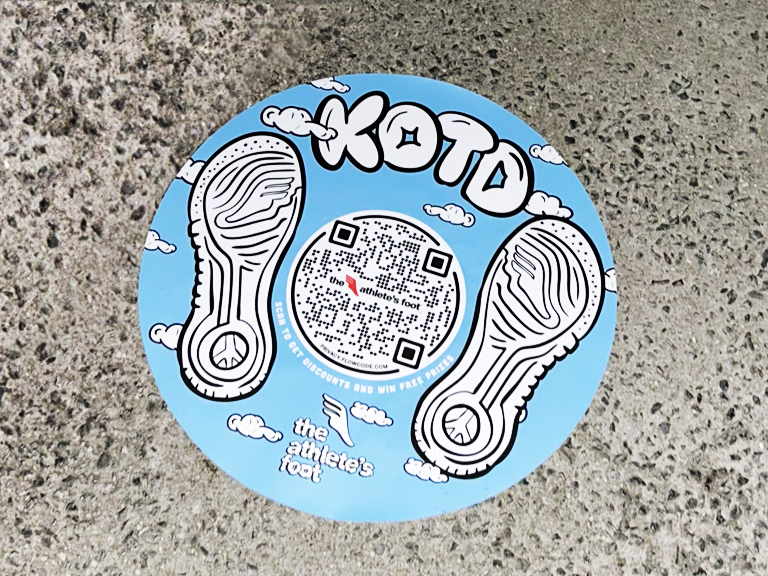
| Sidewalk Vinyl Decals | 10 decals | $3,404 | Installation, geo-tagged reporting |
| Sidewalk Vinyl Decals | 80 decals | $4,998 | Installation, geo-tagged reporting |
| Sidewalk Vinyl Decals | 30 decals | $6,373 | Installation, geo-tagged reporting |
| Sidewalk Vinyl Decals | 50 decals | $8,709 | Installation, geo-tagged reporting |
| Sidewalk Stencils (paint, chalk, or pressure) | 10 stencils | $3,231 | Design, application, documentation |
| Sidewalk Stencils (paint, chalk, or pressure) | 50 stencils | $6,982 | Design, application, documentation |
| Transit Station Surround Package | 400 snipes + 80 decals | $10,000 | Full deployment at station entrances, QR tracking on all units, geo-tagged documentation report |
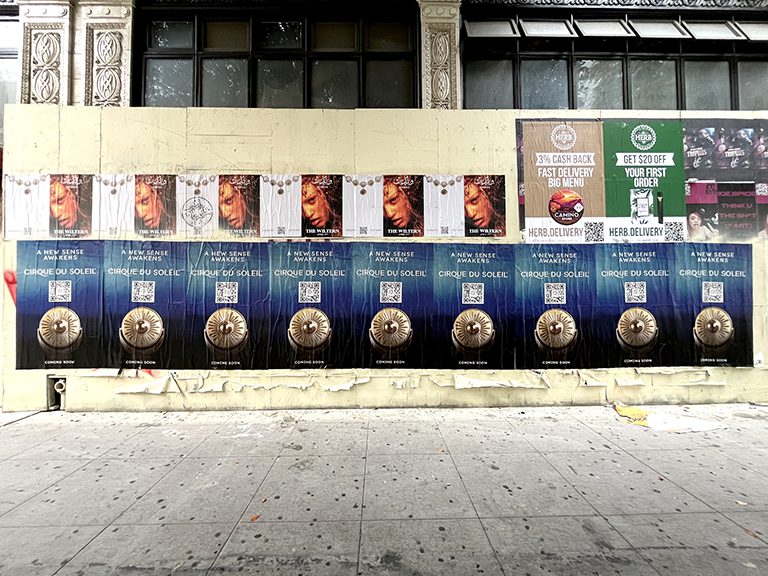
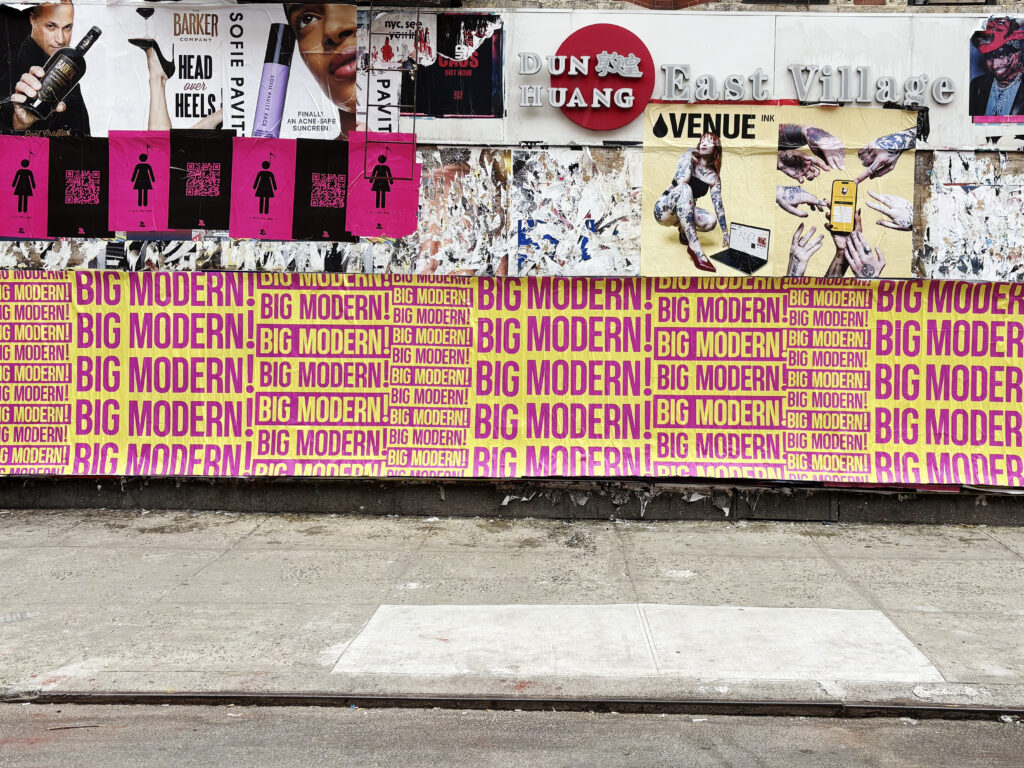
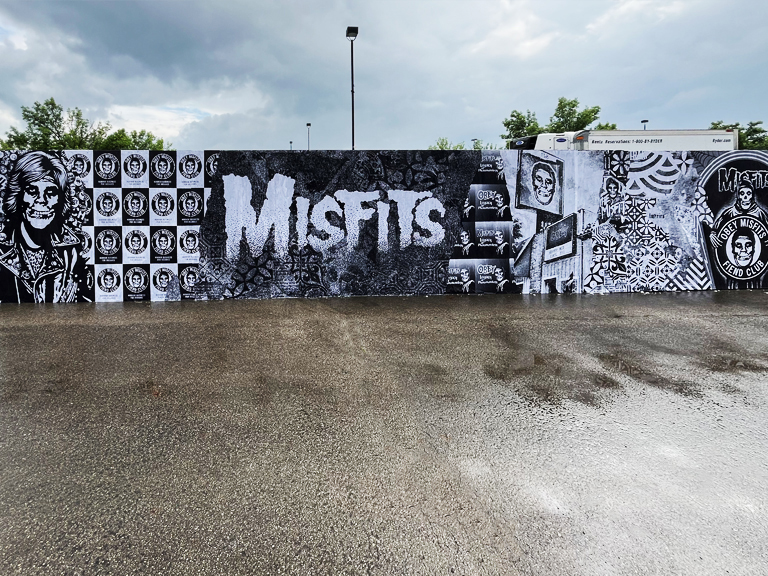
Wheatpaste poster campaigns are Contact AGM for pricing. For wheatpaste campaigns, large format 48×72 posters start at $10,500 (100 large format 48×72 posters, 2 weeks). 72-hour rush fee: +50%. Multi-market and custom volume pricing available. Contact AGM for a custom quote.
Yes. The Lambert Airport Terminal 1 and Terminal 2 MetroLink stations offer transit-format advertising — platform panels, digital screens, and environmental branding — that reaches airport travelers in the rail transit environment. AGM can structure Lambert-specific packages as standalone buys or as part of a full MetroLink campaign. This is distinct from the general airport terminal advertising sold through the Lambert concession program.
Yes. MetroLink’s Red Line runs 38 miles from Lambert Airport through Downtown St. Louis across the Mississippi River to Shiloh-Scott in Metro East Illinois. Advertising on the Red Line reaches both Missouri and Illinois commuters on the same vehicle inventory. AGM can recommend station-specific buys targeting either market.
Entry-level Contact AGM for pricing. e available at official AGM rates. Train wraps run Contact AGM for pricing. g based on your flight requirements and target stations.
Standard minimum buy is 4 weeks. Most campaigns run 4–8 weeks. Airport-terminal buys and event-tied campaigns can be structured around specific date windows. AGM will match the contract structure to your campaign objectives and budget cycle.
The most valuable St. Louis MetroLink stations for advertising are the Lambert Airport terminals, Union Station, Grand, Forest Park/DeBaliviere, and Clayton. Lambert Terminal stations deliver a high-income traveler audience unique in the MetroLink system. Union Station provides the broadest tourism reach. Grand captures the arts and university audience. Forest Park/DeBaliviere reaches affluent Central West End residents. Clayton delivers professional-services workers and county government employees. AGM structures MetroLink advertising campaigns using these stations as primary anchors based on each campaign’s target demographic profile.
MetroLink advertising at the Lambert Airport Terminal 1 and Terminal 2 stations reaches business travelers, leisure travelers, and airport employees in a captive transit environment as they wait for or board trains to downtown St. Louis. This is the only transit-format advertising position in the MetroLink system that directly intercepts airport passengers. AGM builds MetroLink advertising campaigns for travel brands, hotels, and financial services companies with Lambert station placements as the high-value acquisition anchor, pairing them with Red Line interior car cards for continued brand exposure during the full downtown ride.
Yes. St. Louis Cardinals home games and Blues hockey games at Enterprise Center generate measurable ridership spikes on MetroLink, particularly at Union Station and downtown stations nearest to Busch Stadium and Enterprise Center. AGM can structure a MetroLink advertising campaign timed to baseball or hockey season, pairing station advertising at Union Station with interior car cards across the Red Line fleet for maximum reach during game-night commute windows. Sports-season timing is one of the most efficient event-based strategies for St. Louis MetroLink advertising campaigns.
The Forest Park/DeBaliviere MetroLink station provides primary transit access to Washington University’s medical campus and the Barnes-Jewish Hospital complex in the Cortex Innovation Corridor. This proximity means the station delivers a consistent audience of physicians, researchers, medical students, and healthcare workers alongside Central West End affluent residents. AGM uses this station as the primary anchor for healthcare, biotech, and professional services MetroLink advertising campaigns targeting the Washington University Medical community and the surrounding high-income residential catchment zone.
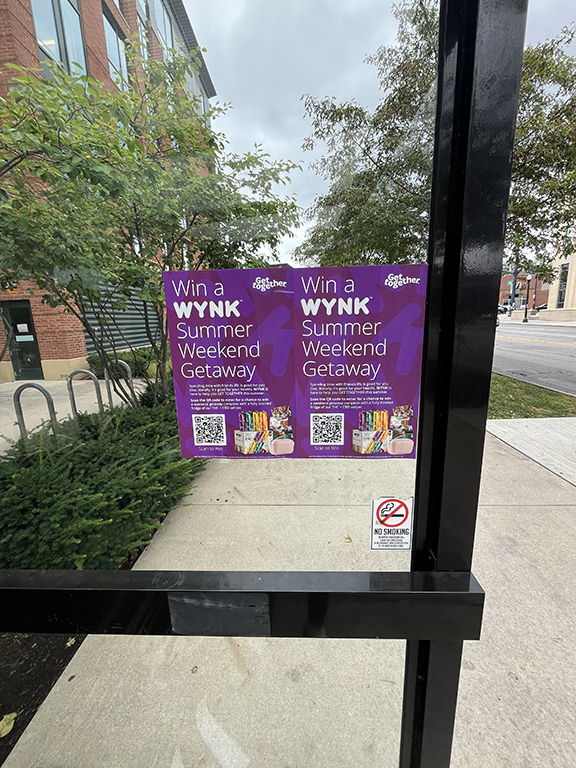
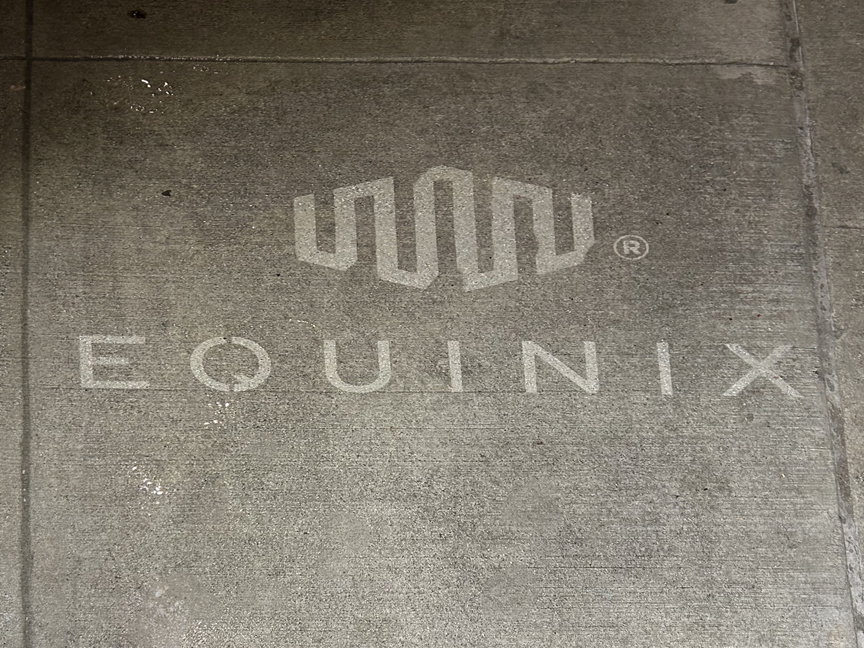
Sidewalk decals and snipe posters near MetroLink stations create brand impressions before riders descend to the platform and after they return to street level. AGM installs vinyl decals at staircase landings and along the 20-foot approach path from the sidewalk to each station entrance, while 9×12 snipe posters go on utility poles and kiosks within 100 feet of every targeted station. This MetroLink advertising surround layer adds two to three brand contacts per commute beyond the transit media buy. QR codes on each snipe are tracked per location for engagement measurement.
AGM manages every element of a St. Louis MetroLink advertising campaign from strategy through documentation. The process begins with a target audience and station selection session, followed by a direct buy through Bi-State Development’s advertising program. AGM field crews execute the guerrilla surround layer at all target MetroLink stations simultaneously with transit install. Every placement is documented with geo-tagged, timestamped photography delivered to the client before final billing. Clients receive a complete proof-of-install report covering all transit media confirmations, snipe locations, and sidewalk decal positions.