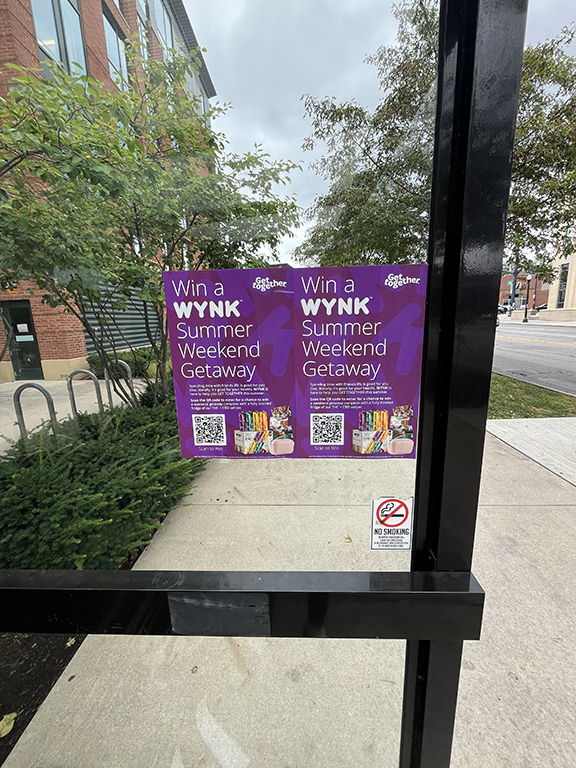
Cannabis brands operate in one of the most restricted media environments of any consumer category. Programmatic advertising is off the table. Broadcast is a minefield. Google and Meta have walls around cannabis that make digital visibility feel like a puzzle with pieces missing. Street-level advertising doesn’t have any of those gatekeepers. A wheatpaste campaign in New York, an LED truck in Chicago, a sidewalk decal in Denver, none of those require platform approval, age gates, or legal review from a digital advertising team. That’s why guerrilla marketing isn’t just a trend play for cannabis brands. It’s one of the most effective mass-reach formats available to the category, full stop.
This is the playbook. What formats work, how campaigns get planned, what to know before you run one, and what to bring to the table when you’re ready to move.
—
Why the Cannabis Category Is Built for Street Marketing
The restriction on cannabis digital advertising isn’t a recent policy quirk, it’s a structural wall that’s been part of the category since legalization began. And that wall has had an unexpected effect: it’s made the brands that figured out physical media more sophisticated street marketers than almost any other category.
Physical media bypasses every platform restriction that makes cannabis advertising difficult. A wheatpaste poster doesn’t require a platform account. It doesn’t get rejected by an algorithm, flagged by a compliance bot, or limited by a platform’s corporate risk posture. It exists in the world, visible to anyone who walks past it. The only approval gate is local permitting, and in most major markets, poster campaigns is a well-established part of the commercial advertising space.
Urban audiences are the primary cannabis consumer demographic, and street marketing reaches them most effectively. The legal cannabis consumer skews younger, more urban, more culturally engaged. These are exactly the people who walk through the neighborhoods where street advertising lives: the warehouse district that turned into a dining corridor, the arts neighborhood, the block between the transit hub and the bar strip. Poster campaigns reaches these audiences at street level, on foot, without algorithmic mediation.
Street advertising carries cultural credibility for a category that still holds some counterculture identity. Cannabis brands occupy an interesting space, simultaneously mainstream (legal, retail, state-licensed) and countercultural (decades of underground culture, shifting social politics, a community identity that predates legalization). Poster campaigns, sidewalk stencils, and building projections have the same dual identity. They’re the format of choice for major brands running city-wide campaigns and for movements, artists, and independent operators. That cultural range makes them an authentic fit for cannabis advertising in a way that a programmatic banner ad simply isn’t.
The shift from illegal to legal has created a brand-building moment that physical advertising captures well. When cannabis became legal in state after state, the brands that invested in street-level presence made a real-world announcement. A poster campaign in a major market signals legitimacy, scale, and permanence in a way that’s difficult to replicate digitally. The physical presence says: we’re here, we’re real, we’re part of this city’s commercial space. That’s messaging that matters for a category that’s still in the process of normalizing.
The tactile, experiential nature of street advertising matches how cannabis consumption is experienced. Cannabis is a sensory product. The brands that resonate are the ones that feel physical, textured, real, not just another tile in a digital feed. Street advertising has that texture. It’s printed, pasted, chalked, projected. It exists in space. That alignment between medium and product isn’t accidental, it’s why street formats consistently outperform digital for cannabis brand awareness when both are available.
—
The Formats That Work Best for Cannabis Brands (And Why)
Not every guerrilla format is equally well-suited to cannabis. These are the ones that consistently perform.
Wheatpaste / Poster Campaigns, Best in Class for Cannabis Brand Awareness
Poster campaigns is the most culturally resonant format for cannabis street advertising. A well-executed poster campaign in the right neighborhoods, dense, visually consistent, occupying the corners and walls and scaffolding that define how a neighborhood looks, signals cultural presence and brand authenticity in a way that’s impossible to fake.
The practical case for wheatpaste is just as strong. Wheat paste is biodegradable and non-toxic, which matters for brands that have any environmental or sustainability positioning. It leaves no surface damage, the paper and paste weather off over time, or are covered by the next campaign. This makes poster campaigns a genuinely responsible format choice, not just a permissible one.
Poster campaigns works in every major legal market in the country: New York City, Los Angeles, Chicago, Denver, Boston, Seattle, Miami, Philadelphia. The format is well understood by local operators, and placement networks in these cities are built to deliver high-visibility locations efficiently.
Pricing: 100 posters at 24×36 in a two-week campaign starts at $4,500. 200 posters run approximately $5,500. Large-format 48×72 campaigns, the kind that dominate a wall rather than share it, run $10,500–$13,500 for 100–200 posters. Rush production adds 50% to most format costs, so planning lead time matters.
Sidewalk Decals, The Dispensary Traffic Driver
For dispensary-level campaigns, sidewalk decals are among the most effective formats in the toolkit. Placed on sidewalks in front of or near dispensary locations, they function as ground-level directional advertising, a visual signal that reaches the pedestrian who’s already in the right geography.
QR codes embedded in decal designs give brands a trackable conversion path. A customer who scans the code from the sidewalk and walks into the dispensary five minutes later is a measurable outcome in a category where most advertising is unmeasurable. That’s a significant operational advantage.
Sidewalk decals work especially well for dispensary launches, product-specific promotions, and seasonal campaigns like 420 events. They can be deployed at scale across multiple locations simultaneously.
Pricing: Campaigns start at $2,904 for 5 locations and scale to $14,466 for 100 locations.
LED Billboard Trucks, City-Wide Reach on a Flexible Schedule
LED billboard trucks are a fully permitted, licensed, legal format. There are no placement restrictions on the format itself, a truck is a truck, it drives on public roads, and the advertising it displays follows standard outdoor advertising rules for the jurisdiction. For cannabis brands, this is a meaningful advantage: the format sidesteps most of the site-specific permitting questions that apply to static outdoor placements.
LED trucks are ideal for city-wide brand awareness campaigns during product launches, 420 campaigns, new market entries, and major brand moments. Routes can be targeted to specific neighborhoods, corridors, and event locations. The flexibility to be in Wicker Park at 6pm and River North at 10pm is a scheduling advantage that static formats don’t have.
Street Teams, Brand Presence at Cultural Moments
Street teams place brand ambassadors at festivals, events, and high-traffic locations. For cannabis brands, the value is in presence at the cultural moments that define the category’s community, music festivals, food events, Pride, cannabis-specific events, and the neighborhood activations that draw the right audience.
Where legally permitted, sampling events are high-conversion opportunities. Even where sampling isn’t an option, street teams can distribute branded materials, direct foot traffic to nearby dispensary locations, and build the kind of face-to-face brand presence that no digital format can replicate. QR code distribution through street teams combines the human touchpoint with a trackable digital outcome.
Building Projections, The High-Impact Brand Moment
Building projections are the format you reach for when you need a moment, a launch, an anniversary, a campaign that generates social sharing at scale. Large-scale imagery projected onto the side of a building is impossible to miss and impossible to ignore. The visual spectacle creates earned media through social sharing that multiplies the campaign’s effective reach beyond the people who were physically present.
Building projections work best for brand launches in new markets, product launches that warrant a genuine announcement, and large-scale campaign moments that benefit from cultural impact beyond standard awareness metrics.
—
What Cannabis Brands Should Know Before Running a Campaign
This isn’t a warning list. It’s the operational knowledge that helps a campaign run smoothly from brief to execution.
Distance Requirements Are Real, Know Them in Advance
Most states with legal recreational cannabis maintain outdoor advertising restrictions near schools, playgrounds, and youth facilities. Distances vary by state, 1,000 feet is a common benchmark, but specific distances depend on the jurisdiction. These restrictions apply to outdoor advertising broadly, not just billboards.
For a cannabis brand, the right response to distance requirements is to build location vetting into the campaign planning process, not to treat it as an obstacle that comes up at the last minute. When distance requirements are addressed in the proposal stage, they become a planning input rather than a problem. At AGM, location vetting against these restrictions is standard procedure for every cannabis campaign. It’s part of how proposals are built, not a last step.
Creative Review Belongs in the Production Timeline
State cannabis advertising rules vary, and they’re still evolving in many markets. Most state regulations prohibit health claims, restrict specific THC percentage marketing in certain contexts, and require that creative not appeal to minors. The specific rules depend on the state.
For cannabis brands with existing compliance processes, this is straightforward: get your creative reviewed before it goes to print. The practical implication for campaign planning is that creative review needs to be built into the production timeline. Sending creative to compliance after it’s already been approved for production is how rush fees happen. A clean timeline has compliance review completed before production begins.
Think About Community Relations in Smaller Markets
This is a campaign strategy consideration, not a legal one. In major metros, New York, Los Angeles, Chicago, Denver, cannabis brands are fully integrated into the mainstream commercial space. Poster campaigns in these markets are just advertising. In smaller markets, the same campaign might land differently depending on local political context, the status of legalization in that state, and the community dynamics of the neighborhood where advertising runs.
For brands operating in markets with a population under 500,000, it’s worth a conversation about how the campaign’s visual and messaging tone will be received locally. This isn’t about softening the message, it’s about knowing your audience, which is good marketing practice regardless of category.
Legal States Only
This is basic but worth stating plainly: guerrilla marketing campaigns should run in states and cities where the product being advertised is legally available. The legal and regulatory complexity of cannabis advertising is entirely a function of state legality. In legal recreational and medical markets, outdoor advertising for cannabis follows rules similar to alcohol advertising. Outside those markets, there’s no campaign to run. Map your legal markets first, then build your advertising strategy to match.
—
State-by-State Reality for Cannabis Campaigns
Legal status and advertising rules vary significantly by market. Here’s the operational picture in the major legal states.
California
California is one of the best cannabis campaign markets in the country. The market is mature, the legal framework is established, and the outdoor advertising culture in Los Angeles, San Francisco, and San Diego is as strong as anywhere in the world. State advertising rules permit outdoor advertising with age-appropriate framing. Poster campaigns in LA’s Silver Lake, Echo Park, and Arts District corridors, or in San Francisco’s Mission and SoMa neighborhoods, reach exactly the audiences cannabis brands want to build. The format infrastructure is well developed, placement networks are established, and the cultural fit is strong.
New York
Legal since 2021, New York’s cannabis market is still developing, but NYC is among the top five poster campaigns environments in the world. The wall inventory, neighborhood diversity, and pedestrian density create ideal conditions for cannabis brand campaigns. State advertising guidelines are continuing to evolve under the Office of Cannabis Management, current NYSOCM rules should be confirmed before campaign launch, as the regulatory environment is actively being refined. AGM runs campaigns in NYC regularly and maintains current knowledge of where campaigns operate effectively.
Illinois
Illinois has a strong legal cannabis market anchored in Chicago. State regulations require age-gating language on outdoor cannabis advertising, which is a straightforward creative requirement to build in. Chicago’s Wicker Park, Logan Square, and River North corridors are well-established posting territories with high foot traffic and strong brand visibility. The city’s street advertising culture is mature and campaigns run effectively with proper location planning.
Colorado
Colorado is a mature market with established outdoor advertising rules. Denver has a vibrant street advertising culture with strong placement networks in neighborhoods like RiNo (River North Arts District), Capitol Hill, and LoDo. Colorado’s regulatory framework has been in place long enough that campaigns here are relatively straightforward to plan and execute. The demographic profile of Denver cannabis consumers makes street advertising particularly effective.
Florida
Florida’s cannabis market is primarily medical as of 2026, with limited advertising options for many product types. Florida has historically been one of the more restrictive states for cannabis advertising, and that posture applies to outdoor formats. Before committing creative and production spend to a Florida campaign, verify current state rules for the specific product type and market context. This is a market where legal review before campaign planning is especially important.
Texas
No recreational cannabis market as of 2026. Resources are better allocated to states where the product is legally available. When that changes, and the momentum in Texas suggests it will, the market size and urban concentration in Dallas, Houston, Austin, and San Antonio will make it one of the most significant cannabis advertising opportunities in the country.
—
How AGM Plans and Executes Cannabis Campaigns
Every campaign AGM runs for a cannabis brand follows the same operational discipline. Here’s what that looks like in practice.
Location vetting is part of the proposal, not an afterthought. Before a proposal goes to a client, locations are screened against applicable distance restrictions. The campaign deliverable includes viable locations that meet regulatory requirements. Clients aren’t discovering location issues after production starts.
Creative review is a checkpoint in the production timeline. AGM’s production workflow includes a creative compliance checkpoint, creative goes to the brand’s legal or compliance team before printing. If a brand doesn’t have an established cannabis compliance review process, we can recommend resources. The goal is that nothing goes to print with a compliance question mark attached to it.
Age-appropriate creative standards are followed regardless of state requirement. Even in states where specific requirements are minimal, AGM follows best-practice standards for cannabis creative: no imagery that appeals to minors, no messaging that could be read as health claims, clear brand identification. This is operational practice, not minimum compliance.
Market-specific operator knowledge is part of the execution. AGM’s operator networks know which walls are available, which routes produce the best impressions, which neighborhoods index highest for target demographics in each city. That local knowledge is what separates a campaign that runs effectively from one that technically ran but didn’t land.
Full documentation on every campaign. Geo-tagged installation photos, run reports, impression estimates calibrated to location and format. Cannabis brands are investing in campaigns where attribution is already a challenge, documentation ensures the campaign is measurable to the extent street advertising can be measured.
Dispensary-level campaigns include traffic analysis. For sidewalk decal and stencil campaigns tied to specific dispensary locations, foot traffic analysis informs placement. High-pedestrian corridors near the dispensary location, directional placement that guides traffic toward the entrance, QR codes that create a measurable conversion path.
—
What to Bring to the Planning Conversation
A campaign comes together faster and produces better results when brands show up to the planning conversation with this information ready.
Target cities and legal status in each. Which markets you’re looking to activate, and whether each is a recreational, medical-only, or pre-legalization market. This determines where campaigns can run and what format choices apply.
Creative status. Is your creative already developed and compliance-reviewed, or are you coming to the table with a brief and needing to build from there? If creative exists, is it designed for large-format outdoor, or will it need adaptation? Production timelines and costs both depend on where creative is in the process.
Campaign objective. Brand awareness at city scale is a different brief than driving dispensary foot traffic at a specific location. A product launch campaign is different from a sustained market presence campaign. The objective shapes format selection, location strategy, and how results get measured.
Timeline. Standard lead time for most formats runs two to four weeks from creative approval to launch. Rush production, anything under two weeks, adds approximately 50% to most format costs. Building timeline into the planning conversation prevents avoidable cost overruns.
State-specific restrictions the brand’s legal team has flagged. If your compliance team has already flagged specific restrictions in target markets, bring those into the conversation at the start. They’ll shape location strategy, creative requirements, and which formats are in play.
—
Frequently Asked Questions
Is guerrilla marketing legal for cannabis brands?
Yes, in states where cannabis is legal, guerrilla marketing and outdoor advertising are available formats for cannabis brands, subject to state-specific advertising regulations. The legal environment for cannabis outdoor advertising is similar in structure to alcohol advertising: specific restrictions apply (particularly around proximity to schools and youth facilities), but the format itself is legal and widely used. The key is running campaigns in legal markets and following applicable state regulations for cannabis advertising in each jurisdiction.
Can cannabis brands advertise with street posters?
Yes. Poster campaigns and wheatpaste poster campaigns are among the most effective advertising formats available to cannabis brands. They bypass the platform restrictions that make digital advertising difficult for cannabis, reach urban audiences effectively, and carry strong cultural resonance for the category. In major legal markets, New York, Los Angeles, Chicago, Denver, and others, poster campaigns for cannabis brands run regularly.
What’s the best marketing format for a cannabis brand launch?
For a new brand launch, the combination of poster campaigns for broad awareness and LED billboard trucks for city-wide reach tends to perform best. Poster campaigns in key neighborhoods establishes visual presence and cultural credibility. LED trucks provide city-wide coverage during the launch window and can be targeted to specific routes and event locations. Building projections work well for launch moments that warrant a high-impact visual event. For dispensary launches specifically, sidewalk decals near the location are highly effective for driving immediate foot traffic.
How does poster campaigns work for cannabis advertising?
Poster campaigns (also called wheatpaste advertising) places large-format printed posters on walls, construction scaffolding, and permitted surfaces throughout target neighborhoods. Wheat paste is used to adhere the posters, it’s biodegradable, non-toxic, and leaves no surface damage. For cannabis brands, placements are vetted against applicable distance restrictions before the campaign launches. A typical campaign runs two to four weeks, with geo-tagged documentation provided at completion. Format sizes range from standard 24×36 street-level posters to large-format 48×72 wall dominators.
What restrictions apply to cannabis outdoor advertising?
Restrictions vary by state. The most common requirements are: minimum distance from schools, playgrounds, and youth facilities (often 1,000 feet, though this varies by state); prohibition of health claims or messaging that implies medical benefits; prohibition of imagery that could appeal to minors; and in some states, required age-gating language in the creative. State regulations for cannabis advertising are still evolving in several markets, so current rules should be confirmed for each target state before campaign launch.
Can dispensaries use sidewalk decals for marketing?
Yes. Sidewalk decals are one of the most effective formats for dispensary-level marketing. They work as ground-level directional advertising, driving foot traffic from pedestrians who are already in proximity to the location. QR codes embedded in the decal design provide a trackable conversion path, a measurable outcome in a category where attribution is often difficult. Decals are particularly effective for dispensary launches, product promotions, and seasonal campaigns.
What states allow cannabis street advertising?
Any state with legal recreational or medical cannabis allows some form of outdoor advertising for cannabis brands, subject to state-specific regulations. The strongest markets for cannabis street advertising are California, New York, Illinois, Colorado, Washington, Oregon, Massachusetts, and Michigan. Each state has its own regulatory framework, and rules are evolving, particularly in newer legal markets like New York. Campaigns should always be confirmed against current state rules before launch.
How much does a cannabis guerrilla marketing campaign cost?
Costs depend on format, scale, and market. Poster campaigns start at approximately $4,500 for 100 posters at 24×36 in a two-week run, with large-format 48×72 campaigns running $10,500–$13,500 for 100–200 posters. Sidewalk decal campaigns start at $2,904 for 5 locations and scale to $14,466 for 100 locations. LED billboard truck campaigns and building projections are priced based on market, duration, and route. Rush production (under two weeks from creative approval to launch) adds approximately 50% to most format costs. Contact AGM for a proposal specific to your markets and objectives.
—
Ready to Run a Campaign?
American Guerrilla Marketing runs cannabis campaigns across every major legal market in the country, poster campaigns, sidewalk decals, LED billboard trucks, street teams, and building projections. If you’re a cannabis brand, a dispensary operator, or a cannabis marketing team looking for a format that actually reaches your audience, reach out to AGM. We’ll scope the markets, vet the locations, and build you a campaign that works.
—
American Guerrilla Marketing is a full-service street advertising agency operating in New York, Los Angeles, Chicago, Denver, Boston, Seattle, Miami, Philadelphia, and additional markets. Specialties include wheatpaste, poster campaigns, sidewalk decals, sidewalk stencils, reverse graffiti, snipe advertising, LED billboard trucks, street teams, and building projections.
—
Related Pages and Articles