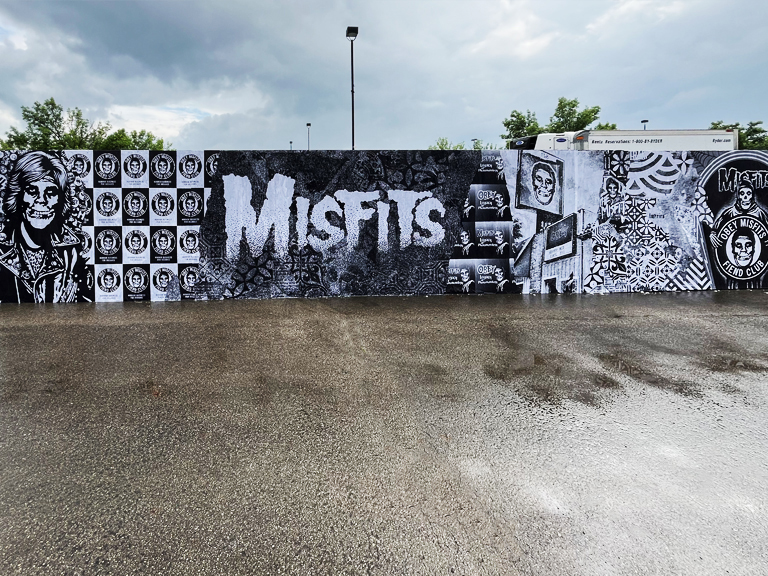
The best guerrilla marketing campaigns have one thing in common: they created disproportionate impact relative to their spend. Not by accident, and not by viral luck — by careful thinking about where a target audience is, what will surprise them in that location, and how to engineer a moment that travels beyond the physical placement through social media and word of mouth.
This guide breaks down what distinguishes the best campaigns from the forgettable ones, analyzes the structural characteristics that make guerrilla marketing work, and covers the specific tactics that consistently deliver results in the current landscape. Our team at American Guerrilla Marketing executes campaigns across these formats every week in 50+ U.S. markets — what’s described here is grounded in actual execution, not just marketing theory.
What the Best Guerrilla Marketing Campaigns Have in Common
When you examine the guerrilla campaigns that generated the most attention and ROI, several structural characteristics appear consistently regardless of brand size, industry, or tactic type.
Geographic Precision
The campaigns that worked were placed where the right audience actually was, not where advertising happened to be cheap or available. An ambient installation at a trade show venue works because the trade show has already aggregated your buyers in one location. A poster campaign in Silver Lake works for a music brand because Silver Lake is where music industry people live. Precision of placement is the first predictor of guerrilla campaign effectiveness.
Singular Message
Guerrilla marketing placements have seconds to communicate. The campaigns that succeed give the audience one clear thing to take away — a single idea, a specific emotion, a concrete benefit. The ones that fail try to say three things at once and communicate none of them. The constraint is real: when someone is walking past a wall or a street team in motion, you have one moment. That moment needs to land one idea with enough force to be remembered.
Social Media Architecture
The best campaigns in the current era are designed to be photographed. The visual composition works in a smartphone photo. The location provides a recognizable or interesting backdrop. The installation itself is striking enough that someone feels compelled to document it and share it. The social photo is often worth more than the physical impression — it reaches people who weren’t at the location, in a personal social context that carries social proof from the person who shared it.
Execution Precision
Great creative in the wrong location is a wasted campaign. Great creative in the right location with poor installation quality is also a wasted campaign. The best guerrilla campaigns are executed with the same rigor as any other marketing channel — planned, documented, measured, and reported. Our GPS-tagged documentation for every campaign placement is part of that execution standard.
High-Impact Guerrilla Marketing Tactics That Work in 2026
Wheatpaste Poster Campaigns
Wheatpaste poster campaigns remain one of the highest-performing formats in entertainment, consumer, and lifestyle brand marketing. The format is physically permanent (two to four weeks), visually dominant on the surfaces it occupies, and generates strong organic social documentation when the creative and placement are right.
What distinguishes successful wheatpaste campaigns: location scouting that identifies walls where the target demographic actually walks, creative designed for distance legibility rather than close-up inspection, overnight installation to create the “appeared everywhere at once” effect, and volume within target neighborhoods sufficient to create genuine saturation rather than scattered presence.
Our wheatpaste campaigns run across 50+ U.S. markets with GPS documentation of every placement.
Sidewalk Stencil Campaigns
Sidewalk stencil campaigns use water-soluble paint or chalk-based materials applied through stencils to create campaign imagery on horizontal surfaces — sidewalks, crosswalks, plazas, parking areas. The format adds a horizontal dimension to campaigns that primarily use vertical wall space, creating an immersive environment effect when run in conjunction with poster campaigns.
Stencil campaigns are particularly effective at high-traffic pedestrian junctions — subway exits, event venue approaches, conference corridors — where people look down as well as across. A stencil at the entrance to a trade show catches every attendee in the exact moment they’re arriving. Our sidewalk stencil campaigns are executed with water-soluble materials that comply with city regulations and property owner requirements.
Mobile LED Billboard Trucks
Mobile LED billboard trucks bring large-format digital displays to any location without the lead time or long-term commitment of static outdoor. For campaigns where timing matters — event launches, product release days, conference campaigns — a mobile LED truck routing through target neighborhoods or parked at a strategic location creates a moving, attention-commanding presence that static formats can’t replicate.
The format is particularly effective for product launches, streaming releases, and event campaigns where the combination of motion, size, and sound (many trucks include audio) creates a street-level presence that generates photograph and social documentation. Our LED billboard truck campaigns operate in all major U.S. markets with flexible routing and timing.
Street Team Activations
Brand ambassador and street team programs create direct human contact between the campaign and the target audience. For campaigns where the goal is not just impression generation but actual conversation, sampling, demonstration, or data capture, brand ambassadors extend the campaign from visual communication into personal engagement.
The most effective street team activations pair ambassadors with a reason for engagement — a sample, a gift, an experience, a piece of information with genuine value to the audience — rather than purely promotional material distribution. The interaction needs to justify the person’s attention in a moment when they weren’t expecting to be approached.
Ambient Brand Installations
Ambient installations integrate campaign imagery into the existing physical environment in ways that feel organic to the location rather than imposed on it. The key characteristic is relevance: the campaign element belongs in the environment because it relates to what that environment already is, which generates genuine surprise and often amusement rather than the mild irritation that intrusive advertising creates.
Ambient campaigns can range from branded bus shelter conversions to interactive street furniture wraps to large-scale temporary art installations. The common thread is the quality of contextual fit — the installation makes sense in its location in a way that makes it feel like a discovery rather than an advertisement.
Case Study Framework: What Makes These Campaigns Succeed
Rather than cataloguing campaigns that are already widely documented elsewhere, we’ll break down the structural success factors that appear in the campaigns that actually worked — the ones our clients and the industry reference as models for effective execution.
The Surprise Factor
Every effective guerrilla campaign generates genuine surprise. Not confusion or discomfort, but the specific kind of surprise that comes from encountering something unexpected that makes sense once you’ve seen it. The surprise is what creates the photograph, the word-of-mouth report to a friend, the social media post. Without surprise, the physical placement generates ordinary impressions. With it, the campaign generates earned amplification that extends reach far beyond the paid placement.
The Earned Media Multiplier
The best guerrilla campaigns generate press and social coverage that multiplies the campaign’s effective reach many times over. A striking installation that gets covered by Adweek, DesignTaxi, or local city press generates millions of additional impressions from coverage. The coverage is earned, not paid, which means it carries the credibility of editorial mention rather than the skepticism that paid advertising faces.
Building earned media potential into the campaign from the planning stage — selecting locations where press photographers and social-media-active pedestrians are likely to encounter the installation, timing launches around adjacent news moments, coordinating with agency press contacts before installation — significantly increases the probability of coverage.
The Concentration Effect
Campaigns that concentrate in specific geographies rather than spreading thin across wide areas generate the perception of ubiquity that makes guerrilla marketing feel significant. When potential buyers see your campaign in three different contexts during the same week — on the wall near the subway, near the lunch spot, near the venue they’re attending — the cumulative effect is qualitatively different from seeing the same campaign once. Concentration is how guerrilla marketing creates frequency without buying national media.
Anatomy of a Guerrilla Campaign That Earned Major Coverage
Rather than simply listing historical campaigns, it’s more useful to break down the structural elements that make campaigns generate earned media coverage — because those elements are replicable, regardless of brand size, budget, or industry.
The Timing Play
Campaigns that launch in coordination with a major cultural moment — a film premiere, a product release, a news event, a seasonal peak — benefit from the attention already concentrated on that moment. The campaign becomes part of the conversation that’s already happening rather than trying to create a new one from scratch. A streaming platform’s street campaign launching the night before a major series premiere is more likely to get covered as part of the premiere coverage than as a standalone marketing news story.
Timing strategy also applies to geography. A campaign that launches in New York on the same night it launches in Los Angeles creates a national moment rather than two local moments — the simultaneous multi-market activation is itself a news story in the marketing press, which adds earned media beyond what either market would generate independently.
The Contextual Surprise
The most-shared guerrilla campaigns consistently involve the campaign appearing in a context where it creates a surprising but perfectly logical connection. A campaign for a running shoe brand that appears at marathon registration locations is surprising because advertising doesn’t usually integrate so precisely into the specific moment of runner decision-making — but it makes complete logical sense once you see it. That combination of surprise and logic is what generates the photograph and the share.
Contextual surprise requires genuine thinking about where the target audience is when they’re in the mindset most relevant to the campaign’s message, not just where they happen to be concentrated. A financial services campaign at a conference registration desk reaches buyers at the exact moment they’re about to spend several days thinking about their industry’s challenges. A nutrition brand campaign at a pre-race staging area reaches athletes in the exact moment they’re optimizing for performance.
The Conversation Starter
The best campaigns generate conversations between people who encounter them together. “Did you see that thing on the wall?” is not something that happens when an ad is average. It happens when the ad is genuinely surprising, genuinely funny, or genuinely thought-provoking. A campaign that creates conversational moments — a piece of copy that demands discussion, an image that requires interpretation — generates earned amplification through person-to-person sharing that no paid media can replicate.
The conversation-starter quality often comes from creative that takes a genuine risk — a strong opinion, an unexpected claim, a piece of humor that has a real perspective. Generic, safe creative rarely generates conversations. Specific, bold creative does.
What Separates Agencies That Deliver from Agencies That Promise
The guerrilla marketing space has a well-documented problem with agencies that promise spectacular results and deliver undocumented, unprofessional execution. This problem creates an industry-wide credibility gap that affects brands new to the format. Here is what actually separates high-quality guerrilla marketing execution from low-quality execution:
Legal Location Networks
Professional guerrilla marketing agencies operate exclusively on legal, permitted locations. This is not just an ethical position — it’s a practical one. Campaigns on unpermitted surfaces create liability for clients, damage property owner relationships in markets the agency operates in repeatedly, and generate the kind of press coverage (“brand vandalizes neighborhood”) that is the opposite of what any campaign is trying to achieve. Our location network in every market consists exclusively of walls where we have active owner agreements or network operator permissions.
GPS Documentation
Every placement in a professionally executed campaign receives GPS-tagged photo documentation at the time of installation, not reconstructed afterward. This documentation is the proof-of-performance that allows clients to verify campaign delivery and provide stakeholder reporting. Agencies that provide undated, unlocated photographs or no documentation at all are not operating at professional standards. Documentation is not optional — it’s a core deliverable.
Installation Quality Standards
The quality of physical installation affects how long the campaign holds and how it looks during the campaign window. Posters that are poorly applied — air bubbles, uneven paste, lifting edges, misaligned multi-panel configurations — communicate brand quality as much as the creative does. Professional installation is a craft skill; treating it as interchangeable unskilled labor produces campaigns that look like they were executed by people who didn’t care about the result.
Industries Where Guerrilla Marketing Performs Best
Guerrilla marketing delivers strong ROI across categories when the execution is right, but certain sectors have established track records of exceptional performance:
- Entertainment: Film, streaming, music, gaming, and live events — where the goal is cultural conversation and ticket or subscription sales from a specific audience demographic
- Consumer products: DTC brands, beverage and food companies, apparel and footwear — where physical presence in the neighborhoods where buyers live creates brand recognition and purchase intent
- Tech and SaaS: Particularly for conference-adjacent campaigns targeting concentrated buyer populations at industry events
- Real estate and hospitality: New development launches, hotel openings, neighborhood-specific campaigns that benefit from hyperlocal physical presence
- Healthcare and wellness: For brands targeting health-conscious urban demographics who respond to authentic, physical brand communication over digital interruption
Planning the Campaign: From Objective to Execution
The planning process for an effective guerrilla campaign follows a consistent framework regardless of tactic or budget:
Define the Objective
What does the campaign need to accomplish? Awareness in a new market? Ticket sales for an event? Brand recognition among a specific professional audience? The objective determines which tactics are appropriate and how to measure success.
Map the Audience’s Physical Geography
Where does the target audience actually live, work, commute, and spend time? This geographic mapping determines which neighborhoods, cities, and specific locations the campaign should target. The answer is never everywhere — the best campaigns are precise about geography.
Select Tactics That Match the Environment
Different physical environments support different tactics. Music venue corridors call for poster campaigns. Conference perimeters call for a combination of posters and street teams. Product launch events call for mobile outdoor plus ambient. The tactic selection should match both the environment and the campaign objective.
Execute with Documentation
Every placement, every street team hour, every mobile billboard routing gets documented. Documentation enables reporting, demonstrates campaign delivery to stakeholders, and provides the attribution data that makes measurement possible.
Frequently Asked Questions
What makes a guerrilla marketing campaign actually work?
The best guerrilla campaigns share three characteristics: unexpected placement that creates genuine surprise, a clear and simple message that registers in seconds, and a social-media-shareable quality that extends the campaign’s reach beyond its physical footprint. Execution precision — legal placement, documentation, timing — determines whether those elements land as intended.
What are the most effective guerrilla marketing tactics for brands today?
Wheatpaste poster campaigns, sidewalk stencils, mobile LED billboard trucks, street team activations, and ambient brand installations consistently produce strong results for brands across entertainment, consumer products, tech, and services categories. The right mix depends on the campaign’s objectives, geographic targets, and budget.
How much do the best guerrilla marketing campaigns cost to execute?
Effective guerrilla campaigns can run anywhere from $5,000 for a single-city poster campaign to $250,000+ for a coordinated multi-city, multi-tactic national rollout. Most mid-market guerrilla campaigns run $15,000 to $75,000. The defining advantage of guerrilla marketing is that well-executed campaigns generate earned media that multiplies the paid reach significantly.
How do you measure guerrilla marketing campaign performance?
Primary metrics include physical impression counts from GPS documentation, organic social media content volume generated by the campaign, earned media coverage, website traffic increases in targeted markets during campaign windows, and branded search volume lifts. Direct response metrics from QR codes or campaign-specific URLs provide the cleanest attribution.
Can small brands run guerrilla marketing campaigns that compete with major brands?
Yes. Guerrilla marketing is specifically effective for smaller brands because the format’s physical unexpectedness generates attention regardless of spend level. A well-executed $10,000 campaign in the right neighborhoods can generate more earned media and social content than a $500,000 digital campaign. Creative quality and placement precision matter more than budget scale.
How do I start planning a guerrilla marketing campaign?
Start with your target audience’s physical geography — where they live, work, and move through their days. Match tactics to those locations. Define the single clear message the campaign needs to communicate. Set a timeline and budget. Then contact AGM to build the execution plan with location scouting, crew coordination, and documentation built in.