June 17, 2026 Guerrilla Marketing Agency, Experimental Marketing Agency, Maximum Impact Campaigns, Street Advertising

Ambient Advertising vs Guerrilla Marketing: Which Creates Better Recall?

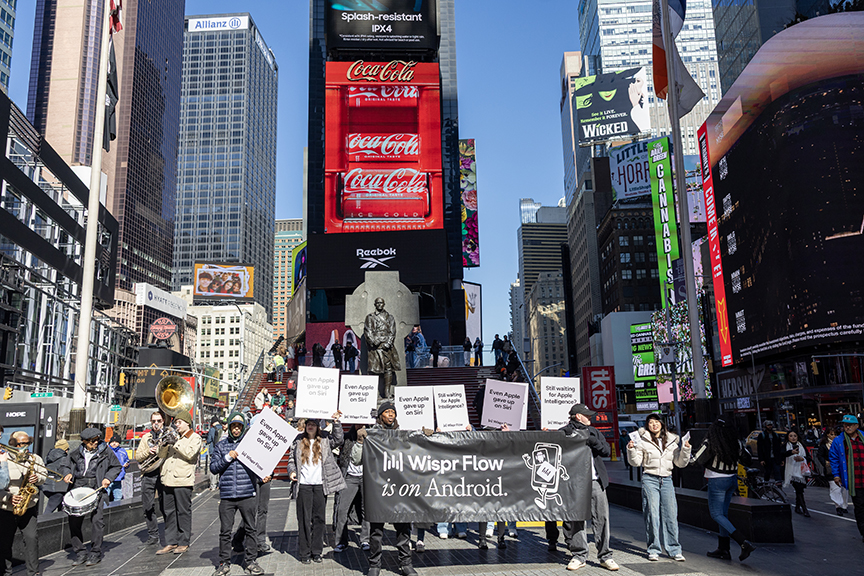
Wispr Flow guerrilla marketing protest activation at Times Square NYC — crowd holding protest-style signs near TKTS red steps

Short answer: The better choice depends on what the campaign needs to do in the real world. Ambient Advertising and Guerrilla Marketing can both work, but they solve different problems and create different kinds of attention.

What Ambient Advertising and Guerrilla Marketing Actually Mean

People compare ambient advertising and guerrilla marketing as if they are interchangeable, but they are usually solving different problems. Ambient Advertising tends to work best when the brand wants unexpected placement inside the environment itself. Guerrilla Marketing tends to work best when the brand wants a broader family of unconventional tactics that may or may not be ambient.

That distinction matters because the wrong comparison leads brands to buy the wrong outcome. The question shouldn’t be which label sounds cooler. It should be which channel creates the right physical behavior.

Decision FactorAmbient AdvertisingGuerrilla Marketing
DefinitionAd integrated into unexpected physical contextBroader unconventional marketing approach
Recall driverSurprise of placementSurprise plus interaction, route logic, or spectacle
Production typeContextual installationVaries widely by format
Best forMemorable object-level interruptionBroader campaign architecture
OverlapOften part of guerrilla strategyCan include ambient work

Core Differences

The biggest differences usually come down to attention style, durability, targeting, and response path. Some formats are built for sudden surprise. Others are built for steady visibility. Some work best as route media. Others act more like mobile or static awareness layers.

If a campaign needs direct interaction, guerrilla marketing might be the stronger option. If it needs more ambient repetition or cultural texture, ambient advertising may create better fit. The operational burden and legal review can also differ more than buyers expect.

When Ambient Advertising Wins

Ambient Advertising wins when the brand needs the kind of attention that comes from placement and context rather than pure media scale. It’s usually strongest when the audience is physically concentrated and the creative can land quickly.

It also wins when the brand wants something that feels less polished and more embedded in the environment, which can be a real advantage for launches, entertainment, fashion, and culturally driven campaigns.

When Guerrilla Marketing Wins

Guerrilla Marketing wins when the campaign needs more control, more mobility, more standardization, or more direct engagement than the other option naturally provides. That is often the better choice for brands that need a cleaner response path or more consistent delivery across several neighborhoods or markets.

It can also be the safer buy when stakeholders need clearer reporting or when the activation needs to work in environments where rougher street tactics wouldn’t fit.

When the Smart Move Is Both

The best answer is sometimes not either-or. Many strong campaigns use one format to create broad visibility and a second to capture action at ground level. That mix can turn a campaign from memorable to measurable.

The key is to assign roles clearly. One channel shouldn’t duplicate the other. Each piece of the mix should do a different job inside the same campaign story.

What Brands Usually Miss

The biggest mistake in articles about ambient advertising versus guerrilla marketing is treating the subject like a vibe instead of an operating decision. Brands usually get better results when they stop chasing the surface idea and start looking at the real constraints: context, interruption, route logic, brand fit, and measurable lift. That is where stronger planning starts.

This topic matters most for marketers comparing awareness formats. They do not need hype. They need a cleaner read on where each tactic wins and how brands should choose, and they need advice that reflects how work behaves once it leaves the deck and hits a real city.

Another thing brands miss is that the market usually tells you very quickly whether the idea belongs there. If the tactic depends on long explanation, perfect conditions, or a very charitable audience, it is probably too fragile. The strongest version of this work holds up under messy real-world conditions. People are distracted, crews are dealing with timing pressure, and the city does not pause so the campaign can explain itself. Good strategy accounts for that from the start.

How This Fits a Real Campaign

In practice, ambient advertising versus guerrilla marketing only works well when it fits the actual business moment. The right use case depends on the brand objective, the market, and the amount of urgency behind the campaign. A strong piece of strategy should help the reader place this tactic inside a launch, event push, retail drive, or awareness burst instead of treating it as a standalone trick.

That is especially true when teams are comparing options. Good advice should show where ambient advertising versus guerrilla marketing creates leverage, where it needs support from other channels, and where a different format would simply be a better fit.

The practical question is not whether the tactic sounds exciting in isolation. The practical question is whether it solves the specific job the campaign has right now. A comparison page, legal explainer, or planning article should help the reader map the tactic to launch pressure, audience concentration, and desired response. That framing is what turns the page into something commercially useful instead of just educational filler.

Market Selection and Route Strategy

Market choice changes the outcome more than many brands expect. A campaign built around ambient advertising versus guerrilla marketing should be shaped by how people actually move, gather, pause, and notice things in that environment. Dense pedestrian corridors behave differently from commuter routes, nightlife districts, campuses, or retail clusters.

Route logic matters too. Repetition across the right blocks usually does more work than scattered exposure in too many places. That is why good operators build around attention paths, not just around a city name on a media plan.

It is also worth thinking about the weak route, not just the strong one. Where does the audience speed up? Where does the environment get noisy? Where does the creative have only a second to land? Those moments are where planning discipline shows up. A good route does not simply chase foot traffic. It matches message length, creative clarity, and repeat exposure to the actual pace of the street.

Budget, Timing, and Operational Reality

Budget only makes sense when it is tied to execution reality. With ambient advertising versus guerrilla marketing, the real cost pressure usually comes from context, interruption, route logic, brand fit, and measurable lift, not from the abstract idea alone. Teams that ignore those details often either overspend on the wrong layer or underfund the part that actually drives performance.

Timing matters just as much. Production windows, approvals, crew scheduling, and launch-date pressure all change what is realistic. A smart plan acknowledges those limits early so the campaign does not collapse into rush fees, weak placements, or compromised creative.

Teams also underestimate the cost of indecision. When the brief changes late, the route shifts twice, or creative gets revised after production is already moving, even a smart tactic gets more expensive and less clean. The best way to protect budget is to lock the objective early and make the timeline honest. That gives production, placement, and reporting a chance to reinforce each other instead of fighting one another.

How to Judge Performance in the Field

The useful way to measure ambient advertising versus guerrilla marketing is to decide in advance what movement should happen if the campaign works. That might mean scans, attendance, store visits, inbound leads, branded search lift, or better documentation spread. The right KPI depends on the job of the campaign.

What matters is staying honest. If the only result is that the team thinks the campaign looked cool, the reporting is too soft. Strong reporting connects the field decision back to a business decision.

A strong page should also explain what failure looks like. If the market does not react, if the scans do not come, if the route never reaches the right people, or if the documentation does not extend the impression, the team needs to say so and learn from it. Useful reporting is not a highlight reel. It is a tool for deciding what should be repeated, what should be cut, and what needs to be rebuilt before the next wave.

Common Mistakes and How to Avoid Them

Most failures around ambient advertising versus guerrilla marketing are not mysterious. The common problems are muddy objectives, weak route logic, message overload, poor fit between tactic and audience, and unrealistic timelines. Those mistakes usually show up before launch if the brief is honest enough.

The fix is usually more discipline, not more spectacle. Narrow the objective, simplify the message, tighten the geography, and make the next action obvious. That is how campaigns stop feeling random and start feeling intentional.

Another recurring mistake is treating scale as a substitute for fit. Brands sometimes spread across too many neighborhoods, use too many messages, or force a format into a market that does not support it. Those moves create activity without creating clarity. The better fix is usually concentration. One sharper route, one clearer message, and one cleaner response path often outperform the busier plan that looked bigger in the original deck.

Audience Behavior Deep Dive

Audience behavior is the real backbone of ambient advertising versus guerrilla marketing. People do not experience street media as a neat demographic segment. They experience it while walking fast, waiting in line, going to an event, commuting, shopping, or killing time between stops. That context changes what they notice and what they ignore.

The better the behavior map, the better the campaign. Brands that understand pace, dwell time, repetition, and route overlap usually get more from the same spend than brands that just buy based on assumptions.

What people do before and after the impression matters too. Are they headed into a venue, leaving work, lining up for food, or moving between transit and destination? That surrounding behavior changes whether the tactic should interrupt, invite, direct, or simply stay visible. The more closely the plan matches those micro-contexts, the easier it becomes to earn attention without wasting creative energy on the wrong moment.

How This Works With Other Channels

Ambient advertising versus guerrilla marketing usually gets stronger when it is paired with the right support channel. That could be creator documentation, retargeting, geo-specific landing pages, retail handoff, PR, or sampling. The goal is not to bolt on channels for the sake of it. The goal is to make the physical impression easier to capture and extend.

This is where a lot of mediocre advice falls apart. Strong strategy shows how the tactic hands off to the next moment instead of pretending the street alone does everything.

The handoff matters just as much as the first impression. If the audience scans, clicks, searches, or asks around after seeing the campaign, the next surface has to be ready. That means the landing page, offer, event page, store experience, or follow-up content needs to feel like part of the same campaign. When that continuity is missing, the street work does its job but the rest of the system drops the opportunity.

Execution Standard, Quality Control, and Next-Step Planning

The quality bar for ambient advertising versus guerrilla marketing lives in the details. Clean production, sound placement choices, readable creative, documented proof, and disciplined rollout timing all matter more than grand language. The best campaigns feel sharp because the operators treated execution as strategy, not as admin.

A useful article should leave the reader with standards they can actually use. What counts as good placement, good timing, and good reporting should be clear by the end of the page.

This is also where quality control earns its keep. Small mistakes in installation, routing, timing, or proof collection can quietly flatten the result even when the high-level idea was strong. That is why experienced teams build checkpoints into the process. They verify the market, the creative, the timing, and the documentation before calling the work done. The page should make that operational rigor feel normal rather than optional.

Final Strategy Notes

The simplest strategic takeaway is that ambient advertising versus guerrilla marketing works best when the team knows exactly why it is using it. If the objective, geography, and response path are blurry, the tactic becomes expensive noise. If those pieces are clear, the same tactic can feel precise and commercially useful.

Brands do not need more mythology around this topic. They need better judgment. The more specific the market logic and the more disciplined the creative, the easier it is to decide whether the campaign actually earned its keep.

If there is one durable lesson across all of this, it is that clarity beats volume. Clear objective, clear geography, clear creative, and clear response path usually win over the campaign that tries to do too much at once. That is useful for readers because it gives them a real decision framework. They can judge the tactic against the market, the moment, and the business goal instead of judging it by novelty alone.

Field Notes That Actually Help Planning

A strong field-level explanation of ambient advertising versus guerrilla marketing should help the reader picture real tradeoffs. What changes by market, by timing, by category, and by objective? What has to be true on the ground for the idea to hold up? Those are the questions that separate real planning from filler copy.

That is why the best content here stays practical. It explains what to check before launch, what to protect during execution, and what to learn after the campaign ends. That kind of specificity makes the writing feel credible because it mirrors how good operators actually think.

The field view should also acknowledge tradeoffs without getting vague. Some markets reward density more than scale. Some tactics reward repetition more than novelty. Some categories need cleaner proof and cleaner handoff before the campaign can justify itself internally. The more honestly the article handles those differences, the more credible it becomes. That kind of realism is what makes the page feel like operating guidance instead of decorative strategy language.

Practical Decision Framework

If a team is seriously evaluating ambient advertising versus guerrilla marketing, the fastest way to sharpen the decision is to move from abstract interest to operational questions. What exactly needs to happen after someone sees the campaign? Does the work need to drive foot traffic, lead flow, search lift, ticket movement, retailer support, or cultural documentation? That answer changes everything. It changes how bold the message should be, how concentrated the route should be, and whether the tactic should be doing the main job or simply helping another channel do its job better.

The second filter is environmental fit. A lot of bad decisions happen because the format is chosen before the market is understood. Teams should ask where the audience is moving, how quickly they are moving, what else is competing for attention, and whether the location supports repeated exposure or only a single passing glance. With ambient advertising versus guerrilla marketing, that environmental read is usually the difference between a tactic that feels embedded in the market and one that feels forced into it.

The third filter is message discipline. Street and field work are unforgiving to clutter. If the audience needs too much time to decode what the brand is saying, the tactic will lose power no matter how clever the original idea looked in a brainstorm. Teams should pressure-test the copy, the visual hierarchy, and the response path against real viewing conditions. Can somebody understand the idea fast? Can they tell what to do next? Can they remember the brand after the moment passes? Those are the questions that protect performance.

The fourth filter is execution tolerance. Some campaigns can survive rough conditions. Others fall apart if the route changes, the launch shifts, approvals take longer, or documentation comes back weak. Honest planning means understanding how much fragility is built into the idea. When the campaign only works under perfect conditions, it is usually too brittle. Better plans build in room for production reality, vendor timing, market variation, and the simple fact that the street does not behave like a studio mockup.

Last, the team should decide what learning would justify the spend even if the first wave is not a runaway success. With ambient advertising versus guerrilla marketing, that might mean discovering which neighborhoods respond best, which creative style earns stronger attention, which handoff converts more cleanly, or where the campaign creates more documented spread than expected. That learning frame matters because it keeps the work strategic. Instead of treating the campaign like a one-shot gamble, it turns the effort into a clearer test of market behavior and a better brief for the next round.

Common Planning Scenarios

One more practical lens is internal alignment. Before launch, the team should be able to explain the choice in plain language to leadership, operations, and any partner involved in execution. If that explanation gets fuzzy, the plan usually is too. Strong campaigns are easier to approve and easier to run because the logic is simple: this audience, in this market, at this moment, for this reason.

It also helps to think in terms of scenario planning. What happens if the first route is weaker than expected? What happens if approvals move slower, the weather changes, or the audience flow shifts? A resilient plan does not panic when conditions move. It has alternates, backup logic, and clear thresholds for what should be adjusted versus what should stay locked.

That level of preparation is what makes the advice on this page valuable. Readers are not just looking for a definition of ambient advertising versus guerrilla marketing. They are looking for a framework they can use when money, timing, and reputation are actually on the line. The closer the article gets to that decision-making reality, the more useful it becomes.

Related AGM resources

These live internal links connect the post to AGM service pages and adjacent campaign formats that a reader would naturally want next.

Justin Phillips

Justin Phillips

Justin Phillips is the founder of American Guerrilla Marketing, a...

About the Author

Ready to Run Your Campaign?

Call us or email us. We’ll tell you exactly what we can do in your market and what it costs.

American Guerrilla Marketing — Los Angeles

★★★★★ 5.0 · 34 Google reviews

Street-level campaigns in Los Angeles and nationwide. Wheatpasting, LED trucks, street teams, and more.

(646) 776-2770