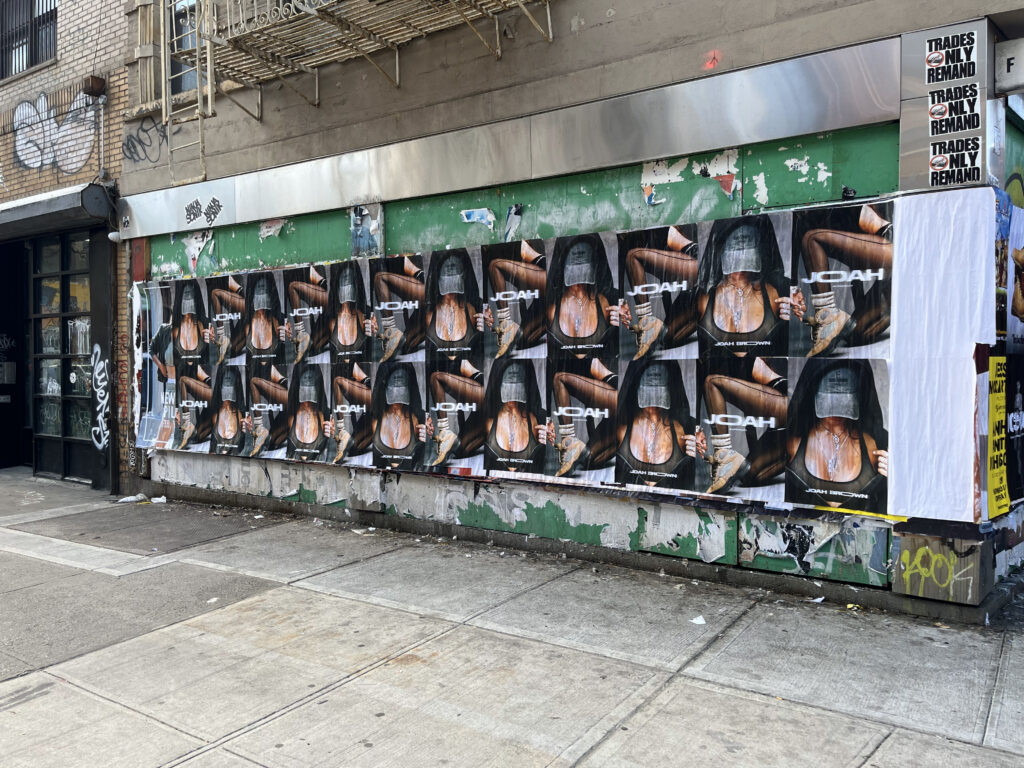
The instinctive answer is no — guerrilla marketing feels like the opposite of luxury. Low-fi, street-level, mass-coverage advertising seems incompatible with brands that derive their value from scarcity, exclusivity, and elevated production standards. But that instinct is based on a misunderstanding of what guerrilla marketing actually is at its best, and how the most sophisticated luxury brands have used it.
The question isn’t whether luxury and guerrilla are compatible. The question is what kind of guerrilla marketing maintains luxury brand standards — and the answer is precise, quality-first, selective-placement campaigns that create discovery moments rather than saturation impressions. When guerrilla marketing is executed at the quality level that luxury brands require, it creates exactly the kind of unexpected encounter that luxury consumers find memorable.
Why Luxury Brands Use Guerrilla Marketing
Luxury brands operate under a fundamental marketing paradox: they need broad awareness to sustain aspiration value, but must avoid the mass-market associations that undermine the exclusivity their positioning depends on. Traditional advertising — television, digital display, mass outdoor — addresses the awareness side but risks the exclusivity problem by placing the brand alongside mass-market product advertising in the same media environment.
Guerrilla marketing offers a path through this paradox when executed correctly. A carefully placed, extraordinarily well-produced installation in a specific luxury retail corridor or cultural venue creates brand presence without the mass-market association. The audience who encounters it feels like they’ve discovered something, not been advertised to — which is precisely the relationship luxury brands want with their customers.
The second reason luxury brands use guerrilla marketing is its social media amplification potential. The discovery quality of unexpected street-level encounters in visually interesting locations generates organic photography and sharing from exactly the high-profile, socially influential people who shape luxury brand perception. When a Vogue editor or a prominent fashion influencer photographs an extraordinary installation on their morning walk and shares it with their audience, the earned impression value is incalculable compared to a paid placement.
Where Luxury Guerrilla Marketing Works
Luxury Retail Corridors
The streets around major luxury retail concentrations — Fifth Avenue in New York, Rodeo Drive in Beverly Hills, the Magnificent Mile in Chicago, Newbury Street in Boston — are the natural geographic home for luxury guerrilla marketing campaigns. The foot traffic is self-selecting: people who are already in a luxury shopping environment are in a mindset receptive to luxury brand messaging.
Poster campaigns and ambient installations in these corridors don’t require the brand to shout. A restrained, beautifully produced installation near a flagship store location reads as a natural extension of the brand’s physical presence — not an interruption of the pedestrian experience but a contribution to the neighborhood’s visual quality.
Fashion Week Environments
Fashion weeks in New York, Los Angeles, and other markets create intense concentrations of exactly the press, buyers, influencers, and consumers that luxury brands most want to reach. The geography of fashion week — the venues, the hotels, the restaurants and bars where industry people gather between shows — becomes a precision targeting environment for the duration of the week.
Our team has executed fashion week campaigns in New York and other major markets, building location plans around the specific geography of the season’s show calendar to maximize encounters with the press and buyer community whose attention and coverage determines which collections become cultural moments.
Cultural and Arts Venues
Luxury brands have long-standing associations with cultural institutions — museums, opera houses, galleries, auction houses. The physical environments around these institutions are natural guerrilla marketing terrain for luxury campaigns. A campaign around the perimeter of a major museum or adjacent to a gallery opening positions the brand within the cultural context that luxury consumers identify with, rather than in the commercial context of pure advertising.
High-Density Urban Neighborhoods Where Luxury Consumers Live
In major cities, luxury consumers are not uniformly distributed — they’re concentrated in specific residential neighborhoods and the commercial streets adjacent to those neighborhoods. For luxury campaigns targeting specific city markets, location selection based on residential affluence mapping and luxury consumer lifestyle geography can create highly precise reach without mass-market distribution.
Luxury Guerrilla Marketing Tactics That Maintain Brand Standards
Art-Quality Large Format Installations
The format that most naturally accommodates luxury brand standards is the large-format installation that treats the wall as a canvas rather than an advertising surface. When execution quality is at the level of gallery-worthy visual art — materials, production standards, installation precision — the result doesn’t read as advertising. It reads as brand expression, which is the correct register for luxury communication.
Gucci, Dior, and other luxury houses have executed campaign imagery as large-format street installations with production values that create genuine visual statements. The scale and quality of these installations generates press coverage and social documentation beyond what any equivalent-cost traditional advertising placement would achieve.
Selective Volume Poster Campaigns
Traditional flyposting in high-volume, mass-saturation configurations is not appropriate for luxury brands. But highly selective poster campaigns — ten to twenty extraordinary placements in exactly the right locations, installed with precision and using premium materials — create a different impression entirely. The selectivity itself communicates exclusivity: this brand chose these specific walls, in these specific neighborhoods, and that choice reflects the same taste and precision the brand demonstrates in its products.
Our wheatpaste campaigns for luxury-adjacent clients prioritize placement quality and location selectivity over volume.
Experiential Pop-Up Installations
Temporary physical installations that create genuine experiences — sensory environments, interactive art pieces, discovery moments — work particularly well for luxury brands because they generate the exact quality of encounter that luxury consumers describe as memorable. Not an advertisement but a moment. The shared experience quality drives social media documentation and word-of-mouth in ways that passive advertising can’t.
Ambient Product Presence
Ambient installations that place brand imagery in contextually relevant environments without advertising framing — branded elements in hotel lobbies, restaurant environments, cultural spaces — create brand encounters that feel organic to the context. When executed well, ambient luxury brand presence doesn’t feel like advertising at all. It feels like the brand belongs in the same environment as the consumer.
Production Standards: Where Luxury Guerrilla Marketing Differs
The most important distinction between luxury guerrilla marketing and mass-market guerrilla marketing is production quality. Every material, every surface, every installation detail must meet the brand’s aesthetic standards — because for luxury brands, execution quality is brand communication.
This means:
- Premium print materials, not standard promotional paper
- Installation precision that treats the installation process as a craft rather than logistics
- Location quality standards that prioritize the right five surfaces over any hundred surfaces
- Creative execution that the brand’s creative director would approve as consistent with the brand’s visual language
Our team works with luxury brand standards and can advise on material selection, installation methods, and location criteria that maintain the production quality that luxury marketing requires.
Earned Media for Luxury Guerrilla Campaigns
Luxury guerrilla campaigns that generate press coverage receive a specific kind of earned media: style and culture press, not just marketing trade publications. Coverage in Vogue, Harper’s Bazaar, AnOther Magazine, and major city cultural publications reaches exactly the audience that luxury brands need to influence. This press coverage typically generates when the installation is visually exceptional — when it’s the kind of thing that fashion press would cover as a cultural moment, not just as marketing news.
Building earned media outreach into the campaign planning — coordinating with brand PR to alert fashion press to the installation, providing professional photography before the public launch, timing the installation to coincide with adjacent cultural moments that press is already covering — significantly increases the probability of coverage quality.
Luxury Brand Guerrilla Marketing in Practice: Formats and Execution Details
Understanding which execution approaches are appropriate for luxury brand contexts is the practical knowledge that makes the difference between a campaign that elevates the brand and one that undermines it. Here is how the most relevant guerrilla formats apply in luxury contexts:
Building-Scale Poster Installations
One of the most effective luxury guerrilla marketing executions is the building-scale poster installation — a large-format campaign that occupies an entire building facade or the kind of wall that typically hosts painted murals. This format is inherently selective (only the best walls support it), inherently high-impact (you cannot miss a building-scale installation), and naturally generates press coverage and social documentation precisely because its scale makes it newsworthy in itself.
For fashion weeks in New York, Milan, and Paris, building-scale poster installations have been used by luxury houses to dominate the visual environment around fashion week venues without the conventional outdoor advertising saturation that would create a mass-market association. The format creates landmark presence rather than advertising presence — a distinction that matters for luxury brand perception.
Pop-Up Retail and Experiential Activations
Luxury brands have pioneered the high-end pop-up retail experience as a guerrilla format — temporary physical environments that embody the brand’s aesthetic and product vision in a way that creates genuine discovery experiences. The defining characteristic of successful luxury pop-ups is the experience quality: materials, craft, lighting, service, and space design that meet the brand’s own aesthetic standards rather than the compromise quality typical of temporary retail environments.
Pop-up activations in unexpected but contextually appropriate locations — a gallery in an art fair neighborhood, a rooftop in a fashion district, a historic space during a cultural festival — create the discovery quality that luxury consumers find memorable. The temporary nature adds urgency; the high quality creates word-of-mouth; the unexpected location creates the social media post.
Cultural Event Sponsorship with Street Presence
Luxury brands often use cultural event sponsorship as the platform for guerrilla marketing extensions. An official sponsorship of a film festival, art fair, or cultural institution provides the right context and permissions; the guerrilla marketing extends the brand’s presence beyond the official sponsorship footprint into the full geographic zone that event audiences occupy.
The guerrilla extension of a cultural sponsorship maintains the brand’s cultural positioning (associated with the prestige of the event) while reaching a significantly larger audience than official event advertising alone would generate. The combination of official cultural association and unexpected street-level presence creates a sophisticated marketing impression that reinforces luxury brand values without mass-market associations.
Geography for Luxury Guerrilla Campaigns
Location selection for luxury guerrilla marketing campaigns requires more careful consideration than standard campaign location selection because the location itself communicates brand positioning. A luxury brand appearing on the same wall as mass-market brand advertising is making a statement about its brand neighborhood, whether intentional or not.
Luxury guerrilla marketing geography should be selected for:
- Contextual alignment: The neighborhood should be one where the brand’s target consumer actually lives, works, and moves. Luxury consumers in New York are in SoHo, Nolita, the West Village, Tribeca, and the Upper East Side. These are different neighborhoods from the music and arts neighborhoods that work for entertainment campaigns.
- Visual environment quality: The existing visual environment of the posting location should be compatible with luxury brand standards. A premium wall in a gallery district reads differently than the same size wall in an industrial corridor, even if both are technically legal posting surfaces.
- Social photography potential: Luxury brand placements should be in locations where the target consumer’s social media activity is concentrated — where the photographs that matter for luxury brand conversation are actually taken.
- Competition on the surface: Luxury brands should not appear adjacent to mass-market competing content. Selective placement on walls with controlled or curated existing content maintains the brand’s visual neighborhood quality.
Case for and Against Luxury Guerrilla Marketing
The Case For
Luxury guerrilla marketing works because discovery is the right relationship for luxury brands and their consumers. Being found, rather than being advertised to — encountering the brand in an unexpected and visually interesting context — creates the kind of brand memory that purchase decisions are built on. The format can be executed at any quality level the brand requires. And the social media amplification from luxury-adjacent influencer photography extends the campaign’s reach to the exact audience that determines which brands are considered culturally relevant.
The Case Against Mass-Format Execution
Mass-saturation guerrilla marketing — high-volume, low-selectivity, any-available-wall deployment — is genuinely inappropriate for luxury brands. It creates the wrong associations, the wrong visual context, and the wrong relationship with the audience. The argument against luxury guerrilla marketing is really an argument against low-quality execution, not against the tactic category itself.
Evaluating Agency Partners for Luxury Guerrilla Campaigns
Luxury brands evaluating guerrilla marketing agency partners need to apply different selection criteria than consumer brands use. The execution quality standards that define luxury marketing apply equally to guerrilla execution. An agency that treats installation as commodity labor, uses generic stock locations without consideration for brand-environment compatibility, or provides undated unlocated documentation is not an appropriate partner for a luxury brand campaign.
The questions luxury brands should ask of any guerrilla marketing agency before engaging: What is their location vetting process, and how do they ensure placements appear in brand-appropriate environments? What are their installation quality standards, and how do they enforce consistent quality across markets? What does campaign documentation look like, and can they provide examples from comparable luxury category campaigns? How do they handle creative review and specification compatibility for premium format productions?
Our team is experienced in the specific requirements of luxury brand campaigns. We apply brand-environment vetting to every location in luxury client campaigns, maintain installation quality standards that reflect the premium execution luxury brands require, and provide documentation that meets the reporting standards luxury brand marketing organizations expect. We approach luxury campaign partnerships as long-term relationships rather than transactional executions — because the location knowledge, brand understanding, and execution standards that make luxury campaigns succeed build over time.
Integrating Luxury Guerrilla Marketing with Broader Campaign Strategy
- Brand ambassador programs in luxury retail environments for direct, personalized audience engagement that matches the luxury service standard
- Large-format outdoor installations at premium locations that serve as campaign anchor points
- Premium mobile LED billboard campaigns in luxury retail corridors for launch-day presence without the permanence of static installations
- Experiential activations at cultural venues and events that place the brand in the right cultural context for luxury positioning
Frequently Asked Questions
Does guerrilla marketing conflict with luxury brand positioning?
Not when executed correctly. The key distinction is quality over volume. Luxury guerrilla campaigns prioritize high-quality installations in precisely selected locations over mass saturation. The creative, materials, and execution standards must match the brand’s overall aesthetic — guerrilla tactics don’t require low production values.
What types of guerrilla marketing work best for luxury brands?
Ambient art-quality installations, large-format building wraps at premium locations, targeted poster campaigns in luxury retail corridors, and experiential street activations that create discovery moments work well for luxury brands. The common thread is quality of execution and selectivity of placement.
Which luxury brands have used guerrilla marketing?
Gucci, Louis Vuitton, Dior, Balenciaga, Rolex, and numerous other luxury houses have used street-level and ambient campaigns — particularly around seasonal launches, flagship store openings, and fashion week moments. Luxury streetwear brands including Off-White and Fear of God have built their entire brand equity partly through street-level cultural presence.
How do you maintain exclusivity while doing guerrilla marketing?
Selectivity in location, restraint in volume, and high production quality maintain exclusivity. Placing ten extraordinary installations in exactly the right locations creates a different impression than placing a hundred standard posters everywhere. Luxury guerrilla marketing is about precision, not saturation.
Can guerrilla marketing support a luxury brand’s seasonal launch?
Yes. Seasonal launches for fashion houses, luxury retail openings, and collection debuts all benefit from street-level presence that extends the launch beyond traditional media. A targeted campaign in luxury retail corridors creates physical presence that editorial and digital can’t replicate.
What are the risks of guerrilla marketing for luxury brands?
The primary risks are brand dilution from poor execution quality, inappropriate placement that conflicts with brand positioning, and over-saturation that undermines exclusivity. All three are management decisions, not inherent to the format — with the right partner and standards, guerrilla marketing doesn’t require any compromise on luxury brand values.