American Guerrilla Marketing
Nationwide serivce
Media planning, media buying, billboard advertising, & guerrilla marketing
American Guerrilla Marketing places interior bus and shelter advertising on Razorback Transit, the University of Arkansas campus bus system in Fayetteville. 28,000+ enrolled students on MLK Jr Boulevard, Maple Street, Garland Ave, and Razorback Stadium game day shuttles.
Fayetteville is the home of the University of Arkansas Razorbacks, and the identity of this mid-sized Arkansas Ozark city is inseparable from the university it hosts. The UA campus sits on a hilltop above the Fayetteville town center, and the student community that fills the 28,000-plus enrollment radiates out from the campus into the apartment corridors along Martin Luther King Jr. Boulevard, Maple Street, and the residential streets running east and south from the campus perimeter. Razorback Transit is the UA campus bus system, offering free transit to UA students with their U Card and connecting the campus core to the off-campus housing corridors, the Dickson Street entertainment district, and the Fayetteville community beyond the immediate campus area. The system also operates game day service to Donald W. Reynolds Razorback Stadium on a scale that reflects the SEC football intensity of the Arkansas Razorbacks fanbase: home games at Razorback Stadium bring the largest single-day transit ridership events of the year to the Razorback Transit network.
Advertising on Razorback Transit is a direct channel to the 18-to-24 Arkansas consumer at the university environment where their brand loyalties are most actively forming. The UA enrollment draws students from across Arkansas and from neighboring states, creating a student body that will spend four or more years in the Fayetteville market before dispersing to professional careers across the region. For brands that want to build Arkansas and regional relationships with this pre-professional demographic during the college years, Razorback Transit advertising on the campus routes during the fall and spring semesters is the most precise campus-market placement available in the state.
AGM executes campus transit advertising campaigns across university markets nationally, and we bring that experience to the UA Fayetteville market with an understanding of how Razorback Transit’s specific route structure, ridership patterns, and seasonal schedule shape the advertising opportunity. The game day dimension of Razorback Transit in particular requires campaign planning that accounts for the extraordinary load and the non-student audience that joins the regular ridership during football season.
AGM places interior bus and shelter advertising on Razorback Transit routes connecting the University of Arkansas campus to the Fayetteville student community. Tell us your target and we'll build the semester campaign that reaches them.
The University of Arkansas enrollment of 28,000-plus makes Razorback Transit one of the larger campus transit systems in the SEC. The off-campus housing concentration along Martin Luther King Jr. Boulevard, which runs south from the campus through one of Fayetteville’s primary student apartment corridors, creates a consistent daily ridership of upperclassmen and graduate students commuting between their apartments and the academic buildings on the UA campus hill. The Hogs Haul route and the MLK corridor routes are the highest-ridership regular service in the Razorback Transit system, connecting the dense student apartment population to the campus with a frequency and reliability that makes transit the practical choice over parking for the MLK Boulevard apartment residents.
Dickson Street, Fayetteville’s entertainment strip running east from the campus perimeter, is one of the most economically active student entertainment corridors in Arkansas, with bars, restaurants, the Walton Arts Center, and the independent entertainment businesses that serve the UA student community concentrated in the blocks between Hill Avenue and the intersection of Dickson and College Avenue. Razorback Transit routes serving Dickson Street and the campus-adjacent entertainment corridors carry students in their social and entertainment mode, creating the same high-receptivity consumer environment that characterizes Tuscaloosa Trolley and Scottsdale Trolley advertising.
Donald W. Reynolds Razorback Stadium seats 76,000 people and fills to near capacity for every home game. SEC football in Fayetteville is not a peripheral event. It is the single largest spectator event the state of Arkansas hosts, and the game day ridership on Razorback Transit shuttles carrying students, alumni, and visitors to and from the stadium represents the highest single-day transit ridership of the year. A campaign running during the fall semester, which includes all home game weekends, reaches both the academic-year daily rider and the extraordinary game day audience in a single semester-length placement.
The Razorback Transit routes running along Martin Luther King Jr. Boulevard from the UA campus south through the student apartment corridor are the system’s highest-ridership daily service. MLK Boulevard is lined with apartment complexes housing thousands of UA upperclassmen, and the Razorback Transit routes serving these complexes carry a consistent daily student ridership between the apartment stops and the academic buildings on the campus hill. The trip from the MLK apartment corridor to the UA Student Union or the parking structure transit hub on Lot 56 takes approximately 10 to 20 minutes depending on traffic and stops, giving interior bus advertising on these routes sustained per-trip exposure during the daily academic commute.
The MLK Boulevard student demographic is overwhelmingly 20 to 23 years old, junior and senior-year students who have moved off campus after freshman or sophomore year in the dorms, managing their own apartments and budgets for the first time with genuine financial independence. This is the consumer phase that bank and credit card brands specifically target during student market campaigns: the transition from a campus-managed financial environment to an independent adult financial life. Razorback Transit advertising on the MLK Boulevard routes reaches this transition-phase demographic at the precise moment when financial product decisions are most formative.
Best advertiser categories: banking and credit card products targeting the financially independent student, food delivery and grocery apps, streaming and entertainment subscriptions, auto insurance targeting student drivers, fitness and wellness brands, and local Fayetteville restaurants and entertainment venues targeting the off-campus student residential community.
The Garland Avenue and Maple Street routes serve the additional student apartment corridors east and northeast of the UA campus, connecting the apartment complexes along these streets to the campus transit hub on the north side of the university. The Garland and Maple student housing community is slightly more diverse in its housing stock than the MLK corridor, including both large garden-style apartment complexes and smaller multi-family housing near the campus perimeter. These routes carry upperclassmen and graduate students whose apartment locations put them on the north and east approach to campus rather than the south approach of the MLK Boulevard routes.
The graduate student segment is more present on the Garland and Maple routes than on the MLK corridor, reflecting the distribution of graduate student housing in the north campus area near the Graduate Studies offices and the Arkansas law school on the north side of campus. Graduate students are transitioning from student to professional status, and their advertising receptiveness reflects this: they are making decisions about financial planning, career development, and professional services that undergraduate students have not yet reached. Interior advertising on the Garland and Maple routes reaches this slightly older, more professionally focused student demographic that is beginning to engage with the post-academic consumer market.
Best advertiser categories: graduate school program advertising from other UA departments, bar exam preparation and professional licensing programs, early-career financial planning products, Arkansas employer recruitment campaigns targeting the UA graduate student talent pool, and professional service brands that benefit from establishing relationships with pre-career graduate students.
The Razorback Transit service connecting the UA campus to the Dickson Street entertainment district carries students heading to and from the bars, restaurants, and entertainment venues on Fayetteville’s primary entertainment strip. Dickson Street between Gregg Avenue and College Avenue is home to the bars that define the UA social scene: George’s Majestic Lounge on Arkansas Avenue, Rec Room, and the dozens of other establishments that fill on Thursday, Friday, and Saturday evenings when the UA student social calendar activates. The Razorback Transit service on the Dickson corridor carries students in the social and entertainment mode that makes this route the Razorback Transit equivalent of the Tuscaloosa Trolley or the Scottsdale Trolley: an entertainment district transit environment where riders are out, spending, and receptive to discovery advertising.
The Dickson Street route ridership skews toward the 21-plus student demographic that the bar and restaurant scene serves, with a mix of juniors, seniors, and graduate students who constitute the core Dickson Street social audience. For consumer brands targeting the 21-to-25 student market in a social consumption frame of mind, the Razorback Transit Dickson Street service during Thursday-Saturday evening operations is the most contextually aligned placement in the Fayetteville transit advertising market.
Best advertiser categories: Dickson Street restaurants and bars, consumer beverage brands targeting the 21-plus college audience, entertainment and venue promotions, food delivery apps for post-outing late-night ordering, and any consumer brand whose connection to the UA student social experience is the primary brand-building platform in this market.
Razorback Transit’s game day service to Donald W. Reynolds Razorback Stadium on the south end of the UA campus carries the single largest ridership load of any regular Razorback Transit operating period. On home game Saturdays during the SEC football season, the combination of the 76,000-seat stadium capacity, the UA student population using the shuttle to reach the stadium from apartment complexes and campus destinations, and the alumni and visitor audience who use the transit service all create an extraordinary ridership event that dwarfs regular academic service by multiple orders of magnitude.
The game day transit audience is not just the UA student demographic. It includes Arkansas Razorback alumni from across the state and region who return to Fayetteville for home games, out-of-town visitors from opposing teams’ fan bases, and the full cross-section of the Arkansas Razorback fanbase that converges on Fayetteville for each home game. Advertising on the game day shuttle service reaches this broader audience in a high-energy, high-spending consumer context that the academic semester’s regular commuter service cannot replicate. For SEC football cultural brands, consumer goods targeting the Arkansas Razorback demographic, and any brand whose consumer target includes the ardent college football audience, game day Razorback Transit service is a campaign placement without equivalent in the Arkansas advertising market.
Best advertiser categories: consumer food and beverage brands with SEC football cultural positioning, QSR brands with Fayetteville area locations, retail brands targeting the Razorback alumni and fan demographic, entertainment and experience brands, financial services brands targeting the alumni age demographic (30-plus), and any brand whose Arkansas market strategy benefits from association with the Razorback athletics cultural moment.
What it is: A complete exterior wrap on a Razorback Transit bus, creating a moving brand presence on the UA campus, the MLK Boulevard apartment corridor, and Fayetteville’s streets.
Best for: Brand launches targeting the UA student market, game day season brand activations, and any campaign where maximum UA campus and Fayetteville student community visual saturation is the objective.
Why buy it: A Razorback Transit full wrap during the fall semester travels the campus core, the MLK apartment corridor, the Dickson Street entertainment district, and the stadium approach on game day, creating brand exposure across the full UA student geographic and social landscape. For brands entering the Fayetteville student market, the wrap creates a market presence that the full student body encounters within the first two weeks of the campaign. Contact AGM for Razorback Transit wrap pricing and fall semester availability.
What it is: A large-format interior posting running along the upper interior walls of Razorback Transit buses.
Best for: System-wide UA student brand awareness campaigns. A king poster buy across all Razorback Transit routes reaches the full student ridership base consistently throughout the fall or spring semester.
Why buy it: The UA student who takes the MLK Boulevard Razorback Transit route every morning for a semester sees a king poster 80 or more times over a 16-week semester campaign. That cumulative frequency is what builds the brand associations that remain with students through graduation and into their professional lives. Contact AGM for Razorback Transit king poster rates and semester campaign pricing.
What it is: Distributed card placements throughout Razorback Transit bus interiors.
Best for: Local Fayetteville businesses, UA campus services, QR code campaigns driving app downloads, and any advertiser targeting the UA student market at a cost point accessible to local and regional business budgets.
Why buy it: Interior cards on Razorback Transit are the most accessible format for Fayetteville-area businesses targeting the student market. A local Fayetteville restaurant, a student-focused financial service, or a UA campus-affiliated organization can place interior cards on targeted Razorback Transit routes for a budget appropriate to a local Fayetteville business economy. The distributed format ensures the message appears throughout the bus at multiple card positions.
What it is: A mid-format interior posting for route-specific Razorback Transit targeting.
Best for: MLK Boulevard route-specific student campaigns, Dickson Street route entertainment campaigns, and game day stadium shuttle service advertising.
Why buy it: Route-specific queen poster buys on Razorback Transit allow precision targeting within the UA student market. A food delivery brand that primarily serves the MLK apartment corridor buys queens on the MLK routes. A Dickson Street bar or restaurant buys queens on the Dickson entertainment service. Game day advertisers buy queens specifically on the stadium shuttle service. Route precision makes Razorback Transit advertising more efficient for advertisers with specific geographic or service-area targets within the Fayetteville student market.
What it is: Cards at reading distance on Razorback Transit seat backs.
Best for: QR code campaigns driving app downloads, digital first contact, and any message that benefits from the phone-ready UA student audience engaging directly from their seat during the campus commute.
Why buy it: UA students on Razorback Transit routes are among the most QR-code-active audiences in any Arkansas transit market because they are digitally native consumers who regularly scan QR codes in their physical environment. A seat-back QR code linking to an app download page, a restaurant reservation, or a financial product enrollment converts the campus commute into a direct response opportunity for brands whose conversion path starts on the phone.
What it is: A horizontal card at the front of Razorback Transit buses visible at every boarding stop along campus and off-campus routes.
Best for: Short brand messages and game day promotional announcements on Razorback Transit’s campus routes where boarding frequency is highest during the academic period peaks.
Why buy it: On the MLK Boulevard route with its multiple apartment complex stops and the campus core route with its academic building boarding points, the headliner accumulates boarding impressions at a rate that compounds into campaign frequency over the semester. For brands with simple, memorable messages targeting the full UA student body, the headliner on the primary Razorback Transit routes delivers the repeat boarding impressions that build recognition.
What it is: An exterior rear-panel advertisement visible to vehicle traffic following Razorback Transit buses on Fayetteville streets.
Best for: Reaching the Fayetteville vehicle-traveling public on MLK Boulevard, Garland Avenue, and the Dickson Street approach where Razorback Transit buses share streets with significant Fayetteville traffic.
Why buy it: MLK Boulevard carries both Razorback Transit buses and the general Fayetteville vehicle traffic, including the student drivers who commute to campus by car. A tail display on the MLK Boulevard route reaches the driving Fayetteville student and community audience who follow the same routes as the transit riders but from behind the wheel. For brands targeting both the transit-riding and car-driving UA community, the tail display bridges both audiences from the same vehicle format.
What it is: Cards in the overhead panel of Razorback Transit buses visible to standing riders during peak load periods.
Best for: Morning class rush placements on the MLK Boulevard and campus core routes during the 7:30 to 9:00 AM academic peak when Razorback Transit buses carry their heaviest standing loads.
Why buy it: The MLK Boulevard morning class rush fills Razorback Transit buses to standing loads as the 8:00 and 9:00 AM class periods approach. Overhead cards on these routes during peak periods reach the maximum daily Razorback Transit student audience during the most attentive transit moment, when students are alert, oriented toward the day ahead, and the bus interior environment is the primary visual field before they reach the academic building.
What it is: Perforated vinyl on Razorback Transit windows visible from outside as a full graphic.
Best for: Exterior brand presence on the Fayetteville streets and at the Razorback Stadium approach during game day service, where the exterior visibility of the transit vehicle extends the campaign to pedestrian and vehicle audiences beyond the bus interior.
Why buy it: On game day Saturdays, Razorback Transit buses with window vinyls on the stadium shuttle service are visible to the full pedestrian and vehicle audience converging on the Razorback Stadium area. This exterior audience, which includes tens of thousands of fans approaching the stadium on foot and by car, sees the window vinyl at the moment of maximum Razorback fan energy and engagement. For brands whose game day visibility in the stadium environment is a campaign priority, window vinyls on the shuttle service create exterior impressions at the stadium approach that no other transit format specifically delivers.
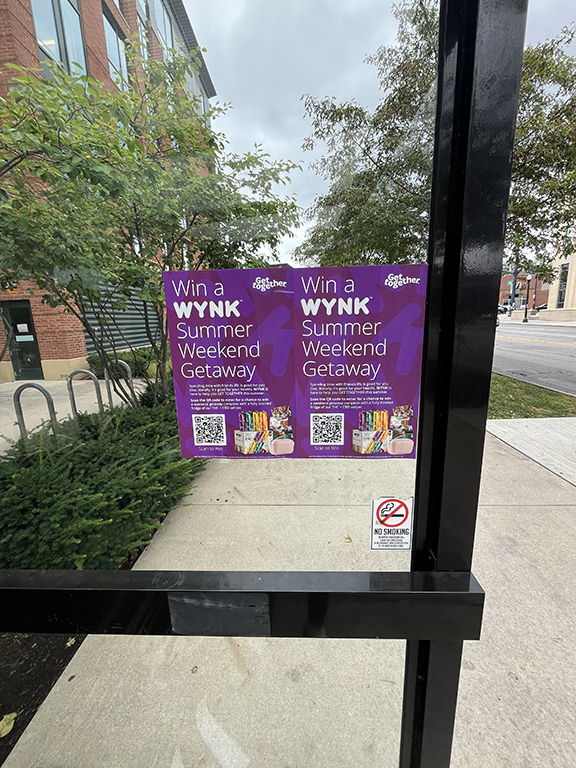
Razorback Transit maintains covered shelter infrastructure at key stop locations on the UA campus and at the primary off-campus apartment complex stops on MLK Boulevard and the Garland Avenue corridor. Campus shelters at the student union transit hub and at the Lot 56 parking structure connecting point see the highest daily student ridership of any fixed shelter positions in the system. Off-campus shelters at the major apartment complex entrances accumulate daily impressions from the same student population that rides the same routes each morning, building frequency with the MLK and Garland student communities across the full campaign posting period.
The shelter positions at the primary Razorback Transit boarding points on MLK Boulevard serve the highest-volume off-campus ridership concentration in the system. Students waiting at these shelters every morning for the MLK corridor routes are the same individuals day after day across the semester, creating the repeat exposure conditions that make campus shelter advertising specifically valuable for frequency campaigns targeting the student demographic. A fall semester shelter campaign at an MLK Boulevard apartment stop reaches the same 200-plus daily riders 80 or more times over the course of the semester, building the brand frequency that converts campus advertising presence into student brand preference.
The shelter positions at the UA Student Union transit hub and in the Old Main area of the historic campus core serve the largest single-location concentration of Razorback Transit riders on the campus side. Students arriving and departing the campus hub shelter positions are specifically campus-mode, between academic and campus social activities, with the attention and engagement that this campus environment produces. Shelter advertising at the student union stop reaches the full cross-section of the UA student body in the location where they congregate most consistently throughout the academic day.
What it is: A full backlit panel in a covered Razorback Transit shelter at a primary UA campus or MLK corridor stop location.
Best for: Full-semester brand campaigns at the UA student union or MLK Boulevard apartment complex stops, where semester-length presence reaches the same student audience with maximum frequency across the academic period.
Why buy it: At $3,850 for a four-week cycle, or structured across the full 16-week semester for maximum student frequency, a premium Razorback Transit shelter display at the student union or an MLK apartment stop delivers the highest-frequency single-position advertising in the UA Fayetteville student market. For brands committed to building UA campus presence across the full academic year, semester-plus shelter campaigns on Razorback Transit are the most frequency-efficient single-position format available.
What it is: A mid-size shelter panel at a Razorback Transit campus or off-campus stop.
Best for: Local Fayetteville businesses, campus services, and event promotions targeting the UA student community at a price point accessible to local business and campus organization budgets.
Why buy it: At $850 for a four-week cycle, the junior poster at a Razorback Transit shelter gives local Fayetteville businesses access to the UA student market at a local business price point. A Dickson Street restaurant, a UA campus tutoring service, or a Fayetteville fitness studio can place a junior poster at the nearest high-traffic Razorback Transit stop and achieve consistent daily student exposure for four weeks.
What it is: A bench advertisement at a Razorback Transit stop on the UA campus or off-campus corridor.
Best for: Sustained campus presence at specific Razorback Transit stop locations, particularly at the MLK Boulevard and Garland Avenue apartment stops where students wait daily.
Why buy it: At $700 for a four-week cycle, the Razorback Transit bench is the most accessible advertising entry in the Fayetteville campus transit market. For a local Fayetteville business, a campus organization, or a student service provider, a bench at the right Razorback Transit stop delivers four weeks of continuous UA student audience exposure at the most budget-accessible price point in the campus transit inventory.
The UA Fayetteville campus and Dickson Street entertainment corridor are among the most responsive guerrilla marketing environments in Arkansas. The student population’s visual engagement with their campus environment, the photography culture around Razorback athletics, and the walkable character of the UA campus create a street-level advertising environment where well-executed guerrilla formats generate genuine community engagement.
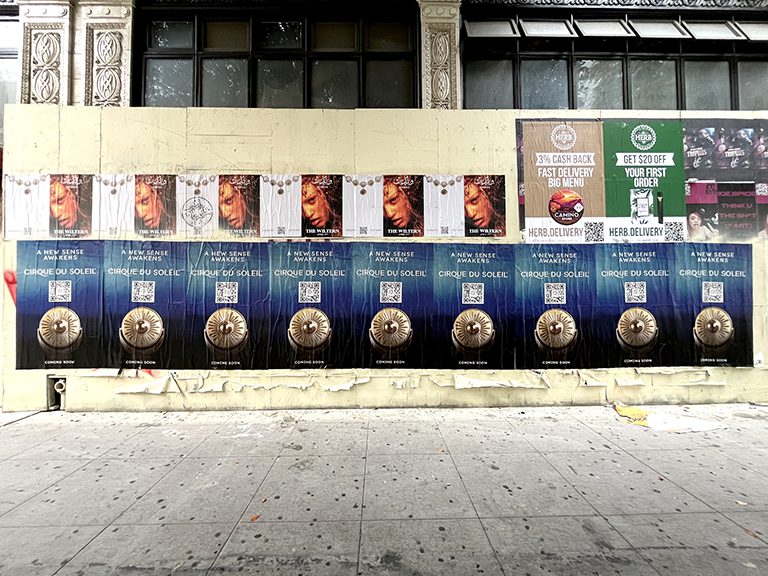
Snipe advertising along MLK Boulevard at the campus approach intersections, on Dickson Street at the entertainment district blocks, and at the Fayetteville square adjacent to the Walton Arts Center creates repeated street-level touchpoints for the UA student and Fayetteville community audience that also uses Razorback Transit. In a campus town where students notice and photograph their physical environment, snipes at the right locations become part of the campus community’s visual landscape.
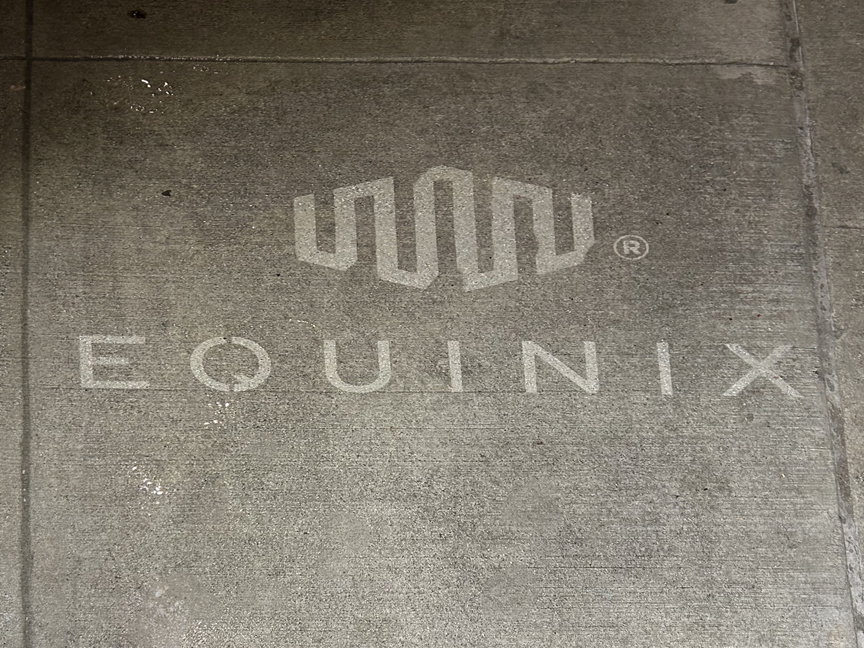
Sidewalk stencils at the primary Razorback Transit stops on the UA campus, particularly at the student union transit hub and at the Brough Commons dining area where students gather between classes, create ground-level brand presence at the highest foot-traffic concentration points on campus. For product launches and campus activations, stencils at the student union stop create impressions for the full daily UA student foot traffic stream.
Take-one flyers at the coffee shops, bars, and student gathering spaces on Dickson Street extend the Razorback Transit campaign into the off-bus social spaces where UA students spend evenings and weekends. Arsaga’s at the Depot, Puritan Coffee and Beer on Dickson, and the student hangout spaces adjacent to campus are high-placement-value take-one locations for the Fayetteville student market.
The University of Arkansas itself is the most consistent Razorback Transit advertiser, using bus interior and shelter advertising for enrollment, health services, financial aid deadlines, and campus programming targeting the full student enrollment. National brands targeting the 18-to-22 demographic use Razorback Transit for student market penetration during the fall semester, particularly financial services launching student banking products, food delivery apps, streaming services, and consumer electronics brands. Local Fayetteville restaurants and bars on Dickson Street use Razorback Transit interior cards for promotional campaigns during the academic year. Arkansas Razorback Athletics uses transit advertising for non-football sporting events where student attendance needs promotion, and for season ticket campaigns targeting the alumni audience during football season. Ozark Regional Transit, the broader Northwest Arkansas system, uses Razorback Transit connections to reach the student community that needs regional NW Arkansas transportation beyond the campus routes.
Razorback Transit operates primarily during the UA academic year, with fall and spring semester service being the full-schedule periods and summer service running at reduced frequency to serve the smaller summer enrollment. For campaigns targeting the full UA student enrollment, fall and spring semester campaigns are the primary windows. Summer campaigns are appropriate for brands targeting summer-enrolled students or for advertisers who want to maintain campus presence through the transition between academic years.
Razorback Transit’s audience is almost entirely UA students commuting between campus and off-campus housing, while Ozark Regional Transit serves the broader Northwest Arkansas community including the Fayetteville, Springdale, Rogers, and Bentonville area with a working adult and community ridership. For brands targeting UA students specifically, Razorback Transit is the more precise placement. For brands targeting the broader Northwest Arkansas market including non-student residents and the Walmart headquarters professional community in Bentonville, Ozark Regional Transit is the appropriate channel. AGM can coordinate a combined Razorback Transit plus Ozark Regional Transit campaign for brands that need both the student and the broader NW Arkansas community audience.
Yes. The fall semester campaign window from late August through early December aligns with the full Arkansas Razorback football season, covering both the regular season and any bowl game preparation period. Game day shuttle service placements can be specifically targeted to individual home game dates within the fall season for brands with event-specific activation objectives. The combination of regular academic-year service advertising and game day shuttle placements during the fall semester creates the most comprehensive Razorback athletics cultural advertising presence available through the campus transit system.
Beyond the main UA campus hill, Razorback Transit serves the UA Research and Technology Park on the north side of Fayetteville, certain routes connect to the Walton College of Business facilities, and the system extends to the medical and health sciences facilities at the UA campus periphery. The full Razorback Transit route network reflects the geographic spread of the UA campus and its affiliated facilities across Fayetteville. AGM reviews current route maps with each campaign to ensure advertising placements match the current service coverage of the specific campus communities and facilities the advertiser wants to reach.
Yes. AGM places transit advertising across all Arkansas systems and can manage a combined Razorback Transit Fayetteville and Rock Region Metro Little Rock campaign through a single engagement. An Arkansas state university market campaign combining the UA Fayetteville student market on Razorback Transit with the UA Little Rock student market on Rock Region Metro’s University Avenue route creates comprehensive Arkansas university-market transit advertising coverage in both of the state’s primary university cities.
For fall semester campaigns launching at the start of the academic year in late August, AGM recommends beginning the planning process in June or July. Semester-length interior campaigns and premium shelter positions at the student union stop may have advance booking demand from campus organizations and national student market brands that plan early for the fall semester launch. Contact AGM by early August at the latest for a clean fall semester launch, and earlier for campaigns with premium shelter or full wrap components.
As a university-operated transit system, Razorback Transit may have content standards that reflect UA’s campus community policies, particularly for alcohol advertising, political campaigns, and certain commercial categories. AGM reviews content guidelines during campaign planning and advises clients on any restrictions relevant to their campaign creative before production begins. Most standard consumer advertising categories including financial services, technology, food and beverage, entertainment, and lifestyle brands operate without restrictions on Razorback Transit.
Yes, substantially. On home football game Saturdays during the fall season, Razorback Transit deploys additional shuttle capacity to serve the stadium approach, and the total ridership on game day service significantly exceeds the highest academic weekday service loads. The game day shuttle ridership includes not just UA students but alumni, visitors, and the full Razorback football audience, creating a ridership spike that can be 5 to 10 times the normal academic service daily load on major home game dates. For brands targeting the game day audience specifically, AGM recommends a combined strategy of interior advertising on the regular fall semester service for daily academic frequency and specific game day shuttle placements for the event-day peak.
AGM provides photographic installation documentation for all Razorback Transit placements, including interior card and poster installation photos showing position within the bus, shelter panel photos at each stop location, and exterior vehicle documentation for wraps and window vinyls. Post-campaign reporting includes all documentation photographs, placement location records, and estimated impression counts using available UA Transportation Services ridership data for the academic period covered by the campaign.
Razorback Transit is primarily a campus transit system designed for UA student commuting between campus and off-campus housing. The routes extend into the surrounding Fayetteville community at some points, and the Dickson Street route carries both students and Fayetteville community residents who use the entertainment district, but the system’s primary audience is UA-enrolled students. For brands that need to reach the broader Fayetteville and Northwest Arkansas community beyond the student population, Ozark Regional Transit is the more appropriate placement. AGM recommends a combined Razorback Transit plus Ozark Regional Transit strategy for advertisers who need both the campus student audience and the broader NW Arkansas community market.